
![[PRO Tips] Gold’s Bullish Revival: Seasonal Trends and Key Levels to Watch](https://xinker.org/uploads/images/202412/image_430x256_67724cc6ad0cd.webp)
![[PRO Tips] Gold Market Under Short-Term Pressure, Safe-Haven Demand and Central Bank Buying Support Long-Term Upside Potential](https://xinker.org/uploads/images/202412/image_430x256_676ffb4685287.webp)
![[PRO Tips] Analysis of 9 key points of differentiation strategy! Master differentiation to create a brand advantage that is unique in the world!](https://firebasestorage.googleapis.com/v0/b/xinker-tips.appspot.com/o/article_thumbnails%2Fscaled_differentiation%20strategy.png.png?alt=media&token=a1bfc3d2-e85a-4db7-8a6d-01c7274f8940)
![[PRO Tips] Will REITs regain growth momentum in 2024? 3 REITs ETFs you must know if you want to invest in real estate.](https://firebasestorage.googleapis.com/v0/b/xinker-tips.appspot.com/o/article_thumbnails%2Fscaled_REITs1.png.png?alt=media&token=8af4eb93-33ff-466f-8039-b6555fad52b4)
![[PRO Tips] Complete tutorial on how to make money in Adobe Stock!](https://firebasestorage.googleapis.com/v0/b/xinker-tips.appspot.com/o/article_thumbnails%2Fscaled_tut-adobe1.png.png?alt=media&token=0b2c8cf2-22bd-4142-883e-140ed1cbaf02)
![[Passive Income] Unlock the secret of passive income: 3 steps to apply for Google AdSense](https://xinker.org/uploads/images/202410/image_430x256_6717a4fb3052b.webp)
![[Passive Income] Earn over $200 a day with AI-generated articles!](https://firebasestorage.googleapis.com/v0/b/xinker-tips.appspot.com/o/article_thumbnails%2Fscaled_article1.png.png?alt=media&token=f61bf35b-8553-4719-826d-7360024adc70)
![[Passive Income] Earn over 20 USD per download with AI-generated images!](https://firebasestorage.googleapis.com/v0/b/xinker-tips.appspot.com/o/article_thumbnails%2Fscaled_adobe2.png.png?alt=media&token=3e20e76a-a907-45af-80aa-bf9b3600301f)
![[Passive Income] Earn 10 USD per new download by sharing CapCut!](https://firebasestorage.googleapis.com/v0/b/xinker-tips.appspot.com/o/article_thumbnails%2Fscaled_capcut2.png.png?alt=media&token=a04dec40-1fac-4857-86f2-19a8be02d38e)
![[Passive Income] Use your WiFi to create passive income in 5 minutes, and you can earn 4-6 U per day!](https://firebasestorage.googleapis.com/v0/b/xinker-tips.appspot.com/o/article_thumbnails%2Fscaled_Grassio.webp.png?alt=media&token=7659a95e-0e47-4f27-a17d-c942ac3cf7f4)


![[Business Talk] The Unique Theme of XINKER's Song: Beef Wellington and Business Mastery](https://xinker.org/uploads/images/202410/image_430x256_671afc155f47f.webp)
![[Business Talk] Chagee: Opening 3,500 stores in 6 years](https://xinker.org/uploads/images/202410/image_430x256_671afce80c5f9.webp)

Playable Worlds launches Stars Reach on Steam early access in August | hands-on preview and interview
Developer Playable Worlds announced that its years-in-the-making sci-fi online game, Stars Reach, will launch on PC via Steam Early Access on August 18. Stars Reach is a sandbox massively multiplayer online role-playing game (MMORPG) where players leave a lasting mark on a galaxy. Powered by cloud-native technology, every asteroid, planet, and settlement exists in a persistent world that evolves through player actions. I got to play a version of the game in early June during the Summer Game Fest. Reshape mountains, reroute rivers, burn forests, and permanently transform ecosystems. With a classless, open-ended progression system, players can become an explorer, journalist, crafter, politician, warrior — or multiple at once. Build influential governments, defend homesteads from hostile threats, craft powerful equipment, battle dangerous creatures, and define civilizations for years to come. Early Access brings players into the experience to help shape what it becomes. Founded by industry veterans Raph Koster and Eric Goldberg, Playable Worlds has continuously refined Stars Reach ahead of its Early Access debut. Recent updates introduced an expanded character creator, combat improvements, and more dynamic wildlife migration that grows increasingly dangerous if left unchecked. In an interview with GamesBeat in June, Koster said the game has been in the works since 2018 and it is the game he always dreamed of making. At home in Stars Reach. Source: Playable Worlds Playable Worlds will be collecting feedback from players and shaping the experience alongside the community. At the Early Access launch, players can explore multiple planets, craft equipment, engage in combat, and trade with others throughout the galaxy. Future updates will include a galaxy-spanning hive mind capable of consuming entire planets. PvP and factions will arrive in 1.0 at a later date. Stars Reach will arrive to Early Access on PC via Steam with three paid tiers: the Firstlight Pack ($30), the Voyager Pack ($50), and the Cosmonaut Pack ($80), each offering increasing rewards and cosmetics. Hands-on preview A town in Stars Reach. Source: Playable Worlds I played the game with Raph Koster at the recent Summer Game Fest in June. He gave me a guided tour and I was able to play alongside him in the same world. Armed with a PC with a mouse and keyboard, we started out at the same place where all players do at the outset. It’s a space station with a Hall of Heroes — a place called Haven. It was a colorful but not too cute sci-fi setting. It was a detailed world, but not one that seemed massive like World of Warcraft. It was more a smaller space, but with enough room to explore. Koster showed me you can switch your camera view, whether in MMO style where the camera is loose and you use the right mouse button to drag around the camera. There’s a tutorial, but we didn’t bother with that as Koster was driving. With Stars Reach, there are a ton of worlds that you can explore in a single giant galaxy. In the space station, you’re part of the Transplanetary League and you get to choose where to go. First, he took me into space on a spaceship. The galaxy various space zones and planets that are all connected via wormholes so you can travel between them fast. What’s unique is that the environments can be stable and familiar, like your own home. Or they can be generated on the fly. We made our way to an asteroid and jumped around on it in low gravity. I floated across the space and crash landed on the asteroid. Koster explained that everything was simulated. In space, they simulate low gravity. You can dig tunnels and mine for resources. Then you can use those for crafting. Raph Koster is cofounder of Playable Worlds. “All of that ties into the gameplay economy because every world has something different to offer,” Koster said. You can fly spaceships around and engage in space combat. We headed down to the surface to see a generated landscape. We played in a world that was set up for the demo, so we could carve it up without messing up anything that belonged to real players testing the game. “Every tree you see grew here from a sapling. Every plant is dynamic. Every cubic meter of the world can be affected and changed. So everything is modifiable. Everything is simulated. We don’t think there’s another game on the planet that does that,” Koster said. On the right edge of the screen, there was a toolbar and I pressed the No. 2, swapping so that I was holding my gun. You can swap to a tool that helps you dig. You can play with a chronophaser that erodes the ground or melts it into lava. So I started creating lava pits. I was able to aim the chronophaser at the ground and watch it deform in real time into a liquid. Koster warned that if I went into the newly created pit, I would catch fire. We pulled out a pistol and aimed at a tree. We also killed some bunnies. When you hit them, they drop health powerups. It’s arcade-like action. A town in Stars Reach. A

Developer Playable Worlds announced that its years-in-the-making sci-fi online game, Stars Reach, will launch on PC via Steam Early Access on August 18.
Stars Reach is a sandbox massively multiplayer online role-playing game (MMORPG) where players leave a lasting mark on a galaxy. Powered by cloud-native technology, every asteroid, planet, and settlement exists in a persistent world that evolves through player actions. I got to play a version of the game in early June during the Summer Game Fest.
Reshape mountains, reroute rivers, burn forests, and permanently transform ecosystems. With a classless, open-ended progression system, players can become an explorer, journalist, crafter, politician, warrior — or multiple at once. Build influential governments, defend homesteads from hostile threats, craft powerful equipment, battle dangerous creatures, and define civilizations for years to come.
Early Access brings players into the experience to help shape what it becomes. Founded by industry veterans Raph Koster and Eric Goldberg, Playable Worlds has continuously refined Stars Reach ahead of its Early Access debut. Recent updates introduced an expanded character creator, combat improvements, and more dynamic wildlife migration that grows increasingly dangerous if left unchecked.
In an interview with GamesBeat in June, Koster said the game has been in the works since 2018 and it is the game he always dreamed of making.
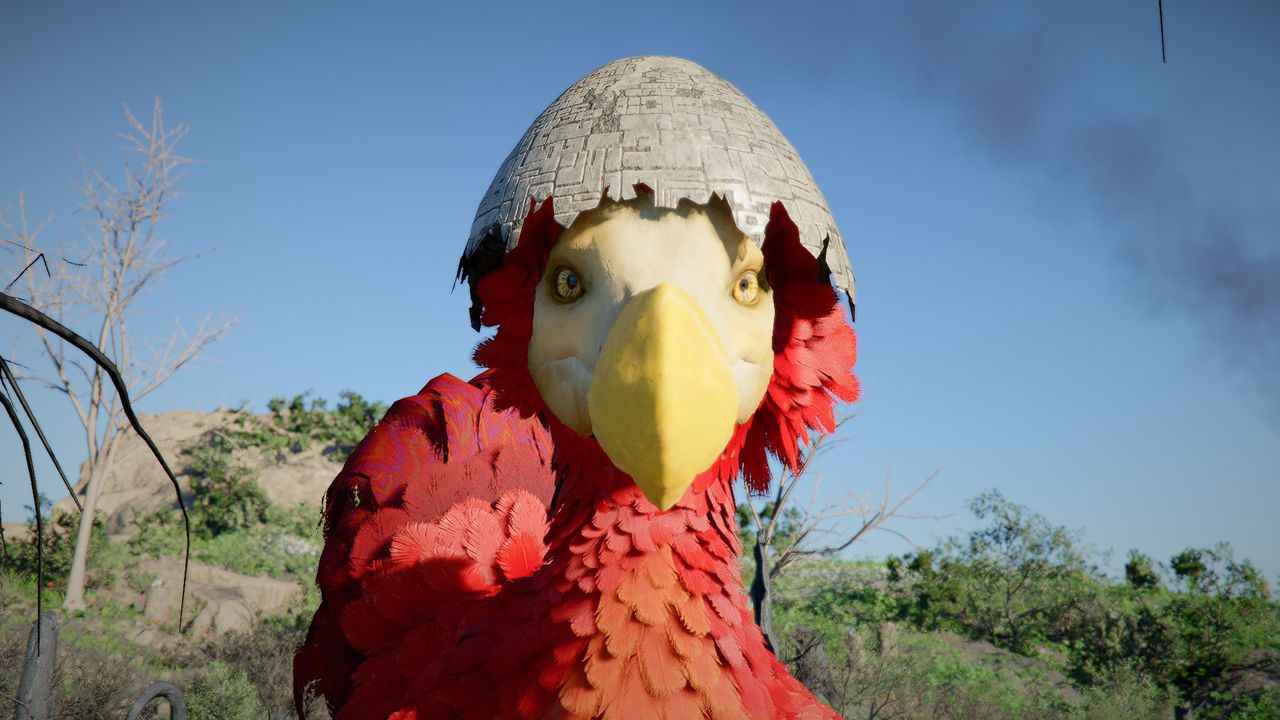
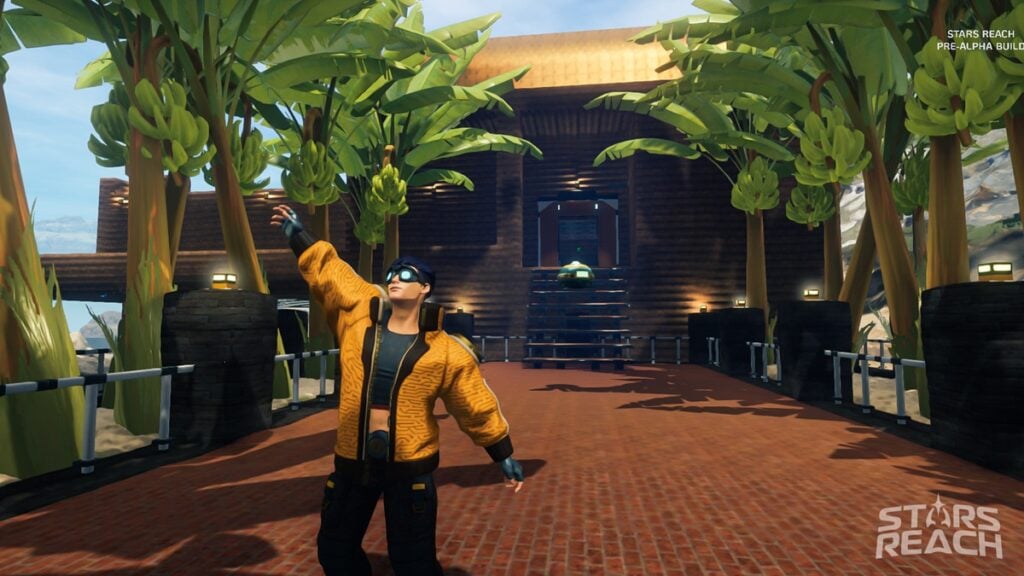 At home in Stars Reach. Source: Playable Worlds
Playable Worlds will be collecting feedback from players and shaping the experience alongside the community. At the Early Access launch, players can explore multiple planets, craft equipment, engage in combat, and trade with others throughout the galaxy. Future updates will include a galaxy-spanning hive mind capable of consuming entire planets. PvP and factions will arrive in 1.0 at a later date.
Stars Reach will arrive to Early Access on PC via Steam with three paid tiers: the Firstlight Pack ($30), the Voyager Pack ($50), and the Cosmonaut Pack ($80), each offering increasing rewards and cosmetics.
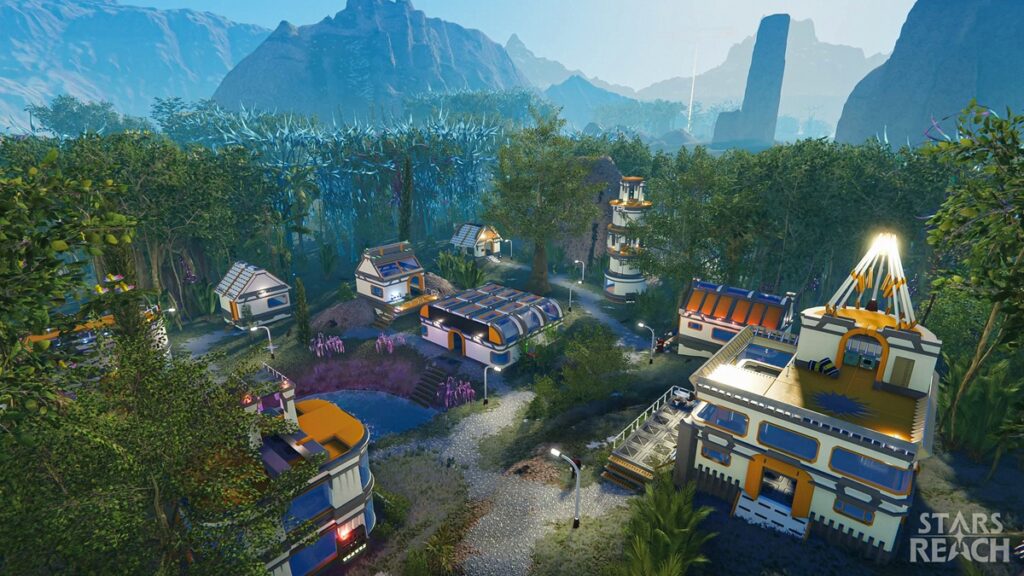 A town in Stars Reach. Source: Playable Worlds I played the game with Raph Koster at the recent Summer Game Fest in June. He gave me a guided tour and I was able to play alongside him in the same world.
Armed with a PC with a mouse and keyboard, we started out at the same place where all players do at the outset. It’s a space station with a Hall of Heroes — a place called Haven. It was a colorful but not too cute sci-fi setting. It was a detailed world, but not one that seemed massive like World of Warcraft. It was more a smaller space, but with enough room to explore.
Koster showed me you can switch your camera view, whether in MMO style where the camera is loose and you use the right mouse button to drag around the camera. There’s a tutorial, but we didn’t bother with that as Koster was driving.
With Stars Reach, there are a ton of worlds that you can explore in a single giant galaxy. In the space station, you’re part of the Transplanetary League and you get to choose where to go. First, he took me into space on a spaceship. The galaxy various space zones and planets that are all connected via wormholes so you can travel between them fast. What’s unique is that the environments can be stable and familiar, like your own home.
Or they can be generated on the fly. We made our way to an asteroid and jumped around on it in low gravity. I floated across the space and crash landed on the asteroid. Koster explained that everything was simulated. In space, they simulate low gravity. You can dig tunnels and mine for resources. Then you can use those for crafting.
 Raph Koster is cofounder of Playable Worlds. “All of that ties into the gameplay economy because every world has something different to offer,” Koster said.
You can fly spaceships around and engage in space combat. We headed down to the surface to see a generated landscape. We played in a world that was set up for the demo, so we could carve it up without messing up anything that belonged to real players testing the game.
“Every tree you see grew here from a sapling. Every plant is dynamic. Every cubic meter of the world can be affected and changed. So everything is modifiable. Everything is simulated. We don’t think there’s another game on the planet that does that,” Koster said.
On the right edge of the screen, there was a toolbar and I pressed the No. 2, swapping so that I was holding my gun. You can swap to a tool that helps you dig. You can play with a chronophaser that erodes the ground or melts it into lava. So I started creating lava pits.
I was able to aim the chronophaser at the ground and watch it deform in real time into a liquid. Koster warned that if I went into the newly created pit, I would catch fire. We pulled out a pistol and aimed at a tree. We also killed some bunnies. When you hit them, they drop health powerups. It’s arcade-like action.
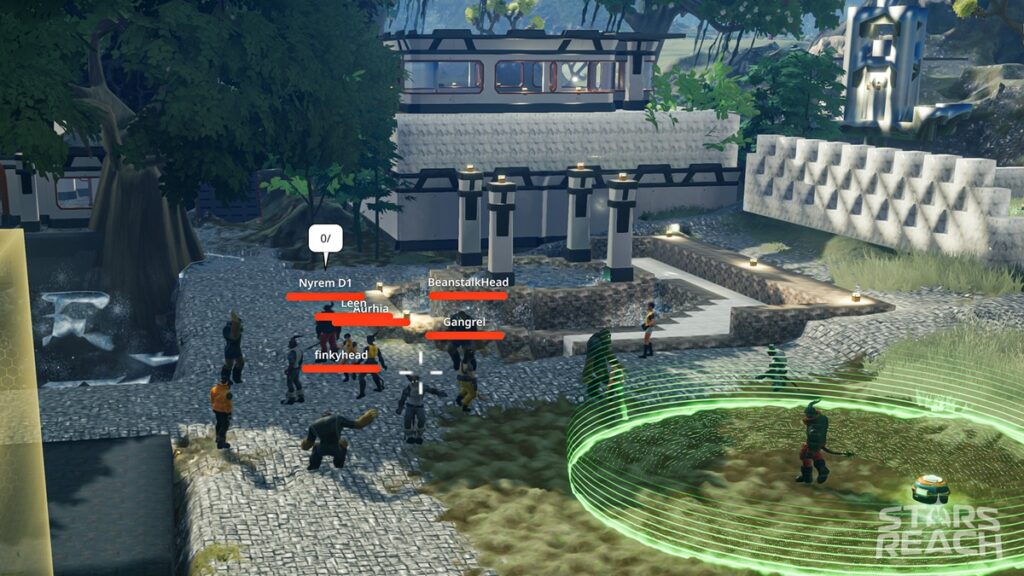 A town in Stars Reach. About 200 players can inhabit a planet. Source: Playable Worlds If you hold down the trigger button, it will charge up over time, and will slow down your movement, and then it will let loose a bigger bolt for higher damage. You don’t need to hold steady, so you can just do it while you’re moving, even to get the charge shot.
You can learn more and more moves, and put them in those slots on your keyboard. So it’s really up to you how you build and how you set up your loadout. All loot is shared, so if somebody else helped you with that fight, you all get the benefit together.
So the lava and ground are all part of the same terrain system, and all of it is modifiable. Materials can evaporate into gas, heat up water, and turn it into steam that floats away. This stuff is not hard-coded to do that. Rather, it’s part of a simulated world with proper physics that follow the cause-and-effect of the world.
If you change the landscape with your digging tool, all of these changes are permanent and persistent for everybody, Koster said. They don’t reset like No Man’s Sky. It is all 100% persistent.
With your chronophaser, you can actually accelerate time on the rock or rewind time on it, so you can turn it into dirt. And then there’s even a dozen kinds of dirt with different pH, and that affects what kinds of plants can grow in it.
“So it allows the player to truly modify their environment in all these ways that play into gameplay,” Koster said. “Farmers, for example, may need specific kinds of dirt for different kinds of crops.”
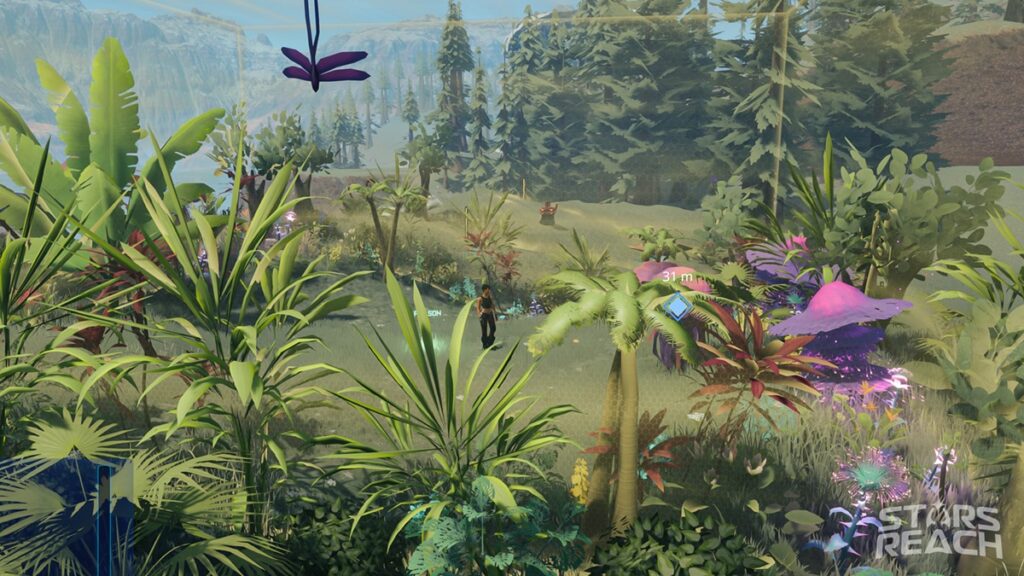 A girl amid poisons. Source: Playable Worlds We were interrupted by creatures who had fire attacks and were tougher than the bunnies. I had to get out my shield and use charged shots while I dodged their attacks. You can do a dodge roll and evade an incoming attack. The creatures’ stray shots caught the trees on fire.
Players are able to grow trees, stunt trees, prune them, or plant them to bring them back. You can use a trailblazer tool to cool down a fire and put it out. Everything reacts to what you do in the environment. Every planet is simulated to this degree.
All the minerals can be mined out. You can even drive creatures extinct, Koster said.
We popped open a camp since we were in a safe area. We obtained a grav mesh from our team demo guy Rod and he traded it to me. It appeared in my inventory and I equipped it. Then I could fly. I tapped a key once to jump, then tapped a second time to fly. It eventually runs out of battery power. But Koster figured this would be safer to head down the cliff because if you trip and fall, you get fall damage. I landed with a gentle landing.
“All of this simulation isn’t just for funsies, right? It all affects gameplay. I mentioned the connections to farming. You saw the connections to combat, the connections to crafting, all of that. But it does lead to lots of random fun kinds of things,” Koster said.
The beam we used to cool things down can also be used to freeze water. So we froze a stream. The physics apples to water. If water meets dirt, it turns into mud and you can get stuck in it. In winter, a lake will freeze over and plants will lose their leaves. So there are seasons.
Other players have actually built ski jumps and ice rinks for fun.
“The things in the world act the way that you would expect, and that then opens up all of the subsidiary gameplay that you would expect from from that because it cascades into the crafting,” Koster said.
You can climb hills or rocks or trees. We went to the water at the edge of a cliff. Then we drilled a hole in the cliff and made a waterfall. You could flood someone else’s place, but you can’t destroy it if players have claimed ownership of a given piece of land.
The game uses a hybrid model of private servers and open public places. Players can take ownership of pieces of the game and treat them like private servers, where no one else can come in unless they allow it. They can change the PvP rules in that place. And you can decide who has permission to dig. In that way, you can build your own little haven.
If a place becomes more like a town, the players can actually elect a government and set laws for that planet and run a private server the way that they want. But it is inside the larger game, so they can still explore the whole galaxy and trade with other planets. When you step across a wormhole border, you move from the private place to the public place.
Going back to the waterfall, Koster showed what the water was doing. It was eroding the ground, turning the gras into mud. That would soon become a lake bed, and Koster said you could dig a ditch and irrigate a desert and then see things bloom.
“If players wanted to take this planet, chop down every tree, kill every monster, and turn it into Trantor or Coruscant, they could do that,” he said. “You can literally pave over the planet and build a shopping mall if you want. And it is all persistent. It all saves. All of this has changed permanently.”
He added, “Players leave their mark. We generate new planets on the fly, and that allows us to throw away planets too. If people don’t go to them, the wormholes stay open because they’re being transited regularly. If people are not going through them, the planets, the wormhole may be lost.”
When we went into some of the buildings, you could stop at a station and view the skill system. You can click on a button to learn skills. There are over 1,000 such skills organized into a bunch of professions. If you pursue a profession, you can learn all of the skills.
“You earn XP in the professions separately. You do not need to be a combatant if you don’t want to be. If you want to just be a botanist and collect plants, you can do that. You can learn all of these skills,” Koster said. “We don’t lock you into only learning some of them. However, you have to keep them in practice, so you can only have so many of them in practice at a time, and that way, if players want to change their builds, they can rearrange it.”
It’s like playing a game of Magic: The Gathering. You can buy all the cards, but you can only have so many in your deck while you’re playing, he said.
You can become a medical expert or be a weapons expert. You can also earn leadership points if you do something like rescue a person in combat. That leadership skill unlocks party systems, guild leadership, the politician skill track and so on.
The game encourages pro-social play and lets people help one another in different ways even if they are pursuing a selfish strategy. It’s a full role-playing game in this respect with an extensive progression system. You can do things like study the composition of the planet and learn about its minerals or creatures. Some unique resources may not last forever.
The worlds are more than just sandboxes, Koster said.
“Dynamic events can occur on planets. A meteor could land here and blow 100-meter crater in the ground and leave some diamonds behind, but also leave a serious scar,” Koster said. “Other kinds of events can happen, like finding abandoned alien laboratories or crashed spaceships or things like that.”
There’s lore where ancient aliens created something called a cornucopia, a biological hive mind. The mother plant in this case can breed more spores and infest the planet. That may give you a mission to do, like saving the planet or escaping from it.
Then we ran into some aliens and they started ganging up on us and killing us. We took some of them out, but Koster took us out and healed Rod and we saw one more thing. He said every player will start with a gun and a single flying saucer that you can use to get around in space. You can engage in space combat, space mining and more.
“We really see it as a reinvention of MMOs. This is gameplay that I don’t think you can get anywhere else,” Koster said.
The post Playable Worlds launches Stars Reach on Steam early access in August | hands-on preview and interview appeared first on GamesBeat.
Stars Reach is a sandbox massively multiplayer online role-playing game (MMORPG) where players leave a lasting mark on a galaxy. Powered by cloud-native technology, every asteroid, planet, and settlement exists in a persistent world that evolves through player actions. I got to play a version of the game in early June during the Summer Game Fest.
Reshape mountains, reroute rivers, burn forests, and permanently transform ecosystems. With a classless, open-ended progression system, players can become an explorer, journalist, crafter, politician, warrior — or multiple at once. Build influential governments, defend homesteads from hostile threats, craft powerful equipment, battle dangerous creatures, and define civilizations for years to come.
Early Access brings players into the experience to help shape what it becomes. Founded by industry veterans Raph Koster and Eric Goldberg, Playable Worlds has continuously refined Stars Reach ahead of its Early Access debut. Recent updates introduced an expanded character creator, combat improvements, and more dynamic wildlife migration that grows increasingly dangerous if left unchecked.
In an interview with GamesBeat in June, Koster said the game has been in the works since 2018 and it is the game he always dreamed of making.
At home in Stars Reach. Source: Playable Worlds Playable Worlds will be collecting feedback from players and shaping the experience alongside the community. At the Early Access launch, players can explore multiple planets, craft equipment, engage in combat, and trade with others throughout the galaxy. Future updates will include a galaxy-spanning hive mind capable of consuming entire planets. PvP and factions will arrive in 1.0 at a later date.
Stars Reach will arrive to Early Access on PC via Steam with three paid tiers: the Firstlight Pack ($30), the Voyager Pack ($50), and the Cosmonaut Pack ($80), each offering increasing rewards and cosmetics.
Hands-on preview
A town in Stars Reach. Source: Playable Worlds I played the game with Raph Koster at the recent Summer Game Fest in June. He gave me a guided tour and I was able to play alongside him in the same world. Armed with a PC with a mouse and keyboard, we started out at the same place where all players do at the outset. It’s a space station with a Hall of Heroes — a place called Haven. It was a colorful but not too cute sci-fi setting. It was a detailed world, but not one that seemed massive like World of Warcraft. It was more a smaller space, but with enough room to explore.
Koster showed me you can switch your camera view, whether in MMO style where the camera is loose and you use the right mouse button to drag around the camera. There’s a tutorial, but we didn’t bother with that as Koster was driving.
With Stars Reach, there are a ton of worlds that you can explore in a single giant galaxy. In the space station, you’re part of the Transplanetary League and you get to choose where to go. First, he took me into space on a spaceship. The galaxy various space zones and planets that are all connected via wormholes so you can travel between them fast. What’s unique is that the environments can be stable and familiar, like your own home.
Or they can be generated on the fly. We made our way to an asteroid and jumped around on it in low gravity. I floated across the space and crash landed on the asteroid. Koster explained that everything was simulated. In space, they simulate low gravity. You can dig tunnels and mine for resources. Then you can use those for crafting.
Raph Koster is cofounder of Playable Worlds. “All of that ties into the gameplay economy because every world has something different to offer,” Koster said.You can fly spaceships around and engage in space combat. We headed down to the surface to see a generated landscape. We played in a world that was set up for the demo, so we could carve it up without messing up anything that belonged to real players testing the game.
“Every tree you see grew here from a sapling. Every plant is dynamic. Every cubic meter of the world can be affected and changed. So everything is modifiable. Everything is simulated. We don’t think there’s another game on the planet that does that,” Koster said.
On the right edge of the screen, there was a toolbar and I pressed the No. 2, swapping so that I was holding my gun. You can swap to a tool that helps you dig. You can play with a chronophaser that erodes the ground or melts it into lava. So I started creating lava pits.
I was able to aim the chronophaser at the ground and watch it deform in real time into a liquid. Koster warned that if I went into the newly created pit, I would catch fire. We pulled out a pistol and aimed at a tree. We also killed some bunnies. When you hit them, they drop health powerups. It’s arcade-like action.
A town in Stars Reach. About 200 players can inhabit a planet. Source: Playable Worlds If you hold down the trigger button, it will charge up over time, and will slow down your movement, and then it will let loose a bigger bolt for higher damage. You don’t need to hold steady, so you can just do it while you’re moving, even to get the charge shot.You can learn more and more moves, and put them in those slots on your keyboard. So it’s really up to you how you build and how you set up your loadout. All loot is shared, so if somebody else helped you with that fight, you all get the benefit together.
So the lava and ground are all part of the same terrain system, and all of it is modifiable. Materials can evaporate into gas, heat up water, and turn it into steam that floats away. This stuff is not hard-coded to do that. Rather, it’s part of a simulated world with proper physics that follow the cause-and-effect of the world.
If you change the landscape with your digging tool, all of these changes are permanent and persistent for everybody, Koster said. They don’t reset like No Man’s Sky. It is all 100% persistent.
With your chronophaser, you can actually accelerate time on the rock or rewind time on it, so you can turn it into dirt. And then there’s even a dozen kinds of dirt with different pH, and that affects what kinds of plants can grow in it.
“So it allows the player to truly modify their environment in all these ways that play into gameplay,” Koster said. “Farmers, for example, may need specific kinds of dirt for different kinds of crops.”
A girl amid poisons. Source: Playable Worlds We were interrupted by creatures who had fire attacks and were tougher than the bunnies. I had to get out my shield and use charged shots while I dodged their attacks. You can do a dodge roll and evade an incoming attack. The creatures’ stray shots caught the trees on fire.Players are able to grow trees, stunt trees, prune them, or plant them to bring them back. You can use a trailblazer tool to cool down a fire and put it out. Everything reacts to what you do in the environment. Every planet is simulated to this degree.
All the minerals can be mined out. You can even drive creatures extinct, Koster said.
We popped open a camp since we were in a safe area. We obtained a grav mesh from our team demo guy Rod and he traded it to me. It appeared in my inventory and I equipped it. Then I could fly. I tapped a key once to jump, then tapped a second time to fly. It eventually runs out of battery power. But Koster figured this would be safer to head down the cliff because if you trip and fall, you get fall damage. I landed with a gentle landing.
“All of this simulation isn’t just for funsies, right? It all affects gameplay. I mentioned the connections to farming. You saw the connections to combat, the connections to crafting, all of that. But it does lead to lots of random fun kinds of things,” Koster said.
The beam we used to cool things down can also be used to freeze water. So we froze a stream. The physics apples to water. If water meets dirt, it turns into mud and you can get stuck in it. In winter, a lake will freeze over and plants will lose their leaves. So there are seasons.
Other players have actually built ski jumps and ice rinks for fun.
“The things in the world act the way that you would expect, and that then opens up all of the subsidiary gameplay that you would expect from from that because it cascades into the crafting,” Koster said.
You can climb hills or rocks or trees. We went to the water at the edge of a cliff. Then we drilled a hole in the cliff and made a waterfall. You could flood someone else’s place, but you can’t destroy it if players have claimed ownership of a given piece of land.
The game uses a hybrid model of private servers and open public places. Players can take ownership of pieces of the game and treat them like private servers, where no one else can come in unless they allow it. They can change the PvP rules in that place. And you can decide who has permission to dig. In that way, you can build your own little haven.
If a place becomes more like a town, the players can actually elect a government and set laws for that planet and run a private server the way that they want. But it is inside the larger game, so they can still explore the whole galaxy and trade with other planets. When you step across a wormhole border, you move from the private place to the public place.
Going back to the waterfall, Koster showed what the water was doing. It was eroding the ground, turning the gras into mud. That would soon become a lake bed, and Koster said you could dig a ditch and irrigate a desert and then see things bloom.
“If players wanted to take this planet, chop down every tree, kill every monster, and turn it into Trantor or Coruscant, they could do that,” he said. “You can literally pave over the planet and build a shopping mall if you want. And it is all persistent. It all saves. All of this has changed permanently.”
He added, “Players leave their mark. We generate new planets on the fly, and that allows us to throw away planets too. If people don’t go to them, the wormholes stay open because they’re being transited regularly. If people are not going through them, the planets, the wormhole may be lost.”
When we went into some of the buildings, you could stop at a station and view the skill system. You can click on a button to learn skills. There are over 1,000 such skills organized into a bunch of professions. If you pursue a profession, you can learn all of the skills.
“You earn XP in the professions separately. You do not need to be a combatant if you don’t want to be. If you want to just be a botanist and collect plants, you can do that. You can learn all of these skills,” Koster said. “We don’t lock you into only learning some of them. However, you have to keep them in practice, so you can only have so many of them in practice at a time, and that way, if players want to change their builds, they can rearrange it.”
It’s like playing a game of Magic: The Gathering. You can buy all the cards, but you can only have so many in your deck while you’re playing, he said.
You can become a medical expert or be a weapons expert. You can also earn leadership points if you do something like rescue a person in combat. That leadership skill unlocks party systems, guild leadership, the politician skill track and so on.
The game encourages pro-social play and lets people help one another in different ways even if they are pursuing a selfish strategy. It’s a full role-playing game in this respect with an extensive progression system. You can do things like study the composition of the planet and learn about its minerals or creatures. Some unique resources may not last forever.
The worlds are more than just sandboxes, Koster said.
“Dynamic events can occur on planets. A meteor could land here and blow 100-meter crater in the ground and leave some diamonds behind, but also leave a serious scar,” Koster said. “Other kinds of events can happen, like finding abandoned alien laboratories or crashed spaceships or things like that.”
There’s lore where ancient aliens created something called a cornucopia, a biological hive mind. The mother plant in this case can breed more spores and infest the planet. That may give you a mission to do, like saving the planet or escaping from it.
Then we ran into some aliens and they started ganging up on us and killing us. We took some of them out, but Koster took us out and healed Rod and we saw one more thing. He said every player will start with a gun and a single flying saucer that you can use to get around in space. You can engage in space combat, space mining and more.
“We really see it as a reinvention of MMOs. This is gameplay that I don’t think you can get anywhere else,” Koster said.
The post Playable Worlds launches Stars Reach on Steam early access in August | hands-on preview and interview appeared first on GamesBeat.
What's Your Reaction?








XINKER - Business and Income Tips
Explore XINKER, the ultimate platform for mastering business strategies, discovering passive income opportunities, and learning success principles. Join a community of thinkers dedicated to achieving financial freedom and entrepreneurial excellence.
![[Business Talk] Chagee: Opening 3,500 stores in 6 years](https://xinker.org/uploads/images/202410/image_140x98_671afce94bf91.webp)