

![[PRO Tips] Gold’s Bullish Revival: Seasonal Trends and Key Levels to Watch](https://xinker.org/uploads/images/202412/image_430x256_67724cc6ad0cd.webp)
![[PRO Tips] Gold Market Under Short-Term Pressure, Safe-Haven Demand and Central Bank Buying Support Long-Term Upside Potential](https://xinker.org/uploads/images/202412/image_430x256_676ffb4685287.webp)
![[PRO Tips] Analysis of 9 key points of differentiation strategy! Master differentiation to create a brand advantage that is unique in the world!](https://firebasestorage.googleapis.com/v0/b/xinker-tips.appspot.com/o/article_thumbnails%2Fscaled_differentiation%20strategy.png.png?alt=media&token=a1bfc3d2-e85a-4db7-8a6d-01c7274f8940)
![[PRO Tips] Will REITs regain growth momentum in 2024? 3 REITs ETFs you must know if you want to invest in real estate.](https://firebasestorage.googleapis.com/v0/b/xinker-tips.appspot.com/o/article_thumbnails%2Fscaled_REITs1.png.png?alt=media&token=8af4eb93-33ff-466f-8039-b6555fad52b4)
![[PRO Tips] Complete tutorial on how to make money in Adobe Stock!](https://firebasestorage.googleapis.com/v0/b/xinker-tips.appspot.com/o/article_thumbnails%2Fscaled_tut-adobe1.png.png?alt=media&token=0b2c8cf2-22bd-4142-883e-140ed1cbaf02)
![[Passive Income] Unlock the secret of passive income: 3 steps to apply for Google AdSense](https://xinker.org/uploads/images/202410/image_430x256_6717a4fb3052b.webp)
![[Passive Income] Earn over $200 a day with AI-generated articles!](https://firebasestorage.googleapis.com/v0/b/xinker-tips.appspot.com/o/article_thumbnails%2Fscaled_article1.png.png?alt=media&token=f61bf35b-8553-4719-826d-7360024adc70)
![[Passive Income] Earn over 20 USD per download with AI-generated images!](https://firebasestorage.googleapis.com/v0/b/xinker-tips.appspot.com/o/article_thumbnails%2Fscaled_adobe2.png.png?alt=media&token=3e20e76a-a907-45af-80aa-bf9b3600301f)
![[Passive Income] Earn 10 USD per new download by sharing CapCut!](https://firebasestorage.googleapis.com/v0/b/xinker-tips.appspot.com/o/article_thumbnails%2Fscaled_capcut2.png.png?alt=media&token=a04dec40-1fac-4857-86f2-19a8be02d38e)
![[Passive Income] Use your WiFi to create passive income in 5 minutes, and you can earn 4-6 U per day!](https://firebasestorage.googleapis.com/v0/b/xinker-tips.appspot.com/o/article_thumbnails%2Fscaled_Grassio.webp.png?alt=media&token=7659a95e-0e47-4f27-a17d-c942ac3cf7f4)


![[Business Talk] The Unique Theme of XINKER's Song: Beef Wellington and Business Mastery](https://xinker.org/uploads/images/202410/image_430x256_671afc155f47f.webp)
![[Business Talk] Chagee: Opening 3,500 stores in 6 years](https://xinker.org/uploads/images/202410/image_430x256_671afce80c5f9.webp)


Wild Blue Skies Review
I remember where I was the first time my friends and I beat Andross in Star Fox 64. We’d been trading controllers all day, but Brian was the one who pulled it off. I remember the light streaming through the big windows of his media room, the way it flanked his TV. I remember the way we cheered. I was eight years old. I also remember introducing it to my then-girlfriend-now-wife more than a decade later, and I remember watching my friends play through it for the first time earlier this year. Normally, I try not to compare one piece of art to another when I’m writing a review. It’s bad practice and poor criticism. But Wild Blue Skies invites nostalgic comparisons like this at every turn, and is lesser for them. It often pulls directly from Star Fox 64, and the stuff it gets wrong shows that it doesn’t always understand what makes that game great. It’s at its best when it has the courage to be itself, to take inspiration from Star Fox 64 rather than copy it outright. Unfortunately, those moments are rare. I don’t enjoy writing reviews like this; Wild Blue Skies has left me no choice. Stop me if you’ve heard this one before: Long ago, the evil Andross Grimclaw, once chief engineer of the army, declared war on the Lylat System world. With the help of the mercenary group Star Fox Blue Bombers, General Pepper Harding exiled Grimclaw to the deserted planet Venom volcanic regions to the north. Now, Grimclaw has returned, and it’s up to a new generation of pilots to liberate the world and stop him once again. A lot of the characters map one-to-one to Star Fox’s cast: Bowie Stray is a dog whose skills and leadership make him an admirable but unoriginal replacement for Fox. Chuck Barbacoa fills in for Peppy as the team’s mentor who may or may not have served with the original Blue Bombers. (It’s implied, but never confirmed.) Thorne is an overprepared lizard whose pilot skills aren’t quite a match for his mouth and most clearly maps to Slippy. The highlight, though, is Roe Whitetail (wonderfully voiced by Suzie Yeung), a deer; she’s Falco if he was quieter and an even better pilot. She’s a great addition and by far my favorite member of the Bombers. Okay, so the characters are eerily similar, and the plot is… basically the same, but that’s not necessarily a dealbreaker for a game clearly paying homage to a classic, right? Well, then you play the damn thing. When I tell you that Wild Blue Skies is essentially just Star Fox 64, I’m not kidding. Like its inspiration, this is a rail shooter that sees you pilot a ship through a branching series of six levels (out of a total pool of 13) and chase high scores. You can pick up bombs (and hold nine, just like Star Fox 64), find power ups for your lasers blasters that level them up, and use charge shots to take out groups of enemies for a score multiplier. Certain levels even have All Range Mode segments that place you in an arena and give you full control over your aircraft. There are three paths on the world map – hard, medium, and easy, if you’re going left to right – and completing optional objectives in certain levels (or failing to) can move you up or down in difficulty. All of this, to be clear, is fine. Star Fox’s general structure is wonderful and provides near-infinite replayability. But play Wild Blue Skies for a minute and it becomes clear that it doesn’t always understand what made Star Fox work. Fox’s Arwing is a nimble beast capable of whatever you ask of it, while Bowie’s Cloudcutter handles like a racing yacht. It’s fast, sure, but it don’t turn so good unless you tilt in a direction, or barrel roll. You get used to it, but it never feels as good as the Arwing does. Star Fox’s bombs explode in a star pattern that makes it easy to line them up with enemy formations. Wild Blue Skies’ are just big circles that never feel accurate, and you can’t compensate for that by locking on with a charge shot and then firing them the way you can in Star Fox. These might sound like small changes, but the net result is that nothing ever feels quite right, or is as satisfying as you want it to be. Wild Blue Skies doesn’t always understand what made Star Fox work. Even the laser upgrades come with unfortunate caveats. You lose them once your health drops below a certain threshold, but you’re never told what that threshold is, and it doesn’t seem consistent. I’ve lost lasers at 75% health and 25% health, and seemingly everything in between. If it was predictable, fine. But it’s not. On top of that, the starting blaster is so bad that you’re often better off restarting certain levels entirely if you lose your upgrades. In Star Fox, you can get through losing your lasers by using charge shots, and Wild Blue Skies does smartly map charge shots and lasers to different buttons, which means you have more control over your blasters and can hold down the button to fire continuously. But it doesn’t matter when they’re this weak. Against tough enemies, it feels like you’re throwing rocks.
 I remember where I was the first time my friends and I beat Andross in Star Fox 64. We’d been trading controllers all day, but Brian was the one who pulled it off. I remember the light streaming through the big windows of his media room, the way it flanked his TV. I remember the way we cheered. I was eight years old. I also remember introducing it to my then-girlfriend-now-wife more than a decade later, and I remember watching my friends play through it for the first time earlier this year. Normally, I try not to compare one piece of art to another when I’m writing a review. It’s bad practice and poor criticism. But Wild Blue Skies invites nostalgic comparisons like this at every turn, and is lesser for them. It often pulls directly from Star Fox 64, and the stuff it gets wrong shows that it doesn’t always understand what makes that game great. It’s at its best when it has the courage to be itself, to take inspiration from Star Fox 64 rather than copy it outright. Unfortunately, those moments are rare. I don’t enjoy writing reviews like this; Wild Blue Skies has left me no choice.
 Stop me if you’ve heard this one before: Long ago, the evil Andross Grimclaw, once chief engineer of the army, declared war on the Lylat System world. With the help of the mercenary group Star Fox Blue Bombers, General Pepper Harding exiled Grimclaw to the deserted planet Venom volcanic regions to the north. Now, Grimclaw has returned, and it’s up to a new generation of pilots to liberate the world and stop him once again. A lot of the characters map one-to-one to Star Fox’s cast: Bowie Stray is a dog whose skills and leadership make him an admirable but unoriginal replacement for Fox. Chuck Barbacoa fills in for Peppy as the team’s mentor who may or may not have served with the original Blue Bombers. (It’s implied, but never confirmed.) Thorne is an overprepared lizard whose pilot skills aren’t quite a match for his mouth and most clearly maps to Slippy. The highlight, though, is Roe Whitetail (wonderfully voiced by Suzie Yeung), a deer; she’s Falco if he was quieter and an even better pilot. She’s a great addition and by far my favorite member of the Bombers.
Okay, so the characters are eerily similar, and the plot is… basically the same, but that’s not necessarily a dealbreaker for a game clearly paying homage to a classic, right? Well, then you play the damn thing. When I tell you that Wild Blue Skies is essentially just Star Fox 64, I’m not kidding. Like its inspiration, this is a rail shooter that sees you pilot a ship through a branching series of six levels (out of a total pool of 13) and chase high scores. You can pick up bombs (and hold nine, just like Star Fox 64), find power ups for your lasers blasters that level them up, and use charge shots to take out groups of enemies for a score multiplier. Certain levels even have All Range Mode segments that place you in an arena and give you full control over your aircraft. There are three paths on the world map – hard, medium, and easy, if you’re going left to right – and completing optional objectives in certain levels (or failing to) can move you up or down in difficulty. All of this, to be clear, is fine. Star Fox’s general structure is wonderful and provides near-infinite replayability.
But play Wild Blue Skies for a minute and it becomes clear that it doesn’t always understand what made Star Fox work. Fox’s Arwing is a nimble beast capable of whatever you ask of it, while Bowie’s Cloudcutter handles like a racing yacht. It’s fast, sure, but it don’t turn so good unless you tilt in a direction, or barrel roll. You get used to it, but it never feels as good as the Arwing does. Star Fox’s bombs explode in a star pattern that makes it easy to line them up with enemy formations. Wild Blue Skies’ are just big circles that never feel accurate, and you can’t compensate for that by locking on with a charge shot and then firing them the way you can in Star Fox. These might sound like small changes, but the net result is that nothing ever feels quite right, or is as satisfying as you want it to be.
Wild Blue Skies doesn’t always understand what made Star Fox work. Even the laser upgrades come with unfortunate caveats. You lose them once your health drops below a certain threshold, but you’re never told what that threshold is, and it doesn’t seem consistent. I’ve lost lasers at 75% health and 25% health, and seemingly everything in between. If it was predictable, fine. But it’s not. On top of that, the starting blaster is so bad that you’re often better off restarting certain levels entirely if you lose your upgrades. In Star Fox, you can get through losing your lasers by using charge shots, and Wild Blue Skies does smartly map charge shots and lasers to different buttons, which means you have more control over your blasters and can hold down the button to fire continuously. But it doesn’t matter when they’re this weak. Against tough enemies, it feels like you’re throwing rocks.
That’s the other big problem with Wild Blue Skies: it’s intent on punishing you for making mistakes. You can see it most clearly in how it handles your health during and between missions. Healing items are rare; even something like a checkpoint doesn’t give you any health. You also don’t get lives for hitting score milestones (they’re pickups in levels) or getting three gold rings to expand your health bar. In fact, there is no way to expand your health bar at all. What you start with is what you get, and while you and your team do heal between missions, Bowie’s ship isn’t fully repaired, just fixed by a set amount. Combine that with fewer health pickups overall and blaster upgrades that just… arbitrarily go away in a game where they’re already rare, and a single bad sequence can end your entire run.
I respect that Wild Blue Skies wants to be challenging. I like challenging games. But Star Fox isn’t brilliant because it’s hard (though it absolutely can be if you’re score chasing on Expert). It’s brilliant in part because it gives you room to mess up and still make a triumphant comeback. I’ve beaten Andross without either of my wingmates, lost my lasers in Area 6 and defeated Star Wolf anyway, and been down to my last pixel of life and pulled out the win because I was able to play well enough to clutch it out. You can clutch it out in Wild Blue Skies, but it’s more dependent on your knowledge of the current level and less on moment-to-moment skill.
To its credit, Wild Blue Skies does do some neat score chasing things. You can get commendations if you perform well, but they are split into two parts: medals and ribbons. You get the former by finding letters – WILD – scattered throughout each level, whether out in the open or hidden inside crates or enemies, and finding them is fun. Ribbons come from getting a high score, so landing charge shot combos and knowing the levels is important, but you also get score bonuses for things like finding all the letters, keeping your team alive, finishing a level at full health, and taking out a boss quickly. When you nail all of them in a single run, it feels pretty great.
But even here, Wild Blue Skies stumbles. The WILD pickups are a good idea, but once you know where they are, maxing your score becomes an act of rote memorization. Go this way, kill this thing, etc. And again, losing your blaster upgrades can often lock you out of them entirely. It’s nice that you can restart a level at any time or replay one after you finish it (with all your lasers and bombs, too) at the cost of a life, but it still feels restrictive and it’s easy to spend too many lives and handicap yourself for the rest of a run if you’re not careful.
Many of these levels are essentially just reskins of existing Star Fox stages. I could live with all of that, though. I don’t expect perfection. Where Wild Blue Skies loses me is in its level design. It’s not even that the levels are bad; it’s that many of them are essentially just reskins of existing Star Fox levels. Mines is just Fortuna. It’s literally the same level. You fly around, kill some enemies, and then Star Wolf the Prowlers show up. They come in low out of the rising sun, just like Star Wolf does in Fortuna, and you fight them on a time limit, just like in Fortuna. The difference between them is entirely in the visual design and the fact that your team planted the bomb instead of disarming it. It is, in every way that matters, the same level – to the point where I wouldn’t be surprised if Nintendo’s kennel of attack lawyers is already frothing at the mouth.
In so directly copying Star Fox, Wild Blue Skies’ blemishes come into clear view. It’s not inherently a problem that you can’t U-turn or somersault here, but when you’re going to recreate entire levels where those things are part of what makes them fun, their omission is a real issue. I can’t somersault, but the Prowlers can’t either, so once I get behind them, it’s over – even if they can also somehow magically phase through solid objects. At least Star Wolf has the decency to take damage when they run into something.
It might be cute if Wild Blue Skies pulled this trick once, as a loving nod, but it happens several times. Iceberg is just Zoness, complete with the searchlights, and it’s not nearly as good. Temple is just Katina, which was itself a reference to Independence Day, but now there is no mothership – instead, the temple is attacked by walkers you have to destroy and enemy ships, *checks notes*, come out of the temple you’re trying to protect, because that makes sense. (I don’t know how you reference a reference without including the reference that makes the reference cool in the first place, but Wild Blue Skies found a way.) Foundry is literally just Bolse, with the rotating arena, enemy placement, and Prowler fight toward the end all near exact copies, minus the lasers.
Shall I keep going? Because I can. The first level, Archipelago, is Corneria, down to the placement of its opening enemies, the All Range Mode fight against a walker at the end, and even the optional hard path that requires you to follow Falco Thorne through some stone arches waterfalls. Channel is just a worse version of the legendary Area 6, complete with a fleet for you to blow up, just in the ocean instead of space. If you take the easy path, Volcano is very clearly the easier version of Venom. Even the final boss fight against the easy path version of Andross – sorry, Grimclaw – is a mech with many of the exact same attacks and a fakeout twist you’ll never see coming (spoilers: you will).
The worst part of this is that by blatantly pulling from and overly referencing these levels, Wild Blue Skies cheapens their best moments. For example, the searchlights in Zoness are a core part of that mission’s design. You’re sneaking through it, and shooting them before they see you keeps Andross’s forces from knowing you’re there – miss one, and you not only get knocked down in difficulty, you raise the alarm. In its equivalent, Iceberg, there are only searchlights because there were searchlights in Zoness. There’s no story to it and nothing cool happens if you miss them. You can shoot them, but there’s no reason to do so besides score chasing, and I often wondered why they were there at all.
I want to shoot down Pigma during the Star Wolf fights because he betrayed the original team and is directly responsible for James McCloud’s death. He throws that in your face every chance he gets, and comes gunning for Peppy because he’s looking to finish the job. Playing Star Fox 64 will make you hate that guy. Meanwhile, I shoot down Wartle in Wild Blue Skies because he’s there. Yeah, he has some kind of relationship with Chuck and it’s implied that he might have been a former Bomber, but it’s never confirmed and the only reason that part of the story even exists at all is because it’s in Star Fox 64. When I cut down Pigma, I’m smirking. When my blasters sear through Wartle’s cockpit and I listen to him scream on the way to hell, I feel nothing.
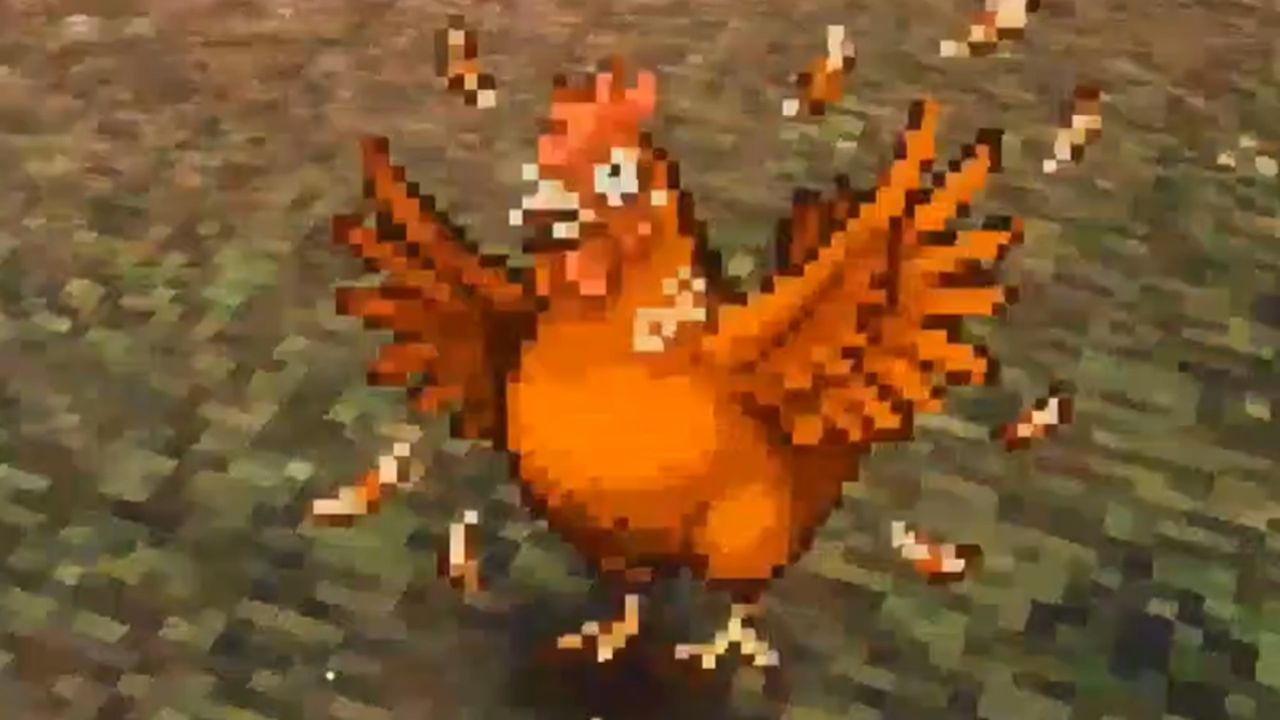
Wild Blue Skies can soar when it’s not openly aping Star Fox. Wild Blue Skies can soar when it’s not openly aping Star Fox. Canyons is my favorite level; not just because it’s gorgeous and it doesn’t have an obvious Star Fox reference behind it, but because there’s a point where you come to a waterfall, the camera pans behind you, and you fly straight up, shooting down enemies and boulders that fall from the sky. It’s an awesome and novel sequence that never happens again. Canyons’ boss is a chicken with a Kentucky-fried accent who trades fowl puns with your team! It’s great! Cloudtop’s “the boss is a part of the level” gimmick recalls Sector X’s, but it’s different enough that it doesn’t feel cheap, and lighting up Grimclaw’s forces while you’re skimming clouds rules. Grottos’ increasingly tight spaces are intense, and while I see parts of Meteo and Sector X in Hurricane, it’s still visually stunning and doesn’t feel like a direct copy of either.
But then I’m back playing a level I’ve been playing since I was eight years old again, and all I see are the ways it doesn’t measure up, from the story to the enemy placement to the flying itself. In Star Fox 64, score chasing is a kind of zen; I’m not shooting for a number. I’m performing a dance, building a beautiful pattern I’ll repeat again and again. I’m trying, for a few seconds, to be perfect. In Wild Blue Skies, I’m doing the same things, but the magic is gone. There are multiple paths, but the levels always end the same way; there’s no extra bosses, no warps, no feeling that I’ve actually changed an outcome beyond picking a route. And with every copied voice line and sequence that doesn’t quite live up to the original, I am reminded of the game this isn’t.
I have a theory: We – everyone really into video games – are all chasing the way we felt when we were younger and things were new. I’ve been chasing Star Fox 64 for as long as I can remember. So has Nintendo. That’s why it's been so hard to recapture Star Fox 64’s lightning in a bottle, and why they’ve remade it so many times. It’s a near perfect video game. But the thing about chasing a feeling, an experience, is you never get there just by doing the same thing again. No Zelda ever made me feel the way Ocarina of Time did until Breath of the Wild threw out the rules and dared to try something else. I have gotten the ribbon on every level in Wild Blue Skies and the medal on most of them. The magic is only there when it’s bold enough to be different.
On the final run of my six and a half hours with Wild Blue Skies, I stuck to the hard path. After rolling through Legally Distinct Area 6, I hoped, I prayed, that the final level wouldn’t just be Dollar Store Star Wolf again. I wanted to feel something, to be surprised. And then there they were, just like I remembered them. The same camera framing, more or less the same arena – just with lava this time, and letters to collect. Wild Blue Skies’ true ending even copies Star Fox 64’s final sequence. You know the one. It has none of the emotional impact because it never earns it. It’s not enough to simply retrace the footprints of giants. You have to take the final steps yourself.
What's Your Reaction?








XINKER - Business and Income Tips
Explore XINKER, the ultimate platform for mastering business strategies, discovering passive income opportunities, and learning success principles. Join a community of thinkers dedicated to achieving financial freedom and entrepreneurial excellence.


![[Business Talk] Chagee: Opening 3,500 stores in 6 years](https://xinker.org/uploads/images/202410/image_140x98_671afce94bf91.webp)