
![[PRO Tips] Gold’s Bullish Revival: Seasonal Trends and Key Levels to Watch](https://xinker.org/uploads/images/202412/image_430x256_67724cc6ad0cd.webp)
![[PRO Tips] Gold Market Under Short-Term Pressure, Safe-Haven Demand and Central Bank Buying Support Long-Term Upside Potential](https://xinker.org/uploads/images/202412/image_430x256_676ffb4685287.webp)
![[PRO Tips] Analysis of 9 key points of differentiation strategy! Master differentiation to create a brand advantage that is unique in the world!](https://firebasestorage.googleapis.com/v0/b/xinker-tips.appspot.com/o/article_thumbnails%2Fscaled_differentiation%20strategy.png.png?alt=media&token=a1bfc3d2-e85a-4db7-8a6d-01c7274f8940)
![[PRO Tips] Will REITs regain growth momentum in 2024? 3 REITs ETFs you must know if you want to invest in real estate.](https://firebasestorage.googleapis.com/v0/b/xinker-tips.appspot.com/o/article_thumbnails%2Fscaled_REITs1.png.png?alt=media&token=8af4eb93-33ff-466f-8039-b6555fad52b4)
![[PRO Tips] Complete tutorial on how to make money in Adobe Stock!](https://firebasestorage.googleapis.com/v0/b/xinker-tips.appspot.com/o/article_thumbnails%2Fscaled_tut-adobe1.png.png?alt=media&token=0b2c8cf2-22bd-4142-883e-140ed1cbaf02)
![[Passive Income] Unlock the secret of passive income: 3 steps to apply for Google AdSense](https://xinker.org/uploads/images/202410/image_430x256_6717a4fb3052b.webp)
![[Passive Income] Earn over $200 a day with AI-generated articles!](https://firebasestorage.googleapis.com/v0/b/xinker-tips.appspot.com/o/article_thumbnails%2Fscaled_article1.png.png?alt=media&token=f61bf35b-8553-4719-826d-7360024adc70)
![[Passive Income] Earn over 20 USD per download with AI-generated images!](https://firebasestorage.googleapis.com/v0/b/xinker-tips.appspot.com/o/article_thumbnails%2Fscaled_adobe2.png.png?alt=media&token=3e20e76a-a907-45af-80aa-bf9b3600301f)
![[Passive Income] Earn 10 USD per new download by sharing CapCut!](https://firebasestorage.googleapis.com/v0/b/xinker-tips.appspot.com/o/article_thumbnails%2Fscaled_capcut2.png.png?alt=media&token=a04dec40-1fac-4857-86f2-19a8be02d38e)
![[Passive Income] Use your WiFi to create passive income in 5 minutes, and you can earn 4-6 U per day!](https://firebasestorage.googleapis.com/v0/b/xinker-tips.appspot.com/o/article_thumbnails%2Fscaled_Grassio.webp.png?alt=media&token=7659a95e-0e47-4f27-a17d-c942ac3cf7f4)


![[Business Talk] The Unique Theme of XINKER's Song: Beef Wellington and Business Mastery](https://xinker.org/uploads/images/202410/image_430x256_671afc155f47f.webp)
![[Business Talk] Chagee: Opening 3,500 stores in 6 years](https://xinker.org/uploads/images/202410/image_430x256_671afce80c5f9.webp)

What an Xbox founder thinks of the new Xbox CEO | Seamus Blackley interview
Seamus Blackley was one of the renegades who got the Xbox started, before it became a corporate thing endorsed by Bill Gates and Steve Ballmer more than 26 years ago. He was a game developer who pushed the frontiers of gaming and wanted the U.S. to launch a console just as Sega gave up and Sony and Nintendo were locking up the market. Blackley and an unlikely group of Microsoft employees — including Otto Berkes, Ted Hase, Nate Brown, Ed Fries and Kevin Bachus — got the attention of Gates with a plan to use the PC to take away the throne of console leadership from Sony. There were competing teams within Microsoft, but Blackley and Fries gave the effort a lot of cred when it came to winning over game developers and gamers. Many of those founders, including Blackley and the four generations of leaders who came after him, have since left Microsoft, and now their baby has landed in the hands of Asha Sharma, an outsider to the game industry who has focused her career on AI. Microsoft announced Sharma will replace Xbox CEO Phil Spencer, and COO and president Sarah Bond is leaving the company. She will team up with No. 2 exec Matt Booty, a game veteran who will be the link to all of Microsoft’s game studios. Almost 25 years ago, the coalition of renegades grew until the full force of Microsoft, then the leading tech company in the world, got behind it. Xbox launched in 2001 and it proceeded to lose around $4 billion in its first generation. But with each generation Microsoft learned and changed and tried to innovate faster than its rivals. Back in the day, I interviewed all of the leaders and wrote a couple of books on the Xbox business. Xbox Live enabled Microsoft to get an edge in online gaming. The Xbox 360 was a breakout success — except for the Red Rings of Death that led to electrical failures. The Xbox team lost its footing with the Xbox One, which focused on entertainment over games, and then Phil Spencer, who started at Microsoft as an intern and was part of the original Xbox launch team, took over. Spencer ushered in the latest console, the Xbox Series X/S, and pushed for Microsoft’s Game Pass subscriptions, cloud gaming efforts and cross-platform play. He engineered the $68.7 billion acquisition of Activision Blizzard. Blackley went on to a career working for game devs at CAA and has spent a lot of time lately working on new technologies enabled by physics research. I caught up with Blackley to extract some wisdom about Microsoft’s journey in games, what he thinks Sharma should do, and where gaming can go next. Part of his message is hopeful, but Blackley sees a lot of peril on the road that Microsoft is following. And it makes him worry about the future of gaming. I can sympathize with the concern about authenticity. On the other hand, almost all the new gaming startups these days are getting funding because they have an AI angle. Why can’t Microsoft do that too? Here’s an edited transcript of our interview. Seamus Blackley in his CAA days. GamesBeat: Tell me what you mean about how things are going? Seamus Blackley: From Microsoft. Satya Nadella has made an incredible number of bets and invested an incredible amount of money and credibility in the transform model AI future. Xbox, like a lot of businesses that aren’t the core AI business, is being sunsetted. They don’t say that, but that’s what’s happening. I expect that the new CEO, Asha Sharma, her job is going to be as a palliative care doctor who slides Xbox gently into the night. It just seems really true. I imagine asking somebody if it made sense to put a major motion picture studio into the hands of somebody who didn’t like movies, or a major record label into the hands of somebody who’d never seen a live show. Why would you do that? Well, you only do that if you’re looking at the problem in a more abstract way. The natural consequence of the focus on AI is that AI abstracts every problem from the minds of the executives who believe in it. We’re abstracting the problem of games as well. There’s a core belief, and you can see it in what Satya said, that AI will subsume games like it will subsume everything. The job of all these people is to just gently usher all of these business units into the new world of AI. That’s what you’re seeing here. Whether or not you agree with it, whether you agree with AI having the potential to do that, whether AI will be successful, is a separate matter. But that’s what we’re seeing. That is in no way surprising. It would have been shocking if they had somebody in there in a meaningful role who was passionate about games, passionate about the creator-driven business of games, because it would be in direct conflict with everything else Microsoft is doing. Microsoft is a company that is now about enabling its customers by enabling AI to drive things. That’s at odds with the auteur model of any art, but specifically of games. Microsoft doesn’t have the problem that Apple does, or that Netflix does, where they have an

Seamus Blackley was one of the renegades who got the Xbox started, before it became a corporate thing endorsed by Bill Gates and Steve Ballmer more than 26 years ago.
He was a game developer who pushed the frontiers of gaming and wanted the U.S. to launch a console just as Sega gave up and Sony and Nintendo were locking up the market. Blackley and an unlikely group of Microsoft employees — including Otto Berkes, Ted Hase, Nate Brown, Ed Fries and Kevin Bachus — got the attention of Gates with a plan to use the PC to take away the throne of console leadership from Sony. There were competing teams within Microsoft, but Blackley and Fries gave the effort a lot of cred when it came to winning over game developers and gamers.
Many of those founders, including Blackley and the four generations of leaders who came after him, have since left Microsoft, and now their baby has landed in the hands of Asha Sharma, an outsider to the game industry who has focused her career on AI. Microsoft announced Sharma will replace Xbox CEO Phil Spencer, and COO and president Sarah Bond is leaving the company. She will team up with No. 2 exec Matt Booty, a game veteran who will be the link to all of Microsoft’s game studios.
Almost 25 years ago, the coalition of renegades grew until the full force of Microsoft, then the leading tech company in the world, got behind it. Xbox launched in 2001 and it proceeded to lose around $4 billion in its first generation. But with each generation Microsoft learned and changed and tried to innovate faster than its rivals. Back in the day, I interviewed all of the leaders and wrote a couple of books on the Xbox business.
Xbox Live enabled Microsoft to get an edge in online gaming. The Xbox 360 was a breakout success — except for the Red Rings of Death that led to electrical failures. The Xbox team lost its footing with the Xbox One, which focused on entertainment over games, and then Phil Spencer, who started at Microsoft as an intern and was part of the original Xbox launch team, took over.
Spencer ushered in the latest console, the Xbox Series X/S, and pushed for Microsoft’s Game Pass subscriptions, cloud gaming efforts and cross-platform play. He engineered the $68.7 billion acquisition of Activision Blizzard. Blackley went on to a career working for game devs at CAA and has spent a lot of time lately working on new technologies enabled by physics research.
I caught up with Blackley to extract some wisdom about Microsoft’s journey in games, what he thinks Sharma should do, and where gaming can go next. Part of his message is hopeful, but Blackley sees a lot of peril on the road that Microsoft is following. And it makes him worry about the future of gaming. I can sympathize with the concern about authenticity. On the other hand, almost all the new gaming startups these days are getting funding because they have an AI angle. Why can’t Microsoft do that too?
Here’s an edited transcript of our interview.
 Seamus Blackley in his CAA days. GamesBeat: Tell me what you mean about how things are going?
Seamus Blackley: From Microsoft. Satya Nadella has made an incredible number of bets and invested an incredible amount of money and credibility in the transform model AI future. Xbox, like a lot of businesses that aren’t the core AI business, is being sunsetted. They don’t say that, but that’s what’s happening. I expect that the new CEO, Asha Sharma, her job is going to be as a palliative care doctor who slides Xbox gently into the night.
It just seems really true. I imagine asking somebody if it made sense to put a major motion picture studio into the hands of somebody who didn’t like movies, or a major record label into the hands of somebody who’d never seen a live show. Why would you do that? Well, you only do that if you’re looking at the problem in a more abstract way. The natural consequence of the focus on AI is that AI abstracts every problem from the minds of the executives who believe in it. We’re abstracting the problem of games as well. There’s a core belief, and you can see it in what Satya said, that AI will subsume games like it will subsume everything.
The job of all these people is to just gently usher all of these business units into the new world of AI. That’s what you’re seeing here. Whether or not you agree with it, whether you agree with AI having the potential to do that, whether AI will be successful, is a separate matter. But that’s what we’re seeing. That is in no way surprising. It would have been shocking if they had somebody in there in a meaningful role who was passionate about games, passionate about the creator-driven business of games, because it would be in direct conflict with everything else Microsoft is doing. Microsoft is a company that is now about enabling its customers by enabling AI to drive things. That’s at odds with the auteur model of any art, but specifically of games. Microsoft doesn’t have the problem that Apple does, or that Netflix does, where they have an auteur-driven content model to manage. Games are the only place where they have a content business.
GamesBeat: Good to see you after all these years, by the way. It’s been a long time.
Blackley: You’re still plugging away.
GamesBeat: Yeah, still in the same business I was 30 years ago. It’s very strange, though. I wonder whether to take at face value, or take in some other way, the comment she made about, “We’re not going to do AI slop.” It’s still about great games and all that.
 original Xbox prototype Blackley: A, you want to believe that. B, that’s what every single person who’s been brought into games from other industries has said when they’re hired, in every press release, probably going back longer than you and I have been in this business. I know that John Riccitiello said that when he was brought in from sporting goods to EA. But that’s just what occurs to people to say when they bring in someone from an outside business into games.
Some people coming from outside businesses succeed in games and others just hit the wall, because it’s a content business and they don’t expect that. They’re not ready for that. They think it’s a compute business, or they think it’s a rendering business, or they think it’s a software business. Games is none of those things. It’s hilarious, but it’s none of those things. Her statement, or the statement that was written for her in the press release, saying that she was looking forward to seeing what makes games work or something like that, was hilarious. It reminded me of that meme. “Hello, fellow kids!” I’ll now figure out what’s interesting about games! Oh, boy. Wow. There may be more than you think.
People have succeeded at that before. Maybe she will.
GamesBeat: Do you think the console still happens? Do you think there’s a way they’ll continue this strategy following Sega’s strategy?
Blackley: I think the rules are different now. Again, it’s important to understand Microsoft and the context of the scale of the bet. It’s an unprecedented monetary and strategic bet that they’ve made in AI, in the history of business. That’s not the same as Sega deciding how to gracefully go out of business. This is a company that’s trying to recontextualize the way we think about technology in its entirety. They’ve decided that the lever point that’s going to do that is generative AI models. They’re looking to fit everything into a generative AI model.
It’s like the thing people say about having a hammer and everything is a nail. That’s incredibly true of Microsoft right now. Everything is a gen AI problem. Games, of course, are a gen AI problem. This is why I say this makes perfect sense. If you’re Satya, you have a hammer called gen AI and every single problem is a nail. Okay, so who do you put in charge of games? A games person? No, because in the world of Satya, everything is a gen AI problem, so you put a gen AI person in charge of games with a training model, with boot camps for her to train her like you train an AI model, to bring gen AI into a position to revolutionize games.
Whether or not you believe that’s possible, I think, is the question of whether or not you believe she can succeed in this. Whether or not you believe that’s possible is the deciding factor in whether or not you believe Xbox will continue to exist and what you believe Microsoft will do with Xbox. Our old way of thinking about things doesn’t work here anymore because the mindset of the guys making the decisions has completely changed. They are living in a world where generative AI is the solution to the problems, and so the application of generative AI is the only solution that they need to think about. Once they’ve done that, the generative AI will then take over the problem. Whether or not you believe in that, like I said, is the deciding factor in whether or not you believe this will be a successful strategy.
GamesBeat: I wonder whether it’s predictable to see where it shifts to. There was an interesting thing that Mark Zuckerberg said a while back when he was having success with his AI glasses. VR was not going the way he expected. He said that maybe the AI glasses would be the back door to the metaverse. Maybe he had been thinking about it the wrong way. Now there’s some chance that games still play some kind of role through something like AR glasses that combine with AI glasses. AR and AI in the same glasses, something that just fits on your head normally rather than a big headset, maybe this is the way we get to the metaverse. There was still a possibility that games would play some role in that AI glasses future. It’s still possible that he’s maybe spending all that money on Reality Labs for that reason. But I don’t know what this means as far as–if AI takes over Xbox, what’s the direction?
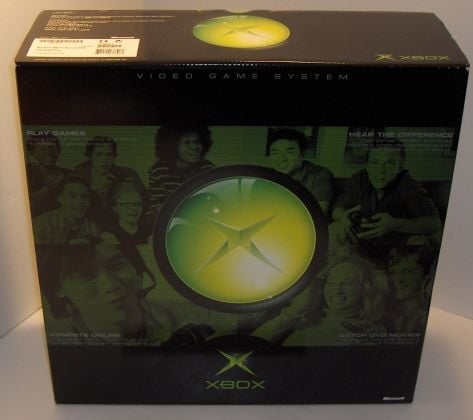 Microsoft’s original Xbox. Blackley: Again, look. It’s dangerous to apply old thinking to a group of people who are thinking in a new way. These guys are not thinking about that problem that way anymore. In an emperor’s new clothes kind of sense, it’s hard to look at in some ways because you have games, which is a proven huge business. We’re somehow subjugating the proven huge business as part of a strategy to prop up a business that we’re not sure will work or not. That’s weird. That’s weird and I don’t understand it. But obviously, these guys are very surefooted about it, sure enough that they’re putting a huge amount of resources behind this.
I remember Zuck’s statement. It was interesting because he was basically saying that games are as uncertain a business as this AR thing, so maybe together they’ll work. No, games work as a business. He’s culturally not seeing that somehow. There’s a model where games are massively profitable and people become billionaires off of games. But again, right now, the way we’re looking at this, Satya is holding a hammer and so Xbox has become a nail. That’s where we’re at.
GamesBeat: Some of the moves also remind me of when Andrew Wilson became CEO of EA. Peter Moore was there. Peter did come in from outside the industry, but he was still there. He was the No. 2 guy and they chose to pass over him in favor of the super young guy. Maybe this is going to be the 20-year CEO, because she’s young and she’s got new ideas [like Andrew Wilson was]. It could be a similar bet on the same kind of person.
Blackley: But again, Asha’s background is entirely in software as a service and AI. The implicit thing here is that games is going to be AI-driven software as a service. If that’s true, she is a young person with those ideas. But she’s not a young games person with CEO ideas. I understand where that strikes a lot of people as really fucking weird, because the games business is a different thing.
One of the things I ran across in my career in games, having interfaced with Hollywood and tech and all these different companies and different cultures, business cultures, is that games almost always represent an unexpected, much higher than wagered challenge. One assumes that it’s technology, and it’s not technology. It just happens to depend on technology. One assumes that it’s a service, and it’s not. One assumes that it’s a purely creative business. People come in and say, “We’ll bring movie directors to do games!” They also fail, because technology is an important part.
It’s a difficult wall to scale. Because it’s games–one thing that I’ve learned across my career is that everyone believes they’re a game developer. Everyone thinks they’re a game designer. There’s something about games–when you play them, they seem so effortless. There’s an assumption that anyone can do it. This can also get you in a lot of trouble. Asha’s statement in there about how she’ll figure it out reminds me a lot of that. I’ve been around a lot of that. I’ve had Bill Gates say that to me. I’ve had Steven Spielberg say that to me. I’ve had a lot of really smart people say, basically, that line to me. It’s funny for me to see that in there as well.
 Asha Sharma and Matt Booty. Credit: Xbox Now that I’m an old man and I’ve heard that a lot–you typically hear that come out of the mouths of people who are about to hit a very thick concrete wall. Some of them, once they bounce off it and put some dressings on their wounds, are able to scale the wall and do great. Bobby Kotick is a great example. Peter Moore is a great example. Both of them came in and got very injured by the game industry, because it wasn’t what they thought, but they figured it out.
The problem that we’re discussing here, really, and the thing that’s important to address, is that they were coming into games because they wanted to be in games. Asha is coming into games because her boss believes that games are going to be driven by AI. It’s a very different approach. You can tell that they’re really serious about games being fixed by AI because madame doth protest so much about how they’re not going to make slop and it’s all human-controlled. For anyone over a certain age with a certain amount of business experience, you recognize those words for what they are.
GamesBeat: I wonder whether gamers are going to be patient enough to accept such a person.
Blackley: Gamers are very patient. Gamers are very tolerant of being told what games are by people who are not gamers. They’re very tolerant of copies of things. They’re very tolerant of automated content. No, they’re not tolerant of any of these things. That’s the wall she’s about to discover and hit. Like a lot of things in life, you can be told something is the way it is. I’m sure there are many things in journalism that are like this. And everyone new who comes in thinks they can handle it, but when they actually have to handle it they get crushed. Then you say to them, “I told you that you were going to have to handle this.” Some people make it through and some people don’t.
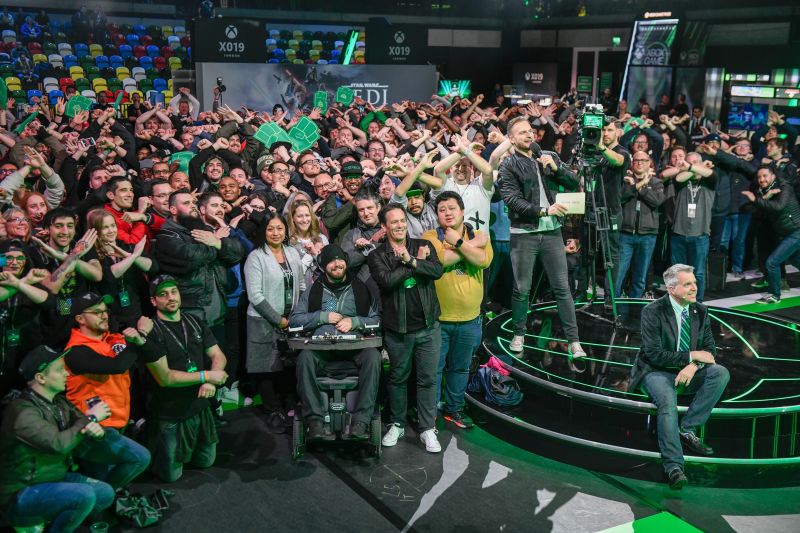 Phil Spencer spent 38 years at Microsoft, 12 leading Xbox. Source: Phil Spencer GamesBeat: Games seem so difficult as a business still. Many years later, it’s as hard as it ever was.
Blackley: That’s why it’s so compelling! That’s why we love it! Games are the combination of everything that’s hard. It’s an entertainment business, which is almost impossible. I was a partner at Creative Artists Agency. I saw all of these creative business models fail continuously. From bankers to guys running studios to guys running record labels to publishers–remember, I did all the mechanical licenses for Guitar Hero and Rock Band. I saw all of those things. That’s almost impossible.
Technology, making a renderer? Almost impossible! It’s so hard to do. So hard to do. And then writing. You have to write the game. You have to do game design. Almost impossible as well. You have to distribute it. You have to keep up with the changes in technology and the changes in customer taste. It’s like the hardest parts of four or five different industries combined in one place. That’s what makes it terrifying, but that’s also what makes it so compelling. There’s no other art form that can enthrall you in so many ways at the same time when it works. And when it doesn’t work it really doesn’t work, but when it works, there’s nothing else that can do that. There is just nothing else.
The real question I have for Asha is, does she get that? If you don’t get that, then you can’t know if your AI is working to do that. Games is not a thing you can understand by viewing customer data. It’s more multidimensional than that. People will say, well, artificial intelligence, generative AI is very good at understanding multidimensional data. Cool. I’m fairly mathematically sophisticated. I understand how AI code works, because I’ve seen it. But this is different than that.
GamesBeat: My speech is kind of like–I want games to be what they were born to be. They can fulfill their destiny as an awesome industry. But even the data this week from Matthew Ball is showing that gaming is losing even more attention. Addiction is winning over fun. Games are fun, but sports betting, OnlyFans porn, other forms of gambling, YouTube, social media, TikTok, these things are all winning the attention war.
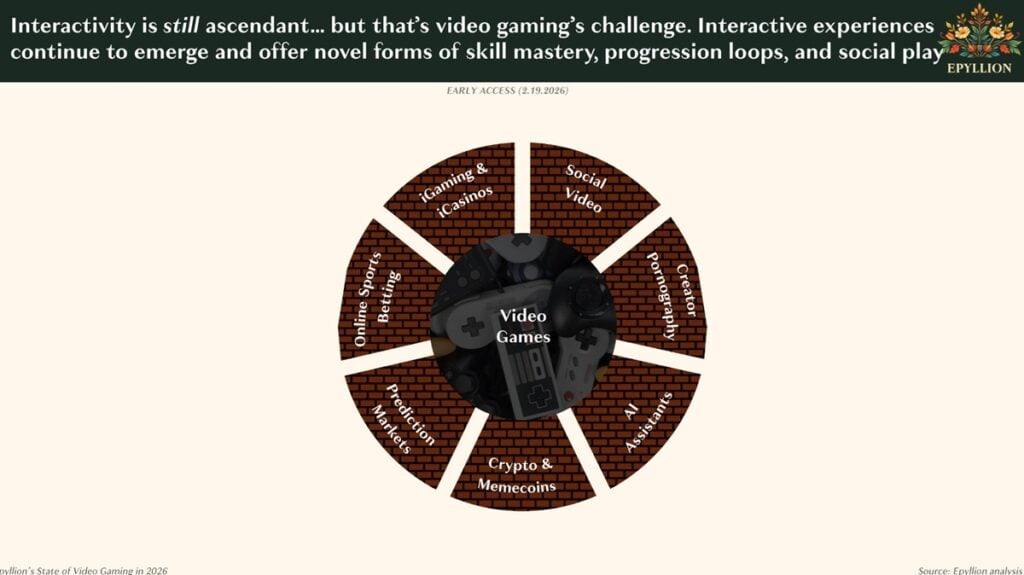 Matthew Ball of Epyllion spelled out all the threats to gaming in the fun-vs-addiction attention war. Source: Epyllion Blackley: The way you phrase that makes it sound like OnlyFans is a form of gambling, which I think is a fascinating business that you should go immediately start.
GamesBeat: Those sides are winning. The addiction side of things is winning. The fun side of things is not.
Blackley: Games follow a cycle similar to winemaking or beer brewing. There’s an addictive side to it that takes over. Sometimes, the alcoholic nature of these things is more important to the business than the artisanal side. You see the importance of microbrew beer wax and wane. The pretension of winemaking waxes and wanes. It’s the same thing.
With winemakin,g the intention is to let the grape reach its maximum potential. That’s the job. When you do that you’ll have a superior product. Then you do that and you make a lot of money, business guys move in and want more of it. Then you lessen the quality of the product. The audience gets a little sick of it. Some people start to drink other stuff because it gets them drunk faster. Then the bottom falls out and it’s out of favor for a while to allow the grape to reach its potential. The business is about something else. After that cycle consumers get sick of that and one guy comes out and says, “I’m a winemaker. I’m going to let the grape reach its full potential.” There’s a New York Times article 15 or 20 years later about this great natural wine movement and we’re back to that stage again.
I think we see this in games. The big unknown in this, this addiction that all the big tech companies have about generative AI being a panacea–
GamesBeat: AI girlfriends, too.
 Credit: Xbox Blackley: Right. Which I’m sure is healthy for you. Very healthy. We’ll see where it goes. It is a strange thing. What iteration of me is she? She’s the fifth iteration of me? Yeah. She’s number five. That’s pretty cool. I didn’t think it would last that long. I didn’t believe that for a second. But at the same time, I will say that the Seamus you met, or that you met a little bit afterward, would be horrified by all of this, obviously. The world outlook changes. But I’d be horrified.
We killed ourselves to maintain a very pure gaming message. “This is purely for gamers. This is what it’s about. We will not allow Microsoft to transform this into a Microsoft agenda device.” That was important because people didn’t believe that Microsoft could make something cool. They didn’t believe that Microsoft could make something fun. They just didn’t believe it. Here we are five generations later. The person taking over comes from the belly of the beast. This is interesting. There’s a symmetry to this.
I think younger me would be screaming about this and saying, “What the hell? Why would you put somebody in charge of a record label who didn’t like records?” Looking at it now from my perspective, I probably still feel that way. I do still feel that way, as I’ve been saying. But at the same time, I understand exactly why it is. I know that, again, Satya is holding a hammer and everything is a nail. There’s a nail with an Xbox logo on it. He’s applying the AI person to it. He has to show shareholders and the press and the world that he is all in on this investment. He has to show them that he believes generative AI is going to fix games and make it profitable. He has to make this move. It doesn’t matter what you think about it. I don’t think he had any choice.
The person who I feel worst for is Sarah Bond, who was more than capable from a leadership standpoint. Super cool, actual gamer. I really like Sarah Bond. This is a crappy day for her. I just want to tell her that I’m thinking of her and that she’s awesome.
GamesBeat: I did think, back in the day, that it was a very odd collection of people running Xbox. You and Ed Fries and J Allard and Robbie Bach and Steve Ballmer and Bill Gates. A collection of opposites. Some of that same battling is still going on here today, I guess. Different personalities, different approaches, different backgrounds.
 Xbox Game Pass Ultimate Blackley: With some perspective from being an older guy, in all these cases it’s never this balance of people that makes something work. The balance is what enables something to happen, but you need to have an idea that people drive through that remains pure somehow. The balance enables it. We needed the money. We needed somebody to back it. We needed the credibility of Microsoft. We had to give away enough of that purity so that the people who had the money to make it happen would let it happen, without giving away too much.
The question is really, if me at that age, if I had just been given the money to do it, it would have probably failed, because I would not have had enough adult supervision for it to go. Did I like the adult supervision? No. But to say that the people who were trying to block a project are responsible for it succeeding is bullshit. People on that list tried to block it, and then later claimed to be in support of it. Even you yourself were fooled by some of these people, I will tell you, in retrospect. But there was an insurgency and it worked out. To some extent, we used their weapons against them. Some guys on that list are very egotistical. I may have used their ego against them to get them to go along.
This is different from Asha. This isn’t an insurgency. This is kind of like, “We’re hoping that the new person who’s been put in charge of our department, who doesn’t have any background in what we do, will not fuck with us too much and will let us do the right thing.” The game that Phil had been playing for a long time, managing the beast so that he could continue to try to do the right thing for games, I think that finally just wore him out. It’s really hard to do that.
GamesBeat: If there’s advice from you to help this person steer it in the right direction, what would it be?
 Asha Sharma, the new CEO of Xbox. Source: Microsoft Blackley: Two things. If I was talking to her I would say, look, if you’re not really passionate about games, or if you can’t develop a passion for games, then you should find a way to leave this job soon. You shouldn’t do it. Because it’s harder than you think. You’re a very smart person who’s accomplished a lot in your career. You’re going to think I’m wrong, but you will discover that I’m right. There’s a long history of extremely smart people in games who have hit this wall.
The second is, if you can get the trust of the gaming community, then you can build a real business on the scale of the Microsoft AI business that will make you very powerful. But that happens if you gain the trust of the audience, if you gain the trust of the community. If you want to look for people to emulate, you look at Shuhei Yoshida. I’d tell her to go and spend a day with Shu. Go and spend a day with Peter Moore. Go and spend a day with Phil Harrison. Go and spend a day, if you can, with some of the guys from Nintendo. Find Reggie. Spend a day with Reggie. Go and talk to those leaders about how they succeeded and failed in the business. Learn from them. Don’t try to make it up on your own. Go get that data. They’re all out there. I’m sure Reggie–shit, there’s a recently-departed executive from Nintendo who might be very interesting for her to talk to, right? That would be my advice. Go talk to all of those people.
In the end, if this isn’t something you’re really passionate about, I think she’s clearly very passionate about e-commerce and about AI. But that’s not games. Games are a passion business. The audience and everyone in the ecosystem reward that passion. At every industry event, at every award show, at every business meeting, at every fight that you have about shelf space, every fight you have about who gets what tariff at what online store, everyone sits around for a minute and talks about what games they love and the passion they have about that. If you’re not ready to hang like that, you’re not going to do well in those meetings. Microsoft is not enough of a gorilla that someone who doesn’t know what they’re talking about can walk in and do things.
The post What an Xbox founder thinks of the new Xbox CEO | Seamus Blackley interview appeared first on GamesBeat.
He was a game developer who pushed the frontiers of gaming and wanted the U.S. to launch a console just as Sega gave up and Sony and Nintendo were locking up the market. Blackley and an unlikely group of Microsoft employees — including Otto Berkes, Ted Hase, Nate Brown, Ed Fries and Kevin Bachus — got the attention of Gates with a plan to use the PC to take away the throne of console leadership from Sony. There were competing teams within Microsoft, but Blackley and Fries gave the effort a lot of cred when it came to winning over game developers and gamers.
Many of those founders, including Blackley and the four generations of leaders who came after him, have since left Microsoft, and now their baby has landed in the hands of Asha Sharma, an outsider to the game industry who has focused her career on AI. Microsoft announced Sharma will replace Xbox CEO Phil Spencer, and COO and president Sarah Bond is leaving the company. She will team up with No. 2 exec Matt Booty, a game veteran who will be the link to all of Microsoft’s game studios.
Almost 25 years ago, the coalition of renegades grew until the full force of Microsoft, then the leading tech company in the world, got behind it. Xbox launched in 2001 and it proceeded to lose around $4 billion in its first generation. But with each generation Microsoft learned and changed and tried to innovate faster than its rivals. Back in the day, I interviewed all of the leaders and wrote a couple of books on the Xbox business.
Xbox Live enabled Microsoft to get an edge in online gaming. The Xbox 360 was a breakout success — except for the Red Rings of Death that led to electrical failures. The Xbox team lost its footing with the Xbox One, which focused on entertainment over games, and then Phil Spencer, who started at Microsoft as an intern and was part of the original Xbox launch team, took over.
Spencer ushered in the latest console, the Xbox Series X/S, and pushed for Microsoft’s Game Pass subscriptions, cloud gaming efforts and cross-platform play. He engineered the $68.7 billion acquisition of Activision Blizzard. Blackley went on to a career working for game devs at CAA and has spent a lot of time lately working on new technologies enabled by physics research.
I caught up with Blackley to extract some wisdom about Microsoft’s journey in games, what he thinks Sharma should do, and where gaming can go next. Part of his message is hopeful, but Blackley sees a lot of peril on the road that Microsoft is following. And it makes him worry about the future of gaming. I can sympathize with the concern about authenticity. On the other hand, almost all the new gaming startups these days are getting funding because they have an AI angle. Why can’t Microsoft do that too?
Here’s an edited transcript of our interview.
Seamus Blackley in his CAA days. GamesBeat: Tell me what you mean about how things are going?Seamus Blackley: From Microsoft. Satya Nadella has made an incredible number of bets and invested an incredible amount of money and credibility in the transform model AI future. Xbox, like a lot of businesses that aren’t the core AI business, is being sunsetted. They don’t say that, but that’s what’s happening. I expect that the new CEO, Asha Sharma, her job is going to be as a palliative care doctor who slides Xbox gently into the night.
It just seems really true. I imagine asking somebody if it made sense to put a major motion picture studio into the hands of somebody who didn’t like movies, or a major record label into the hands of somebody who’d never seen a live show. Why would you do that? Well, you only do that if you’re looking at the problem in a more abstract way. The natural consequence of the focus on AI is that AI abstracts every problem from the minds of the executives who believe in it. We’re abstracting the problem of games as well. There’s a core belief, and you can see it in what Satya said, that AI will subsume games like it will subsume everything.
The job of all these people is to just gently usher all of these business units into the new world of AI. That’s what you’re seeing here. Whether or not you agree with it, whether you agree with AI having the potential to do that, whether AI will be successful, is a separate matter. But that’s what we’re seeing. That is in no way surprising. It would have been shocking if they had somebody in there in a meaningful role who was passionate about games, passionate about the creator-driven business of games, because it would be in direct conflict with everything else Microsoft is doing. Microsoft is a company that is now about enabling its customers by enabling AI to drive things. That’s at odds with the auteur model of any art, but specifically of games. Microsoft doesn’t have the problem that Apple does, or that Netflix does, where they have an auteur-driven content model to manage. Games are the only place where they have a content business.
GamesBeat: Good to see you after all these years, by the way. It’s been a long time.
Blackley: You’re still plugging away.
GamesBeat: Yeah, still in the same business I was 30 years ago. It’s very strange, though. I wonder whether to take at face value, or take in some other way, the comment she made about, “We’re not going to do AI slop.” It’s still about great games and all that.
original Xbox prototype Blackley: A, you want to believe that. B, that’s what every single person who’s been brought into games from other industries has said when they’re hired, in every press release, probably going back longer than you and I have been in this business. I know that John Riccitiello said that when he was brought in from sporting goods to EA. But that’s just what occurs to people to say when they bring in someone from an outside business into games.Some people coming from outside businesses succeed in games and others just hit the wall, because it’s a content business and they don’t expect that. They’re not ready for that. They think it’s a compute business, or they think it’s a rendering business, or they think it’s a software business. Games is none of those things. It’s hilarious, but it’s none of those things. Her statement, or the statement that was written for her in the press release, saying that she was looking forward to seeing what makes games work or something like that, was hilarious. It reminded me of that meme. “Hello, fellow kids!” I’ll now figure out what’s interesting about games! Oh, boy. Wow. There may be more than you think.
People have succeeded at that before. Maybe she will.
GamesBeat: Do you think the console still happens? Do you think there’s a way they’ll continue this strategy following Sega’s strategy?
Blackley: I think the rules are different now. Again, it’s important to understand Microsoft and the context of the scale of the bet. It’s an unprecedented monetary and strategic bet that they’ve made in AI, in the history of business. That’s not the same as Sega deciding how to gracefully go out of business. This is a company that’s trying to recontextualize the way we think about technology in its entirety. They’ve decided that the lever point that’s going to do that is generative AI models. They’re looking to fit everything into a generative AI model.
It’s like the thing people say about having a hammer and everything is a nail. That’s incredibly true of Microsoft right now. Everything is a gen AI problem. Games, of course, are a gen AI problem. This is why I say this makes perfect sense. If you’re Satya, you have a hammer called gen AI and every single problem is a nail. Okay, so who do you put in charge of games? A games person? No, because in the world of Satya, everything is a gen AI problem, so you put a gen AI person in charge of games with a training model, with boot camps for her to train her like you train an AI model, to bring gen AI into a position to revolutionize games.
Whether or not you believe that’s possible, I think, is the question of whether or not you believe she can succeed in this. Whether or not you believe that’s possible is the deciding factor in whether or not you believe Xbox will continue to exist and what you believe Microsoft will do with Xbox. Our old way of thinking about things doesn’t work here anymore because the mindset of the guys making the decisions has completely changed. They are living in a world where generative AI is the solution to the problems, and so the application of generative AI is the only solution that they need to think about. Once they’ve done that, the generative AI will then take over the problem. Whether or not you believe in that, like I said, is the deciding factor in whether or not you believe this will be a successful strategy.
GamesBeat: I wonder whether it’s predictable to see where it shifts to. There was an interesting thing that Mark Zuckerberg said a while back when he was having success with his AI glasses. VR was not going the way he expected. He said that maybe the AI glasses would be the back door to the metaverse. Maybe he had been thinking about it the wrong way. Now there’s some chance that games still play some kind of role through something like AR glasses that combine with AI glasses. AR and AI in the same glasses, something that just fits on your head normally rather than a big headset, maybe this is the way we get to the metaverse. There was still a possibility that games would play some role in that AI glasses future. It’s still possible that he’s maybe spending all that money on Reality Labs for that reason. But I don’t know what this means as far as–if AI takes over Xbox, what’s the direction?
Microsoft’s original Xbox. Blackley: Again, look. It’s dangerous to apply old thinking to a group of people who are thinking in a new way. These guys are not thinking about that problem that way anymore. In an emperor’s new clothes kind of sense, it’s hard to look at in some ways because you have games, which is a proven huge business. We’re somehow subjugating the proven huge business as part of a strategy to prop up a business that we’re not sure will work or not. That’s weird. That’s weird and I don’t understand it. But obviously, these guys are very surefooted about it, sure enough that they’re putting a huge amount of resources behind this.I remember Zuck’s statement. It was interesting because he was basically saying that games are as uncertain a business as this AR thing, so maybe together they’ll work. No, games work as a business. He’s culturally not seeing that somehow. There’s a model where games are massively profitable and people become billionaires off of games. But again, right now, the way we’re looking at this, Satya is holding a hammer and so Xbox has become a nail. That’s where we’re at.
GamesBeat: Some of the moves also remind me of when Andrew Wilson became CEO of EA. Peter Moore was there. Peter did come in from outside the industry, but he was still there. He was the No. 2 guy and they chose to pass over him in favor of the super young guy. Maybe this is going to be the 20-year CEO, because she’s young and she’s got new ideas [like Andrew Wilson was]. It could be a similar bet on the same kind of person.
Blackley: But again, Asha’s background is entirely in software as a service and AI. The implicit thing here is that games is going to be AI-driven software as a service. If that’s true, she is a young person with those ideas. But she’s not a young games person with CEO ideas. I understand where that strikes a lot of people as really fucking weird, because the games business is a different thing.
One of the things I ran across in my career in games, having interfaced with Hollywood and tech and all these different companies and different cultures, business cultures, is that games almost always represent an unexpected, much higher than wagered challenge. One assumes that it’s technology, and it’s not technology. It just happens to depend on technology. One assumes that it’s a service, and it’s not. One assumes that it’s a purely creative business. People come in and say, “We’ll bring movie directors to do games!” They also fail, because technology is an important part.
It’s a difficult wall to scale. Because it’s games–one thing that I’ve learned across my career is that everyone believes they’re a game developer. Everyone thinks they’re a game designer. There’s something about games–when you play them, they seem so effortless. There’s an assumption that anyone can do it. This can also get you in a lot of trouble. Asha’s statement in there about how she’ll figure it out reminds me a lot of that. I’ve been around a lot of that. I’ve had Bill Gates say that to me. I’ve had Steven Spielberg say that to me. I’ve had a lot of really smart people say, basically, that line to me. It’s funny for me to see that in there as well.
Asha Sharma and Matt Booty. Credit: Xbox Now that I’m an old man and I’ve heard that a lot–you typically hear that come out of the mouths of people who are about to hit a very thick concrete wall. Some of them, once they bounce off it and put some dressings on their wounds, are able to scale the wall and do great. Bobby Kotick is a great example. Peter Moore is a great example. Both of them came in and got very injured by the game industry, because it wasn’t what they thought, but they figured it out.The problem that we’re discussing here, really, and the thing that’s important to address, is that they were coming into games because they wanted to be in games. Asha is coming into games because her boss believes that games are going to be driven by AI. It’s a very different approach. You can tell that they’re really serious about games being fixed by AI because madame doth protest so much about how they’re not going to make slop and it’s all human-controlled. For anyone over a certain age with a certain amount of business experience, you recognize those words for what they are.
GamesBeat: I wonder whether gamers are going to be patient enough to accept such a person.
Blackley: Gamers are very patient. Gamers are very tolerant of being told what games are by people who are not gamers. They’re very tolerant of copies of things. They’re very tolerant of automated content. No, they’re not tolerant of any of these things. That’s the wall she’s about to discover and hit. Like a lot of things in life, you can be told something is the way it is. I’m sure there are many things in journalism that are like this. And everyone new who comes in thinks they can handle it, but when they actually have to handle it they get crushed. Then you say to them, “I told you that you were going to have to handle this.” Some people make it through and some people don’t.
Phil Spencer spent 38 years at Microsoft, 12 leading Xbox. Source: Phil Spencer GamesBeat: Games seem so difficult as a business still. Many years later, it’s as hard as it ever was.Blackley: That’s why it’s so compelling! That’s why we love it! Games are the combination of everything that’s hard. It’s an entertainment business, which is almost impossible. I was a partner at Creative Artists Agency. I saw all of these creative business models fail continuously. From bankers to guys running studios to guys running record labels to publishers–remember, I did all the mechanical licenses for Guitar Hero and Rock Band. I saw all of those things. That’s almost impossible.
Technology, making a renderer? Almost impossible! It’s so hard to do. So hard to do. And then writing. You have to write the game. You have to do game design. Almost impossible as well. You have to distribute it. You have to keep up with the changes in technology and the changes in customer taste. It’s like the hardest parts of four or five different industries combined in one place. That’s what makes it terrifying, but that’s also what makes it so compelling. There’s no other art form that can enthrall you in so many ways at the same time when it works. And when it doesn’t work it really doesn’t work, but when it works, there’s nothing else that can do that. There is just nothing else.
The real question I have for Asha is, does she get that? If you don’t get that, then you can’t know if your AI is working to do that. Games is not a thing you can understand by viewing customer data. It’s more multidimensional than that. People will say, well, artificial intelligence, generative AI is very good at understanding multidimensional data. Cool. I’m fairly mathematically sophisticated. I understand how AI code works, because I’ve seen it. But this is different than that.
GamesBeat: My speech is kind of like–I want games to be what they were born to be. They can fulfill their destiny as an awesome industry. But even the data this week from Matthew Ball is showing that gaming is losing even more attention. Addiction is winning over fun. Games are fun, but sports betting, OnlyFans porn, other forms of gambling, YouTube, social media, TikTok, these things are all winning the attention war.
Matthew Ball of Epyllion spelled out all the threats to gaming in the fun-vs-addiction attention war. Source: Epyllion Blackley: The way you phrase that makes it sound like OnlyFans is a form of gambling, which I think is a fascinating business that you should go immediately start.GamesBeat: Those sides are winning. The addiction side of things is winning. The fun side of things is not.
Blackley: Games follow a cycle similar to winemaking or beer brewing. There’s an addictive side to it that takes over. Sometimes, the alcoholic nature of these things is more important to the business than the artisanal side. You see the importance of microbrew beer wax and wane. The pretension of winemaking waxes and wanes. It’s the same thing.
With winemakin,g the intention is to let the grape reach its maximum potential. That’s the job. When you do that you’ll have a superior product. Then you do that and you make a lot of money, business guys move in and want more of it. Then you lessen the quality of the product. The audience gets a little sick of it. Some people start to drink other stuff because it gets them drunk faster. Then the bottom falls out and it’s out of favor for a while to allow the grape to reach its potential. The business is about something else. After that cycle consumers get sick of that and one guy comes out and says, “I’m a winemaker. I’m going to let the grape reach its full potential.” There’s a New York Times article 15 or 20 years later about this great natural wine movement and we’re back to that stage again.
I think we see this in games. The big unknown in this, this addiction that all the big tech companies have about generative AI being a panacea–
GamesBeat: AI girlfriends, too.
Credit: Xbox Blackley: Right. Which I’m sure is healthy for you. Very healthy. We’ll see where it goes. It is a strange thing. What iteration of me is she? She’s the fifth iteration of me? Yeah. She’s number five. That’s pretty cool. I didn’t think it would last that long. I didn’t believe that for a second. But at the same time, I will say that the Seamus you met, or that you met a little bit afterward, would be horrified by all of this, obviously. The world outlook changes. But I’d be horrified.We killed ourselves to maintain a very pure gaming message. “This is purely for gamers. This is what it’s about. We will not allow Microsoft to transform this into a Microsoft agenda device.” That was important because people didn’t believe that Microsoft could make something cool. They didn’t believe that Microsoft could make something fun. They just didn’t believe it. Here we are five generations later. The person taking over comes from the belly of the beast. This is interesting. There’s a symmetry to this.
I think younger me would be screaming about this and saying, “What the hell? Why would you put somebody in charge of a record label who didn’t like records?” Looking at it now from my perspective, I probably still feel that way. I do still feel that way, as I’ve been saying. But at the same time, I understand exactly why it is. I know that, again, Satya is holding a hammer and everything is a nail. There’s a nail with an Xbox logo on it. He’s applying the AI person to it. He has to show shareholders and the press and the world that he is all in on this investment. He has to show them that he believes generative AI is going to fix games and make it profitable. He has to make this move. It doesn’t matter what you think about it. I don’t think he had any choice.
The person who I feel worst for is Sarah Bond, who was more than capable from a leadership standpoint. Super cool, actual gamer. I really like Sarah Bond. This is a crappy day for her. I just want to tell her that I’m thinking of her and that she’s awesome.
GamesBeat: I did think, back in the day, that it was a very odd collection of people running Xbox. You and Ed Fries and J Allard and Robbie Bach and Steve Ballmer and Bill Gates. A collection of opposites. Some of that same battling is still going on here today, I guess. Different personalities, different approaches, different backgrounds.
Xbox Game Pass Ultimate Blackley: With some perspective from being an older guy, in all these cases it’s never this balance of people that makes something work. The balance is what enables something to happen, but you need to have an idea that people drive through that remains pure somehow. The balance enables it. We needed the money. We needed somebody to back it. We needed the credibility of Microsoft. We had to give away enough of that purity so that the people who had the money to make it happen would let it happen, without giving away too much.The question is really, if me at that age, if I had just been given the money to do it, it would have probably failed, because I would not have had enough adult supervision for it to go. Did I like the adult supervision? No. But to say that the people who were trying to block a project are responsible for it succeeding is bullshit. People on that list tried to block it, and then later claimed to be in support of it. Even you yourself were fooled by some of these people, I will tell you, in retrospect. But there was an insurgency and it worked out. To some extent, we used their weapons against them. Some guys on that list are very egotistical. I may have used their ego against them to get them to go along.
This is different from Asha. This isn’t an insurgency. This is kind of like, “We’re hoping that the new person who’s been put in charge of our department, who doesn’t have any background in what we do, will not fuck with us too much and will let us do the right thing.” The game that Phil had been playing for a long time, managing the beast so that he could continue to try to do the right thing for games, I think that finally just wore him out. It’s really hard to do that.
GamesBeat: If there’s advice from you to help this person steer it in the right direction, what would it be?
Asha Sharma, the new CEO of Xbox. Source: Microsoft Blackley: Two things. If I was talking to her I would say, look, if you’re not really passionate about games, or if you can’t develop a passion for games, then you should find a way to leave this job soon. You shouldn’t do it. Because it’s harder than you think. You’re a very smart person who’s accomplished a lot in your career. You’re going to think I’m wrong, but you will discover that I’m right. There’s a long history of extremely smart people in games who have hit this wall.The second is, if you can get the trust of the gaming community, then you can build a real business on the scale of the Microsoft AI business that will make you very powerful. But that happens if you gain the trust of the audience, if you gain the trust of the community. If you want to look for people to emulate, you look at Shuhei Yoshida. I’d tell her to go and spend a day with Shu. Go and spend a day with Peter Moore. Go and spend a day with Phil Harrison. Go and spend a day, if you can, with some of the guys from Nintendo. Find Reggie. Spend a day with Reggie. Go and talk to those leaders about how they succeeded and failed in the business. Learn from them. Don’t try to make it up on your own. Go get that data. They’re all out there. I’m sure Reggie–shit, there’s a recently-departed executive from Nintendo who might be very interesting for her to talk to, right? That would be my advice. Go talk to all of those people.
In the end, if this isn’t something you’re really passionate about, I think she’s clearly very passionate about e-commerce and about AI. But that’s not games. Games are a passion business. The audience and everyone in the ecosystem reward that passion. At every industry event, at every award show, at every business meeting, at every fight that you have about shelf space, every fight you have about who gets what tariff at what online store, everyone sits around for a minute and talks about what games they love and the passion they have about that. If you’re not ready to hang like that, you’re not going to do well in those meetings. Microsoft is not enough of a gorilla that someone who doesn’t know what they’re talking about can walk in and do things.
The post What an Xbox founder thinks of the new Xbox CEO | Seamus Blackley interview appeared first on GamesBeat.
What's Your Reaction?








XINKER - Business and Income Tips
Explore XINKER, the ultimate platform for mastering business strategies, discovering passive income opportunities, and learning success principles. Join a community of thinkers dedicated to achieving financial freedom and entrepreneurial excellence.