
![[PRO Tips] Gold’s Bullish Revival: Seasonal Trends and Key Levels to Watch](https://xinker.org/uploads/images/202412/image_430x256_67724cc6ad0cd.webp)
![[PRO Tips] Gold Market Under Short-Term Pressure, Safe-Haven Demand and Central Bank Buying Support Long-Term Upside Potential](https://xinker.org/uploads/images/202412/image_430x256_676ffb4685287.webp)
![[PRO Tips] Analysis of 9 key points of differentiation strategy! Master differentiation to create a brand advantage that is unique in the world!](https://firebasestorage.googleapis.com/v0/b/xinker-tips.appspot.com/o/article_thumbnails%2Fscaled_differentiation%20strategy.png.png?alt=media&token=a1bfc3d2-e85a-4db7-8a6d-01c7274f8940)
![[PRO Tips] Will REITs regain growth momentum in 2024? 3 REITs ETFs you must know if you want to invest in real estate.](https://firebasestorage.googleapis.com/v0/b/xinker-tips.appspot.com/o/article_thumbnails%2Fscaled_REITs1.png.png?alt=media&token=8af4eb93-33ff-466f-8039-b6555fad52b4)
![[PRO Tips] Complete tutorial on how to make money in Adobe Stock!](https://firebasestorage.googleapis.com/v0/b/xinker-tips.appspot.com/o/article_thumbnails%2Fscaled_tut-adobe1.png.png?alt=media&token=0b2c8cf2-22bd-4142-883e-140ed1cbaf02)
![[Passive Income] Unlock the secret of passive income: 3 steps to apply for Google AdSense](https://xinker.org/uploads/images/202410/image_430x256_6717a4fb3052b.webp)
![[Passive Income] Earn over $200 a day with AI-generated articles!](https://firebasestorage.googleapis.com/v0/b/xinker-tips.appspot.com/o/article_thumbnails%2Fscaled_article1.png.png?alt=media&token=f61bf35b-8553-4719-826d-7360024adc70)
![[Passive Income] Earn over 20 USD per download with AI-generated images!](https://firebasestorage.googleapis.com/v0/b/xinker-tips.appspot.com/o/article_thumbnails%2Fscaled_adobe2.png.png?alt=media&token=3e20e76a-a907-45af-80aa-bf9b3600301f)
![[Passive Income] Earn 10 USD per new download by sharing CapCut!](https://firebasestorage.googleapis.com/v0/b/xinker-tips.appspot.com/o/article_thumbnails%2Fscaled_capcut2.png.png?alt=media&token=a04dec40-1fac-4857-86f2-19a8be02d38e)
![[Passive Income] Use your WiFi to create passive income in 5 minutes, and you can earn 4-6 U per day!](https://firebasestorage.googleapis.com/v0/b/xinker-tips.appspot.com/o/article_thumbnails%2Fscaled_Grassio.webp.png?alt=media&token=7659a95e-0e47-4f27-a17d-c942ac3cf7f4)


![[Business Talk] The Unique Theme of XINKER's Song: Beef Wellington and Business Mastery](https://xinker.org/uploads/images/202410/image_430x256_671afc155f47f.webp)
![[Business Talk] Chagee: Opening 3,500 stores in 6 years](https://xinker.org/uploads/images/202410/image_430x256_671afce80c5f9.webp)


Ubisoft reports $482M in FYQ4 net bookings, down 54% from a year ago but above expectations
Ubisoft reported its net bookings of $482 million (€415 million) for its fourth fiscal quarter ended March 31, above guidance of $453 million (€390 million) but down 54% from a year ago. The performance was driven by stronger-than-expected bookings across the back-catalog, highlighting the enduring strength of the group’s brands, Ubisoft said. In the past year, Ubisoft has reduce its employee base by 1,200 jobs. Net bookings were down 54% year-on-year when compared to a record Q4 in FY2025-26 that included the release of Assassin’s Creed Shadows and significantly higher revenue from partnerships. Ubisoft’s transformation towards its new operating model is well underway, including the closing of the landmark strategic transaction with Tencent, bringing $1.34 billion (€1.16 billion) of cash and enabling to meaningfully reduce the debt of the group. “What makes me confident about this transition is the very high q of the leadership we are putting in place across the world organization,” said Yves Guillemot, CEO of Ubisoft, in an analyst call. Looking back, Ubisoft said it has strengthened its leadership with the recently appointed Vantage Studios’ co-CEOs establishing a dedicated leadership team for Assassin’s Creed and naming Nicolo Laurent as their strategic advisor. It also made leadership appointments for Creative Houses 3 & 5, and the Creative Network. And it finalized of the recruitment of the general manager and selection of a leadership team for Creative House 2. Ubisoft it is progressing towards a “rightsized and more focused organization” that included a comprehensive portfolio review resulting in a more focused roadmap, with seven projects discontinued and six projects delayed. Continued execution with discipline on the fixed cost base, delivering $137 million (€118 million) savings vs. FY2024-25. The fixed cost base has now been reduced by around $377.8 million (€325 million) since FY2022-23 with a clear path to reaching $581 million (€500 million) in cumulated savings on a run-rate basis by March 2028.Improved quality delivery for recent releases Yves Guillemot Ubisoft said its latest releases demonstrated improved quality delivery, with Assassin’s Creed Shadows, Anno 117: Pax Romana and Avatar: Frontiers of Pandora expansion exceeding 80 Metacritic scores. Ubisoft said it will spend its FY2026-27 (fiscal year ending March 31, 2027) laying the foundations for strong execution. The FY2026-27 line-up includes Assassin’s Creed Black Flag Resynced (July 9), alongside other targeted premium games based on established Ubisoft brands. In a statement, Guillemot said, “This past fiscal year was one of decisive action for Ubisoft. We initiated one of the most ambitious transformations in the company’s history, building a more focused, agile and disciplined organization that is capable of consistently delivering high-quality experiences to players through a sustained release cadence while supporting value creation over time.” He said Ubisoft is a “more disciplined” organization in a conference call with analysts. He said the company has been reducing the size of its staff and cutting debt. While he said the short-term performance was disappointing, he said the long-term outlook will be positive over time. The company is actively engaged in refinancing its debt. He added, “To achieve this strategic reset, in FY2025-26, we began putting in place a new operating model, rationalized our portfolio of games and executed with discipline on our cost reduction program while significantly deleveraging the group.” And he said, “In FY2026-27, we will pursue and complete the execution of this transformation, and continue investment ahead of a much stronger and sustained content cycle. This year is therefore expected to represent a low point in our free cash flow trajectory along with a softer release slate and restructuring costs. We will continue to grow our Live games, led by Rainbow Six Siege and its strong roadmap, deliver Assassin’s Creed Black Flag Resynced and launch other targeted premium games based on established Ubisoft brands.” Guillemot continued, “This two-year transformation comes with difficult decisions and a disappointing short-term financial performance, but I firmly believe that, together, these actions are better positioning Ubisoft to deliver sustainable free cash flow over time.” He said the expected outcome, beyond FY2026-27, will be an important rebound driven by a significantly stronger new release pipeline, the acceleration of live games and the continued reduction of our fixed cost base, with free cash flow turning positive in FY2027-28 and reaching a robust level in FY2028-29. “Overall, we expect to generate positive cumulated free cash Flow through the FY2026-27 to FY2028-29 period. In this context, with a comfortable liquidity position, the review of our financing options is actively progressing, with the objective of executing the most efficient financing scheme in due course,” Guillemo

Ubisoft reported its net bookings of $482 million (€415 million) for its fourth fiscal quarter ended March 31, above guidance of $453 million (€390 million) but down 54% from a year ago.
The performance was driven by stronger-than-expected bookings across the back-catalog, highlighting the enduring strength of the group’s brands, Ubisoft said. In the past year, Ubisoft has reduce its employee base by 1,200 jobs.
Net bookings were down 54% year-on-year when compared to a record Q4 in FY2025-26 that included the release of Assassin’s Creed Shadows and significantly higher revenue from partnerships.
Ubisoft’s transformation towards its new operating model is well underway, including the closing of the landmark strategic transaction with Tencent, bringing $1.34 billion (€1.16 billion) of cash and enabling to meaningfully reduce the debt of the group.
“What makes me confident about this transition is the very high q of the leadership we are putting in place across the world organization,” said Yves Guillemot, CEO of Ubisoft, in an analyst call.
Looking back, Ubisoft said it has strengthened its leadership with the recently appointed Vantage Studios’ co-CEOs establishing a dedicated leadership team for Assassin’s Creed and naming Nicolo Laurent as their strategic advisor.
It also made leadership appointments for Creative Houses 3 & 5, and the Creative Network. And it finalized of the recruitment of the general manager and selection of a leadership team for Creative House 2.
Ubisoft it is progressing towards a “rightsized and more focused organization” that included a comprehensive portfolio review resulting in a more focused roadmap, with seven projects discontinued and six projects delayed.
Continued execution with discipline on the fixed cost base, delivering $137 million (€118 million) savings vs. FY2024-25. The fixed cost base has now been reduced by around $377.8 million (€325 million) since FY2022-23 with a clear path to reaching $581 million (€500 million) in cumulated savings on a run-rate basis by March 2028.
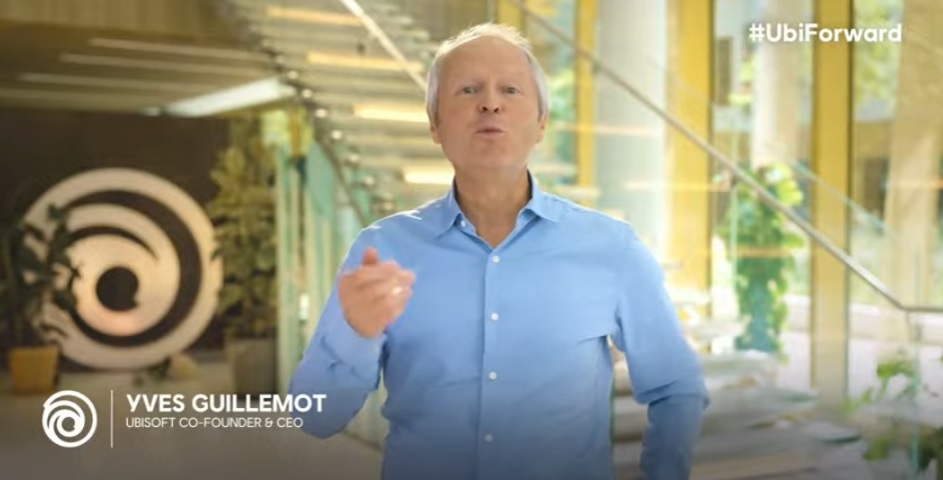 Yves Guillemot Ubisoft said its latest releases demonstrated improved quality delivery, with Assassin’s Creed Shadows, Anno 117: Pax Romana and Avatar: Frontiers of Pandora expansion exceeding 80 Metacritic scores.
Ubisoft said it will spend its FY2026-27 (fiscal year ending March 31, 2027) laying the foundations for strong execution. The FY2026-27 line-up includes Assassin’s Creed Black Flag Resynced (July 9), alongside other targeted premium games based on established Ubisoft brands.
In a statement, Guillemot said, “This past fiscal year was one of decisive action for Ubisoft. We initiated one of the most ambitious transformations in the company’s history, building a more focused, agile and disciplined organization that is capable of consistently delivering high-quality experiences to players through a sustained release cadence while supporting value creation over time.”
He said Ubisoft is a “more disciplined” organization in a conference call with analysts. He said the company has been reducing the size of its staff and cutting debt. While he said the short-term performance was disappointing, he said the long-term outlook will be positive over time. The company is actively engaged in refinancing its debt.
He added, “To achieve this strategic reset, in FY2025-26, we began putting in place a new operating model, rationalized our portfolio of games and executed with discipline on our cost reduction program while significantly deleveraging the group.”
And he said, “In FY2026-27, we will pursue and complete the execution of this transformation, and continue investment ahead of a much stronger and sustained content cycle. This year is therefore expected to represent a low point in our free cash flow trajectory along with a softer release slate and restructuring costs. We will continue to grow our Live games, led by Rainbow Six Siege and its strong roadmap, deliver Assassin’s Creed Black Flag Resynced and launch other targeted premium games based on established Ubisoft brands.”
Guillemot continued, “This two-year transformation comes with difficult decisions and a disappointing short-term financial performance, but I firmly believe that, together, these actions are better positioning Ubisoft to deliver sustainable free cash flow over time.”
He said the expected outcome, beyond FY2026-27, will be an important rebound driven by a significantly stronger new release pipeline, the acceleration of live games and the continued reduction of our fixed cost base, with free cash flow turning positive in FY2027-28 and reaching a robust level in FY2028-29.
“Overall, we expect to generate positive cumulated free cash Flow through the FY2026-27 to FY2028-29 period. In this context, with a comfortable liquidity position, the review of our financing options is actively progressing, with the objective of executing the most efficient financing scheme in due course,” Guillemot said. “Our ambition remains clear: reinforce Ubisoft’s position as one of the industry’s leading creators of high-quality, memorable and engaging entertainment experiences that resonate with players over the long term. By combining creative focus, the latest innovative technologies, a reinforced talent base and a commitment to enhanced quality, we believe we have the assets and brands to return to profitable growth, robust free cash flow generation and a strengthened capital structure.”
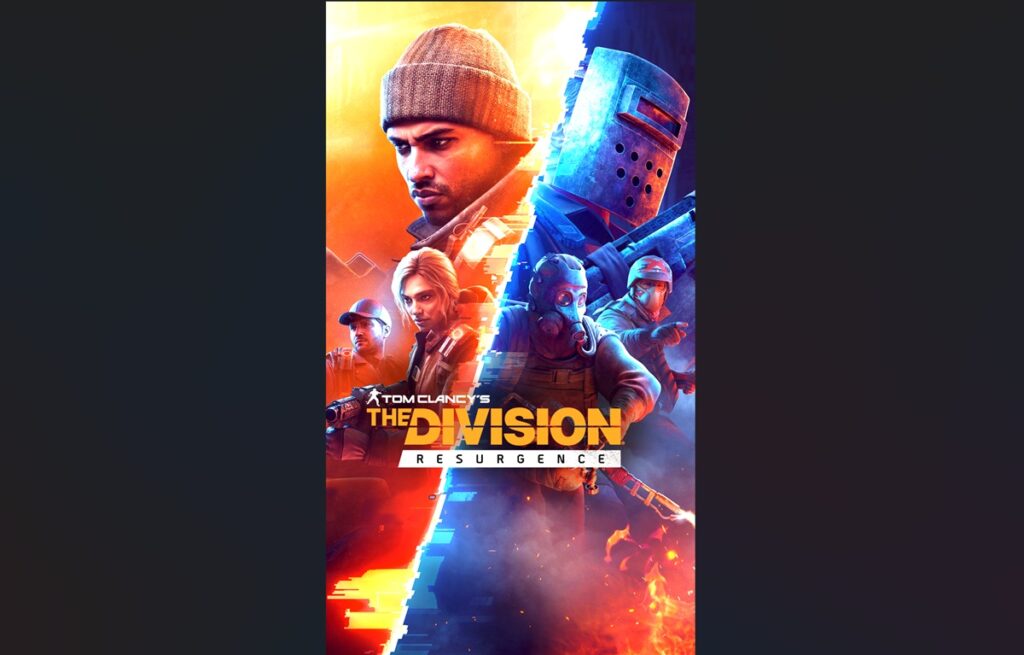 Ubisoft’s Tom Clancy’s The Division Resurgence. Source: Ubisoft Overall, net bookings for the year stood at $1.773 billion (€1,525 million), down 17% year-on-year, primarily reflecting a softer new release schedule. Back-catalog was robust, performing broadly stable year-on-year, highlighting once again the strength and attractiveness of the Group’s portfolio of franchises. The group reached 36 million (monthly active users) MAUs and 129 million unique users across consoles and PC, stable when excluding XDefiant from the base.
For its part, back-catalog net bookings stood at $282 million (€243 million) this quarter, down mid-single digit excluding partnerships.
Tom Clancy’s Rainbow Six Siege delivered a solid quarter with activity and engagement trends significantly improving sequentially. Session Days remained stable year-on-year while peak DAUs in March increased year-on-year and nearly three times higher than in early November, reaching the 2nd highest level since March 2020.
MAUs were clearly above 10 million in March and up double-digit year-on-year, reflecting a meaningful re-engagement of the player base and closing the year with an annual audience growing low double digit and above 30 million unique active players. The Year 11 has been praised by players, showcasing significant community-driven content for the year ahead and reflecting the team’s sustained effort to address player feedback over the recent months.
Tom Clancy’s The Division 2 saw net bookings outperform in the quarter, and more than double year on year this fiscal year, supported by the 10-year anniversary of the franchise, roadmap updates and continued strong Live-services execution.
The anniversary season and the limited time realism mode drove meaningful player engagement growth and led to a record quarter in terms of monetization for the game thanks to audience growth as well as structural improvements in terms of retention and conversion. This performance highlights the team’s continued focus on evolving the player experience over time.
The Assassin’s Creed franchise also posted a strong performance, outperforming and delivering year-on-year engagement growth, closing the year with an annual audience above 30 million unique active players.
Avatar: Frontiers of Pandora continued to benefit from momentum generated by the third-person update, the latest expansion and the theatrical release of the avatar film in the prior quarter, delivering very strong year-on-year net bookings growth both in the quarter and over the fiscal year.
The Crew Motorfest reached record quarterly users on the back of a robust content pipeline, including the NASCAR-themed season and the release of Trackforge, a new UGC feature enabling players to build their own racing circuits.
For Honor saw net bookings grow double-digit this quarter, supported by the launch of Year 10, Cycle of War that led to solid audience and engagement growth. The new seasonal content roadmap, gameplay updates and anniversary celebrations highlighted the franchise’s long-term durability and reflected the team’s continued Live services execution nearly 10 years after release.
On the Mobile side, Invincible: Guarding the Globe benefited from the release of the new TV series, driving a significant uplift in player activity throughout March and reaching record activity levels in early FY2026-27. Overall, net bookings were up over 50% this fiscal year. The quarter also saw the release of Rainbow Six Mobile and The Division Resurgence. Both games were welcomed by players for their faithful gameplay experiences. While the games had a slow start, the teams are working towards broadening their respective audiences.
 Image credit: Ubisoft Following the comprehensive transformation announced in January, centered on a new operating model, a refocused portfolio and a rightsized organization, Ubisoft is now firmly in the execution phase, delivering tangible progress across all pillars.
The creation of Vantage Studios alongside the $1.34 billion (€1.16 billion) cash injection from Tencent marked a key milestone, strengthening the balance sheet and enhancing financial flexibility to support the group’s transformation.
Organizationally, the recently appointed co-CEOs of Vantage Studios established a new dedicated leadership team for the Assassin’s Creed franchise, bringing clear mandates and creative accountability to Ubisoft’s most iconic brand. They also appointed Nicolo Laurent as strategic advisor, bringing extensive experience building and operating globally successful competitive and Live games, further strengthening Vantage Studios’ capabilities in this critical segment.
In parallel, Ubisoft is rolling out its new structure, with key leadership appointments across Creative Houses 3 and 5 and the Creative Network, while finalizing the leadership team for Creative House 2. Julien Bares, as general manager of Creative Houses 3 and 5, brings more than 25 years of extensive experience in the video gaming industry in leadership roles across triple-A production and live operations, including more than 20 years in China.
In a more selective market, Ubisoft has also streamlined its portfolio, discontinuing 7 projects and delaying 6 others to maximize long-term value and refocus its three-year roadmap. This more disciplined approach better positions the Creative Houses to a return to higher quality standards, already reflected in recent releases such as Assassin’s Creed Shadows, Anno 117: Pax Romana and the Avatar: Frontiers of Pandora expansion, each achieving above 80 Metacritic scores.
Leveraging AI to enhance player experience and boost teams’ creativity and efficiency
Ubisoft is accelerating investments behind Teammates, its first playable Generative AI experience, to enrich player experiences, while teams are making tangible progress organically on AI applications that can help manage the growing complexity of modern game development pipelines. This ranges from more intelligent bots supporting our QC teams, to smarter NPCs and game worlds that can adapt to player behavior and react more dynamically in real time.
The group is fully leveraging decades of expertise in open worlds, systemic gameplay, and AI-driven systems, combined with years of pioneering AI and machine learning research through its La Forge R&D teams. Together with the many early adopters across its production teams, this gives the company confidence in Ubisoft’s ability to remain at the forefront of this transformation and provides its teams with tools to enhance their creativity.
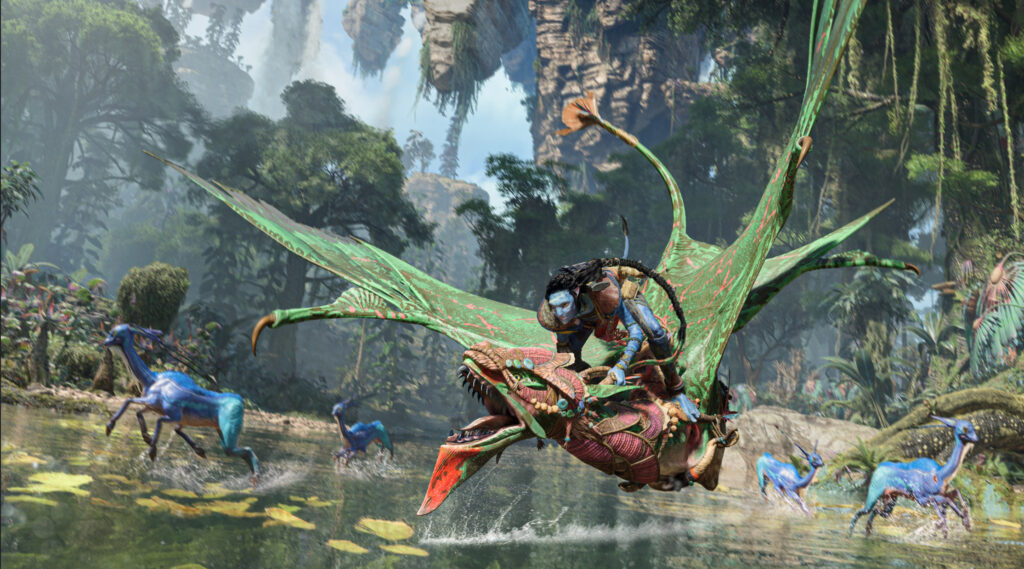 Getting to fly whenever you want rules. Ubisoft’s fixed cost base remains a core priority, with the initial cost reduction program achieved one year ahead of schedule and above the target, highlighting continued discipline and strong execution.
The group’s total headcount stood at 16,590 at the end of March 2026, down by around 1,200 employees versus last year, while maintaining voluntary attrition close to Ubisoft’s record low levels, particularly among senior profiles, and strengthening the talent base thanks to the return of 155 former Ubisoft top talents.
The FY2025-26 fixed cost base stood at around $1.67 billion (€1.435 billion), down $137 million (€118 million) and 8% versus the FY2024-25 base. This includes a favorable foreign exchange impact and brings the cumulated fixed cost base reduction since FY2022-23 to nearly $377 million (€325 million).
Looking ahead, Ubisoft has a clear path to completing the third and final phase of its cost reduction program, targeting a fixed cost base of $1.45 billion (€1.25 billion) on a run-rate basis by March 2028, supported by continued discipline in recruitment and targeted restructurings. The group also continues to consider potential asset divestitures.
April was marked by the opening of Heroes of Might and Magic: Olden Era in early access on PC, marking the return of the long-running franchise through a modernized strategy RPG experience.
Ubisoft said the title, developed by Unfrozen and published by Hooded Horse, generated very positive community engagement and achieved 88% positive user ratings on Steam to date, demonstrating the strength of the Might and Magic brand. This also illustrates Ubisoft’s capacity to leverage and monetize the strength of its IP portfolio across multiple genres and audiences, both directly or through partners.
Ubisoft announced Assassin’s Creed Black Flag Resynced, a faithful remake of Assassin’s Creed IV Black Flag, originally released in 2013, led by Ubisoft Singapore and scheduled for release on July 9, 2026. Rebuilt from the ground up using the latest version of the Anvil engine, the game introduces substantial visual enhancements alongside enriched gameplay systems, including updated combat, stealth, parkour, naval mechanics, and additional narrative content.
The company said the reveal generated strong engagement across the Assassin’s Creed community, with players praising the game’s modernized presentation and expanded gameplay features while recognizing its faithfulness to the original experience. Early pre-order momentum has been particularly strong, notably in China, ranking among the franchise’s best performances over the first three weeks.
The fiscal year will also benefit from continued investment across Ubisoft’s Live services portfolio. Rainbow Six Siege is expected to return to solid net bookings growth thanks to an ambitious, community-driven content roadmap for its Year 11, with the release of numerous highly anticipated features, including Ranked 3.0 and meta-driven gameplay that brings freshness to the experience.
The Salt Lake City Major last week further underscored the game’s competitive appeal, setting a new record for a Major event viewership. The Division 2 will also continue to expand through its Year 8 roadmap, featuring four seasonal updates, a new DLC set in New York and additional content for players as well as introduce The Division 2: Survivors, a new game experience.
The FY2026-27 release slate will also include targeted premium games based on established Ubisoft brands that will be announced at a later date.
In FY2027-28 & 2028-29, Ubisoft expects a significantly stronger and diversified content pipeline over FY2027-28 and FY2028-29, supported by releases across its major brands, including Assassin’s Creed, Far Cry and Ghost Recon as well as an acceleration of its live services driven by Rainbow Six Siege. This roadmap reflects the Group’s continued focus on building sustainable evergreen ecosystems, strengthening release regularity, and delivering high-quality experiences across multiple player segments.
At March 31, 2026, Cash and cash equivalent stood at $1.56 billion (€1,345 million). The group’s equity was and non-IFRS debt was $287 million (€187 million), down meaningfully from $1.028 billion (€885 million) a year earlier.
An analyst estimated Ubisoft would need to refinance in the next couple of months and hit at least €400 million in free cash flow the FY29 year. Could Ubisoft hit that target? Ubisoft’s CFO Frédérick Duguet replied the company expects to hit its targets in FY28 and FY29 and will update the market in due time on its financial solutions.
Net bookings for the first quarter of 2026-27 (ending June 30, 2026) are expected to come in at around $290.4 million (€250 million).
Full-year 2026-27
The Company is introducing its targets for 2026-27 and expects:
Net bookings will be down by a high single-digit percentage and have a high single-digit negative non-IFRS operating margin. Free cash flow consumption will be no more than $581 million (€500 million).
The company said Ubisoft has sufficient liquidity to address the near-term maturity using cash on hand. Ubisoft is currently reviewing available financing options with the objective of addressing upcoming maturities, extending its debt profile and maintaining financial flexibility. This review is actively progressing, with the objective of executing the most efficient financing scheme in due course.
Beyond FY2026-27
The group expects a significantly stronger and diversified pipeline of content to come over FY2027-28 & FY2028-29, supported by releases across its major brands including Assassin’s Creed, Far Cry and Ghost Recon as well as an acceleration of its live services driven by Rainbow Six Siege.
In this context, Ubisoft expects to get back to free cash flow generation and positive non-IFRS EBIT in FY2027-28 and generate robust free cash flow in FY2028-29, with positive cumulated Free Cash Flow during the FY2026-27 to FY2028-29 period.
The post Ubisoft reports $482M in FYQ4 net bookings, down 54% from a year ago but above expectations appeared first on GamesBeat.
The performance was driven by stronger-than-expected bookings across the back-catalog, highlighting the enduring strength of the group’s brands, Ubisoft said. In the past year, Ubisoft has reduce its employee base by 1,200 jobs.
Net bookings were down 54% year-on-year when compared to a record Q4 in FY2025-26 that included the release of Assassin’s Creed Shadows and significantly higher revenue from partnerships.
Ubisoft’s transformation towards its new operating model is well underway, including the closing of the landmark strategic transaction with Tencent, bringing $1.34 billion (€1.16 billion) of cash and enabling to meaningfully reduce the debt of the group.
“What makes me confident about this transition is the very high q of the leadership we are putting in place across the world organization,” said Yves Guillemot, CEO of Ubisoft, in an analyst call.
Looking back, Ubisoft said it has strengthened its leadership with the recently appointed Vantage Studios’ co-CEOs establishing a dedicated leadership team for Assassin’s Creed and naming Nicolo Laurent as their strategic advisor.
It also made leadership appointments for Creative Houses 3 & 5, and the Creative Network. And it finalized of the recruitment of the general manager and selection of a leadership team for Creative House 2.
Ubisoft it is progressing towards a “rightsized and more focused organization” that included a comprehensive portfolio review resulting in a more focused roadmap, with seven projects discontinued and six projects delayed.
Continued execution with discipline on the fixed cost base, delivering $137 million (€118 million) savings vs. FY2024-25. The fixed cost base has now been reduced by around $377.8 million (€325 million) since FY2022-23 with a clear path to reaching $581 million (€500 million) in cumulated savings on a run-rate basis by March 2028.
Improved quality delivery for recent releases
Yves Guillemot Ubisoft said its latest releases demonstrated improved quality delivery, with Assassin’s Creed Shadows, Anno 117: Pax Romana and Avatar: Frontiers of Pandora expansion exceeding 80 Metacritic scores.Ubisoft said it will spend its FY2026-27 (fiscal year ending March 31, 2027) laying the foundations for strong execution. The FY2026-27 line-up includes Assassin’s Creed Black Flag Resynced (July 9), alongside other targeted premium games based on established Ubisoft brands.
In a statement, Guillemot said, “This past fiscal year was one of decisive action for Ubisoft. We initiated one of the most ambitious transformations in the company’s history, building a more focused, agile and disciplined organization that is capable of consistently delivering high-quality experiences to players through a sustained release cadence while supporting value creation over time.”
He said Ubisoft is a “more disciplined” organization in a conference call with analysts. He said the company has been reducing the size of its staff and cutting debt. While he said the short-term performance was disappointing, he said the long-term outlook will be positive over time. The company is actively engaged in refinancing its debt.
He added, “To achieve this strategic reset, in FY2025-26, we began putting in place a new operating model, rationalized our portfolio of games and executed with discipline on our cost reduction program while significantly deleveraging the group.”
And he said, “In FY2026-27, we will pursue and complete the execution of this transformation, and continue investment ahead of a much stronger and sustained content cycle. This year is therefore expected to represent a low point in our free cash flow trajectory along with a softer release slate and restructuring costs. We will continue to grow our Live games, led by Rainbow Six Siege and its strong roadmap, deliver Assassin’s Creed Black Flag Resynced and launch other targeted premium games based on established Ubisoft brands.”
Guillemot continued, “This two-year transformation comes with difficult decisions and a disappointing short-term financial performance, but I firmly believe that, together, these actions are better positioning Ubisoft to deliver sustainable free cash flow over time.”
He said the expected outcome, beyond FY2026-27, will be an important rebound driven by a significantly stronger new release pipeline, the acceleration of live games and the continued reduction of our fixed cost base, with free cash flow turning positive in FY2027-28 and reaching a robust level in FY2028-29.
“Overall, we expect to generate positive cumulated free cash Flow through the FY2026-27 to FY2028-29 period. In this context, with a comfortable liquidity position, the review of our financing options is actively progressing, with the objective of executing the most efficient financing scheme in due course,” Guillemot said. “Our ambition remains clear: reinforce Ubisoft’s position as one of the industry’s leading creators of high-quality, memorable and engaging entertainment experiences that resonate with players over the long term. By combining creative focus, the latest innovative technologies, a reinforced talent base and a commitment to enhanced quality, we believe we have the assets and brands to return to profitable growth, robust free cash flow generation and a strengthened capital structure.”
Q4/FY Highlights
Ubisoft’s Tom Clancy’s The Division Resurgence. Source: Ubisoft Overall, net bookings for the year stood at $1.773 billion (€1,525 million), down 17% year-on-year, primarily reflecting a softer new release schedule. Back-catalog was robust, performing broadly stable year-on-year, highlighting once again the strength and attractiveness of the Group’s portfolio of franchises. The group reached 36 million (monthly active users) MAUs and 129 million unique users across consoles and PC, stable when excluding XDefiant from the base.For its part, back-catalog net bookings stood at $282 million (€243 million) this quarter, down mid-single digit excluding partnerships.
Tom Clancy’s Rainbow Six Siege delivered a solid quarter with activity and engagement trends significantly improving sequentially. Session Days remained stable year-on-year while peak DAUs in March increased year-on-year and nearly three times higher than in early November, reaching the 2nd highest level since March 2020.
MAUs were clearly above 10 million in March and up double-digit year-on-year, reflecting a meaningful re-engagement of the player base and closing the year with an annual audience growing low double digit and above 30 million unique active players. The Year 11 has been praised by players, showcasing significant community-driven content for the year ahead and reflecting the team’s sustained effort to address player feedback over the recent months.
Tom Clancy’s The Division 2 saw net bookings outperform in the quarter, and more than double year on year this fiscal year, supported by the 10-year anniversary of the franchise, roadmap updates and continued strong Live-services execution.
The anniversary season and the limited time realism mode drove meaningful player engagement growth and led to a record quarter in terms of monetization for the game thanks to audience growth as well as structural improvements in terms of retention and conversion. This performance highlights the team’s continued focus on evolving the player experience over time.
The Assassin’s Creed franchise also posted a strong performance, outperforming and delivering year-on-year engagement growth, closing the year with an annual audience above 30 million unique active players.
Avatar: Frontiers of Pandora continued to benefit from momentum generated by the third-person update, the latest expansion and the theatrical release of the avatar film in the prior quarter, delivering very strong year-on-year net bookings growth both in the quarter and over the fiscal year.
The Crew Motorfest reached record quarterly users on the back of a robust content pipeline, including the NASCAR-themed season and the release of Trackforge, a new UGC feature enabling players to build their own racing circuits.
For Honor saw net bookings grow double-digit this quarter, supported by the launch of Year 10, Cycle of War that led to solid audience and engagement growth. The new seasonal content roadmap, gameplay updates and anniversary celebrations highlighted the franchise’s long-term durability and reflected the team’s continued Live services execution nearly 10 years after release.
On the Mobile side, Invincible: Guarding the Globe benefited from the release of the new TV series, driving a significant uplift in player activity throughout March and reaching record activity levels in early FY2026-27. Overall, net bookings were up over 50% this fiscal year. The quarter also saw the release of Rainbow Six Mobile and The Division Resurgence. Both games were welcomed by players for their faithful gameplay experiences. While the games had a slow start, the teams are working towards broadening their respective audiences.
Progress on group transformation
Image credit: Ubisoft Following the comprehensive transformation announced in January, centered on a new operating model, a refocused portfolio and a rightsized organization, Ubisoft is now firmly in the execution phase, delivering tangible progress across all pillars. The creation of Vantage Studios alongside the $1.34 billion (€1.16 billion) cash injection from Tencent marked a key milestone, strengthening the balance sheet and enhancing financial flexibility to support the group’s transformation.
Organizationally, the recently appointed co-CEOs of Vantage Studios established a new dedicated leadership team for the Assassin’s Creed franchise, bringing clear mandates and creative accountability to Ubisoft’s most iconic brand. They also appointed Nicolo Laurent as strategic advisor, bringing extensive experience building and operating globally successful competitive and Live games, further strengthening Vantage Studios’ capabilities in this critical segment.
In parallel, Ubisoft is rolling out its new structure, with key leadership appointments across Creative Houses 3 and 5 and the Creative Network, while finalizing the leadership team for Creative House 2. Julien Bares, as general manager of Creative Houses 3 and 5, brings more than 25 years of extensive experience in the video gaming industry in leadership roles across triple-A production and live operations, including more than 20 years in China.
In a more selective market, Ubisoft has also streamlined its portfolio, discontinuing 7 projects and delaying 6 others to maximize long-term value and refocus its three-year roadmap. This more disciplined approach better positions the Creative Houses to a return to higher quality standards, already reflected in recent releases such as Assassin’s Creed Shadows, Anno 117: Pax Romana and the Avatar: Frontiers of Pandora expansion, each achieving above 80 Metacritic scores.
Leveraging AI to enhance player experience and boost teams’ creativity and efficiency
Ubisoft is accelerating investments behind Teammates, its first playable Generative AI experience, to enrich player experiences, while teams are making tangible progress organically on AI applications that can help manage the growing complexity of modern game development pipelines. This ranges from more intelligent bots supporting our QC teams, to smarter NPCs and game worlds that can adapt to player behavior and react more dynamically in real time.
The group is fully leveraging decades of expertise in open worlds, systemic gameplay, and AI-driven systems, combined with years of pioneering AI and machine learning research through its La Forge R&D teams. Together with the many early adopters across its production teams, this gives the company confidence in Ubisoft’s ability to remain at the forefront of this transformation and provides its teams with tools to enhance their creativity.
Strong execution on cost reduction initiatives
Getting to fly whenever you want rules. Ubisoft’s fixed cost base remains a core priority, with the initial cost reduction program achieved one year ahead of schedule and above the target, highlighting continued discipline and strong execution.The group’s total headcount stood at 16,590 at the end of March 2026, down by around 1,200 employees versus last year, while maintaining voluntary attrition close to Ubisoft’s record low levels, particularly among senior profiles, and strengthening the talent base thanks to the return of 155 former Ubisoft top talents.
The FY2025-26 fixed cost base stood at around $1.67 billion (€1.435 billion), down $137 million (€118 million) and 8% versus the FY2024-25 base. This includes a favorable foreign exchange impact and brings the cumulated fixed cost base reduction since FY2022-23 to nearly $377 million (€325 million).
Looking ahead, Ubisoft has a clear path to completing the third and final phase of its cost reduction program, targeting a fixed cost base of $1.45 billion (€1.25 billion) on a run-rate basis by March 2028, supported by continued discipline in recruitment and targeted restructurings. The group also continues to consider potential asset divestitures.
Content roadmap
FY2026-27April was marked by the opening of Heroes of Might and Magic: Olden Era in early access on PC, marking the return of the long-running franchise through a modernized strategy RPG experience.
Ubisoft said the title, developed by Unfrozen and published by Hooded Horse, generated very positive community engagement and achieved 88% positive user ratings on Steam to date, demonstrating the strength of the Might and Magic brand. This also illustrates Ubisoft’s capacity to leverage and monetize the strength of its IP portfolio across multiple genres and audiences, both directly or through partners.
Ubisoft announced Assassin’s Creed Black Flag Resynced, a faithful remake of Assassin’s Creed IV Black Flag, originally released in 2013, led by Ubisoft Singapore and scheduled for release on July 9, 2026. Rebuilt from the ground up using the latest version of the Anvil engine, the game introduces substantial visual enhancements alongside enriched gameplay systems, including updated combat, stealth, parkour, naval mechanics, and additional narrative content.
The company said the reveal generated strong engagement across the Assassin’s Creed community, with players praising the game’s modernized presentation and expanded gameplay features while recognizing its faithfulness to the original experience. Early pre-order momentum has been particularly strong, notably in China, ranking among the franchise’s best performances over the first three weeks.
The fiscal year will also benefit from continued investment across Ubisoft’s Live services portfolio. Rainbow Six Siege is expected to return to solid net bookings growth thanks to an ambitious, community-driven content roadmap for its Year 11, with the release of numerous highly anticipated features, including Ranked 3.0 and meta-driven gameplay that brings freshness to the experience.
The Salt Lake City Major last week further underscored the game’s competitive appeal, setting a new record for a Major event viewership. The Division 2 will also continue to expand through its Year 8 roadmap, featuring four seasonal updates, a new DLC set in New York and additional content for players as well as introduce The Division 2: Survivors, a new game experience.
The FY2026-27 release slate will also include targeted premium games based on established Ubisoft brands that will be announced at a later date.
In FY2027-28 & 2028-29, Ubisoft expects a significantly stronger and diversified content pipeline over FY2027-28 and FY2028-29, supported by releases across its major brands, including Assassin’s Creed, Far Cry and Ghost Recon as well as an acceleration of its live services driven by Rainbow Six Siege. This roadmap reflects the Group’s continued focus on building sustainable evergreen ecosystems, strengthening release regularity, and delivering high-quality experiences across multiple player segments.
At March 31, 2026, Cash and cash equivalent stood at $1.56 billion (€1,345 million). The group’s equity was and non-IFRS debt was $287 million (€187 million), down meaningfully from $1.028 billion (€885 million) a year earlier.
An analyst estimated Ubisoft would need to refinance in the next couple of months and hit at least €400 million in free cash flow the FY29 year. Could Ubisoft hit that target? Ubisoft’s CFO Frédérick Duguet replied the company expects to hit its targets in FY28 and FY29 and will update the market in due time on its financial solutions.
Outlook
First-quarter 2026-27Net bookings for the first quarter of 2026-27 (ending June 30, 2026) are expected to come in at around $290.4 million (€250 million).
Full-year 2026-27
The Company is introducing its targets for 2026-27 and expects:
Net bookings will be down by a high single-digit percentage and have a high single-digit negative non-IFRS operating margin. Free cash flow consumption will be no more than $581 million (€500 million).
The company said Ubisoft has sufficient liquidity to address the near-term maturity using cash on hand. Ubisoft is currently reviewing available financing options with the objective of addressing upcoming maturities, extending its debt profile and maintaining financial flexibility. This review is actively progressing, with the objective of executing the most efficient financing scheme in due course.
Beyond FY2026-27
The group expects a significantly stronger and diversified pipeline of content to come over FY2027-28 & FY2028-29, supported by releases across its major brands including Assassin’s Creed, Far Cry and Ghost Recon as well as an acceleration of its live services driven by Rainbow Six Siege.
In this context, Ubisoft expects to get back to free cash flow generation and positive non-IFRS EBIT in FY2027-28 and generate robust free cash flow in FY2028-29, with positive cumulated Free Cash Flow during the FY2026-27 to FY2028-29 period.
The post Ubisoft reports $482M in FYQ4 net bookings, down 54% from a year ago but above expectations appeared first on GamesBeat.
What's Your Reaction?








XINKER - Business and Income Tips
Explore XINKER, the ultimate platform for mastering business strategies, discovering passive income opportunities, and learning success principles. Join a community of thinkers dedicated to achieving financial freedom and entrepreneurial excellence.

![[Business Talk] Chagee: Opening 3,500 stores in 6 years](https://xinker.org/uploads/images/202410/image_140x98_671afce94bf91.webp)