
![[PRO Tips] Gold’s Bullish Revival: Seasonal Trends and Key Levels to Watch](https://xinker.org/uploads/images/202412/image_430x256_67724cc6ad0cd.webp)
![[PRO Tips] Gold Market Under Short-Term Pressure, Safe-Haven Demand and Central Bank Buying Support Long-Term Upside Potential](https://xinker.org/uploads/images/202412/image_430x256_676ffb4685287.webp)
![[PRO Tips] Analysis of 9 key points of differentiation strategy! Master differentiation to create a brand advantage that is unique in the world!](https://firebasestorage.googleapis.com/v0/b/xinker-tips.appspot.com/o/article_thumbnails%2Fscaled_differentiation%20strategy.png.png?alt=media&token=a1bfc3d2-e85a-4db7-8a6d-01c7274f8940)
![[PRO Tips] Will REITs regain growth momentum in 2024? 3 REITs ETFs you must know if you want to invest in real estate.](https://firebasestorage.googleapis.com/v0/b/xinker-tips.appspot.com/o/article_thumbnails%2Fscaled_REITs1.png.png?alt=media&token=8af4eb93-33ff-466f-8039-b6555fad52b4)
![[PRO Tips] Complete tutorial on how to make money in Adobe Stock!](https://firebasestorage.googleapis.com/v0/b/xinker-tips.appspot.com/o/article_thumbnails%2Fscaled_tut-adobe1.png.png?alt=media&token=0b2c8cf2-22bd-4142-883e-140ed1cbaf02)
![[Passive Income] Unlock the secret of passive income: 3 steps to apply for Google AdSense](https://xinker.org/uploads/images/202410/image_430x256_6717a4fb3052b.webp)
![[Passive Income] Earn over $200 a day with AI-generated articles!](https://firebasestorage.googleapis.com/v0/b/xinker-tips.appspot.com/o/article_thumbnails%2Fscaled_article1.png.png?alt=media&token=f61bf35b-8553-4719-826d-7360024adc70)
![[Passive Income] Earn over 20 USD per download with AI-generated images!](https://firebasestorage.googleapis.com/v0/b/xinker-tips.appspot.com/o/article_thumbnails%2Fscaled_adobe2.png.png?alt=media&token=3e20e76a-a907-45af-80aa-bf9b3600301f)
![[Passive Income] Earn 10 USD per new download by sharing CapCut!](https://firebasestorage.googleapis.com/v0/b/xinker-tips.appspot.com/o/article_thumbnails%2Fscaled_capcut2.png.png?alt=media&token=a04dec40-1fac-4857-86f2-19a8be02d38e)
![[Passive Income] Use your WiFi to create passive income in 5 minutes, and you can earn 4-6 U per day!](https://firebasestorage.googleapis.com/v0/b/xinker-tips.appspot.com/o/article_thumbnails%2Fscaled_Grassio.webp.png?alt=media&token=7659a95e-0e47-4f27-a17d-c942ac3cf7f4)


![[Business Talk] The Unique Theme of XINKER's Song: Beef Wellington and Business Mastery](https://xinker.org/uploads/images/202410/image_430x256_671afc155f47f.webp)
![[Business Talk] Chagee: Opening 3,500 stores in 6 years](https://xinker.org/uploads/images/202410/image_430x256_671afce80c5f9.webp)


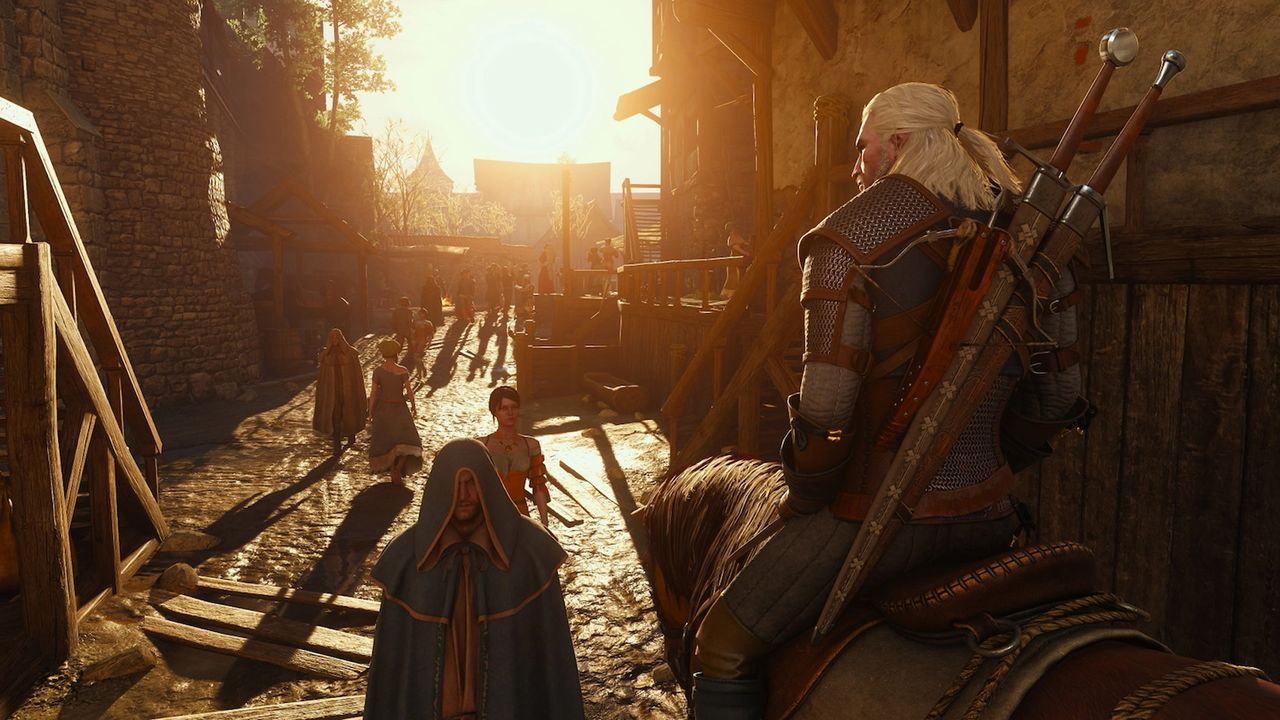
The Witcher 3 Director Set Up His New RPG Studio To Make Something ‘Meaningful’
Konrad Tomaszkiewicz loves RPGs. That will come as a surprise to no one who takes even a cursory glance at his career history, which saw him rise from a junior tester all the way up to the director of The Witcher 3 and its expansions over a 17-year journey with CD Projekt Red. Today, Tomaszkiewicz has his own studio, Rebel Wolves, which is dedicated to making new games in the genre he’s loved for decades. “From the first PCs, my favorite games were Eye of the Beholder and Betrayal at Krondor,” he reminisces. “Later it was Ultima 7, Baldur's Gate, the first Fallout. And then there was definitely Vampire: The Masquerade – Bloodlines, the first one. It was buggy as hell but it was a great game. So many possibilities, every vampire clan and different ways of play. It was really, really great.” Perhaps Tomaszkiewicz’s love for Bloodlines was the distant origin point for The Blood of Dawnwalker, Rebel Wolves’ upcoming, deeply ambitious vampire RPG. As in Troika’s beloved game, Dawnwalker makes clever use of vampire mythology to inform its gameplay mechanics, including a hunger system that overrides your dialogue options with a desperate need to feed when you’re starved of blood. Ignore your cravings for too long and you may find yourself involuntarily draining a major NPC of their lifeforce, permanently removing them from the story. It’s systems like that that have ensured RPGs have remained Tomaszkiewicz’s favourite genre through the decades. “[They] are the most important for me because they allow me to choose,” he says. “They allow me to feel the consequence of my choices.” For the Love of RPGs Tomaszkiewicz’s fascination with the immersive qualities of RPGs began early on. “I had quite a difficult childhood because my father was a surgeon, but the problem was that he was also an alcoholic,” he explains. “We had a lot of things which were really heavy and video games were an escape. RPGs were the most immersive because when I went into the role, it was really important for me to solve those mysteries or go through the adventures. This escape was really perfect for me because I could forget about reality in those games.” RPGs have been so formative in Tomaszkiewicz’s life that he simply won’t consider making any other kind of game. “I will not go to do racing games or shooters, because [role-playing games] is something which is inside me. This is what I want to create.” That brings us to Rebel Wolves. As you enter into its Warsaw-based offices, you’re greeted by a wall mural that reads “A studio born out of love for RPGs.” Its desks are manned by all manner of RPG enthusiasts, including family (both figuratively and literally – Tomaszkiewicz’s brother, Mateusz, is Dawnwalker’s creative director) who followed him from CD Projekt Red, and new allies with varied past experiences, from train simulators to historical reenactment. Together, they hope to create a medieval fantasy RPG that's “meaningful for players and the industry.” But what does Rebel Wolves mean by that? When it comes to players, Tomaszkiewicz explains it's not just about delivering an impactful story, but something that will encourage thought and reflection after playing. “When I hear from the players that they experienced something new and something fresh, this is meaningful for me,” he says. As for the industry, Tomaszkiewicz points towards The Blood of Dawnwalker’s central mechanic: time. You have just 30 days and 30 nights to save protagonist Coen’s family from the clutches of evil vampires, with actions such as completing objectives and engaging in certain conversations pushing the clock forward. While it shares common ground with the time management loops in games like Persona and Disco Elysium, it’s a new way of adding pressure and consequence to a Witcher-style RPG. “I want to show to the industry that it's possible to do this risky stuff,” Tomaszkiewicz says, “and to change the feeling of the genre, to create a branch of the genre, because I think that there is a lot of space and a lot of unknown we haven’t explored yet.”Risky Business Tomaszkiewicz admits that “we were a little bored” of making what he calls “same-but-new” video games. “When you release the one game and it is a success, people want more of this, but they don't want you to change it because they love this particular idea,” he laments. “And obviously when you have these stakeholders or the stock market and so on, there are the needs from those sides and it's quite hard to please everyone.” On the surface, The Blood of Dawnwalker does admittedly look very similar to The Witcher 3. It’s another single protagonist RPG with a focus on action combat, deep choices, and cinematic presentation – it looks same-but-new. But the team wanted to create something that was fundamentally very different. That’s where the idea of the “narrative sandbox” came in; Dawnwalker doesn’t have a classic main quest line that takes you from prologue to final boss. Instead, after the introduction
 Konrad Tomaszkiewicz loves RPGs. That will come as a surprise to no one who takes even a cursory glance at his career history, which saw him rise from a junior tester all the way up to the director of The Witcher 3 and its expansions over a 17-year journey with CD Projekt Red.
Today, Tomaszkiewicz has his own studio, Rebel Wolves, which is dedicated to making new games in the genre he’s loved for decades.
“From the first PCs, my favorite games were Eye of the Beholder and Betrayal at Krondor,” he reminisces. “Later it was Ultima 7, Baldur's Gate, the first Fallout. And then there was definitely Vampire: The Masquerade – Bloodlines, the first one. It was buggy as hell but it was a great game. So many possibilities, every vampire clan and different ways of play. It was really, really great.”
Perhaps Tomaszkiewicz’s love for Bloodlines was the distant origin point for The Blood of Dawnwalker, Rebel Wolves’ upcoming, deeply ambitious vampire RPG. As in Troika’s beloved game, Dawnwalker makes clever use of vampire mythology to inform its gameplay mechanics, including a hunger system that overrides your dialogue options with a desperate need to feed when you’re starved of blood. Ignore your cravings for too long and you may find yourself involuntarily draining a major NPC of their lifeforce, permanently removing them from the story.
It’s systems like that that have ensured RPGs have remained Tomaszkiewicz’s favourite genre through the decades. “[They] are the most important for me because they allow me to choose,” he says. “They allow me to feel the consequence of my choices.”
For the Love of RPGs
Tomaszkiewicz’s fascination with the immersive qualities of RPGs began early on. “I had quite a difficult childhood because my father was a surgeon, but the problem was that he was also an alcoholic,” he explains. “We had a lot of things which were really heavy and video games were an escape. RPGs were the most immersive because when I went into the role, it was really important for me to solve those mysteries or go through the adventures. This escape was really perfect for me because I could forget about reality in those games.”RPGs have been so formative in Tomaszkiewicz’s life that he simply won’t consider making any other kind of game. “I will not go to do racing games or shooters, because [role-playing games] is something which is inside me. This is what I want to create.”
That brings us to Rebel Wolves. As you enter into its Warsaw-based offices, you’re greeted by a wall mural that reads “A studio born out of love for RPGs.” Its desks are manned by all manner of RPG enthusiasts, including family (both figuratively and literally – Tomaszkiewicz’s brother, Mateusz, is Dawnwalker’s creative director) who followed him from CD Projekt Red, and new allies with varied past experiences, from train simulators to historical reenactment. Together, they hope to create a medieval fantasy RPG that's “meaningful for players and the industry.”
But what does Rebel Wolves mean by that? When it comes to players, Tomaszkiewicz explains it's not just about delivering an impactful story, but something that will encourage thought and reflection after playing. “When I hear from the players that they experienced something new and something fresh, this is meaningful for me,” he says.
As for the industry, Tomaszkiewicz points towards The Blood of Dawnwalker’s central mechanic: time. You have just 30 days and 30 nights to save protagonist Coen’s family from the clutches of evil vampires, with actions such as completing objectives and engaging in certain conversations pushing the clock forward. While it shares common ground with the time management loops in games like Persona and Disco Elysium, it’s a new way of adding pressure and consequence to a Witcher-style RPG.
“I want to show to the industry that it's possible to do this risky stuff,” Tomaszkiewicz says, “and to change the feeling of the genre, to create a branch of the genre, because I think that there is a lot of space and a lot of unknown we haven’t explored yet.”
Risky Business
Tomaszkiewicz admits that “we were a little bored” of making what he calls “same-but-new” video games. “When you release the one game and it is a success, people want more of this, but they don't want you to change it because they love this particular idea,” he laments. “And obviously when you have these stakeholders or the stock market and so on, there are the needs from those sides and it's quite hard to please everyone.” On the surface, The Blood of Dawnwalker does admittedly look very similar to The Witcher 3. It’s another single protagonist RPG with a focus on action combat, deep choices, and cinematic presentation – it looks same-but-new. But the team wanted to create something that was fundamentally very different. That’s where the idea of the “narrative sandbox” came in; Dawnwalker doesn’t have a classic main quest line that takes you from prologue to final boss. Instead, after the introduction you’re free to explore the world and complete its many, many quests in any order you like. Some overlap, creating a deeper sense of place and politics. But none are mandatory – you can simply go right from tutorial to the final encounter if you really want to.
When you have the big companies which have established IPs, it's really hard to do something really innovative because it's always about being same-but-new. “Our mission should be to deliver not only a cool experience, which is ‘safe’ because we know how to do that, but we should also explore these areas which we are not experts in yet, and to try to deliver some fresh feelings,” insists Tomaszkiewicz. “Obviously here the risk is bigger, but I think that it's worth it because later on you will be remembered in the industry, because you created something really new. Maybe in the future some other people will try to do the ‘narrative sandbox’.”
I ask Tomaszkiewicz if Dawnwalker’s narrative sandbox and time loop were things he could have accomplished at CDPR or another large, established studio. “I think I couldn't,” he says. “When you have the big companies which have established IPs, it's really hard to change something or do something really innovative because it's always about being same-but-new. You already know the playerbase wants almost the same, but new, in comparison to doing something really fresh and new. I think that Cyberpunk was this kind of jump for CDPR, but it's really hard to go through with ideas like this in the big companies. And here, when I have my own company, I can, with the commerce [team] and my [development] team, make our own mistakes or our own decisions of crazy stuff we want to create.”
Beyond Dawnwalker
Considering Tomaszkiewicz’s frustrations with a development system that forces studios to make overly-similar games, I ask about his vision for the future of Rebel Wolves. The Blood of Dawnwalker is planned to be a saga, but won’t that mean developing iterative sequels that are “same-but-new”?“I think that it's really smart to work how Blizzard worked before,” he says, pointing back to the Californian studio’s early days. “They had Warcraft, but they also created StarCraft. It's smart because people need refreshment. And at some point we need to create a second IP. I think that, some time from now, we will do one game from [the Dawnwalker] IP and a second game from a different IP, and then back to [Dawnwalker].”
Tomaszkiewicz notes that he wants to work with his team for as long as possible, and he recognises that part of the challenge is creating an environment that will foster creative happiness. He believes that creating a second IP will (at least partly) fix the problem of developers stifled by working on “same-but-new” projects.
Levelling up the RPG
As a life-long fan of role-playing games, Tomaszkiewicz has watched the genre change in real-time. “Because of this evolution of tools and of tech, you can do things faster, you can develop games with bigger words, with the features you couldn't do sometime ago,” he says. “The perfect example is Crimson Desert, because the amount of features they have is insane! And I'm laughing that, if it would be possible for me to have so many features like they have, combined with the story we can tell, we would create a holy grail.”Such a lofty goal raises the question of AI, which the tech giants of the world promise can deliver super-human productivity. Tomaszkiewicz confirms that Rebel Wolves has used generative AI as part of Dawnwalker’s development – artificial voices were used during the early stages of design to create a sort of draft version of cutscenes and dialogues, which allowed the team to work out if the script worked in practice before the cast of actors were brought in to record their performances. The final version of Dawnwalker will feature no AI assets at all, though.
“I think that companies should use AI, but in the way which helps people to work, not replace the people,” emphasises Tomaszkiewicz.
He uses Rebel Wolves’ in-house QA team as an example of how AI tools could be used to improve development. “They sometimes have the task that they need to, for example, go through the terrain and check if there are no holes in the terrain and that the collisions are good,” he explains. “At the same time, they could play the quest and tell me if they like the characters or if the gameplay loops are fun enough, or if the timings in the combat can be better or whatever, right? And my approach is that I feel that we should use AI to help our people to work and take from them these tasks which are annoying and frustrating and allow them to do this more fun work, which is needed, actually.”
That’s not a reality for Rebel Wolves at the moment, and so the developer’s 150 staff must carefully focus on the things that are worth spending time on. Given time and money, such a team could almost certainly achieve that “holy grail” of Crimson Desert’s feature-packed world grafted onto The Blood of Dawnwalkers story, without any need for AI. But the reality of game development is that there are time and money constraints, and that can shape a studio’s outlook and drive.
“We have here philosophy that we create features which support the story and the feel we want to create. We prefer to create less features, but [make them] more polished,” Tomaszkiewicz explains. “From my perspective, all of this stuff needs to have meaning in the game, or I need to have the motivation to use them.”
But Tomaszkiewicz’s real motivation for pushing forward the genre is something he shares with many of the world’s most prominent RPG developers. It all goes back to where the genre began: on the tabletop, with 20-sided dice and a dungeon master.
“We’re learning how to give even more freedom to players,” he says. “Not only in the gameplay and exploration of the world, but also the story elements. Like in quests, allowing you to complete your goal in many, many ways. It's moving the video game closer to pen and paper RPGs, and I think that this is the holy grail of what we want to achieve. To give you the freedom and give you immersion, which allows you to experience – emotionality-wise and feeling-wise – the games in a different way.”
For many, Larian’s Baldur’s Gate 3 has set an almost impossible high bar when it comes to that kind of ambition. But, from what I’ve seen of The Blood of Dawnwalker so far, its dedication to choice and shocking consequences, as well as its ambitious “narrative sandbox” design, means that it stands a chance of capturing the magic of an unforgettable D&D session. And if it all goes well, Tomaszkiewicz will have helped install yet another Polish studio among RPG royalty.
Matt Purslow is IGN's Executive Editor of Features.
What's Your Reaction?








XINKER - Business and Income Tips
Explore XINKER, the ultimate platform for mastering business strategies, discovering passive income opportunities, and learning success principles. Join a community of thinkers dedicated to achieving financial freedom and entrepreneurial excellence.


![[Business Talk] Chagee: Opening 3,500 stores in 6 years](https://xinker.org/uploads/images/202410/image_140x98_671afce94bf91.webp)