



![[PRO Tips] Gold’s Bullish Revival: Seasonal Trends and Key Levels to Watch](https://xinker.org/uploads/images/202412/image_430x256_67724cc6ad0cd.webp)
![[PRO Tips] Gold Market Under Short-Term Pressure, Safe-Haven Demand and Central Bank Buying Support Long-Term Upside Potential](https://xinker.org/uploads/images/202412/image_430x256_676ffb4685287.webp)
![[PRO Tips] Analysis of 9 key points of differentiation strategy! Master differentiation to create a brand advantage that is unique in the world!](https://firebasestorage.googleapis.com/v0/b/xinker-tips.appspot.com/o/article_thumbnails%2Fscaled_differentiation%20strategy.png.png?alt=media&token=a1bfc3d2-e85a-4db7-8a6d-01c7274f8940)
![[PRO Tips] Will REITs regain growth momentum in 2024? 3 REITs ETFs you must know if you want to invest in real estate.](https://firebasestorage.googleapis.com/v0/b/xinker-tips.appspot.com/o/article_thumbnails%2Fscaled_REITs1.png.png?alt=media&token=8af4eb93-33ff-466f-8039-b6555fad52b4)
![[PRO Tips] Complete tutorial on how to make money in Adobe Stock!](https://firebasestorage.googleapis.com/v0/b/xinker-tips.appspot.com/o/article_thumbnails%2Fscaled_tut-adobe1.png.png?alt=media&token=0b2c8cf2-22bd-4142-883e-140ed1cbaf02)
![[Passive Income] Unlock the secret of passive income: 3 steps to apply for Google AdSense](https://xinker.org/uploads/images/202410/image_430x256_6717a4fb3052b.webp)
![[Passive Income] Earn over $200 a day with AI-generated articles!](https://firebasestorage.googleapis.com/v0/b/xinker-tips.appspot.com/o/article_thumbnails%2Fscaled_article1.png.png?alt=media&token=f61bf35b-8553-4719-826d-7360024adc70)
![[Passive Income] Earn over 20 USD per download with AI-generated images!](https://firebasestorage.googleapis.com/v0/b/xinker-tips.appspot.com/o/article_thumbnails%2Fscaled_adobe2.png.png?alt=media&token=3e20e76a-a907-45af-80aa-bf9b3600301f)
![[Passive Income] Earn 10 USD per new download by sharing CapCut!](https://firebasestorage.googleapis.com/v0/b/xinker-tips.appspot.com/o/article_thumbnails%2Fscaled_capcut2.png.png?alt=media&token=a04dec40-1fac-4857-86f2-19a8be02d38e)
![[Passive Income] Use your WiFi to create passive income in 5 minutes, and you can earn 4-6 U per day!](https://firebasestorage.googleapis.com/v0/b/xinker-tips.appspot.com/o/article_thumbnails%2Fscaled_Grassio.webp.png?alt=media&token=7659a95e-0e47-4f27-a17d-c942ac3cf7f4)


![[Business Talk] The Unique Theme of XINKER's Song: Beef Wellington and Business Mastery](https://xinker.org/uploads/images/202410/image_430x256_671afc155f47f.webp)
![[Business Talk] Chagee: Opening 3,500 stores in 6 years](https://xinker.org/uploads/images/202410/image_430x256_671afce80c5f9.webp)


"When Arc Raiders was at its peak," Embark was burning 30 terabytes of data per day tracking every single bullet fired: "We want to know who shot first"
Arc Raiders developer Embark Studios recently pulled back the curtain on the data pipeline it uses to track what players are doing and make adjustments based on their behavior, revealing a staggering bit of tech that can, within seconds, tell the devs about every single bullet fired in the game. Speaking at the developer conference held by publisher Nexon, data engineer Mattias Andersson examines the structure and purpose of Embark's intense data tracking. This covers the studio's previous game, The Finals, as well, but Arc Raiders is the focus. "We track every bullet in these games," Andersson says. "We track where the players are. We track whenever a bullet hits something. We have miniguns in our game, at least in The Finals, so this is a lot of bullets to keep track of. "We're tracking more than 1,000 different event types," he continues. "We were tracking more than 100 billion events per day when Arc Raiders was at its peak. That is 30 terabytes of data per day. And we do all this with less than two second latency into [the data tool] BigQuery. So as soon as you fire a bullet, two seconds later, I can run a query in BigQuery and find out if you hit or not." That peak would've been around November 2025 to February 2026, when Arc Raiders was regularly pulling over 400,000 concurrent players on Steam alone. The game is averaging far fewer than that today, with some players simply moving on or perhaps waiting for the big October update, but Arc Raiders is still hanging out in or around the top 50 most-played games on Steam. (Image credit: Embark Studios) Embark tracks this stuff so granularly, Andersson explains, for anti-cheat purposes, bug detection, improving elements like weapon balancing based on accuracy and damage, and to tune the behavior-driven matchmaking system of Arc Raiders in particular. "We try to find out how aggressive a player you are," he says of Arc Raiders matchmaking. "We want to know who shot first in any encounter. Who was the one who started shooting at the other player? And then we try to make sure that people who want to PvP a lot get matchmade who PvP a lot, and the people who never initiate fights, the friendly players, get moved in together with the more friendly players." This gives us a closer look at something Arc Raiders designer director Virgil Watkins told us about earlier this year. "We can track who shoots first and who takes damage and who [does] whatever," Watkins said at the time. "But the one thing the system does not do is attempt to assume intent. If I'm a very bad player and you're a good player, and I'm the aggressor and I just miss all my shots and you defend yourself, the game doesn't know what the intent was. They just saw you kill me because I'm terrible." The data pipeline underpinning this approach is, from the outside, a dizzying labyrinth of dashboards, printouts, and applications. But some of it is pretty intuitive. For example, Embark has access to a custom "round viewer" that can replay player actions, including a "map replay" that shows where people move throughout a round. Heatmaps showing where players move, where they die, and clusters of other actions function similarly. An in-engine voxel heatmap of Arc Raiders' Stella Montis map confirms a few unsurprising death boxes. (Image credit: Embark Studios / Nexon) Arc Raiders devs have "completed our rollout of Denuvo Anti-Cheat to all players," but Embark isn't done yet with "a more extensive update" striving for fair play. [/url]
 Arc Raiders developer Embark Studios recently pulled back the curtain on the data pipeline it uses to track what players are doing and make adjustments based on their behavior, revealing a staggering bit of tech that can, within seconds, tell the devs about every single bullet fired in the game.
 Speaking at the developer conference held by publisher Nexon, data engineer Mattias Andersson examines the structure and purpose of Embark's intense data tracking. This covers the studio's previous game, The Finals, as well, but Arc Raiders is the focus.
"We track every bullet in these games," Andersson says. "We track where the players are. We track whenever a bullet hits something. We have miniguns in our game, at least in The Finals, so this is a lot of bullets to keep track of.
"We're tracking more than 1,000 different event types," he continues. "We were tracking more than 100 billion events per day when Arc Raiders was at its peak. That is 30 terabytes of data per day. And we do all this with less than two second latency into [the data tool] BigQuery. So as soon as you fire a bullet, two seconds later, I can run a query in BigQuery and find out if you hit or not."
That peak would've been around November 2025 to February 2026, when Arc Raiders was regularly pulling over 400,000 concurrent players on Steam alone. The game is averaging far fewer than that today, with some players simply moving on or perhaps waiting for the big October update, but Arc Raiders is still hanging out in or around the top 50 most-played games on Steam.

(Image credit: Embark Studios) Embark tracks this stuff so granularly, Andersson explains, for anti-cheat purposes, bug detection, improving elements like weapon balancing based on accuracy and damage, and to tune the behavior-driven matchmaking system of Arc Raiders in particular.
"We try to find out how aggressive a player you are," he says of Arc Raiders matchmaking. "We want to know who shot first in any encounter. Who was the one who started shooting at the other player? And then we try to make sure that people who want to PvP a lot get matchmade who PvP a lot, and the people who never initiate fights, the friendly players, get moved in together with the more friendly players."
This gives us a closer look at something Arc Raiders designer director Virgil Watkins told us about earlier this year. "We can track who shoots first and who takes damage and who [does] whatever," Watkins said at the time. "But the one thing the system does not do is attempt to assume intent. If I'm a very bad player and you're a good player, and I'm the aggressor and I just miss all my shots and you defend yourself, the game doesn't know what the intent was. They just saw you kill me because I'm terrible."
The data pipeline underpinning this approach is, from the outside, a dizzying labyrinth of dashboards, printouts, and applications. But some of it is pretty intuitive. For example, Embark has access to a custom "round viewer" that can replay player actions, including a "map replay" that shows where people move throughout a round. Heatmaps showing where players move, where they die, and clusters of other actions function similarly. An in-engine voxel heatmap of Arc Raiders' Stella Montis map confirms a few unsurprising death boxes.
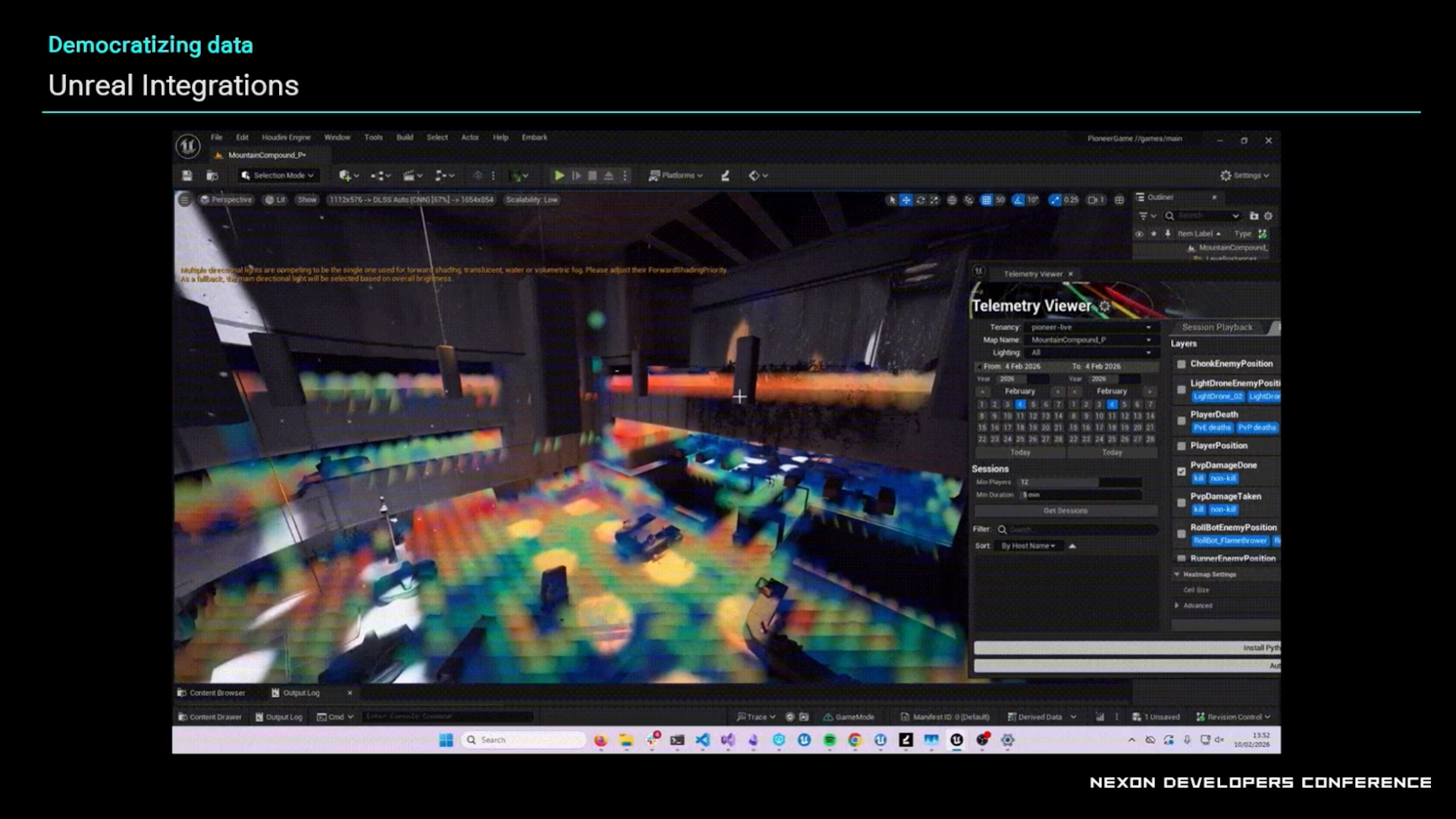
(Image credit: Embark Studios / Nexon) Arc Raiders devs have "completed our rollout of Denuvo Anti-Cheat to all players," but Embark isn't done yet with "a more extensive update" striving for fair play.
[/url]
What's Your Reaction?








XINKER - Business and Income Tips
Explore XINKER, the ultimate platform for mastering business strategies, discovering passive income opportunities, and learning success principles. Join a community of thinkers dedicated to achieving financial freedom and entrepreneurial excellence.



![[Business Talk] Chagee: Opening 3,500 stores in 6 years](https://xinker.org/uploads/images/202410/image_140x98_671afce94bf91.webp)