
![[PRO Tips] Gold’s Bullish Revival: Seasonal Trends and Key Levels to Watch](https://xinker.org/uploads/images/202412/image_430x256_67724cc6ad0cd.webp)
![[PRO Tips] Gold Market Under Short-Term Pressure, Safe-Haven Demand and Central Bank Buying Support Long-Term Upside Potential](https://xinker.org/uploads/images/202412/image_430x256_676ffb4685287.webp)
![[PRO Tips] Analysis of 9 key points of differentiation strategy! Master differentiation to create a brand advantage that is unique in the world!](https://firebasestorage.googleapis.com/v0/b/xinker-tips.appspot.com/o/article_thumbnails%2Fscaled_differentiation%20strategy.png.png?alt=media&token=a1bfc3d2-e85a-4db7-8a6d-01c7274f8940)
![[PRO Tips] Will REITs regain growth momentum in 2024? 3 REITs ETFs you must know if you want to invest in real estate.](https://firebasestorage.googleapis.com/v0/b/xinker-tips.appspot.com/o/article_thumbnails%2Fscaled_REITs1.png.png?alt=media&token=8af4eb93-33ff-466f-8039-b6555fad52b4)
![[PRO Tips] Complete tutorial on how to make money in Adobe Stock!](https://firebasestorage.googleapis.com/v0/b/xinker-tips.appspot.com/o/article_thumbnails%2Fscaled_tut-adobe1.png.png?alt=media&token=0b2c8cf2-22bd-4142-883e-140ed1cbaf02)
![[Passive Income] Unlock the secret of passive income: 3 steps to apply for Google AdSense](https://xinker.org/uploads/images/202410/image_430x256_6717a4fb3052b.webp)
![[Passive Income] Earn over $200 a day with AI-generated articles!](https://firebasestorage.googleapis.com/v0/b/xinker-tips.appspot.com/o/article_thumbnails%2Fscaled_article1.png.png?alt=media&token=f61bf35b-8553-4719-826d-7360024adc70)
![[Passive Income] Earn over 20 USD per download with AI-generated images!](https://firebasestorage.googleapis.com/v0/b/xinker-tips.appspot.com/o/article_thumbnails%2Fscaled_adobe2.png.png?alt=media&token=3e20e76a-a907-45af-80aa-bf9b3600301f)
![[Passive Income] Earn 10 USD per new download by sharing CapCut!](https://firebasestorage.googleapis.com/v0/b/xinker-tips.appspot.com/o/article_thumbnails%2Fscaled_capcut2.png.png?alt=media&token=a04dec40-1fac-4857-86f2-19a8be02d38e)
![[Passive Income] Use your WiFi to create passive income in 5 minutes, and you can earn 4-6 U per day!](https://firebasestorage.googleapis.com/v0/b/xinker-tips.appspot.com/o/article_thumbnails%2Fscaled_Grassio.webp.png?alt=media&token=7659a95e-0e47-4f27-a17d-c942ac3cf7f4)


![[Business Talk] The Unique Theme of XINKER's Song: Beef Wellington and Business Mastery](https://xinker.org/uploads/images/202410/image_430x256_671afc155f47f.webp)
![[Business Talk] Chagee: Opening 3,500 stores in 6 years](https://xinker.org/uploads/images/202410/image_430x256_671afce80c5f9.webp)


We need games like Clair Obscur: Expedition 33, Balatro, and Peak as a cure for the "fear" in the industry, say experts
In a sea of conservative, market-researched games, a group of game development and publishing staff pointed to games like French JRPG Clair Obscur: Expedition 33, co-op adventure Peak, and roguelike card game Balatro as modern demonstrations of the "courage" that games should carry. "We're moving fast and losing what made us good (creativity, craft & the future)," declared a 2026 DevGAMM Madeira Games Summit workgroup hosted by veteran indie dev and consultant Rami Ismail of Vlambeer fame, as https://www.gamesindustry.biz/the-games-industry-is-stifled-by-a-culture-of-fear points out. Filled with designers, producers, publishers, and other game-orbiting staff, the group, as Ismail put it in a LinkedIn post, examined the "fear" chilling the games industry. In this fearful climate, they looked to four creative pillars: "creating coherence, identifying weaknesses, selling the dream," and "connecting the dots." "Many of the more fearful reflexes of the industry aim to sand down the rough edges of creative work, creating homogenous and bland works that 'check all the boxes', but are nevertheless (or, consequently) insincere, uninspiring, and uninteresting," Ismail said. "Courage is a consistent factor of most hit titles; in funding, in publishing, in marketing, and in investment." He added: "The industry’s fear of risk is currently the largest risk it faces." The thrust, I gather, is to help and encourage more developers and companies to follow the example of games like Clair Obscur, Balatro, and Peak by un-learning the impulse to "make games for everyone" or "chase the algorithm," per GamesIndustry.biz's reporting. (Image credit: LocalThunk) However, there was also notable pushback among the group on the idea of auteur-led development that sees one creative figure dragging teams behind them like cans on string. Rather than a caution-to-the-wind embracement of creativity of all, the group seemed to push brave and sustainable decisions. "There are too many cowards using all the wrong metrics controlling too many critical levers, and until we figure out how to put people - taste, creativity, and craft - back at the top, we're going to be stuck in the same loop that literally millennia ago people already understood and warned for: that acting from fear begets what you fear," Ismail says on LinkedIn. This approach to making risk workable comes as many industry figures highlight overdone de-risking in games, particularly in the AAA space, often to the point of outright de-fanging projects in the name of safety or broader appeal. Just last month, former PlayStation chief Shawn Layden argued that "we've lost a lot of the variety in games" thanks to the "rising cost" to make them. When costs go up, investment risks go up, so large, publicly traded companies often sand off risky elements to improve a project's outlook or try to reach a larger audience. But elements seen as risky are often the secret sauce that makes games fun and memorable, and without it, they may be reduced to a state worse than dead: sauceless. And let's talk about those costs for a minute. Too often it's implied that these enormous budgets are unavoidable, that games must be this big and expensive (and treading a path strewn with discarded labor, but I digress) and this is just how much it costs to make them. I'm reminded of a quote from Strange Scaffold head Xalavier Nelson Jr, one of the dozens of developers who told GamesRadar+ why they don't want to use generative AI (as it happens, we also spoke to Ismail). Nelson Jr. rather pertinently said: "For all the people who say it will let us finally make our big games faster and cheaper as the costs go exponentially up, the unspoken decision that has occurred is that rather than ask whether the size of the game is feasible, and whether it provides the thing that is most meaningful for a player, they have decided that the sheer scope is the god of their development process and it must be fulfilled at all costs." Clair Obscur: Expedition 33, as a more mid-sized AA type of game, has been an especially relevant talking point on budgets. Reports from last year indicated its sub-$10 million budget clocked in around 3% of the likes of Marvel's Spider-Man 2 from Sony-owned studio Insomniac Games. Former PlayStation boss Shuhei Yoshida says $200 million AAA budgets mean publishers greenlight fewer games: "Something that has to be done." [/url]
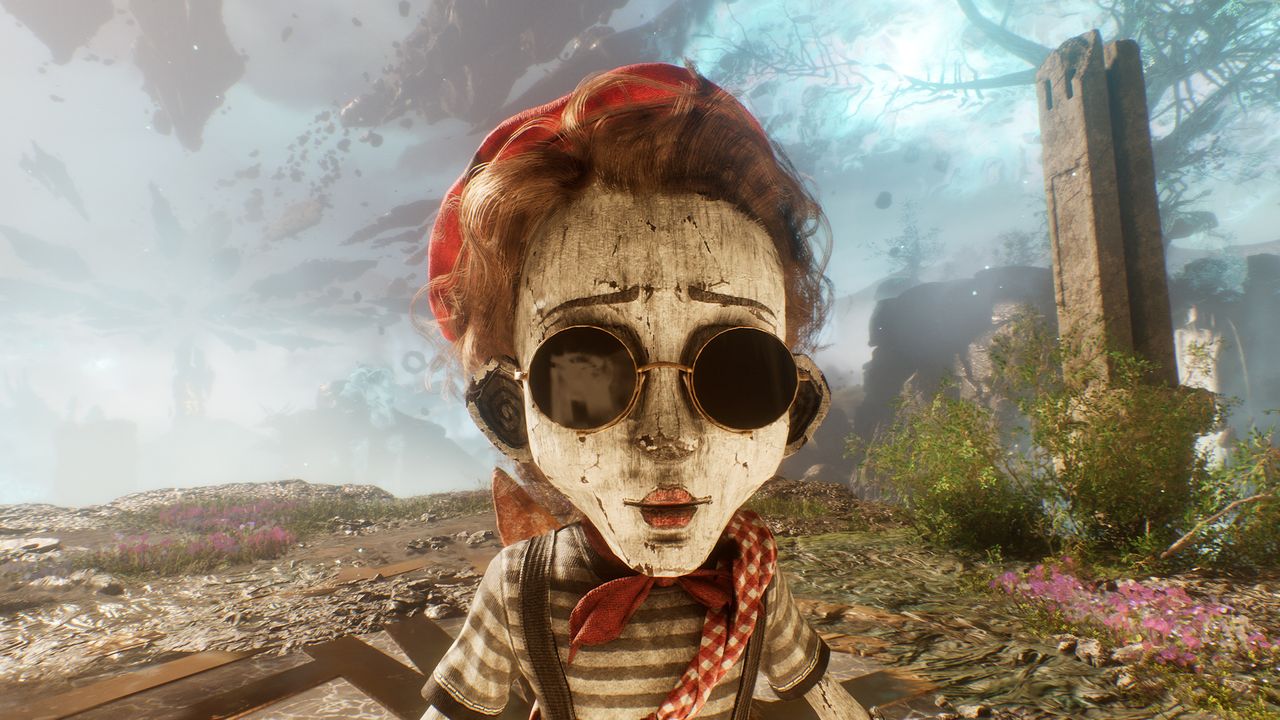 In a sea of conservative, market-researched games, a group of game development and publishing staff pointed to games like French JRPG Clair Obscur: Expedition 33, co-op adventure Peak, and roguelike card game Balatro as modern demonstrations of the "courage" that games should carry.
 "We're moving fast and losing what made us good (creativity, craft & the future)," declared a 2026 DevGAMM Madeira Games Summit workgroup hosted by veteran indie dev and consultant Rami Ismail of Vlambeer fame, as https://www.gamesindustry.biz/the-games-industry-is-stifled-by-a-culture-of-fear points out.
Filled with designers, producers, publishers, and other game-orbiting staff, the group, as Ismail put it in a LinkedIn post, examined the "fear" chilling the games industry. In this fearful climate, they looked to four creative pillars: "creating coherence, identifying weaknesses, selling the dream," and "connecting the dots."
"Many of the more fearful reflexes of the industry aim to sand down the rough edges of creative work, creating homogenous and bland works that 'check all the boxes', but are nevertheless (or, consequently) insincere, uninspiring, and uninteresting," Ismail said. "Courage is a consistent factor of most hit titles; in funding, in publishing, in marketing, and in investment."
He added: "The industry’s fear of risk is currently the largest risk it faces."
The thrust, I gather, is to help and encourage more developers and companies to follow the example of games like Clair Obscur, Balatro, and Peak by un-learning the impulse to "make games for everyone" or "chase the algorithm," per GamesIndustry.biz's reporting.

(Image credit: LocalThunk) However, there was also notable pushback among the group on the idea of auteur-led development that sees one creative figure dragging teams behind them like cans on string. Rather than a caution-to-the-wind embracement of creativity of all, the group seemed to push brave and sustainable decisions.
"There are too many cowards using all the wrong metrics controlling too many critical levers, and until we figure out how to put people - taste, creativity, and craft - back at the top, we're going to be stuck in the same loop that literally millennia ago people already understood and warned for: that acting from fear begets what you fear," Ismail says on LinkedIn.
This approach to making risk workable comes as many industry figures highlight overdone de-risking in games, particularly in the AAA space, often to the point of outright de-fanging projects in the name of safety or broader appeal.
Just last month, former PlayStation chief Shawn Layden argued that "we've lost a lot of the variety in games" thanks to the "rising cost" to make them. When costs go up, investment risks go up, so large, publicly traded companies often sand off risky elements to improve a project's outlook or try to reach a larger audience. But elements seen as risky are often the secret sauce that makes games fun and memorable, and without it, they may be reduced to a state worse than dead: sauceless.
And let's talk about those costs for a minute. Too often it's implied that these enormous budgets are unavoidable, that games must be this big and expensive (and treading a path strewn with discarded labor, but I digress) and this is just how much it costs to make them. I'm reminded of a quote from Strange Scaffold head Xalavier Nelson Jr, one of the dozens of developers who told GamesRadar+ why they don't want to use generative AI (as it happens, we also spoke to Ismail).
Nelson Jr. rather pertinently said: "For all the people who say it will let us finally make our big games faster and cheaper as the costs go exponentially up, the unspoken decision that has occurred is that rather than ask whether the size of the game is feasible, and whether it provides the thing that is most meaningful for a player, they have decided that the sheer scope is the god of their development process and it must be fulfilled at all costs."
Clair Obscur: Expedition 33, as a more mid-sized AA type of game, has been an especially relevant talking point on budgets. Reports from last year indicated its sub-$10 million budget clocked in around 3% of the likes of Marvel's Spider-Man 2 from Sony-owned studio Insomniac Games.
Former PlayStation boss Shuhei Yoshida says $200 million AAA budgets mean publishers greenlight fewer games: "Something that has to be done."
[/url]
What's Your Reaction?








XINKER - Business and Income Tips
Explore XINKER, the ultimate platform for mastering business strategies, discovering passive income opportunities, and learning success principles. Join a community of thinkers dedicated to achieving financial freedom and entrepreneurial excellence.


![[Business Talk] Chagee: Opening 3,500 stores in 6 years](https://xinker.org/uploads/images/202410/image_140x98_671afce94bf91.webp)