


![[PRO Tips] Gold’s Bullish Revival: Seasonal Trends and Key Levels to Watch](https://xinker.org/uploads/images/202412/image_430x256_67724cc6ad0cd.webp)
![[PRO Tips] Gold Market Under Short-Term Pressure, Safe-Haven Demand and Central Bank Buying Support Long-Term Upside Potential](https://xinker.org/uploads/images/202412/image_430x256_676ffb4685287.webp)
![[PRO Tips] Analysis of 9 key points of differentiation strategy! Master differentiation to create a brand advantage that is unique in the world!](https://firebasestorage.googleapis.com/v0/b/xinker-tips.appspot.com/o/article_thumbnails%2Fscaled_differentiation%20strategy.png.png?alt=media&token=a1bfc3d2-e85a-4db7-8a6d-01c7274f8940)
![[PRO Tips] Will REITs regain growth momentum in 2024? 3 REITs ETFs you must know if you want to invest in real estate.](https://firebasestorage.googleapis.com/v0/b/xinker-tips.appspot.com/o/article_thumbnails%2Fscaled_REITs1.png.png?alt=media&token=8af4eb93-33ff-466f-8039-b6555fad52b4)
![[PRO Tips] Complete tutorial on how to make money in Adobe Stock!](https://firebasestorage.googleapis.com/v0/b/xinker-tips.appspot.com/o/article_thumbnails%2Fscaled_tut-adobe1.png.png?alt=media&token=0b2c8cf2-22bd-4142-883e-140ed1cbaf02)
![[Passive Income] Unlock the secret of passive income: 3 steps to apply for Google AdSense](https://xinker.org/uploads/images/202410/image_430x256_6717a4fb3052b.webp)
![[Passive Income] Earn over $200 a day with AI-generated articles!](https://firebasestorage.googleapis.com/v0/b/xinker-tips.appspot.com/o/article_thumbnails%2Fscaled_article1.png.png?alt=media&token=f61bf35b-8553-4719-826d-7360024adc70)
![[Passive Income] Earn over 20 USD per download with AI-generated images!](https://firebasestorage.googleapis.com/v0/b/xinker-tips.appspot.com/o/article_thumbnails%2Fscaled_adobe2.png.png?alt=media&token=3e20e76a-a907-45af-80aa-bf9b3600301f)
![[Passive Income] Earn 10 USD per new download by sharing CapCut!](https://firebasestorage.googleapis.com/v0/b/xinker-tips.appspot.com/o/article_thumbnails%2Fscaled_capcut2.png.png?alt=media&token=a04dec40-1fac-4857-86f2-19a8be02d38e)
![[Passive Income] Use your WiFi to create passive income in 5 minutes, and you can earn 4-6 U per day!](https://firebasestorage.googleapis.com/v0/b/xinker-tips.appspot.com/o/article_thumbnails%2Fscaled_Grassio.webp.png?alt=media&token=7659a95e-0e47-4f27-a17d-c942ac3cf7f4)


![[Business Talk] The Unique Theme of XINKER's Song: Beef Wellington and Business Mastery](https://xinker.org/uploads/images/202410/image_430x256_671afc155f47f.webp)
![[Business Talk] Chagee: Opening 3,500 stores in 6 years](https://xinker.org/uploads/images/202410/image_430x256_671afce80c5f9.webp)

Vgames raises $10M fund for project financing for indie games | exclusive interview
Vgames has raised a $10 million indie fund to back the next generation of independent game studios through project financing. This new initiative — the third fund for the veteran team in addition to a user-acquisition fund and a main venture capital fund — will back indie developers building premium PC and console games across all genres with project financing tailored to modern game development environments. Vgames started in 2020 as a games-focused venture capital fund led by Eitan Reise and Daniel Mironov. I spoke with Mironov and investor for the fund Lior Elovitch in an interview. “We previously announced our growth financing fund, and we keep covering different domains of gaming and we are introducing this vehicle to approach indie developers that are building and looking for for capital,” Mironov said. He said the fund is aiming to invest in about 20 companies or so, and so the likely average round will be about $500,000 per studio. “We can go above and some cases below that,” Mironov said. “We can invest alongside others as well and don’t have to be the only capital in a particular project.” Daniel Mironov, partner at Vgames. photo eric sultan Vgames has established itself as one of the most active funds in the gaming sector, having invested in over 50 companies globally since its launch. The fund maintains flexibility in its investment structures, invests across all platforms, and supports companies from the earliest stages through to growth rounds. The Indie Fund introduces a project-based financing model with simple, founder-friendly terms in exchange for a share of a game’s revenue. Designed as an alternative to traditional equity financing and publisher-led structures, the fund gives developers flexible capital tied directly to the commercial performance of their games. The fund is focused specifically on premium PC and console titles across all genres, supporting studios building commercially ambitious games without relying on free-to-play monetization models. Unlike traditional publishers, Vgames does not control a studio’s product roadmap, creative direction, or go-to-market decisions. Studios retain full independence throughout development and publishing, including complete ownership of their intellectual property. The fund is designed for teams that already demonstrate strong distribution strategy and execution capabilities and are looking for capital partners rather than publishing services. Vgames believes this model is increasingly better suited for modern PC and console development, where smaller teams can now build commercially successful titles with greater speed and efficiency than ever before thanks to advances in development tools and production technology. In recent years, independent studios have produced some of the industry’s biggest breakout successes with comparatively lean teams and modest budgets, highlighting both the opportunity and the growing need for more founder-aligned financing models. “Independent developers are building some of the most important games in the industry today,” said Mironov, partner at Vgames. “Technology is allowing smaller teams to compete at a level that simply wasn’t possible a few years ago. But financing models haven’t evolved at the same pace. We believe studios need funding structures that match the realities of modern game development – flexible capital that supports growth without forcing founders into unnecessary dilution or loss of control.” “We’re backing studios, not taking control of their games,” Mironov added. “Founders keep creative independence, publishing flexibility, and ownership of their IP while gaining a financing partner aligned with the success of the game.” The fund will support projects across PC and console, with a focus on studios demonstrating strong creative direction, distribution skills, market validation, and strong global commercial potential. “In recent years, we’ve seen lean independent teams create breakout successes by building direct relationships with players and earning strong community support,” said Lior Elovitch, investor at Vgames. “Games today can scale globally with leaner teams, faster production cycles, and more efficient distribution than ever before. That creates opportunities for a new category of studios, and a need for financing models built specifically for them.” “We’re particularly excited to support teams that already understand how to bring games to market successfully,” Elovitch added. “The best independent studios today are highly capable not only in development, but also in distribution, community building, and commercial execution.”Part of a larger financial commitment to games Eitan Reisel, founder at Vgames. photo eric sultan Vgames is one of the most active gaming investors globally, backing category-defining founders from inception. With over $400 million in assets under management and top performance across funds, Vgames is a multistage investor providing both equity and non-di

Vgames has raised a $10 million indie fund to back the next generation of independent game studios through project financing.
This new initiative — the third fund for the veteran team in addition to a user-acquisition fund and a main venture capital fund — will back indie developers building premium PC and console games across all genres with project financing tailored to modern game development environments.
Vgames started in 2020 as a games-focused venture capital fund led by Eitan Reise and Daniel Mironov. I spoke with Mironov and investor for the fund Lior Elovitch in an interview.
“We previously announced our growth financing fund, and we keep covering different domains of gaming and we are introducing this vehicle to approach indie developers that are building and looking for for capital,” Mironov said.
He said the fund is aiming to invest in about 20 companies or so, and so the likely average round will be about $500,000 per studio.
“We can go above and some cases below that,” Mironov said. “We can invest alongside others as well and don’t have to be the only capital in a particular project.”
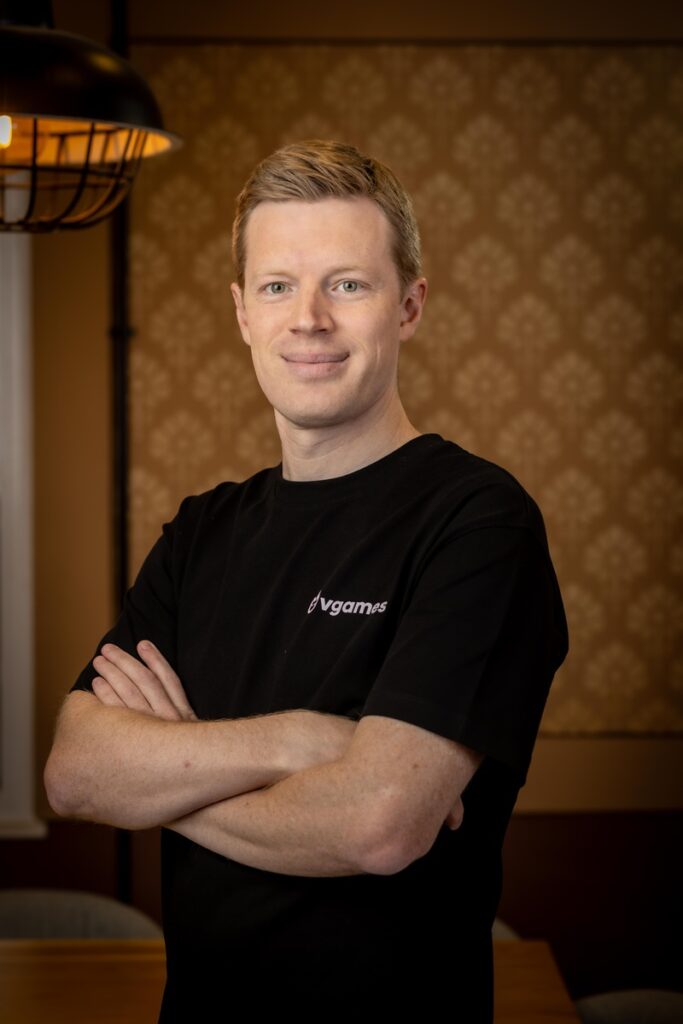 Daniel Mironov, partner at Vgames. photo eric sultan
Vgames has established itself as one of the most active funds in the gaming sector, having invested in over 50 companies globally since its launch. The fund maintains flexibility in its investment structures, invests across all platforms, and supports companies from the earliest stages through to growth rounds.
The Indie Fund introduces a project-based financing model with simple, founder-friendly terms in exchange for a share of a game’s revenue. Designed as an alternative to traditional equity financing and publisher-led structures, the fund gives developers flexible capital tied directly to the commercial performance of their games. The fund is focused specifically on premium PC and console titles across all genres, supporting studios building commercially ambitious games without relying on free-to-play monetization models.
Unlike traditional publishers, Vgames does not control a studio’s product roadmap, creative direction, or go-to-market decisions. Studios retain full independence throughout development and publishing, including complete ownership of their intellectual property. The fund is designed for teams that already demonstrate strong distribution strategy and execution capabilities and are looking for capital partners rather than publishing services.
Vgames believes this model is increasingly better suited for modern PC and console development, where smaller teams can now build commercially successful titles with greater speed and efficiency than ever before thanks to advances in development tools and production technology.
In recent years, independent studios have produced some of the industry’s biggest breakout successes with comparatively lean teams and modest budgets, highlighting both the opportunity and the growing need for more founder-aligned financing models.
“Independent developers are building some of the most important games in the industry today,” said Mironov, partner at Vgames. “Technology is allowing smaller teams to compete at a level that simply wasn’t possible a few years ago. But financing models haven’t evolved at the same pace. We believe studios need funding structures that match the realities of modern game development – flexible capital that supports growth without forcing founders into unnecessary dilution or loss of control.”
“We’re backing studios, not taking control of their games,” Mironov added. “Founders keep creative independence, publishing flexibility, and ownership of their IP while gaining a financing partner aligned with the success of the game.”
The fund will support projects across PC and console, with a focus on studios demonstrating strong creative direction, distribution skills, market validation, and strong global commercial potential.
“In recent years, we’ve seen lean independent teams create breakout successes by building direct relationships with players and earning strong community support,” said Lior Elovitch, investor at Vgames. “Games today can scale globally with leaner teams, faster production cycles, and more efficient distribution than ever before. That creates opportunities for a new category of studios, and a need for financing models built specifically for them.”
“We’re particularly excited to support teams that already understand how to bring games to market successfully,” Elovitch added. “The best independent studios today are highly capable not only in development, but also in distribution, community building, and commercial execution.”
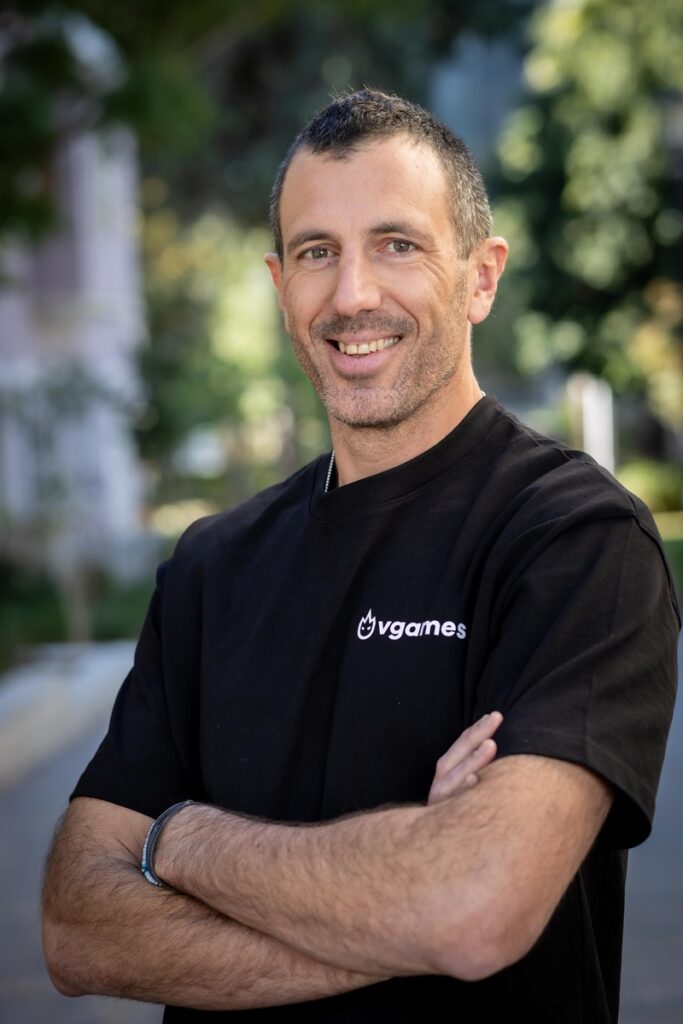 Eitan Reisel, founder at Vgames. photo eric sultan
Vgames is one of the most active gaming investors globally, backing category-defining founders from inception. With over $400 million in assets under management and top performance across funds, Vgames is a multistage investor providing both equity and non-dilutive growth financing to companies shaping how millions play, connect, and create across gaming, interactive entertainment, and consumer experiences.
Headquartered in Israel, Vgames has invested in nearly 50 companies, including SuperPlay, Innplay Labs, Candivore, 1047 Games, Starform, GOAT Studios, and Pocket Haven, among many others. The Indie Fund is expected to begin deploying capital immediately, with initial investments already in active discussions.
“It’s not like they’re at an early ideation phase,” he said. “In most cases they already have some distribution signals, their community, wish tests, or anything that provides more information about if there is an interest from the audience.”
The team made one investment a PC game company in Israel already but it hasn’t revealed it yet. The fund will likely focus on PC premium titles which are indie titles that sell for $5 to $40.
“Most of them are distributing on their own as well, so they prefer to use this capital instead of having a publisher, which means that they will have actually to distribute the game and work with their community,” Mironov said.
 Lior Elovitch, investor at Vgames. I asked if the firm had inspiration to invest in indies because of the success of Clair Obscur: Expedition 33, the hit game from Sandfall Interactive that won more awards than any game in history. They nodded and noted an even more recent success, Mecca Chamelon.
“It became like a social phenomenon, but we’re actually seeing a lot of teams that are quite small that are addressing a particular market subgenre, and building for it,” Mironov said. “They are talking directly to their community, building in the open, which we believe is the right way to market games today.”
He noted that, instead of having a third party distribute the game, the devs will distribute on your own and be very transparent with the community.
 Vgames and General Catalyst have found a new way to back founders. Source: Vgames There’s a lot less money available than in the past, so funding smaller teams makes sense. Griffin Gaming Partners, which has more than billion dollars under management, recently announced a $100 million project financing fund. Other investors like Dan Bunting are also turning to project financing, and Mironov believes this is a sign that the “VC ecosystem is changing and adapting to the reality of the industry.”
Elovitch said, “One thing that is important to mention about all those funds, not just ours, but the fact that VCs are now doing project financing, and in PC market, it allows the studios a different alternative rather than going with publishers. It’s a great fit for studios that still want to maintain their independence.”
Elovitch noted that publishers usually set milestones. They get involved in the product roadmap with the studio.
“We as investors will do that, but we also give the studios full independence on their creative, on their IP, on their product roadmap, on distribution. So it’s for studios that want to keep their independence,” he said.
Asked about the percentage fee that the fund will take, Mironov said it will differ case by case, but it will be similar to a VC model. The fund will recoup its investment during one phase, and then it will offer a split more generous in a later stage.
“It’s not equity, it’s revenue share model, and it’s lower compared to traditional publishers because we’re not doing the distribution,” Mironov said. “We’re risking capital. Our rev share is more modest than the other options. And we don’t take IP. We don’t do tranches as well. We’re trying to be more founder friendly, but we also expect them to be more independent on the distribution side.”
The fund will have a global reach, but it is likely to focus on the Middle East, Turkey and Eastern Europe.
“Our goal is to come up with a strategy to help developers get games out to the world,” Mironov said. “We feel that this vehicle will help at least an amount of founders who will fulfill their dreams and get the game out.”
He said a lot of companies got into trouble because they raised money in tranches or only enough to fund part of a game. Then they needed to raise more money and could not do so.
Elovitch said, “Distribution signals can be anything related to social media. It can be Instagram followers, it can be YouTube subscriptions, it can be even the comments on the game on the posts. We gives a lot of weight to the engagement of the of the users. For example, many comments saying we would love to play this game when you release it. That’s a signal we give a lot of weight to.”
The team prefers to see progress toward an actual game, rather than a pitch deck. But the distribution signals matter a lot.
 Dana Weinberg, investor at Vgames. I noted that the war in the Middle East and the war in Ukraine have made the market volatile, with the Esports World Cup forced to relocate from Riyadh to Paris. I wonder if this made raising the fund harder.
“Not really,” Mironov said. “Our LPs are very confident in our ability to find good opportunities and perform as Israelis. It’s difficult to say we’re almost used to that. It’s part of our reality, and in the end, I believe that people build some some entertainment products when they want to escape a bit from what’s happening in the world and the news and just create.”
I noted that the game industry really needs this fund.
Mironov said, “That’s why we started it. We saw there were some super talented founders that came to us, even for advice, because they didn’t have any other solution.”
As for the other funds, Mironov said the company is investing from its third fund now and it is in the process of raising a fourth fund. The company had two major exits that made the overall performance strong. In comparison to other active game investors, I tracked around 80 or so on my list since 2019. But Mironov believes there are only 10 or 15 active game funds now.
As far as the user acquisition fund, in conjunction with General Catalyst, Mironov said it is going well and the team is actively deploying capital from it.
“We see a very strong appetite from from studios also, because it’s difficult to raise growth rounds today, so this became as a strong alternative, especially for those that are looking for large scale opportunities,” said Mironov.
The post Vgames raises $10M fund for project financing for indie games | exclusive interview appeared first on GamesBeat.
This new initiative — the third fund for the veteran team in addition to a user-acquisition fund and a main venture capital fund — will back indie developers building premium PC and console games across all genres with project financing tailored to modern game development environments.
Vgames started in 2020 as a games-focused venture capital fund led by Eitan Reise and Daniel Mironov. I spoke with Mironov and investor for the fund Lior Elovitch in an interview.
“We previously announced our growth financing fund, and we keep covering different domains of gaming and we are introducing this vehicle to approach indie developers that are building and looking for for capital,” Mironov said.
He said the fund is aiming to invest in about 20 companies or so, and so the likely average round will be about $500,000 per studio.
“We can go above and some cases below that,” Mironov said. “We can invest alongside others as well and don’t have to be the only capital in a particular project.”
Daniel Mironov, partner at Vgames. photo eric sultanVgames has established itself as one of the most active funds in the gaming sector, having invested in over 50 companies globally since its launch. The fund maintains flexibility in its investment structures, invests across all platforms, and supports companies from the earliest stages through to growth rounds.
The Indie Fund introduces a project-based financing model with simple, founder-friendly terms in exchange for a share of a game’s revenue. Designed as an alternative to traditional equity financing and publisher-led structures, the fund gives developers flexible capital tied directly to the commercial performance of their games. The fund is focused specifically on premium PC and console titles across all genres, supporting studios building commercially ambitious games without relying on free-to-play monetization models.
Unlike traditional publishers, Vgames does not control a studio’s product roadmap, creative direction, or go-to-market decisions. Studios retain full independence throughout development and publishing, including complete ownership of their intellectual property. The fund is designed for teams that already demonstrate strong distribution strategy and execution capabilities and are looking for capital partners rather than publishing services.
Vgames believes this model is increasingly better suited for modern PC and console development, where smaller teams can now build commercially successful titles with greater speed and efficiency than ever before thanks to advances in development tools and production technology.
In recent years, independent studios have produced some of the industry’s biggest breakout successes with comparatively lean teams and modest budgets, highlighting both the opportunity and the growing need for more founder-aligned financing models.
“Independent developers are building some of the most important games in the industry today,” said Mironov, partner at Vgames. “Technology is allowing smaller teams to compete at a level that simply wasn’t possible a few years ago. But financing models haven’t evolved at the same pace. We believe studios need funding structures that match the realities of modern game development – flexible capital that supports growth without forcing founders into unnecessary dilution or loss of control.”
“We’re backing studios, not taking control of their games,” Mironov added. “Founders keep creative independence, publishing flexibility, and ownership of their IP while gaining a financing partner aligned with the success of the game.”
The fund will support projects across PC and console, with a focus on studios demonstrating strong creative direction, distribution skills, market validation, and strong global commercial potential.
“In recent years, we’ve seen lean independent teams create breakout successes by building direct relationships with players and earning strong community support,” said Lior Elovitch, investor at Vgames. “Games today can scale globally with leaner teams, faster production cycles, and more efficient distribution than ever before. That creates opportunities for a new category of studios, and a need for financing models built specifically for them.”
“We’re particularly excited to support teams that already understand how to bring games to market successfully,” Elovitch added. “The best independent studios today are highly capable not only in development, but also in distribution, community building, and commercial execution.”
Part of a larger financial commitment to games
Eitan Reisel, founder at Vgames. photo eric sultanVgames is one of the most active gaming investors globally, backing category-defining founders from inception. With over $400 million in assets under management and top performance across funds, Vgames is a multistage investor providing both equity and non-dilutive growth financing to companies shaping how millions play, connect, and create across gaming, interactive entertainment, and consumer experiences.
Headquartered in Israel, Vgames has invested in nearly 50 companies, including SuperPlay, Innplay Labs, Candivore, 1047 Games, Starform, GOAT Studios, and Pocket Haven, among many others. The Indie Fund is expected to begin deploying capital immediately, with initial investments already in active discussions.
A response to a tough market and the rise of indies
Mironov noted that there are many small teams that have been working on games for a while and they need capital to push the games out to the market.“It’s not like they’re at an early ideation phase,” he said. “In most cases they already have some distribution signals, their community, wish tests, or anything that provides more information about if there is an interest from the audience.”
The team made one investment a PC game company in Israel already but it hasn’t revealed it yet. The fund will likely focus on PC premium titles which are indie titles that sell for $5 to $40.
“Most of them are distributing on their own as well, so they prefer to use this capital instead of having a publisher, which means that they will have actually to distribute the game and work with their community,” Mironov said.
Expeditions?
Lior Elovitch, investor at Vgames. I asked if the firm had inspiration to invest in indies because of the success of Clair Obscur: Expedition 33, the hit game from Sandfall Interactive that won more awards than any game in history. They nodded and noted an even more recent success, Mecca Chamelon.“It became like a social phenomenon, but we’re actually seeing a lot of teams that are quite small that are addressing a particular market subgenre, and building for it,” Mironov said. “They are talking directly to their community, building in the open, which we believe is the right way to market games today.”
He noted that, instead of having a third party distribute the game, the devs will distribute on your own and be very transparent with the community.
Alternatives to publishers
Vgames and General Catalyst have found a new way to back founders. Source: Vgames There’s a lot less money available than in the past, so funding smaller teams makes sense. Griffin Gaming Partners, which has more than billion dollars under management, recently announced a $100 million project financing fund. Other investors like Dan Bunting are also turning to project financing, and Mironov believes this is a sign that the “VC ecosystem is changing and adapting to the reality of the industry.”Elovitch said, “One thing that is important to mention about all those funds, not just ours, but the fact that VCs are now doing project financing, and in PC market, it allows the studios a different alternative rather than going with publishers. It’s a great fit for studios that still want to maintain their independence.”
Elovitch noted that publishers usually set milestones. They get involved in the product roadmap with the studio.
“We as investors will do that, but we also give the studios full independence on their creative, on their IP, on their product roadmap, on distribution. So it’s for studios that want to keep their independence,” he said.
Asked about the percentage fee that the fund will take, Mironov said it will differ case by case, but it will be similar to a VC model. The fund will recoup its investment during one phase, and then it will offer a split more generous in a later stage.
“It’s not equity, it’s revenue share model, and it’s lower compared to traditional publishers because we’re not doing the distribution,” Mironov said. “We’re risking capital. Our rev share is more modest than the other options. And we don’t take IP. We don’t do tranches as well. We’re trying to be more founder friendly, but we also expect them to be more independent on the distribution side.”
The fund will have a global reach, but it is likely to focus on the Middle East, Turkey and Eastern Europe.
“Our goal is to come up with a strategy to help developers get games out to the world,” Mironov said. “We feel that this vehicle will help at least an amount of founders who will fulfill their dreams and get the game out.”
He said a lot of companies got into trouble because they raised money in tranches or only enough to fund part of a game. Then they needed to raise more money and could not do so.
Elovitch said, “Distribution signals can be anything related to social media. It can be Instagram followers, it can be YouTube subscriptions, it can be even the comments on the game on the posts. We gives a lot of weight to the engagement of the of the users. For example, many comments saying we would love to play this game when you release it. That’s a signal we give a lot of weight to.”
The team prefers to see progress toward an actual game, rather than a pitch deck. But the distribution signals matter a lot.
The state of the world
Dana Weinberg, investor at Vgames. I noted that the war in the Middle East and the war in Ukraine have made the market volatile, with the Esports World Cup forced to relocate from Riyadh to Paris. I wonder if this made raising the fund harder.“Not really,” Mironov said. “Our LPs are very confident in our ability to find good opportunities and perform as Israelis. It’s difficult to say we’re almost used to that. It’s part of our reality, and in the end, I believe that people build some some entertainment products when they want to escape a bit from what’s happening in the world and the news and just create.”
I noted that the game industry really needs this fund.
Mironov said, “That’s why we started it. We saw there were some super talented founders that came to us, even for advice, because they didn’t have any other solution.”
As for the other funds, Mironov said the company is investing from its third fund now and it is in the process of raising a fourth fund. The company had two major exits that made the overall performance strong. In comparison to other active game investors, I tracked around 80 or so on my list since 2019. But Mironov believes there are only 10 or 15 active game funds now.
As far as the user acquisition fund, in conjunction with General Catalyst, Mironov said it is going well and the team is actively deploying capital from it.
“We see a very strong appetite from from studios also, because it’s difficult to raise growth rounds today, so this became as a strong alternative, especially for those that are looking for large scale opportunities,” said Mironov.
The post Vgames raises $10M fund for project financing for indie games | exclusive interview appeared first on GamesBeat.
What's Your Reaction?








XINKER - Business and Income Tips
Explore XINKER, the ultimate platform for mastering business strategies, discovering passive income opportunities, and learning success principles. Join a community of thinkers dedicated to achieving financial freedom and entrepreneurial excellence.


![[Business Talk] Chagee: Opening 3,500 stores in 6 years](https://xinker.org/uploads/images/202410/image_140x98_671afce94bf91.webp)