


![[PRO Tips] Gold’s Bullish Revival: Seasonal Trends and Key Levels to Watch](https://xinker.org/uploads/images/202412/image_430x256_67724cc6ad0cd.webp)
![[PRO Tips] Gold Market Under Short-Term Pressure, Safe-Haven Demand and Central Bank Buying Support Long-Term Upside Potential](https://xinker.org/uploads/images/202412/image_430x256_676ffb4685287.webp)
![[PRO Tips] Analysis of 9 key points of differentiation strategy! Master differentiation to create a brand advantage that is unique in the world!](https://firebasestorage.googleapis.com/v0/b/xinker-tips.appspot.com/o/article_thumbnails%2Fscaled_differentiation%20strategy.png.png?alt=media&token=a1bfc3d2-e85a-4db7-8a6d-01c7274f8940)
![[PRO Tips] Will REITs regain growth momentum in 2024? 3 REITs ETFs you must know if you want to invest in real estate.](https://firebasestorage.googleapis.com/v0/b/xinker-tips.appspot.com/o/article_thumbnails%2Fscaled_REITs1.png.png?alt=media&token=8af4eb93-33ff-466f-8039-b6555fad52b4)
![[PRO Tips] Complete tutorial on how to make money in Adobe Stock!](https://firebasestorage.googleapis.com/v0/b/xinker-tips.appspot.com/o/article_thumbnails%2Fscaled_tut-adobe1.png.png?alt=media&token=0b2c8cf2-22bd-4142-883e-140ed1cbaf02)
![[Passive Income] Unlock the secret of passive income: 3 steps to apply for Google AdSense](https://xinker.org/uploads/images/202410/image_430x256_6717a4fb3052b.webp)
![[Passive Income] Earn over $200 a day with AI-generated articles!](https://firebasestorage.googleapis.com/v0/b/xinker-tips.appspot.com/o/article_thumbnails%2Fscaled_article1.png.png?alt=media&token=f61bf35b-8553-4719-826d-7360024adc70)
![[Passive Income] Earn over 20 USD per download with AI-generated images!](https://firebasestorage.googleapis.com/v0/b/xinker-tips.appspot.com/o/article_thumbnails%2Fscaled_adobe2.png.png?alt=media&token=3e20e76a-a907-45af-80aa-bf9b3600301f)
![[Passive Income] Earn 10 USD per new download by sharing CapCut!](https://firebasestorage.googleapis.com/v0/b/xinker-tips.appspot.com/o/article_thumbnails%2Fscaled_capcut2.png.png?alt=media&token=a04dec40-1fac-4857-86f2-19a8be02d38e)
![[Passive Income] Use your WiFi to create passive income in 5 minutes, and you can earn 4-6 U per day!](https://firebasestorage.googleapis.com/v0/b/xinker-tips.appspot.com/o/article_thumbnails%2Fscaled_Grassio.webp.png?alt=media&token=7659a95e-0e47-4f27-a17d-c942ac3cf7f4)


![[Business Talk] The Unique Theme of XINKER's Song: Beef Wellington and Business Mastery](https://xinker.org/uploads/images/202410/image_430x256_671afc155f47f.webp)
![[Business Talk] Chagee: Opening 3,500 stores in 6 years](https://xinker.org/uploads/images/202410/image_430x256_671afce80c5f9.webp)

Valve says Steam Machine is $1,049 because it "doesn't align with our beliefs" to subsidize the cost
The Steam Machine is now available for pre-order under what some are acknowledging as the shocking starting price of $1,049, partly because Valve says this is the cost that best reflects its core values. Company spokespeople tell The Verge in a new report that Valve isn't interested in subsidizing the cost of its Steam Machine and selling its hardware at a loss the way other companies do, since "it doesn't align with our beliefs about how healthy ecosystems are built." Valve explains in its statement, "If there's anything we're religious about at Valve, it's our belief that open systems are better in the long run, for ourselves and customers. The openness of the PC ecosystem in particular has enabled it to be the primary driver of hardware and software innovation, because anyone with an idea for a way to do something better was able to take a shot at it. "When companies sell their hardware under cost for competitive advantage, or buy exclusive content for it, they're doing that to build a more closed system, one where you don't get to choose what software you want to use." In its announcement post for the Steam Machine's launch, however, Valve instead bemoans the fact that "our original goal for the price of Steam Machine is no longer viable" due to factors like RAM shortages and the US' constantly shapeshifting tariffs. (Image credit: Future / Valve) So "the prices we're sharing today reflect the state of the world for manufacturing," says Valve, "or, more accurately, it reflects the price of the components as we've secured them over the past 6 months." This official statement suggests Valve is mournfully selling the Steam Machine for as much as it costs to produce it, and Valve Steam Deck developer Pierre-Loup Griffais confirms to The Verge that, "We're being more aggressive with margins and things to be as close to cost as possible now." That's not an unreasonable decision for Valve to make; it still isn't necessarily whipping up a profit on the Steam Machine, after all. But it argues in a more confident tone in its statement to The Verge, "When companies sell their hardware under cost for competitive advantage, or buy exclusive content for it, they're doing that to build a more closed system, one where you don't get to choose what software you want to use." This is the kind of company-first speak I'm skeptical of. Subsidized hardware prices may obscure manufacturing costs, but should manufacturing cost be my concern as a consumer? We've had games industry experts warning us for months now that console prices could pass the $1,000 mark. Well, now they're right, and inflation around the globe is also impacting everything from gas prices to a dozen eggs. It feels like the burden of change keeps getting placed on the individual buyer, or worker, rather than the big, expensive company. The people who make up the games industry keep getting barbecued by mass layoffs, for example, and yet the industry itself has just soared past the historic $200 billion in revenue, a 9.1% year-on-year increase. With this in mind, I can accept that the $1,049 Steam Machine (not including accessories) is part of Valve's beliefs. But it certainly doesn't represent mine. The Steam Machine just landed for an eye-watering $1,049, so I'm tempted to build a modern Shuttle XPC that looks like my compact 2000s rig instead. [/url]
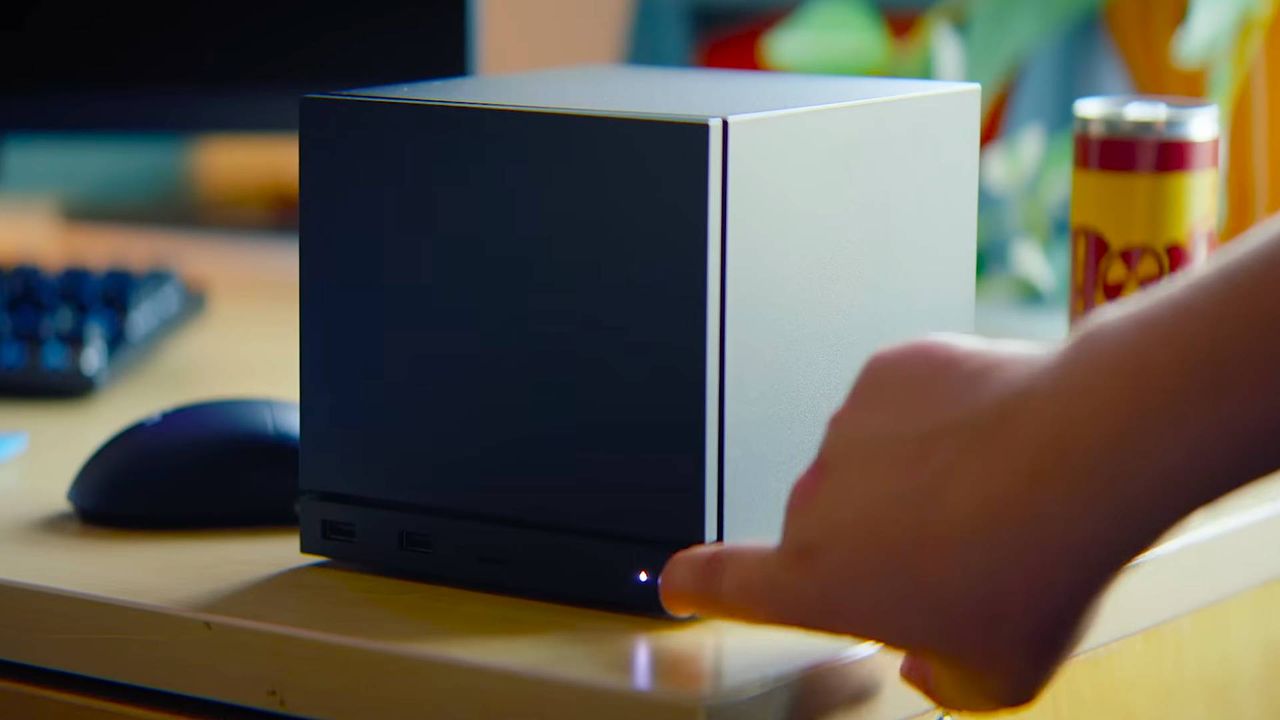 The Steam Machine is now available for pre-order under what some are acknowledging as the shocking starting price of $1,049, partly because Valve says this is the cost that best reflects its core values.
 Company spokespeople tell The Verge in a new report that Valve isn't interested in subsidizing the cost of its Steam Machine and selling its hardware at a loss the way other companies do, since "it doesn't align with our beliefs about how healthy ecosystems are built."
Valve explains in its statement, "If there's anything we're religious about at Valve, it's our belief that open systems are better in the long run, for ourselves and customers. The openness of the PC ecosystem in particular has enabled it to be the primary driver of hardware and software innovation, because anyone with an idea for a way to do something better was able to take a shot at it.
"When companies sell their hardware under cost for competitive advantage, or buy exclusive content for it, they're doing that to build a more closed system, one where you don't get to choose what software you want to use." In its announcement post for the Steam Machine's launch, however, Valve instead bemoans the fact that "our original goal for the price of Steam Machine is no longer viable" due to factors like RAM shortages and the US' constantly shapeshifting tariffs.

(Image credit: Future / Valve) So "the prices we're sharing today reflect the state of the world for manufacturing," says Valve, "or, more accurately, it reflects the price of the components as we've secured them over the past 6 months." This official statement suggests Valve is mournfully selling the Steam Machine for as much as it costs to produce it, and Valve Steam Deck developer Pierre-Loup Griffais confirms to The Verge that, "We're being more aggressive with margins and things to be as close to cost as possible now."
That's not an unreasonable decision for Valve to make; it still isn't necessarily whipping up a profit on the Steam Machine, after all. But it argues in a more confident tone in its statement to The Verge, "When companies sell their hardware under cost for competitive advantage, or buy exclusive content for it, they're doing that to build a more closed system, one where you don't get to choose what software you want to use."
This is the kind of company-first speak I'm skeptical of. Subsidized hardware prices may obscure manufacturing costs, but should manufacturing cost be my concern as a consumer?
We've had games industry experts warning us for months now that console prices could pass the $1,000 mark. Well, now they're right, and inflation around the globe is also impacting everything from gas prices to a dozen eggs. It feels like the burden of change keeps getting placed on the individual buyer, or worker, rather than the big, expensive company. The people who make up the games industry keep getting barbecued by mass layoffs, for example, and yet the industry itself has just soared past the historic $200 billion in revenue, a 9.1% year-on-year increase.
With this in mind, I can accept that the $1,049 Steam Machine (not including accessories) is part of Valve's beliefs. But it certainly doesn't represent mine.
The Steam Machine just landed for an eye-watering $1,049, so I'm tempted to build a modern Shuttle XPC that looks like my compact 2000s rig instead.
[/url]
What's Your Reaction?








XINKER - Business and Income Tips
Explore XINKER, the ultimate platform for mastering business strategies, discovering passive income opportunities, and learning success principles. Join a community of thinkers dedicated to achieving financial freedom and entrepreneurial excellence.



![[Business Talk] Chagee: Opening 3,500 stores in 6 years](https://xinker.org/uploads/images/202410/image_140x98_671afce94bf91.webp)