



![[PRO Tips] Gold’s Bullish Revival: Seasonal Trends and Key Levels to Watch](https://xinker.org/uploads/images/202412/image_430x256_67724cc6ad0cd.webp)
![[PRO Tips] Gold Market Under Short-Term Pressure, Safe-Haven Demand and Central Bank Buying Support Long-Term Upside Potential](https://xinker.org/uploads/images/202412/image_430x256_676ffb4685287.webp)
![[PRO Tips] Analysis of 9 key points of differentiation strategy! Master differentiation to create a brand advantage that is unique in the world!](https://firebasestorage.googleapis.com/v0/b/xinker-tips.appspot.com/o/article_thumbnails%2Fscaled_differentiation%20strategy.png.png?alt=media&token=a1bfc3d2-e85a-4db7-8a6d-01c7274f8940)
![[PRO Tips] Will REITs regain growth momentum in 2024? 3 REITs ETFs you must know if you want to invest in real estate.](https://firebasestorage.googleapis.com/v0/b/xinker-tips.appspot.com/o/article_thumbnails%2Fscaled_REITs1.png.png?alt=media&token=8af4eb93-33ff-466f-8039-b6555fad52b4)
![[PRO Tips] Complete tutorial on how to make money in Adobe Stock!](https://firebasestorage.googleapis.com/v0/b/xinker-tips.appspot.com/o/article_thumbnails%2Fscaled_tut-adobe1.png.png?alt=media&token=0b2c8cf2-22bd-4142-883e-140ed1cbaf02)
![[Passive Income] Unlock the secret of passive income: 3 steps to apply for Google AdSense](https://xinker.org/uploads/images/202410/image_430x256_6717a4fb3052b.webp)
![[Passive Income] Earn over $200 a day with AI-generated articles!](https://firebasestorage.googleapis.com/v0/b/xinker-tips.appspot.com/o/article_thumbnails%2Fscaled_article1.png.png?alt=media&token=f61bf35b-8553-4719-826d-7360024adc70)
![[Passive Income] Earn over 20 USD per download with AI-generated images!](https://firebasestorage.googleapis.com/v0/b/xinker-tips.appspot.com/o/article_thumbnails%2Fscaled_adobe2.png.png?alt=media&token=3e20e76a-a907-45af-80aa-bf9b3600301f)
![[Passive Income] Earn 10 USD per new download by sharing CapCut!](https://firebasestorage.googleapis.com/v0/b/xinker-tips.appspot.com/o/article_thumbnails%2Fscaled_capcut2.png.png?alt=media&token=a04dec40-1fac-4857-86f2-19a8be02d38e)
![[Passive Income] Use your WiFi to create passive income in 5 minutes, and you can earn 4-6 U per day!](https://firebasestorage.googleapis.com/v0/b/xinker-tips.appspot.com/o/article_thumbnails%2Fscaled_Grassio.webp.png?alt=media&token=7659a95e-0e47-4f27-a17d-c942ac3cf7f4)


![[Business Talk] The Unique Theme of XINKER's Song: Beef Wellington and Business Mastery](https://xinker.org/uploads/images/202410/image_430x256_671afc155f47f.webp)
![[Business Talk] Chagee: Opening 3,500 stores in 6 years](https://xinker.org/uploads/images/202410/image_430x256_671afce80c5f9.webp)

The Scuf Omega feels gorgeous in the hands, but those side buttons aren't all they're cracked up to be
The world of third-party PS5 pro pads is expanding, and Scuf is the latest challenger in this increasingly expensive arena. The Scuf Omega looks to take on the best PS5 controllers with its Omron mechanical switches, adjustable triggers, easy mobile keybinding, and additional macro keys. At $219.99, it's nestled in among these more premium control options, matching MSRPs from Razer and coming in slightly over Turtle Beach and Nacon. Ultimately, it has a lot going for it and, when the price is right, could topple Razer's Raiju V3 Pro for those after extra customization options. Awkward side button placement and a less-than-durable top plate hold it back, while an excellent feel in hand propels it forward. Whether it's right for you comes down to the numbers on the day and how well you can train your knuckles. Key Specs Connection Wireless USB-A receiver, Wired Buttons 28 Remappable buttons 11 Weight 254g Cable length 2mWhat I loved about the Scuf Omega Super satisfying controls I've been a fan of clacky switches on my face buttons ever since I first picked up the EasySMX X10, and the Scuf Omega delivers. Action is incredibly fast here, with a satisfying click that makes more traditional gamepads feel spongy by comparison. It's a faster reaction, with much less travel and an immediate response to each press, but it's also just more pleasing under the thumbs. Repeat presses are far less fatiguing, quick-snap inputs are faster than ever, and the lack of pressure required for actuation makes longer sessions easier on the thumbs as well. That's not all, though. Scuf has also outfitted its triggers with digital locks that mirror this snappy mechanical feel up top as well. The stopper system sits underneath the trigger, with a small lever setting your distance from the full free pull to an instant response. That also means they can be assigned separately, opening up a particularly satisfying bow pull and release in Horizon Forbidden West, for example. (Image credit: Future) Around the rear, we have two integrated back paddles that press into the grips - not quite the magnetic ones you'll find on the Gulikit KK3 Max, but definitely more paddle than button. There's also a higher set of angled back buttons as well. Far from the smaller nubbins you'll find on the DualSense Edge, these raised middle clackers are actually incredibly easy to hit precisely in-game. That extra height means they're just a nudge in the right direction away, even if I'd have personally preferred a little less tension in the paddles themselves. They're easy enough to actuate in isolation, but when the heat is on, there's just a little too much force required to keep these back paddles feeling nifty. (Image credit: Future) TMR thumbsticks round out this package, with a smooth tension, speedy snap, and all the durability that comes with the updated magnet tech. Easy customization for PS5 The Omega has been designed as a customization powerhouse, featuring a whopping 28 buttons to play with and 11 configurable inputs. Your basics are all here: swappable thumbstick tops, blanks for the side, and back buttons. Actual keybindings are handled by the Scuf companion app, no more plugging into a PC before switching your PS5 on. It's a pretty well-trodden idea in the world of more premium third-party PS5 controllers: the Razer Raiju V3 Pro has the Razer app, but heavy hitters like the Victrix Pro BFG and Nacon Revolution 5 Pro still rely on Windows-based software. Good news for those who hate working through complex assignment button presses on the fly, though you can still enter 'Remap Mode' on the controller itself if you wish. The Scuf app itself is uncomplicated, with a panel for your keybindings reflected in an on-screen gamepad, separate settings for firmware, polling rates, SOCD, and more, a quick start guide, and profile and battery indicators. Future Future Future I was a little disappointed to find that the face and d-pad buttons aren't configurable in PS5 Mode (they're fully open when being used as a PC controller), but there's still a comprehensive roster of on-the-fly settings to tweak and save to up to three profiles. Triggers and thumbsticks curve their deadzone on a nicely organized percentage scale, for those who aren't setting the digital stopper on the former, with a selection of five presets to choose from. Both left and right can be customized independently from each other as well. Back and side buttons (all six of them) can run as any PS5 control, with keyboard inputs available on PC. (Image credit: Future) Five G-keys are also present along the bottom of the gamepad, a little awkwardly placed for mid-game solutions but still handy for map, quest, and inventory shortcuts. When connected to PS5, only the G1 and G5 are free for you to assign, the rest are reserved for headset volume, mute, and mic controls. Swapping over to PC, all five keys are assignable. Comfortable in the hands Before I had a chance to dive into
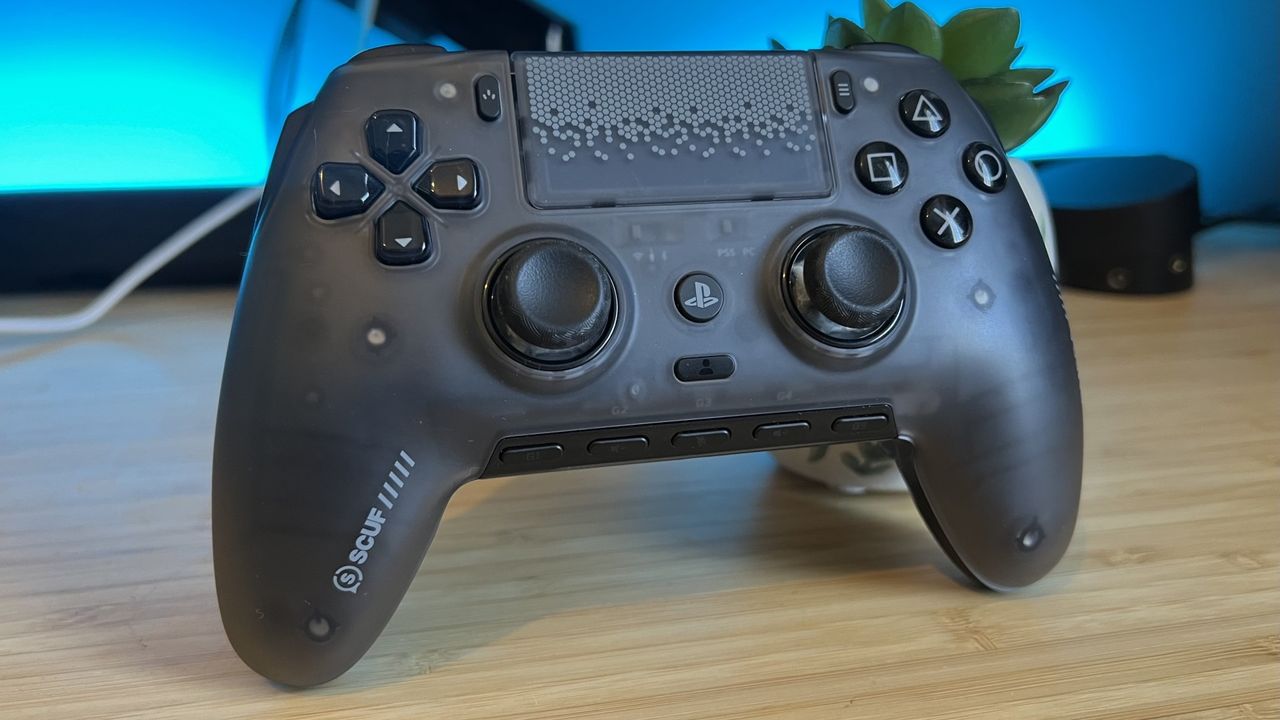 The world of third-party PS5 pro pads is expanding, and Scuf is the latest challenger in this increasingly expensive arena. The Scuf Omega looks to take on the best PS5 controllers with its Omron mechanical switches, adjustable triggers, easy mobile keybinding, and additional macro keys. At $219.99, it's nestled in among these more premium control options, matching MSRPs from Razer and coming in slightly over Turtle Beach and Nacon.
 Ultimately, it has a lot going for it and, when the price is right, could topple Razer's Raiju V3 Pro for those after extra customization options. Awkward side button placement and a less-than-durable top plate hold it back, while an excellent feel in hand propels it forward. Whether it's right for you comes down to the numbers on the day and how well you can train your knuckles.
Key Specs
Connection
Wireless USB-A receiver, Wired
Buttons
28
Remappable buttons
11
Weight
254g
Cable length
2m
What I loved about the Scuf Omega
Super satisfying controls
I've been a fan of clacky switches on my face buttons ever since I first picked up the EasySMX X10, and the Scuf Omega delivers. Action is incredibly fast here, with a satisfying click that makes more traditional gamepads feel spongy by comparison. It's a faster reaction, with much less travel and an immediate response to each press, but it's also just more pleasing under the thumbs. Repeat presses are far less fatiguing, quick-snap inputs are faster than ever, and the lack of pressure required for actuation makes longer sessions easier on the thumbs as well.
That's not all, though. Scuf has also outfitted its triggers with digital locks that mirror this snappy mechanical feel up top as well. The stopper system sits underneath the trigger, with a small lever setting your distance from the full free pull to an instant response. That also means they can be assigned separately, opening up a particularly satisfying bow pull and release in Horizon Forbidden West, for example.
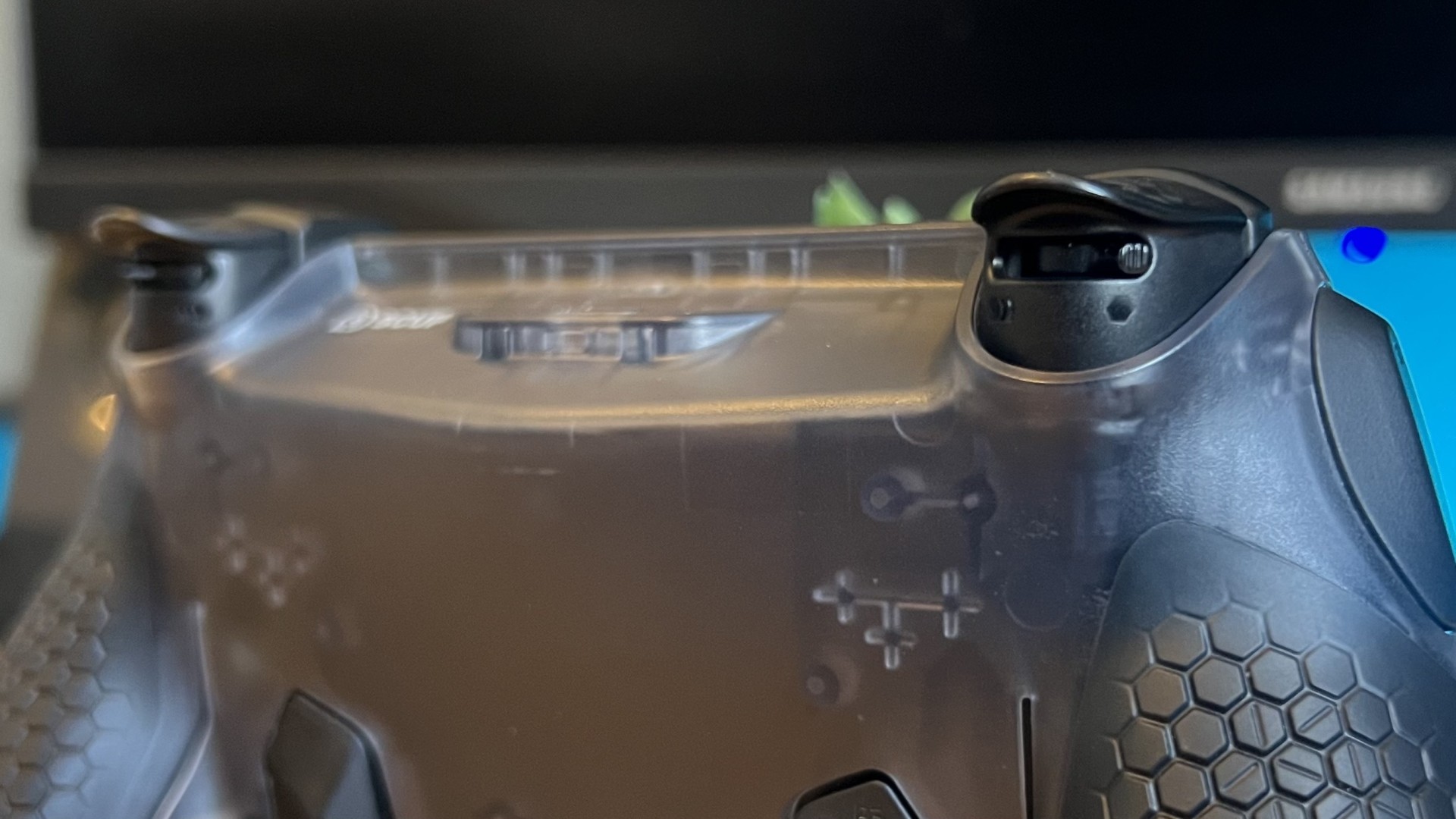
(Image credit: Future) Around the rear, we have two integrated back paddles that press into the grips - not quite the magnetic ones you'll find on the Gulikit KK3 Max, but definitely more paddle than button. There's also a higher set of angled back buttons as well.
Far from the smaller nubbins you'll find on the DualSense Edge, these raised middle clackers are actually incredibly easy to hit precisely in-game. That extra height means they're just a nudge in the right direction away, even if I'd have personally preferred a little less tension in the paddles themselves. They're easy enough to actuate in isolation, but when the heat is on, there's just a little too much force required to keep these back paddles feeling nifty.
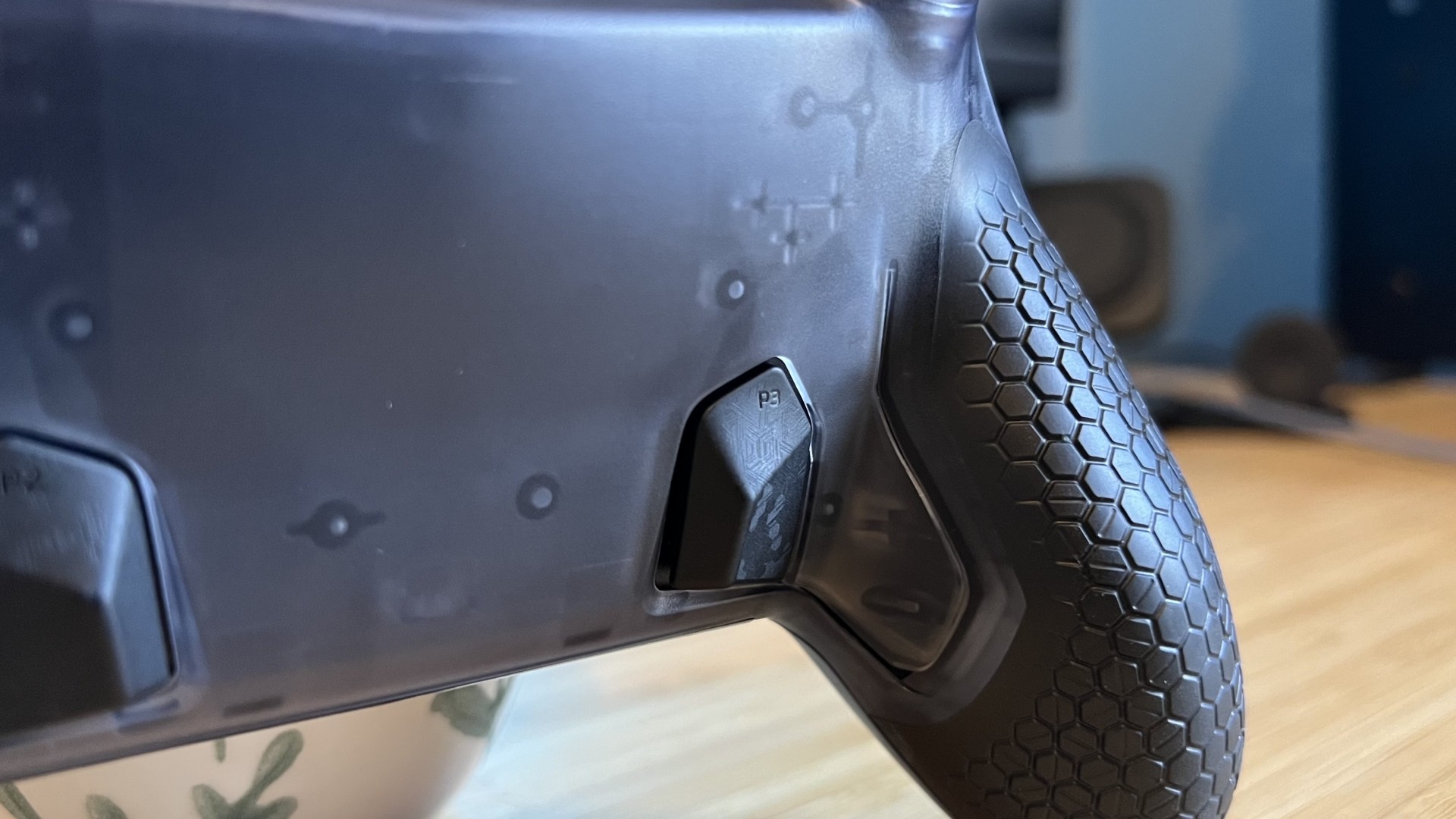
(Image credit: Future) TMR thumbsticks round out this package, with a smooth tension, speedy snap, and all the durability that comes with the updated magnet tech.
Easy customization for PS5
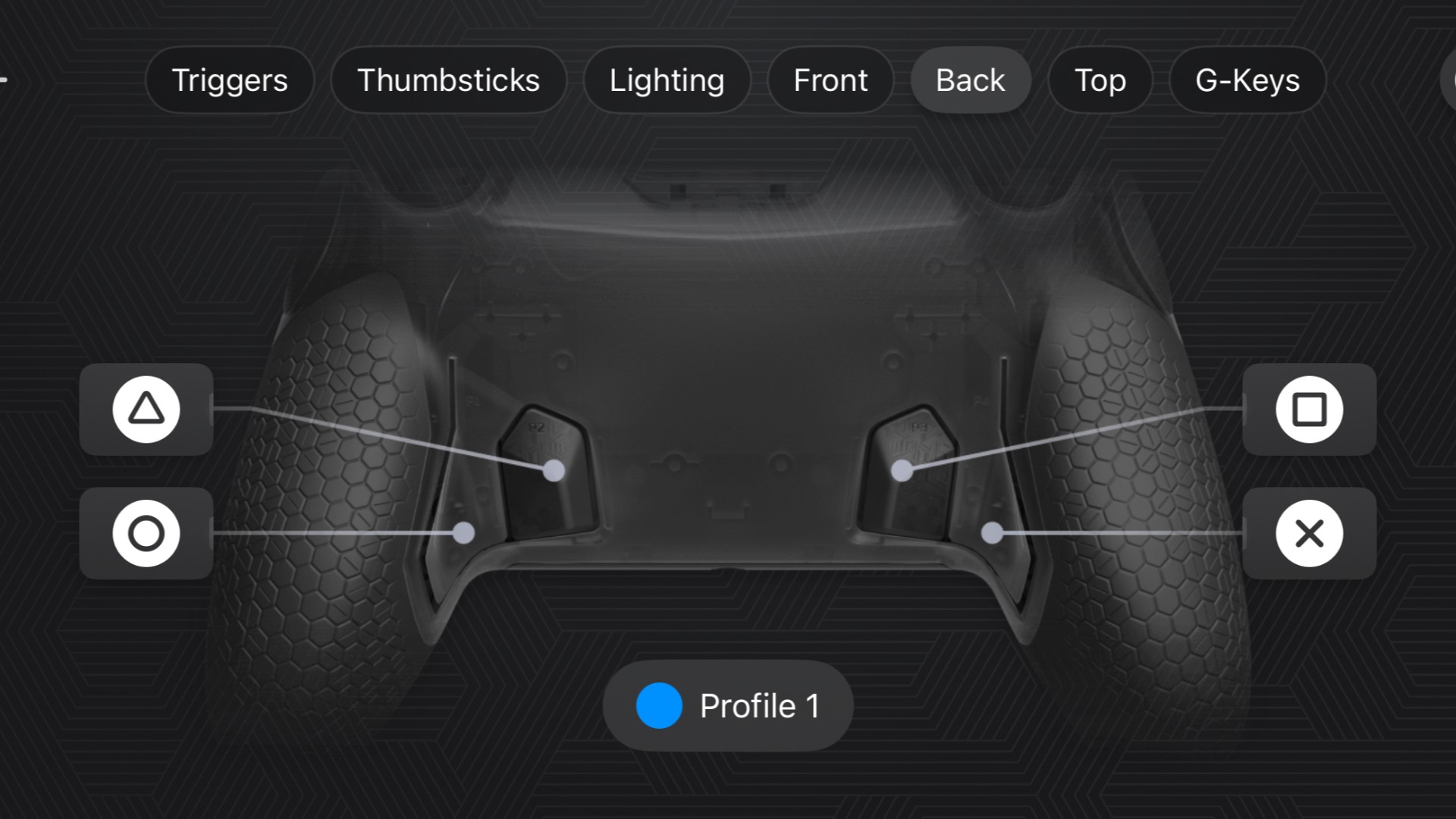
The Omega has been designed as a customization powerhouse, featuring a whopping 28 buttons to play with and 11 configurable inputs. Your basics are all here: swappable thumbstick tops, blanks for the side, and back buttons. Actual keybindings are handled by the Scuf companion app, no more plugging into a PC before switching your PS5 on. It's a pretty well-trodden idea in the world of more premium third-party PS5 controllers: the Razer Raiju V3 Pro has the Razer app, but heavy hitters like the Victrix Pro BFG and Nacon Revolution 5 Pro still rely on Windows-based software. Good news for those who hate working through complex assignment button presses on the fly, though you can still enter 'Remap Mode' on the controller itself if you wish.
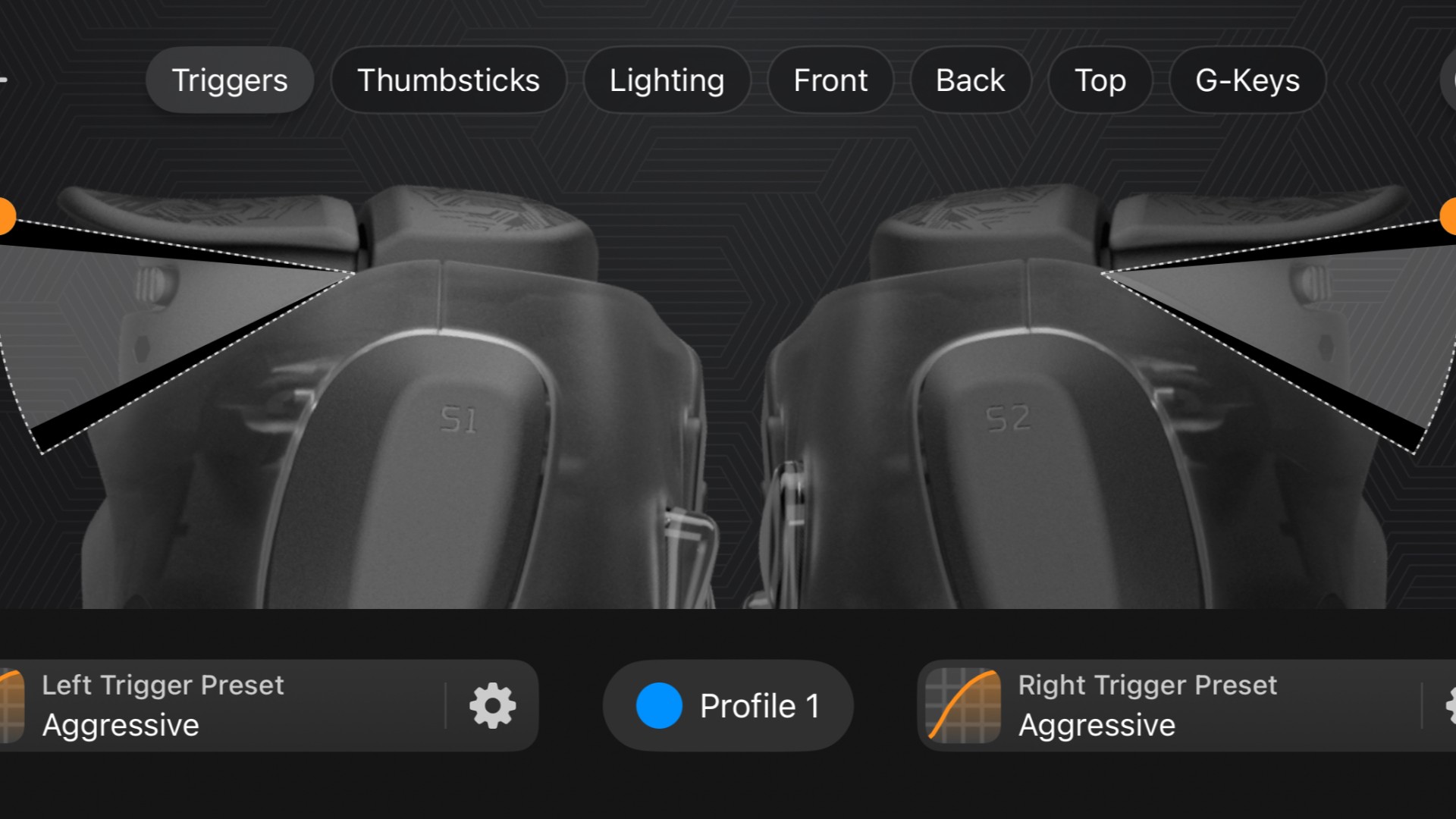
The Scuf app itself is uncomplicated, with a panel for your keybindings reflected in an on-screen gamepad, separate settings for firmware, polling rates, SOCD, and more, a quick start guide, and profile and battery indicators.
 Future
  Future
 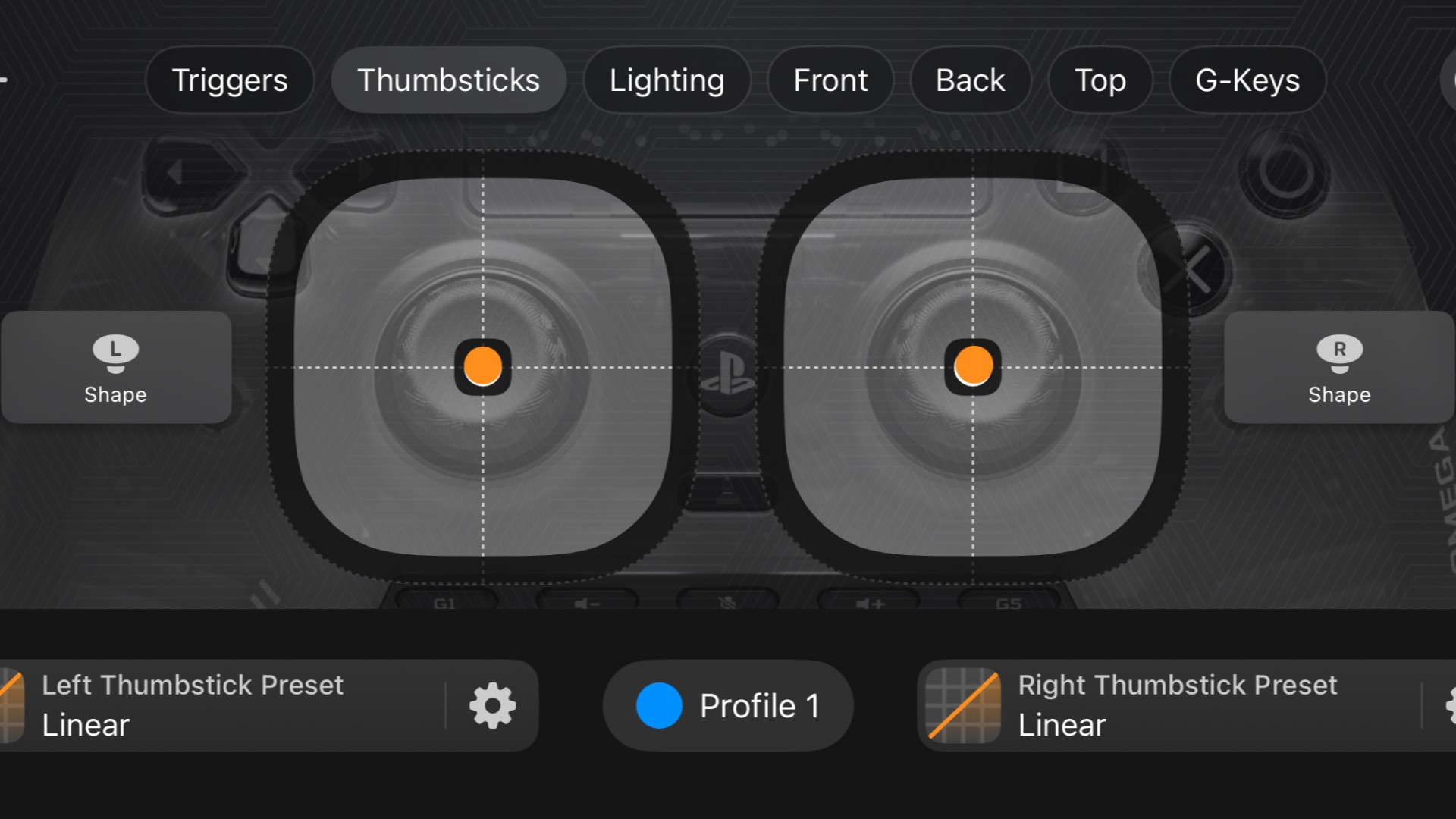 Future I was a little disappointed to find that the face and d-pad buttons aren't configurable in PS5 Mode (they're fully open when being used as a PC controller), but there's still a comprehensive roster of on-the-fly settings to tweak and save to up to three profiles.
 Triggers and thumbsticks curve their deadzone on a nicely organized percentage scale, for those who aren't setting the digital stopper on the former, with a selection of five presets to choose from. Both left and right can be customized independently from each other as well.
Back and side buttons (all six of them) can run as any PS5 control, with keyboard inputs available on PC.
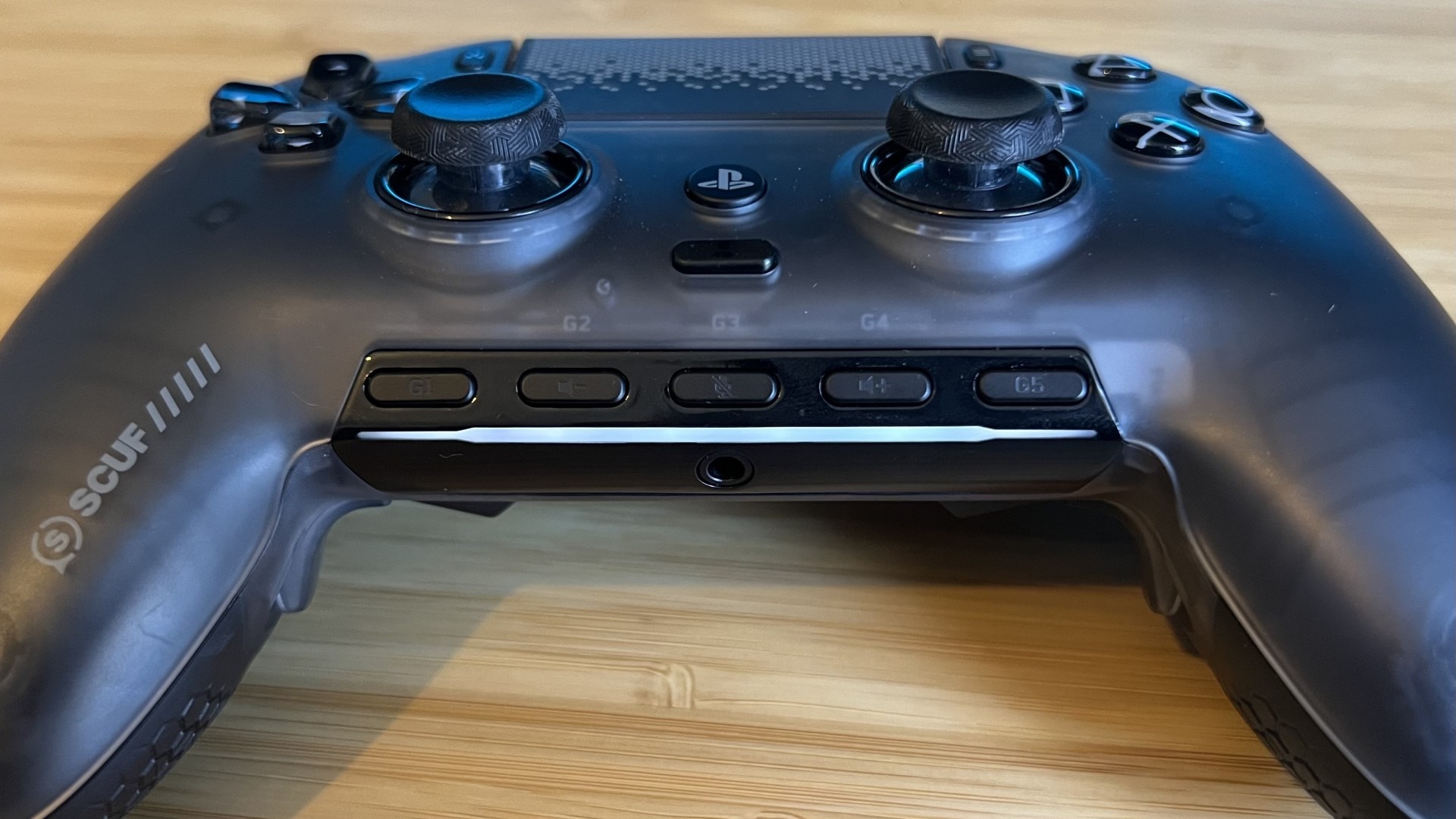
(Image credit: Future) Five G-keys are also present along the bottom of the gamepad, a little awkwardly placed for mid-game solutions but still handy for map, quest, and inventory shortcuts. When connected to PS5, only the G1 and G5 are free for you to assign, the rest are reserved for headset volume, mute, and mic controls. Swapping over to PC, all five keys are assignable.
Comfortable in the hands
Before I had a chance to dive into any of that, though, I was impressed with the way the Scuf Omega felt straight out of the box. A comfortable 254g and with a rugged rubberized texture across the back of each grip, it's easy to wield for long periods of time without slipping or cramping. That weight in particular is incredibly well balanced. It's lighter than a traditional DualSense, but not so as to feel cheap or hollow in the hand; there's still a satisfying sense of heft, making good on that premium price point.
What to consider about the Scuf Omega
About those side buttons
Throughout my testing, I've largely focused on Borderlands 4, running with a red-tree Chroma Accelerator Harlowe build. Since picking up the Omega, Harlowe's become a little more trigger-happy with that Chroma canon. Try as I might, my gameplay is consistently punctuated with "oh flip," or words to that effect, as a giant energy ball rips towards an NPC mid-conversation, spreads through an empty battleground, and starts its cooldown right as the next firefight commences. In short, these side buttons are incredibly easy to accidentally hit - to the point where I wouldn't trust them in a more competitive scenario.
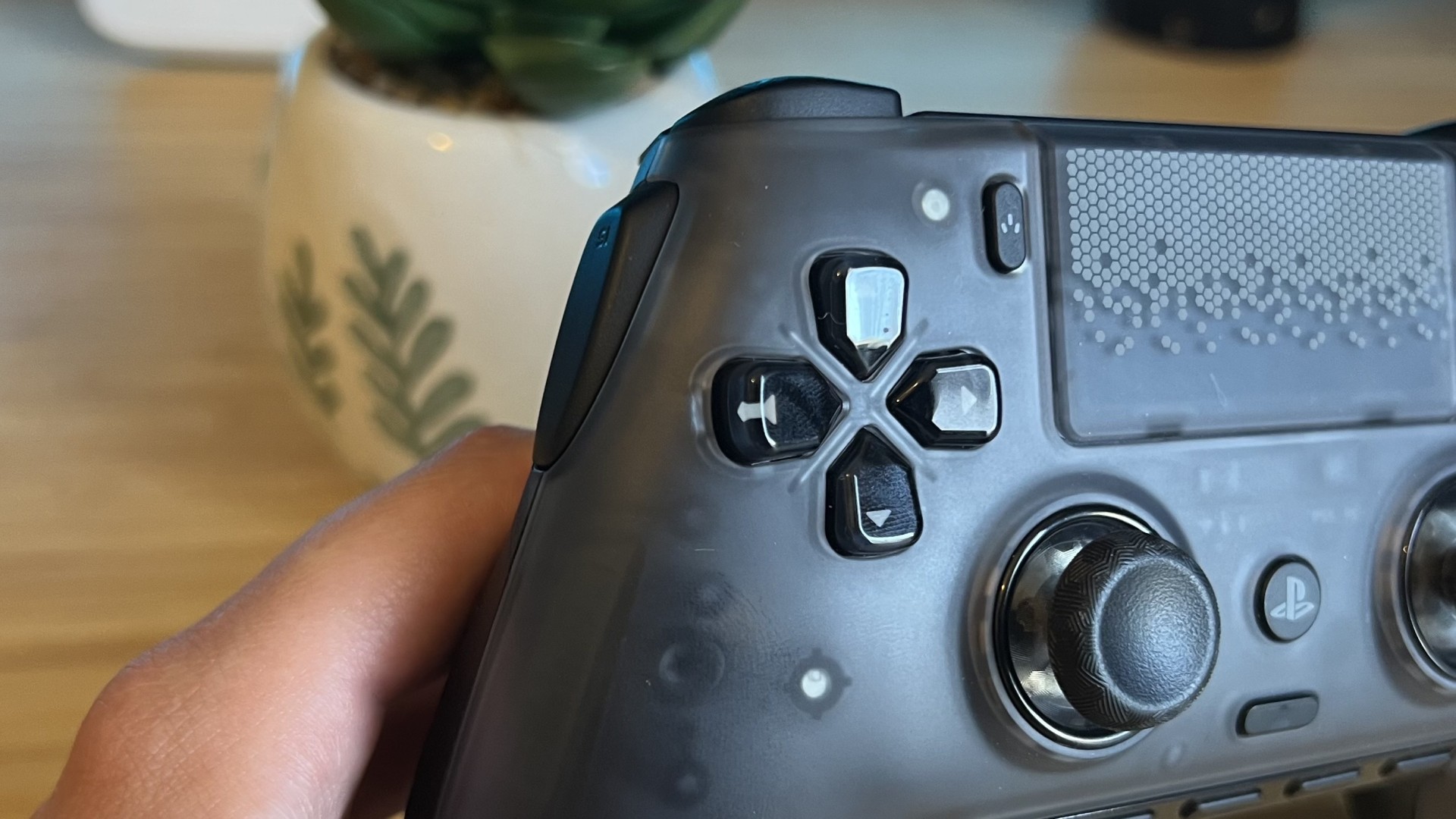
(Image credit: Future) Scuf does include blank plates in the box to neutralize them if you're not a fan, but it's frustrating that a controller designed for competitive play, featuring additional buttons to keep your fingers on those all-important face buttons, doesn't feel trustworthy in the very arena it was built for. There's space to put just a little more resistance in these buttons as well - they naturally rest against the inside of your knuckle; there's plenty of leverage in this part of the hand for a tighter button press.
Precariously thin top plate
The Scuf Omega features one of Corsair's favorite controller upsells, a swappable faceplate. However, this time it also houses two toggles I found myself reaching for regularly. You'll need to snap that top plate off its magnetic cradle in order to access connection controls (swap between Bluetooth, 2.4GHz, and wired) and switch between PS5 and PC mode. If that's something you'll need to do often, be warned. 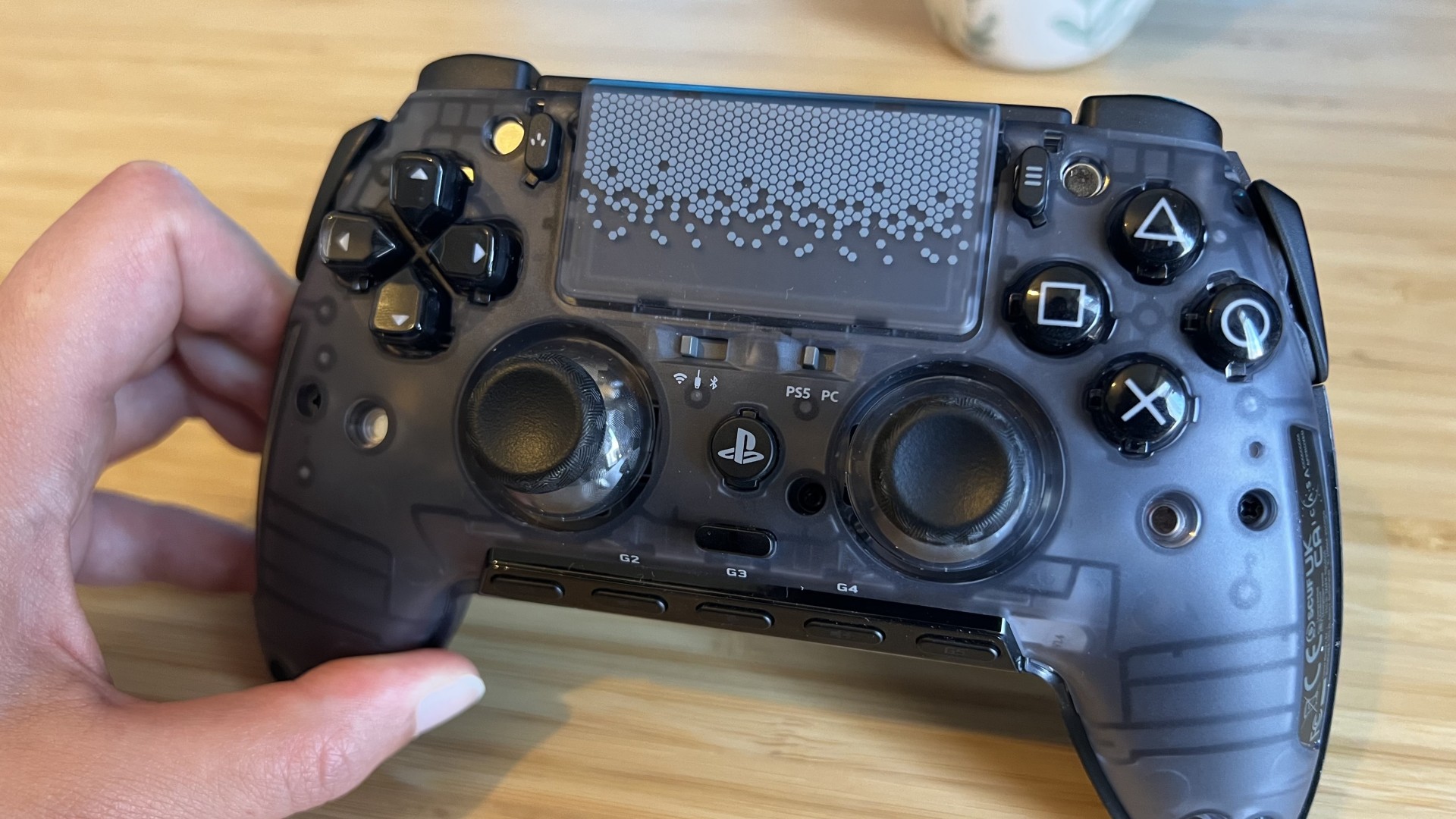
(Image credit: Future) This top plate feels a little too thin for my liking. It's a flexible, brittle-feeling plastic that could easily snap with too much pressure between the sides. Having to prise it off the top of the controller every time you need to swap platforms or change connections feels especially risky. Over time, that could cause problems with regular usage.
Speed over immersion
My final point is one not limited to the Scuf Omega, but more the vast majority of third-party PS5 controllers. Still, if you're a solo player who invested in the console for its immersive control system, it bears repeating here. Because of Sony's licensing terms, third-party gamepads cannot use adaptive triggers and haptic feedback. It's something I miss whenever I'm using a non-DualSense, having grown to love the dynamic resistance of the triggers in particular. Did I miss it enough to sacrifice the mechanical switches in the Scuf? Not exactly, but it's worth noting if you're tied to these first-party features.
Should you buy the Scuf Omega PS5 controller?
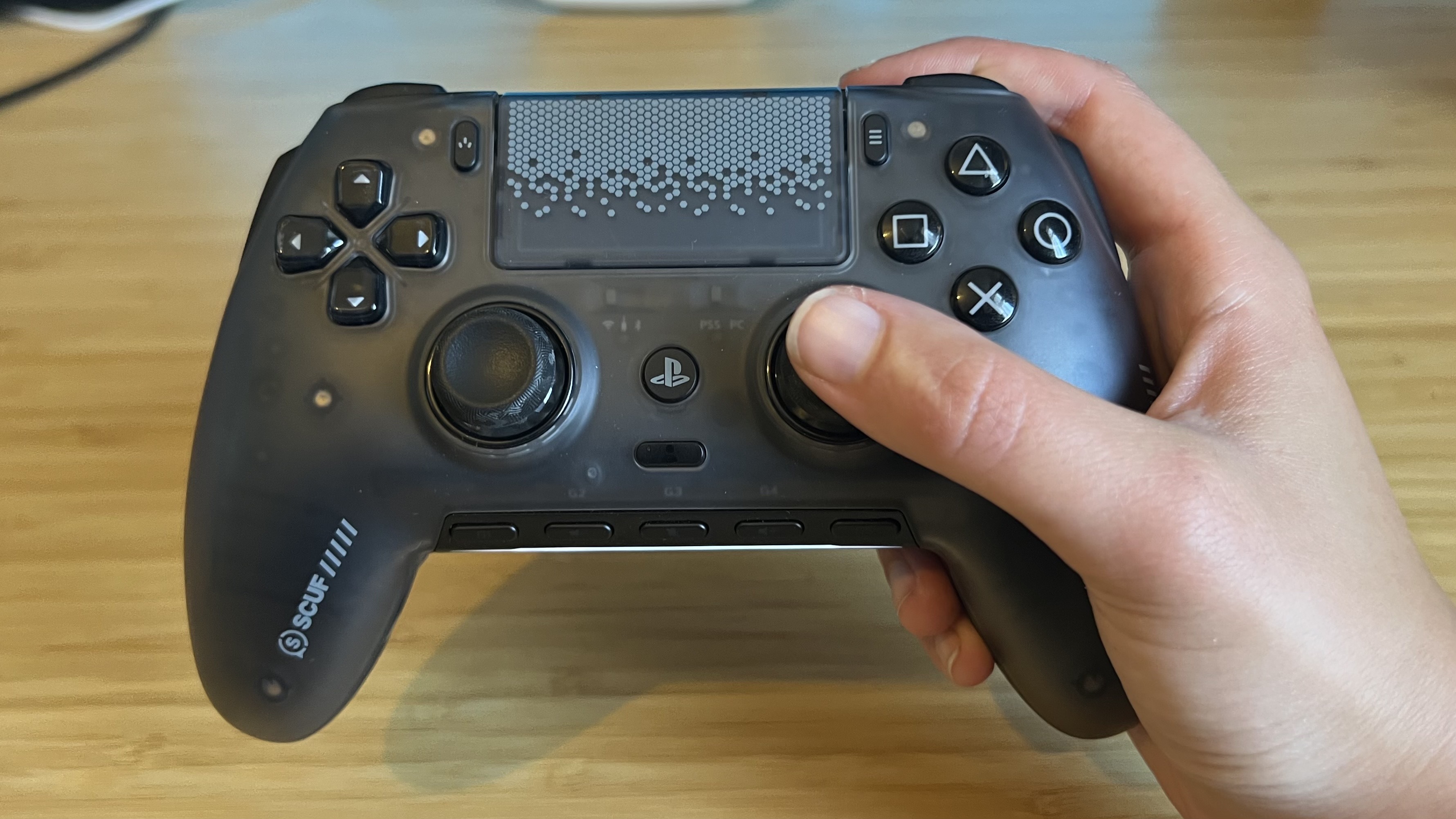
(Image credit: Future) The Scuf Omega is an expensive piece of kit, tickling the very top of the third-party market. We're used to the idea of spending $200 on a pro gamepad for PS5 these days, and Scuf has positioned its controller right next to the $219.99 Razer Raiju V3 Pro. That's where your biggest decision is going to be made (presuming you're not after modular control schemes, in which case you'll want to head over to the Victrix Pro BFG).
In reality, both gamepads are similar. They both pack mouse-like mechanical buttons, TMR thumbsticks, short and long-range triggers, and an easy companion app. Razer's D-pad is a little less satisfying in the hands (though 8-way rather than 4-way), and its back buttons are notably smaller (though still remarkably easy and comfortable to hit). It also, however, suffers a little more from a motor-less hollow feel than the Omega. Without that extra weight, we noted that the Raiju can feel cheap in the hands, while Scuf's model still manages to feel sturdy and solid.
By contrast, Scuf offers more customizable inputs (especially if you swap between PS5 and PC), a longer grip shape, and a better feel overall.
Razer's 2,000Hz PC polling rate is going to clinch it for those primarily on Windows, with a PS5 on the side, and its top-loaded extra bumpers will also serve those worried about accidental presses on Scuf's side buttons as well. However, as an all-round package, I'd be inclined to recommend the Omega before the Raiju, with a pricing caveat.
Razer's entry is slightly older and will therefore see more regular discounts (the record currently sits at $129.99, but it's more likely to be found between $150 and $175). At a discounted rate, the Raiju is infinitely better value - so keep an eye on prices between the two.
How I tested the Scuf Omega PS5 controller
I tested the Scuf Omega on both PS5 and PC, playing Borderlands 4 and Horizon Forbidden West on the former and Forza Horizon 6, Apex Legends, and Farming Simulator 25 on the latter. I remapped the controller for optimal control schemes across each game, adjusting deadzones across triggers and thumbsticks for a couple of titles. For more on how we test controllers, check out the full GamesRadar+ Hardware Policy.
We're also rounding up all the best TMR controllers we've tested so far, as well as the best Xbox Series X controllers and the best Nintendo Switch 2 controllers for alternative platforms.
[/url]
What's Your Reaction?








XINKER - Business and Income Tips
Explore XINKER, the ultimate platform for mastering business strategies, discovering passive income opportunities, and learning success principles. Join a community of thinkers dedicated to achieving financial freedom and entrepreneurial excellence.



![[Business Talk] Chagee: Opening 3,500 stores in 6 years](https://xinker.org/uploads/images/202410/image_140x98_671afce94bf91.webp)