




![[PRO Tips] Gold’s Bullish Revival: Seasonal Trends and Key Levels to Watch](https://xinker.org/uploads/images/202412/image_430x256_67724cc6ad0cd.webp)
![[PRO Tips] Gold Market Under Short-Term Pressure, Safe-Haven Demand and Central Bank Buying Support Long-Term Upside Potential](https://xinker.org/uploads/images/202412/image_430x256_676ffb4685287.webp)
![[PRO Tips] Analysis of 9 key points of differentiation strategy! Master differentiation to create a brand advantage that is unique in the world!](https://firebasestorage.googleapis.com/v0/b/xinker-tips.appspot.com/o/article_thumbnails%2Fscaled_differentiation%20strategy.png.png?alt=media&token=a1bfc3d2-e85a-4db7-8a6d-01c7274f8940)
![[PRO Tips] Will REITs regain growth momentum in 2024? 3 REITs ETFs you must know if you want to invest in real estate.](https://firebasestorage.googleapis.com/v0/b/xinker-tips.appspot.com/o/article_thumbnails%2Fscaled_REITs1.png.png?alt=media&token=8af4eb93-33ff-466f-8039-b6555fad52b4)
![[PRO Tips] Complete tutorial on how to make money in Adobe Stock!](https://firebasestorage.googleapis.com/v0/b/xinker-tips.appspot.com/o/article_thumbnails%2Fscaled_tut-adobe1.png.png?alt=media&token=0b2c8cf2-22bd-4142-883e-140ed1cbaf02)
![[Passive Income] Unlock the secret of passive income: 3 steps to apply for Google AdSense](https://xinker.org/uploads/images/202410/image_430x256_6717a4fb3052b.webp)
![[Passive Income] Earn over $200 a day with AI-generated articles!](https://firebasestorage.googleapis.com/v0/b/xinker-tips.appspot.com/o/article_thumbnails%2Fscaled_article1.png.png?alt=media&token=f61bf35b-8553-4719-826d-7360024adc70)
![[Passive Income] Earn over 20 USD per download with AI-generated images!](https://firebasestorage.googleapis.com/v0/b/xinker-tips.appspot.com/o/article_thumbnails%2Fscaled_adobe2.png.png?alt=media&token=3e20e76a-a907-45af-80aa-bf9b3600301f)
![[Passive Income] Earn 10 USD per new download by sharing CapCut!](https://firebasestorage.googleapis.com/v0/b/xinker-tips.appspot.com/o/article_thumbnails%2Fscaled_capcut2.png.png?alt=media&token=a04dec40-1fac-4857-86f2-19a8be02d38e)
![[Passive Income] Use your WiFi to create passive income in 5 minutes, and you can earn 4-6 U per day!](https://firebasestorage.googleapis.com/v0/b/xinker-tips.appspot.com/o/article_thumbnails%2Fscaled_Grassio.webp.png?alt=media&token=7659a95e-0e47-4f27-a17d-c942ac3cf7f4)


![[Business Talk] The Unique Theme of XINKER's Song: Beef Wellington and Business Mastery](https://xinker.org/uploads/images/202410/image_430x256_671afc155f47f.webp)
![[Business Talk] Chagee: Opening 3,500 stores in 6 years](https://xinker.org/uploads/images/202410/image_430x256_671afce80c5f9.webp)

The ELO Vagabond combines the best parts of Razer and GameSir to make the ultimate mobile controller
It's easy for me to say this as a gamepad reviewer who has never tried to make one, but I really don't think designing a great mobile controller is that difficult. So many brands have tried, but they've focused way too much on portability, or making it feel bespoke to a phone, or trying to fill really niche areas in the market that haven't been catered to yet. It just doesn't need to be that complicated, and a simple, on-the-go mobile controller shouldn't cost the $160 some companies will charge you. Just take a regular-sized gamepad, cut it in half, and that should really be the end of it. The ELO Vagabond seems like it understands all of this. Why downsize a regular controller when that will almost always hamstring comfort? Why charge so much when this is almost always going to be a secondary peripheral people won't have a massive budget for? Why change the shape and design of controller grips that people have been enjoying for decades now? At $99 / £74, the ELO Vagabond provides the best overall package in the mobile controller market. It isn't as affordable as the GameSir G8 Galileo I awarded 5 stars and the top spot on our buying guide, but it improves on its best features without charging as much as Razer. If mobile controllers have always felt a little imperfect to you, read on.Design (Image credit: Future / Duncan Robertson) Perhaps more than any other wrap-around mobile controller I've come across, the ELO Vagabond really does resemble a pro PC Controller sliced in half. Even on larger options like the Razer Kishi V3 Pro or the Razer Kishi Ultra, the grips feel a bit stumpy and compacted compared to the brand's full-sized Wolverine V3 Pro. The GameSir G8 Galileo has a chunkier, more comfortable form factor than the Backbone One and its imitators, but it's still clinging to a mobile controller design ideology that holds back its comfort compared to full-sized gamepads. The ELO Vagabond makes a real statement with its grip shape. They feel almost lengthened and pointed at their ends to spite the rest of the market. Holding the Vagabond is almost similar to holding a GameSir Tarantula Pro or DualShock 4. Maybe not in a rounded shape kind of way, but in the sense that it caters to your pinkie fingers with ample room. (Image credit: Future / Duncan Robertson) I wouldn't say the build quality of the ELO Vagabond is the best, and in fact, in my two weeks of testing, I'd say durability is the only emergent flaw that really jumps to mind in this review. The grips have a dotted texture, and they're pretty solid - no problems there. But away from that texture, I do start to notice a bit of a hollow feeling. The springs within the triggers can be heard when pressing them, which is not attractive in the slightest for a $99 peripheral. What's worse is that if I flip the controller over, I can hear something falling around inside the chassis. Again, not ideal for a product you want to take on the go with you and frequently shove in a bag. I'd say the grips are the defining design point of the Vagabond, but something I really like is that it's learned from the competition. The pivoting USB-C connector from the GameSir G8 is one of my favorite, tiny design flourishes on pretty much any gaming accessory I've tested - mobile or otherwise. The Vagabond carries it over, which makes it so much easier and safer for your phone to remove and connect from the controller's cradle. The Vagabond itself uses your phone's battery to charge, but there's a passthrough USB-C port on it for power delivery, and ELO even makes a high-speed cable so you can keep up with your game's power demands. Also a nice addition is a 3.5mm headphone jack if you're using a wired audio device.Features (Image credit: Future / Duncan Robertson) The Vagabond features Hall effect thumbsticks, but there are ways to upgrade them too. As an add-on, you can get thumbstick toppers to bring more height and accuracy into your gameplay; these do cost extra, and although they're a nice thing to have, I found plenty of FPS enjoyment without them. There are four microswitch face buttons laid out in the Xbox configuration. These are microswitch, clicky buttons, but they still have a deep-feeling actuation allowing for plenty of feel if you're mainly looking to play singleplayer games. (Image credit: Future / Duncan Robertson) The Vagabond also features two back buttons, which are placed ever so slightly too high for my liking. With grips that make a statement by being a bit longer than other mobile pads, I'd argue ELO should make use of them by placing the back buttons lower down. Hell, give me a second pair if you want to? If you're not a big fan of back buttons, these are lockable via a pair of switches. Like Backbone before it, ELO has made a central app to let you configure all your mobile games and launch them from. This is fine, but as someone who mainly uses mobile play for remote play of a PS5, SteamLink, or Game Pass Cloud Streaming, these always
 It's easy for me to say this as a gamepad reviewer who has never tried to make one, but I really don't think designing a great mobile controller is that difficult. So many brands have tried, but they've focused way too much on portability, or making it feel bespoke to a phone, or trying to fill really niche areas in the market that haven't been catered to yet. It just doesn't need to be that complicated, and a simple, on-the-go mobile controller shouldn't cost the $160 some companies will charge you. Just take a regular-sized gamepad, cut it in half, and that should really be the end of it.
The ELO Vagabond seems like it understands all of this. Why downsize a regular controller when that will almost always hamstring comfort? Why charge so much when this is almost always going to be a secondary peripheral people won't have a massive budget for? Why change the shape and design of controller grips that people have been enjoying for decades now?
At $99 / £74, the ELO Vagabond provides the best overall package in the mobile controller market. It isn't as affordable as the GameSir G8 Galileo I awarded 5 stars and the top spot on our buying guide, but it improves on its best features without charging as much as Razer. If mobile controllers have always felt a little imperfect to you, read on.
Design
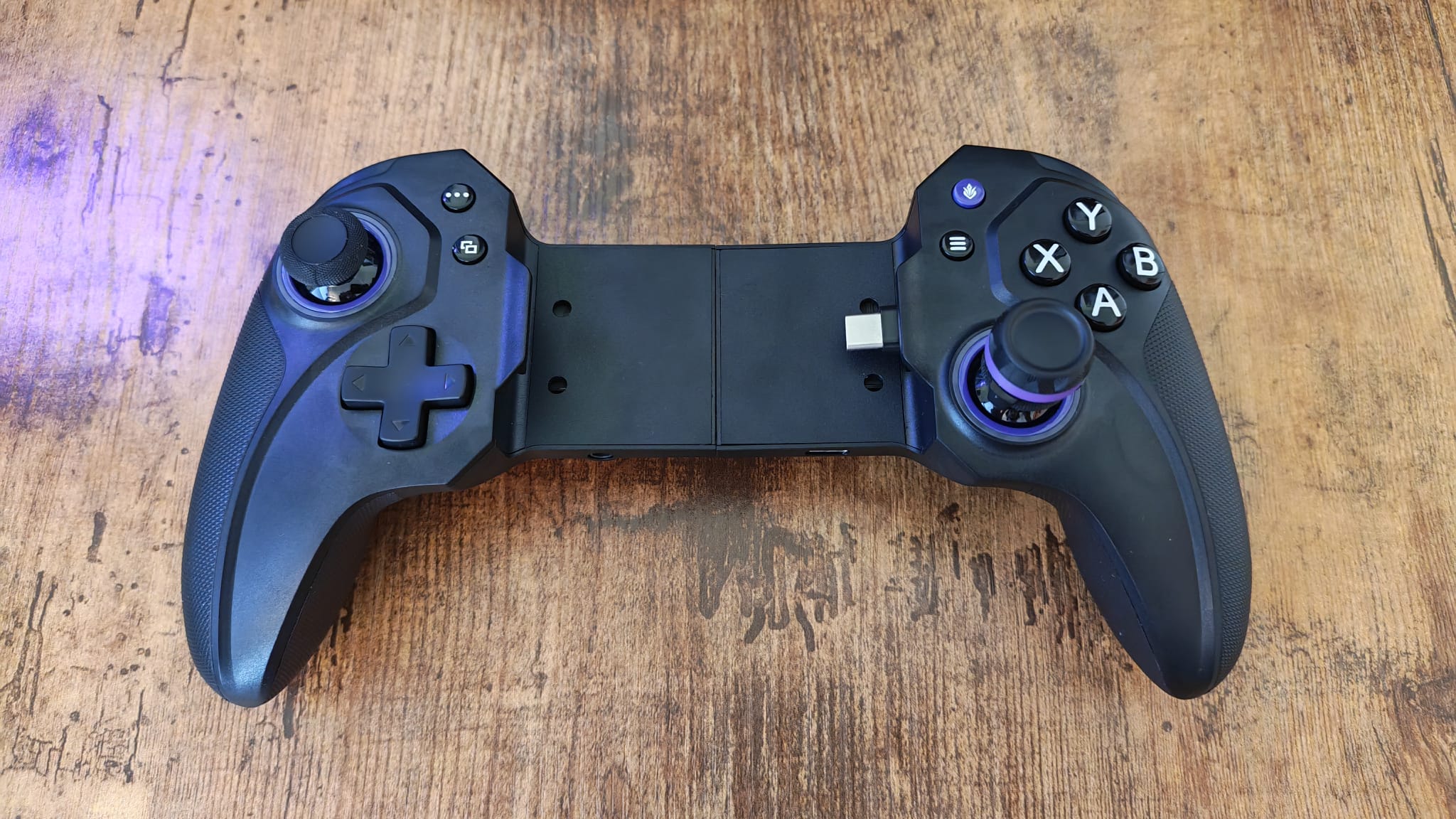
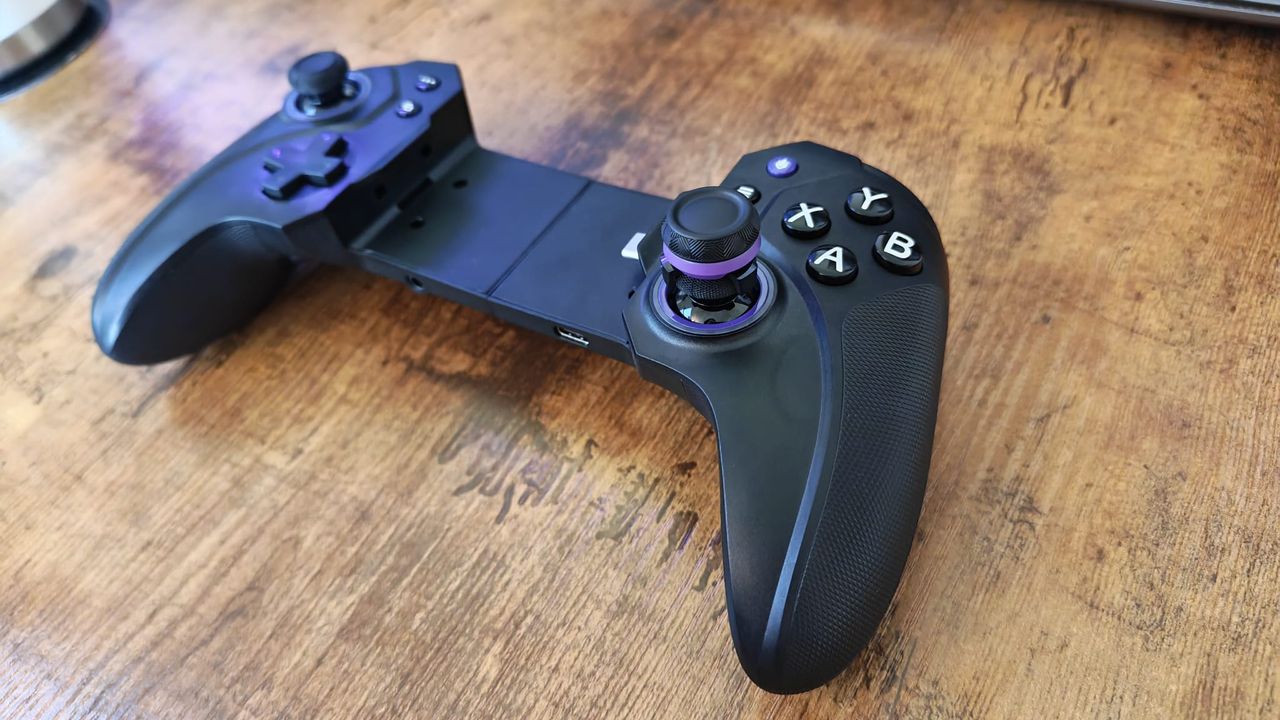
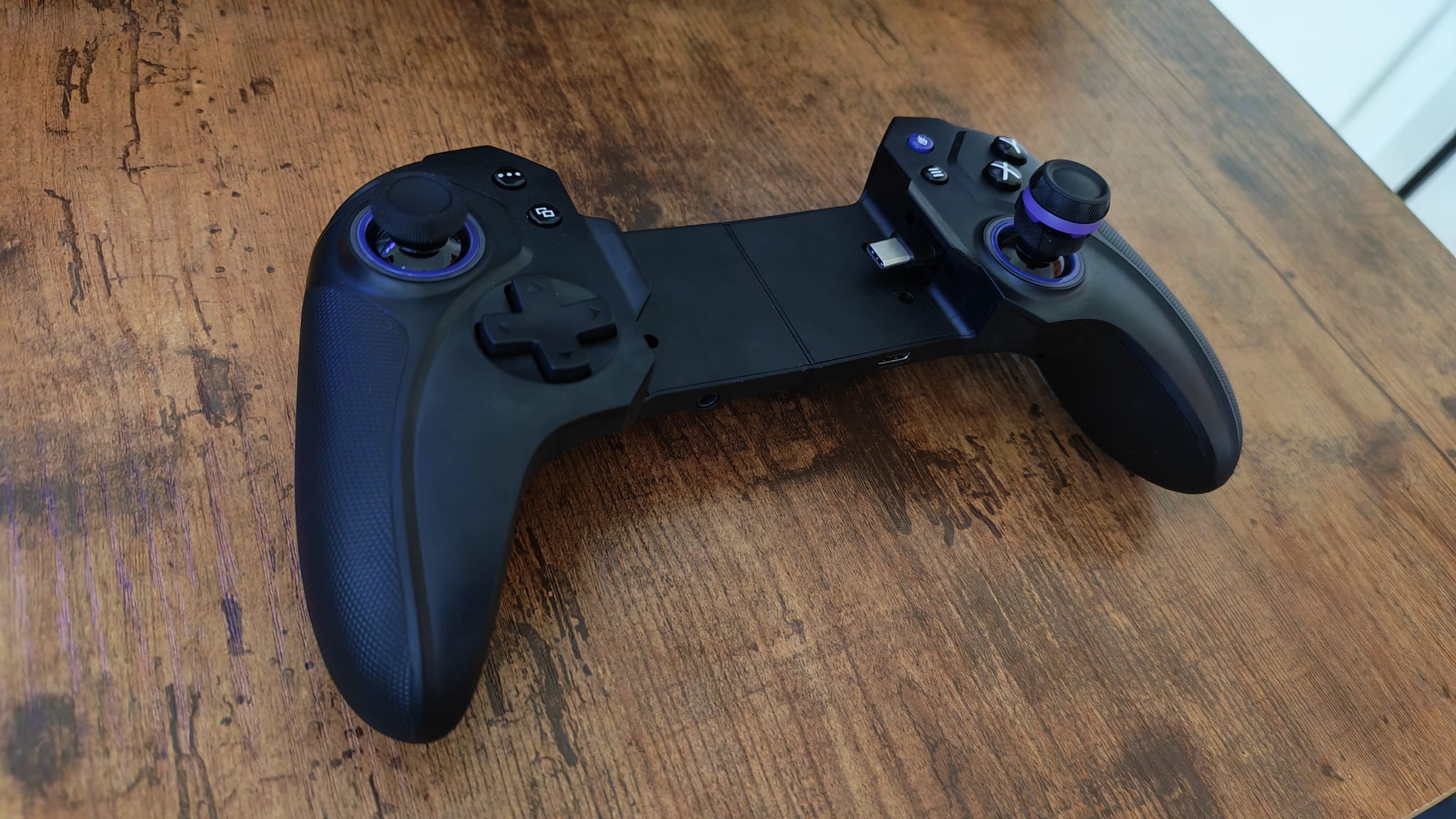
(Image credit: Future / Duncan Robertson) Perhaps more than any other wrap-around mobile controller I've come across, the ELO Vagabond really does resemble a pro PC Controller sliced in half. Even on larger options like the Razer Kishi V3 Pro or the Razer Kishi Ultra, the grips feel a bit stumpy and compacted compared to the brand's full-sized Wolverine V3 Pro. The GameSir G8 Galileo has a chunkier, more comfortable form factor than the Backbone One and its imitators, but it's still clinging to a mobile controller design ideology that holds back its comfort compared to full-sized gamepads.
The ELO Vagabond makes a real statement with its grip shape. They feel almost lengthened and pointed at their ends to spite the rest of the market. Holding the Vagabond is almost similar to holding a GameSir Tarantula Pro or DualShock 4. Maybe not in a rounded shape kind of way, but in the sense that it caters to your pinkie fingers with ample room.
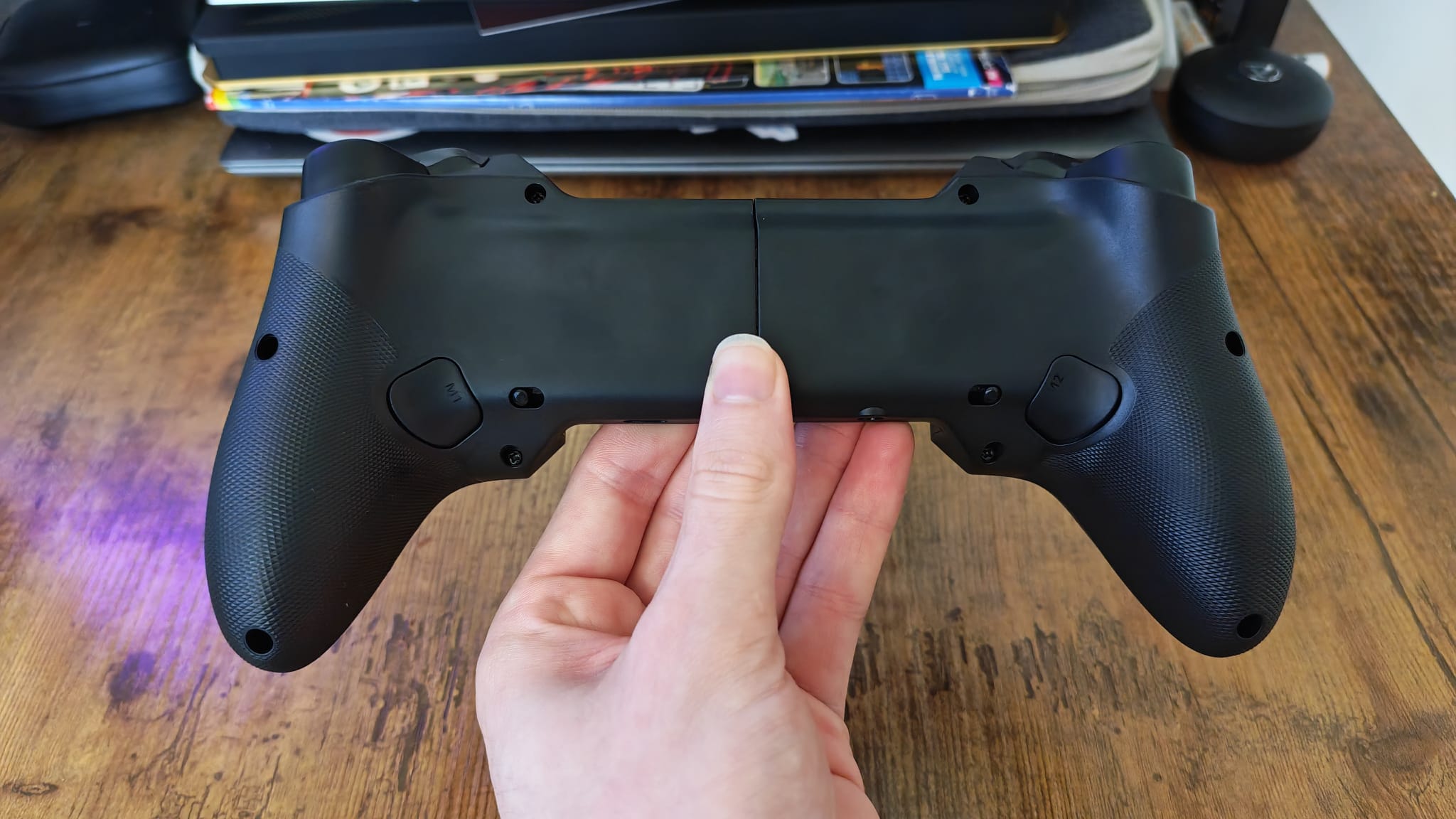
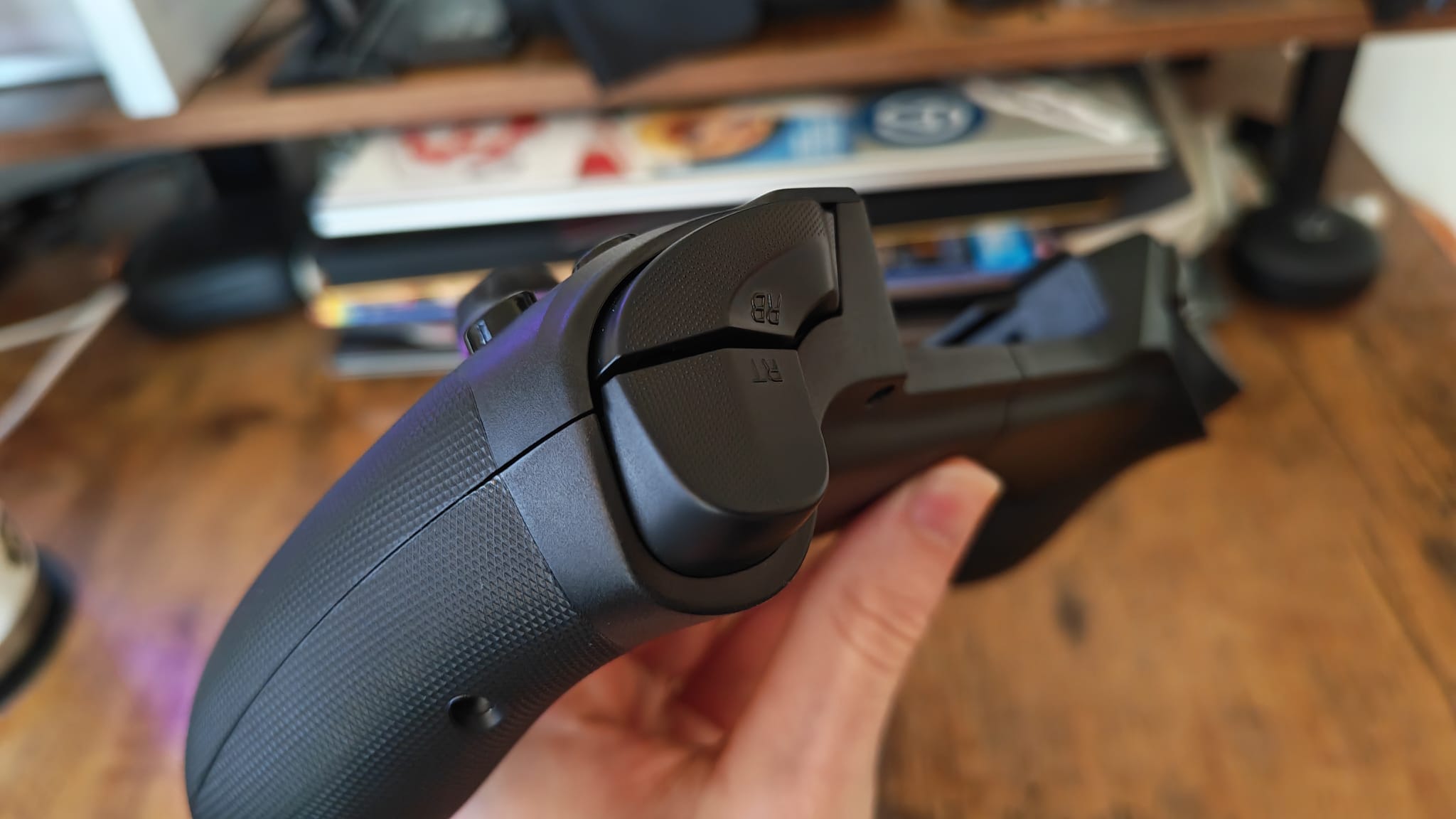
(Image credit: Future / Duncan Robertson) I wouldn't say the build quality of the ELO Vagabond is the best, and in fact, in my two weeks of testing, I'd say durability is the only emergent flaw that really jumps to mind in this review. The grips have a dotted texture, and they're pretty solid - no problems there. But away from that texture, I do start to notice a bit of a hollow feeling. The springs within the triggers can be heard when pressing them, which is not attractive in the slightest for a $99 peripheral. What's worse is that if I flip the controller over, I can hear something falling around inside the chassis. Again, not ideal for a product you want to take on the go with you and frequently shove in a bag.
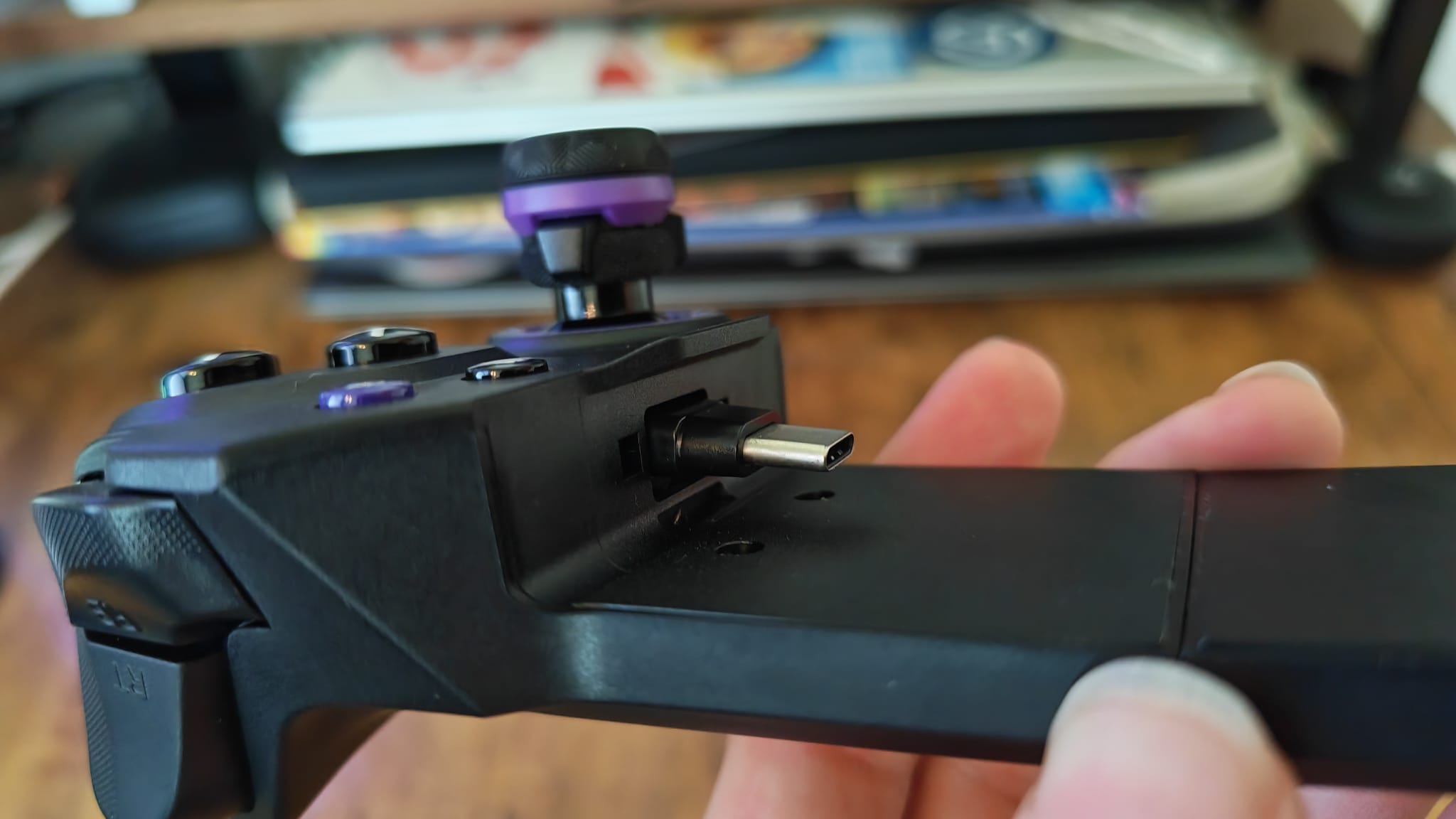
I'd say the grips are the defining design point of the Vagabond, but something I really like is that it's learned from the competition. The pivoting USB-C connector from the GameSir G8 is one of my favorite, tiny design flourishes on pretty much any gaming accessory I've tested - mobile or otherwise. The Vagabond carries it over, which makes it so much easier and safer for your phone to remove and connect from the controller's cradle.
The Vagabond itself uses your phone's battery to charge, but there's a passthrough USB-C port on it for power delivery, and ELO even makes a high-speed cable so you can keep up with your game's power demands. Also a nice addition is a 3.5mm headphone jack if you're using a wired audio device.
Features
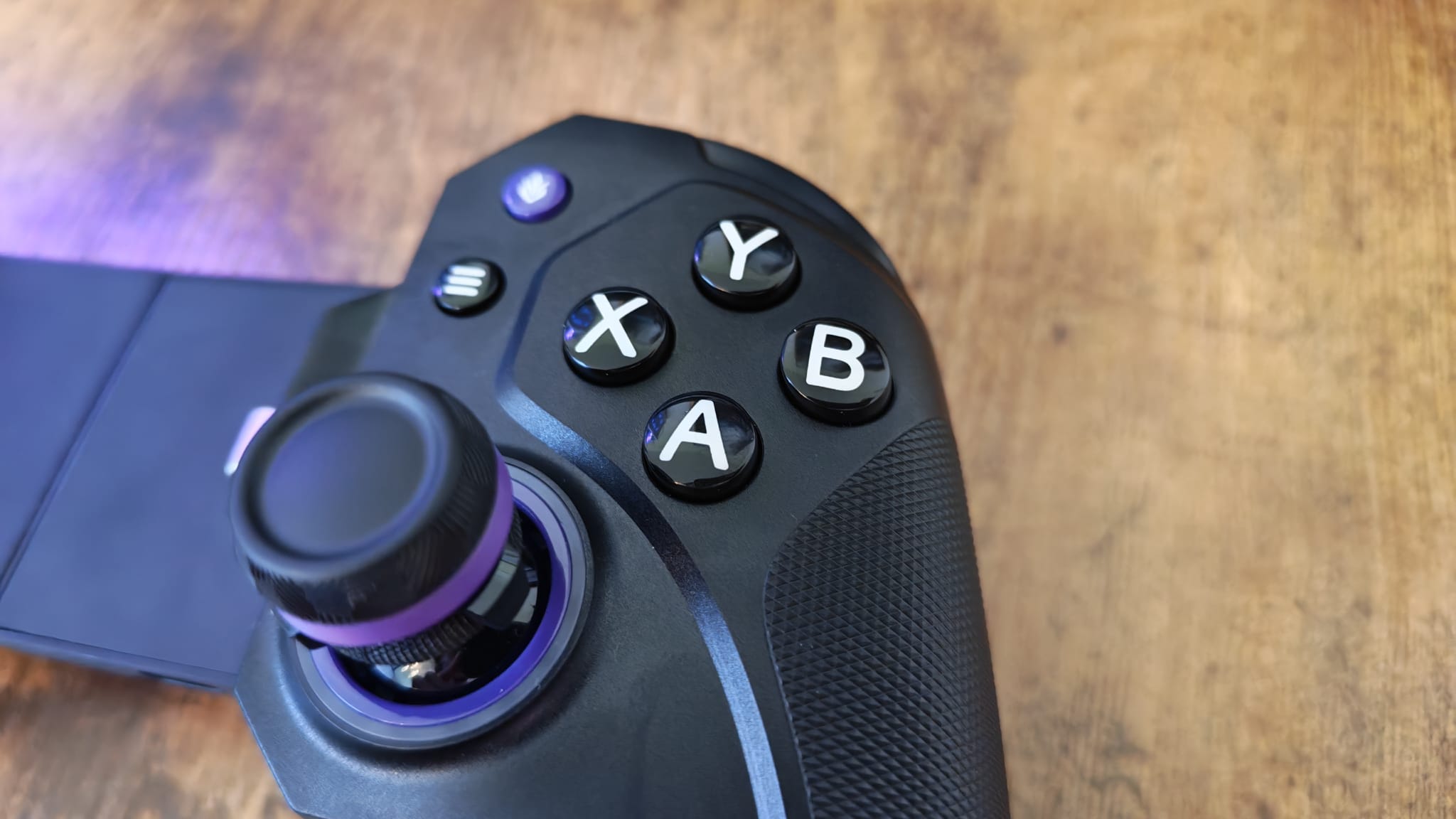
(Image credit: Future / Duncan Robertson) The Vagabond features Hall effect thumbsticks, but there are ways to upgrade them too. As an add-on, you can get thumbstick toppers to bring more height and accuracy into your gameplay; these do cost extra, and although they're a nice thing to have, I found plenty of FPS enjoyment without them.
There are four microswitch face buttons laid out in the Xbox configuration. These are microswitch, clicky buttons, but they still have a deep-feeling actuation allowing for plenty of feel if you're mainly looking to play singleplayer games.
(Image credit: Future / Duncan Robertson) The Vagabond also features two back buttons, which are placed ever so slightly too high for my liking. With grips that make a statement by being a bit longer than other mobile pads, I'd argue ELO should make use of them by placing the back buttons lower down. Hell, give me a second pair if you want to? If you're not a big fan of back buttons, these are lockable via a pair of switches.
Like Backbone before it, ELO has made a central app to let you configure all your mobile games and launch them from. This is fine, but as someone who mainly uses mobile play for remote play of a PS5, SteamLink, or Game Pass Cloud Streaming, these always feel a bit extra to me. For those mobile gamers who do use this sort of app, it seems just as conclusive as Backbone's.
Performance
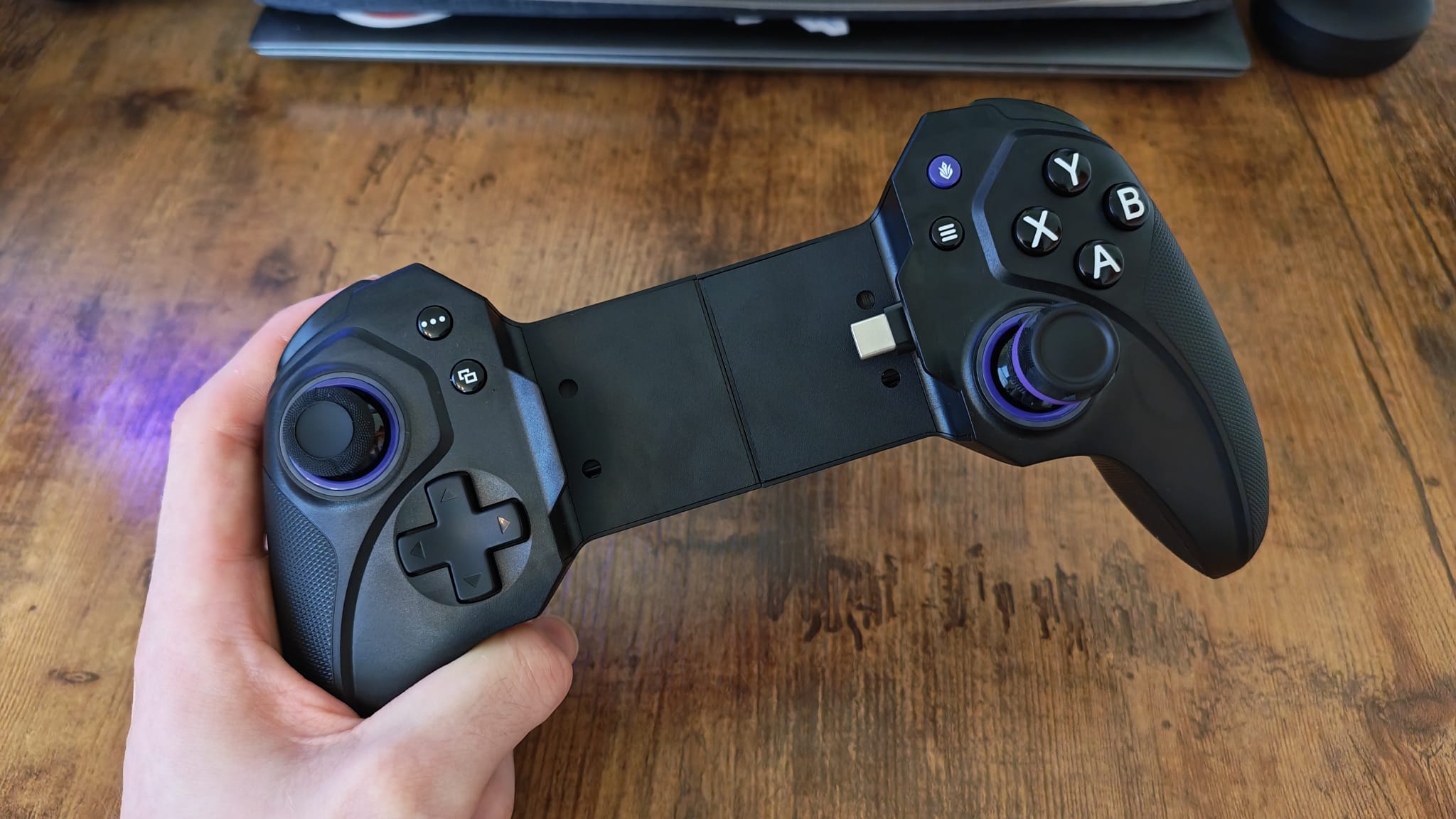
(Image credit: Future / Duncan Robertson) Build quality hesitancy and trigger spring volume quickly become a non-issue when I'm playing games with the ELO Vagabond. It's a proper controller you can play mobile games with, and maybe besides the much more expensive Kishi V3 Pro, it's one of the only ones I've used I think I'd actually not mind using as a PC controller if I needed to.
Its long grips and Hall sensor sticks give it plenty of scope for shooters, especially if you click the stick upgrades on and really start whipping your crosshair around. The comfort of the grips makes it a joy in third-person games, and the clicky buttons make it responsive in fighting games and platformers. It's versatile, and that only makes it a better on-the-go gaming solution because even if you have specialist hardware at home for one genre of gaming, the Vagabond is going to do a pretty good stand-in job while you're away.
That doesn't mean that it's perfect though, and although the Vagabond does a fantastic job replicating the gamepad experience with a phone, there are a few ways I wish it would take things further.
(Image credit: Future / Duncan Robertson) I've talked about it before, but most mobile controllers fail because they adopt the Switch's Joy-Con curse; putting the face buttons and thumbsticks right underneath one another. This invites thumbcramp and discomfort into the equation because you're constantly having to flex your thumb down the way to reach a stick, and thumbs move much more accurately and much faster side to side. It helps make a controller more portable, but it doesn't make one more comfortable or as satisfying to use.
The Vagabond does a good job of giving you more to grip onto, but I think if there was a Vagabond 2, I'd love to see more of a horizontal separation between the thumbstick and face buttons/D-pad. This isn't bad as is, but it isn't quite as comfortable as on a regular controller, and I think on a pad like this it could be.
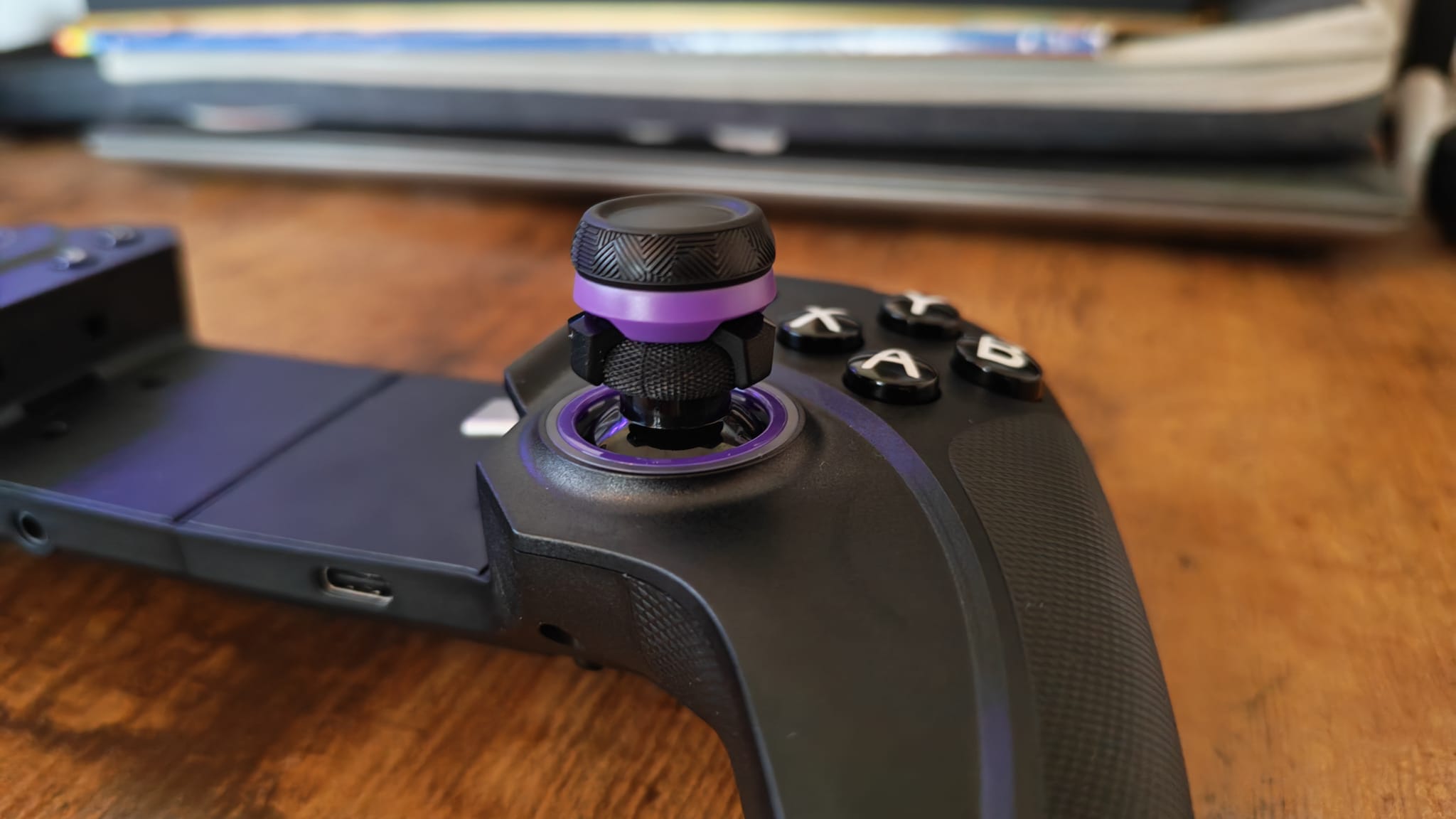
(Image credit: Future / Duncan Robertson) The other option is looking at the Scuf Nomad and taking a leaf out of the Steam Deck's book. Is there anything wrong with placing the thumbsticks symmetrically at the top of the controller? In my eyes, absolutely not, because even if it isn't conventional to a console player's eyes, they'll soon appreciate the comfort it brings.
If I get really nit-picky, I think there's an argument to be made for the D-pad being a little less rigid. I'd prefer a circular/8-wayt D-pad to make it a little easier to actuate at speed when it's placed a little awkwardly, but that might just come down to preference.
Something to celebrate is how practical the Vagabond is despite not trying to be as portable as the Backbone One or the foldable Asus ROG Tessen. It might not be as easy to shove in a bag or a pocket, but I got a new phone case while testing it, and the ELO didn't care. I never had to do any annoying swapping or case removal to fit my phone into it. That's all I really require from an on-the-go peripheral; I don't really have any need to fit it in my pocket.
Should you buy the ELO Vagabond?
(Image credit: Future / Duncan Robertson) I'm going to try and put this review in perspective with a personal anecdote. I have an Asus ROG Ally X that I've been using for all my on-the-go, portable gaming needs. Handheld gaming PCs obviously have their appeal because they're strong enough to run games natively and they can be docked for home play too. But for me, comfort is king, and something that drives me up the wall about the original Ally X is that Asus now offers similar handheld consoles with Xbox branding and full controller grips. In fact, all the handheld PC makers are now out here admitting through more ergonomic handles that their first iterations were rubbish for your hands.
I just don't find the ROG Ally X very comfortable, and it annoys me to the extent I don't use it as often as I want to.
With the ELO Vagabond wrapped around my phone, I'm much, much more inspired to take my gaming on the go because it's comfortable to hold for longer periods of time. Yes, it means streaming my PC games via SteamLink and dealing with lesser visuals and worse performance, but it's comfortable enough for me to play with, immerse myself in a game, and not think about how I need to regrip while playing every 5 minutes.
For me, that's a sign that the ELO Vagabond has succeeded in its mission. It's a really well-designed mobile controller that doesn't mean you compromise on comfort. It's also priced really well in the market. For me, this is the best mobile controller you can buy right now.
How I tested the ELO Vagabond
I tested the ELO Vagabond for over two weeks, using it for all my portable gaming and remote play needs. I tested it with and without its upgradable thumbsticks, and in plenty of gaming genres. I compared it closely to the GameSir G8 Galileo, the more recent Razer Kishi V3 controllers, and other mobile gamepads. For more on how we test controllers, take a look at the GamesRadar+ hardware policy.
If you made it this far, I'd also recommend reading up on the best TMR controllers, the best PS5 controllers, and the best Xbox Series X controllers.
[/url]
What's Your Reaction?








XINKER - Business and Income Tips
Explore XINKER, the ultimate platform for mastering business strategies, discovering passive income opportunities, and learning success principles. Join a community of thinkers dedicated to achieving financial freedom and entrepreneurial excellence.


![[Business Talk] Chagee: Opening 3,500 stores in 6 years](https://xinker.org/uploads/images/202410/image_140x98_671afce94bf91.webp)