





![[PRO Tips] Gold’s Bullish Revival: Seasonal Trends and Key Levels to Watch](https://xinker.org/uploads/images/202412/image_430x256_67724cc6ad0cd.webp)
![[PRO Tips] Gold Market Under Short-Term Pressure, Safe-Haven Demand and Central Bank Buying Support Long-Term Upside Potential](https://xinker.org/uploads/images/202412/image_430x256_676ffb4685287.webp)
![[PRO Tips] Analysis of 9 key points of differentiation strategy! Master differentiation to create a brand advantage that is unique in the world!](https://firebasestorage.googleapis.com/v0/b/xinker-tips.appspot.com/o/article_thumbnails%2Fscaled_differentiation%20strategy.png.png?alt=media&token=a1bfc3d2-e85a-4db7-8a6d-01c7274f8940)
![[PRO Tips] Will REITs regain growth momentum in 2024? 3 REITs ETFs you must know if you want to invest in real estate.](https://firebasestorage.googleapis.com/v0/b/xinker-tips.appspot.com/o/article_thumbnails%2Fscaled_REITs1.png.png?alt=media&token=8af4eb93-33ff-466f-8039-b6555fad52b4)
![[PRO Tips] Complete tutorial on how to make money in Adobe Stock!](https://firebasestorage.googleapis.com/v0/b/xinker-tips.appspot.com/o/article_thumbnails%2Fscaled_tut-adobe1.png.png?alt=media&token=0b2c8cf2-22bd-4142-883e-140ed1cbaf02)
![[Passive Income] Unlock the secret of passive income: 3 steps to apply for Google AdSense](https://xinker.org/uploads/images/202410/image_430x256_6717a4fb3052b.webp)
![[Passive Income] Earn over $200 a day with AI-generated articles!](https://firebasestorage.googleapis.com/v0/b/xinker-tips.appspot.com/o/article_thumbnails%2Fscaled_article1.png.png?alt=media&token=f61bf35b-8553-4719-826d-7360024adc70)
![[Passive Income] Earn over 20 USD per download with AI-generated images!](https://firebasestorage.googleapis.com/v0/b/xinker-tips.appspot.com/o/article_thumbnails%2Fscaled_adobe2.png.png?alt=media&token=3e20e76a-a907-45af-80aa-bf9b3600301f)
![[Passive Income] Earn 10 USD per new download by sharing CapCut!](https://firebasestorage.googleapis.com/v0/b/xinker-tips.appspot.com/o/article_thumbnails%2Fscaled_capcut2.png.png?alt=media&token=a04dec40-1fac-4857-86f2-19a8be02d38e)
![[Passive Income] Use your WiFi to create passive income in 5 minutes, and you can earn 4-6 U per day!](https://firebasestorage.googleapis.com/v0/b/xinker-tips.appspot.com/o/article_thumbnails%2Fscaled_Grassio.webp.png?alt=media&token=7659a95e-0e47-4f27-a17d-c942ac3cf7f4)


![[Business Talk] The Unique Theme of XINKER's Song: Beef Wellington and Business Mastery](https://xinker.org/uploads/images/202410/image_430x256_671afc155f47f.webp)
![[Business Talk] Chagee: Opening 3,500 stores in 6 years](https://xinker.org/uploads/images/202410/image_430x256_671afce80c5f9.webp)


Intel says the Core Ultra 7 270K Plus isn't a flagship processor, but it's an Ultra 9 in all but name and price
For years now, I've been banging on about how flagship desktop processors are kind of pointless. "Mid-range" options really aren't mid-range anymore, to the point where you can pretty comfortably pair a Ryzen 5 or Intel Core i5 with a powerful 4K graphics card and not really run into tangible bottlenecks. So what are you paying for with a Ryzen 9 or Intel Core i9? Usually, higher temperatures, bigger power draws, and slightly better speeds all in the name of saying you have the best CPU for gaming inside your computer. Intel seems to be catching onto this. It might be really impressive for these brands to say "we make the fastest processor ever built" every time they launch a new family of chips but, let's face it, the headline-grabbing ones are probably going to be too expensive for most gamers and PC builders to even consider. Moreover, when mid-range options can offer unreal performance, I'm not sure that many people outside of an enthusiast lens should really care. It's the 5- and 7-tiered processors that have my attention when a new range is announced, and that's because they're all you're really going to need. Intel has opted not to launch a Core Ultra 9 in its Arrow Lake refresh; instead, it's throwing all of its backing into the new Intel Core Ultra 7 270K Plus. There's no claim that it's the fastest processor on the shelves; rather, a claim that this is the fastest processor this brand has ever made. I like that, because it speaks to the new self-improvement era Intel seems to be in. It's not trying to be better than AMD; it's trying to work on itself and its own relationship with consumers, which is exactly what a $299 / £299 price is going to do. Specs & Features (Image credit: Future / Duncan Robertson) Similar to the Intel Core Ultra 5 250K Plus, there's a marked improvement in value for money when you look at this CPU's spec sheet. Intel wanted to make an enthusiast processor in the 270K Plus without making it an inaccessible flagship people couldn't afford, but I also see the pricing here as a sign that Intel knows it needs to strike a better value line if it wants to keep up with AMD. The good news is that despite fairer pricing, there's also an improvement over the spec sheet of the last-gen Intel Core Ultra 7 265K, which had 20 cores and 20 threads compared to the 24 of each in the 270K Plus. A last-gen boost clock of 5.5GHz might look a little consistent with the 265K, but with extra performance and efficiency cores and a more affordable price tag, the new version is definitely going to outclass it. Intel Core Ultra 7 270K Plus key specs Launch date: March 2026Core Count: 24 (8 performance, 16 efficient)Threads: 24Cache: 36MBBase Clock: P-cores = 3.7GHz, E-cores = 3.2GHzBoost Clock: 5.5GHzMax recommended RAM speed: Tested up to 6,000MT/S, quoted up to 7,200MT/sIntegrated graphics: YesMotherboard socket: LGA 1851Launch price: $299 / £299GR+'s recommended GPU pairing: RTX 50 Series / RX 9070 XT The interesting part comes when you compare the 270K Plus with last gen's actual flagship, the Core Ultra 9 285K. It had the exact same cores and threads configuration as the 270K Plus, the same cache size, and only a slightly faster boost clock of 5.7GHz. Its price was a much more demanding $589 in the US and £549 in the UK, which goes to show the value for money struck with the 270K Plus. It also shows that Intel seems to have learned a lesson about CPU tiering. What's in a name? Because this might as well be a flagship - in fact, looking at its spec list, it is one in all but name. The 270K Plus is a Core Ultra 9 in disguise but, if you go back far enough, Intel Core i5s have been even older flagship i9s from previous generations hiding in plain sight. Intel has always offered more cores and threads than AMD, but it might finally be learning that it's the tiering structure and over-pricing of each one that's been keeping it behind in the race. (Image credit: Future / Duncan Robertson) Speaking of the competition, the obvious rivals to a processor like this are AMD's X3D heroes. Intel might have more cores and threads in the 270K Plus than some of them, but it's not got the same clever double-decker cache. It seems to me like Intel's answer on the software side was to create tools that could increase efficiency, namely, the Intel Binary Optimization tool. I love the idea of this. If you can't answer the raw hardware innovation of Ryzen, find another route to glory. I'm sure this is something that will be worked on as time goes on, and we'll see it build with each new range, but right now I haven't noticed any tangible performance gains through it. Other reviewers have, so take my thoughts with a pinch of salt, but I also hope we see the list of supported games expand for it because, as you'll see from the names below, it's not the most useful so far.Final Fantasy XIV: Dawntrail Shadow of the Tomb RaiderAssassin's Creed MirageBorderlands 3Cyberpunk 2077Far Cry 6Geekbench 6.3+Hitman 3Hogwarts L
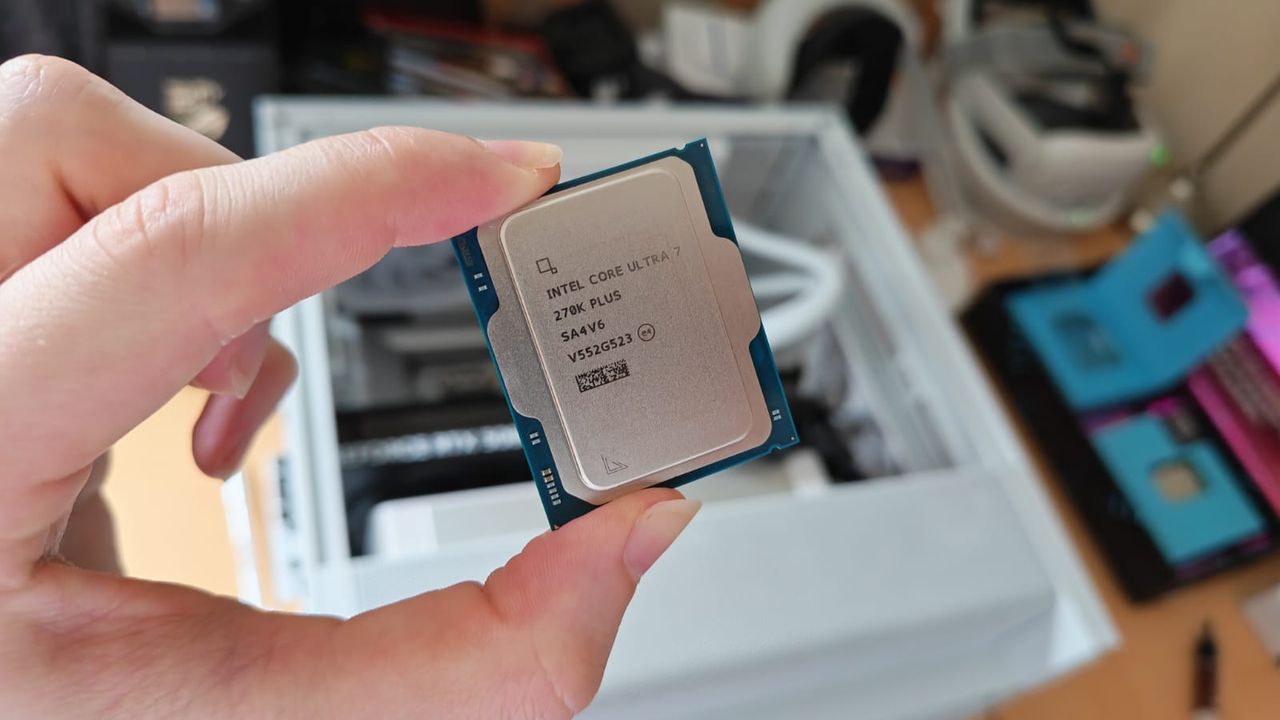 For years now, I've been banging on about how flagship desktop processors are kind of pointless. "Mid-range" options really aren't mid-range anymore, to the point where you can pretty comfortably pair a Ryzen 5 or Intel Core i5 with a powerful 4K graphics card and not really run into tangible bottlenecks. So what are you paying for with a Ryzen 9 or Intel Core i9? Usually, higher temperatures, bigger power draws, and slightly better speeds all in the name of saying you have the best CPU for gaming inside your computer.
Intel seems to be catching onto this. It might be really impressive for these brands to say "we make the fastest processor ever built" every time they launch a new family of chips but, let's face it, the headline-grabbing ones are probably going to be too expensive for most gamers and PC builders to even consider. Moreover, when mid-range options can offer unreal performance, I'm not sure that many people outside of an enthusiast lens should really care. It's the 5- and 7-tiered processors that have my attention when a new range is announced, and that's because they're all you're really going to need.
Intel has opted not to launch a Core Ultra 9 in its Arrow Lake refresh; instead, it's throwing all of its backing into the new Intel Core Ultra 7 270K Plus. There's no claim that it's the fastest processor on the shelves; rather, a claim that this is the fastest processor this brand has ever made. I like that, because it speaks to the new self-improvement era Intel seems to be in. It's not trying to be better than AMD; it's trying to work on itself and its own relationship with consumers, which is exactly what a $299 / £299 price is going to do.
Specs & Features
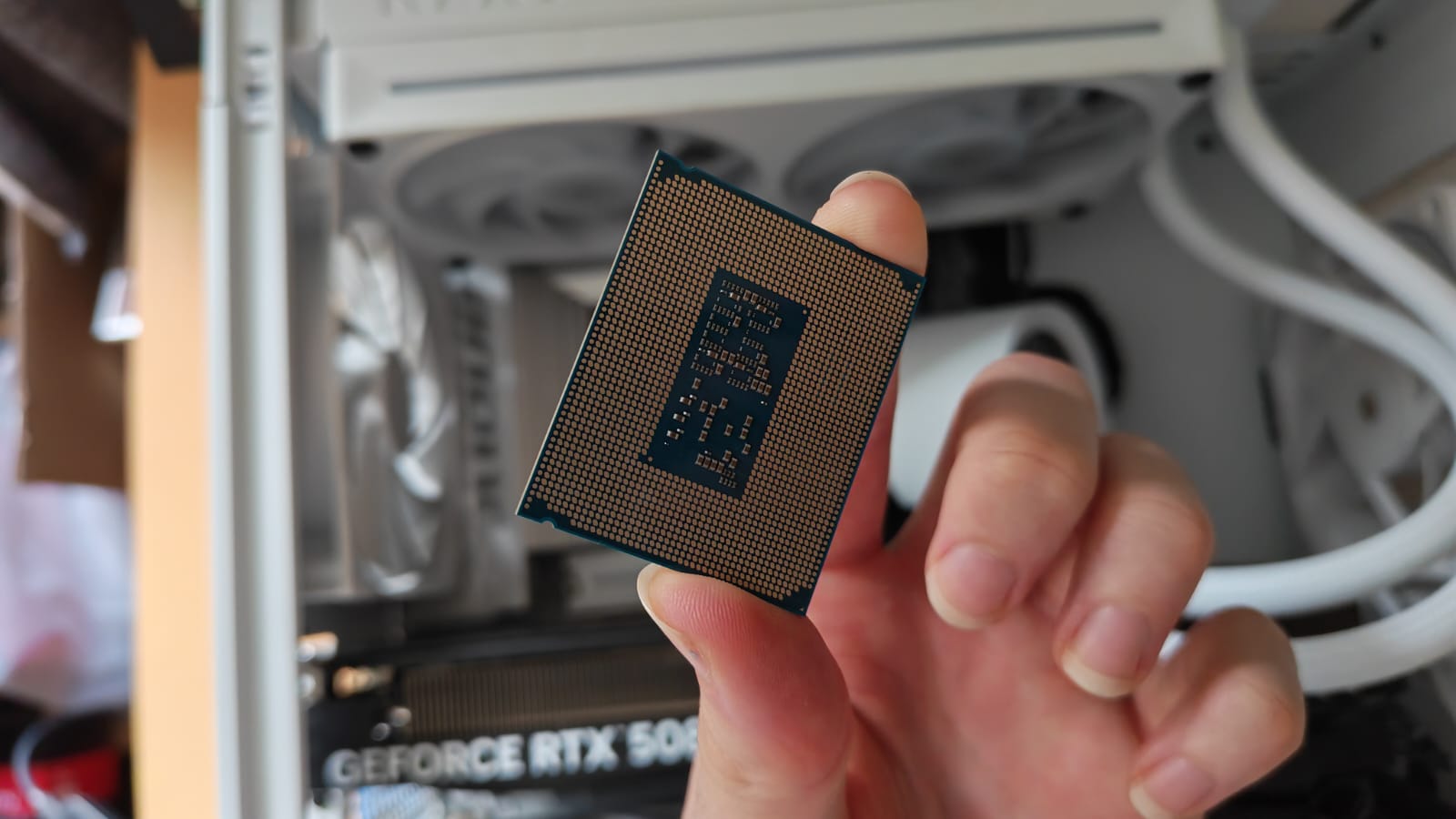
(Image credit: Future / Duncan Robertson) Similar to the Intel Core Ultra 5 250K Plus, there's a marked improvement in value for money when you look at this CPU's spec sheet. Intel wanted to make an enthusiast processor in the 270K Plus without making it an inaccessible flagship people couldn't afford, but I also see the pricing here as a sign that Intel knows it needs to strike a better value line if it wants to keep up with AMD.
The good news is that despite fairer pricing, there's also an improvement over the spec sheet of the last-gen Intel Core Ultra 7 265K, which had 20 cores and 20 threads compared to the 24 of each in the 270K Plus. A last-gen boost clock of 5.5GHz might look a little consistent with the 265K, but with extra performance and efficiency cores and a more affordable price tag, the new version is definitely going to outclass it.
Intel Core Ultra 7 270K Plus key specs Launch date: March 2026
Core Count: 24 (8 performance, 16 efficient)
Threads: 24
Cache: 36MB
Base Clock: P-cores = 3.7GHz, E-cores = 3.2GHz
Boost Clock: 5.5GHz
Max recommended RAM speed: Tested up to 6,000MT/S, quoted up to 7,200MT/s
Integrated graphics: Yes
Motherboard socket: LGA 1851
Launch price: $299 / £299
GR+'s recommended GPU pairing: RTX 50 Series / RX 9070 XT
The interesting part comes when you compare the 270K Plus with last gen's actual flagship, the Core Ultra 9 285K. It had the exact same cores and threads configuration as the 270K Plus, the same cache size, and only a slightly faster boost clock of 5.7GHz. Its price was a much more demanding $589 in the US and £549 in the UK, which goes to show the value for money struck with the 270K Plus.
It also shows that Intel seems to have learned a lesson about CPU tiering. What's in a name? Because this might as well be a flagship - in fact, looking at its spec list, it is one in all but name. The 270K Plus is a Core Ultra 9 in disguise but, if you go back far enough, Intel Core i5s have been even older flagship i9s from previous generations hiding in plain sight. Intel has always offered more cores and threads than AMD, but it might finally be learning that it's the tiering structure and over-pricing of each one that's been keeping it behind in the race.
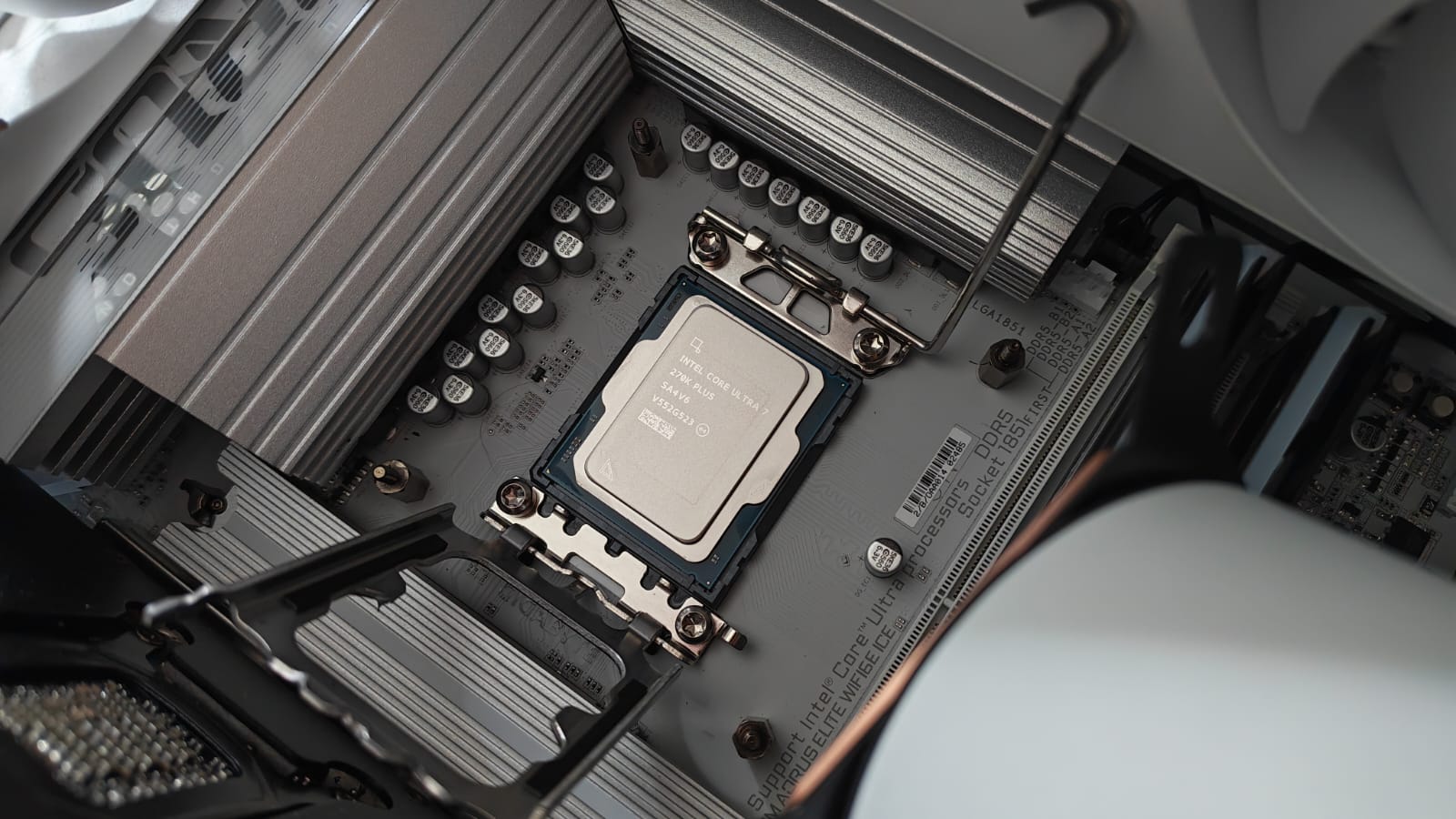
(Image credit: Future / Duncan Robertson) Speaking of the competition, the obvious rivals to a processor like this are AMD's X3D heroes. Intel might have more cores and threads in the 270K Plus than some of them, but it's not got the same clever double-decker cache. It seems to me like Intel's answer on the software side was to create tools that could increase efficiency, namely, the Intel Binary Optimization tool.
I love the idea of this. If you can't answer the raw hardware innovation of Ryzen, find another route to glory. I'm sure this is something that will be worked on as time goes on, and we'll see it build with each new range, but right now I haven't noticed any tangible performance gains through it. Other reviewers have, so take my thoughts with a pinch of salt, but I also hope we see the list of supported games expand for it because, as you'll see from the names below, it's not the most useful so far.
- Final Fantasy XIV: Dawntrail
- Shadow of the Tomb Raider
- Assassin's Creed Mirage
- Borderlands 3
- Cyberpunk 2077
- Far Cry 6
- Geekbench 6.3+
- Hitman 3
- Hogwarts Legacy
- Marvel's Spider-Man Remastered
- Naraka: Bladepoint
- Remnant 2
- Tiny Tina's Wonderlands
Performance
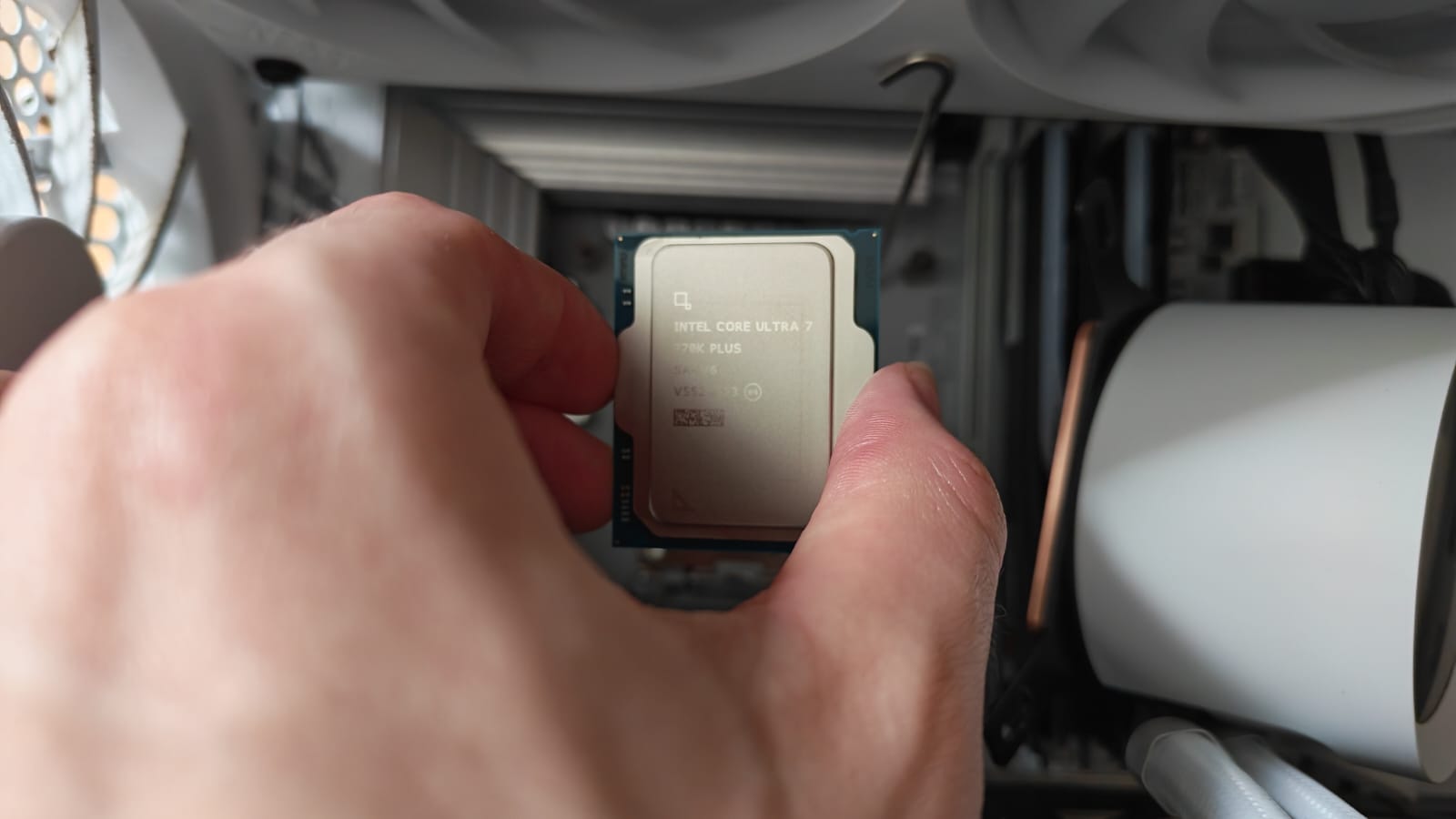
(Image credit: Future / Duncan Robertson) As I mentioned when reviewing the 250K Plus, I came to this new generation of Intel CPUs with a bit of a sour taste in my mouth. Having come from Intel's two most recent Raptor Lake i7 processors, I had a long list of quality-of-life improvements I was hoping to see. I was utterly sick of my PC's fans spiking up at random, my processor being pretty much impossible to cool even with the might of NZXT's AIOs, and I detested having a CPU that was so powerful, yet suffered constant frame rate stutters and dips due to volatile architecture.
I was definitely appeased by the Core Ultra 5. It offered excellent 4K gaming performance when paired with a PNY Slim RTX 5080, but its temperatures were sublime, and it felt like hard work finding tasks that would bring it to 70 degrees Celsius.
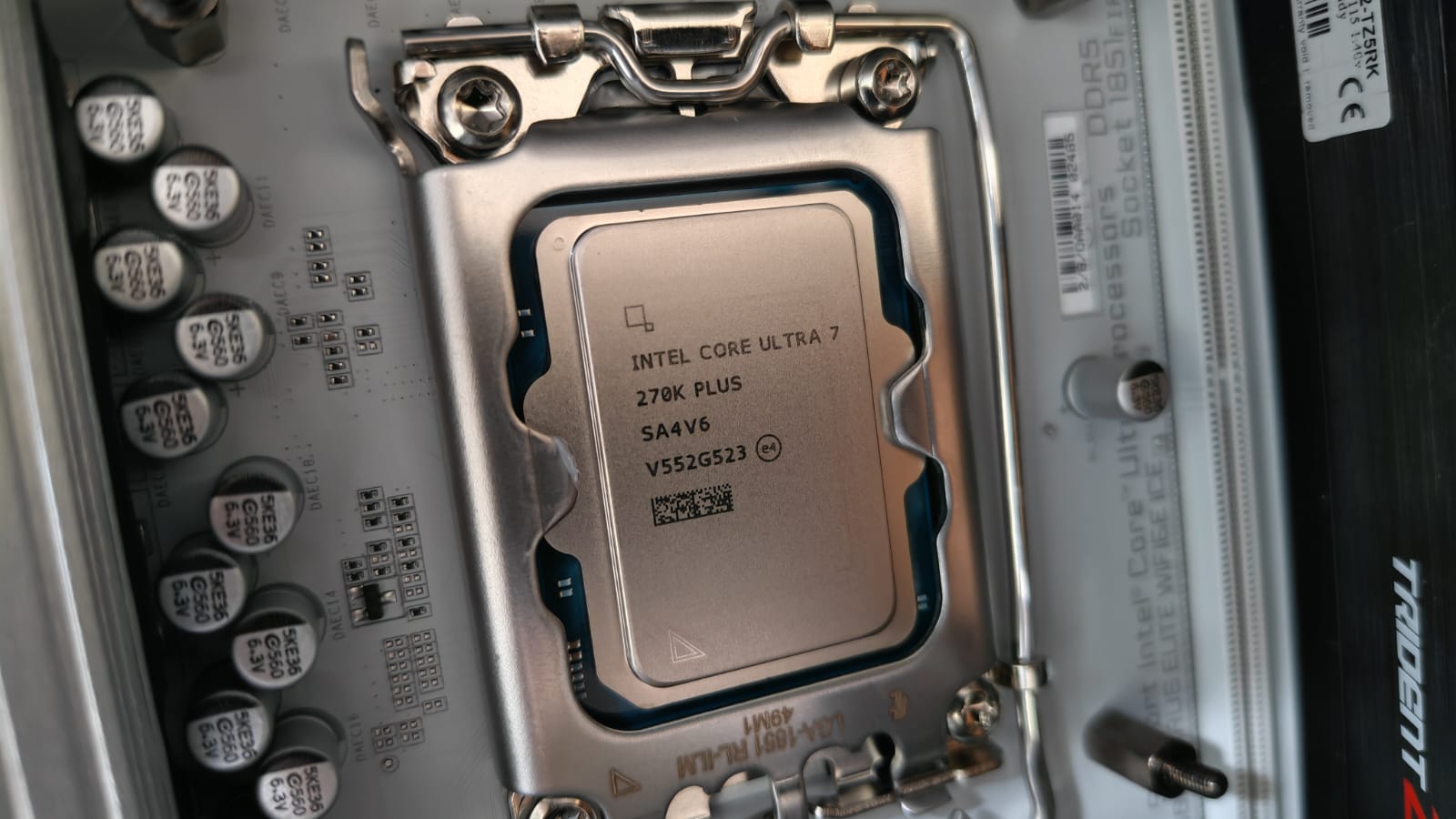
(Image credit: Future / Duncan Robertson) When first installing and playing around with its beefier sibling, I worried I was back to the status quo. Fans were a little louder, and the temperature reading on the pump head of my AIO was fluctuating. Truth be told, I think this was all in my head, really.
After weeks of testing this processor, I don't think it's fair to compare it to the Raptor Lake i7s at all. It isn't unruly; its temperatures are actually very controlled for a chip this powerful; it's just a hefty one that's naturally going to demand a little more than the Ultra 5. Hell, if I think of it like the Ultra 9 it sort of is, its temperatures are brilliantly calm for the power it gives you. I find that it idles between 36 degrees and 39 degrees depending on which work tasks I have running and, although some spikes during benchmarking took it up to the 80-degree mark, I only saw a peak of 86, which came during a Cinebench test. Again, compared to plenty of Raptor Lake products that reached boiling point in tests like these, the Arrow Lake refresh Ultra 7 might as well have ice in its veins.
For the most part, when gaming and not doing maximal tests, this CPU stays in really manageable temperature ranges in the 60s and low 70s, which is really impressive for the kind of numbers it can churn out.
https://flo.uri.sh/visualisation/29999643/embed The 270K Plus certainly achieved some impressive content creation benchmark scores. Of the chips I've tested in Cinebench's refreshed multi thread test, the 270K Plus scored the highest, and by some margin. It's trounced even the 250K Plus in the multi thread test when it already had a pretty impressive result over the AMD Ryzen 7 9700F in the Quoted Tech Horizon build I reviewed. In the single thread test, the gap wasn't quite so large between the 250K Plus and 270K Plus, and AMD's Ryzen 7 9700F actually scored higher.
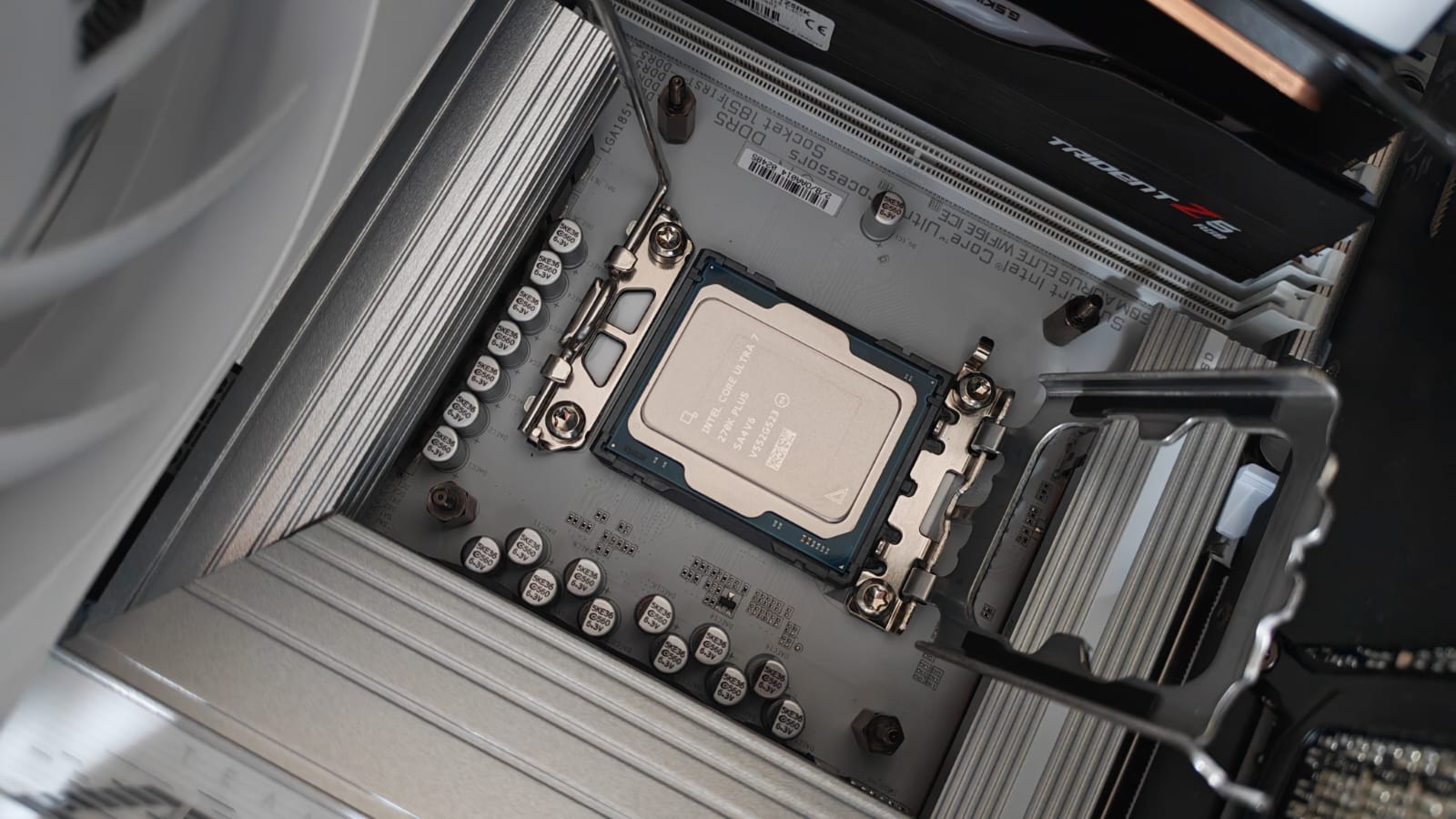
(Image credit: Future / Duncan Robertson) But in all three Blender benchmark tests, the 270K Plus now holds the record-high scores of any CPU I've tested. I'd like to run some updated benchmarks with the Ryzen 7 9800X3D to see how things compare, but either way, Intel's clearly geared this thing toward excellent content creation performance at a $300 price point.
https://flo.uri.sh/visualisation/29999548/embed Gaming tests are similarly impressive - although I do feel the need to caveat them by saying that the Core Ultra 5 and 7 have been tested in the same machine, with the added help of an RTX 5080. Meanwhile, the AMD Ryzens were tested with varying components, mostly with an RX 7900 GRE, which packs less of a punch.
In Total War: Warhammer 3, both current-gen Intel processors performed brilliantly, but what's interesting is that the 250K Plus actually outperformed its non-flagship/flagship sibling by a measly frame in two tests. I did notice bigger temperature spikes in these benchmarks for the 270K Plus, so it could have been an anomaly due to higher thermals, but either way, not what I expected to see and really speaks to how well the 250K Plus performs.
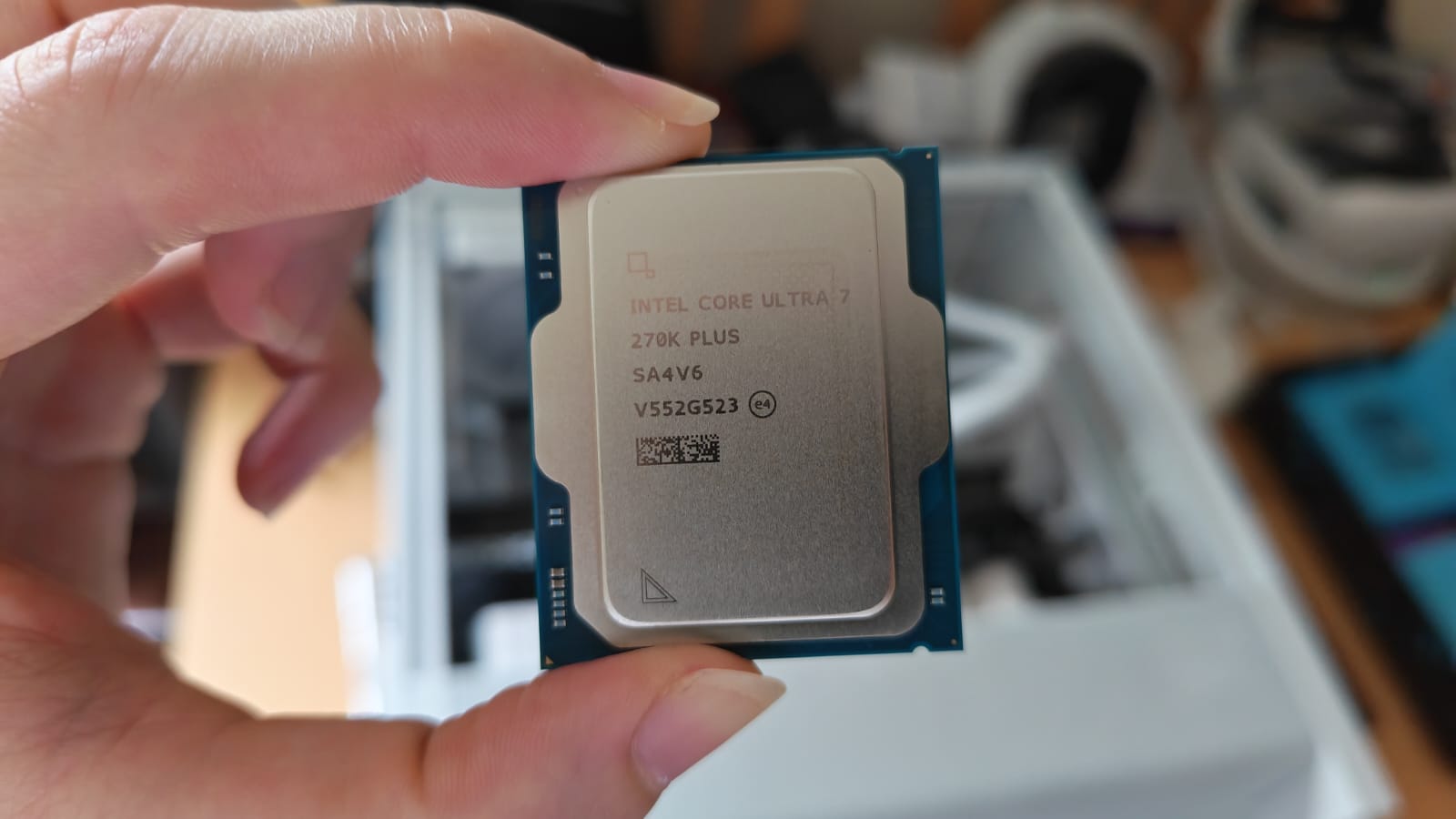
(Image credit: Future / Duncan Robertson) In Homeworld 3 and all of my Cities: Skylines scenario tests, the 270K Plus ruled supreme on the Intel side of things. That said, the Ryzen 7 7800X3D's average frame rates in these scenarios are still comfortably in the lead. In these sorts of games, your CPU is going to make a big difference, and in Planet Zoo I did see a marked difference with the 270K Plus over the 250K of 78 up to 97fps.
For its ability to boot out higher numbers for the most part, the 270K Plus does keep its power draw under control. It idles at a similar 30W to the 250K Plus, which is great, but is a bit hungrier for wattage when you're using it more strenuously. In Total War: Warhammer 3's Battle benchmark, for example, the 270K Plus asked for a peak of 85W, while the 250K Plus only required 72W.
Should you buy the Intel Core Ultra 7 270K Plus?
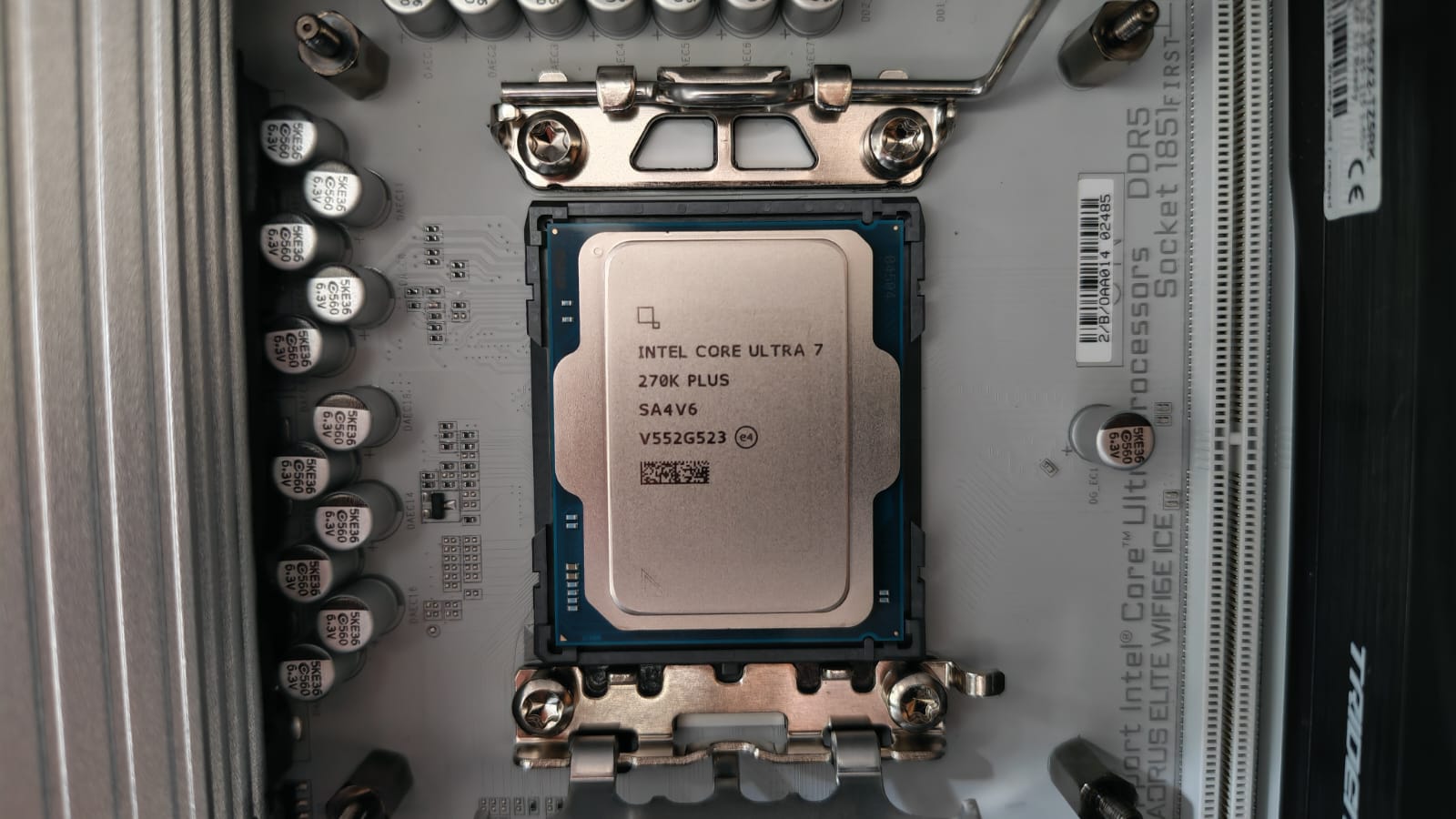
(Image credit: Future / Duncan Robertson) It's a flagship in all but name, offering bigger, badder performance without the price tag that usually goes along with an Intel Core i9/Ultra 9 package. I'd absolutely recommend the 270K Plus to gamers and content creators, but I'd caveat it by saying that not everyone is going to need it. See, while it avoids the typical annoyances of "flagship" chips, it's still a little more expensive, demands more power, and takes a bit more effort to keep cool. As impressive as Intel has made the 270K Plus, and as much as it's tried to avoid the pitfalls of an Ultra 9, the Ultra 250K Plus is also pretty damn good for a whole hundred less of your hard-earned dollars.
I'd say that if you're a content creator, or you spend a lot of time playing very CPU-intensive games, you'll benefit from the extra money spent on the Ultra 7, but if not, most gamers will be able to pair the 250K Plus with a decent 4K GPU and won't be left asking where their frames are.
The 270K Plus is certainly priced competitively, which is what it needs to be to win people over against pricier X3D rivals from AMD. In my experience, though, those can offer extra gaming performance and plentiful forward upgrades, so it's still a difficult toss-up.
Intel certainly seems like it's turning over a new leaf, and in many ways, the accessible price and fantastic performance of the 270K Plus is testament to that. It's a fantastic investment in the CPU market right now, but it's up to Intel to make sure that stays true well into the future.
How I tested the Intel Core Ultra 7 270K Plus
The Intel Core Ultra 7 270K Plus has been socketed in my gaming and work PC for a few weeks now, and I've run the full gauntlet of CPU benchmarks on it before writing up this review. I paired it with an RTX 5080 GPU, 32GB of G.Skill DDR5 RAM, and an NZXT Kraken Plus 240mm RGB cooler. I performed content creation benchmark tests through Blender and Cinebench, watching power draws and temperatures through NZXT Cam software. I also performed gaming tests through various CPU-hungry games. I compared scores and value to similar gaming CPUs.
For more on how we test gaming PCs, take a look at the full-length GamesRadar+ Hardware Policy.
There are other components to research if you're looking to buy one of the best gaming PCs. Take a look at the best RAM for gaming and the best graphics cards.
[/url]
What's Your Reaction?








XINKER - Business and Income Tips
Explore XINKER, the ultimate platform for mastering business strategies, discovering passive income opportunities, and learning success principles. Join a community of thinkers dedicated to achieving financial freedom and entrepreneurial excellence.

![S11 New Characters' Adventures: [Chapter 1]](https://clan.fastly.steamstatic.com/images/34875433/223e421349382280b811d75e1d7afe74853a983d.png?#)

![[Business Talk] Chagee: Opening 3,500 stores in 6 years](https://xinker.org/uploads/images/202410/image_140x98_671afce94bf91.webp)