
![[PRO Tips] Gold’s Bullish Revival: Seasonal Trends and Key Levels to Watch](https://xinker.org/uploads/images/202412/image_430x256_67724cc6ad0cd.webp)
![[PRO Tips] Gold Market Under Short-Term Pressure, Safe-Haven Demand and Central Bank Buying Support Long-Term Upside Potential](https://xinker.org/uploads/images/202412/image_430x256_676ffb4685287.webp)
![[PRO Tips] Analysis of 9 key points of differentiation strategy! Master differentiation to create a brand advantage that is unique in the world!](https://firebasestorage.googleapis.com/v0/b/xinker-tips.appspot.com/o/article_thumbnails%2Fscaled_differentiation%20strategy.png.png?alt=media&token=a1bfc3d2-e85a-4db7-8a6d-01c7274f8940)
![[PRO Tips] Will REITs regain growth momentum in 2024? 3 REITs ETFs you must know if you want to invest in real estate.](https://firebasestorage.googleapis.com/v0/b/xinker-tips.appspot.com/o/article_thumbnails%2Fscaled_REITs1.png.png?alt=media&token=8af4eb93-33ff-466f-8039-b6555fad52b4)
![[PRO Tips] Complete tutorial on how to make money in Adobe Stock!](https://firebasestorage.googleapis.com/v0/b/xinker-tips.appspot.com/o/article_thumbnails%2Fscaled_tut-adobe1.png.png?alt=media&token=0b2c8cf2-22bd-4142-883e-140ed1cbaf02)
![[Passive Income] Unlock the secret of passive income: 3 steps to apply for Google AdSense](https://xinker.org/uploads/images/202410/image_430x256_6717a4fb3052b.webp)
![[Passive Income] Earn over $200 a day with AI-generated articles!](https://firebasestorage.googleapis.com/v0/b/xinker-tips.appspot.com/o/article_thumbnails%2Fscaled_article1.png.png?alt=media&token=f61bf35b-8553-4719-826d-7360024adc70)
![[Passive Income] Earn over 20 USD per download with AI-generated images!](https://firebasestorage.googleapis.com/v0/b/xinker-tips.appspot.com/o/article_thumbnails%2Fscaled_adobe2.png.png?alt=media&token=3e20e76a-a907-45af-80aa-bf9b3600301f)
![[Passive Income] Earn 10 USD per new download by sharing CapCut!](https://firebasestorage.googleapis.com/v0/b/xinker-tips.appspot.com/o/article_thumbnails%2Fscaled_capcut2.png.png?alt=media&token=a04dec40-1fac-4857-86f2-19a8be02d38e)
![[Passive Income] Use your WiFi to create passive income in 5 minutes, and you can earn 4-6 U per day!](https://firebasestorage.googleapis.com/v0/b/xinker-tips.appspot.com/o/article_thumbnails%2Fscaled_Grassio.webp.png?alt=media&token=7659a95e-0e47-4f27-a17d-c942ac3cf7f4)


![[Business Talk] The Unique Theme of XINKER's Song: Beef Wellington and Business Mastery](https://xinker.org/uploads/images/202410/image_430x256_671afc155f47f.webp)
![[Business Talk] Chagee: Opening 3,500 stores in 6 years](https://xinker.org/uploads/images/202410/image_430x256_671afce80c5f9.webp)

How Tencent sees AI and UGC lowering game dev costs and leading to new kinds of games | Tian Xiao fireside chat
It’s not always easy to articulate a company’s game strategy, especially when you’re at a giant company like Tencent. But we had a good conversation about that topic with Tian Xiao, head of North American partnerships at Tencent, during our GamesBeat Summit 2026 in May. In a fireside chat, we talked about Tencent’s view of the future of games. Its viewpoint matters, considering its global role in gaming. Tencent is reportedly mulling selling stakes in some of its game holdings, but the company declined to comment on that story.Tencent’s gaming holdings Shenzhen, China-based Tencent spans businesses from social media to financial services. But its game revenues make it the largest game company in the world. It generates billions of dollars in revenues a month in games. Honor of Kings alone generated $2 billion in 2025 revenue on iOS alone in China. Delta Force grew revenue to more than $500 million, with annual revenue up 29 times over the year before. Tencent also owns major stakes in game leaders like Riot Games (League of Legends), Epic Games (Fortnite), Supercell (Clash of Clans), Digital Extremes (Warframe) and many more. Tencent has also reinvested a lot of profits by making investments in game companies, including many startups in the West. The company still has challenges, like becoming better known in the West. Xiao wanted his talk to be “more organic and blunt” based on his own perspective. And he wanted to share what Tencent sees in the market for games. First, we talked about Tencent’s structure. Xiao noted Tencent has four major internal studios, including TiMi, which made Honor of Kings, Call of Duty: Mobile, Arena of Valor and Pokemon Unite. Tencent’s LightSpeed Studio made PUBG Mobile and Peacekeepers Elite. MoreFun Studio made Naruto Mobile and Rock Kingdom. And Aurora Studio made Need for Speed Online and Ring of Elysium.Tencent’s view of gaming Honor of Kings is one of Tencent’s big hits. Asked about his view of the gaming industry, Xiao said, “We had a discussion with some of our partners at GDC. Over the past two years, especially for folks on the ground in North America, — my colleague Amir Satvat is in the audience as well. He’s done a terrific job in terms of documenting the impact of layoffs.” He added, “When I went to Gamescom (in August, 2025) two years ago, it felt pretty pessimistic. As we look at what’s happening in China and elsewhere, we get the sense that the picture is not as bleak as everyone thinks in terms of the overall gaming industry.” And he continued, “I’m sure some of you have read Matthew Ball’s report. We have our own perspective on data on that as well. If you look at the past five years, 2021 to 2025, the gaming industry grew from close to $200 billion to about $220 billion. So that represents about 2% CAGR over the past five years, and a lot of that peak during COVID came down and recently recovered. I would say the growth is not really broad-based. It’s not like everywhere, but it’s very nuanced across a few pockets, based on what we’re seeing.” He said the key winners were casual mobile gaming, right, which brings in new non-gamers into it, because of lower barrier of entry. He noted the key studios in this segment are based in Turkey, China, Vietnam, and Southeast Asia. “This is one area we’ve been digging into quite a bit recently. The second area I think Tencent has been primarily focused on has been on evergreen franchises. That may seem like an overused term, but it refers to any gaming franchise that generates over $1 billion or $500 million in annual revenue,” he said. Tencent has around 15 to 17 such franchises, and they’re growing. The third pocket is something that Xiao loves to talk about.User-generated content Delta Force is a Tencent game. Source: Tencent “I’m personally very passionate about this in terms of what we’ve seen in the user-generated content (UGC) space,” he said. “I know there’s been a lot of talks about triple-A space, the growing costs. But on the other hand, I’ve been paying a lot of attention to the UGC space for the past two years. With Roblox, with Unreal Editor for Fortnite (UEFN), it’s actually been growing a lot.” He noted a lot of the losers are some of the long tail and some of the mid-market studios, as well as bit of the console space. Tencent’s investment strategy MetaHuman 5.8 has launched. Source: Epic Games I asked about Tencent’s investment strategy and what will help grow gaming to the next level. As far as what Tencent is looking for, Xiao said, “I think one of the key trends that we can see is, over the past few years, capital has pulled back mostly from gaming industry compared to COVID levels.” That includes both venture capital firms and strategic investors. Asked if Tencent is still investing, he said, “The way I answer it is Tencent actually consistently invests over the time, over different cycles. We’ve been doing that for the past 10 years, 15 years, ever since we started investing into Riot, Epic, othe

It’s not always easy to articulate a company’s game strategy, especially when you’re at a giant company like Tencent. But we had a good conversation about that topic with Tian Xiao, head of North American partnerships at Tencent, during our GamesBeat Summit 2026 in May.
In a fireside chat, we talked about Tencent’s view of the future of games. Its viewpoint matters, considering its global role in gaming. Tencent is reportedly mulling selling stakes in some of its game holdings, but the company declined to comment on that story.
Tencent also owns major stakes in game leaders like Riot Games (League of Legends), Epic Games (Fortnite), Supercell (Clash of Clans), Digital Extremes (Warframe) and many more. Tencent has also reinvested a lot of profits by making investments in game companies, including many startups in the West.
The company still has challenges, like becoming better known in the West. Xiao wanted his talk to be “more organic and blunt” based on his own perspective. And he wanted to share what Tencent sees in the market for games.
First, we talked about Tencent’s structure. Xiao noted Tencent has four major internal studios, including TiMi, which made Honor of Kings, Call of Duty: Mobile, Arena of Valor and Pokemon Unite. Tencent’s LightSpeed Studio made PUBG Mobile and Peacekeepers Elite. MoreFun Studio made Naruto Mobile and Rock Kingdom. And Aurora Studio made Need for Speed Online and Ring of Elysium.
 Honor of Kings is one of Tencent’s big hits. Asked about his view of the gaming industry, Xiao said, “We had a discussion with some of our partners at GDC. Over the past two years, especially for folks on the ground in North America, — my colleague Amir Satvat is in the audience as well. He’s done a terrific job in terms of documenting the impact of layoffs.”
He added, “When I went to Gamescom (in August, 2025) two years ago, it felt pretty pessimistic. As we look at what’s happening in China and elsewhere, we get the sense that the picture is not as bleak as everyone thinks in terms of the overall gaming industry.”
And he continued, “I’m sure some of you have read Matthew Ball’s report. We have our own perspective on data on that as well. If you look at the past five years, 2021 to 2025, the gaming industry grew from close to $200 billion to about $220 billion. So that represents about 2% CAGR over the past five years, and a lot of that peak during COVID came down and recently recovered. I would say the growth is not really broad-based. It’s not like everywhere, but it’s very nuanced across a few pockets, based on what we’re seeing.”
He said the key winners were casual mobile gaming, right, which brings in new non-gamers into it, because of lower barrier of entry. He noted the key studios in this segment are based in Turkey, China, Vietnam, and Southeast Asia.
“This is one area we’ve been digging into quite a bit recently. The second area I think Tencent has been primarily focused on has been on evergreen franchises. That may seem like an overused term, but it refers to any gaming franchise that generates over $1 billion or $500 million in annual revenue,” he said.
Tencent has around 15 to 17 such franchises, and they’re growing. The third pocket is something that Xiao loves to talk about.
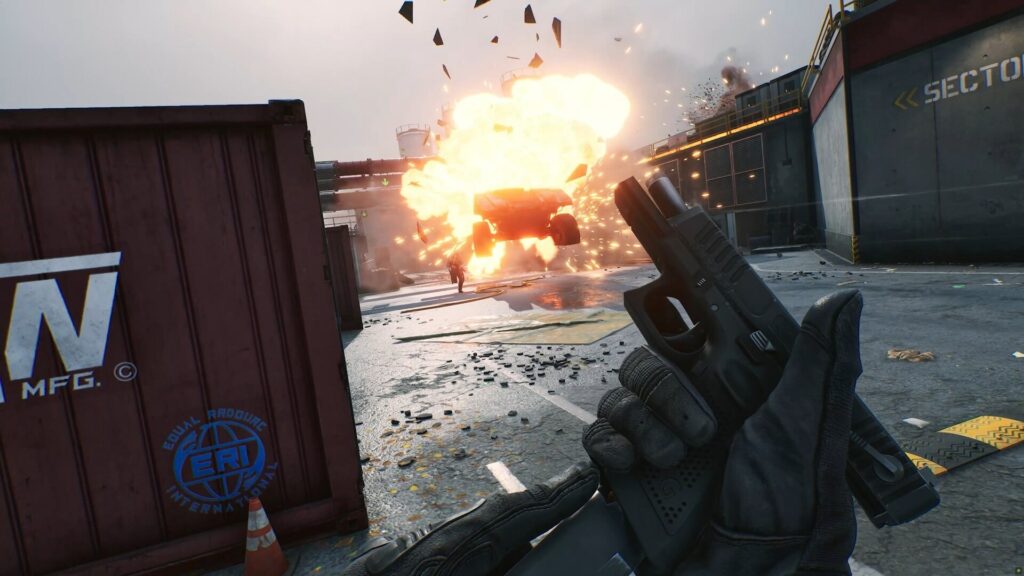 Delta Force is a Tencent game. Source: Tencent “I’m personally very passionate about this in terms of what we’ve seen in the user-generated content (UGC) space,” he said. “I know there’s been a lot of talks about triple-A space, the growing costs. But on the other hand, I’ve been paying a lot of attention to the UGC space for the past two years. With Roblox, with Unreal Editor for Fortnite (UEFN), it’s actually been growing a lot.”
He noted a lot of the losers are some of the long tail and some of the mid-market studios, as well as bit of the console space.
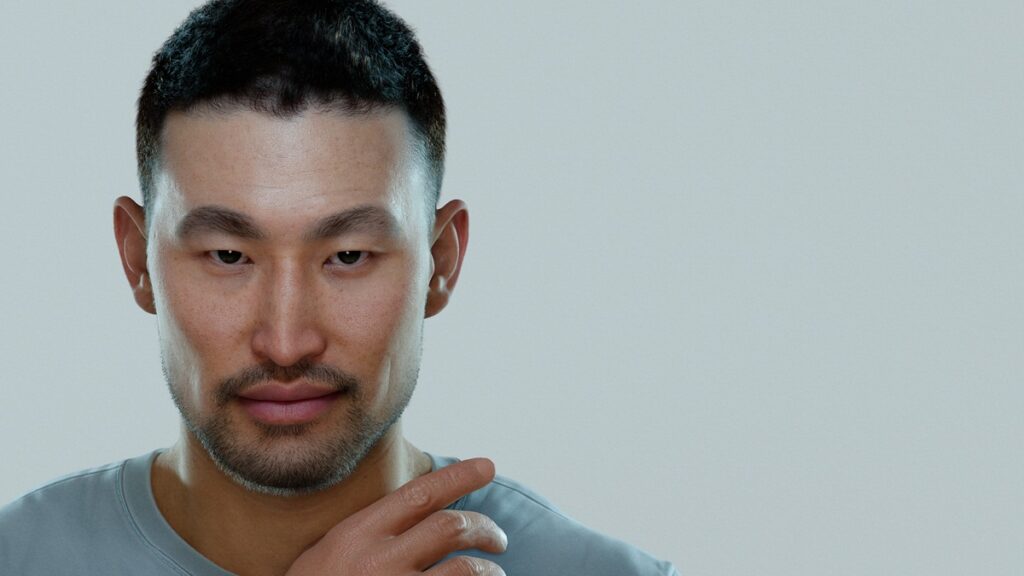 MetaHuman 5.8 has launched. Source: Epic Games I asked about Tencent’s investment strategy and what will help grow gaming to the next level.
As far as what Tencent is looking for, Xiao said, “I think one of the key trends that we can see is, over the past few years, capital has pulled back mostly from gaming industry compared to COVID levels.”
That includes both venture capital firms and strategic investors. Asked if Tencent is still investing, he said, “The way I answer it is Tencent actually consistently invests over the time, over different cycles. We’ve been doing that for the past 10 years, 15 years, ever since we started investing into Riot, Epic, other studios.”
He added, “And there was a period of time where we were very public about the type of investments that we would be making, particularly in 2019 to 2021 and 2022, during peak of COVID.”
He said Tencent would invest into a lot of triple-A studios, double-A studios and core studios.
“We’ve now seen the results of those as well. We’ve had a lot of learnings. I would say over time, we’ve also gathered our own pattern recognition in terms of what works and what didn’t work,” Xiao said. “I would say the area that where we are good at is actually when we’re very gameplay focused. So we have a team based out of Shenzhen that evaluates the gameplay playtests for thousands of games. They come in and give feedback. They have a lot of pattern recognition, and through that we find that our sweet spot generally is when the game is has a playable that is close to launch.”
He said that Tencent may have a miss when a team is very early and it only has a bit of a playable and is mostly a “paper pitch.”
He added, “I’m not saying that we don’t invest in them, but generally it’s harder for us to form our thesis around those. The other part of it is we invest into evergreen franchise IPs, mature studios — particularly studios that have built one game and are now shipping a second or third game.”
He said the team has seen that with examples like Larian, which built the Divinity series and Baldur’s Gate 3. Experienced studios like Larian are able to build upon their infrastructure, their past success, and their community. Shipping a game for a first time, even if you’re on a veteran team, is instrumental to success, Xiao said.
I also asked Xiao about the regions that are interesting. I noted in Ball’s attention war deck, he noted that the net growth of the West is about zero, if you back out the gains of Roblox, China’s growth and the growth of platforms. Western game developers and publishers aren’t growing.
“This is a very nuanced topic I can touch upon at a high level. I would say we actually have our own framework of looking at it as well,” he said. “Part of it is if you look at the number of companies that have generated revenue of $500 million or more in terms of particular single studios, I think in America, went from like 15 a few years ago to now maybe about 12 to 13, so. The number of studios actually declined. That’s in North America and Europe. That’s actually grown to the teens in Japan and Korea. Japan roughly stayed constant or shrank a little bit.”
He added, “In China, actually, the number of studios over $500 million revenue per single year went from 18 to 33 and that group of studios actually took more share of the gaming market over the past few years than any other studios.”
To say that triple-A games are failing, based on this data, is really just rhetoric, he said.
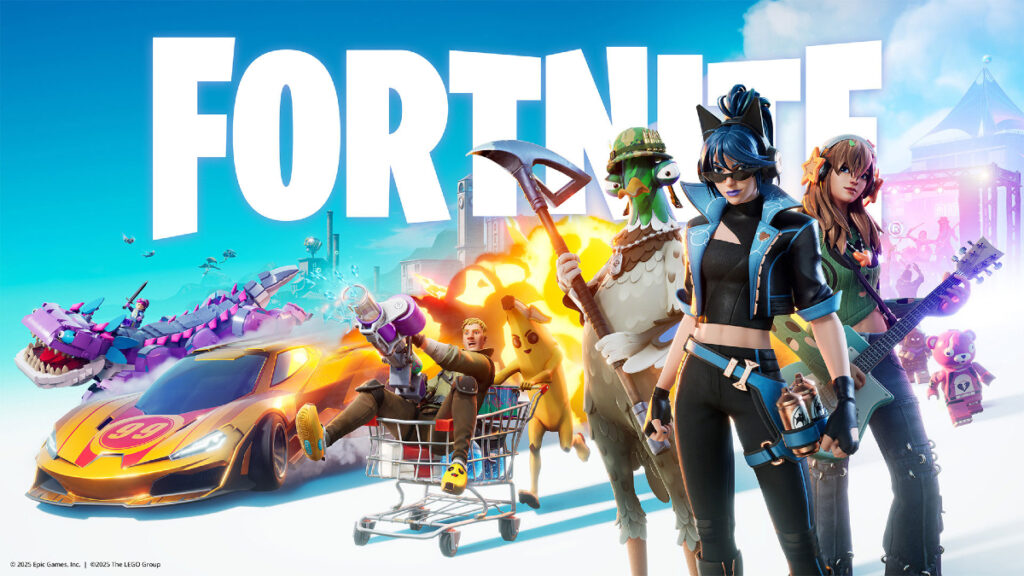 Image credit: Epic Games “On the one hand, we’ve seen that the bigger guys in the top league are taking more share, right?” he said. “The middle layer is kind of getting a little squeezed, and part of [the reason] is rising development costs, and all those things,” Xiao said. “And then there’s a long tail, and that long tail is what we talk about with UGC, and those kind of things.”
And he said, “But I would say our view of the U.S. is there’s still a lot of talent, still a lot of IP, a lot of tech, particularly with AI, and we think that the thesis in the future is about what they’re going to do with AI, with IP.”
He said those are going to become more valuable. He said Tencent has been very active in Europe as well, investing a lot in studios there.
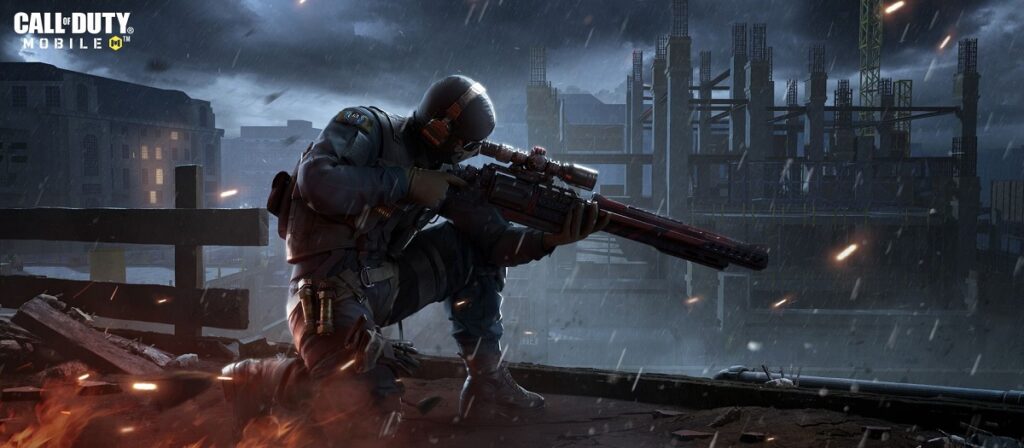 Sniping in Call of Duty: Mobile. I asked about Xiao’s take on AI and the impact on gaming. And how is Tencent integrating AI into its development cycle.
“Look, at the end of the day, I know in the West there’s a lot of resistance in the gaming industry in terms of thinking about what AI means for the industry as a whole,” Xiao said. “In terms of labor and everything like that. Working for Tencent, I think you know Tencent’s a very practical company as well. When I went back to Shenzhen a few months ago, management talked a lot about AI first across all of the business.”
He added, “What that means is they’re not talking about layoffs and replacing human capital. They’re talking about how we amplify the current talent with AI. And so the way that Tencent is applying AI, for instance, in gaming is we have this model called the Hunyuan. That generates a lot of assets. I think it’s one of the more advanced ones right now, along with Mid-Journey and others on the market.”
And he said, “We do a lot of coding with AI now, using our model on the market. We’ll do a lot of QA testing. We did a lot of NPC companions. So across all of gaming we’re now thinking about how do we use AI to accelerate efficiency, but not only in Tencent. I think if you look at studios in China, they’re using AI to really accelerate the development.”
He said this is not just about cutting costs. It’s a matter of which part of the business can be accelerated.
“I met with creators like Jenova Chen and others like Jennifer Svedberg-Yen at Sandfall Interactive (Clair Obscur: Expedition 33) at GDC. One of the really interesting topics that we discussed was whether AI is really going to replace the top creators. I actually think in an AI age the top creators are going to be more valuable because they’re the ones that can really come up with a world and the story. I don’t think AI can actually address right now. And so that’s one thesis that we’re really thinking about, right? Because players want to connect with creators as the soul, not just the AI.”
I noted that in Asia, it seems like AI is not as controversial. Everybody seems to be racing ahead. I asked if he felt that way, and if there is a comparison he would make to Silicon Valley.
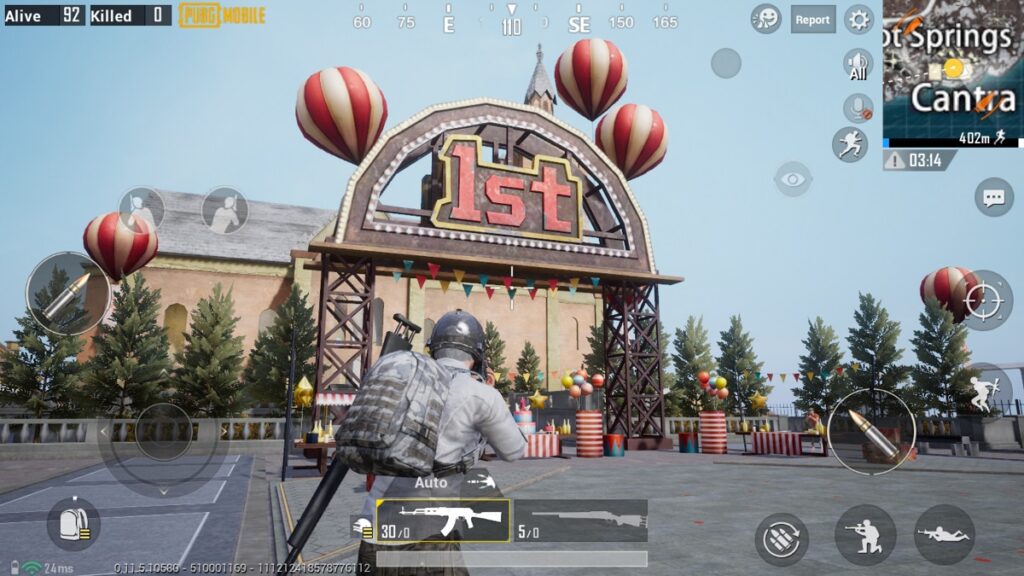 PUBG Mobile He said there is “a lot of anxiety in China as well, in terms of the AI race. Everyone wants to stay ahead. Everyone is thinking about how to apply the data, everyone is thinking about how to safeguard their data. But most importantly, how do they come up with new applications? They that just as with mobile and compute, this is the next biggest innovation, and we need to stay ahead of the curve, right?”
I noted that Tencent successfully launched Delta Force in China. What learnings does Tencent have to share?
He noted that last year, we talked about the strength of sales for Black Myth: Wukong, which one of Tencent’s partners, Game Science, created.
“That game coming out actually did something really good for the gaming industry in China,” Xiao said. “It really helped to put gaming as something culturally impactful in the eyes of the government and everything, and so there’s a more benevolent stance towards gaming now.”
He also said, “Secondly, I would say that there’s now an underserved market in terms of PC games in China, and more and more we get the question from our major partners, ‘What should our China strategy be?’ That wasn’t really the case four or five years ago, when China seemed like a distant market, blocked by regulations.”
Xiao mentioned he went back to the China Joy show in Shanghai last year, where there were a lot of visitors from outside China there, learning about the market. Delta Force was one of the games TiMi was working on, and it had been slated at first for mobile. But then it became a cross-platform game and a more ambitious bet.
“It became one of the one of the few, if not the only, examples of a PC-plus-mobile cross-platform game launch in China, and what it did was mobile became a source of retention,” he said. “Mobile became a source of user acquisition, and PC became like a retention lever. It really targeted the college students in China, and there’s 10 million of them entering the college every year with laptops. What do they do at night? They play games. They were playing a lot of Delta Force. The extraction mode is very popular, and so that has now become the third largest game in Tencent portfolio, with about 50 million daily active users (DAU), and it’s great to see them starting to make more progress globally as well.”
He said, “It’s important to be on the ground in China, trying to get a ground view of what’s happening in the market, and we’ve been hosting a lot of partners in China as well, trying to help them understand, trying to be play the tall guy role, trying to play that know-how.”
 Supercell is owned by Tencent. Source: Supercell I noted the overall market has been fairly unpredictable. Tariffs have thrown everyone for a loop. I asked what surprised Xiao. I noted that ARC Raiders was a surprise success, coming out just two weeks after Battlefield 6 in October 2025 and two weeks before Call of Duty: Black Ops 7. Yet it succeeded and held onto concurrent users better than other games did.
“I would say the surprise is some of the smaller studios and medium studios that, like you mentioned, have been able to punch above their weight, and this somewhat contradicts what I was saying earlier on,” he said. “But at the same time I think the Western triple-A market — the analogy I use is the cost of making game is getting more expensive, but at the same time it’s getting cheaper. On the one hand, you have games that cost $300 million to $500 million to make, and the return-risk profile in those games is pretty risky, especially if it’s about creating a new IP.”
And on the other hand, he said, “Because of Unreal Engine 5, coupled with some of the smaller teams like the Expedition 33 example, Lies of P in Korea, Black Myth: Wukong — they really leveled the playing field. They’re able to build something that is culturally nuanced and appeals to the global audience. That’s something that we’ve been sort of pretty surprised by.”
As for ARC Raiders, he noted the team built The Finals before, and they punched way above their weight. And he noted that the success of UGC was where his biggest source of surprise came from.
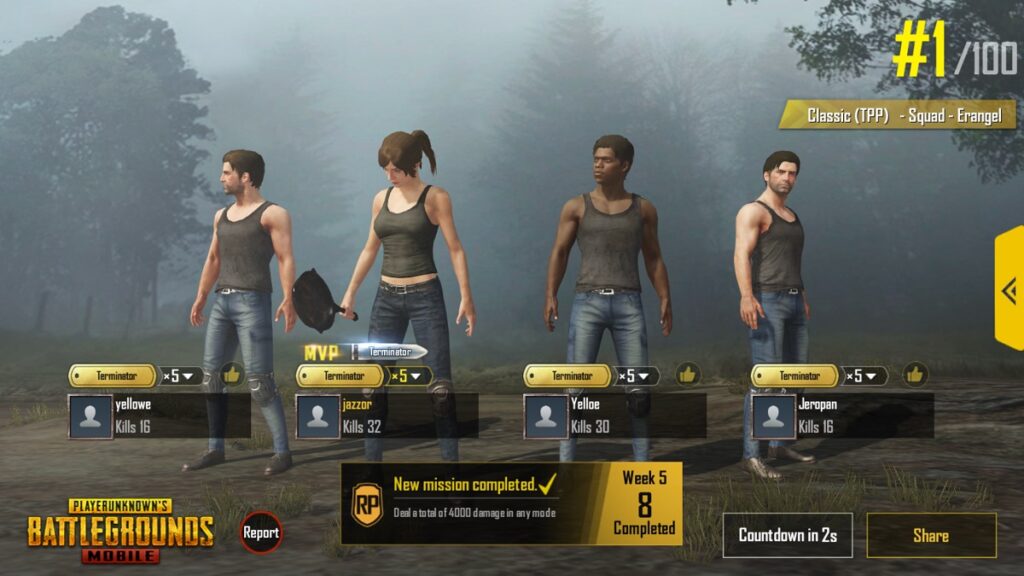 PUBG Mobile is one of Tencent’s big titles. A couple of years ago, Xiao reminded me he was pessimistic about where the game industry was headed.
“It felt like ‘winter is coming’ was a narrative because of layoffs, because of adjustments. But then I went to this conference in San Jose, California,” Xiao said.
It was the Roblox Developer Conference, with thousands of game creators focused on UGC on the fast growing platform, which now has 132 million daily active users, or more than the next six game platforms combined.
“I was surprised when I went to that room, the amount of energy I felt — it was like I witnessed a different breed of developers,” Xiao said. “I described it almost like a cult, and these are developers who have been also developing on the platform for the past 10 years, but they started developing when they’re like 10 or 12. They began as players, and they are now developers.”
He added, “I think that in the West, the free-to-play model is the hardest to crack. These guys have cracked it, and I think in FPS, first person shooting games, there’s a term called Time to Kill, TTK. I have my own term talking to some of these devs, which is TTF, which is time to fun, I think we have short-form videos, TikTok, all that. The next generation of kids, my kids growing up, have very short attention span. When they play a new game, they only have 30 seconds to really understand the code loop. What’s dopamine? What is onboarding? What is this game trying to communicate? And these Roblox developers really know how to nail it.”
He said the Roblox devs have nailed the onboarding, the time to fun, the distribution and how to build community.
“I think this is a next generation of creators that are going to move fast, and they might disrupt some of the current developers,” Xiao said.
I noted that Dave Baszucki, CEO of Roblox, has been predicting for a while that he expects there will be a Roblox game developer that is valued at a billion dollars or more. I asked if Xiao was on board with that prediction.
“I’m not David, but it’s hard to predict that kind of valuation. There are different types of developers there. Those that are only interested in creating new IPs, new hits, and those that are interested in live ops in those games. There are aggregators. Some of those creators are going to move off platform, they’re going to go on off Roblox, go to UEFN, and go to Steam,” he said.
They’re going to get better, and they will not optimize for fidelity or production value. They will optimize for the gameplay core loop, Xiao said.
“I know there’s a lot of pushback on graphics and those kinds of things, and when you think about that combined with AI, that’s going to churn out a lot more games. So that’s something that we’re watching pretty closely as well,” he said.
I noted that the attention war means that games have competition from the addiction industries — including TikTok, YouTube, AI companions, Only Fans, prediction markets, sports betting and online gambling. I asked how concerned we should be that these industries are growing faster than gaming now.
“I agree with that view, and I have a lot of respect for Matthew as my friend. I think he showed some really compelling data. It also comes back to the point that I was making. It’s the time to fun, right?” Xiao said. “When you think about the next generation [of kids], their attention span is very short. They don’t have time to really understand a 30-minute game when it takes 30 minutes to go through the onboarding. So that’s why you see casual mobile, you see UGC, those are the areas that we saw were growing for the past few years.”
He said that UGC creators figured out how to use TikTok to their advantage. Casual mobile studios in China and in Turkey, they do thousands of A/B tests every day, in terms of what works, what doesn’t.
“It’s very data driven, so those companies that are armed in those areas, they know the modern distribution methods and how to build a community,” he said.
He noted other talks about community at the summit, with tips on how to build a community and a following.
“They will disrupt, they will survive, but then if you only rely on traditional methods, I feel like that alone is is not enough. And so that’s something that we actually also learning as well,” Xiao said. “When you think about us trying to launch claims globally into markets that we don’t know, emerging markets in the West, PC/console, those are muscles that we exercise.”
He added, “We’re also learning, and so there’s a lot of figuring out, but I would say that this is a really interesting debate. As AI takes up more time, I’m sure people will still have time for entertainment, and we still believe gaming is going to be a core part of it.”
His assessment is based on what Tencent’s data shows and the results of portfolio companies as well while they continue to grow.
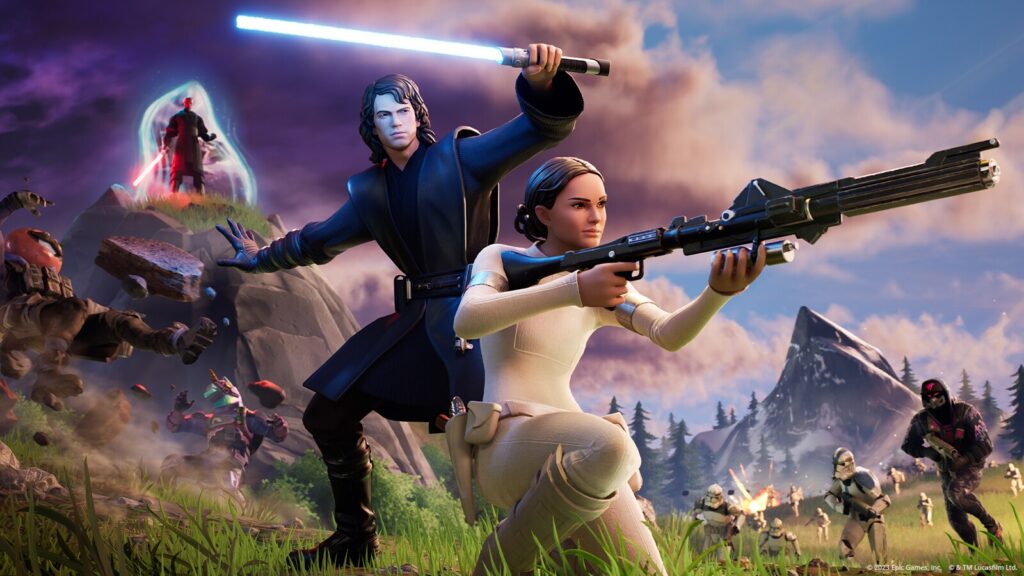 Fortnite In closing, I asked about Tencent’s capital allocation for games and what he thinks of the possible decline in funding for games.
“I would say that, like, few years ago, in terms of gaming, I think there were a lot of ebbs and flows of the cycle. You’ve been in the industry longer than me. You’ve seen there are players that come in and players that leave. I think during COVID, obviously, there was a peak in terms of gaming. There was a lot of capital. Capital was cheap, and a lot of players came in.”
He added, “I won’t name specific players, but I would say the challenge is when you think about some of the investors, the liquidity or the exit path. I used to be an investor myself. The liquidity exit path is is not as visible. You can actually exit through acquisition. Can you actually exit through an IPO? Those are the key areas of exit, but if you can’t capture those values, where can you exit?”
He said that, luckily for Tencent, “We don’t really care about those exits. We invest, we hold on to them. We’ve been investing through the cycles during this high and low. So yes, compared to previous levels, overall investment levels are down, but we think it’s going to come back.”
He said that because of AI and UGC, there will be a new breed of creators who might not necessarily need as much funding to ship products.
“That’s why I say the cost of development is becoming both expensive and also cheaper, so there’s a bifurcation in terms of what’s happening in industry,” he said.
I noted that many investment cycles in games have been driven by hype cycles. Many years ago, when I started GamesBeat, it was about the investments in Facebook games. We saw companies like Zynga come out of that. Everybody thought there would be a dozen Zyngas, and so the investment followed that pattern. We saw hype cycles around esports, the metaverse, blockchain and now AI. They hype seems crazy, but the perceived opportunity is always around disruption. I asked if this makes sense.
“That’s a, that’s a pretty difficult question, but I would say that from when you think about what the next wave of disruption will be in terms of AI, there are a few buckets. One is increasing efficiency. That’s something that we’ve talked about at Tencent as well.”
He added, “Second is introducing new genre or new game. Play is a key source of disruption, but that’s what we don’t really even know yet.And what does AI mean when it’s combined with some of the UGC creators or some of the top creators in triple-A? Will it reset budget? Those are the questions that we’re scratching our head over.”
And he said, “All we know is that, for instance, the last disruption in mobile, we captured some of those waves. It’s important, almost like index investing, to consistently invest over cycles, so that you don’t really miss out on and capture all the waves, and that’s what we’ve been doing, fortunately. We’ve also had some of our scar tissues as well. A lot of learnings.”
The post How Tencent sees AI and UGC lowering game dev costs and leading to new kinds of games | Tian Xiao fireside chat appeared first on GamesBeat.
In a fireside chat, we talked about Tencent’s view of the future of games. Its viewpoint matters, considering its global role in gaming. Tencent is reportedly mulling selling stakes in some of its game holdings, but the company declined to comment on that story.
Tencent’s gaming holdings
Shenzhen, China-based Tencent spans businesses from social media to financial services. But its game revenues make it the largest game company in the world. It generates billions of dollars in revenues a month in games. Honor of Kings alone generated $2 billion in 2025 revenue on iOS alone in China. Delta Force grew revenue to more than $500 million, with annual revenue up 29 times over the year before.Tencent also owns major stakes in game leaders like Riot Games (League of Legends), Epic Games (Fortnite), Supercell (Clash of Clans), Digital Extremes (Warframe) and many more. Tencent has also reinvested a lot of profits by making investments in game companies, including many startups in the West.
The company still has challenges, like becoming better known in the West. Xiao wanted his talk to be “more organic and blunt” based on his own perspective. And he wanted to share what Tencent sees in the market for games.
First, we talked about Tencent’s structure. Xiao noted Tencent has four major internal studios, including TiMi, which made Honor of Kings, Call of Duty: Mobile, Arena of Valor and Pokemon Unite. Tencent’s LightSpeed Studio made PUBG Mobile and Peacekeepers Elite. MoreFun Studio made Naruto Mobile and Rock Kingdom. And Aurora Studio made Need for Speed Online and Ring of Elysium.
Tencent’s view of gaming
Honor of Kings is one of Tencent’s big hits. Asked about his view of the gaming industry, Xiao said, “We had a discussion with some of our partners at GDC. Over the past two years, especially for folks on the ground in North America, — my colleague Amir Satvat is in the audience as well. He’s done a terrific job in terms of documenting the impact of layoffs.”He added, “When I went to Gamescom (in August, 2025) two years ago, it felt pretty pessimistic. As we look at what’s happening in China and elsewhere, we get the sense that the picture is not as bleak as everyone thinks in terms of the overall gaming industry.”
And he continued, “I’m sure some of you have read Matthew Ball’s report. We have our own perspective on data on that as well. If you look at the past five years, 2021 to 2025, the gaming industry grew from close to $200 billion to about $220 billion. So that represents about 2% CAGR over the past five years, and a lot of that peak during COVID came down and recently recovered. I would say the growth is not really broad-based. It’s not like everywhere, but it’s very nuanced across a few pockets, based on what we’re seeing.”
He said the key winners were casual mobile gaming, right, which brings in new non-gamers into it, because of lower barrier of entry. He noted the key studios in this segment are based in Turkey, China, Vietnam, and Southeast Asia.
“This is one area we’ve been digging into quite a bit recently. The second area I think Tencent has been primarily focused on has been on evergreen franchises. That may seem like an overused term, but it refers to any gaming franchise that generates over $1 billion or $500 million in annual revenue,” he said.
Tencent has around 15 to 17 such franchises, and they’re growing. The third pocket is something that Xiao loves to talk about.
User-generated content
Delta Force is a Tencent game. Source: Tencent “I’m personally very passionate about this in terms of what we’ve seen in the user-generated content (UGC) space,” he said. “I know there’s been a lot of talks about triple-A space, the growing costs. But on the other hand, I’ve been paying a lot of attention to the UGC space for the past two years. With Roblox, with Unreal Editor for Fortnite (UEFN), it’s actually been growing a lot.”He noted a lot of the losers are some of the long tail and some of the mid-market studios, as well as bit of the console space.
Tencent’s investment strategy
MetaHuman 5.8 has launched. Source: Epic Games I asked about Tencent’s investment strategy and what will help grow gaming to the next level. As far as what Tencent is looking for, Xiao said, “I think one of the key trends that we can see is, over the past few years, capital has pulled back mostly from gaming industry compared to COVID levels.”
That includes both venture capital firms and strategic investors. Asked if Tencent is still investing, he said, “The way I answer it is Tencent actually consistently invests over the time, over different cycles. We’ve been doing that for the past 10 years, 15 years, ever since we started investing into Riot, Epic, other studios.”
He added, “And there was a period of time where we were very public about the type of investments that we would be making, particularly in 2019 to 2021 and 2022, during peak of COVID.”
He said Tencent would invest into a lot of triple-A studios, double-A studios and core studios.
“We’ve now seen the results of those as well. We’ve had a lot of learnings. I would say over time, we’ve also gathered our own pattern recognition in terms of what works and what didn’t work,” Xiao said. “I would say the area that where we are good at is actually when we’re very gameplay focused. So we have a team based out of Shenzhen that evaluates the gameplay playtests for thousands of games. They come in and give feedback. They have a lot of pattern recognition, and through that we find that our sweet spot generally is when the game is has a playable that is close to launch.”
He said that Tencent may have a miss when a team is very early and it only has a bit of a playable and is mostly a “paper pitch.”
He added, “I’m not saying that we don’t invest in them, but generally it’s harder for us to form our thesis around those. The other part of it is we invest into evergreen franchise IPs, mature studios — particularly studios that have built one game and are now shipping a second or third game.”
He said the team has seen that with examples like Larian, which built the Divinity series and Baldur’s Gate 3. Experienced studios like Larian are able to build upon their infrastructure, their past success, and their community. Shipping a game for a first time, even if you’re on a veteran team, is instrumental to success, Xiao said.
I also asked Xiao about the regions that are interesting. I noted in Ball’s attention war deck, he noted that the net growth of the West is about zero, if you back out the gains of Roblox, China’s growth and the growth of platforms. Western game developers and publishers aren’t growing.
“This is a very nuanced topic I can touch upon at a high level. I would say we actually have our own framework of looking at it as well,” he said. “Part of it is if you look at the number of companies that have generated revenue of $500 million or more in terms of particular single studios, I think in America, went from like 15 a few years ago to now maybe about 12 to 13, so. The number of studios actually declined. That’s in North America and Europe. That’s actually grown to the teens in Japan and Korea. Japan roughly stayed constant or shrank a little bit.”
He added, “In China, actually, the number of studios over $500 million revenue per single year went from 18 to 33 and that group of studios actually took more share of the gaming market over the past few years than any other studios.”
To say that triple-A games are failing, based on this data, is really just rhetoric, he said.
Image credit: Epic Games “On the one hand, we’ve seen that the bigger guys in the top league are taking more share, right?” he said. “The middle layer is kind of getting a little squeezed, and part of [the reason] is rising development costs, and all those things,” Xiao said. “And then there’s a long tail, and that long tail is what we talk about with UGC, and those kind of things.”And he said, “But I would say our view of the U.S. is there’s still a lot of talent, still a lot of IP, a lot of tech, particularly with AI, and we think that the thesis in the future is about what they’re going to do with AI, with IP.”
He said those are going to become more valuable. He said Tencent has been very active in Europe as well, investing a lot in studios there.
AI and games
Sniping in Call of Duty: Mobile. I asked about Xiao’s take on AI and the impact on gaming. And how is Tencent integrating AI into its development cycle.“Look, at the end of the day, I know in the West there’s a lot of resistance in the gaming industry in terms of thinking about what AI means for the industry as a whole,” Xiao said. “In terms of labor and everything like that. Working for Tencent, I think you know Tencent’s a very practical company as well. When I went back to Shenzhen a few months ago, management talked a lot about AI first across all of the business.”
He added, “What that means is they’re not talking about layoffs and replacing human capital. They’re talking about how we amplify the current talent with AI. And so the way that Tencent is applying AI, for instance, in gaming is we have this model called the Hunyuan. That generates a lot of assets. I think it’s one of the more advanced ones right now, along with Mid-Journey and others on the market.”
And he said, “We do a lot of coding with AI now, using our model on the market. We’ll do a lot of QA testing. We did a lot of NPC companions. So across all of gaming we’re now thinking about how do we use AI to accelerate efficiency, but not only in Tencent. I think if you look at studios in China, they’re using AI to really accelerate the development.”
He said this is not just about cutting costs. It’s a matter of which part of the business can be accelerated.
“I met with creators like Jenova Chen and others like Jennifer Svedberg-Yen at Sandfall Interactive (Clair Obscur: Expedition 33) at GDC. One of the really interesting topics that we discussed was whether AI is really going to replace the top creators. I actually think in an AI age the top creators are going to be more valuable because they’re the ones that can really come up with a world and the story. I don’t think AI can actually address right now. And so that’s one thesis that we’re really thinking about, right? Because players want to connect with creators as the soul, not just the AI.”
I noted that in Asia, it seems like AI is not as controversial. Everybody seems to be racing ahead. I asked if he felt that way, and if there is a comparison he would make to Silicon Valley.
PUBG Mobile He said there is “a lot of anxiety in China as well, in terms of the AI race. Everyone wants to stay ahead. Everyone is thinking about how to apply the data, everyone is thinking about how to safeguard their data. But most importantly, how do they come up with new applications? They that just as with mobile and compute, this is the next biggest innovation, and we need to stay ahead of the curve, right?”I noted that Tencent successfully launched Delta Force in China. What learnings does Tencent have to share?
He noted that last year, we talked about the strength of sales for Black Myth: Wukong, which one of Tencent’s partners, Game Science, created.
“That game coming out actually did something really good for the gaming industry in China,” Xiao said. “It really helped to put gaming as something culturally impactful in the eyes of the government and everything, and so there’s a more benevolent stance towards gaming now.”
He also said, “Secondly, I would say that there’s now an underserved market in terms of PC games in China, and more and more we get the question from our major partners, ‘What should our China strategy be?’ That wasn’t really the case four or five years ago, when China seemed like a distant market, blocked by regulations.”
Xiao mentioned he went back to the China Joy show in Shanghai last year, where there were a lot of visitors from outside China there, learning about the market. Delta Force was one of the games TiMi was working on, and it had been slated at first for mobile. But then it became a cross-platform game and a more ambitious bet.
“It became one of the one of the few, if not the only, examples of a PC-plus-mobile cross-platform game launch in China, and what it did was mobile became a source of retention,” he said. “Mobile became a source of user acquisition, and PC became like a retention lever. It really targeted the college students in China, and there’s 10 million of them entering the college every year with laptops. What do they do at night? They play games. They were playing a lot of Delta Force. The extraction mode is very popular, and so that has now become the third largest game in Tencent portfolio, with about 50 million daily active users (DAU), and it’s great to see them starting to make more progress globally as well.”
He said, “It’s important to be on the ground in China, trying to get a ground view of what’s happening in the market, and we’ve been hosting a lot of partners in China as well, trying to help them understand, trying to be play the tall guy role, trying to play that know-how.”
Economic surprises
Supercell is owned by Tencent. Source: Supercell I noted the overall market has been fairly unpredictable. Tariffs have thrown everyone for a loop. I asked what surprised Xiao. I noted that ARC Raiders was a surprise success, coming out just two weeks after Battlefield 6 in October 2025 and two weeks before Call of Duty: Black Ops 7. Yet it succeeded and held onto concurrent users better than other games did.“I would say the surprise is some of the smaller studios and medium studios that, like you mentioned, have been able to punch above their weight, and this somewhat contradicts what I was saying earlier on,” he said. “But at the same time I think the Western triple-A market — the analogy I use is the cost of making game is getting more expensive, but at the same time it’s getting cheaper. On the one hand, you have games that cost $300 million to $500 million to make, and the return-risk profile in those games is pretty risky, especially if it’s about creating a new IP.”
And on the other hand, he said, “Because of Unreal Engine 5, coupled with some of the smaller teams like the Expedition 33 example, Lies of P in Korea, Black Myth: Wukong — they really leveled the playing field. They’re able to build something that is culturally nuanced and appeals to the global audience. That’s something that we’ve been sort of pretty surprised by.”
As for ARC Raiders, he noted the team built The Finals before, and they punched way above their weight. And he noted that the success of UGC was where his biggest source of surprise came from.
Pessimism?
PUBG Mobile is one of Tencent’s big titles. A couple of years ago, Xiao reminded me he was pessimistic about where the game industry was headed. “It felt like ‘winter is coming’ was a narrative because of layoffs, because of adjustments. But then I went to this conference in San Jose, California,” Xiao said.
It was the Roblox Developer Conference, with thousands of game creators focused on UGC on the fast growing platform, which now has 132 million daily active users, or more than the next six game platforms combined.
“I was surprised when I went to that room, the amount of energy I felt — it was like I witnessed a different breed of developers,” Xiao said. “I described it almost like a cult, and these are developers who have been also developing on the platform for the past 10 years, but they started developing when they’re like 10 or 12. They began as players, and they are now developers.”
He added, “I think that in the West, the free-to-play model is the hardest to crack. These guys have cracked it, and I think in FPS, first person shooting games, there’s a term called Time to Kill, TTK. I have my own term talking to some of these devs, which is TTF, which is time to fun, I think we have short-form videos, TikTok, all that. The next generation of kids, my kids growing up, have very short attention span. When they play a new game, they only have 30 seconds to really understand the code loop. What’s dopamine? What is onboarding? What is this game trying to communicate? And these Roblox developers really know how to nail it.”
He said the Roblox devs have nailed the onboarding, the time to fun, the distribution and how to build community.
“I think this is a next generation of creators that are going to move fast, and they might disrupt some of the current developers,” Xiao said.
I noted that Dave Baszucki, CEO of Roblox, has been predicting for a while that he expects there will be a Roblox game developer that is valued at a billion dollars or more. I asked if Xiao was on board with that prediction.
“I’m not David, but it’s hard to predict that kind of valuation. There are different types of developers there. Those that are only interested in creating new IPs, new hits, and those that are interested in live ops in those games. There are aggregators. Some of those creators are going to move off platform, they’re going to go on off Roblox, go to UEFN, and go to Steam,” he said.
They’re going to get better, and they will not optimize for fidelity or production value. They will optimize for the gameplay core loop, Xiao said.
“I know there’s a lot of pushback on graphics and those kinds of things, and when you think about that combined with AI, that’s going to churn out a lot more games. So that’s something that we’re watching pretty closely as well,” he said.
I noted that the attention war means that games have competition from the addiction industries — including TikTok, YouTube, AI companions, Only Fans, prediction markets, sports betting and online gambling. I asked how concerned we should be that these industries are growing faster than gaming now.
“I agree with that view, and I have a lot of respect for Matthew as my friend. I think he showed some really compelling data. It also comes back to the point that I was making. It’s the time to fun, right?” Xiao said. “When you think about the next generation [of kids], their attention span is very short. They don’t have time to really understand a 30-minute game when it takes 30 minutes to go through the onboarding. So that’s why you see casual mobile, you see UGC, those are the areas that we saw were growing for the past few years.”
He said that UGC creators figured out how to use TikTok to their advantage. Casual mobile studios in China and in Turkey, they do thousands of A/B tests every day, in terms of what works, what doesn’t.
“It’s very data driven, so those companies that are armed in those areas, they know the modern distribution methods and how to build a community,” he said.
He noted other talks about community at the summit, with tips on how to build a community and a following.
“They will disrupt, they will survive, but then if you only rely on traditional methods, I feel like that alone is is not enough. And so that’s something that we actually also learning as well,” Xiao said. “When you think about us trying to launch claims globally into markets that we don’t know, emerging markets in the West, PC/console, those are muscles that we exercise.”
He added, “We’re also learning, and so there’s a lot of figuring out, but I would say that this is a really interesting debate. As AI takes up more time, I’m sure people will still have time for entertainment, and we still believe gaming is going to be a core part of it.”
His assessment is based on what Tencent’s data shows and the results of portfolio companies as well while they continue to grow.
Tencent’s investment strategy
Fortnite In closing, I asked about Tencent’s capital allocation for games and what he thinks of the possible decline in funding for games. “I would say that, like, few years ago, in terms of gaming, I think there were a lot of ebbs and flows of the cycle. You’ve been in the industry longer than me. You’ve seen there are players that come in and players that leave. I think during COVID, obviously, there was a peak in terms of gaming. There was a lot of capital. Capital was cheap, and a lot of players came in.”
He added, “I won’t name specific players, but I would say the challenge is when you think about some of the investors, the liquidity or the exit path. I used to be an investor myself. The liquidity exit path is is not as visible. You can actually exit through acquisition. Can you actually exit through an IPO? Those are the key areas of exit, but if you can’t capture those values, where can you exit?”
He said that, luckily for Tencent, “We don’t really care about those exits. We invest, we hold on to them. We’ve been investing through the cycles during this high and low. So yes, compared to previous levels, overall investment levels are down, but we think it’s going to come back.”
He said that because of AI and UGC, there will be a new breed of creators who might not necessarily need as much funding to ship products.
“That’s why I say the cost of development is becoming both expensive and also cheaper, so there’s a bifurcation in terms of what’s happening in industry,” he said.
I noted that many investment cycles in games have been driven by hype cycles. Many years ago, when I started GamesBeat, it was about the investments in Facebook games. We saw companies like Zynga come out of that. Everybody thought there would be a dozen Zyngas, and so the investment followed that pattern. We saw hype cycles around esports, the metaverse, blockchain and now AI. They hype seems crazy, but the perceived opportunity is always around disruption. I asked if this makes sense.
“That’s a, that’s a pretty difficult question, but I would say that from when you think about what the next wave of disruption will be in terms of AI, there are a few buckets. One is increasing efficiency. That’s something that we’ve talked about at Tencent as well.”
He added, “Second is introducing new genre or new game. Play is a key source of disruption, but that’s what we don’t really even know yet.And what does AI mean when it’s combined with some of the UGC creators or some of the top creators in triple-A? Will it reset budget? Those are the questions that we’re scratching our head over.”
And he said, “All we know is that, for instance, the last disruption in mobile, we captured some of those waves. It’s important, almost like index investing, to consistently invest over cycles, so that you don’t really miss out on and capture all the waves, and that’s what we’ve been doing, fortunately. We’ve also had some of our scar tissues as well. A lot of learnings.”
The post How Tencent sees AI and UGC lowering game dev costs and leading to new kinds of games | Tian Xiao fireside chat appeared first on GamesBeat.
What's Your Reaction?








XINKER - Business and Income Tips
Explore XINKER, the ultimate platform for mastering business strategies, discovering passive income opportunities, and learning success principles. Join a community of thinkers dedicated to achieving financial freedom and entrepreneurial excellence.

![[Business Talk] Chagee: Opening 3,500 stores in 6 years](https://xinker.org/uploads/images/202410/image_140x98_671afce94bf91.webp)