
![[PRO Tips] Gold’s Bullish Revival: Seasonal Trends and Key Levels to Watch](https://xinker.org/uploads/images/202412/image_430x256_67724cc6ad0cd.webp)
![[PRO Tips] Gold Market Under Short-Term Pressure, Safe-Haven Demand and Central Bank Buying Support Long-Term Upside Potential](https://xinker.org/uploads/images/202412/image_430x256_676ffb4685287.webp)
![[PRO Tips] Analysis of 9 key points of differentiation strategy! Master differentiation to create a brand advantage that is unique in the world!](https://firebasestorage.googleapis.com/v0/b/xinker-tips.appspot.com/o/article_thumbnails%2Fscaled_differentiation%20strategy.png.png?alt=media&token=a1bfc3d2-e85a-4db7-8a6d-01c7274f8940)
![[PRO Tips] Will REITs regain growth momentum in 2024? 3 REITs ETFs you must know if you want to invest in real estate.](https://firebasestorage.googleapis.com/v0/b/xinker-tips.appspot.com/o/article_thumbnails%2Fscaled_REITs1.png.png?alt=media&token=8af4eb93-33ff-466f-8039-b6555fad52b4)
![[PRO Tips] Complete tutorial on how to make money in Adobe Stock!](https://firebasestorage.googleapis.com/v0/b/xinker-tips.appspot.com/o/article_thumbnails%2Fscaled_tut-adobe1.png.png?alt=media&token=0b2c8cf2-22bd-4142-883e-140ed1cbaf02)
![[Passive Income] Unlock the secret of passive income: 3 steps to apply for Google AdSense](https://xinker.org/uploads/images/202410/image_430x256_6717a4fb3052b.webp)
![[Passive Income] Earn over $200 a day with AI-generated articles!](https://firebasestorage.googleapis.com/v0/b/xinker-tips.appspot.com/o/article_thumbnails%2Fscaled_article1.png.png?alt=media&token=f61bf35b-8553-4719-826d-7360024adc70)
![[Passive Income] Earn over 20 USD per download with AI-generated images!](https://firebasestorage.googleapis.com/v0/b/xinker-tips.appspot.com/o/article_thumbnails%2Fscaled_adobe2.png.png?alt=media&token=3e20e76a-a907-45af-80aa-bf9b3600301f)
![[Passive Income] Earn 10 USD per new download by sharing CapCut!](https://firebasestorage.googleapis.com/v0/b/xinker-tips.appspot.com/o/article_thumbnails%2Fscaled_capcut2.png.png?alt=media&token=a04dec40-1fac-4857-86f2-19a8be02d38e)
![[Passive Income] Use your WiFi to create passive income in 5 minutes, and you can earn 4-6 U per day!](https://firebasestorage.googleapis.com/v0/b/xinker-tips.appspot.com/o/article_thumbnails%2Fscaled_Grassio.webp.png?alt=media&token=7659a95e-0e47-4f27-a17d-c942ac3cf7f4)


![[Business Talk] The Unique Theme of XINKER's Song: Beef Wellington and Business Mastery](https://xinker.org/uploads/images/202410/image_430x256_671afc155f47f.webp)
![[Business Talk] Chagee: Opening 3,500 stores in 6 years](https://xinker.org/uploads/images/202410/image_430x256_671afce80c5f9.webp)


From top-down crime capers to online open-world heists, GTA has defined play freedom across gaming generations
With GTA 6 close on the horizon, the gaming industry is set to have a new standard thrust upon it with all the grace of tossing a molotov cocktail at your own carefully assembled traffic jam. It's not the first time Rockstar Games has shaken the medium by its shoulders. Arguably, they've been doing so since the very first Grand Theft Auto gave us an unprecedented amount of top-down criminal freedom. Though, perhaps, it wasn't until the rightfully legendary Grand Theft Auto 3 crystallized the open world genre on PS2 that a standard was truly set, one the developer has committed to one-upping time and time again. By the end of the PS2 generation, it had been redefined again. Then, onto the next one. Here, we take a trip through each era of Grand Theft Auto, exploring what's defined each, and how they've pushed open world gaming forward. We're poised to see how GTA 6 will do it again.1997-1999: It's in their DMA (Image credit: Rockstar Games) Games released: Grand Theft Auto, GTA: London 1969, GTA 2Countdown to GTA 6 (Image credit: Rockstar Games) Can't wait for the new Grand Theft Auto? Join our Countdown to GTA 6 hub for all the latest updates, features, and retrospectives on the series' legendary history. Back in 1997, when Rockstar North was still known as DMA Design, it released a PS1 game called Grand Theft Auto, and a gaming legend was born. This top-down crime-'em-up was spread across three locations: Liberty City; Vice City; and San Andreas. Yup, all three have been GTA canon from the beginning. You may not be surprised to learn that the series, and its reliance on crime and violence, caused controversy from the very beginning. There was much red-faced bluster about the first game in the House Of Lords, and many people wanted the game banned from sale (which never happened). (Image credit: Rockstar Games) 1999 saw the release of two new games. Grand Theft Auto: London 1969 was an expansion pack developed by Rockstar Canada, and was set in – you guessed it – London. Over here, the expansion got a bigger, standalone release (bet you can't guess why). You could tell that it was set in the UK, because when you were arrested, the screen would shout NICKED at you instead of BUSTED. Alas, the series never returned to London or any other real-world setting. The fully fledged sequel was released in the same year as the cockney-flavoured expansion pack for the first game. GTA2 introduced many things that carried through to the rest of the series in one way or another, such as a health bar, manual saving, side-missions, vehicle modding, and – for better or for worse – a large number of things to collect hidden throughout the city. A solid foundation for future games to build on.2001-2004: 3D or not 3D? (Image credit: Rockstar Games) Still Playing (Image credit: Future) This feature first appeared in PLAY Magazine #18's GTA supplement. Games released: GTA 3, GTA: Vice City, GTA: San Andreas 2001's GTA 3 was the final game to be developed under the name DMA Design (with help from Rockstar's New York division) but that, of course, is not the most notable thing about it. This was the first game in the series in full 3D, making the open world gameplay more enticing than ever. The protagonist causing havoc in Liberty City was mute, but the NPCs weren't. The fully-voiced story boasted high-profile actors in the cast, including Kyle MacLachlan and Michael Madsen. It must've been costly to develop, but it paid off; GTA 3 was the best-selling game of the year. (Image credit: Rockstar Games) The next game in the series arrived just one year later. The legendary GTA: Vice City was also the best selling game of its year, and it's little surprise, really. Not only was it riding on the phenomenal success of the previous game, the excellently curated licensed soundtrack and neon-happy visual design practically screamed 1980s at players. Another all-star cast certainly didn't hurt, with actors including Gary Busey, Dennis Hopper… and the late Ray Liotta as Tommy Vercetti. In 2004 came the big one (literally); in terms of map size, GTA: San Andreas was much bigger than anything that had come before, over twice as big as Liberty City and Vice City put together. Despite this, there were – unlike in the previous two games – no loading screens while exploring the open world. Some still treasure it as the best GTA, and it was certainly met with a warm welcome on release. As is tradition for the series by now, it outsold all other games that year. It introduced stealth, hopping over walls, and the ability to swim. It was the first game in the series to feature character customisation via haircuts and the like, and RPG-style skill improvement.2005-2009: Time to pocket the profits (Image credit: Rockstar Games) Games released: GTA: Liberty City Stories, GTA: Vice City Stories, GTA: Chinatown Wars Spin-off GTA: Liberty City Stories was released as a PSP exclusive in 2005. It was ported to PS2 in 2006, but the latter version was ac
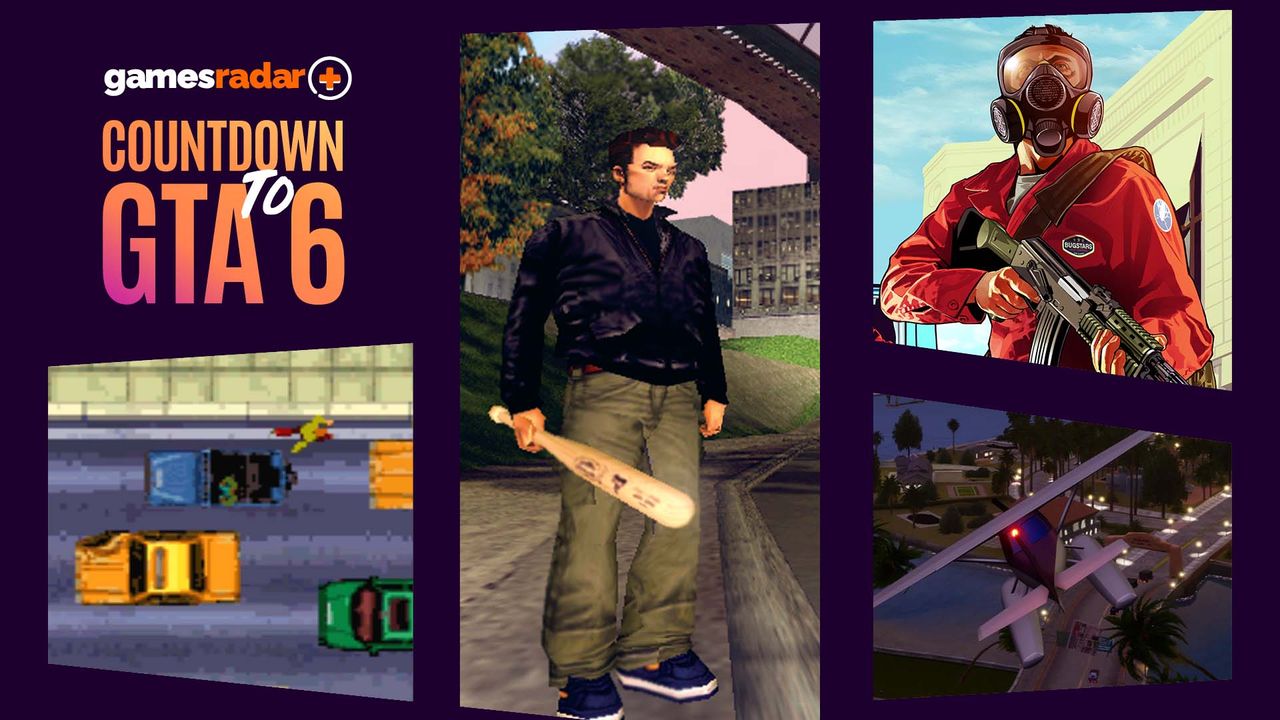 With GTA 6 close on the horizon, the gaming industry is set to have a new standard thrust upon it with all the grace of tossing a molotov cocktail at your own carefully assembled traffic jam. It's not the first time Rockstar Games has shaken the medium by its shoulders. Arguably, they've been doing so since the very first Grand Theft Auto gave us an unprecedented amount of top-down criminal freedom.
Though, perhaps, it wasn't until the rightfully legendary Grand Theft Auto 3 crystallized the open world genre on PS2 that a standard was truly set, one the developer has committed to one-upping time and time again. By the end of the PS2 generation, it had been redefined again. Then, onto the next one. Here, we take a trip through each era of Grand Theft Auto, exploring what's defined each, and how they've pushed open world gaming forward. We're poised to see how GTA 6 will do it again.
1997-1999: It's in their DMA
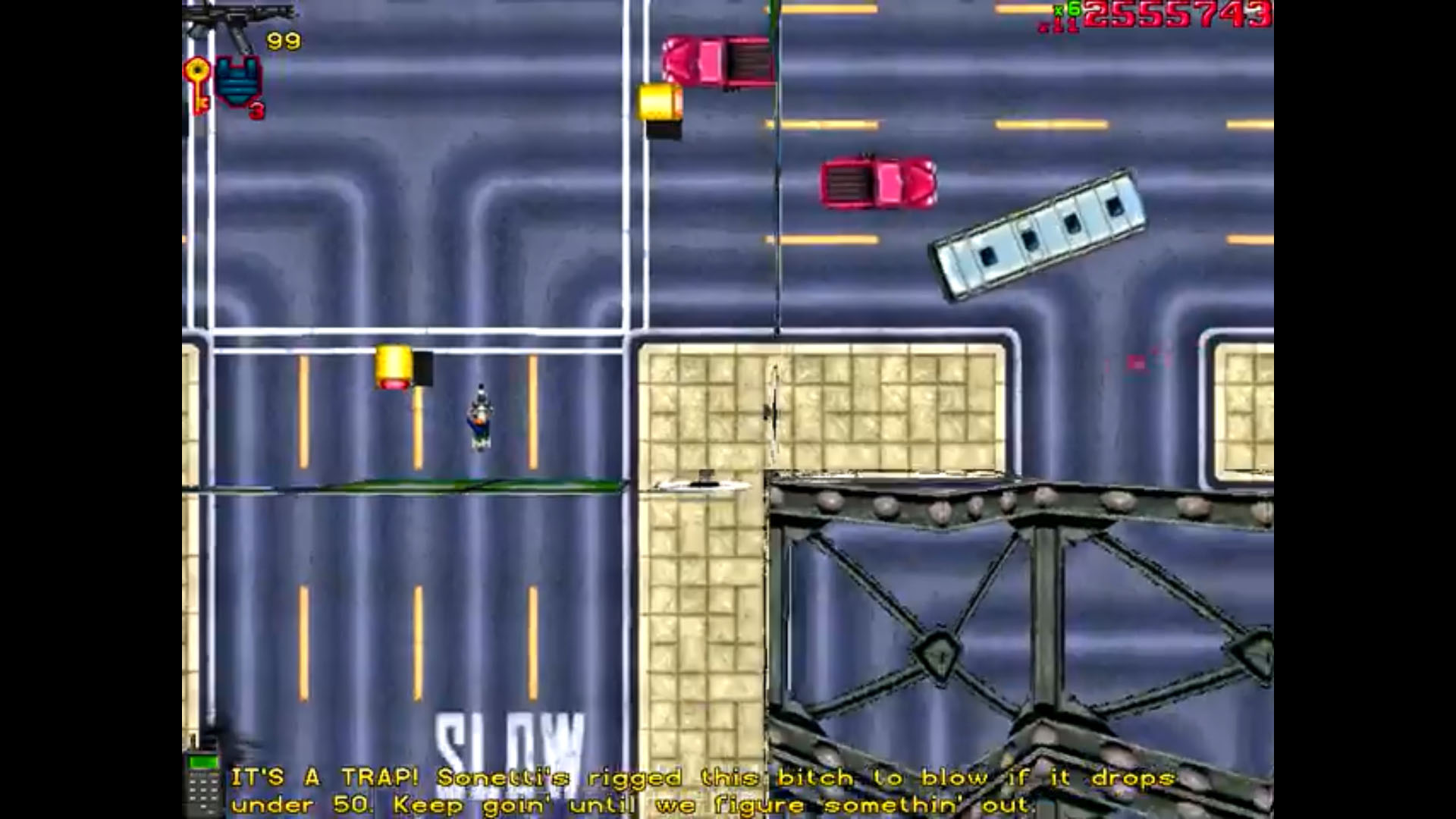
(Image credit: Rockstar Games) Games released: Grand Theft Auto, GTA: London 1969, GTA 2
Countdown to GTA 6
(Image credit: Rockstar Games) Can't wait for the new Grand Theft Auto? Join our Countdown to GTA 6 hub for all the latest updates, features, and retrospectives on the series' legendary history.
Back in 1997, when Rockstar North was still known as DMA Design, it released a PS1 game called Grand Theft Auto, and a gaming legend was born.
This top-down crime-'em-up was spread across three locations: Liberty City; Vice City; and San Andreas. Yup, all three have been GTA canon from the beginning. You may not be surprised to learn that the series, and its reliance on crime and violence, caused controversy from the very beginning. There was much red-faced bluster about the first game in the House Of Lords, and many people wanted the game banned from sale (which never happened).
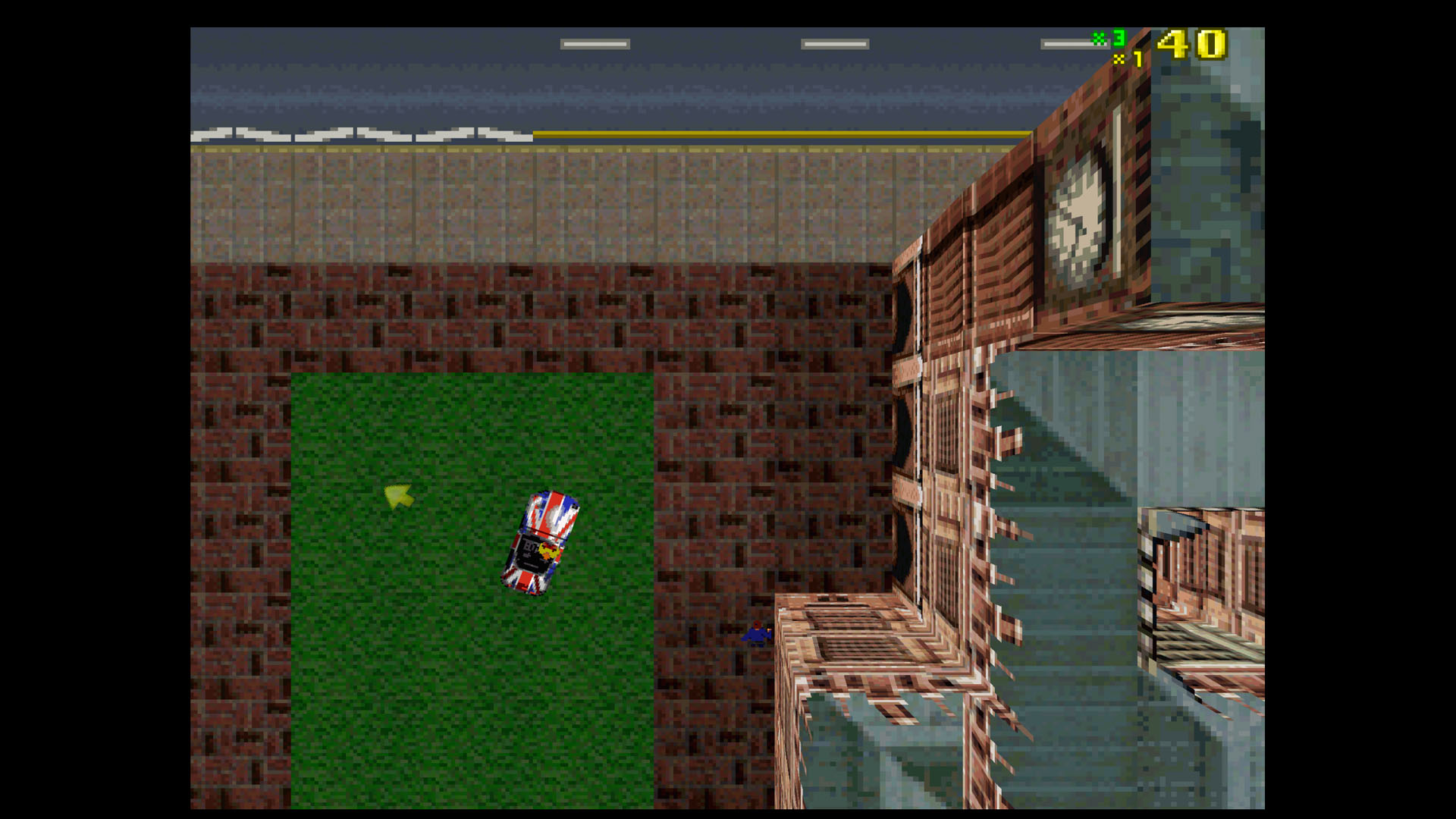
(Image credit: Rockstar Games) 1999 saw the release of two new games. Grand Theft Auto: London 1969 was an expansion pack developed by Rockstar Canada, and was set in – you guessed it – London. Over here, the expansion got a bigger, standalone release (bet you can't guess why). You could tell that it was set in the UK, because when you were arrested, the screen would shout NICKED at you instead of BUSTED. Alas, the series never returned to London or any other real-world setting.
The fully fledged sequel was released in the same year as the cockney-flavoured expansion pack for the first game. GTA2 introduced many things that carried through to the rest of the series in one way or another, such as a health bar, manual saving, side-missions, vehicle modding, and – for better or for worse – a large number of things to collect hidden throughout the city. A solid foundation for future games to build on.
2001-2004: 3D or not 3D?
(Image credit: Rockstar Games) Still Playing
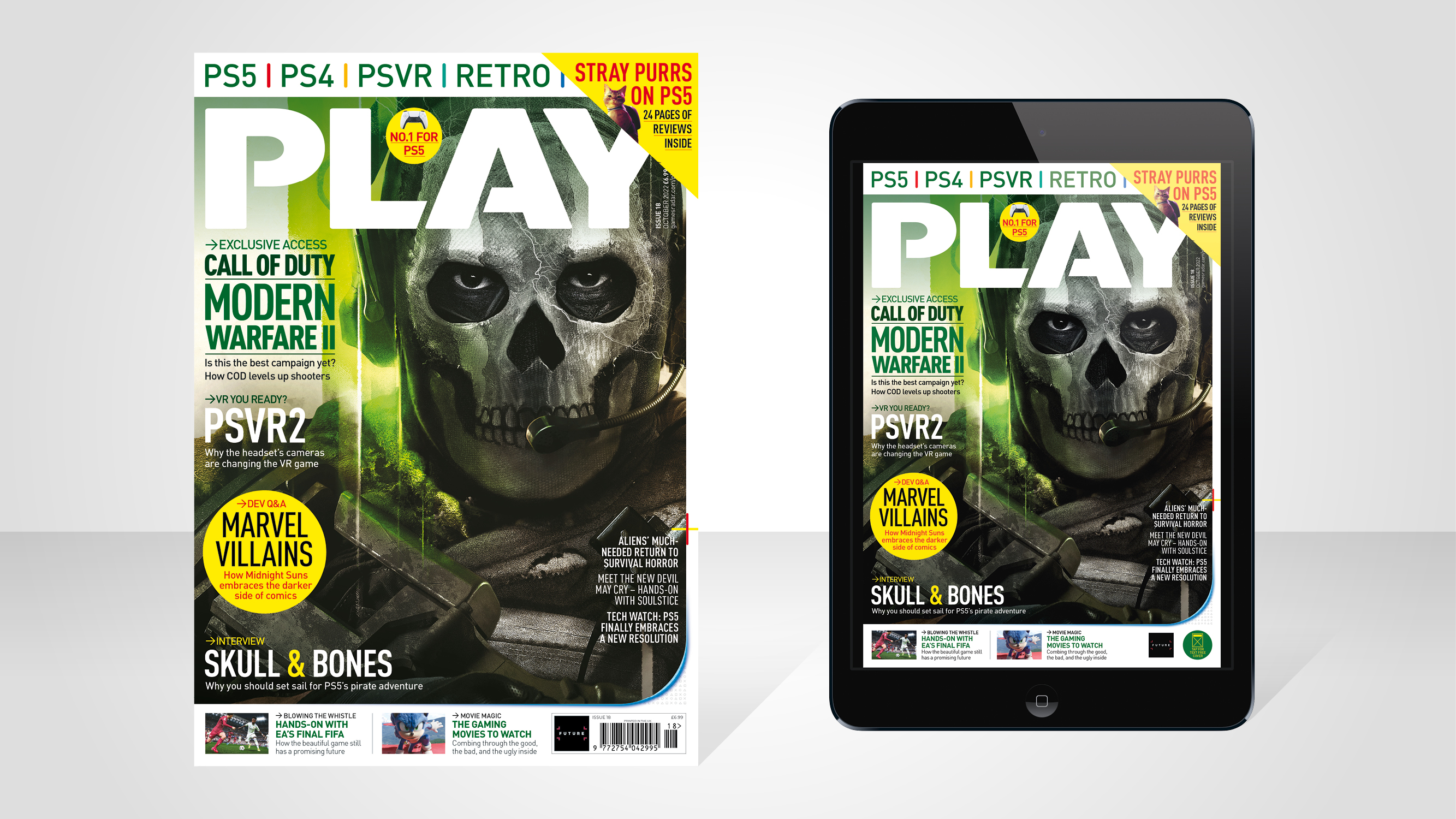
(Image credit: Future) This feature first appeared in PLAY Magazine #18's GTA supplement.
Games released: GTA 3, GTA: Vice City, GTA: San Andreas
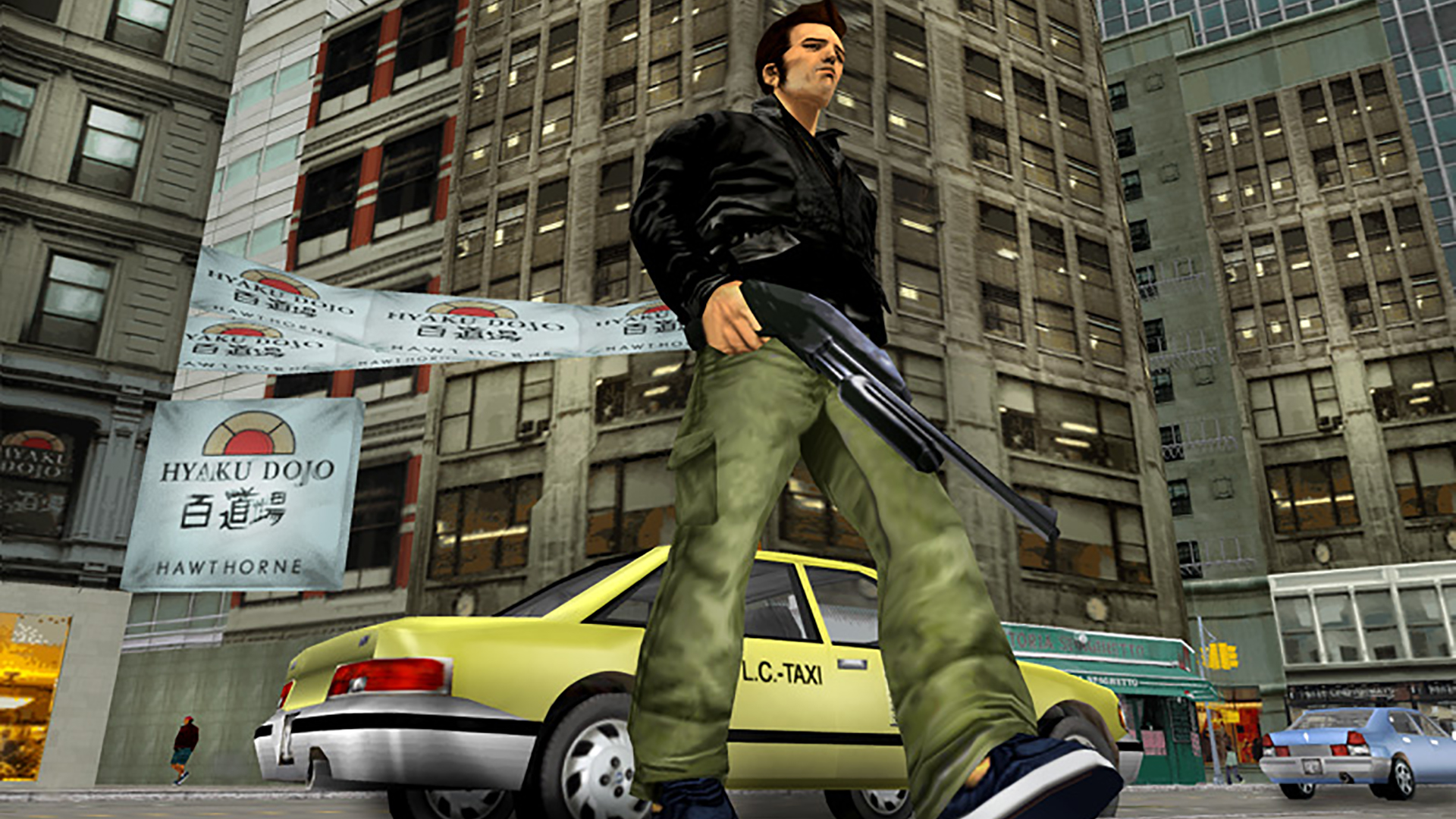
2001's GTA 3 was the final game to be developed under the name DMA Design (with help from Rockstar's New York division) but that, of course, is not the most notable thing about it. This was the first game in the series in full 3D, making the open world gameplay more enticing than ever.
The protagonist causing havoc in Liberty City was mute, but the NPCs weren't. The fully-voiced story boasted high-profile actors in the cast, including Kyle MacLachlan and Michael Madsen. It must've been costly to develop, but it paid off; GTA 3 was the best-selling game of the year.
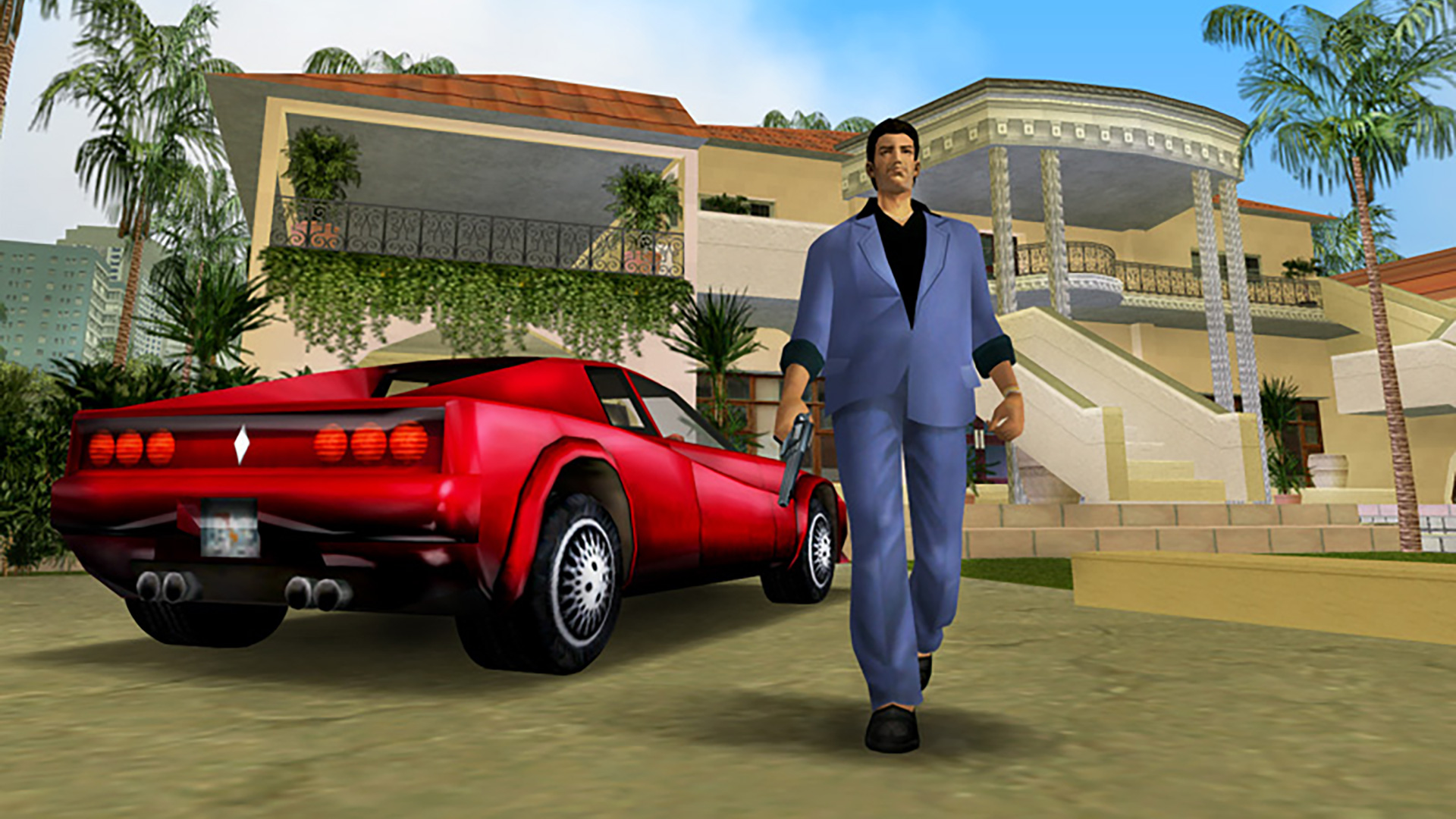
(Image credit: Rockstar Games) The next game in the series arrived just one year later. The legendary GTA: Vice City was also the best selling game of its year, and it's little surprise, really. Not only was it riding on the phenomenal success of the previous game, the excellently curated licensed soundtrack and neon-happy visual design practically screamed 1980s at players. Another all-star cast certainly didn't hurt, with actors including Gary Busey, Dennis Hopper… and the late Ray Liotta as Tommy Vercetti.
In 2004 came the big one (literally); in terms of map size, GTA: San Andreas was much bigger than anything that had come before, over twice as big as Liberty City and Vice City put together. Despite this, there were – unlike in the previous two games – no loading screens while exploring the open world. Some still treasure it as the best GTA, and it was certainly met with a warm welcome on release. As is tradition for the series by now, it outsold all other games that year. It introduced stealth, hopping over walls, and the ability to swim. It was the first game in the series to feature character customisation via haircuts and the like, and RPG-style skill improvement.
2005-2009: Time to pocket the profits
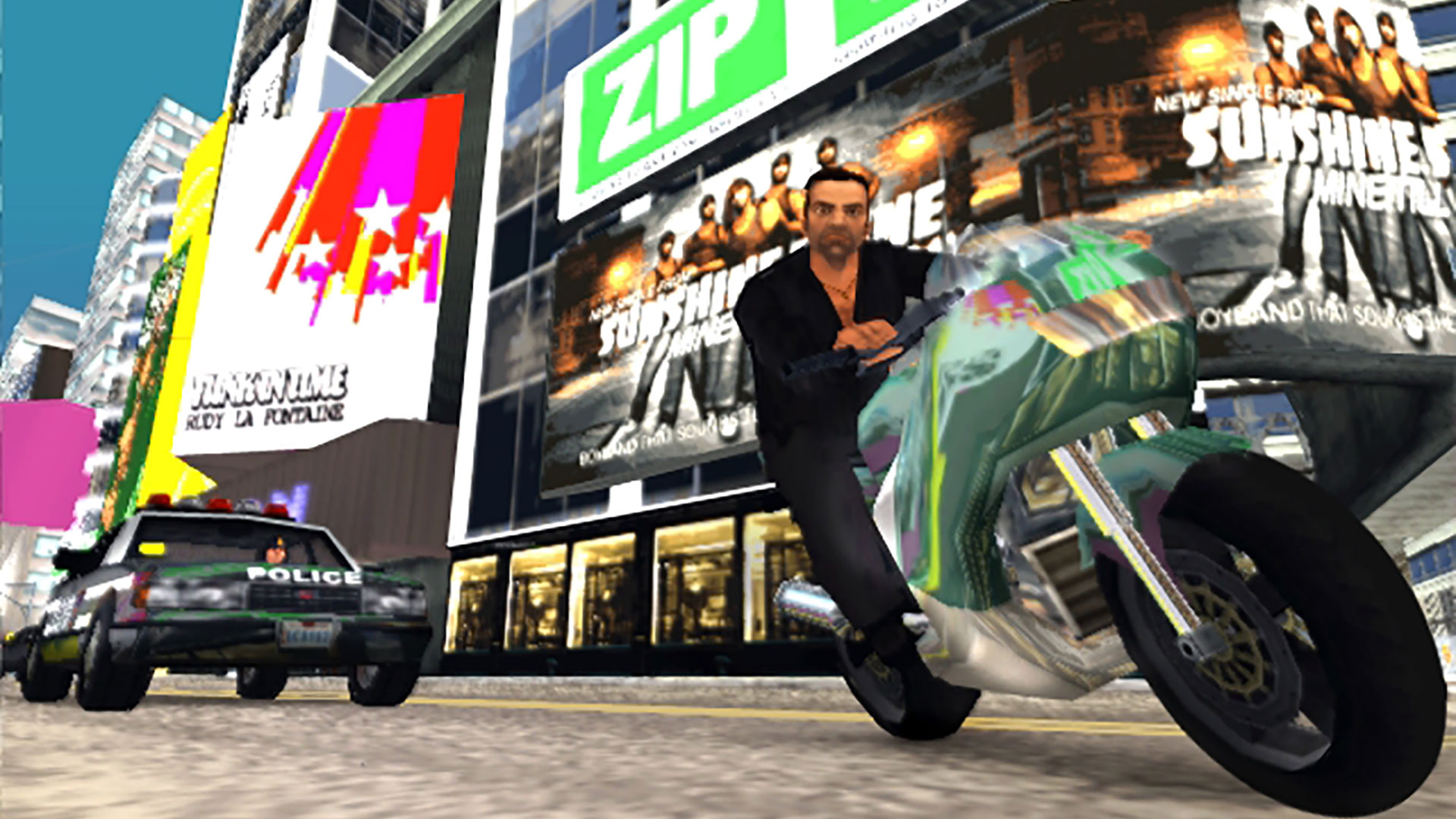
(Image credit: Rockstar Games) Games released: GTA: Liberty City Stories, GTA: Vice City Stories, GTA: Chinatown Wars
Spin-off GTA: Liberty City Stories was released as a PSP exclusive in 2005. It was ported to PS2 in 2006, but the latter version was actually missing some really cool features from the original handheld release, namely the multiplayer mode and the ability to create custom soundtracks from your own music. (Now that's something we wish the series still had.)
2006 then saw GTA: Vice City Stories for PSP (also later ported to PS2). Although the Stories games and their recycled maps were filling a gap before the next 'proper' GTA, they were still pretty good, and retained some of the stars of the games that they drew from.
GTA: Chinatown Wars in 2009 never made the jump from DS/PSP to PS2, which is a shame, because it's absolutely brilliant. Using a similar top-down view to the original games, it had a retro feel while being a much sharper experience than those 1990s titles.
2008-2010: Relax at the Niko cafe
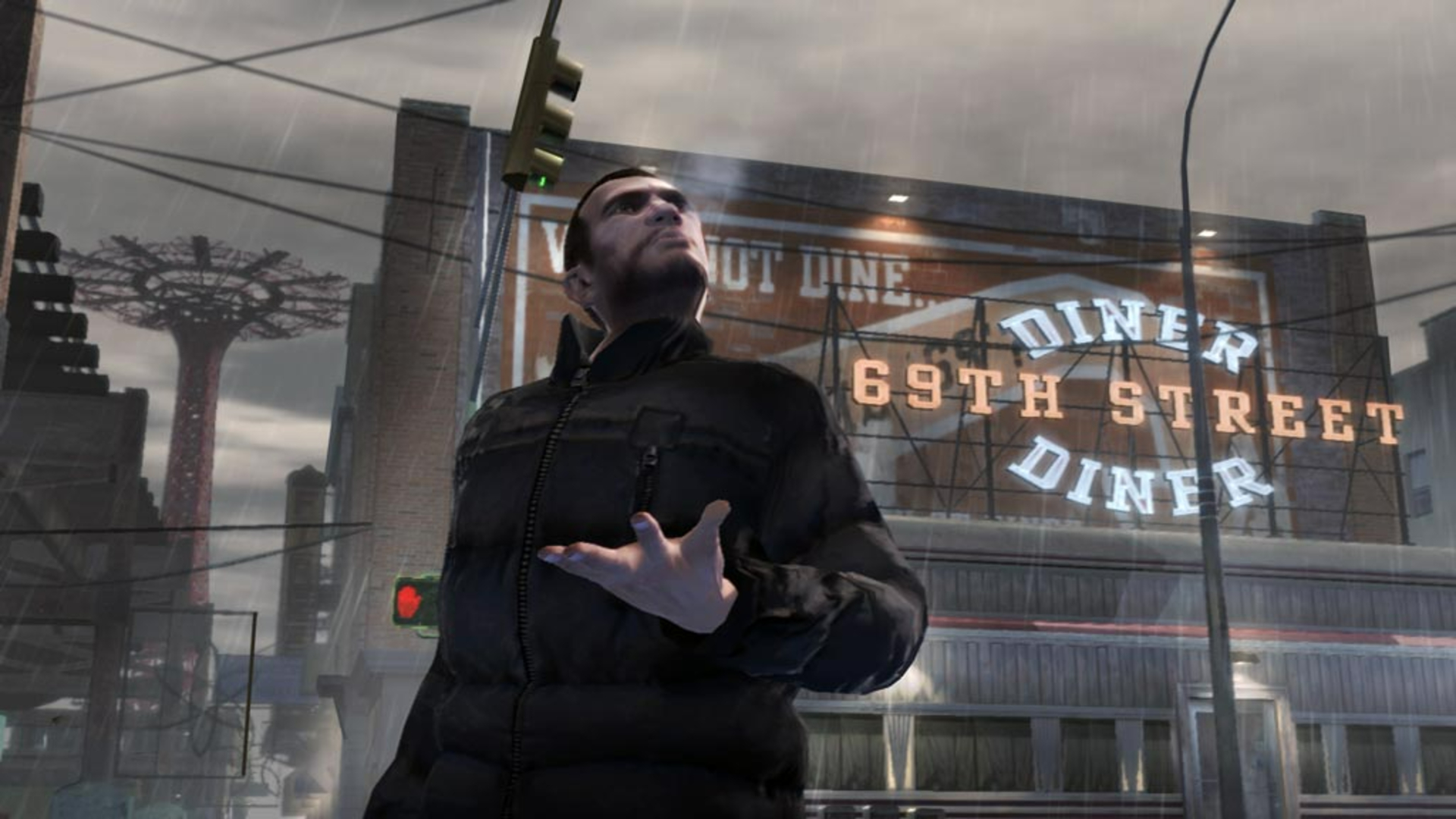
(Image credit: Rockstar) Games released: GTA 4, The Lost And Damned, The Ballad of Gay Tony
As the first GTA designed from the ground up for a new generation of consoles, GTA 4 wowed the industry when it launched for PS3 in 2008.
Liberty City looked better than ever, and the game featured a number of improvements and features that would return in the next entry in the series. These include the importance and functions of your phone, TV programmes that you can watch in the protagonist's home, the ability to make decisions at certain points during the story, and (a small but very neat thing) the ability to hail a cab and just sit in the back, enjoying the ride.
Two expansions, The Lost And Damned and The Ballad Of Gay Tony, were released individually for Xbox 360 in 2009, but in a single standalone package for PS3 in 2010. The Lost And Damned gained notoriety for briefly showing a man's 'unholstered pistol' (ahem) in a cutscene.
2013-Present: Five is live (service)
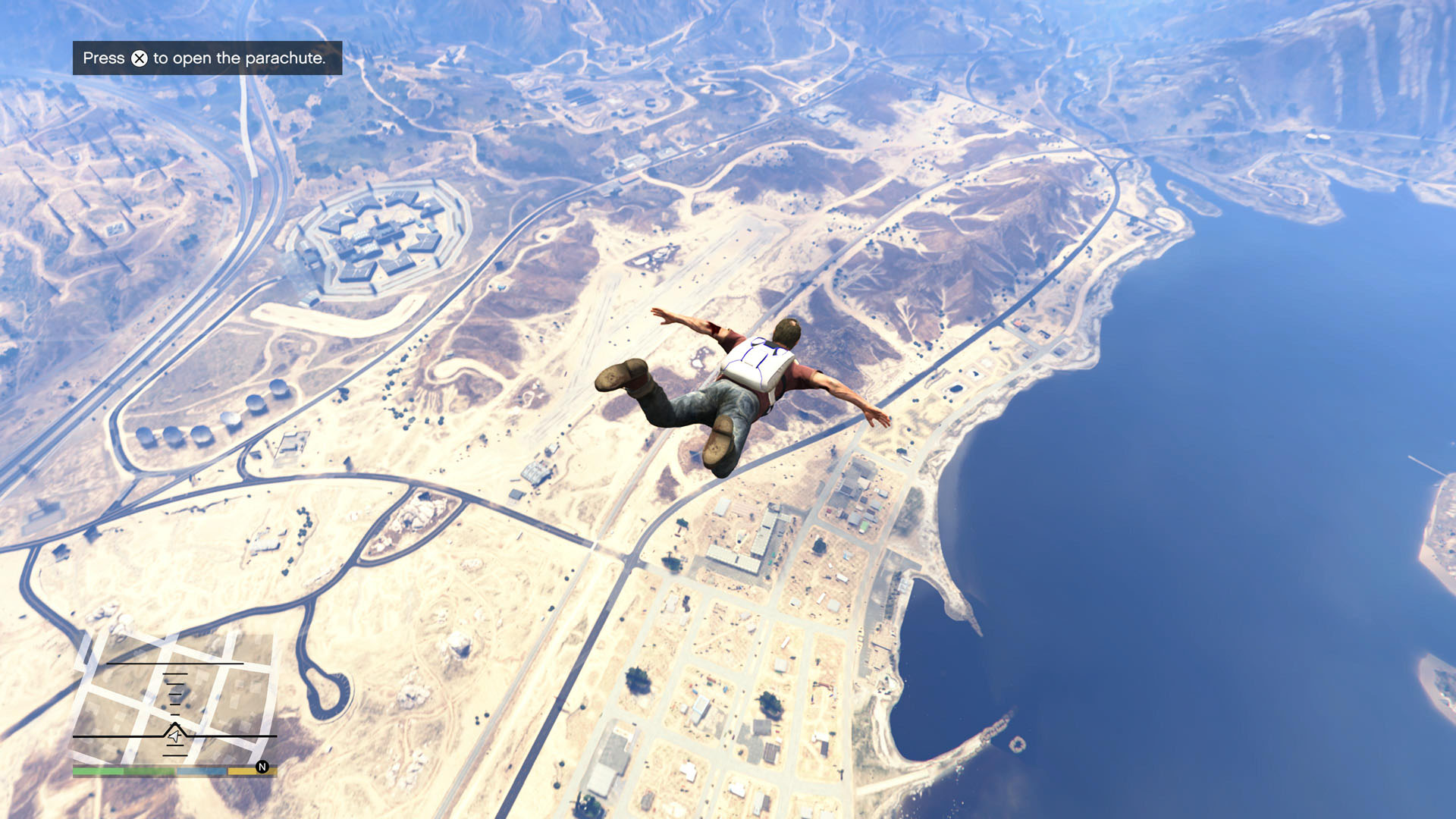
(Image credit: Rockstar Games) Games released: GTA 5, GTA Online
GTA 5 was released in 2013. And 2014. And, er, also in 2022. We're pretty sure that Rockstar is done making new versions though, if only because it's run out of PlayStation consoles to make it for. The game’s certainly stood the test of time; the PS5 story mode is essentially identical to the original PS3 one – yet despite this, it very much feels like a current-gen experience.
We don't have the space or the time to list everything the latest instalment introduced and improved, but multiple playable characters, the biggest map in the series to date, an optional first-person perspective, and complex heist missions are certainly worth mentioning. Then, of course, there is GTA Online.
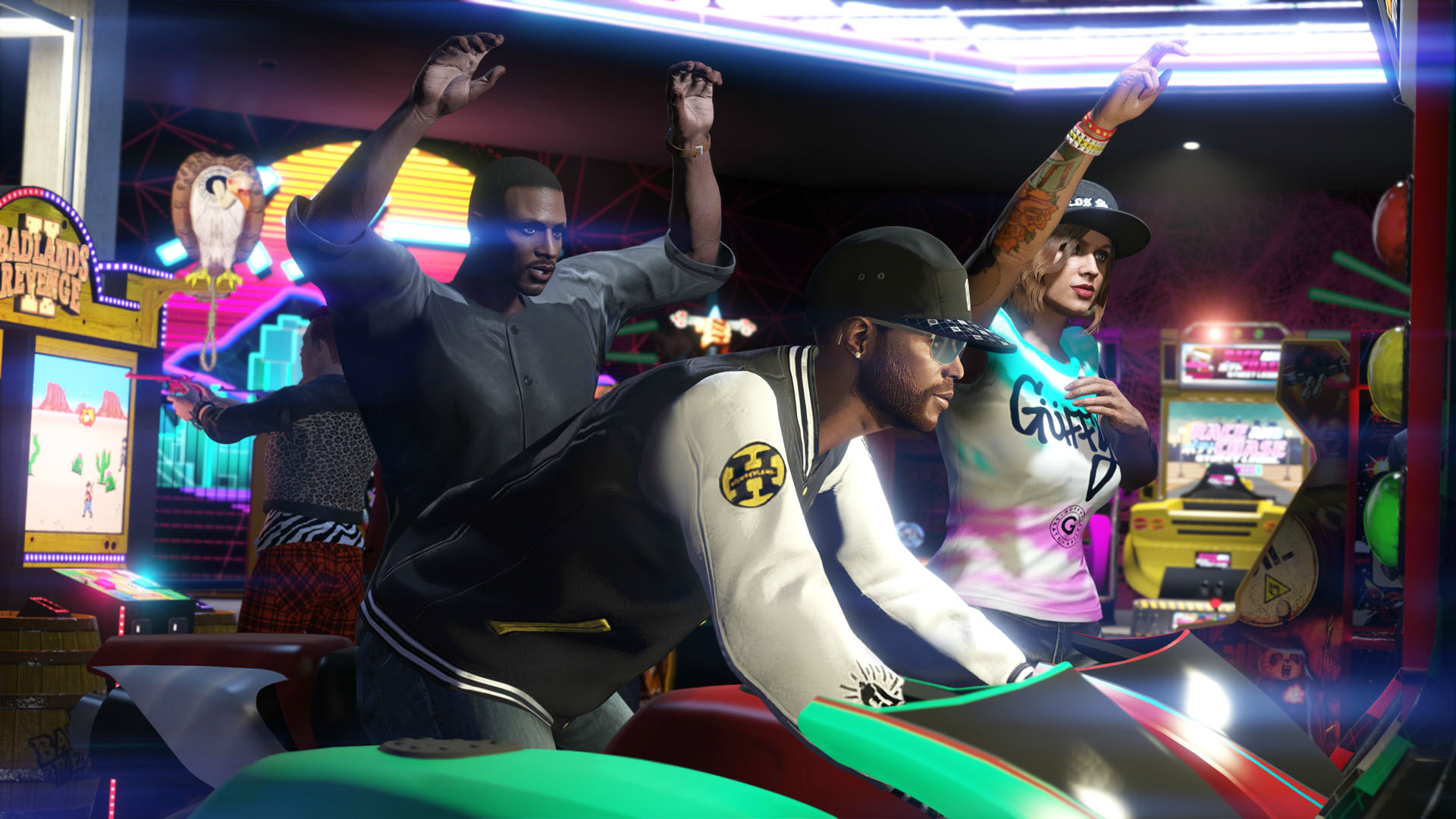
(Image credit: Rockstar Games) Grand Theft Auto Online, which launched a month after the offline component in 2013, initially suffered from severe technical issues and arguably limited content. It soon recovered, however, and Rockstar has been constantly improving and adding to it ever since. The repeated rereleases saw some casualties along the way, though; PS3 updates were stopped in 2015, and PS3 servers were shut down completely in 2021.
The game as it stands today is crammed with content, so much so that a standalone version was released earlier this year. It has a full story with expansions, players can race with one another, set up businesses, take part in multiplayer heists, enjoy stunt races, and more. Up to 30 people can play together, yet much of it can still be enjoyed as a solo experience.
Is Rockstar's dedication to GTA Online updates a sign of how important online features will be to the next game? Even if it's not, each instalment has offered something new, and there's no reason to think GTA 6 will be any different.
But which one should you play while waiting for GTA 6? Our best GTA games ranking has the answer!
[/url]
What's Your Reaction?








XINKER - Business and Income Tips
Explore XINKER, the ultimate platform for mastering business strategies, discovering passive income opportunities, and learning success principles. Join a community of thinkers dedicated to achieving financial freedom and entrepreneurial excellence.
![[Business Talk] Chagee: Opening 3,500 stores in 6 years](https://xinker.org/uploads/images/202410/image_140x98_671afce94bf91.webp)