
![[PRO Tips] Gold’s Bullish Revival: Seasonal Trends and Key Levels to Watch](https://xinker.org/uploads/images/202412/image_430x256_67724cc6ad0cd.webp)
![[PRO Tips] Gold Market Under Short-Term Pressure, Safe-Haven Demand and Central Bank Buying Support Long-Term Upside Potential](https://xinker.org/uploads/images/202412/image_430x256_676ffb4685287.webp)
![[PRO Tips] Analysis of 9 key points of differentiation strategy! Master differentiation to create a brand advantage that is unique in the world!](https://firebasestorage.googleapis.com/v0/b/xinker-tips.appspot.com/o/article_thumbnails%2Fscaled_differentiation%20strategy.png.png?alt=media&token=a1bfc3d2-e85a-4db7-8a6d-01c7274f8940)
![[PRO Tips] Will REITs regain growth momentum in 2024? 3 REITs ETFs you must know if you want to invest in real estate.](https://firebasestorage.googleapis.com/v0/b/xinker-tips.appspot.com/o/article_thumbnails%2Fscaled_REITs1.png.png?alt=media&token=8af4eb93-33ff-466f-8039-b6555fad52b4)
![[PRO Tips] Complete tutorial on how to make money in Adobe Stock!](https://firebasestorage.googleapis.com/v0/b/xinker-tips.appspot.com/o/article_thumbnails%2Fscaled_tut-adobe1.png.png?alt=media&token=0b2c8cf2-22bd-4142-883e-140ed1cbaf02)
![[Passive Income] Unlock the secret of passive income: 3 steps to apply for Google AdSense](https://xinker.org/uploads/images/202410/image_430x256_6717a4fb3052b.webp)
![[Passive Income] Earn over $200 a day with AI-generated articles!](https://firebasestorage.googleapis.com/v0/b/xinker-tips.appspot.com/o/article_thumbnails%2Fscaled_article1.png.png?alt=media&token=f61bf35b-8553-4719-826d-7360024adc70)
![[Passive Income] Earn over 20 USD per download with AI-generated images!](https://firebasestorage.googleapis.com/v0/b/xinker-tips.appspot.com/o/article_thumbnails%2Fscaled_adobe2.png.png?alt=media&token=3e20e76a-a907-45af-80aa-bf9b3600301f)
![[Passive Income] Earn 10 USD per new download by sharing CapCut!](https://firebasestorage.googleapis.com/v0/b/xinker-tips.appspot.com/o/article_thumbnails%2Fscaled_capcut2.png.png?alt=media&token=a04dec40-1fac-4857-86f2-19a8be02d38e)
![[Passive Income] Use your WiFi to create passive income in 5 minutes, and you can earn 4-6 U per day!](https://firebasestorage.googleapis.com/v0/b/xinker-tips.appspot.com/o/article_thumbnails%2Fscaled_Grassio.webp.png?alt=media&token=7659a95e-0e47-4f27-a17d-c942ac3cf7f4)


![[Business Talk] The Unique Theme of XINKER's Song: Beef Wellington and Business Mastery](https://xinker.org/uploads/images/202410/image_430x256_671afc155f47f.webp)
![[Business Talk] Chagee: Opening 3,500 stores in 6 years](https://xinker.org/uploads/images/202410/image_430x256_671afce80c5f9.webp)

Ex-Highguard Dev Says The Shooter 'Leaned Too Far Into the Competitive Scene,' And That 'Turned a Lot of Players Off'
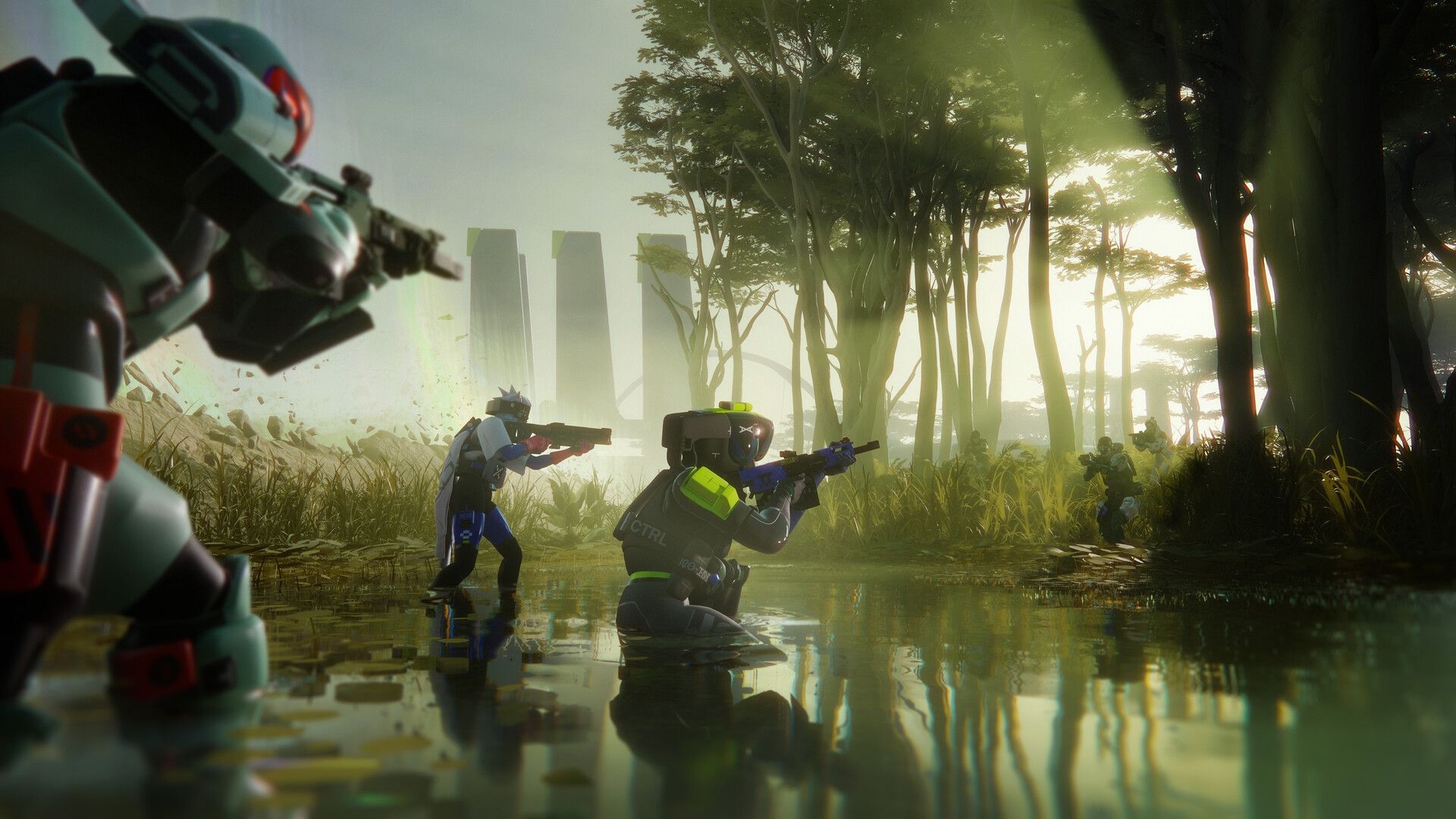
Highguard, the free-to-play PvP raid shooter announced at The Game Awards last year and released only for most of its developers to be laid off just weeks after launch, may have failed because it "leaned too far into the competitive scene." That's according to former Wildlight developer and level designer Alex Graner, who told Quad Damage Podcast that developers "don't strive to create something that doesn't work out," throughout development, Wildlight "really leaned into the competitive side of it, and that was always one of my biggest fears as a player." "I can only speak to my side of it as a level designer, but when I joined [Wildlight], it was trying to figure out this new, ambitious game, and this team is always pushing the boundaries," Graner said, as transcribed by PCGN, via Eurogamer. "You don't strive to create something that doesn't work out, but it happens, unfortunately. Throughout development, we really leaned into the competitive side of it, and that was always one of my biggest fears as a player." "3v3 duos is always the sweatiest version of anything like battle royale, objective modes, wingman, you know it, you name it. It requires such a high intensity of communication with your team, and team play, that it doesn't leave much room for casualness. I think that was the biggest thing that turned a lot of players off Highguard," he added. The issue, Graner believes, is that Highguard had "all these different rules and stages," which made it difficult for players who don't already have a team to play with, and particularly challenging for new players. "It's like, 'Oh, you want to loot, now we've got to chase this objective, now we have to plant this objective, now it's overtime… It has all these rules, which I think works at a really high level, but when players are first coming in it's a lot to grasp," Graner explained. "On top of all that, because it was 3v3, that kind of game just requires high-skill movement and shooting, which is already a pretty high [bar to] entry as well. So if you just have a few bad games or your teammates aren't sticking together, you're just going to get rolled, and it's very hard to 1v2 in our game. "It's all designed to be a team-based shooter. I think that was the biggest thing. People just kind of turned it off because they didn't have the team." Another former developer also recently spoke out about the disastrous announcement and launch, saying the game, and by extension its team, "turned into a joke from minute one, largely due to false assumptions about a million-dollar ad placement." A number of high-profile video game developers have also defended Highguard following the online backlash during the game’s launch. We recently learned that Highguard was apparently financially backed by Tencent, which seemingly pulled funding just a couple of weeks after it launched. It reportedly has fewer than 20 developers working on it. Highguard hit a peak of 97,249 concurrent players when it launched on Steam. Now, it has just 105 on Valve's platform. Vikki Blake is a reporter for IGN, as well as a critic, columnist, and consultant with 15+ years experience working with some of the world's biggest gaming sites and publications. She's also a Guardian, Spartan, Silent Hillian, Legend, and perpetually High Chaos. Find her at BlueSky.
 Highguard, the free-to-play PvP raid shooter announced at The Game Awards last year and released only for most of its developers to be laid off just weeks after launch, may have failed because it "leaned too far into the competitive scene."
That's according to former Wildlight developer and level designer Alex Graner, who told Quad Damage Podcast that developers "don't strive to create something that doesn't work out," throughout development, Wildlight "really leaned into the competitive side of it, and that was always one of my biggest fears as a player."
"I can only speak to my side of it as a level designer, but when I joined [Wildlight], it was trying to figure out this new, ambitious game, and this team is always pushing the boundaries," Graner said, as transcribed by PCGN, via Eurogamer. "You don't strive to create something that doesn't work out, but it happens, unfortunately. Throughout development, we really leaned into the competitive side of it, and that was always one of my biggest fears as a player."
"3v3 duos is always the sweatiest version of anything like battle royale, objective modes, wingman, you know it, you name it. It requires such a high intensity of communication with your team, and team play, that it doesn't leave much room for casualness. I think that was the biggest thing that turned a lot of players off Highguard," he added.
The issue, Graner believes, is that Highguard had "all these different rules and stages," which made it difficult for players who don't already have a team to play with, and particularly challenging for new players.
"It's like, 'Oh, you want to loot, now we've got to chase this objective, now we have to plant this objective, now it's overtime… It has all these rules, which I think works at a really high level, but when players are first coming in it's a lot to grasp," Graner explained. "On top of all that, because it was 3v3, that kind of game just requires high-skill movement and shooting, which is already a pretty high [bar to] entry as well. So if you just have a few bad games or your teammates aren't sticking together, you're just going to get rolled, and it's very hard to 1v2 in our game.
"It's all designed to be a team-based shooter. I think that was the biggest thing. People just kind of turned it off because they didn't have the team."
Another former developer also recently spoke out about the disastrous announcement and launch, saying the game, and by extension its team, "turned into a joke from minute one, largely due to false assumptions about a million-dollar ad placement." A number of high-profile video game developers have also defended Highguard following the online backlash during the game’s launch.
We recently learned that Highguard was apparently financially backed by Tencent, which seemingly pulled funding just a couple of weeks after it launched. It reportedly has fewer than 20 developers working on it. Highguard hit a peak of 97,249 concurrent players when it launched on Steam. Now, it has just 105 on Valve's platform.
Vikki Blake is a reporter for IGN, as well as a critic, columnist, and consultant with 15+ years experience working with some of the world's biggest gaming sites and publications. She's also a Guardian, Spartan, Silent Hillian, Legend, and perpetually High Chaos. Find her at BlueSky.
What's Your Reaction?








XINKER - Business and Income Tips
Explore XINKER, the ultimate platform for mastering business strategies, discovering passive income opportunities, and learning success principles. Join a community of thinkers dedicated to achieving financial freedom and entrepreneurial excellence.