


![[PRO Tips] Gold’s Bullish Revival: Seasonal Trends and Key Levels to Watch](https://xinker.org/uploads/images/202412/image_430x256_67724cc6ad0cd.webp)
![[PRO Tips] Gold Market Under Short-Term Pressure, Safe-Haven Demand and Central Bank Buying Support Long-Term Upside Potential](https://xinker.org/uploads/images/202412/image_430x256_676ffb4685287.webp)
![[PRO Tips] Analysis of 9 key points of differentiation strategy! Master differentiation to create a brand advantage that is unique in the world!](https://firebasestorage.googleapis.com/v0/b/xinker-tips.appspot.com/o/article_thumbnails%2Fscaled_differentiation%20strategy.png.png?alt=media&token=a1bfc3d2-e85a-4db7-8a6d-01c7274f8940)
![[PRO Tips] Will REITs regain growth momentum in 2024? 3 REITs ETFs you must know if you want to invest in real estate.](https://firebasestorage.googleapis.com/v0/b/xinker-tips.appspot.com/o/article_thumbnails%2Fscaled_REITs1.png.png?alt=media&token=8af4eb93-33ff-466f-8039-b6555fad52b4)
![[PRO Tips] Complete tutorial on how to make money in Adobe Stock!](https://firebasestorage.googleapis.com/v0/b/xinker-tips.appspot.com/o/article_thumbnails%2Fscaled_tut-adobe1.png.png?alt=media&token=0b2c8cf2-22bd-4142-883e-140ed1cbaf02)
![[Passive Income] Unlock the secret of passive income: 3 steps to apply for Google AdSense](https://xinker.org/uploads/images/202410/image_430x256_6717a4fb3052b.webp)
![[Passive Income] Earn over $200 a day with AI-generated articles!](https://firebasestorage.googleapis.com/v0/b/xinker-tips.appspot.com/o/article_thumbnails%2Fscaled_article1.png.png?alt=media&token=f61bf35b-8553-4719-826d-7360024adc70)
![[Passive Income] Earn over 20 USD per download with AI-generated images!](https://firebasestorage.googleapis.com/v0/b/xinker-tips.appspot.com/o/article_thumbnails%2Fscaled_adobe2.png.png?alt=media&token=3e20e76a-a907-45af-80aa-bf9b3600301f)
![[Passive Income] Earn 10 USD per new download by sharing CapCut!](https://firebasestorage.googleapis.com/v0/b/xinker-tips.appspot.com/o/article_thumbnails%2Fscaled_capcut2.png.png?alt=media&token=a04dec40-1fac-4857-86f2-19a8be02d38e)
![[Passive Income] Use your WiFi to create passive income in 5 minutes, and you can earn 4-6 U per day!](https://firebasestorage.googleapis.com/v0/b/xinker-tips.appspot.com/o/article_thumbnails%2Fscaled_Grassio.webp.png?alt=media&token=7659a95e-0e47-4f27-a17d-c942ac3cf7f4)


![[Business Talk] The Unique Theme of XINKER's Song: Beef Wellington and Business Mastery](https://xinker.org/uploads/images/202410/image_430x256_671afc155f47f.webp)
![[Business Talk] Chagee: Opening 3,500 stores in 6 years](https://xinker.org/uploads/images/202410/image_430x256_671afce80c5f9.webp)


Epic Games launches Unreal Engine 5.8
With Unreal Engine 5.8, you can push performance and customization further, thanks toadvanced worldbuilding and terrain creation tools, high-quality real-time vegetationauthoring, and simplified lighting workflows. Epic Games announced Unreal Engine 5.8 at Unreal Fest, the Epic Games game engine festival in Chicago this week. Epic released Unreal Engine 5 six years ago. With the engine, devs will also discover faster in-engine character and animation creation tools, advances in virtual production, high-fidelity full-body performance capture, accelerated content creation with integrated LLM workflows, and much more. UE 5.8 is the last planned major Unreal Engine 5 release on Epic’s roadmap as it ramps upwork on UE6. Epic will continue to support UE5 for bug fixes and regressions, and may addanother official release if circumstances warrant it. Meanwhile, let’s take a look at the 5.8details.What’s new in Unreal Engine 5.8 Unreal Engine 5.8 scene. Source: Epic Games Create expansive open worldsDevs will be able to build larger, feature-rich worlds faster with Mesh Terrain, unlock advanced open world editing and customization with the Procedural Content Generation (PCG) framework, and streamline vegetation authoring directly in the editor. Mesh Terrain is a brand-new Experimental 3D-mesh-based system for authoring larger,more complex terrains. Unlike the existing Landscape tool and other traditional 2.5D heightfield systems, MeshTerrain is a true 3D mesh model, enabling you to create arbitrary shapes such asoverhangs, floating islands, and tunnels. You can create the mesh directly in the UnrealEditor, or start by importing a mesh or heightmap from an external application. Nondestructive modifiers make it easy to make changes to your scenes. For example, ifyou move a landscape feature, the terrain will regenerate automatically. The system isalso fully interoperable with PCG. Tightly integrated with World Partition and One File Per Actor (OFPA), Mesh Terrainoffers all the advantages of automatic distance-based streaming and data management,as well as enabling collaborative workflows. With PCG, it’s now possible to make manual edits on top of procedurally generatedcontent without breaking the proceduralism, so you can art direct the system’s resultswhile continuing to adjust upstream parameters. There’s also new support for complex attribute types—including arrays, structures, sets,and maps—as well as new example PCG graphs designed for spatial operations.Together, these features make it possible to generate elements such as buildings, citystreets, and much more. The Experimental Procedural Vegetation Editor (PVE) now enables you to growhigh-quality, biologically correct, Nanite-ready vegetation from scratch. Trees are able toreact symbiotically, competing naturally for light and forming clusters. They’ll even growaround external meshes, and you can also art direct nature with basic sculpting tools andthe ability to add or remove branches. You can also now import meshes from different external sources, such as DCCs, andconvert them to PVE-compatible assets complete with extracted skeletons. In addition,you can use 2D sketches and photographs as input to move faster from concept orreal-world reference to production. PVE also benefits from PCG’s new ability to create embedded subgraphs. Technicalartists can create custom vegetation tools for artists to use in production, hiding the realcomplexity in the subgraph and exposing just the parameters that artists need to createvariations. Epic will continue to add more Quixel Megaplants species to get you started faster. Checkout the full new collection now available to download from Fab. If you saw The Witcher 4 Unreal Engine 5 Tech Demo at last year’s State of Unreal, youwitnessed the Fast Geometry Streaming Plugin in action. The Experimental plugin—which enables you to rapidly load static, non-gameplay assets for massive, seamless open worlds—now delivers multiple improvements to speed, stability, and use case support.Streamline character and animation workflows Simon Tourangeau, vice president of engineering at Epic Games. Source: Epic Games New features and enhancements to the in-engine rigging and animation toolsets meanyou can create more in the editor. There’s now better support for in-editor sculpt-driven facial workflows and shot sculpting. This includes updates to the sculpting brush toolset, new options for mirroring and flipping targets, weight locking, and more—strengthening blend shape authoring for stylized characters, custom skeletal meshes, and MetaHumans, as well as for pose corrections. Control Rig Physics moves to Beta, featuring enhancements for both riggers and animators. It’s great for anything from fully dynamic ragdoll animation, such as a character falling down stairs, to subtle secondary motion, such as jiggling flesh. Physics rigs can now be modular, enabling you to use them with your own rigs. This also means you can layer the physics over e

With Unreal Engine 5.8, you can push performance and customization further, thanks to
advanced worldbuilding and terrain creation tools, high-quality real-time vegetation
authoring, and simplified lighting workflows.
Epic Games announced Unreal Engine 5.8 at Unreal Fest, the Epic Games game engine festival in Chicago this week. Epic released Unreal Engine 5 six years ago.
With the engine, devs will also discover faster in-engine character and animation creation tools, advances in virtual production, high-fidelity full-body performance capture, accelerated content
creation with integrated LLM workflows, and much more.
UE 5.8 is the last planned major Unreal Engine 5 release on Epic’s roadmap as it ramps up
work on UE6. Epic will continue to support UE5 for bug fixes and regressions, and may add
another official release if circumstances warrant it. Meanwhile, let’s take a look at the 5.8
details.
 Unreal Engine 5.8 scene. Source: Epic Games Create expansive open worlds
Devs will be able to build larger, feature-rich worlds faster with Mesh Terrain, unlock advanced open world editing and customization with the Procedural Content Generation (PCG) framework, and streamline vegetation authoring directly in the editor.
Mesh Terrain is a brand-new Experimental 3D-mesh-based system for authoring larger,
more complex terrains.
Unlike the existing Landscape tool and other traditional 2.5D heightfield systems, Mesh
Terrain is a true 3D mesh model, enabling you to create arbitrary shapes such as
overhangs, floating islands, and tunnels. You can create the mesh directly in the Unreal
Editor, or start by importing a mesh or heightmap from an external application.
Nondestructive modifiers make it easy to make changes to your scenes. For example, if
you move a landscape feature, the terrain will regenerate automatically. The system is
also fully interoperable with PCG.
Tightly integrated with World Partition and One File Per Actor (OFPA), Mesh Terrain
offers all the advantages of automatic distance-based streaming and data management,
as well as enabling collaborative workflows.
With PCG, it’s now possible to make manual edits on top of procedurally generated
content without breaking the proceduralism, so you can art direct the system’s results
while continuing to adjust upstream parameters.
There’s also new support for complex attribute types—including arrays, structures, sets,
and maps—as well as new example PCG graphs designed for spatial operations.
Together, these features make it possible to generate elements such as buildings, city
streets, and much more.
The Experimental Procedural Vegetation Editor (PVE) now enables you to grow
high-quality, biologically correct, Nanite-ready vegetation from scratch. Trees are able to
react symbiotically, competing naturally for light and forming clusters. They’ll even grow
around external meshes, and you can also art direct nature with basic sculpting tools and
the ability to add or remove branches.
You can also now import meshes from different external sources, such as DCCs, and
convert them to PVE-compatible assets complete with extracted skeletons. In addition,
you can use 2D sketches and photographs as input to move faster from concept or
real-world reference to production.
PVE also benefits from PCG’s new ability to create embedded subgraphs. Technical
artists can create custom vegetation tools for artists to use in production, hiding the real
complexity in the subgraph and exposing just the parameters that artists need to create
variations.
Epic will continue to add more Quixel Megaplants species to get you started faster. Check
out the full new collection now available to download from Fab.
If you saw The Witcher 4 Unreal Engine 5 Tech Demo at last year’s State of Unreal, you
witnessed the Fast Geometry Streaming Plugin in action. The Experimental plugin—which enables you to rapidly load static, non-gameplay assets for massive, seamless open worlds—now delivers multiple improvements to speed, stability, and use case support.
 Simon Tourangeau, vice president of engineering at Epic Games. Source: Epic Games New features and enhancements to the in-engine rigging and animation toolsets mean
you can create more in the editor.
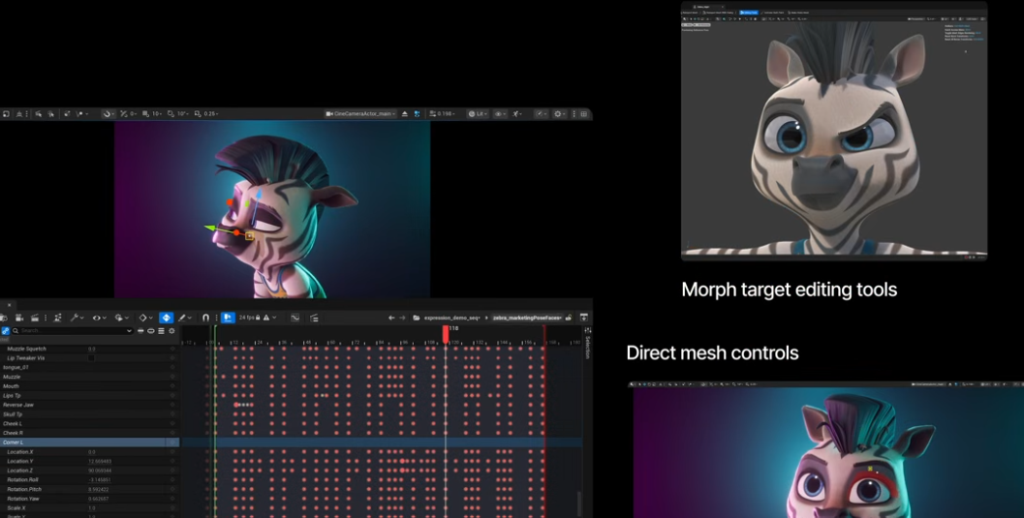
There’s now better support for in-editor sculpt-driven facial workflows and shot sculpting. This includes updates to the sculpting brush toolset, new options for mirroring and flipping targets, weight locking, and more—strengthening blend shape authoring for stylized characters, custom skeletal meshes, and MetaHumans, as well as for pose corrections.
Control Rig Physics moves to Beta, featuring enhancements for both riggers and animators. It’s great for anything from fully dynamic ragdoll animation, such as a character falling down stairs, to subtle secondary motion, such as jiggling flesh.
Physics rigs can now be modular, enabling you to use them with your own rigs. This also means you can layer the physics over existing animation, and keyframe its weighting to
precisely control its influence over time.
In addition to Control Rig Physics, which is ideal for cinematics, Epic introduced Control
Rig Dynamics, a new particle-based solver for runtime use that evaluates at five times
the speed of the original solver, enabling you to trade off accuracy for real-time performance.
Also new is Direct Mesh Controls (DMC), an Experimental new system that enables Control Rig controls to be represented directly on sections of the Skeletal Mesh. Inspired by workflows from some of the biggest feature animation studios, animators can manipulate rigs by interacting with the actual character surface, making it especially useful for facial animation.
To try out the full Unreal Engine 5.8 animation and rigging toolset—including DMC—download the new Zebra Character Sample from Fab. It features a fully DMC-enabled face rig, as well as a production body rig that employs the same rigging modules used to animate Fortnite characters, a full physics rig complete with secondary motion, and more.
Automated animation baking now streamlines iteration by giving animators the ability to instantly bake, test, and rebake character animation with a single click, while enhanced Curve Editor and Sequencer workflows give animators faster, more focused control over animation data with unified selection and filtering, and improved navigation.
New foot definition options for retargeting improve animation transfer across characters with different proportions and stylized anatomy, while Retarget Override Sets reduce rework when retargeting animation to characters of different proportions.
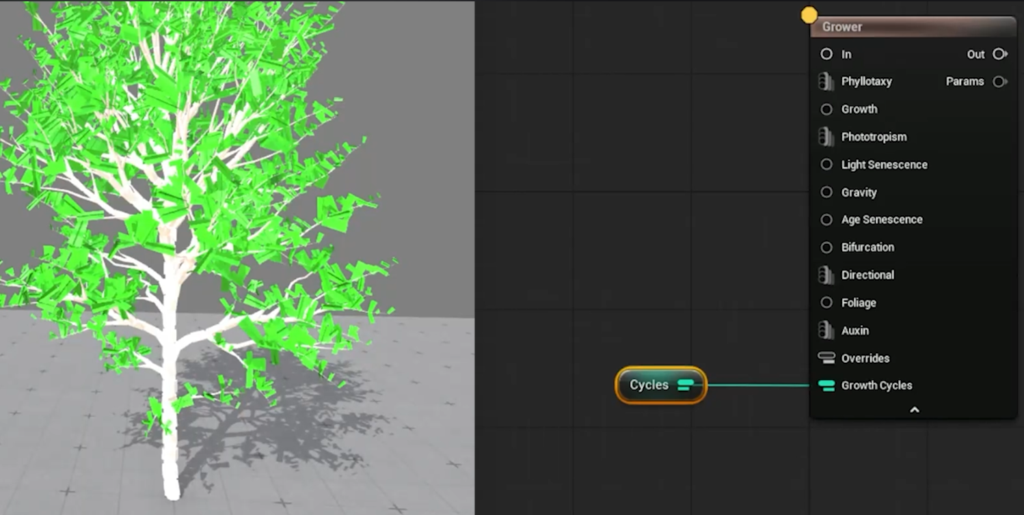 Procedural vegetation in Unreal Engine 5.8. Source: Epic Games Meeting the needs of both professional mocap stages and solo creators, Live Link Hub is now Production-Ready. You can now monitor live video feeds from multiple sources directly within the Live Link Hub interface. Plus, you can now control devices over IP across your mocap studio, so you can monitor and synchronize all your Live Link data, UE editor clients, and control recording devices from one place.
Meanwhile, Mocap Manager gets a new dedicated facial animation preview window and new procedural Auto-cameras that follow the action dynamically.
Movie Render Graph is now Production-Ready. The redesigned Queue Window introduces a new graph-based configuration that offers artists control of render settings directly in the panel. This release also adds support for nDisplay, and for isolating lights to render shots with different values for intensity, color, or any other property on any type of light.
And a new Accumulation Depth of Field fAccumulation Depth of Field_1.mp4eature delivers cinematic, film-style focus effects akin to the Path Tracer at a lower time and performance cost, reducing visual artifacts while preserving real-time look development.
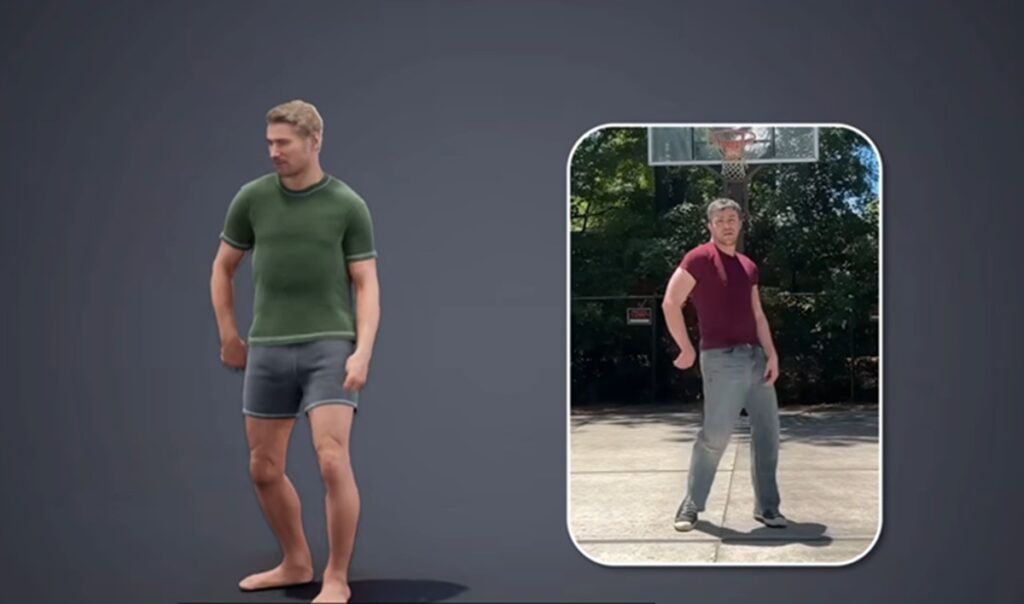 MetaHuman 5.8. Source: Epic Games Unreal Engine 5.8 introduces MetaHuman Collections—an Experimental new asset type that enables you to populate your real-time world with crowds of MetaHumans, scaling up to hundreds of characters on mobile and thousands on higher-end platforms.
It’s an essential element of a new crowd-creation workflow that also relies upon Mass for crowd orchestration, and can be rendered using Nanite where available.
The feature seamlessly transitions characters between high-fidelity individual Actors and lower-fidelity Instanced Skinned Meshes (ISKMs) based on camera proximity, delivering both highly realistic close-ups and optimized performance and memory footprint.
To help get devs started, Epic released a new MetaHuman Crowds Sample on Fab, where you can explore a performant and scalable approach to populating your scene with thousands of MetaHumans.
Another big piece of news for MetaHuman is the new ability to turn any human mesh into a MetaHuman.
Now fully integrated into MetaHuman Creator, Mesh to MetaHuman—which previously only worked for heads—is now also able to conform bodies. This powerful enhancement means you can turn any human character mesh with arbitrary topology into a fully rigged MetaHuman with MetaHuman topology in a single workflow.
In a parallel move, MetaHuman Animator can now capture your full character performance: face, body, or both at once, from a single off-actor camera.
There’s no need for mocap rigs, helmet cameras, or markers—a webcam is enough to capture high-quality head-to-toe animation.
This new ability comes from the integration of the new MetaHuman Animator Markerless Motion Capture Plugin, which is available for Windows; you can download it from Fab.
As you may have seen in the State of Unreal livestream, Epic is also providing open source access to RigLogic and DNA via OpenRigLogic on GitHub to all developers under an MIT licence. The OpenRigLogic repository is the start of the MetaHuman Devkit, an evolving collection of MetaHuman character technology that developers can integrate into the platform or application of their choice outside of Unreal Engine.
You can find more information on these and other new MetaHuman features in the
dedicated blog.
 Unreal Engine 5.8 is ready. Source: Epic Games MegaLights is now Production-Ready, empowering you to place a vast number of dynamic and shadowed area lights into your scenes—while now delivering greatly reduced noise to maximize visual fidelity.
MegaLights also delivers improved overall performance to achieve a target of 60 fps on current-generation consoles, new debugging and optimization tools designed to give you the confidence to place lights and embrace a truly dynamically lit world, and many further enhancements.
Lumen dynamic global illumination now offers a Lumen Lite mode, which is designed to preserve much of the visual impact at a significantly lower GPU cost by using irradiance fields with probe occlusion. Twice as fast as Lumen High Quality, it means that games that rely on global illumination for artistic purposes can run on Nintendo Switch 2 at 60 fps.
It’s also supported on PC.
An Experimental new Fog Screen Space Scattering (FSSS) feature is now available on Volumetric Fog and Local Fog Volumes. FSSS simulates multiple light scattering, making dense fog, smoke, and dust appear blurrier and more integrated with the scene for increased realism.
For those looking to mimic 2D, stylized, or hand-drawn anime and cartoon styles, UE 5.8 introduces an Experimental new Toon Shader, built on the Substrate framework. The new
shading model supports the full range of UE5 target platforms.
In this release, new features for the Dataflow Editor framework include improved graph evaluation, enhanced UI and UX, rich rendering support for most data types, and more.
One of Dataflow’s most exciting applications is for use with Chaos Destruction. With Dataflow, you can implement instant, nondestructive changes, making iteration much faster and more flexible.
Chaos Cloth is also now Production-Ready. Epic migrated the cloth authoring pipeline to a new Dataflow-based Cloth Panel Editor, bringing closer alignment with panel-driven clothing workflows.
Speed up mobile workflows
Unreal Engine 5.8 brings improved onboarding and faster iteration for mobile developers.
Epic automated the process of setting up a workstation for Android development, making it faster and easier to get started. That goes hand in hand with extensively updated documentation.
With the updated Unreal Engine Remote application, you can preview, test, and iterate on
mobile input—including touch controls and gestures—without building or deploying to a physical device.
Platform Preview also now more closely matches the visual output of the target device,
so you can more accurately preview the platform within the editor and iterate on visual aspects of your game without making a build.
Finally, Android developers can look forward to accelerated cook times.
industry-standard DCC tools, it adds better hit targets, clearer visual feedback, customizable presets, and improved precision for faster, more predictable manipulation.
Epic implemented an Experimental MCP (Model Context Protocol) plugin for Unreal Engine. The open standard plugin enables LLM systems—you can use any model you want—to connect to and understand both the engine and your project. You can then use them to help you build assets and systems; extend engine functionality; perform testing and optimization tasks; and more.
The plugin ships with built-in exposure to many core systems, including Blueprints, assets, levels, materials, meshes, and many more; developers can easily extend it with their own functionality.
Also new are Sandboxes, an Experimental feature that provides a safe, isolated environment for experimentation, iteration, and collaboration where you can selectively merge changes you want back into the main project, and easily share sandboxed work with teammates.
And there’s more…. These are just some of the new features and enhancements in Unreal Engine 5.8. Check out the release notes to see the full feature list.
The post Epic Games launches Unreal Engine 5.8 appeared first on GamesBeat.
advanced worldbuilding and terrain creation tools, high-quality real-time vegetation
authoring, and simplified lighting workflows.
Epic Games announced Unreal Engine 5.8 at Unreal Fest, the Epic Games game engine festival in Chicago this week. Epic released Unreal Engine 5 six years ago.
With the engine, devs will also discover faster in-engine character and animation creation tools, advances in virtual production, high-fidelity full-body performance capture, accelerated content
creation with integrated LLM workflows, and much more.
UE 5.8 is the last planned major Unreal Engine 5 release on Epic’s roadmap as it ramps up
work on UE6. Epic will continue to support UE5 for bug fixes and regressions, and may add
another official release if circumstances warrant it. Meanwhile, let’s take a look at the 5.8
details.
What’s new in Unreal Engine 5.8
Unreal Engine 5.8 scene. Source: Epic Games Create expansive open worldsDevs will be able to build larger, feature-rich worlds faster with Mesh Terrain, unlock advanced open world editing and customization with the Procedural Content Generation (PCG) framework, and streamline vegetation authoring directly in the editor.
Mesh Terrain is a brand-new Experimental 3D-mesh-based system for authoring larger,
more complex terrains.
Unlike the existing Landscape tool and other traditional 2.5D heightfield systems, Mesh
Terrain is a true 3D mesh model, enabling you to create arbitrary shapes such as
overhangs, floating islands, and tunnels. You can create the mesh directly in the Unreal
Editor, or start by importing a mesh or heightmap from an external application.
Nondestructive modifiers make it easy to make changes to your scenes. For example, if
you move a landscape feature, the terrain will regenerate automatically. The system is
also fully interoperable with PCG.
Tightly integrated with World Partition and One File Per Actor (OFPA), Mesh Terrain
offers all the advantages of automatic distance-based streaming and data management,
as well as enabling collaborative workflows.
With PCG, it’s now possible to make manual edits on top of procedurally generated
content without breaking the proceduralism, so you can art direct the system’s results
while continuing to adjust upstream parameters.
There’s also new support for complex attribute types—including arrays, structures, sets,
and maps—as well as new example PCG graphs designed for spatial operations.
Together, these features make it possible to generate elements such as buildings, city
streets, and much more.
The Experimental Procedural Vegetation Editor (PVE) now enables you to grow
high-quality, biologically correct, Nanite-ready vegetation from scratch. Trees are able to
react symbiotically, competing naturally for light and forming clusters. They’ll even grow
around external meshes, and you can also art direct nature with basic sculpting tools and
the ability to add or remove branches.
You can also now import meshes from different external sources, such as DCCs, and
convert them to PVE-compatible assets complete with extracted skeletons. In addition,
you can use 2D sketches and photographs as input to move faster from concept or
real-world reference to production.
PVE also benefits from PCG’s new ability to create embedded subgraphs. Technical
artists can create custom vegetation tools for artists to use in production, hiding the real
complexity in the subgraph and exposing just the parameters that artists need to create
variations.
Epic will continue to add more Quixel Megaplants species to get you started faster. Check
out the full new collection now available to download from Fab.
If you saw The Witcher 4 Unreal Engine 5 Tech Demo at last year’s State of Unreal, you
witnessed the Fast Geometry Streaming Plugin in action. The Experimental plugin—which enables you to rapidly load static, non-gameplay assets for massive, seamless open worlds—now delivers multiple improvements to speed, stability, and use case support.
Streamline character and animation workflows
Simon Tourangeau, vice president of engineering at Epic Games. Source: Epic Games New features and enhancements to the in-engine rigging and animation toolsets meanyou can create more in the editor.
There’s now better support for in-editor sculpt-driven facial workflows and shot sculpting. This includes updates to the sculpting brush toolset, new options for mirroring and flipping targets, weight locking, and more—strengthening blend shape authoring for stylized characters, custom skeletal meshes, and MetaHumans, as well as for pose corrections.
Control Rig Physics moves to Beta, featuring enhancements for both riggers and animators. It’s great for anything from fully dynamic ragdoll animation, such as a character falling down stairs, to subtle secondary motion, such as jiggling flesh.
Physics rigs can now be modular, enabling you to use them with your own rigs. This also means you can layer the physics over existing animation, and keyframe its weighting to
precisely control its influence over time.
In addition to Control Rig Physics, which is ideal for cinematics, Epic introduced Control
Rig Dynamics, a new particle-based solver for runtime use that evaluates at five times
the speed of the original solver, enabling you to trade off accuracy for real-time performance.
Also new is Direct Mesh Controls (DMC), an Experimental new system that enables Control Rig controls to be represented directly on sections of the Skeletal Mesh. Inspired by workflows from some of the biggest feature animation studios, animators can manipulate rigs by interacting with the actual character surface, making it especially useful for facial animation.
To try out the full Unreal Engine 5.8 animation and rigging toolset—including DMC—download the new Zebra Character Sample from Fab. It features a fully DMC-enabled face rig, as well as a production body rig that employs the same rigging modules used to animate Fortnite characters, a full physics rig complete with secondary motion, and more.
Automated animation baking now streamlines iteration by giving animators the ability to instantly bake, test, and rebake character animation with a single click, while enhanced Curve Editor and Sequencer workflows give animators faster, more focused control over animation data with unified selection and filtering, and improved navigation.
New foot definition options for retargeting improve animation transfer across characters with different proportions and stylized anatomy, while Retarget Override Sets reduce rework when retargeting animation to characters of different proportions.
Accelerate virtual production
Procedural vegetation in Unreal Engine 5.8. Source: Epic Games Meeting the needs of both professional mocap stages and solo creators, Live Link Hub is now Production-Ready. You can now monitor live video feeds from multiple sources directly within the Live Link Hub interface. Plus, you can now control devices over IP across your mocap studio, so you can monitor and synchronize all your Live Link data, UE editor clients, and control recording devices from one place.Meanwhile, Mocap Manager gets a new dedicated facial animation preview window and new procedural Auto-cameras that follow the action dynamically.
Movie Render Graph is now Production-Ready. The redesigned Queue Window introduces a new graph-based configuration that offers artists control of render settings directly in the panel. This release also adds support for nDisplay, and for isolating lights to render shots with different values for intensity, color, or any other property on any type of light.
And a new Accumulation Depth of Field fAccumulation Depth of Field_1.mp4eature delivers cinematic, film-style focus effects akin to the Path Tracer at a lower time and performance cost, reducing visual artifacts while preserving real-time look development.
Scale realistic digital humans
MetaHuman 5.8. Source: Epic Games Unreal Engine 5.8 introduces MetaHuman Collections—an Experimental new asset type that enables you to populate your real-time world with crowds of MetaHumans, scaling up to hundreds of characters on mobile and thousands on higher-end platforms. It’s an essential element of a new crowd-creation workflow that also relies upon Mass for crowd orchestration, and can be rendered using Nanite where available.
The feature seamlessly transitions characters between high-fidelity individual Actors and lower-fidelity Instanced Skinned Meshes (ISKMs) based on camera proximity, delivering both highly realistic close-ups and optimized performance and memory footprint.
To help get devs started, Epic released a new MetaHuman Crowds Sample on Fab, where you can explore a performant and scalable approach to populating your scene with thousands of MetaHumans.
Another big piece of news for MetaHuman is the new ability to turn any human mesh into a MetaHuman.
Now fully integrated into MetaHuman Creator, Mesh to MetaHuman—which previously only worked for heads—is now also able to conform bodies. This powerful enhancement means you can turn any human character mesh with arbitrary topology into a fully rigged MetaHuman with MetaHuman topology in a single workflow.
In a parallel move, MetaHuman Animator can now capture your full character performance: face, body, or both at once, from a single off-actor camera.
There’s no need for mocap rigs, helmet cameras, or markers—a webcam is enough to capture high-quality head-to-toe animation.
This new ability comes from the integration of the new MetaHuman Animator Markerless Motion Capture Plugin, which is available for Windows; you can download it from Fab.
As you may have seen in the State of Unreal livestream, Epic is also providing open source access to RigLogic and DNA via OpenRigLogic on GitHub to all developers under an MIT licence. The OpenRigLogic repository is the start of the MetaHuman Devkit, an evolving collection of MetaHuman character technology that developers can integrate into the platform or application of their choice outside of Unreal Engine.
You can find more information on these and other new MetaHuman features in the
dedicated blog.
Advance real-time rendering
Unreal Engine 5.8 is ready. Source: Epic Games MegaLights is now Production-Ready, empowering you to place a vast number of dynamic and shadowed area lights into your scenes—while now delivering greatly reduced noise to maximize visual fidelity.MegaLights also delivers improved overall performance to achieve a target of 60 fps on current-generation consoles, new debugging and optimization tools designed to give you the confidence to place lights and embrace a truly dynamically lit world, and many further enhancements.
Lumen dynamic global illumination now offers a Lumen Lite mode, which is designed to preserve much of the visual impact at a significantly lower GPU cost by using irradiance fields with probe occlusion. Twice as fast as Lumen High Quality, it means that games that rely on global illumination for artistic purposes can run on Nintendo Switch 2 at 60 fps.
It’s also supported on PC.
An Experimental new Fog Screen Space Scattering (FSSS) feature is now available on Volumetric Fog and Local Fog Volumes. FSSS simulates multiple light scattering, making dense fog, smoke, and dust appear blurrier and more integrated with the scene for increased realism.
For those looking to mimic 2D, stylized, or hand-drawn anime and cartoon styles, UE 5.8 introduces an Experimental new Toon Shader, built on the Substrate framework. The new
shading model supports the full range of UE5 target platforms.
Iterate physics assets faster
Dataflow—Unreal Engine’s node-based system for the procedural generation of physics-based assets—is now Production-Ready, with a slew of enhancements. In this release, new features for the Dataflow Editor framework include improved graph evaluation, enhanced UI and UX, rich rendering support for most data types, and more.
One of Dataflow’s most exciting applications is for use with Chaos Destruction. With Dataflow, you can implement instant, nondestructive changes, making iteration much faster and more flexible.
Chaos Cloth is also now Production-Ready. Epic migrated the cloth authoring pipeline to a new Dataflow-based Cloth Panel Editor, bringing closer alignment with panel-driven clothing workflows.
Speed up mobile workflows
Unreal Engine 5.8 brings improved onboarding and faster iteration for mobile developers.
Epic automated the process of setting up a workstation for Android development, making it faster and easier to get started. That goes hand in hand with extensively updated documentation.
With the updated Unreal Engine Remote application, you can preview, test, and iterate on
mobile input—including touch controls and gestures—without building or deploying to a physical device.
Platform Preview also now more closely matches the visual output of the target device,
so you can more accurately preview the platform within the editor and iterate on visual aspects of your game without making a build.
Finally, Android developers can look forward to accelerated cook times.
Simplify creative iteration
Epic unified the legacy and custom Gizmo systems into a single, cohesive framework, significantly improving consistency, usability, and reliability. Inspired by workflows fromindustry-standard DCC tools, it adds better hit targets, clearer visual feedback, customizable presets, and improved precision for faster, more predictable manipulation.
Epic implemented an Experimental MCP (Model Context Protocol) plugin for Unreal Engine. The open standard plugin enables LLM systems—you can use any model you want—to connect to and understand both the engine and your project. You can then use them to help you build assets and systems; extend engine functionality; perform testing and optimization tasks; and more.
The plugin ships with built-in exposure to many core systems, including Blueprints, assets, levels, materials, meshes, and many more; developers can easily extend it with their own functionality.
Also new are Sandboxes, an Experimental feature that provides a safe, isolated environment for experimentation, iteration, and collaboration where you can selectively merge changes you want back into the main project, and easily share sandboxed work with teammates.
And there’s more…. These are just some of the new features and enhancements in Unreal Engine 5.8. Check out the release notes to see the full feature list.
The post Epic Games launches Unreal Engine 5.8 appeared first on GamesBeat.
What's Your Reaction?








XINKER - Business and Income Tips
Explore XINKER, the ultimate platform for mastering business strategies, discovering passive income opportunities, and learning success principles. Join a community of thinkers dedicated to achieving financial freedom and entrepreneurial excellence.



![[Business Talk] Chagee: Opening 3,500 stores in 6 years](https://xinker.org/uploads/images/202410/image_140x98_671afce94bf91.webp)