
![[PRO Tips] Gold’s Bullish Revival: Seasonal Trends and Key Levels to Watch](https://xinker.org/uploads/images/202412/image_430x256_67724cc6ad0cd.webp)
![[PRO Tips] Gold Market Under Short-Term Pressure, Safe-Haven Demand and Central Bank Buying Support Long-Term Upside Potential](https://xinker.org/uploads/images/202412/image_430x256_676ffb4685287.webp)
![[PRO Tips] Analysis of 9 key points of differentiation strategy! Master differentiation to create a brand advantage that is unique in the world!](https://firebasestorage.googleapis.com/v0/b/xinker-tips.appspot.com/o/article_thumbnails%2Fscaled_differentiation%20strategy.png.png?alt=media&token=a1bfc3d2-e85a-4db7-8a6d-01c7274f8940)
![[PRO Tips] Will REITs regain growth momentum in 2024? 3 REITs ETFs you must know if you want to invest in real estate.](https://firebasestorage.googleapis.com/v0/b/xinker-tips.appspot.com/o/article_thumbnails%2Fscaled_REITs1.png.png?alt=media&token=8af4eb93-33ff-466f-8039-b6555fad52b4)
![[PRO Tips] Complete tutorial on how to make money in Adobe Stock!](https://firebasestorage.googleapis.com/v0/b/xinker-tips.appspot.com/o/article_thumbnails%2Fscaled_tut-adobe1.png.png?alt=media&token=0b2c8cf2-22bd-4142-883e-140ed1cbaf02)
![[Passive Income] Unlock the secret of passive income: 3 steps to apply for Google AdSense](https://xinker.org/uploads/images/202410/image_430x256_6717a4fb3052b.webp)
![[Passive Income] Earn over $200 a day with AI-generated articles!](https://firebasestorage.googleapis.com/v0/b/xinker-tips.appspot.com/o/article_thumbnails%2Fscaled_article1.png.png?alt=media&token=f61bf35b-8553-4719-826d-7360024adc70)
![[Passive Income] Earn over 20 USD per download with AI-generated images!](https://firebasestorage.googleapis.com/v0/b/xinker-tips.appspot.com/o/article_thumbnails%2Fscaled_adobe2.png.png?alt=media&token=3e20e76a-a907-45af-80aa-bf9b3600301f)
![[Passive Income] Earn 10 USD per new download by sharing CapCut!](https://firebasestorage.googleapis.com/v0/b/xinker-tips.appspot.com/o/article_thumbnails%2Fscaled_capcut2.png.png?alt=media&token=a04dec40-1fac-4857-86f2-19a8be02d38e)
![[Passive Income] Use your WiFi to create passive income in 5 minutes, and you can earn 4-6 U per day!](https://firebasestorage.googleapis.com/v0/b/xinker-tips.appspot.com/o/article_thumbnails%2Fscaled_Grassio.webp.png?alt=media&token=7659a95e-0e47-4f27-a17d-c942ac3cf7f4)


![[Business Talk] The Unique Theme of XINKER's Song: Beef Wellington and Business Mastery](https://xinker.org/uploads/images/202410/image_430x256_671afc155f47f.webp)
![[Business Talk] Chagee: Opening 3,500 stores in 6 years](https://xinker.org/uploads/images/202410/image_430x256_671afce80c5f9.webp)

Denmu raises $50M fund to fuel visionary game makers | exclusive
Denmu announced it has raised $50 million in a venture capital fund to invest in visionary game makers. The San Francisco-based fund said it has secured the majority of capital commitments for its initial $50 million investment fund. This first Denmu fund is dedicated to financing and supporting the next generation of iconic video games, providing development, marketing and growth capital across a broad range of projects, including triple-A, indie, premium, free-to-play, PC, console and mobile games. Denmu’s investment philosophy centers on an “auteur-first” approach, prioritizing creative vision and long-term partnerships over short-term financial optimization. Unlike traditional funding sources, Denmu seeks to support the people who make games across multiple projects, helping them build enduring brands and sustainable businesses. “We view it as our mission to help turn dreams into memories,” said Michael Fan, generalpartner and creative director of Denmu, in a statement. “We’ve chosen to invest in games because of the passion we have for video games across the entire team, not because of timing or market trends. Our long-term goal is to become a ‘one-stop shop’ for game makers seeking funding who have a singular dream or vision.” Founded by Fan and Ryan You, Denmu brings deep gaming expertise, publishing experience and long-term investment capital to support those making memorable, genre-defining experiences. The Denmu team also includes Devin Maa, investment partner; Joe Brown, publishing partner and founder of Top Hat Studios; and David Brevik, operating partnerand cofounder of Blizzard North and creator of the Diablo franchise. You noted that the fund was created last year, in the midst of a lot of studio closures, funding shortages, layoffs and growth challenges. While the pie for video games is above $200 billion now, financing models have not been sophisticated, You said in an exclusive interview with GamesBeat. “We are trying to solve that,” You said. “We already did six deals. We started investing last year, and we have already secured the majority of the fund.”Denmu’s strategy Denmu’s team in San Francisco. Source: Denmu A core component of Denmu’s strategy is providing the bridge between Eastern and Westerngaming ecosystems. The firm’s leadership team brings decades of experience operating across North America, Europe, China, and Japan, enabling Denmu to help Western games reach Asian audiences while supporting Asian developers seeking global growth. Unlike traditional investors, Denmu said it provides flexible, relationship-driven funding; publishing, production and marketing expertise; fast decision-making from a small senior team; hands-on support in game design, testing and strategic growth; long-term commitment and “infinite patience” with developers; and an East-West bridge. For the latter, Denmu said it helps Western games expand into Asia, particularly China and Japan; Asian developers reach global audiences; connect talent, publishers, audiences and capital across regions; and navigate cultural and market differences with a globally experienced team. “Video games are a global medium, but many developers encounter obstacles when trying toreach audiences beyond their home markets,” said You, general partner and CEO ofDenmu, in a statement. “Our team composition gives us an advantage in navigating and reconciling the complexities of Eastern and Western collaboration, as well insight from both a consumer and studio perspective. We help our partners infuse their games with local resonance, regardless of territory.”Counter-cyclical investment timing I asked why Denmu is moving in a countercyclical way, diving in right when many of the pre-pandemic or pandemic investors have bailed out of game investments. “Video games have always been the place I wanted to be,” You said. “We have passion in this $200 billion market. We were VC investors before, but we think there has to be a better way to invest in your game. We spent years thinking about how to do that, and I would say Denmu is not just a new brand new vehicle. It is also a new investment model. We learned a lot from film and music.” It comes some of the project financing model with some equity components. We developed our own investment model to fit the game industry. “Hopefully, we are one of the helpers bringing more capital to the industry that is much needed right now, and we can generate new and interesting games,” You said. Fan added, “For me, the video game [industry] is probably the most important cultural media. I am who I am really because of video games. I learned English through video games growing up. I always thought, ‘Why there are not more of those games I like? Why are the publishers or investors investing in so many games that I don’t particularly enjoy?” And Fan said, “Today I am very fortunate to be in a place where I can change the world. I can participate in making and bringing more of the games I enjoy to the mar

Denmu announced it has raised $50 million in a venture capital fund to invest in visionary game makers.
The San Francisco-based fund said it has secured the majority of capital commitments for its initial $50 million investment fund. This first Denmu fund is dedicated to financing and supporting the next generation of iconic video games, providing development, marketing and growth capital across a broad range of projects, including triple-A, indie, premium, free-to-play, PC, console and mobile games.
Denmu’s investment philosophy centers on an “auteur-first” approach, prioritizing creative vision and long-term partnerships over short-term financial optimization.
Unlike traditional funding sources, Denmu seeks to support the people who make games across multiple projects, helping them build enduring brands and sustainable businesses.
“We view it as our mission to help turn dreams into memories,” said Michael Fan, general
partner and creative director of Denmu, in a statement. “We’ve chosen to invest in games because of the passion we have for video games across the entire team, not because of timing or market trends. Our long-term goal is to become a ‘one-stop shop’ for game makers seeking funding who have a singular dream or vision.”
Founded by Fan and Ryan You, Denmu brings deep gaming expertise, publishing experience and long-term investment capital to support those making memorable, genre-defining experiences. The Denmu team also includes Devin Maa, investment partner; Joe Brown, publishing partner and founder of Top Hat Studios; and David Brevik, operating partner
and cofounder of Blizzard North and creator of the Diablo franchise.
You noted that the fund was created last year, in the midst of a lot of studio closures, funding shortages, layoffs and growth challenges. While the pie for video games is above $200 billion now, financing models have not been sophisticated, You said in an exclusive interview with GamesBeat.
“We are trying to solve that,” You said. “We already did six deals. We started investing last year, and we have already secured the majority of the fund.”
 Denmu’s team in San Francisco. Source: Denmu A core component of Denmu’s strategy is providing the bridge between Eastern and Western
gaming ecosystems. The firm’s leadership team brings decades of experience operating across North America, Europe, China, and Japan, enabling Denmu to help Western games reach Asian audiences while supporting Asian developers seeking global growth.
Unlike traditional investors, Denmu said it provides flexible, relationship-driven funding; publishing, production and marketing expertise; fast decision-making from a small senior team; hands-on support in game design, testing and strategic growth; long-term commitment and “infinite patience” with developers; and an East-West bridge.
For the latter, Denmu said it helps Western games expand into Asia, particularly China and Japan; Asian developers reach global audiences; connect talent, publishers, audiences and capital across regions; and navigate cultural and market differences with a globally experienced team.
“Video games are a global medium, but many developers encounter obstacles when trying to
reach audiences beyond their home markets,” said You, general partner and CEO of
Denmu, in a statement. “Our team composition gives us an advantage in navigating and reconciling the complexities of Eastern and Western collaboration, as well insight from both a consumer and studio perspective. We help our partners infuse their games with local resonance, regardless of territory.”
“Video games have always been the place I wanted to be,” You said. “We have passion in this $200 billion market. We were VC investors before, but we think there has to be a better way to invest in your game. We spent years thinking about how to do that, and I would say Denmu is not just a new brand new vehicle. It is also a new investment model. We learned a lot from film and music.”
It comes some of the project financing model with some equity components. We developed our own investment model to fit the game industry.
“Hopefully, we are one of the helpers bringing more capital to the industry that is much needed right now, and we can generate new and interesting games,” You said.
Fan added, “For me, the video game [industry] is probably the most important cultural media. I am who I am really because of video games. I learned English through video games growing up. I always thought, ‘Why there are not more of those games I like? Why are the publishers or investors investing in so many games that I don’t particularly enjoy?”
And Fan said, “Today I am very fortunate to be in a place where I can change the world. I can participate in making and bringing more of the games I enjoy to the market, and so I feel like this is an incredible opportunity. When we discussed it with Ryan, for me, it was a no brainer, because I will do this no matter what. I will do this with my own money if I have to, because the one thing I know is every single game that we have invested and every single game we are about to invest in are games that I will enjoy playing.”
The limited partners are pretty diverse, with a comibination of game publishers across Asia and the West, high net-worth individuals and family offices, and more.
“They play games like us and they enjoy video games,” You said. “Some of them have been burned before. We were able to convince a good amount of them to invest. Our goal is to build this bridge to produce more capital for the industry.”
Since its founding in 2025, Denmu has reviewed more than 400 game opportunities and
invested in six projects including The Hundred Line: Last Defense Academy, which is Danganronpa creator Kazutaka Kodaka’s first original IP.
You said The Hundred Line was unusual as a visual novel, and everyone told Denmu that there was no market for visual novels. It had a hundred different endings, and people said it would be too long to play. But it drew more than 200 million social media impressions.
“Well, I played the gold master and I fall in love with the game. When I talk to Kazutaka Kodaka, I realized that this is the epitome of everything they’ve been working on last 20 or 30 For me, it’s a masterpiece,” Fan said. “If you understand The Hundred Line, you will completely understand who we are. It’s an iconic game. If you play this game, you can love it, you can hate it, but you are never going to ignore this game. It is the content that drives conversations, the kind of game that creates new thoughts, and for us, this is the kind of game we want. A Denmu game will never be ignored. It will always drive conversation.”
Denmu has also invested in Blue Protocol: Star Resonance, Bleach: Soul Resonance, Labyrinth of the Demon King, MotorSlice and Silly Polybeast. The firm has also invested in an upcoming triple-A title based on a major entertainment IP and is supporting the upcoming global launch of Sword and Fairy 4 Remake, which will introduce the iconic Chinese RPG franchise to new audiences worldwide.
The majority of the investments so far are PC and console games, with a focus on double-A and indie games. Over the next one to two years, Denmu plans to invest in 10 to 20 additional projects. The lesson of Sandfall Interactive’s Clair Obscur: Expedition 33, which won the most gaming awards in history in the past year, is that the big hits can come from smaller companies.
“We have a quite broad general coverage. We don’t think of a macro view such as certain genres or platforms. We are product first. The game, the game maker, are first. It’s more like a bottom-up way to invest,” You said.
The average check is around $2 million or so, but it also varies. So far, the startups are based in the U.S., Japan, China, United Kingdom, South America and Australia.
The company’s name, Denmu (“Electric Dreams” in Japanese) reflects Denmu’s
Eastern/Western bridge with the kanji spelling of the name which can be read by Japanese,
Chinese and Korean native speakers. It is a multilingual bridge that reflects Denmu’s global
perspective, connecting the “Electric Dreams” of Philip K. Dick’s classic (inspiration for Blade Runner) to the visionary games of the Eastern and Western markets.
“We obviously welcome more people funding games, you. It, because we think it’s a good thing for the market in general, but I would advise anyone who’s thinking about doing project financing that project financing is not easier than equity investment,” Fan said. “It’s different. Project financing is not a magic word that suddenly everything is going to make money.”
Fan added,”Project financing has its own complexity, and I would say in project financing those two words are extremely important. So, when you’re doing product financing, you first have to be an expert in the actual project. If you don’t understand every single detail of the project, you’re probably going to be wrong, and then on the financing part, if you are not capable of structuring the deal correctly, understanding the nitty gritty of what the financial complexity is required, then your [assessment] would be wrong.”
You said Denmu almost never thinks about popular investment trends.
“We evaluate all types of opportunities. We have a lot of AI native game pitches, right? We receive a lot. We receive a lot of UGC or Roblox pitches. I think that, in the end, we are backing the games,” You said. “So far, we haven’t found an opportunity in the newer areas that fits into our taste. The beginning for us is taste. We do the numbers, the market analysis. But the first thing we do in the investment is creative. Why do we like the product?”
And he said, “We basically don’t have a macro view. I don’t think anyone can predict what game’s going to be popular next year, right? It’s impossible, so we try to go that route. We are proud of every single game we invested in, and we love them. We played them.”
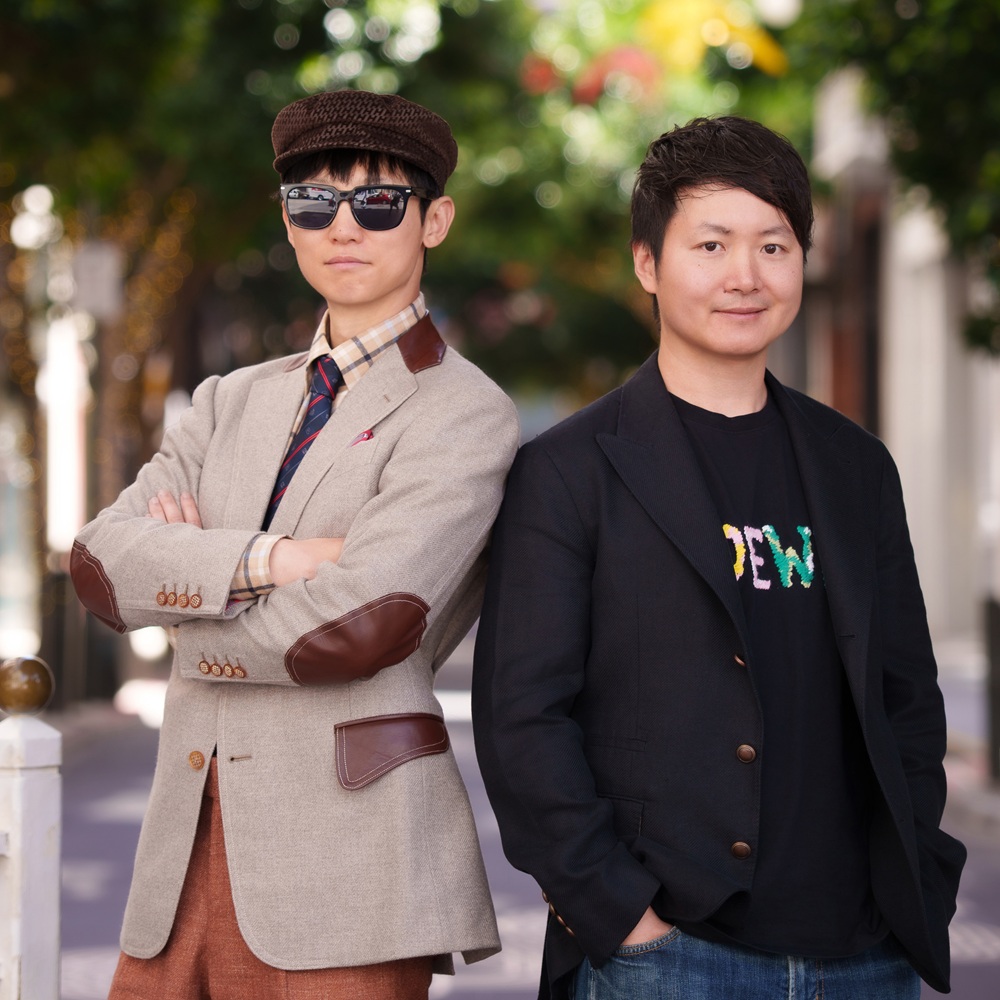 Michael Fan (left) and Ryan You are the founders of Denmu. Source: Denmu Fan and You have long experience in game investment, having previously worked together at Galaxy Interactive, co-leading its gaming investment as well as serving on several game company boards of directors.
You was a partner at Galaxy Interactive, where he co-led investments in gaming and
interactive tech companies. At Galaxy, You managed a $150 million gaming portfolio and served on multiple boards, working closely with portfolio companies such as Avia, Solsten, Invercity and Nekcom to drive growth and execute strategic transactions.
Prior to Galaxy, You was head of U.S. at Aream & Co., the gaming investment bank, where
he built the U.S. franchise from the ground up, bridging opportunities between North America
and Asia. He advised on multi-billion value in gaming M&A transactions, including the $750 million sale of Unknown Worlds Entertainment to Krafton, the $525 million sale of Starlark to Zynga, and the $300 million sale of Daybreak to EG7.
He also helped gaming studios secure strategic capital from industry leaders such as Tencent, NetEase, Sony and Square Enix. Earlier in his career, he worked in tech investment banking at Bank of America Merrill Lynch and quantitative portfolio management at Och-Ziff Capital.
You holds an MBA from Columbia Business School and a degree in Information Systems from
Carnegie Mellon University. He is a native Mandarin speaker and has extensive experience in
cross-border transactions and global gaming markets, making him a key player in bridging
investment opportunities around the world.
Fan is an investor and operator with a passion for gaming, interactive media and emerging technologies. As a former partner at Galaxy Interactive, he co-led investments and founded the firm’s gaming practice, scaling its assets under management to over $800 million. Over six years, he spearheaded investments in ~35 game studios and infrastructure companies globally, including WolfEye, Fun Dog, 1047 Games and AccelByte.
Before Galaxy, Fan served as chief strategy officer at Blade Group, where he led the U.S.
launch of Shadow, a trailblazing cloud gaming service, cementing Blade’s role in the game
streaming revolution. His career spans engineering, product development and strategic roles at
Orange, SoftBank, Nufront and Conviva, where he honed his expertise in cross-border
partnerships and scaling tech innovations worldwide.
A lifelong gamer and tinkerer, Fan reverse-engineered software and hacked games as a
teen, building his first video streaming stack by 19 to broadcast Korean StarCraft competitions.
Today, he channels that same curiosity into game jams, writing game design documents and
playing (or building) games.
Born in China, raised in France, Fan bridges cultures and continents to unlock global
opportunities. He holds a degree from ESSEC Business School in Paris and brings a rare blend of technical depth, strategic vision and infectious enthusiasm to every venture he touches.
“It is the kind of situation we deal with a lot,” You said. “The key is that we want to make sure the right studio or game doesn’t have a funding gap. But if the game they are making requires much more than the kind of check we write, that’s the issue. We always try to find a solution.”
You added, “We hope the marketers don’t forget the reason that there’s a triple-A market is because people want better and more immersive experiences. So every type of game has merit.”
I asked how they try to persuade larger investors to put money into their fund or into the game industry. They noted that if investors simply follow trends, they would invest in AI companies today.
“But if you just start today, just follow the trend, it’s gonna be really hard to make money, right? Gaming has been here for a long time, just like Michael said. It’s one of the probably the biggest cultural media and cultural phenomenon. It is hard for small teams in other industries to push a product to global scale,” You said.
It’s possible for gaming to hit big heights, but it also takes dedicated attention and a dedicated strategy. It’s not something that “tourist” investors can dive into and expect success, You said.
Fan said, “A lot of people talk about video games in terms of numbers of market size, but for me, what is really interesting is video games are the biggest vehicle of culture for our generation, and probably the next ones.”
Fan added, “When you think from that perspective, it gives you so much. We are really grateful to have some influence on the games that can be shipped to the market. But another way of thinking about that is, as an investor in video games, you get to participate in the culture, which also makes us very humble about the responsibility we have.”
Their backgrounds show they marry both games and finance. They’re aware that the game industry has a “twisted love and hate relationship with the financial industry.”
But You said, “We try to create a way to connect capital to the industry without too much influence on the correlation with capital markets. We cannot ignore the capital markets. That’s why we are not a pure project financing fund. If we build that connection between capital and the game industry, it will help the industry grow healthier in the future.”
The post Denmu raises $50M fund to fuel visionary game makers | exclusive appeared first on GamesBeat.
The San Francisco-based fund said it has secured the majority of capital commitments for its initial $50 million investment fund. This first Denmu fund is dedicated to financing and supporting the next generation of iconic video games, providing development, marketing and growth capital across a broad range of projects, including triple-A, indie, premium, free-to-play, PC, console and mobile games.
Denmu’s investment philosophy centers on an “auteur-first” approach, prioritizing creative vision and long-term partnerships over short-term financial optimization.
Unlike traditional funding sources, Denmu seeks to support the people who make games across multiple projects, helping them build enduring brands and sustainable businesses.
“We view it as our mission to help turn dreams into memories,” said Michael Fan, general
partner and creative director of Denmu, in a statement. “We’ve chosen to invest in games because of the passion we have for video games across the entire team, not because of timing or market trends. Our long-term goal is to become a ‘one-stop shop’ for game makers seeking funding who have a singular dream or vision.”
Founded by Fan and Ryan You, Denmu brings deep gaming expertise, publishing experience and long-term investment capital to support those making memorable, genre-defining experiences. The Denmu team also includes Devin Maa, investment partner; Joe Brown, publishing partner and founder of Top Hat Studios; and David Brevik, operating partner
and cofounder of Blizzard North and creator of the Diablo franchise.
You noted that the fund was created last year, in the midst of a lot of studio closures, funding shortages, layoffs and growth challenges. While the pie for video games is above $200 billion now, financing models have not been sophisticated, You said in an exclusive interview with GamesBeat.
“We are trying to solve that,” You said. “We already did six deals. We started investing last year, and we have already secured the majority of the fund.”
Denmu’s strategy
Denmu’s team in San Francisco. Source: Denmu A core component of Denmu’s strategy is providing the bridge between Eastern and Westerngaming ecosystems. The firm’s leadership team brings decades of experience operating across North America, Europe, China, and Japan, enabling Denmu to help Western games reach Asian audiences while supporting Asian developers seeking global growth.
Unlike traditional investors, Denmu said it provides flexible, relationship-driven funding; publishing, production and marketing expertise; fast decision-making from a small senior team; hands-on support in game design, testing and strategic growth; long-term commitment and “infinite patience” with developers; and an East-West bridge.
For the latter, Denmu said it helps Western games expand into Asia, particularly China and Japan; Asian developers reach global audiences; connect talent, publishers, audiences and capital across regions; and navigate cultural and market differences with a globally experienced team.
“Video games are a global medium, but many developers encounter obstacles when trying to
reach audiences beyond their home markets,” said You, general partner and CEO of
Denmu, in a statement. “Our team composition gives us an advantage in navigating and reconciling the complexities of Eastern and Western collaboration, as well insight from both a consumer and studio perspective. We help our partners infuse their games with local resonance, regardless of territory.”
Counter-cyclical investment timing
I asked why Denmu is moving in a countercyclical way, diving in right when many of the pre-pandemic or pandemic investors have bailed out of game investments.“Video games have always been the place I wanted to be,” You said. “We have passion in this $200 billion market. We were VC investors before, but we think there has to be a better way to invest in your game. We spent years thinking about how to do that, and I would say Denmu is not just a new brand new vehicle. It is also a new investment model. We learned a lot from film and music.”
It comes some of the project financing model with some equity components. We developed our own investment model to fit the game industry.
“Hopefully, we are one of the helpers bringing more capital to the industry that is much needed right now, and we can generate new and interesting games,” You said.
Fan added, “For me, the video game [industry] is probably the most important cultural media. I am who I am really because of video games. I learned English through video games growing up. I always thought, ‘Why there are not more of those games I like? Why are the publishers or investors investing in so many games that I don’t particularly enjoy?”
And Fan said, “Today I am very fortunate to be in a place where I can change the world. I can participate in making and bringing more of the games I enjoy to the market, and so I feel like this is an incredible opportunity. When we discussed it with Ryan, for me, it was a no brainer, because I will do this no matter what. I will do this with my own money if I have to, because the one thing I know is every single game that we have invested and every single game we are about to invest in are games that I will enjoy playing.”
The limited partners are pretty diverse, with a comibination of game publishers across Asia and the West, high net-worth individuals and family offices, and more.
“They play games like us and they enjoy video games,” You said. “Some of them have been burned before. We were able to convince a good amount of them to invest. Our goal is to build this bridge to produce more capital for the industry.”
Market thesis
https://www.youtube.com/embed/jLjz8umrD1E?feature=oembed Denmu believes the future of gaming will be driven by the rise of creator-led (“auteur”) games; growth of boutique publishing brands; funding gaps for game developers; opportunities to co-finance projects with platforms and IP owners; faster, more flexible financing solutions than traditional sources provide.Since its founding in 2025, Denmu has reviewed more than 400 game opportunities and
invested in six projects including The Hundred Line: Last Defense Academy, which is Danganronpa creator Kazutaka Kodaka’s first original IP.
You said The Hundred Line was unusual as a visual novel, and everyone told Denmu that there was no market for visual novels. It had a hundred different endings, and people said it would be too long to play. But it drew more than 200 million social media impressions.
“Well, I played the gold master and I fall in love with the game. When I talk to Kazutaka Kodaka, I realized that this is the epitome of everything they’ve been working on last 20 or 30 For me, it’s a masterpiece,” Fan said. “If you understand The Hundred Line, you will completely understand who we are. It’s an iconic game. If you play this game, you can love it, you can hate it, but you are never going to ignore this game. It is the content that drives conversations, the kind of game that creates new thoughts, and for us, this is the kind of game we want. A Denmu game will never be ignored. It will always drive conversation.”
Denmu has also invested in Blue Protocol: Star Resonance, Bleach: Soul Resonance, Labyrinth of the Demon King, MotorSlice and Silly Polybeast. The firm has also invested in an upcoming triple-A title based on a major entertainment IP and is supporting the upcoming global launch of Sword and Fairy 4 Remake, which will introduce the iconic Chinese RPG franchise to new audiences worldwide.
The majority of the investments so far are PC and console games, with a focus on double-A and indie games. Over the next one to two years, Denmu plans to invest in 10 to 20 additional projects. The lesson of Sandfall Interactive’s Clair Obscur: Expedition 33, which won the most gaming awards in history in the past year, is that the big hits can come from smaller companies.
“We have a quite broad general coverage. We don’t think of a macro view such as certain genres or platforms. We are product first. The game, the game maker, are first. It’s more like a bottom-up way to invest,” You said.
The average check is around $2 million or so, but it also varies. So far, the startups are based in the U.S., Japan, China, United Kingdom, South America and Australia.
The company’s name, Denmu (“Electric Dreams” in Japanese) reflects Denmu’s
Eastern/Western bridge with the kanji spelling of the name which can be read by Japanese,
Chinese and Korean native speakers. It is a multilingual bridge that reflects Denmu’s global
perspective, connecting the “Electric Dreams” of Philip K. Dick’s classic (inspiration for Blade Runner) to the visionary games of the Eastern and Western markets.
Where Denmu won’t focus
Denmu isn’t focused on platforms or technology. It’s a strict focus on content — the games. And when it comes to games, it’s easier to focus on games with demos or a working vertical slice. Paper pitches don’t work so well, as it isn’t as easy to assess the idea, Fan said. And so far, there aren’t many bidding wars in the space where Denmu is focused.“We obviously welcome more people funding games, you. It, because we think it’s a good thing for the market in general, but I would advise anyone who’s thinking about doing project financing that project financing is not easier than equity investment,” Fan said. “It’s different. Project financing is not a magic word that suddenly everything is going to make money.”
Fan added,”Project financing has its own complexity, and I would say in project financing those two words are extremely important. So, when you’re doing product financing, you first have to be an expert in the actual project. If you don’t understand every single detail of the project, you’re probably going to be wrong, and then on the financing part, if you are not capable of structuring the deal correctly, understanding the nitty gritty of what the financial complexity is required, then your [assessment] would be wrong.”
You said Denmu almost never thinks about popular investment trends.
“We evaluate all types of opportunities. We have a lot of AI native game pitches, right? We receive a lot. We receive a lot of UGC or Roblox pitches. I think that, in the end, we are backing the games,” You said. “So far, we haven’t found an opportunity in the newer areas that fits into our taste. The beginning for us is taste. We do the numbers, the market analysis. But the first thing we do in the investment is creative. Why do we like the product?”
And he said, “We basically don’t have a macro view. I don’t think anyone can predict what game’s going to be popular next year, right? It’s impossible, so we try to go that route. We are proud of every single game we invested in, and we love them. We played them.”
Origins
Michael Fan (left) and Ryan You are the founders of Denmu. Source: Denmu Fan and You have long experience in game investment, having previously worked together at Galaxy Interactive, co-leading its gaming investment as well as serving on several game company boards of directors.You was a partner at Galaxy Interactive, where he co-led investments in gaming and
interactive tech companies. At Galaxy, You managed a $150 million gaming portfolio and served on multiple boards, working closely with portfolio companies such as Avia, Solsten, Invercity and Nekcom to drive growth and execute strategic transactions.
Prior to Galaxy, You was head of U.S. at Aream & Co., the gaming investment bank, where
he built the U.S. franchise from the ground up, bridging opportunities between North America
and Asia. He advised on multi-billion value in gaming M&A transactions, including the $750 million sale of Unknown Worlds Entertainment to Krafton, the $525 million sale of Starlark to Zynga, and the $300 million sale of Daybreak to EG7.
He also helped gaming studios secure strategic capital from industry leaders such as Tencent, NetEase, Sony and Square Enix. Earlier in his career, he worked in tech investment banking at Bank of America Merrill Lynch and quantitative portfolio management at Och-Ziff Capital.
You holds an MBA from Columbia Business School and a degree in Information Systems from
Carnegie Mellon University. He is a native Mandarin speaker and has extensive experience in
cross-border transactions and global gaming markets, making him a key player in bridging
investment opportunities around the world.
Fan is an investor and operator with a passion for gaming, interactive media and emerging technologies. As a former partner at Galaxy Interactive, he co-led investments and founded the firm’s gaming practice, scaling its assets under management to over $800 million. Over six years, he spearheaded investments in ~35 game studios and infrastructure companies globally, including WolfEye, Fun Dog, 1047 Games and AccelByte.
Before Galaxy, Fan served as chief strategy officer at Blade Group, where he led the U.S.
launch of Shadow, a trailblazing cloud gaming service, cementing Blade’s role in the game
streaming revolution. His career spans engineering, product development and strategic roles at
Orange, SoftBank, Nufront and Conviva, where he honed his expertise in cross-border
partnerships and scaling tech innovations worldwide.
A lifelong gamer and tinkerer, Fan reverse-engineered software and hacked games as a
teen, building his first video streaming stack by 19 to broadcast Korean StarCraft competitions.
Today, he channels that same curiosity into game jams, writing game design documents and
playing (or building) games.
Born in China, raised in France, Fan bridges cultures and continents to unlock global
opportunities. He holds a degree from ESSEC Business School in Paris and brings a rare blend of technical depth, strategic vision and infectious enthusiasm to every venture he touches.
Why gaming is attractive
I asked if the fund would consider investing in some of the studios that Microsoft is reportedly in the middle of divesting or shutting down. You said he could not comment on the Xbox situation. “It is the kind of situation we deal with a lot,” You said. “The key is that we want to make sure the right studio or game doesn’t have a funding gap. But if the game they are making requires much more than the kind of check we write, that’s the issue. We always try to find a solution.”
You added, “We hope the marketers don’t forget the reason that there’s a triple-A market is because people want better and more immersive experiences. So every type of game has merit.”
I asked how they try to persuade larger investors to put money into their fund or into the game industry. They noted that if investors simply follow trends, they would invest in AI companies today.
“But if you just start today, just follow the trend, it’s gonna be really hard to make money, right? Gaming has been here for a long time, just like Michael said. It’s one of the probably the biggest cultural media and cultural phenomenon. It is hard for small teams in other industries to push a product to global scale,” You said.
It’s possible for gaming to hit big heights, but it also takes dedicated attention and a dedicated strategy. It’s not something that “tourist” investors can dive into and expect success, You said.
Fan said, “A lot of people talk about video games in terms of numbers of market size, but for me, what is really interesting is video games are the biggest vehicle of culture for our generation, and probably the next ones.”
Fan added, “When you think from that perspective, it gives you so much. We are really grateful to have some influence on the games that can be shipped to the market. But another way of thinking about that is, as an investor in video games, you get to participate in the culture, which also makes us very humble about the responsibility we have.”
Their backgrounds show they marry both games and finance. They’re aware that the game industry has a “twisted love and hate relationship with the financial industry.”
But You said, “We try to create a way to connect capital to the industry without too much influence on the correlation with capital markets. We cannot ignore the capital markets. That’s why we are not a pure project financing fund. If we build that connection between capital and the game industry, it will help the industry grow healthier in the future.”
The post Denmu raises $50M fund to fuel visionary game makers | exclusive appeared first on GamesBeat.
What's Your Reaction?








XINKER - Business and Income Tips
Explore XINKER, the ultimate platform for mastering business strategies, discovering passive income opportunities, and learning success principles. Join a community of thinkers dedicated to achieving financial freedom and entrepreneurial excellence.
![[Business Talk] Chagee: Opening 3,500 stores in 6 years](https://xinker.org/uploads/images/202410/image_140x98_671afce94bf91.webp)