




![[PRO Tips] Gold’s Bullish Revival: Seasonal Trends and Key Levels to Watch](https://xinker.org/uploads/images/202412/image_430x256_67724cc6ad0cd.webp)
![[PRO Tips] Gold Market Under Short-Term Pressure, Safe-Haven Demand and Central Bank Buying Support Long-Term Upside Potential](https://xinker.org/uploads/images/202412/image_430x256_676ffb4685287.webp)
![[PRO Tips] Analysis of 9 key points of differentiation strategy! Master differentiation to create a brand advantage that is unique in the world!](https://firebasestorage.googleapis.com/v0/b/xinker-tips.appspot.com/o/article_thumbnails%2Fscaled_differentiation%20strategy.png.png?alt=media&token=a1bfc3d2-e85a-4db7-8a6d-01c7274f8940)
![[PRO Tips] Will REITs regain growth momentum in 2024? 3 REITs ETFs you must know if you want to invest in real estate.](https://firebasestorage.googleapis.com/v0/b/xinker-tips.appspot.com/o/article_thumbnails%2Fscaled_REITs1.png.png?alt=media&token=8af4eb93-33ff-466f-8039-b6555fad52b4)
![[PRO Tips] Complete tutorial on how to make money in Adobe Stock!](https://firebasestorage.googleapis.com/v0/b/xinker-tips.appspot.com/o/article_thumbnails%2Fscaled_tut-adobe1.png.png?alt=media&token=0b2c8cf2-22bd-4142-883e-140ed1cbaf02)
![[Passive Income] Unlock the secret of passive income: 3 steps to apply for Google AdSense](https://xinker.org/uploads/images/202410/image_430x256_6717a4fb3052b.webp)
![[Passive Income] Earn over $200 a day with AI-generated articles!](https://firebasestorage.googleapis.com/v0/b/xinker-tips.appspot.com/o/article_thumbnails%2Fscaled_article1.png.png?alt=media&token=f61bf35b-8553-4719-826d-7360024adc70)
![[Passive Income] Earn over 20 USD per download with AI-generated images!](https://firebasestorage.googleapis.com/v0/b/xinker-tips.appspot.com/o/article_thumbnails%2Fscaled_adobe2.png.png?alt=media&token=3e20e76a-a907-45af-80aa-bf9b3600301f)
![[Passive Income] Earn 10 USD per new download by sharing CapCut!](https://firebasestorage.googleapis.com/v0/b/xinker-tips.appspot.com/o/article_thumbnails%2Fscaled_capcut2.png.png?alt=media&token=a04dec40-1fac-4857-86f2-19a8be02d38e)
![[Passive Income] Use your WiFi to create passive income in 5 minutes, and you can earn 4-6 U per day!](https://firebasestorage.googleapis.com/v0/b/xinker-tips.appspot.com/o/article_thumbnails%2Fscaled_Grassio.webp.png?alt=media&token=7659a95e-0e47-4f27-a17d-c942ac3cf7f4)


![[Business Talk] The Unique Theme of XINKER's Song: Beef Wellington and Business Mastery](https://xinker.org/uploads/images/202410/image_430x256_671afc155f47f.webp)
![[Business Talk] Chagee: Opening 3,500 stores in 6 years](https://xinker.org/uploads/images/202410/image_430x256_671afce80c5f9.webp)


By God Alone Dev Diary #4 - Christian Church Situation
Greetings! You may remember me from the days of Khans of the Steppe, but today I am here to welcome you to another By God Alone dev diary.When we set out to rework how Christianity feels in Crusader Kings III, we kept returning to the same question: how do you make a thousand years of Church history feel alive in a sandbox, without turning every playthrough into the same timeline? Our answer is The Christian Church; a new Situation that tracks the spiritual health of Christendom across seven different Chapters.Today we will walk you through how the Situation works: who participates, how Chapters change, what Catalysts push the Church forward, and what each era means for your ruler, both as a ecclesiastical government or not.\[Please note that all images are Work in Progress and do not reflect the final result.]The Situation's sub-region is Christendom: the sum of every independent Christian realm whose lands fall within an archdiocese. The Church may become bigger or smaller as archdioceses are created, expanded, or split.\[A map of all Clerical Titles (archdioceses, patriarchates and metropolitanates) in 1066.]Not every Christian ruler experiences a Chapter (Situation Phase) the same way. Six participant groups split Christendom along three axes:Clerical vs. Secular: are you an ecclesiastical or lay ruler?Main Power vs. Secondary Powers: do you follow the Christian faith that currently holds the most counties in the world?Ecumenical vs. Heretic: does your faith carry the ecumenical Christian doctrine, or are you a heretic?The Main Power faith is dynamic. It is recalculated whenever county faith changes across Christendom, stored as a Situation variable and refreshed automatically. When the Main Power changes (say, if Catholic counties are overtaken by Orthodox ones) that shift can itself become a Catalyst, and it can instantly push the Church into the Reform Phase.Orthodox, in this case, would become the Main Power in the Christian Church, and obtain all the benefits that rulers in that group have.We call the Church's phases Chapters. There are seven in total, each named after a recognizable era of Church history. Every Chapter belongs to one of four Chapter Types, which tell you the broad tone of the era:Instability. Rulers are easier to sway to rites, excommunications fly, and gold has a way of leaving the treasury.Crisis. The Church at its most scorched. Indulgences are cheaper, Ecumenical Councils more frequent, taxes suffer and (depending on the phase) even clergy may be able to marry.Zeal. Mass conversion, cheaper bulls (more on that later), holy wars, and easier faith conversion.Stability. Grand Cathedrals rise faster, characters take vows more readily, and emperors may even try to mend the Great Schism.Fragile Unity (Instability)The 867 opening Chapter. Secular rulers sway more easily between rites; Main Power secular rulers gain a free Humiliation casus belli and easier claim requests from their Head of Faith.Clergy siphon treasury more effectively, and secular rulers of both Main and Secondary groups may Levy the Tithes through a dedicated decision to extract wealth from their ecclesiastical vassals (at risk of annoying the archbishop of your diocese).Saeculum Obscurum (Crisis)Crisis deepens. Ecumenical councils and indulgences are cheaper. \[Secular rulers can appoint their own Court Chaplains during Saeculum Obscurum.]\[Clergy may marry, and they even get a seduction scheme bonus during this phase.]Unless players have already resolved the schism through dedicated decisions, the Great Schism is created automatically at this Chapter's close, cementing the east–west fracture that will define later centuries.Conversion Phase (Zeal)The Main Power faith converts counties 50% faster and finds character conversion easier; everyone else converts 25% slower.Clergy gain an extra personal and hostile scheme slot; bulls are also half price.\[The Mass Rite Conversion great project becomes available as a coordinated push to bring borderlands into the faith.] Reform Phase (Instability)Excommunications are cheaper. Main Power secular rulers gain cultural head fascination.\[Clergy may send legatine missions to increase the development and control of their lands.]\[Monastic Order patrons may invest in their orders to increase their Piety and Spiritual Fulfillment, as well as their relationship with their head.] Investiture Controversy (Crisis)As in Saeculum Obscurum, secular rulers may appoint Court Chaplains without papal approval, but they're not the only ones willing to abuse their power…\[The head of faith refuses to host anointments.]Clerical appointment interactions are cheaper, secular rulers suffer accelerating county control decline and clerical rulers see reduced feudal tax contributions.Crusade Phase (Zeal)When this Chapter begins, every Christian faith's great holy war cooldown is cleared. Holy site pilgrimages grant learning experience. Hiring Holy Orders is cheaper, and so are bulls; secular rulers
Greetings! You may remember me from the days of Khans of the Steppe, but today I am here to welcome you to another By God Alone dev diary.
When we set out to rework how Christianity feels in Crusader Kings III, we kept returning to the same question: how do you make a thousand years of Church history feel alive in a sandbox, without turning every playthrough into the same timeline? Our answer is The Christian Church; a new Situation that tracks the spiritual health of Christendom across seven different Chapters.
Today we will walk you through how the Situation works: who participates, how Chapters change, what Catalysts push the Church forward, and what each era means for your ruler, both as a ecclesiastical government or not.
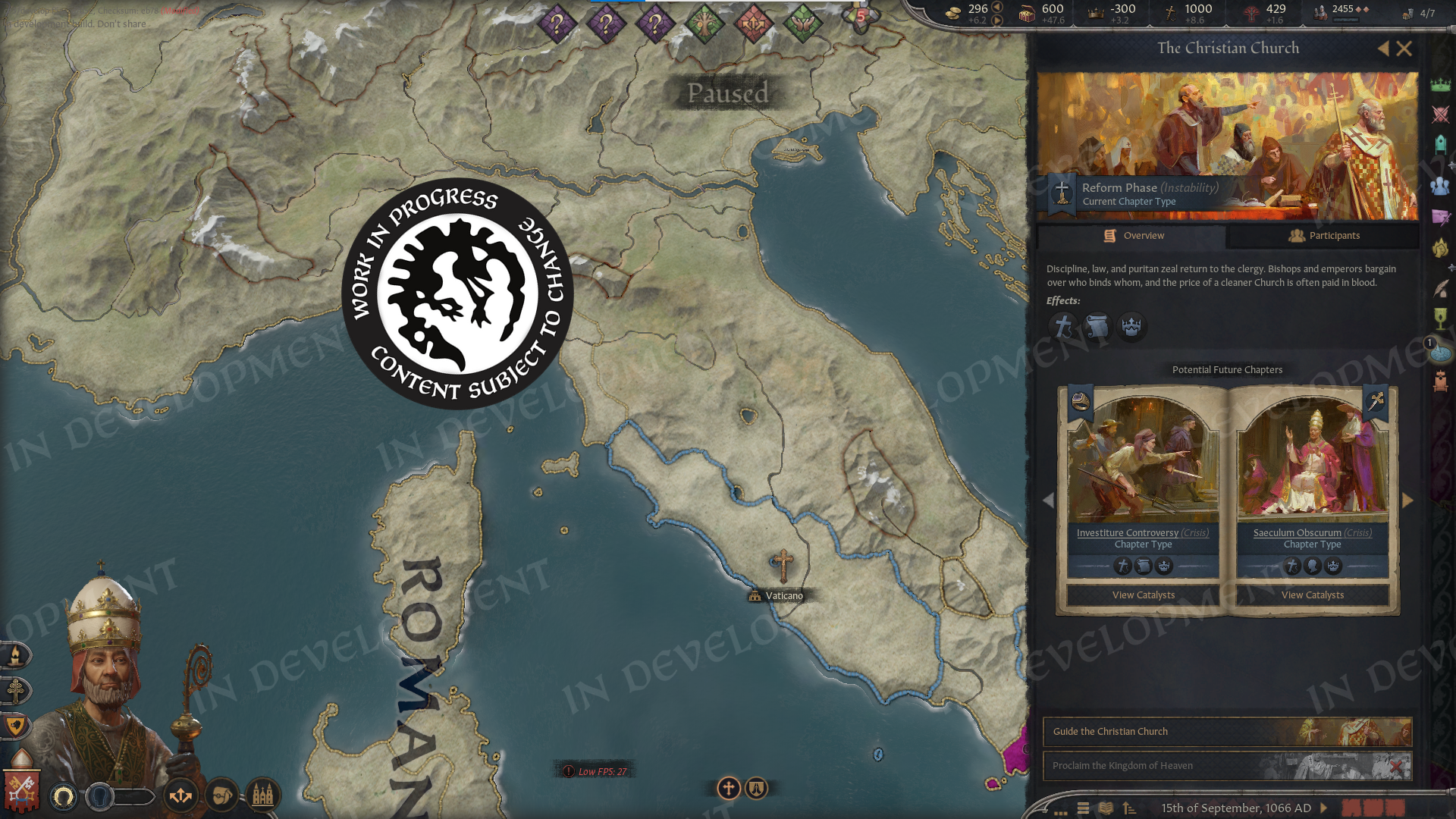 \[Please note that all images are Work in Progress and do not reflect the final result.]

The Situation's sub-region is Christendom: the sum of every independent Christian realm whose lands fall within an archdiocese. The Church may become bigger or smaller as archdioceses are created, expanded, or split.
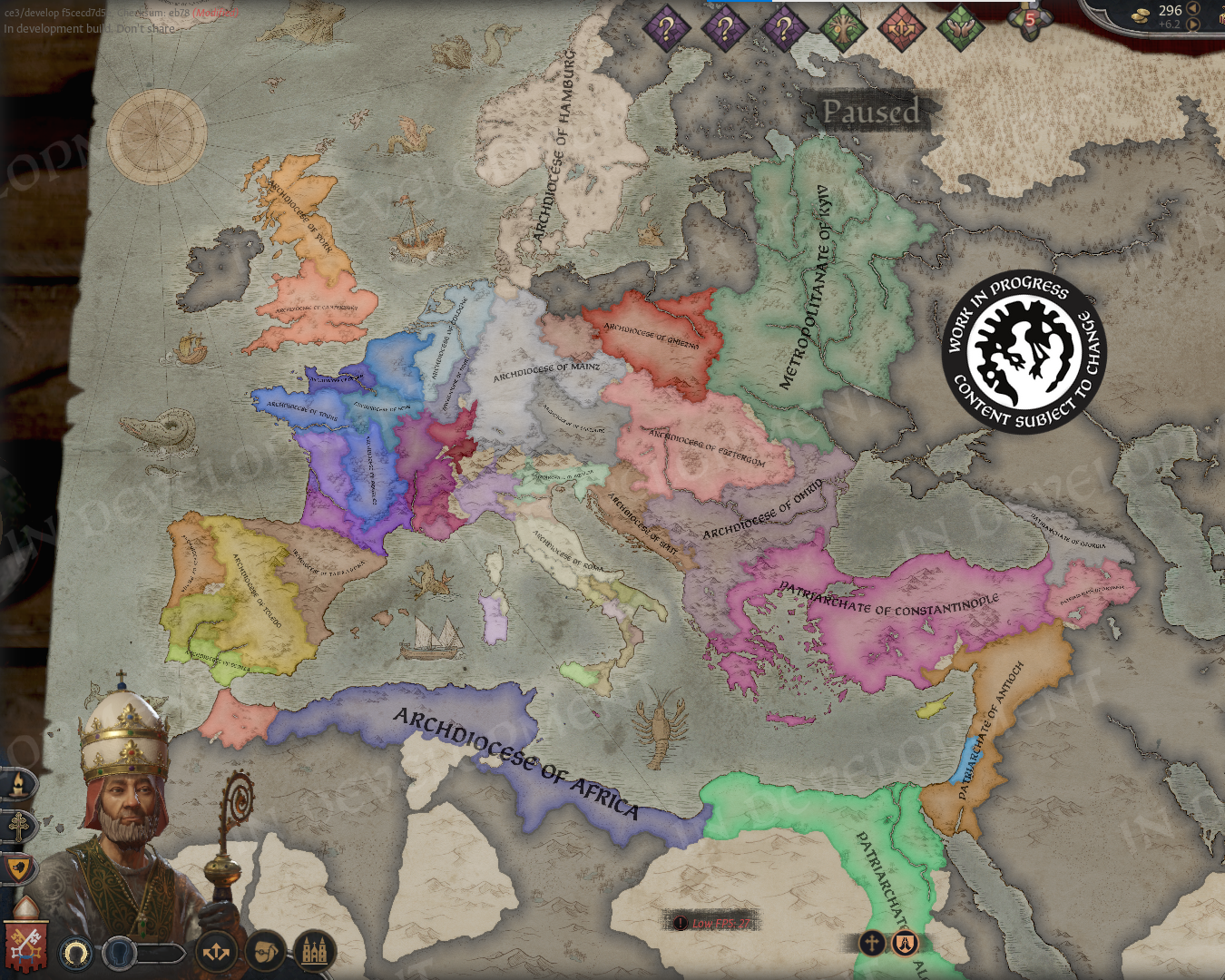 \[A map of all Clerical Titles (archdioceses, patriarchates and metropolitanates) in 1066.]

Not every Christian ruler experiences a Chapter (Situation Phase) the same way. Six participant groups split Christendom along three axes:
Clerical vs. Secular: are you an ecclesiastical or lay ruler?
Main Power vs. Secondary Powers: do you follow the Christian faith that currently holds the most counties in the world?
Ecumenical vs. Heretic: does your faith carry the ecumenical Christian doctrine, or are you a heretic?
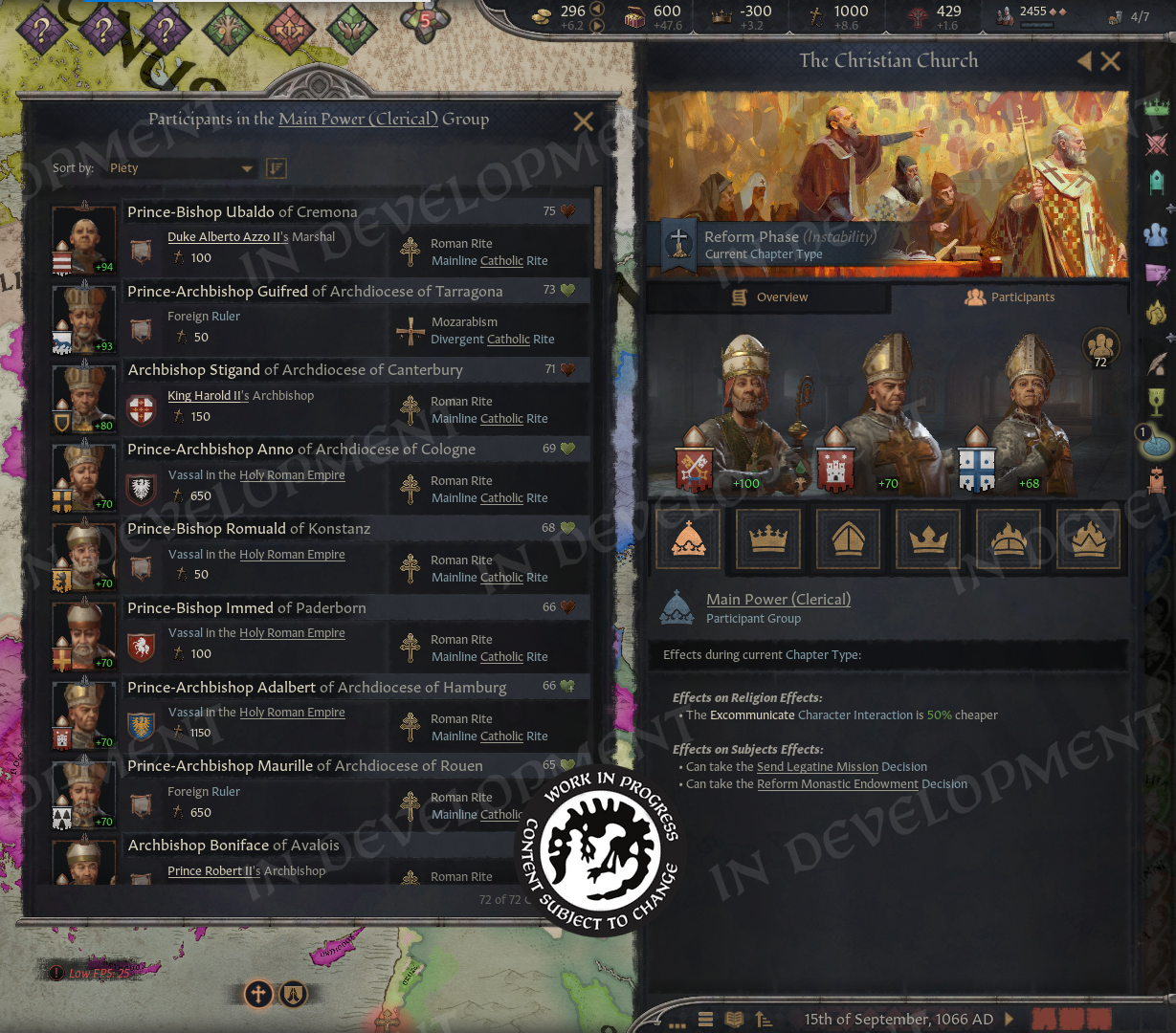
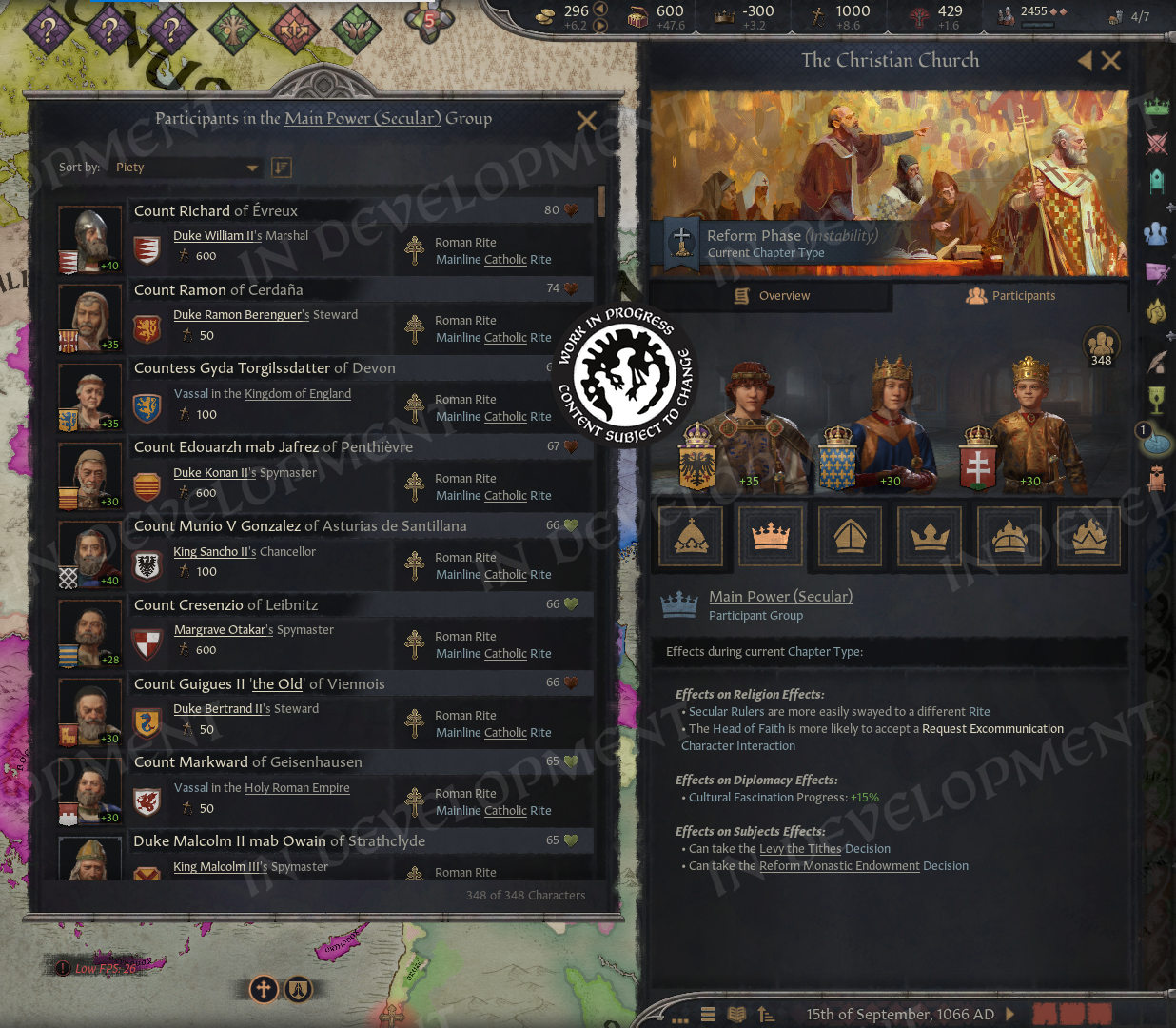
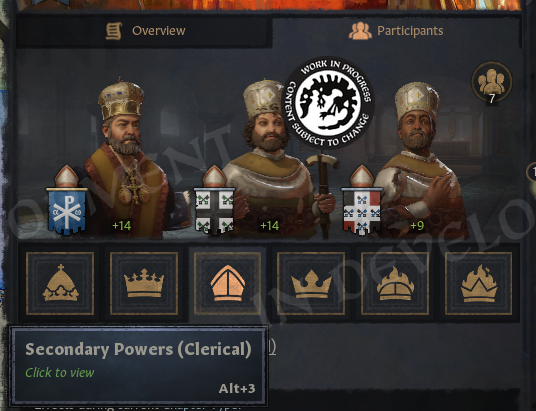
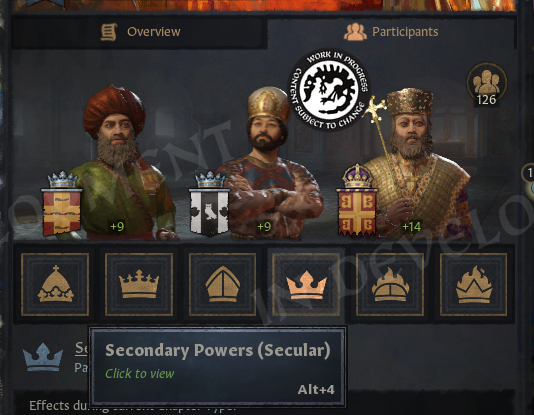
The Main Power faith is dynamic. It is recalculated whenever county faith changes across Christendom, stored as a Situation variable and refreshed automatically. When the Main Power changes (say, if Catholic counties are overtaken by Orthodox ones) that shift can itself become a Catalyst, and it can instantly push the Church into the Reform Phase.
Orthodox, in this case, would become the Main Power in the Christian Church, and obtain all the benefits that rulers in that group have.

We call the Church's phases Chapters. There are seven in total, each named after a recognizable era of Church history. Every Chapter belongs to one of four Chapter Types, which tell you the broad tone of the era:
Instability. Rulers are easier to sway to rites, excommunications fly, and gold has a way of leaving the treasury.
Crisis. The Church at its most scorched. Indulgences are cheaper, Ecumenical Councils more frequent, taxes suffer and (depending on the phase) even clergy may be able to marry.
Zeal. Mass conversion, cheaper bulls (more on that later), holy wars, and easier faith conversion.
Stability. Grand Cathedrals rise faster, characters take vows more readily, and emperors may even try to mend the Great Schism.

The 867 opening Chapter. Secular rulers sway more easily between rites; Main Power secular rulers gain a free Humiliation casus belli and easier claim requests from their Head of Faith.
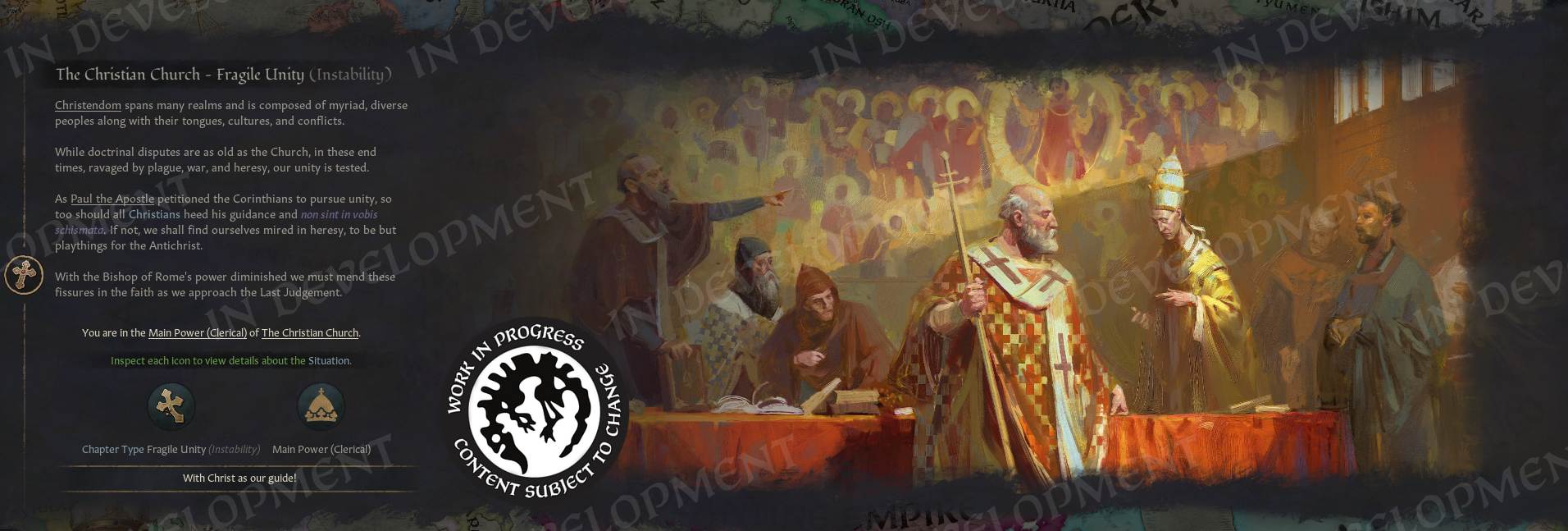
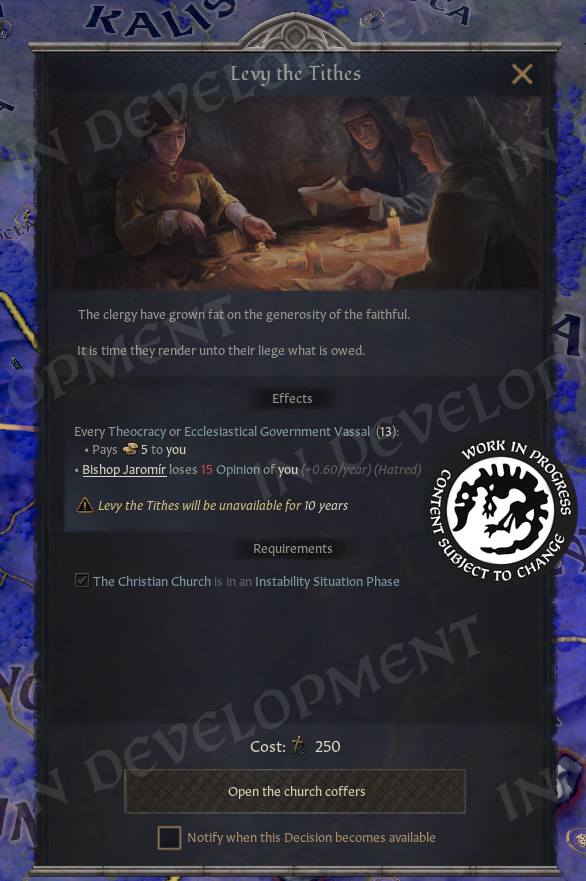
Clergy siphon treasury more effectively, and secular rulers of both Main and Secondary groups may Levy the Tithes through a dedicated decision to extract wealth from their ecclesiastical vassals (at risk of annoying the archbishop of your diocese).
Crisis deepens. Ecumenical councils and indulgences are cheaper.
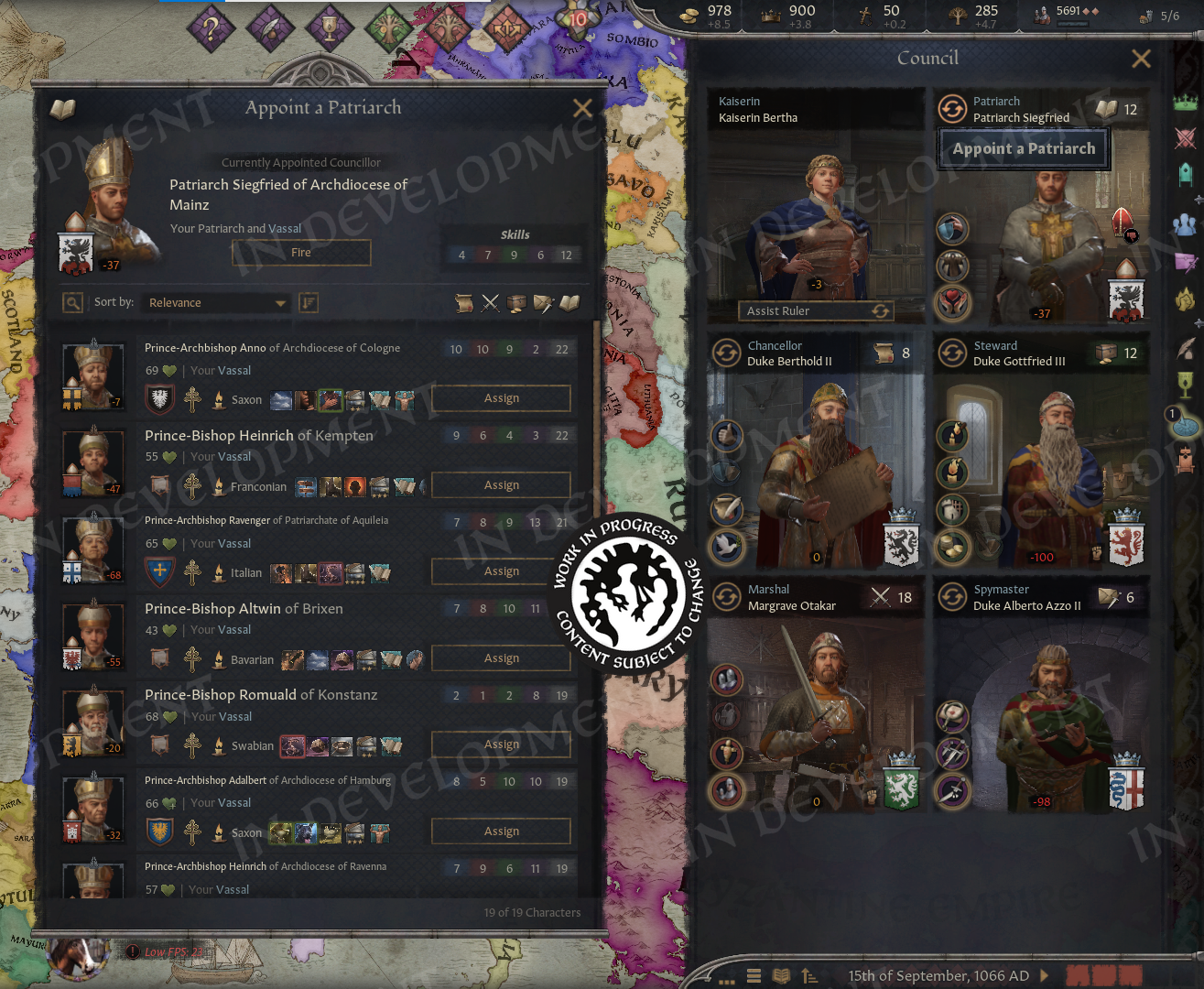 \[Secular rulers can appoint their own Court Chaplains during Saeculum Obscurum.]
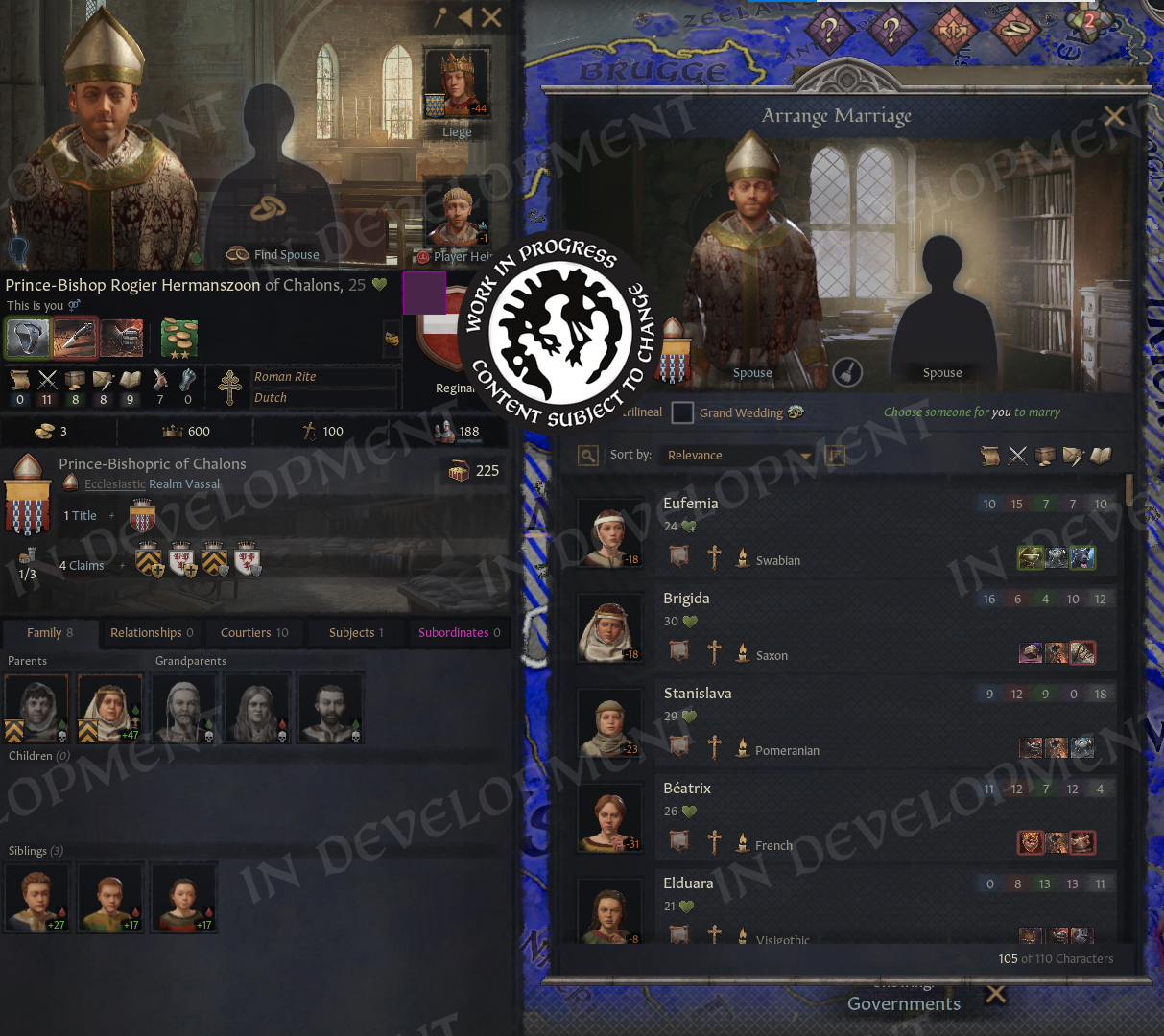 \[Clergy may marry, and they even get a seduction scheme bonus during this phase.]
Unless players have already resolved the schism through dedicated decisions, the Great Schism is created automatically at this Chapter's close, cementing the east–west fracture that will define later centuries.
The Main Power faith converts counties 50% faster and finds character conversion easier; everyone else converts 25% slower.
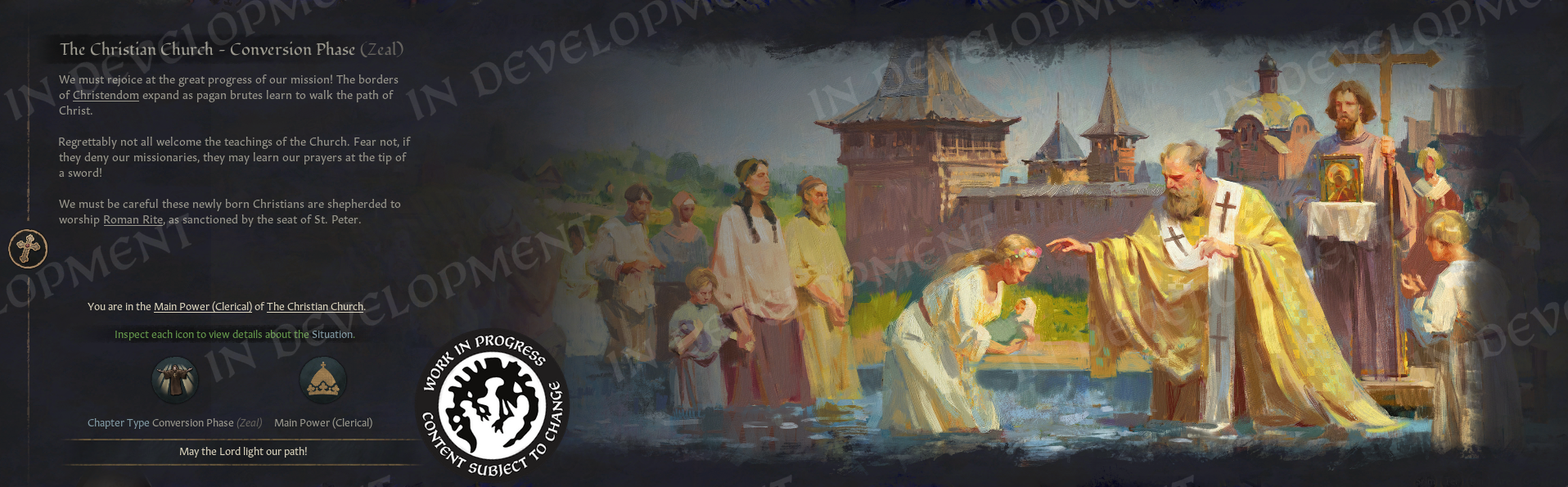
Clergy gain an extra personal and hostile scheme slot; bulls are also half price.
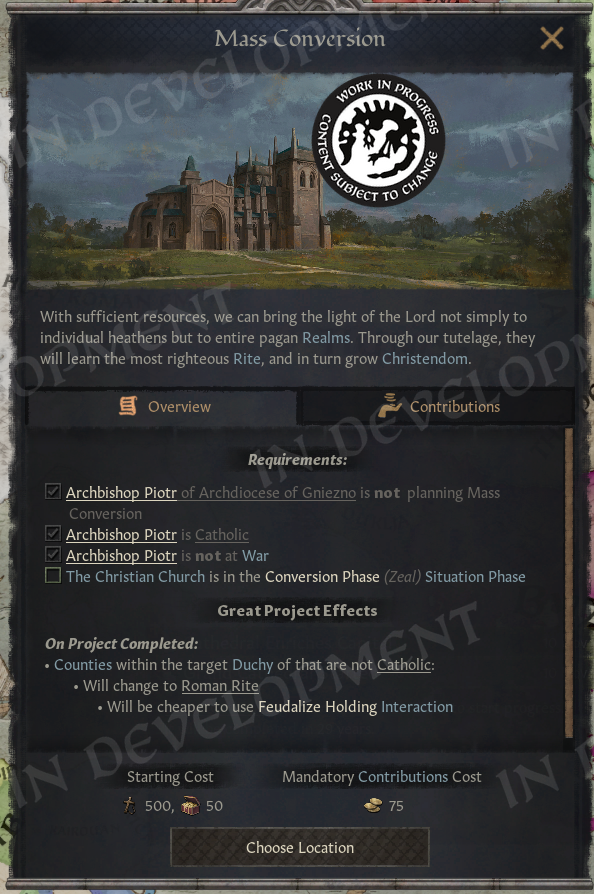
\[The Mass Rite Conversion great project becomes available as a coordinated push to bring borderlands into the faith.]
Excommunications are cheaper. Main Power secular rulers gain cultural head fascination.
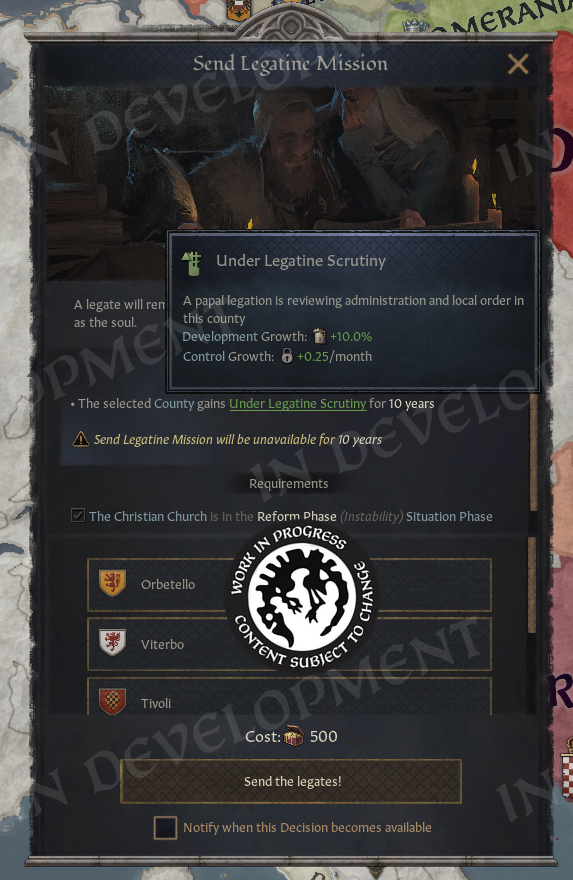
\[Clergy may send legatine missions to increase the development and control of their lands.]
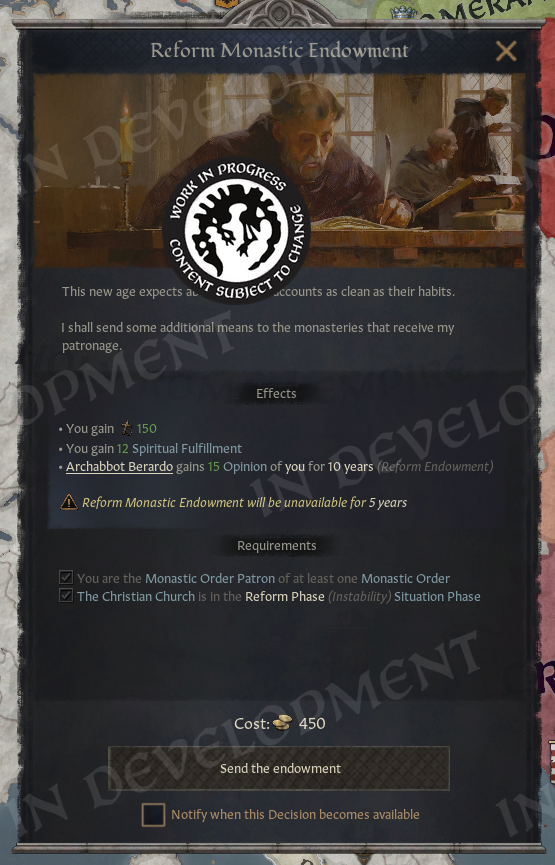
\[Monastic Order patrons may invest in their orders to increase their Piety and Spiritual Fulfillment, as well as their relationship with their head.]
As in Saeculum Obscurum, secular rulers may appoint Court Chaplains without papal approval, but they're not the only ones willing to abuse their power…
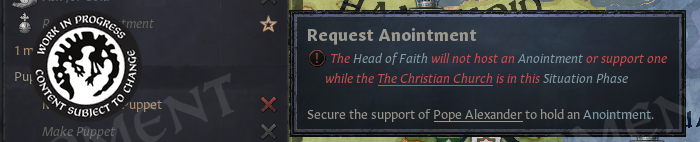
\[The head of faith refuses to host anointments.]
Clerical appointment interactions are cheaper, secular rulers suffer accelerating county control decline and clerical rulers see reduced feudal tax contributions.
When this Chapter begins, every Christian faith's great holy war cooldown is cleared. Holy site pilgrimages grant learning experience. Hiring Holy Orders is cheaper, and so are bulls; secular rulers gain access to cheaper religious wars and cheaper men-at-arms recruitment.
And…
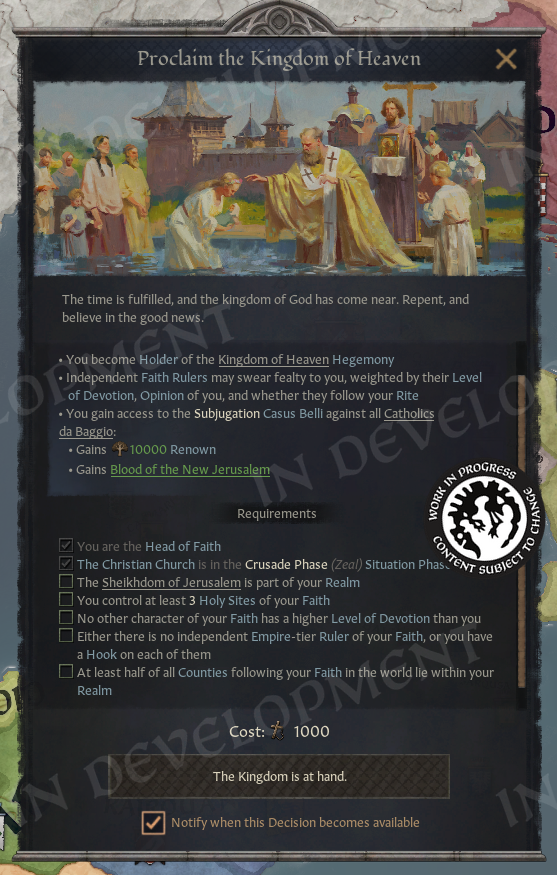
\[The Pope can now proclaim the Kingdom of Heaven!]
Grand Cathedral construction is faster, characters accept taking vows more readily. Church and domicile building costs fall across the board.
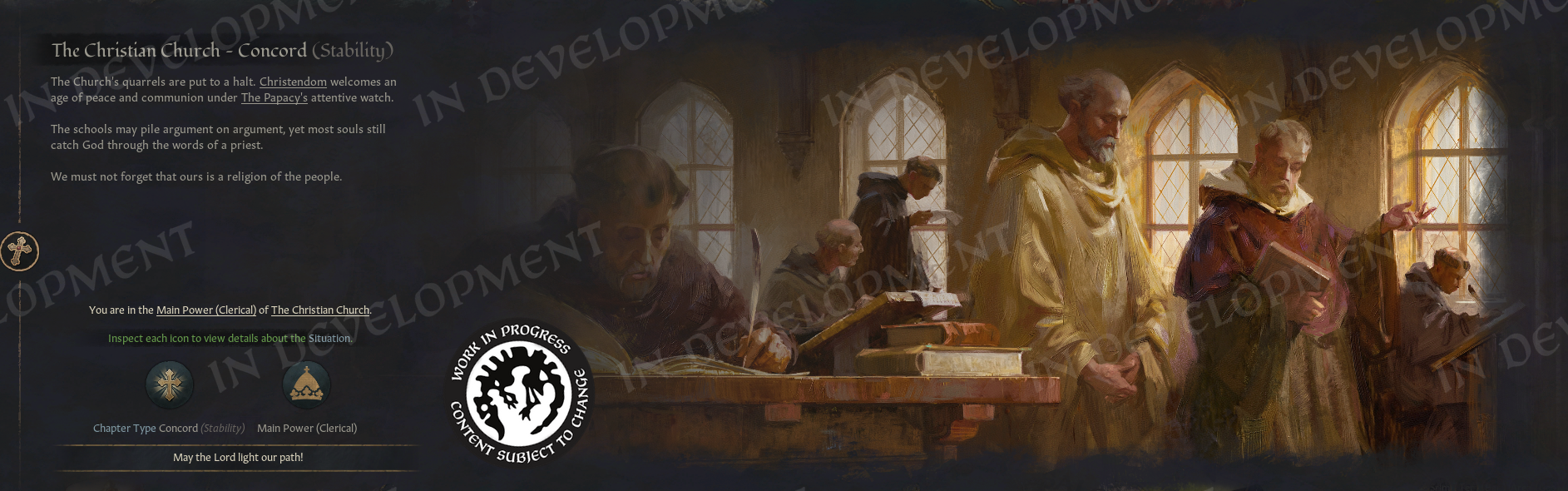
Christian kings or emperors may try to mend the Great Schism, heretics may seek communion. Theocratic heir candidacy is boosted; heads of faith lift excommunications more willingly.

From any current Chapter, only a limited set of future Chapters is available, which are shown as clickable books in the Situation window. Each future Chapter accumulates progress through Catalysts. When a Chapter reaches 1,000 points, it takes over.
Catalysts can be triggered by any eligible Christian ruler, with no limit on how many times each one fires. They are wired into the everyday fabric of CK3: marriages, murders, wars, county conversions, ecumenical councils, pilgrimages, great project contributions, heresy outbreaks, and more.
Some specially important events can also accelerate the pace dramatically.
If the Catholic head of faith does not control the de jure capital of the Papal States while Christendom is in Fragile Unity, Saeculum Obscurum triggers immediately.
Likewise, a change in Main Power faith during Saeculum Obscurum can snap the Church straight into the Reform Phase.
Examples of Catalysts by theme:
Clerical scandal: simony, embezzlement, clergy marrying or having children, head of faith murdered or marrying.
Secular interference: imprisoning a head of faith, ecclesiastical grant claims, replacing realm priests, lay investiture disputes.
Religious changes in the land: county conversions to or from Christianity, new or divergent rites, heresy outbreaks, clerical regions created or split.
War and holy sites: Jerusalem lost or reclaimed, great holy wars won or declared against Christians, humiliation wars, excommunication wars.
Shows of devotion: pilgrimages completed, cathedrals built, ecumenical councils hosted, mass rite conversion great projects.
Deliberate steering: the Guide the Christian Church decision is available to pious, learned, or powerful rulers every ten years at major piety cost. Choose which future Chapter you wish to push toward, and fire a massive Catalyst (+75 points) in that direction.
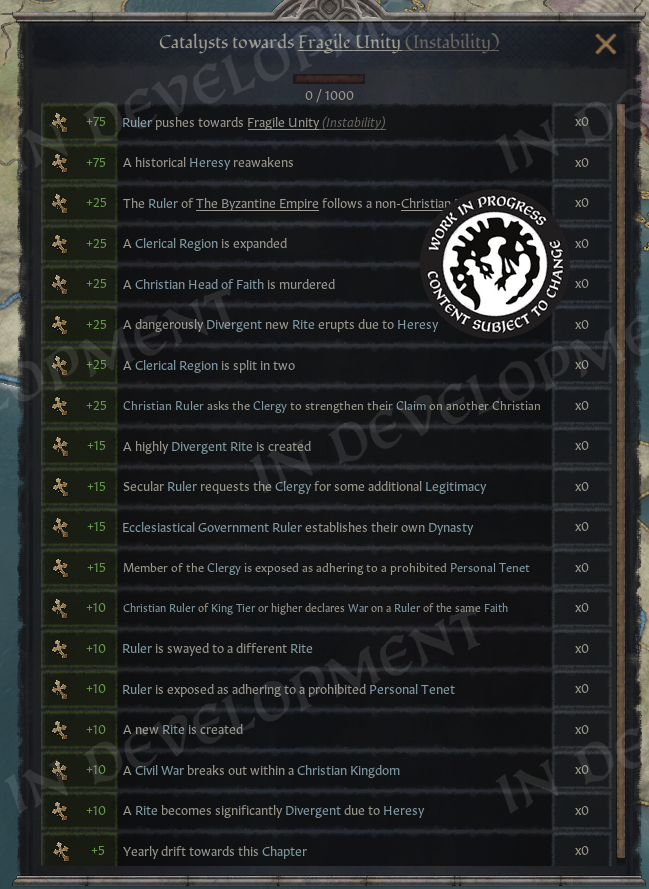
\[Examples of catalyst towards Fragile Unity.]

Bulls are the formal instrument by which the Bishop of Rome reshapes the faith without waiting for a council, a war, or a century of drift. They are one of the most direct ways a Catholic head of faith can steer the Church.
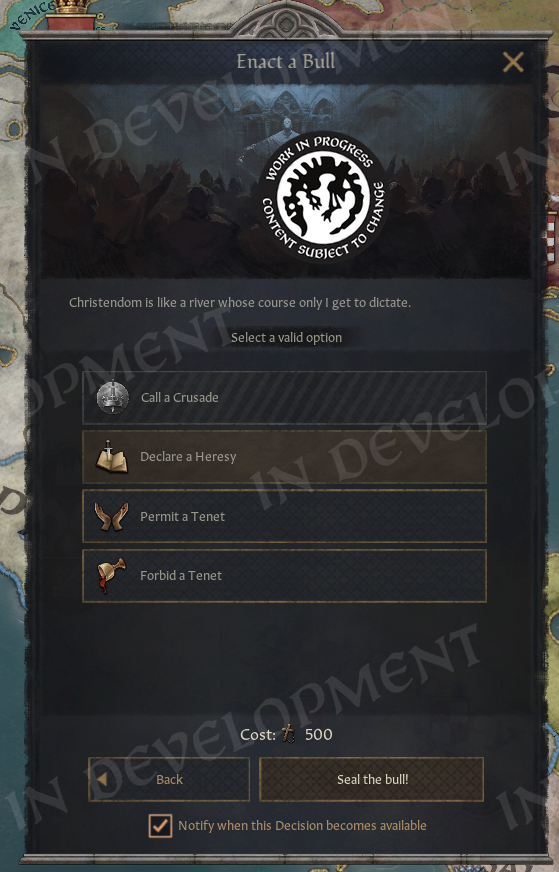
\[The four bull options.]
Only the Catholic head of faith may take the Enact a Bull decision. You must hold your head-of-faith title and have at least Limited Church Authority (or higher) as a realm law. The decision costs a major amount of piety and carries a five-year cooldown, so each bull should feel deliberate.
When you enact a bull, you first choose its purpose from four options. Each leads into a follow-up step: picking a crusade target on the map, selecting a rite to condemn, or choosing a tenet to permit or forbid.
Every ruler of the faith then receives a letter notification, so the realm knows what Rome has decreed.
The most dramatic bull. The Pope selects a hostile kingdom on the map as the target of a Great Holy War, then proclaims the crusade. The faith must already allow great holy wars, have a spiritual head, hold at least 60 fervor, and have no GHW already in progress. Of course, there must also be a valid hostile kingdom to target.
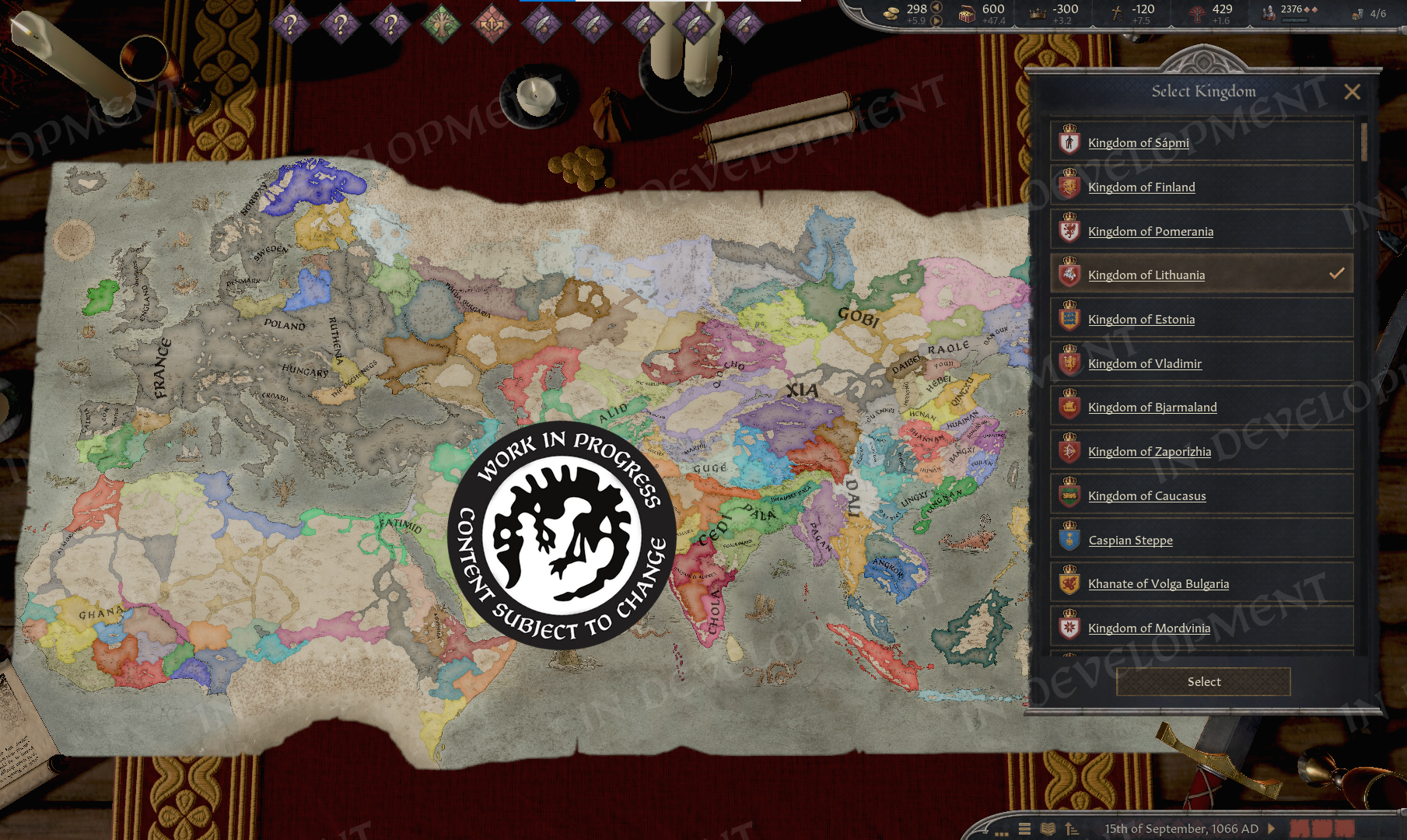 \[Any valid hostile kingdom may be selected as a crusade target.]
Normally, calling a crusade by bull requires High Church Authority or better. During the Crusade Phase of the Christian Church Situation, that requirement is waived: when Christendom is already ablaze with crusading fervor, the Pope may call the cross even under looser church authority.
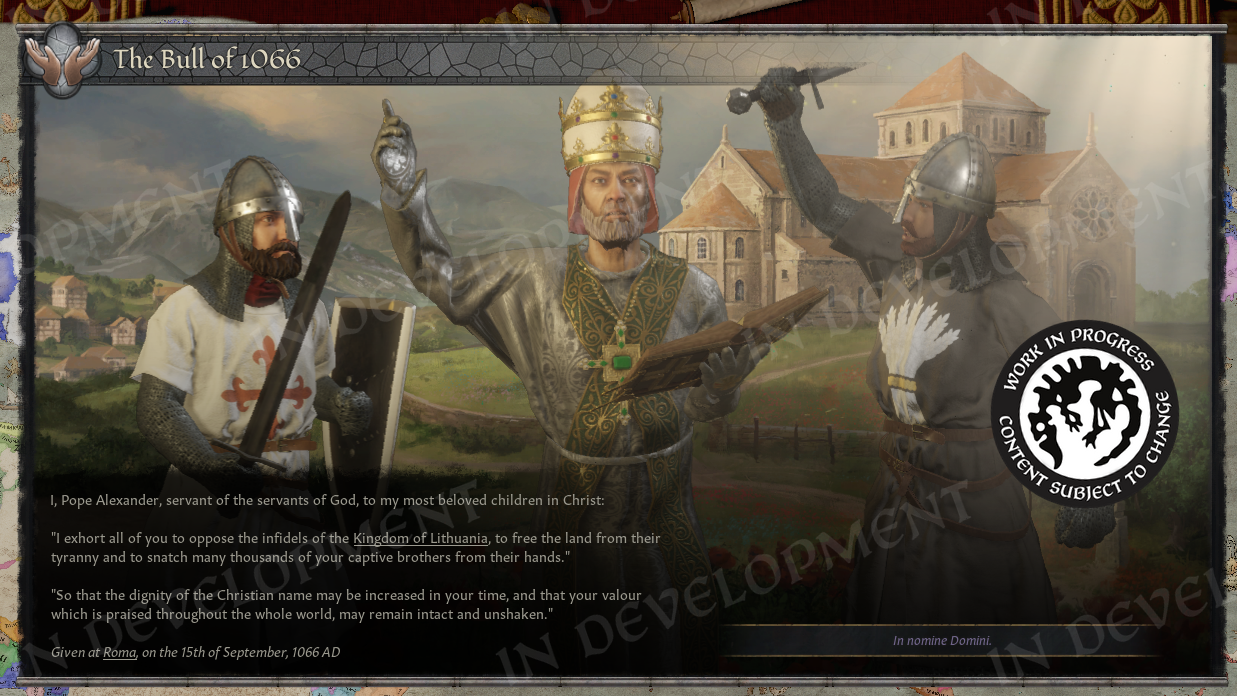 \[The Pope calls a crusade for Lithuania.]
When a rite within Catholicism has diverged far enough from the main rite, the Pope may issue a bull condemning it. The condemned rite becomes a new heretical faith, its head is branded a Heresiarch, and ecumenical status is stripped.
Catholic fervor rises; rulers of the condemned rite receive a letter and may choose to convert to the Pope’s rite rather than remain under anathema.
The Pope may elevate a known tenet from obscurity to permitted status within the rite, opening new doctrinal room for the faithful. The faith pays for flexibility with a significant fervor loss.
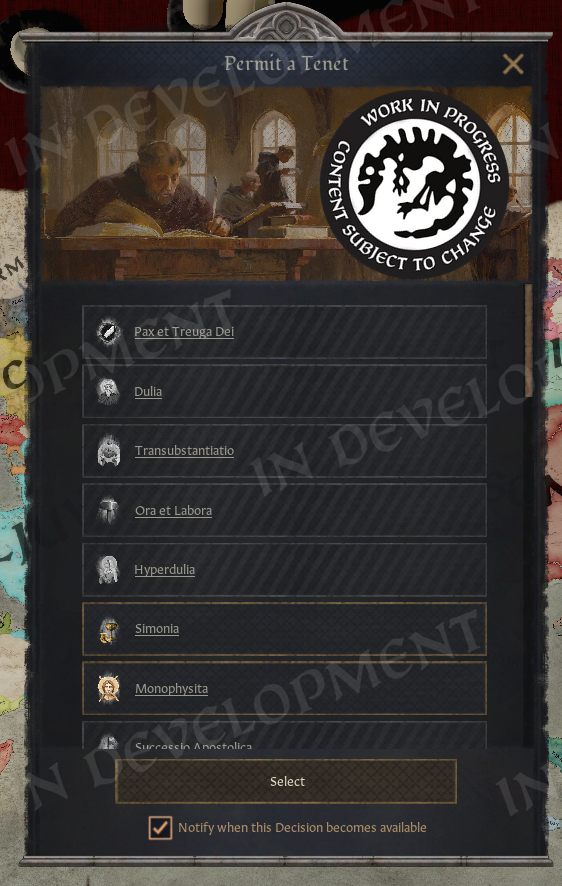
\[The list showcases all tenets personally known to the Pope.]
The reverse: a tenet is declared prohibited, tightening doctrine and granting a notable fervor gain as the Church reaffirms its boundaries.
We hope you enjoy steering (or surviving) the Chapters of Christendom.
As always, we look forward to your feedback (and do keep in mind that extra effects and/or catalysts may still get added)
What's Your Reaction?










![[Business Talk] Chagee: Opening 3,500 stores in 6 years](https://xinker.org/uploads/images/202410/image_140x98_671afce94bf91.webp)