
![[PRO Tips] Gold’s Bullish Revival: Seasonal Trends and Key Levels to Watch](https://xinker.org/uploads/images/202412/image_430x256_67724cc6ad0cd.webp)
![[PRO Tips] Gold Market Under Short-Term Pressure, Safe-Haven Demand and Central Bank Buying Support Long-Term Upside Potential](https://xinker.org/uploads/images/202412/image_430x256_676ffb4685287.webp)
![[PRO Tips] Analysis of 9 key points of differentiation strategy! Master differentiation to create a brand advantage that is unique in the world!](https://firebasestorage.googleapis.com/v0/b/xinker-tips.appspot.com/o/article_thumbnails%2Fscaled_differentiation%20strategy.png.png?alt=media&token=a1bfc3d2-e85a-4db7-8a6d-01c7274f8940)
![[PRO Tips] Will REITs regain growth momentum in 2024? 3 REITs ETFs you must know if you want to invest in real estate.](https://firebasestorage.googleapis.com/v0/b/xinker-tips.appspot.com/o/article_thumbnails%2Fscaled_REITs1.png.png?alt=media&token=8af4eb93-33ff-466f-8039-b6555fad52b4)
![[PRO Tips] Complete tutorial on how to make money in Adobe Stock!](https://firebasestorage.googleapis.com/v0/b/xinker-tips.appspot.com/o/article_thumbnails%2Fscaled_tut-adobe1.png.png?alt=media&token=0b2c8cf2-22bd-4142-883e-140ed1cbaf02)
![[Passive Income] Unlock the secret of passive income: 3 steps to apply for Google AdSense](https://xinker.org/uploads/images/202410/image_430x256_6717a4fb3052b.webp)
![[Passive Income] Earn over $200 a day with AI-generated articles!](https://firebasestorage.googleapis.com/v0/b/xinker-tips.appspot.com/o/article_thumbnails%2Fscaled_article1.png.png?alt=media&token=f61bf35b-8553-4719-826d-7360024adc70)
![[Passive Income] Earn over 20 USD per download with AI-generated images!](https://firebasestorage.googleapis.com/v0/b/xinker-tips.appspot.com/o/article_thumbnails%2Fscaled_adobe2.png.png?alt=media&token=3e20e76a-a907-45af-80aa-bf9b3600301f)
![[Passive Income] Earn 10 USD per new download by sharing CapCut!](https://firebasestorage.googleapis.com/v0/b/xinker-tips.appspot.com/o/article_thumbnails%2Fscaled_capcut2.png.png?alt=media&token=a04dec40-1fac-4857-86f2-19a8be02d38e)
![[Passive Income] Use your WiFi to create passive income in 5 minutes, and you can earn 4-6 U per day!](https://firebasestorage.googleapis.com/v0/b/xinker-tips.appspot.com/o/article_thumbnails%2Fscaled_Grassio.webp.png?alt=media&token=7659a95e-0e47-4f27-a17d-c942ac3cf7f4)


![[Business Talk] The Unique Theme of XINKER's Song: Beef Wellington and Business Mastery](https://xinker.org/uploads/images/202410/image_430x256_671afc155f47f.webp)
![[Business Talk] Chagee: Opening 3,500 stores in 6 years](https://xinker.org/uploads/images/202410/image_430x256_671afce80c5f9.webp)

As Bungie closes the book on Destiny, we weigh the legacy of the best, worst, and most brilliantly boring FPS of its era
Everyone who has played Destiny will tell you a story about it. They'll probably have a few, actually, but ask them to pick their most memorable and it will likely be the tale of how they got their first Gjallarhorn, the all-conquering rocket launcher that made mincemeat of just about everything during Destiny's first year. We doubt many can beat the story of the member of our raid team who got theirs by stopping on the approach to a loot chest deep in the Vault Of Glass, and firing their entire supply of rockets at it. Stepping up to open it, out popped Gjallarhorn. For weeks afterwards, the other five raiders would unleash rocket after rocket at the luckily impervious chest in the hope of seeing it spit out Destiny's most prized reward. Such were the lengths we went to, in those early days, to tip the odds in our favour. Destiny launched in September 2014, and within days it had become starkly apparent that this was not the game we had dreamed of, or the one Bungie had promised it would be. Its story, if you could call it that, was over in a flash. Our character hit the level cap of 20 within days, and it seemed there was nothing left to do. A pop-up window that appeared after we hit level 20 hinted at a new purpose – the pursuit of Light, the true measure of a Destiny Guardian's power – but the only way to raise it was to play, again and again, levels and missions that we felt we had already picked clean. (Image credit: Bungie) In the absence of anything new to do, Bungie gave us punishing difficulty and a miserly random loot system. The weekly Nightfall Strike, for instance – a ramped-up version of an existing mission with tougher enemies and a selection of cruel gameplay modifiers – offered up one of the best loot tables in the game, with a reasonable chance of dropping legendary and exotic gear upon completion. Yet enemies would frequently appear at a level or two higher than you could ever reach, and if all three team members died, they'd be kicked to orbit, and would have to start over from scratch. Faced with those odds, it's little surprise that players did what they could to cheat the system. One Nightfall boss could be killed by hiding beneath a raised platform, shooting through a small gap that enemy ordnance couldn't fit through, using Ice Breaker, a sniper rifle whose ammo replenished automatically over time. It worked, but playing Destiny this way was slow, boring, and not in the spirit of the game, so Bungie patched it. It did likewise for the infamous loot cave, a small opening in a rockface in Old Russia's Skywatch zone from which enemies constantly spawned, and into which players would empty clip after clip, standing stock still until their supplies ran dry. Destiny was the first game in Bungie's 10-year deal with Activision, but the game would likely have died, and the contract been ripped up, within weeks of launch were it not for the Vault Of Glass. VOG, to use the Destiny community's affectionate shorthand for the game's first raid, launched a week after the base game – just long enough for the committed player to reach the recommended level 26. Even now, four expansions and three more raids later, VOG is held up as the best Destiny – and co-op console gaming in general – has to offer. Vault of Glass (Image credit: Bungie) It was clear from the start that this was different to everything else in Destiny, whose missions until now had been linear excursions between objective markers, with variously sized gunfights building to a battle against a bullet-sponge boss. Yet VOG opened by asking a six-strong team to split up and hold three capture points from incessantly spawning enemies. Inside there were boss fights, yes, but they were no mere shootouts. Each had a set of exacting mechanics to learn, to devise a solution to, and to conquer. In between there was light relief – a frequently hilarious platforming puzzle with disappearing scenery, which even now is all too easy to mess up – and a marvellously fraught stealth maze whose patrolling Gorgon enemies would instakill anyone they laid eyes on. VOG was difficult, yes: the first team in the world to clear it took over 10 hours. But it was the most rewarding activity Destiny had to offer, both figuratively – the sense of satisfaction after you and five friends finally clear a difficult section is part of what makes Destiny so special – and literally, as some of the best loot in the game flooded into your inventory after each boss was vanquished. And what loot it was. The armour on offer was, at the time, the only route to the true level cap of 30. And the guns were, aside from the more widely available Gjallarhorn, the best available. There's never been a hand cannon like Fatebringer: it had the Firefly perk, which caused enemies killed by headshots to explode, dealing heavy damage to those around it, and Outlaw, which greatly increased reload speed after a precision kill. It was more than a gun: it was a game in itself, training
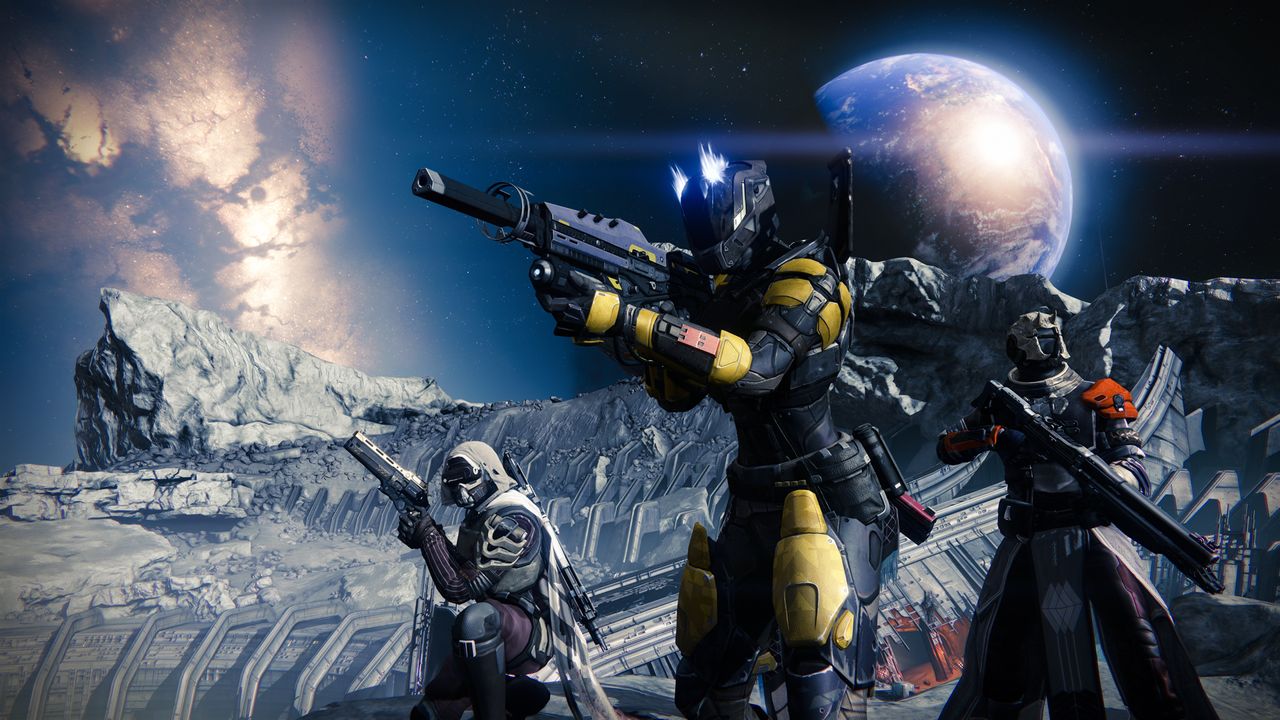 Everyone who has played Destiny will tell you a story about it. They'll probably have a few, actually, but ask them to pick their most memorable and it will likely be the tale of how they got their first Gjallarhorn, the all-conquering rocket launcher that made mincemeat of just about everything during Destiny's first year. We doubt many can beat the story of the member of our raid team who got theirs by stopping on the approach to a loot chest deep in the Vault Of Glass, and firing their entire supply of rockets at it. Stepping up to open it, out popped Gjallarhorn. For weeks afterwards, the other five raiders would unleash rocket after rocket at the luckily impervious chest in the hope of seeing it spit out Destiny's most prized reward.
 Such were the lengths we went to, in those early days, to tip the odds in our favour. Destiny launched in September 2014, and within days it had become starkly apparent that this was not the game we had dreamed of, or the one Bungie had promised it would be. Its story, if you could call it that, was over in a flash. Our character hit the level cap of 20 within days, and it seemed there was nothing left to do. A pop-up window that appeared after we hit level 20 hinted at a new purpose – the pursuit of Light, the true measure of a Destiny Guardian's power – but the only way to raise it was to play, again and again, levels and missions that we felt we had already picked clean.
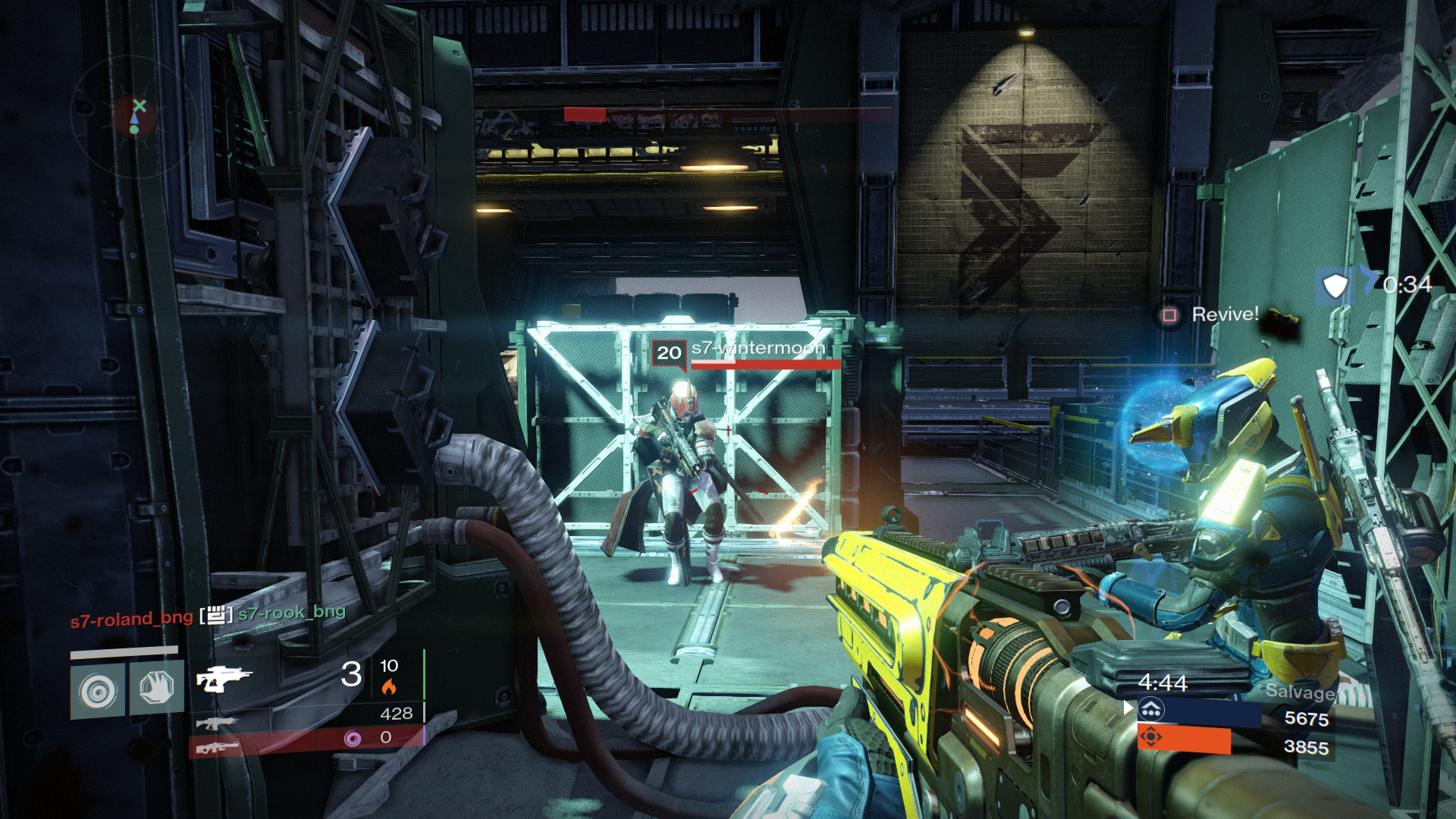
(Image credit: Bungie) In the absence of anything new to do, Bungie gave us punishing difficulty and a miserly random loot system. The weekly Nightfall Strike, for instance – a ramped-up version of an existing mission with tougher enemies and a selection of cruel gameplay modifiers – offered up one of the best loot tables in the game, with a reasonable chance of dropping legendary and exotic gear upon completion. Yet enemies would frequently appear at a level or two higher than you could ever reach, and if all three team members died, they'd be kicked to orbit, and would have to start over from scratch.
Faced with those odds, it's little surprise that players did what they could to cheat the system. One Nightfall boss could be killed by hiding beneath a raised platform, shooting through a small gap that enemy ordnance couldn't fit through, using Ice Breaker, a sniper rifle whose ammo replenished automatically over time. It worked, but playing Destiny this way was slow, boring, and not in the spirit of the game, so Bungie patched it. It did likewise for the infamous loot cave, a small opening in a rockface in Old Russia's Skywatch zone from which enemies constantly spawned, and into which players would empty clip after clip, standing stock still until their supplies ran dry.
Destiny was the first game in Bungie's 10-year deal with Activision, but the game would likely have died, and the contract been ripped up, within weeks of launch were it not for the Vault Of Glass. VOG, to use the Destiny community's affectionate shorthand for the game's first raid, launched a week after the base game – just long enough for the committed player to reach the recommended level 26. Even now, four expansions and three more raids later, VOG is held up as the best Destiny – and co-op console gaming in general – has to offer.
Vault of Glass
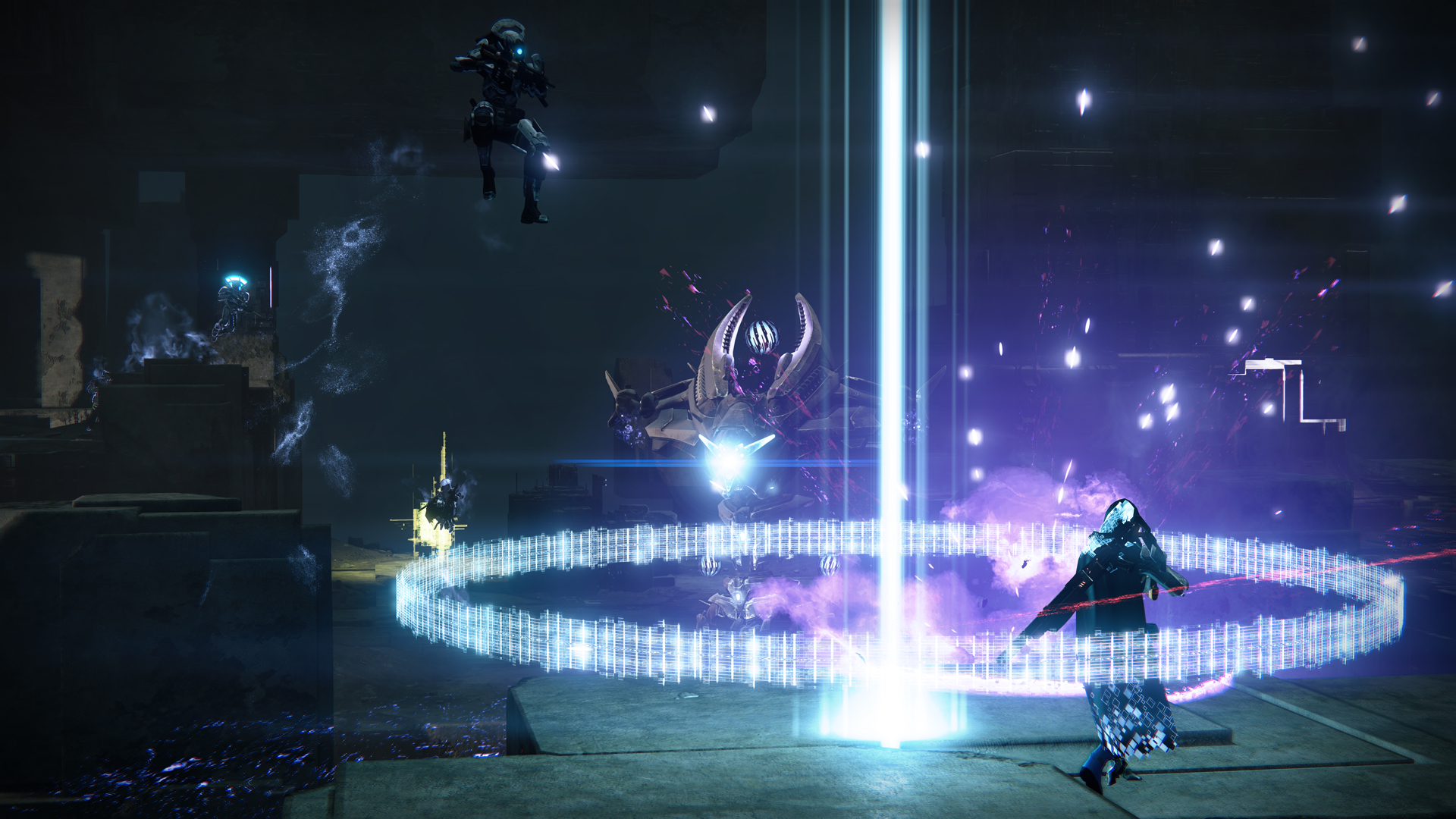
(Image credit: Bungie) It was clear from the start that this was different to everything else in Destiny, whose missions until now had been linear excursions between objective markers, with variously sized gunfights building to a battle against a bullet-sponge boss. Yet VOG opened by asking a six-strong team to split up and hold three capture points from incessantly spawning enemies. Inside there were boss fights, yes, but they were no mere shootouts. Each had a set of exacting mechanics to learn, to devise a solution to, and to conquer.
In between there was light relief – a frequently hilarious platforming puzzle with disappearing scenery, which even now is all too easy to mess up – and a marvellously fraught stealth maze whose patrolling Gorgon enemies would instakill anyone they laid eyes on. VOG was difficult, yes: the first team in the world to clear it took over 10 hours. But it was the most rewarding activity Destiny had to offer, both figuratively – the sense of satisfaction after you and five friends finally clear a difficult section is part of what makes Destiny so special – and literally, as some of the best loot in the game flooded into your inventory after each boss was vanquished.
And what loot it was. The armour on offer was, at the time, the only route to the true level cap of 30. And the guns were, aside from the more widely available Gjallarhorn, the best available. There's never been a hand cannon like Fatebringer: it had the Firefly perk, which caused enemies killed by headshots to explode, dealing heavy damage to those around it, and Outlaw, which greatly increased reload speed after a precision kill. It was more than a gun: it was a game in itself, training you to pick your shots, and rewarding you for doing so by killing four other enemies in the vicinity, then refilling your clip in a split second. It's simply one of those guns – Doom 2's super shotgun, Titanfall's smart pistol, and so on – that will be talked about for years.
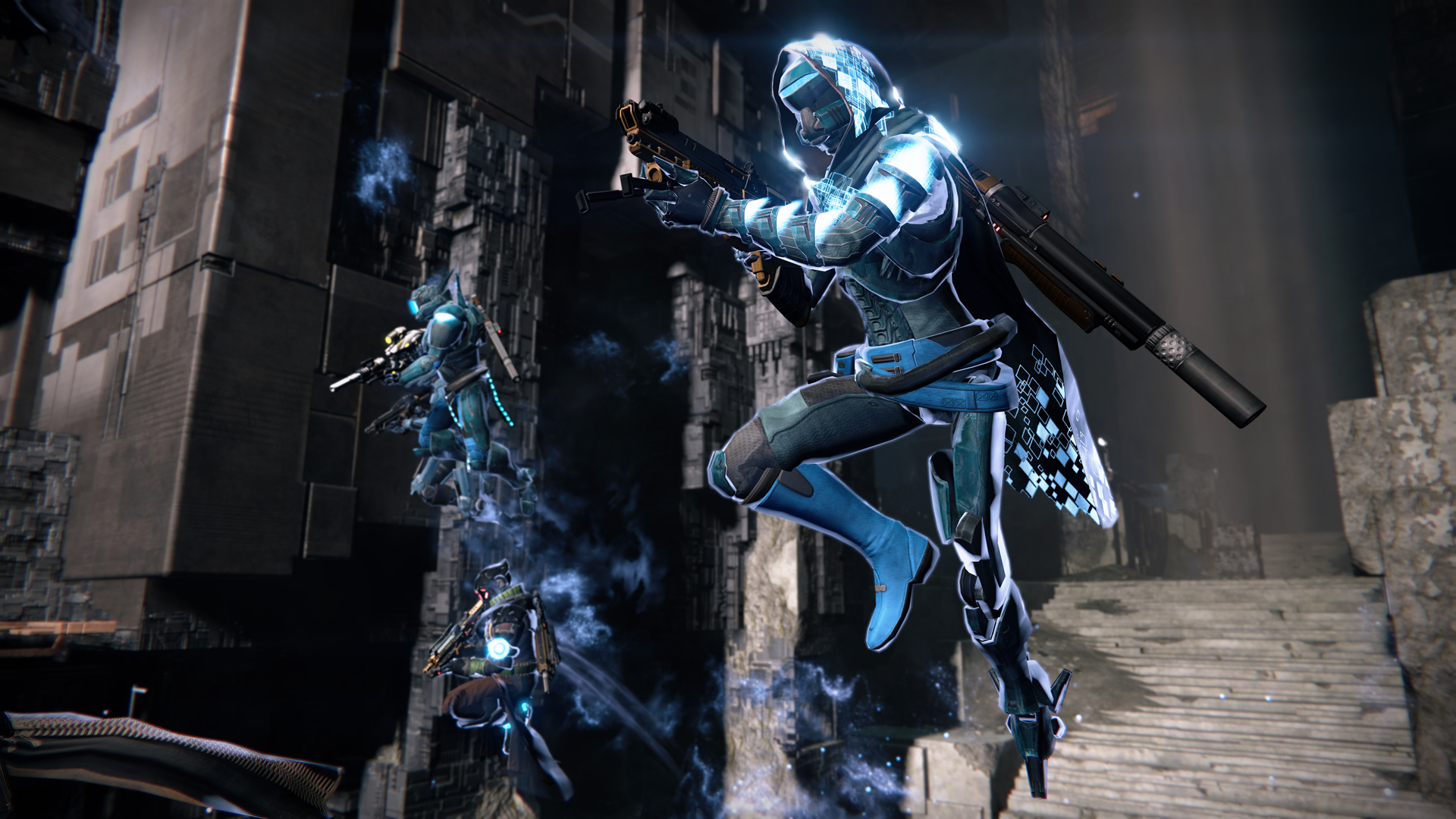
(Image credit: Bungie) Yet for all that VOG was a masterclass in design, and the gear that dropped from it a delight, it also exposed two of Destiny's greatest problems. The first is that a handful of guns were overpowered, to the extent that anything else was considered a waste. When the hard-mode version of Crota's End, the second Destiny raid, launched, it was widely accepted that the final boss fight was as good as impossible without a full team of Gjallarhorn owners. Matchmaking websites, created to help players assemble raid teams – there was no such facility in the game itself – hosted listings with strict team requirements, almost all of which insisted on applicants being max-level and with Gjallarhorn in their inventory.
The second problem was, inevitably, RNG. Since VOG was, for a spell, the gatekeeper to the level cap, you were reliant on the game granting you a full set of raid armour. Many were left looking for just one piece (for most, weirdly, it was a pair of boots). The hunt spawned a meme, 'Forever 29' – one drop short of the maximum level of 30. A wounded Bungie has been working to make amends ever since.
(Image credit: Bungie) Indeed, the studio has worked tirelessly on these two distinct problems, struggling to balance a set of weapons that must fulfil two very different needs – in PVE, being overpowered is fun, but in PVP, it's ruinous – while reducing Destiny's reliance on a random-number generator. It's been largely successful: in its final form, Destiny is the fairest it's ever been. Guns are finely balanced. Loot still drops randomly, but the most powerful gear is available through fixed, clearly explained (though typically long-winded) means. Everyone can reach the level cap by simply playing what is now a very generous, accommodating game. There's little to complain about in Destiny today. But it's missing something, too.
Randomness is a powerful thing. And for the first 12 months Destiny was defined by RNG – powered by it, propped up by it, the reason we loved it and hated it and kept on playing it anyway, going into work the next day bleary-eyed, disappointed and itching to get back to it. The weeks or months of waiting for your raid boots, or Gjallarhorn, made the eventual payoff all the sweeter.
Better Together
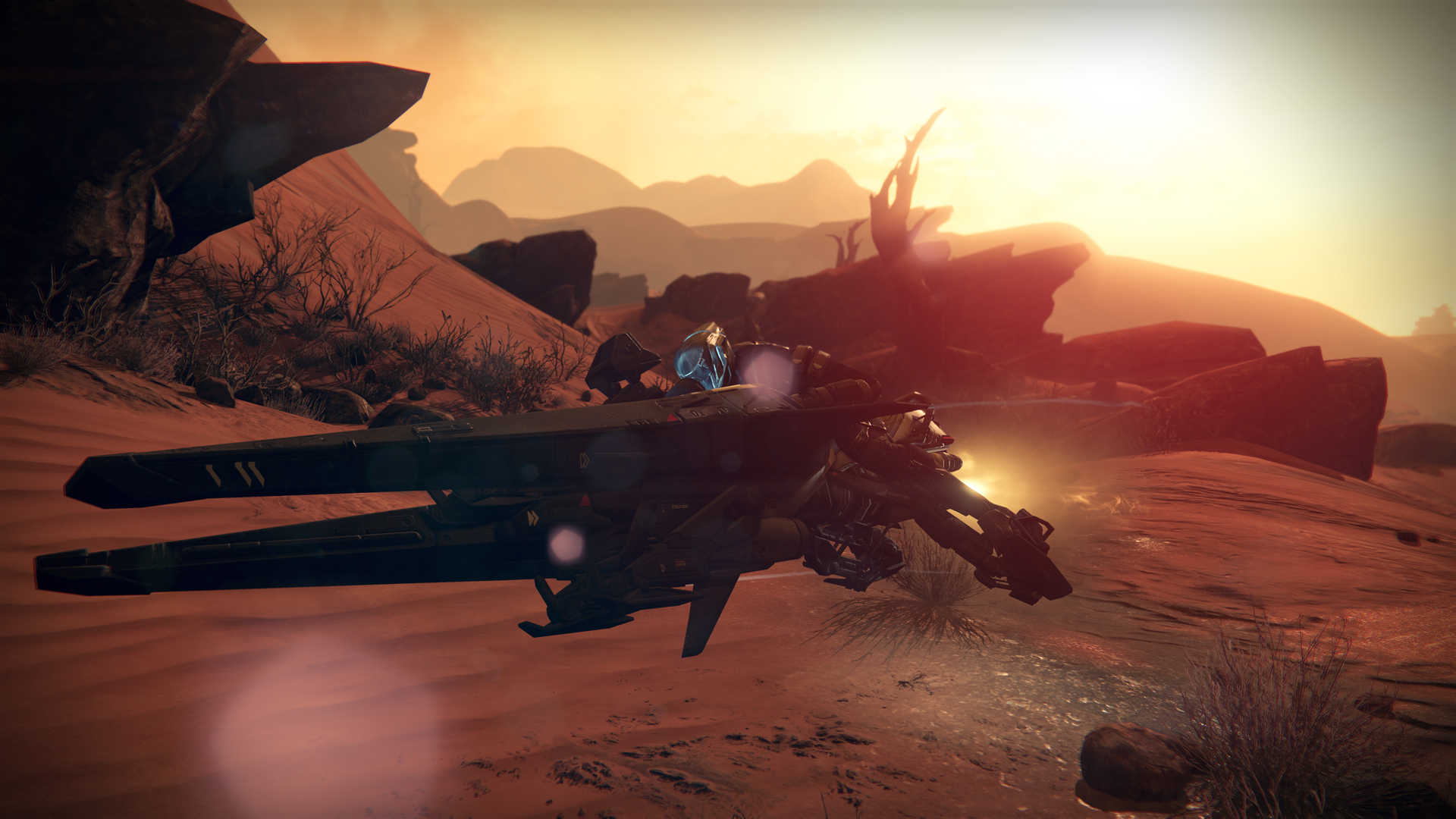
(Image credit: Bungie) The pain may have stopped, but we didn't. Once you'd got all the gear you really needed you carried on anyway, playing and replaying the same old missions. Routes and enemy patterns had long been committed to memory, your god-tier weapons making mincemeat of them all. Luke Smith – the Bungie staffer who designed VOG, Destiny's first and best raid, directed The Taken King, its best expansion, and went on to lead development of Destiny 2 – once described Destiny as "the bar I can go to in my pyjamas", and it remains the most succinct explanation of the game's appeal.
A few sphincter-clenching raid sections aside, it's the most laid-back game about shooting alien monsters you could possibly imagine. The advantage to having so little content was that, if you played it enough times, you could do it without thinking about it. It's a highly social game, with a largely friendly community – the kind that forms when players come together to see off some of the toughest challenges in video games, then spend a couple of hours popping Cabal heads, farming upgrade materials and talking about their days to wind down.
None of this would have happened had Destiny not been one of the best FPS games around. Not even the magic of VOG would've saved Destiny had there not, beneath the miserly loot system, the wet fart of a story and the content drought, been a rock-solid FPS. We expected great gunplay from the maker of Halo, but Destiny's true mechanical magic lies in the way it borrows from the best MMOs – with its cooldowns and super moves, its deeply customisable subclasses – and uses them to create something that subverts, and elevates, our expectations of the FPS.
That foundation carried the game through three years of peaks and troughs. And as we finally close the book on Destiny, the lingering impression is not one of a shooter, or even an RPG – but a game that somehow managed to be the best when it was, by any objective standard, its absolute worst.
This article was first published in 2017, in issue 308 of Edge Magazine. If you're interested in receiving more stories just like this one, subscribe to Edge Magazine.
[/url]
What's Your Reaction?








XINKER - Business and Income Tips
Explore XINKER, the ultimate platform for mastering business strategies, discovering passive income opportunities, and learning success principles. Join a community of thinkers dedicated to achieving financial freedom and entrepreneurial excellence.

![[Business Talk] Chagee: Opening 3,500 stores in 6 years](https://xinker.org/uploads/images/202410/image_140x98_671afce94bf91.webp)