
![Bodycam Devlog Part [3/4] : Trenches | V0.8 Locked & Loaded](https://clan.akamai.steamstatic.com/images/44020457/76e257eb044d01bc6a6478752371dda19da1437a.png?#)

Beyond the Game: How Owlmates Keep Our Worlds Alive
Making a game is only part of the story. Ten Owlmates writers tell us how one unexplained detail can turn into 350,000 words — and how a private idea becomes part of a community.It is past midnight. Lore is feeding the cats. Then, a scene about Warhammer 40,000: Rogue Trader’s Calligos Winterscale arrives without warning. By 2 a.m., it is 3,000 words long and on its way to a friend. The next morning, the reply arrives: several paragraphs of all-caps screaming.Is feeding the cats a reliable writing method? Probably not. But this moment tells us something useful: fanfiction does not always wait for an outline, a desk, or a sensible hour.For this article, we spoke with 10 writers from Owlmates, Owlcat Games’ creator program:JaalCreative, Lore, WrathofFran, Holy Lustration, The Evil Scribbler, Leonard, Cawyden, Red Stairs, LoveOfOurOwnFate, and Mags.We asked them about their first fan stories, their writing habits, the scenes that escaped their outlines, and the responses from readers that have stayed with them.Did we find one correct way to write? Not even close. Some set daily word-count goals; others stop when a story is no longer fun. Some map every beat, while others insist they are improvising even as they plan. What they share is attention: to the line of dialogue that lingers, the consequences a game never shows, or the character who keeps talking after the screen goes dark.Where Stories BeginSeveral of the writers began inventing stories long before they knew fanfiction was even a word. The Evil Scribbler wrote an episode of The X-Files by hand at age 12. Holy Lustration produced what she now calls a “glorious” Star Wars: The Phantom Menace self-insert when she was 11, after years of staging dramatic masterpieces with Beanie Babies, Jurassic Park figures, and Spice Dolls. Mags wrote Pokémon fanfiction in a double-spaced notebook, leaving room for the many edits to come.For others, Warhammer 40,000: Rogue Trader marked a return — or a first. WrathofFran had already published original fiction but had never felt compelled to write fanfiction. Then, after finishing Rogue Trader in December 2023, she decided there was not enough of the kind of romantic stories she herself wanted to see in the game. The conclusion was perfectly sensible: “Guess I have to write it myself this time.”The Evil Scribbler returned to fanfiction after almost 15 years. Leonard shared a Rogue Trader story privately with a friend before finding the courage to publish; Vows Over Amasec, which was also the first fic he ever completed, took exactly a year to write. Cawyden was 45 when she published her first fanfiction, Immortalium, having been driven by a need to explore the spaces around Heinrix’s romance that the game could not contain. Even now, with the book counting over 300,000 words, she is still working on it.For many, the game itself often provided a starting point for writing. Several writers returned to the “what if” behind a plot development: What was another character thinking? What happened after the scene ended? What consequences arose later? Others found stories in the game’s branching endings, sometimes using concepts from philosophy and religious studies to imagine a third possibility between two opposing ideas.The gap does not have to be large. Sometimes, it is the size of a pendant. Heinrix’s official artwork shows him bearing the symbol of the Ecclesiarchy, but the game never explains this. Was it a mistake, a sign of his faith, a psy-focus, or a remnant from his past? For Cawyden, that single unanswered detail gave rise to a whole history. Meanwhile, another story began with a damaged walkway and a huge ice crystal in the Pillars of Viridice — first, the suggestion of an accident, and then, an entire scene. But not every starting point comes from something the game leaves unexplained. JaalCreative, who has hyperphantasia — an unusually vivid visual imagination — can find the beginning of a narrative in just a few bars of music or a 30-second TikTok sound. Yet even these sudden sparks are often rooted in personal experience, turning a fleeting impression into something a story can grow from.There Is No One Way to WriteOnce the idea arrives, what happens next? This is where agreement ends.Lore calls the process “organized chaos.” First, ideas become excited conversations with friends and then a mind map filled with dialogue, images, and thematic fragments. Sometimes, a rough “zero draft” comes next. When writing outside the apartment, Lore usually has a chai latte; at home, colored lights around the desk change to match the scene.Red Stairs takes a more internal approach, rehearsing a scene in their head until it feels ready for the page, then zoning out and letting the words flow. “I basically hallucinate the plot,” they say.Holy Lustration sets a word-count goal and a regular time, often aiming for 500 words while sitting on the patio trying not to be distracted by visiting wildlife. LoveOfOurOwnFate writes at nigh
Making a game is only part of the story. Ten Owlmates writers tell us how one unexplained detail can turn into 350,000 words — and how a private idea becomes part of a community.
It is past midnight. Lore is feeding the cats. Then, a scene about Warhammer 40,000: Rogue Trader’s Calligos Winterscale arrives without warning. By 2 a.m., it is 3,000 words long and on its way to a friend. The next morning, the reply arrives: several paragraphs of all-caps screaming.
Is feeding the cats a reliable writing method? Probably not. But this moment tells us something useful: fanfiction does not always wait for an outline, a desk, or a sensible hour.
For this article, we spoke with 10 writers from Owlmates, Owlcat Games’ creator program:
JaalCreative, Lore, WrathofFran, Holy Lustration, The Evil Scribbler, Leonard, Cawyden, Red Stairs, LoveOfOurOwnFate, and Mags.
We asked them about their first fan stories, their writing habits, the scenes that escaped their outlines, and the responses from readers that have stayed with them.
Did we find one correct way to write? Not even close. Some set daily word-count goals; others stop when a story is no longer fun. Some map every beat, while others insist they are improvising even as they plan. What they share is attention: to the line of dialogue that lingers, the consequences a game never shows, or the character who keeps talking after the screen goes dark.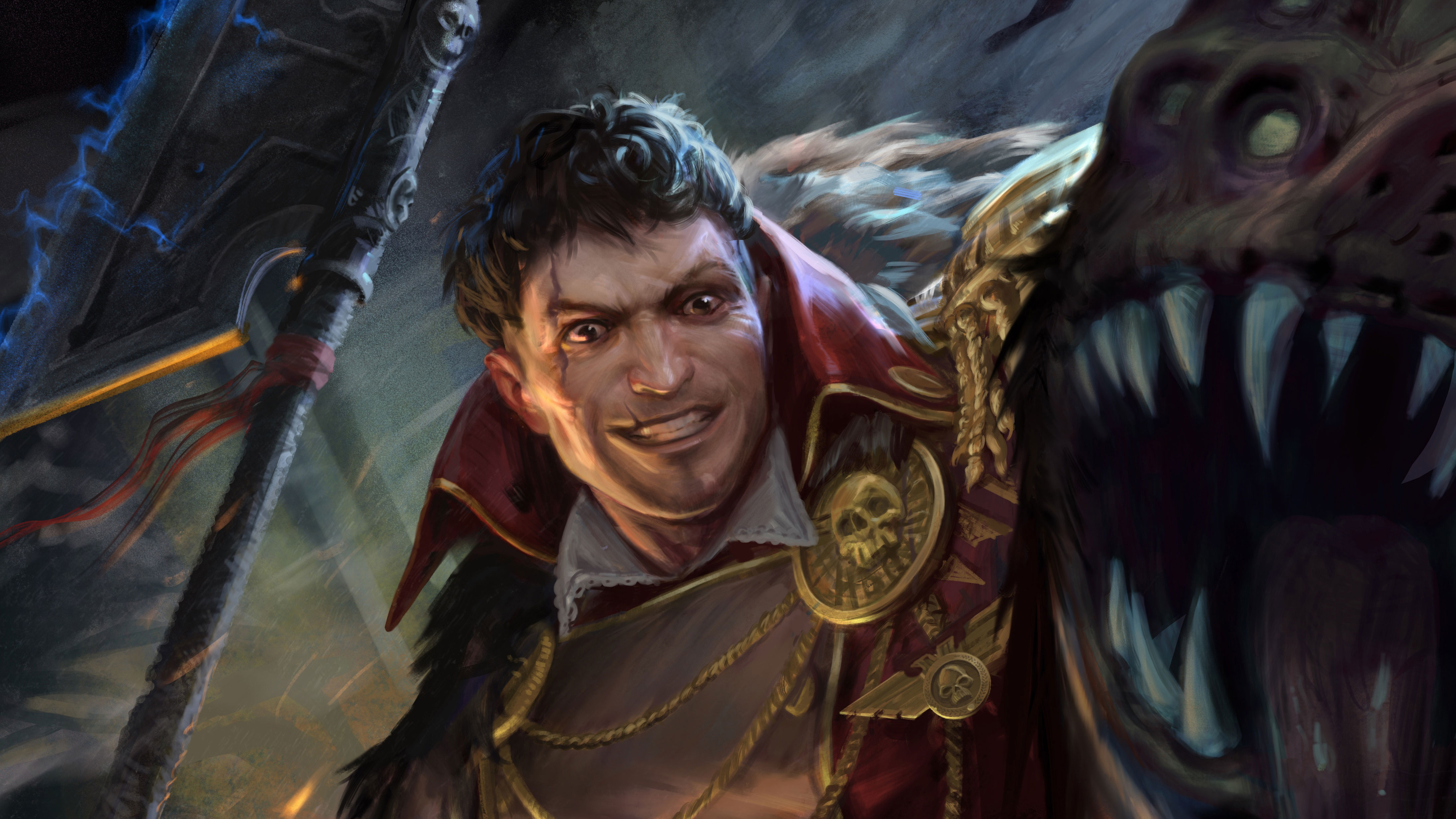
Several of the writers began inventing stories long before they knew fanfiction was even a word. The Evil Scribbler wrote an episode of The X-Files by hand at age 12. Holy Lustration produced what she now calls a “glorious” Star Wars: The Phantom Menace self-insert when she was 11, after years of staging dramatic masterpieces with Beanie Babies, Jurassic Park figures, and Spice Dolls. Mags wrote Pokémon fanfiction in a double-spaced notebook, leaving room for the many edits to come.
For others, Warhammer 40,000: Rogue Trader marked a return — or a first. WrathofFran had already published original fiction but had never felt compelled to write fanfiction. Then, after finishing Rogue Trader in December 2023, she decided there was not enough of the kind of romantic stories she herself wanted to see in the game. The conclusion was perfectly sensible: “Guess I have to write it myself this time.”
The Evil Scribbler returned to fanfiction after almost 15 years. Leonard shared a Rogue Trader story privately with a friend before finding the courage to publish; Vows Over Amasec, which was also the first fic he ever completed, took exactly a year to write. Cawyden was 45 when she published her first fanfiction, Immortalium, having been driven by a need to explore the spaces around Heinrix’s romance that the game could not contain. Even now, with the book counting over 300,000 words, she is still working on it.
For many, the game itself often provided a starting point for writing. Several writers returned to the “what if” behind a plot development: What was another character thinking? What happened after the scene ended? What consequences arose later? Others found stories in the game’s branching endings, sometimes using concepts from philosophy and religious studies to imagine a third possibility between two opposing ideas.
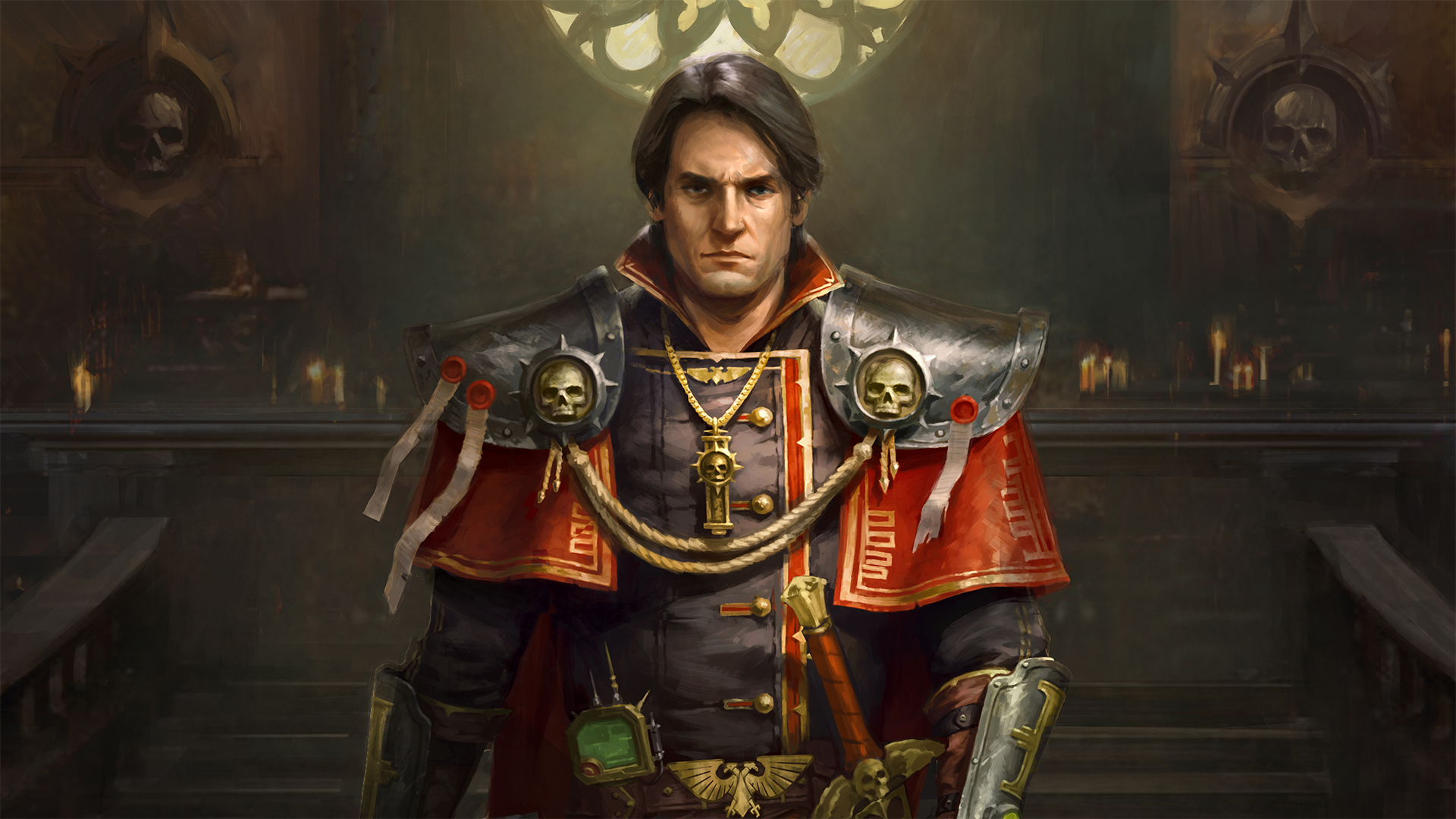
The gap does not have to be large. Sometimes, it is the size of a pendant. Heinrix’s official artwork shows him bearing the symbol of the Ecclesiarchy, but the game never explains this. Was it a mistake, a sign of his faith, a psy-focus, or a remnant from his past? For Cawyden, that single unanswered detail gave rise to a whole history. Meanwhile, another story began with a damaged walkway and a huge ice crystal in the Pillars of Viridice — first, the suggestion of an accident, and then, an entire scene.
But not every starting point comes from something the game leaves unexplained. JaalCreative, who has hyperphantasia — an unusually vivid visual imagination — can find the beginning of a narrative in just a few bars of music or a 30-second TikTok sound. Yet even these sudden sparks are often rooted in personal experience, turning a fleeting impression into something a story can grow from.
Once the idea arrives, what happens next? This is where agreement ends.
Lore calls the process “organized chaos.” First, ideas become excited conversations with friends and then a mind map filled with dialogue, images, and thematic fragments. Sometimes, a rough “zero draft” comes next. When writing outside the apartment, Lore usually has a chai latte; at home, colored lights around the desk change to match the scene.
Red Stairs takes a more internal approach, rehearsing a scene in their head until it feels ready for the page, then zoning out and letting the words flow. “I basically hallucinate the plot,” they say.
Holy Lustration sets a word-count goal and a regular time, often aiming for 500 words while sitting on the patio trying not to be distracted by visiting wildlife. LoveOfOurOwnFate writes at night, fueled by tea and one song played on repeat, with a deliberately modest target of 100 words a day. Leonard also uses a daily target, but the real planning happens in a large document full of speech-to-text notes and questions: Why would the characters do this? Does it fit their motivation? Is it physically possible in this universe?
WrathofFran can write on a crowded train, between meetings, or after a workout. A chapter usually passes through three or four drafts before reaching a beta reader. Mags describes planning as a flashlight pointed into a dark room: the next part is visible in detail, the ending can be seen in the distance, and the space between them comes into focus as the writer moves forward. Or, in Mags’ other comparison, it is like Gromit laying track directly in front of the toy train carrying him. Both images are probably more honest than simply saying, “I have a plan.”
Characters, meanwhile, are not always respectful of plans. Some writers know the beginning and ending but leave space in between for the characters to “take the wheel.” Holy Lustration keeps unused ideas at the bottom of the document in case the story finds a use for them later: “We don’t delete things in the House of Holy.” Not everyone relates to this experience, however. For some, characters have never seized the wheel or dragged a story somewhere unexpected. Apparently, such mystical events are optional, and a story is no less real just because its author remains in charge.
So, the characters may or may not stay under control. The word count, however, is definitely less than cooperative. At Fanfare’s End was supposed to be roughly 4,000 words; it ended up being 41,000. A planned handful of post-game scenes grew into a draft of more than 100,000 words. Much Ado About the Lord Captain was expected to take up 100,000 words or so; more than 350,000 words and 50 chapters later, it is still in progress.
Not every unexpected development can be measured in words. While writing for the Rogue Trader Gift Exchange, WrathofFran discovered that Ulfar wanted to narrate his part in saga style. The result was an unplanned passage in Germanic verse and meter — and, naturally, a beatboxed performance by WrathofFran at the reveal.
Ideas are not usually the problem. The problem is time. Several writers described fitting their fiction around careers, family, responsibilities, and the exhaustion that often remains when a free hour finally appears.
The blank page has other weapons. Red Stairs, who grew up with several languages, sometimes has words collide mid-sentence and ends up chasing English vocabulary “like a mad dog.” A rough draft may come quickly, while descriptions of expressions and surroundings require much slower polishing. Editing poses a different problem: the point when every sentence begins to look like a potential mistake. Then, there are the scenes themselves. Leonard has learned that if a scene feels wrong to write, it can simply happen “off camera,” with the story turning instead to its aftermath. Sometimes, what follows an event reveals more than the event itself.
And when motivation disappears? The advice can be divided into two broad camps: step away, or make the next step very small.
Stepping away can mean going for a walk, changing projects, listening to music, and waiting until writing no longer feels like an obligation. Stopping altogether is also an option. If a hobby is no longer enjoyable or socially meaningful, there is no reason to grind it into the ground.
Taking the second path can be as simple as setting a daily goal of 100 words — small enough to meet even on a bad day, but often just what you need to restart the engine. Some writers switch to a future scene, trusting that even imperfect work will give the editing process at least something to shape. Lore uses rewards, favorite food, and conversations with enthusiastic friends to rekindle focus — an approach developed through learning to work with an ADHD brain rather than against it.
Cawyden has a practical answer to the terror of an empty page: do not begin with the perfect first sentence. Begin with bullet points, a piece of dialogue, or the scene that feels most exciting. A story does not have to be written in the order in which it will eventually be read.
There was one thing that became impossible to ignore in the Owlmates’ answers.
Ask them about their proudest achievement, their favorite memory, or what keeps them writing, and sooner or later, they stop talking about stories.
They start talking about people.
Cawyden still laughs about the reader who left a comment that read, in full: “your fic is a drug and I'm an addict *licks her laptop screen*.” “A bit weird,” she confesses, “but... exciting that someone was so eager to continue reading.”
Not every response is quite so loud. LoveOfOurOwnFate remembers opening an email and realizing that one reader had worked through nearly every story they had published, leaving kudos along the way. “I had a little happy cry, I’ll admit,” they said. Others spoke about readers returning to a favorite story during a difficult period, commenting on every new chapter, or simply saying that they could not wait to continue. What stays with the writers is not praise in the abstract. It is the evidence of there being a real person on the other side.
Sometimes, readers even carry a story beyond the page. Lore knew their original characters had found a place in other people’s imaginations when readers began sending unrelated Tumblr posts and Discord messages simply because they reminded them of those characters. Elsewhere, writers discovered their fics being discussed on Discord, saw readers waiting for update notifications, or heard that a story had changed someone’s view of a character or relationship.
Sometimes, the connection outgrows the story itself. A private message from one of WrathofFran’s readers, prompted by a scene that touched something personal, developed into a friendship. They still talk regularly and now hope to meet in person. Other Owlmates told similar stories: they had expected to write quietly in their own corner and instead found friends from around the world.
The Rogue Trader Gift Exchange turns that connection into an event of its own. JaalCreative and The Evil Scribbler create narratives around NPCs, Rogue Traders, and retinue characters, then watch the community respond in real time. Some of their scripts and character interactions have even been performed by the game’s original voice actors. What usually happens one comment at a time becomes a shared experience unfolding in real time.
This is why the reader is not merely the final step after you hit the Publish button. They become part of what the story does next. The game gives people a world they love; fanfiction gives them a way to keep playing in it together.
We asked whether fanfiction is a “less serious” form of writing. The Owlmates did what writers do best: they disagreed.
Some answered by taking “serious” very seriously. LoveOfOurOwnFate places fanfiction in a much older tradition: Virgil’s Aeneid, James Joyce’s Ulysses, and the many contradictory versions of Arthurian legend all take existing stories and make something new from them. The term “fanfiction” may be relatively modern; the practice is not.
Others questioned why fanfiction should have to defend itself at all. It is usually created and shared for free, in a culture that assigns a monetary value to almost everything people make. It can be silly, painfully earnest, sweet, strange, explicit, or technically ambitious. Most importantly, it does not have to become a product or prove anything to a market.
Red Stairs sees value in fanfiction being less serious in one particular sense. A sketchbook serves a different purpose from a finished painting. Similarly, fanfiction can be a sandbox where writers experiment with form, narrative devices, and familiar characters without recreating an entire world or answering to a publishing house. Less serious does not have to mean less valuable. Sometimes, it simply means more room to play.
The works themselves make the same case. LoveOfOurOwnFate’s logos_ethos runs two narratives in parallel columns, one written largely in decodable hexadecimal. JaalCreative’s In the Event of Matrimony experiments with form inside an arranged-marriage alternate universe. Fanfiction can offer creative freedom and still be formally ambitious.
Mags offers the shortest answer: “Must everything be serious? Is there no room for enthusiasm and whimsy in your life?”
Fanfiction can demand enormous care without becoming an obligation or a product. Seriousness and play are not opposites.
Should a new writer publish? Before that question comes a more immediate one: How do you make the story exist? The Evil Scribbler’s rule is simple: “You have to make it exist first. Perfecting it comes after that.” Start with the scene you want to write. Set a goal small enough to survive a difficult day. Find people who understand what you are trying to make.
But publishing can carry real risks, and pretending otherwise does not help. Red Stairs warns that fear of criticism is not imaginary: people can be cruel, and automated accounts can leave abusive comments for no clear reason. Writers are allowed to restrict anonymous comments, close messages, ignore unsolicited advice, and protect their peace.
Then, for if and when the time feels right, there is Holy Lustration’s answer:
“Do it. Do it scared. Do it with your teeth gritted. Do it cringe. But just do it. You will find your style and your voice, just like you will find your people.”
No one has to press Publish. But after spending time with these writers, it is difficult to dismiss fanfiction as “less serious” — not because every story is polished or every writer dreams of publishing a novel, but because the same curiosity, dedication, vulnerability, and craft that drive any creative work can be found here too.
These stories began in private — with unanswered questions, improvised plans, and sleepless nights. The friendships, Gift Exchanges, and comments came when the stories were shared. The decision remained each writer’s own: whether and when to press Publish.
你覺得這篇文章如何?