![[PRO Tips] Gold’s Bullish Revival: Seasonal Trends and Key Levels to Watch](https://xinker.org/uploads/images/202412/image_430x256_67724cc6ad0cd.webp)
![[PRO Tips] Gold Market Under Short-Term Pressure, Safe-Haven Demand and Central Bank Buying Support Long-Term Upside Potential](https://xinker.org/uploads/images/202412/image_430x256_676ffb4685287.webp)
![[PRO Tips] Analysis of 9 key points of differentiation strategy! Master differentiation to create a brand advantage that is unique in the world!](https://firebasestorage.googleapis.com/v0/b/xinker-tips.appspot.com/o/article_thumbnails%2Fscaled_differentiation%20strategy.png.png?alt=media&token=a1bfc3d2-e85a-4db7-8a6d-01c7274f8940)
![[PRO Tips] Will REITs regain growth momentum in 2024? 3 REITs ETFs you must know if you want to invest in real estate.](https://firebasestorage.googleapis.com/v0/b/xinker-tips.appspot.com/o/article_thumbnails%2Fscaled_REITs1.png.png?alt=media&token=8af4eb93-33ff-466f-8039-b6555fad52b4)
![[PRO Tips] Complete tutorial on how to make money in Adobe Stock!](https://firebasestorage.googleapis.com/v0/b/xinker-tips.appspot.com/o/article_thumbnails%2Fscaled_tut-adobe1.png.png?alt=media&token=0b2c8cf2-22bd-4142-883e-140ed1cbaf02)
![[Passive Income] Unlock the secret of passive income: 3 steps to apply for Google AdSense](https://xinker.org/uploads/images/202410/image_430x256_6717a4fb3052b.webp)
![[Passive Income] Earn over $200 a day with AI-generated articles!](https://firebasestorage.googleapis.com/v0/b/xinker-tips.appspot.com/o/article_thumbnails%2Fscaled_article1.png.png?alt=media&token=f61bf35b-8553-4719-826d-7360024adc70)
![[Passive Income] Earn over 20 USD per download with AI-generated images!](https://firebasestorage.googleapis.com/v0/b/xinker-tips.appspot.com/o/article_thumbnails%2Fscaled_adobe2.png.png?alt=media&token=3e20e76a-a907-45af-80aa-bf9b3600301f)
![[Passive Income] Earn 10 USD per new download by sharing CapCut!](https://firebasestorage.googleapis.com/v0/b/xinker-tips.appspot.com/o/article_thumbnails%2Fscaled_capcut2.png.png?alt=media&token=a04dec40-1fac-4857-86f2-19a8be02d38e)
![[Passive Income] Use your WiFi to create passive income in 5 minutes, and you can earn 4-6 U per day!](https://firebasestorage.googleapis.com/v0/b/xinker-tips.appspot.com/o/article_thumbnails%2Fscaled_Grassio.webp.png?alt=media&token=7659a95e-0e47-4f27-a17d-c942ac3cf7f4)


![[Business Talk] The Unique Theme of XINKER's Song: Beef Wellington and Business Mastery](https://xinker.org/uploads/images/202410/image_430x256_671afc155f47f.webp)
![[Business Talk] Chagee: Opening 3,500 stores in 6 years](https://xinker.org/uploads/images/202410/image_430x256_671afce80c5f9.webp)


Nvidia DLSS 5 is launching on September 3: Here's everything I learned about it from a private Gamescom demo
After its controversial reveal earlier in the year, DLSS 5 will launch later this week, on September 3rd. At Gamescom last week, I got invited to a behind-closed-doors look at the latest Nvidia upscaling tech. During the session, Nvidia lifted the lid on various aspects of it, revealing how its developer tools work, how it'll impact indie games with different art styles, and allowing me to ask my own questions about it. Before it arrives on your gaming PCs at the end of this week, I've tried to round up everything I learned. If you're not up to speed, DLSS 5 came under a lot of scrutiny when it was revealed because it takes a very different approach to AI upscaling than previous versions. Instead of rendering an image at a lower resolution and then polishing it up to run better using AI transformer models, DLSS 5 is all about helping the best graphics cards to achieve "true photorealism". The way it does this, however, is by using a 2D, generative AI layer on top of a game's rendered frames, which Nvidia is calling 3D-guided Neural Rendering, as we suspected after its initial reveal. In other words, it isn't remodelling the rendered frames to seek better performance and higher frame rates; it produces a generative layer over a rendered frame that changes or, depending on who you talk to, "enhances" its quality. Nvidia / 2K Nvidia / 2K This is controversial for many reasons, not least of which because it looks as though it's running games through a ChatGPT filter, or otherwise "yassifying" characters like Grace and Leon from Resident Evil Requiem. The first game launching with support for the new version of DLSS 5 will be NBA 2K27, which arrives on PC this Friday, so all 50 Series laptops and graphics cards will be able to utilize it. For me, one of the main concerns about DLSS 5 wasn't even about making everything look like AI slop (although that is certainly a concern); it's that a tool like this undoubtedly seeks to standardize what so much of video game art looks like, and detracts from individual games having their own, hand-crafted approaches to graphical styles. Artistic intent is a thing, and I don't know about you, but I have never toggled some DLSS settings before now and thought I was so overtly stepping away from the visuals that developers had intended me to see. That brings me onto the first thing Nvidia showed me during the demo at Gamescom: Developer tools are a thing (Image credit: Nvidia) Thankfully, one of the first things that calmed my nerves a bit is that developer tools do exist. One of the Nvidia engineers in my demonstration was an artist in their earlier career, working in animation and game development on multiple projects. He ran me through a suite of developer tools that artists and game devs will have on their end when they add DLSS 5 support to their game. They'll have an initial choice between three different AI models within DLSS 5 that enhance their game's art style in differing ways, and they're not bound to only using one per scene. Developers can select items in the back or foreground of a scene; they can select clothing on their characters, face models, hair, and they can, for the most part, control how those models change their games. (Image credit: Nvidia) The main game dev controls I saw exist in a plethora of sliders that allow developers to change the strengths of various parameters, mainly the tone intensity and structure intensity. Imagine all of the image settings in something like Canva or Instagram when you're setting a filter or editing a photo, although a little less wide-spanning. The technology does seem pretty advanced in that it can recognize various objects via clever AI masking techniques, and developers will be able to edit them all individually, accessing those sliders I mentioned for each individual object. So, if an environment artist sets a DLSS 5 parameter for one thing, it doesn't then auto-apply it to the entire scene. One thing to bear in mind, however, is that the demonstration of these dev tools that I saw was in an Nvidia-made programme called Zorah. I didn't get to see the tools in action in a live demonstration within a video game, so I'd be interested to know how devs find the technology suite when working on their own projects and if it's as clever at distinguishing different objects as it was in Nvidia's presentation.DLSS 5 is a separate tool for game devs to opt into, and previous DLSS support doesn't automatically mean "yassified" games This was my first question. It's all well and good providing those controls to developers, but my worry was that if a game already has support for DLSS 4.5 or earlier versions, Nvidia would auto-apply DLSS 5 support for all of them and let the software run wild. The way Nvidia described it, DLSS 5 is a "separate creative tool" for developers, and it's their choice if they want to use it in their games or not. Game developers will need to apply some of those settings if they want DLSS 5 support
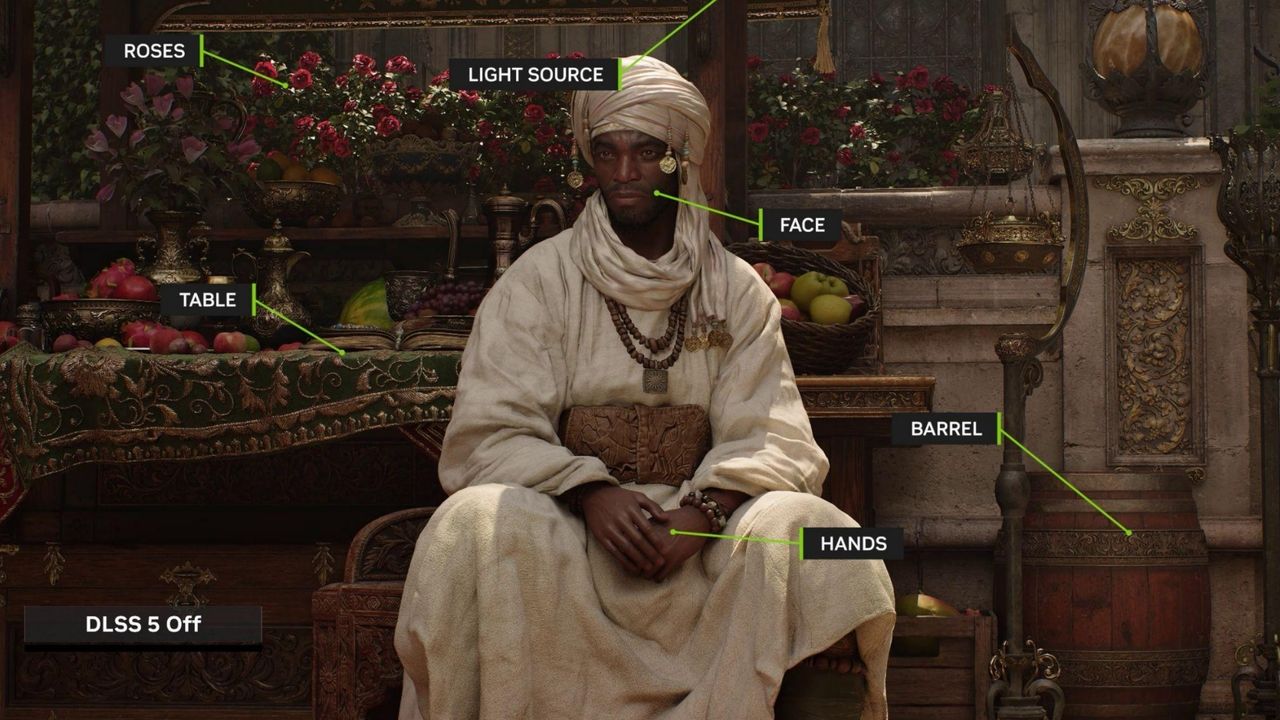 After its controversial reveal earlier in the year, DLSS 5 will launch later this week, on September 3rd. At Gamescom last week, I got invited to a behind-closed-doors look at the latest Nvidia upscaling tech. During the session, Nvidia lifted the lid on various aspects of it, revealing how its developer tools work, how it'll impact indie games with different art styles, and allowing me to ask my own questions about it. Before it arrives on your gaming PCs at the end of this week, I've tried to round up everything I learned.
If you're not up to speed, DLSS 5 came under a lot of scrutiny when it was revealed because it takes a very different approach to AI upscaling than previous versions. Instead of rendering an image at a lower resolution and then polishing it up to run better using AI transformer models, DLSS 5 is all about helping the best graphics cards to achieve "true photorealism".
The way it does this, however, is by using a 2D, generative AI layer on top of a game's rendered frames, which Nvidia is calling 3D-guided Neural Rendering, as we suspected after its initial reveal. In other words, it isn't remodelling the rendered frames to seek better performance and higher frame rates; it produces a generative layer over a rendered frame that changes or, depending on who you talk to, "enhances" its quality.
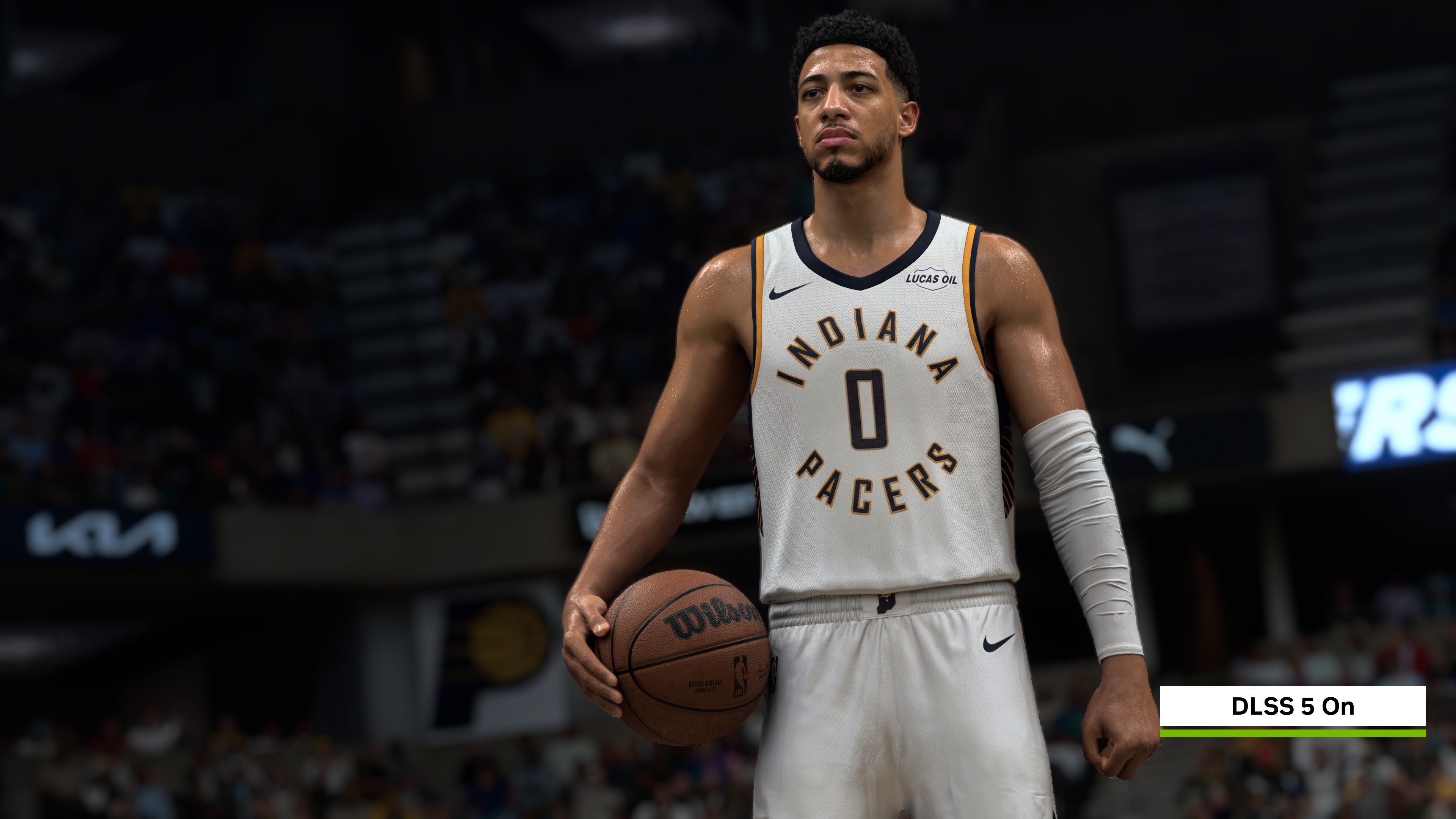 Nvidia / 2K
 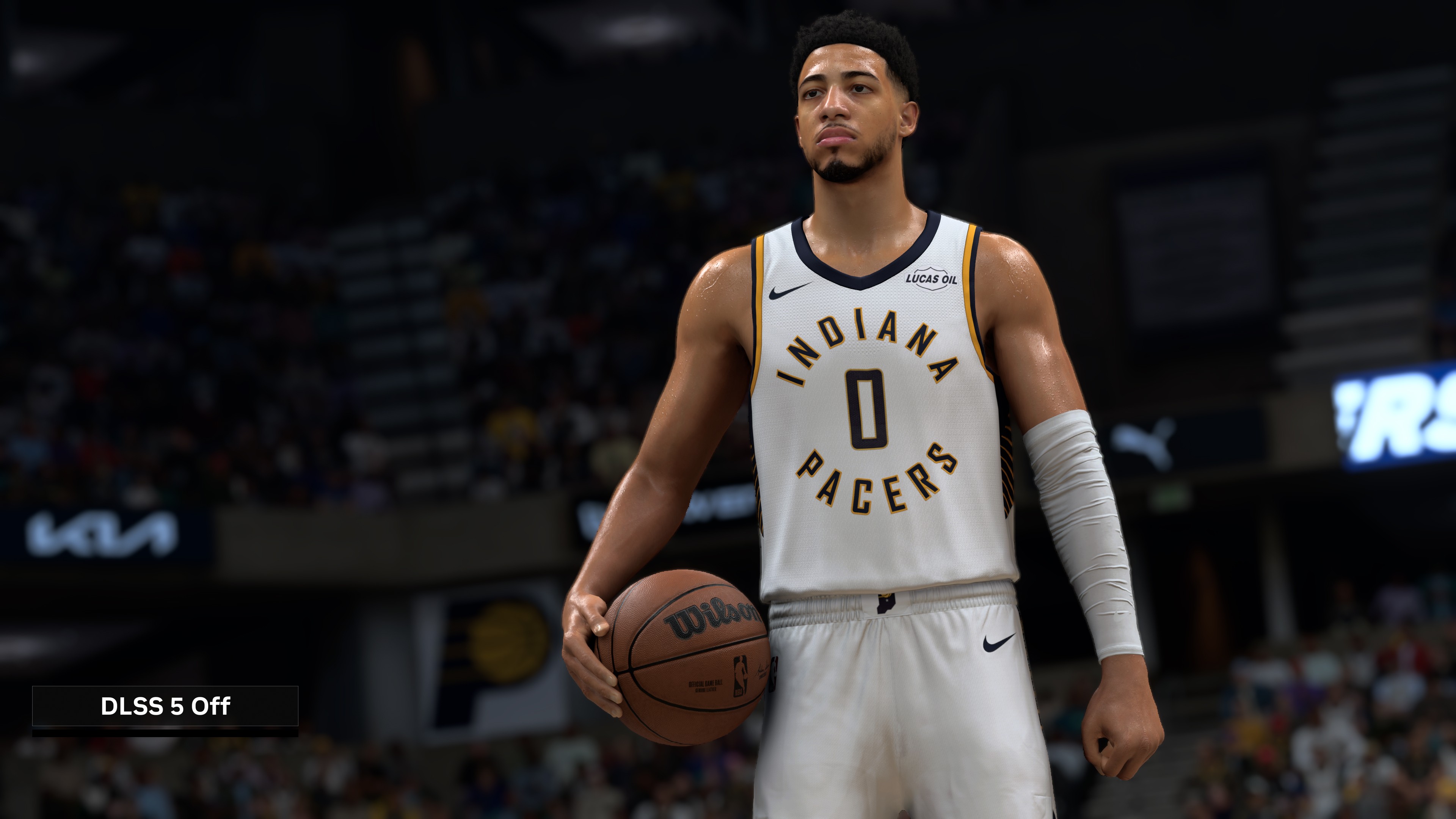 Nvidia / 2K This is controversial for many reasons, not least of which because it looks as though it's running games through a ChatGPT filter, or otherwise "yassifying" characters like Grace and Leon from Resident Evil Requiem. The first game launching with support for the new version of DLSS 5 will be NBA 2K27, which arrives on PC this Friday, so all 50 Series laptops and graphics cards will be able to utilize it.
For me, one of the main concerns about DLSS 5 wasn't even about making everything look like AI slop (although that is certainly a concern); it's that a tool like this undoubtedly seeks to standardize what so much of video game art looks like, and detracts from individual games having their own, hand-crafted approaches to graphical styles. Artistic intent is a thing, and I don't know about you, but I have never toggled some DLSS settings before now and thought I was so overtly stepping away from the visuals that developers had intended me to see.
That brings me onto the first thing Nvidia showed me during the demo at Gamescom:
Developer tools are a thing

(Image credit: Nvidia) Thankfully, one of the first things that calmed my nerves a bit is that developer tools do exist. One of the Nvidia engineers in my demonstration was an artist in their earlier career, working in animation and game development on multiple projects. He ran me through a suite of developer tools that artists and game devs will have on their end when they add DLSS 5 support to their game.
They'll have an initial choice between three different AI models within DLSS 5 that enhance their game's art style in differing ways, and they're not bound to only using one per scene. Developers can select items in the back or foreground of a scene; they can select clothing on their characters, face models, hair, and they can, for the most part, control how those models change their games.
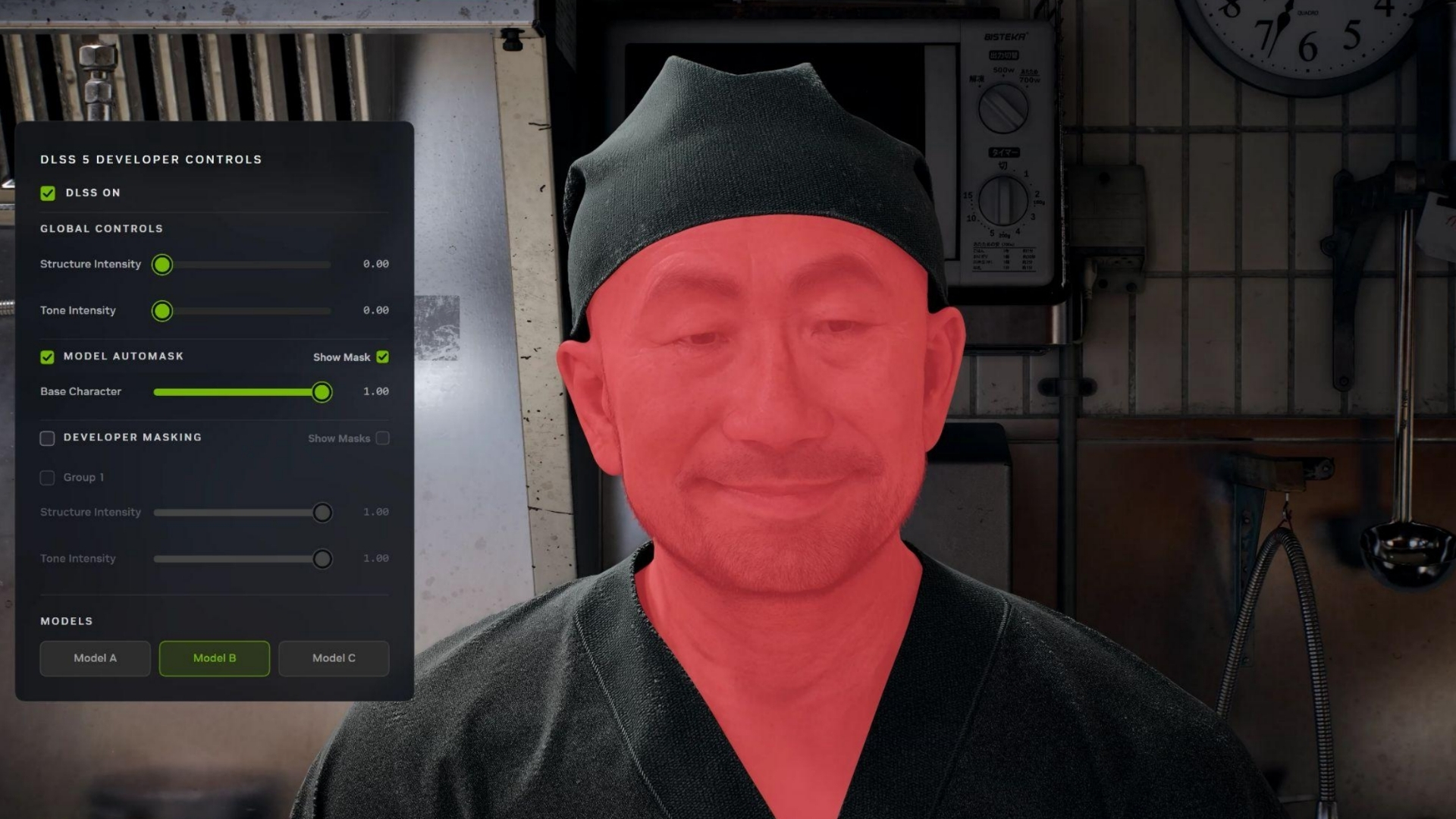
(Image credit: Nvidia) The main game dev controls I saw exist in a plethora of sliders that allow developers to change the strengths of various parameters, mainly the tone intensity and structure intensity. Imagine all of the image settings in something like Canva or Instagram when you're setting a filter or editing a photo, although a little less wide-spanning.
The technology does seem pretty advanced in that it can recognize various objects via clever AI masking techniques, and developers will be able to edit them all individually, accessing those sliders I mentioned for each individual object. So, if an environment artist sets a DLSS 5 parameter for one thing, it doesn't then auto-apply it to the entire scene.
One thing to bear in mind, however, is that the demonstration of these dev tools that I saw was in an Nvidia-made programme called Zorah. I didn't get to see the tools in action in a live demonstration within a video game, so I'd be interested to know how devs find the technology suite when working on their own projects and if it's as clever at distinguishing different objects as it was in Nvidia's presentation.
DLSS 5 is a separate tool for game devs to opt into, and previous DLSS support doesn't automatically mean "yassified" games
This was my first question. It's all well and good providing those controls to developers, but my worry was that if a game already has support for DLSS 4.5 or earlier versions, Nvidia would auto-apply DLSS 5 support for all of them and let the software run wild. The way Nvidia described it, DLSS 5 is a "separate creative tool" for developers, and it's their choice if they want to use it in their games or not.
Game developers will need to apply some of those settings if they want DLSS 5 support for their games

(Image credit: Nvidia) Nvidia's reps also clarified to me that they don't see a scenario where a game developer opts into DLSS 5 support and doesn't in some way configure their own settings. In fact, Nvidia's representatives made it seem as though aiming the AI tech in their own directions is a requirement of sorts to make it work in their games.
Again, this is reassuring, since it means that the AI models within the tech won't be able to run wild and take their own artistic license - or at least, they will, but the developers will need to steer that license in their own directions.
Previous DLSS models will still exist, so it doesn't look like we'll need to use DLSS 5... for now
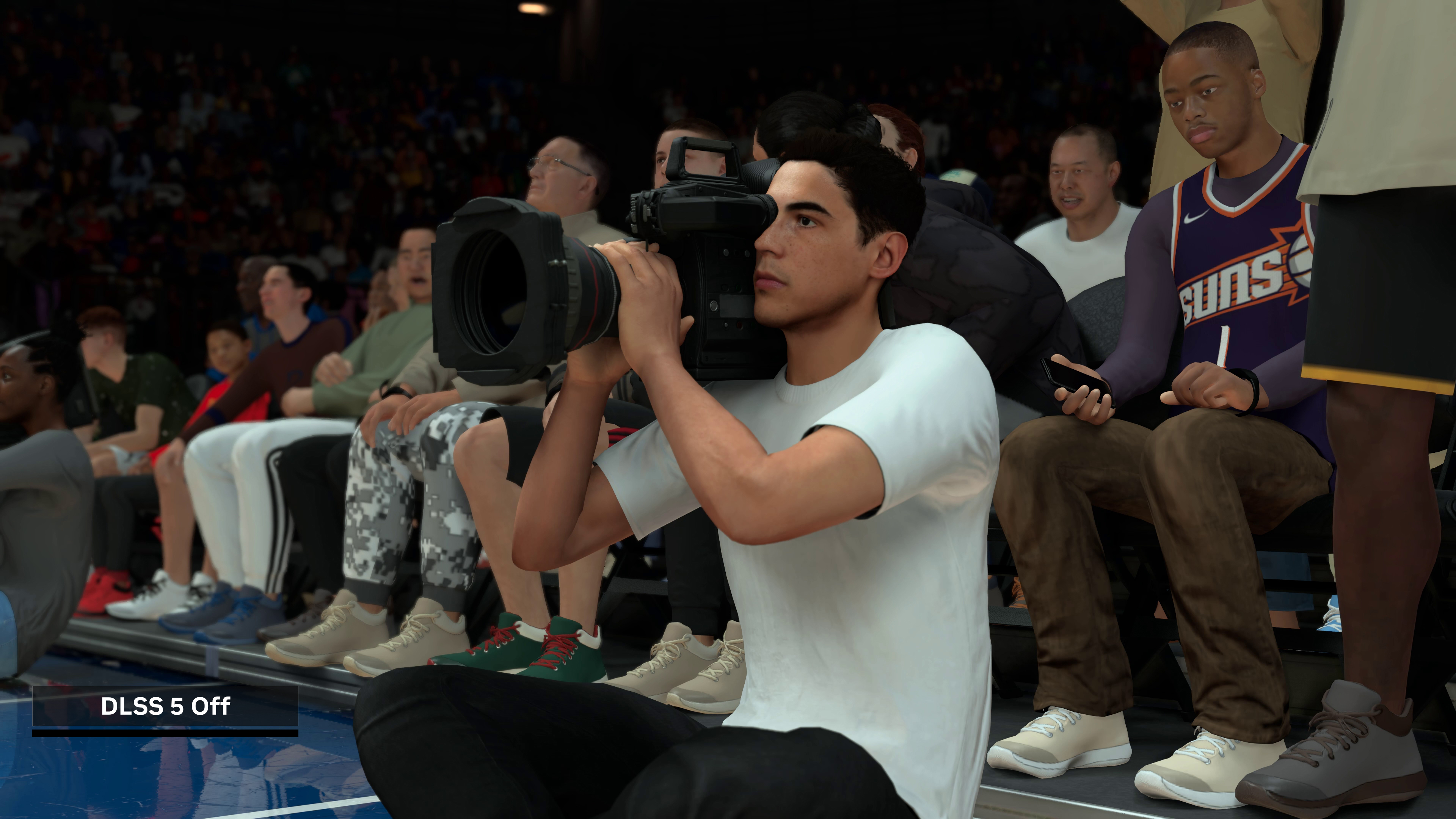 Nvidia / 2K
 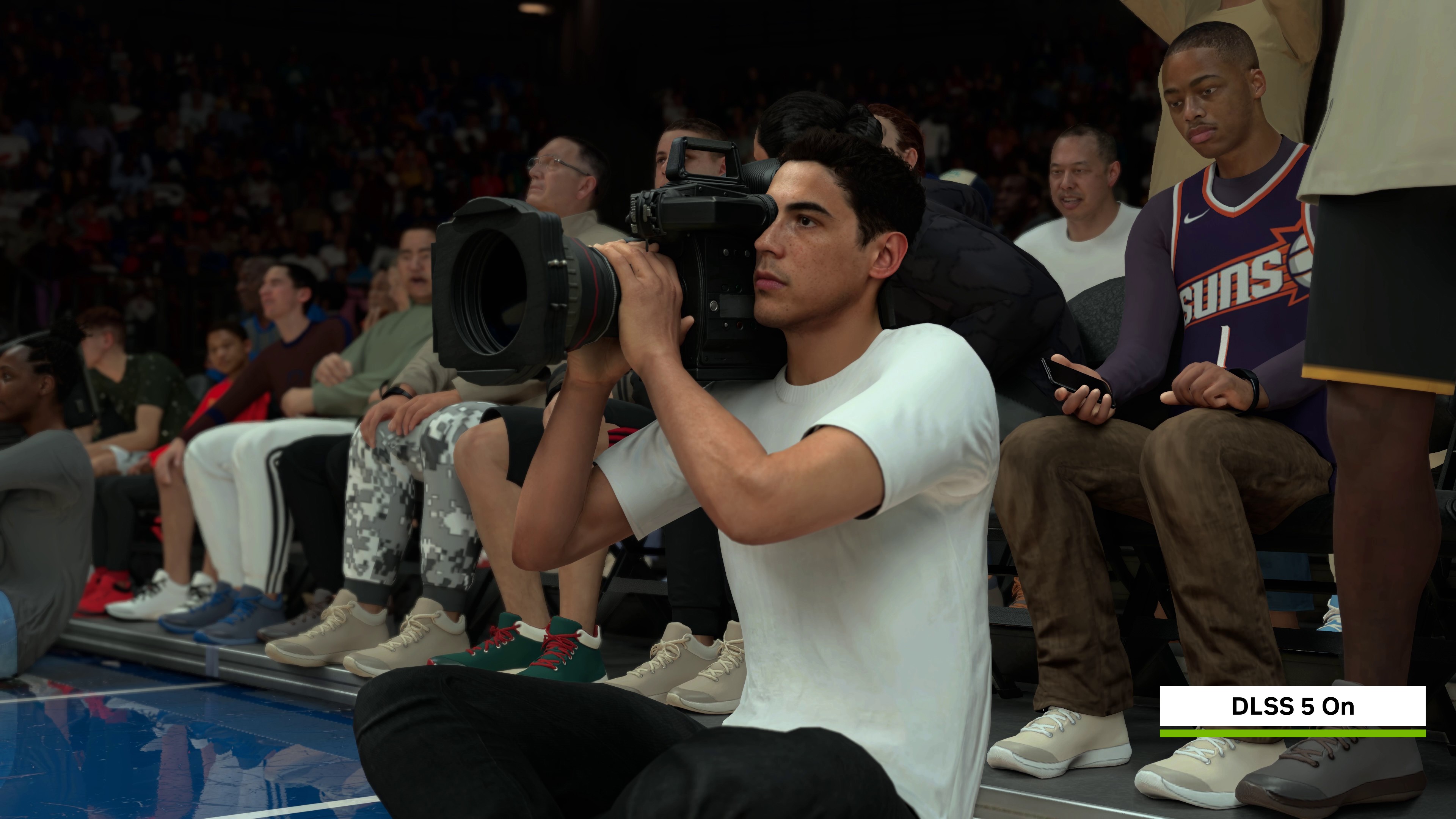 Nvidia / 2K My next question was about whether DLSS 5 would be replacing DLSS 4.5. It's great that video game creators don't have to use it, but I think players should also be given that option too.
 The Nvidia employees in the room with me said that this wouldn't be the case, and that you'll still be able to select the version of DLSS that you want within the settings menu of your games. The only issue is that that will entirely depend on whether or not a game supports both versions of the technology.
Where this gets interesting is onward support, which Nvidia didn't clarify with me at the time. My concern is that if a game only supports the most recent version of DLSS because that's where the best performance improvements and technical support will be going forward, then us gamers will need to put up with a lot of AI-slop image changes if we want to access it for better frame rates.
I've been saying this for a while now, but it's a reason I'm not the biggest fan of Nvidia's DLSS being such a crutch for video game optimization these days. A massive third-party company now holds all the cards for how that optimization will work for a massive market of PC gamers.
Gamers will not have access to DLSS 5's developer controls
 Nvidia
 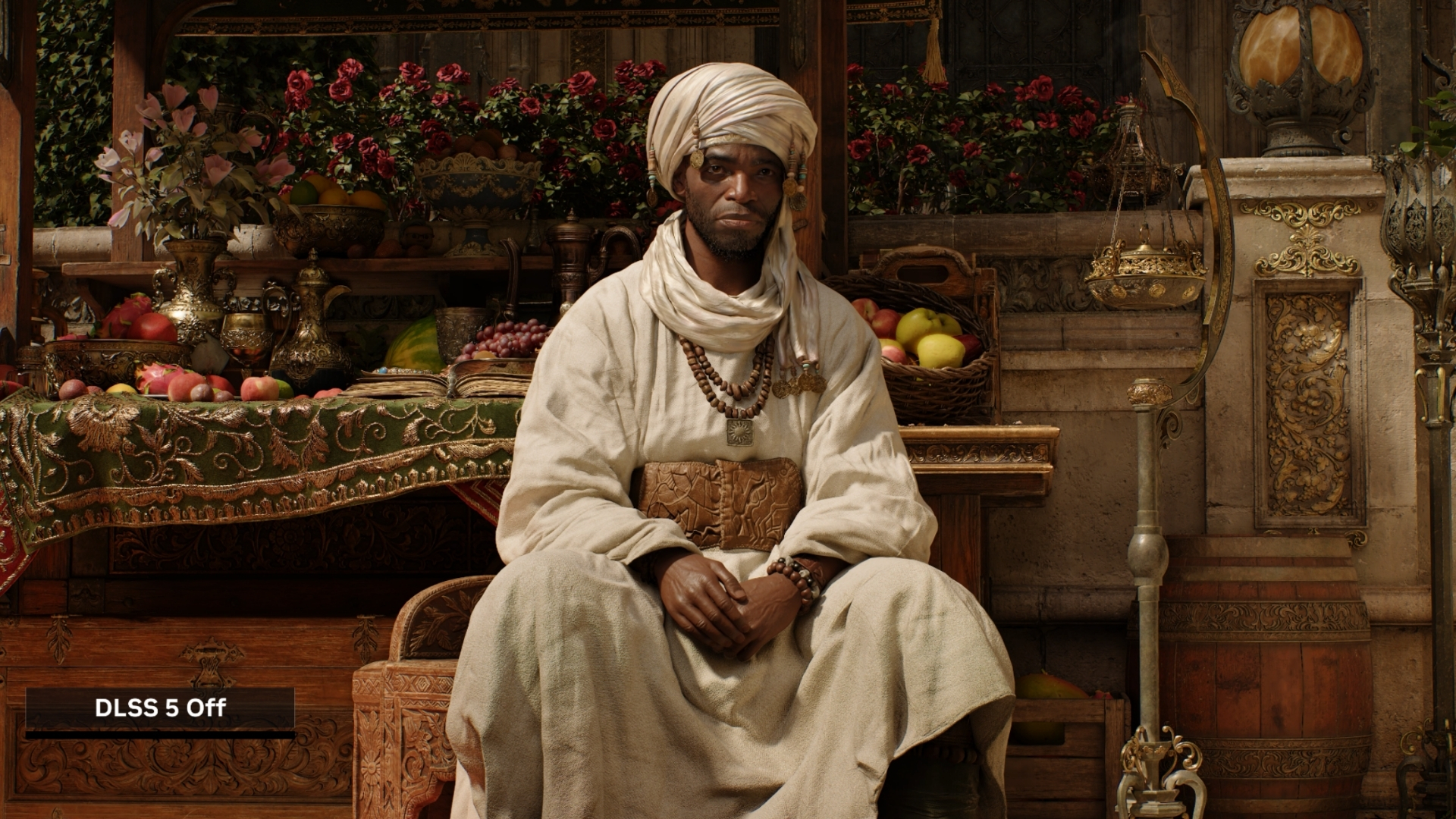 Nvidia One bit of bad news for gamers is that, while artists and developers will be able to control how DLSS 5 changes their games, it'll only be an on-or-off thing for consumers. That means if gamers themselves like the way certain aspects of DLSS 5 look in backgrounds, but hate looking at AI-stylized characters, they won't have the ability to change what DLSS 5 is "enhancing" for themselves.
Nvidia is "only" targetting DLSS 5 at games that are aiming for photorealism
 Nvidia / 2K
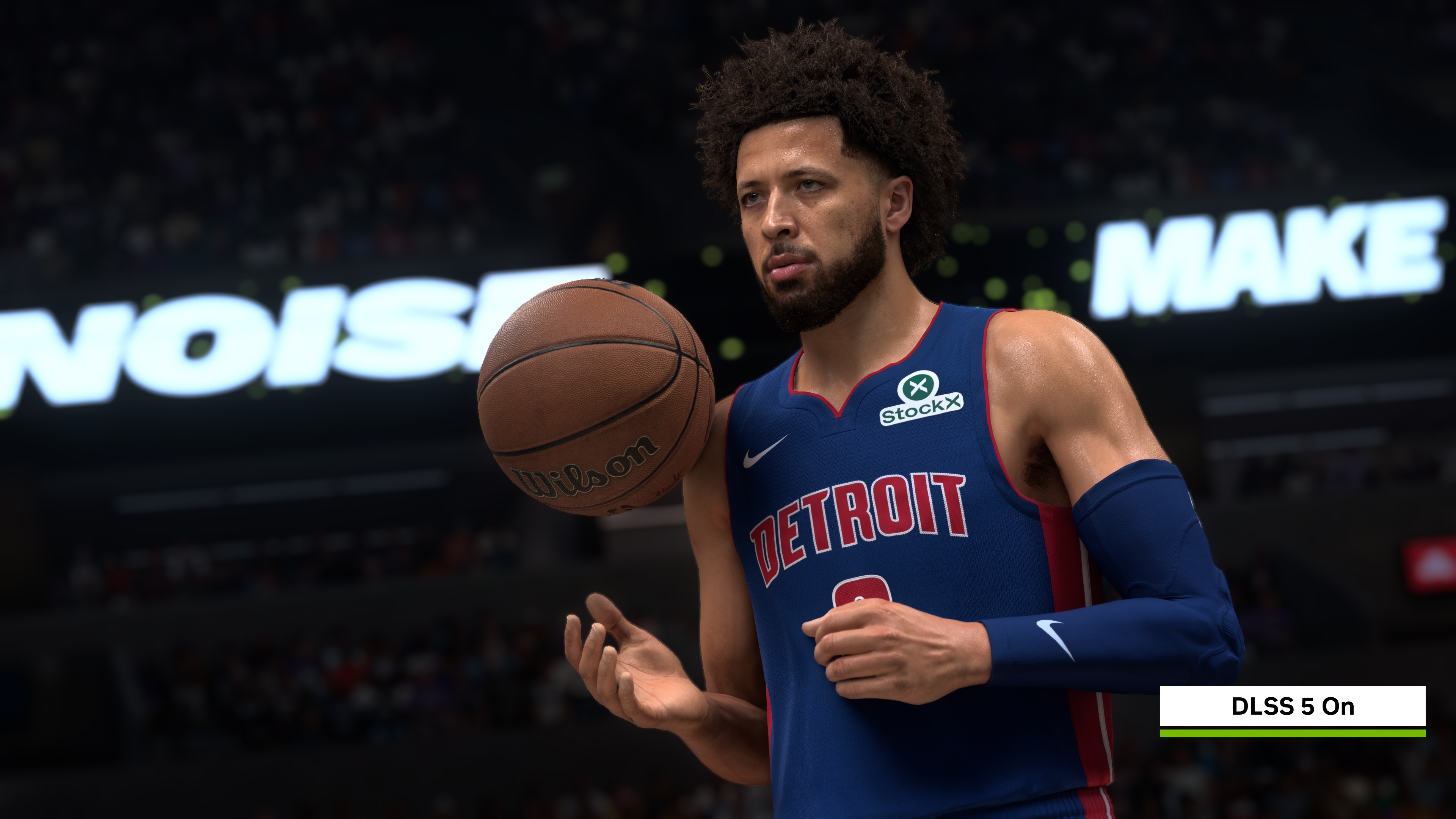
 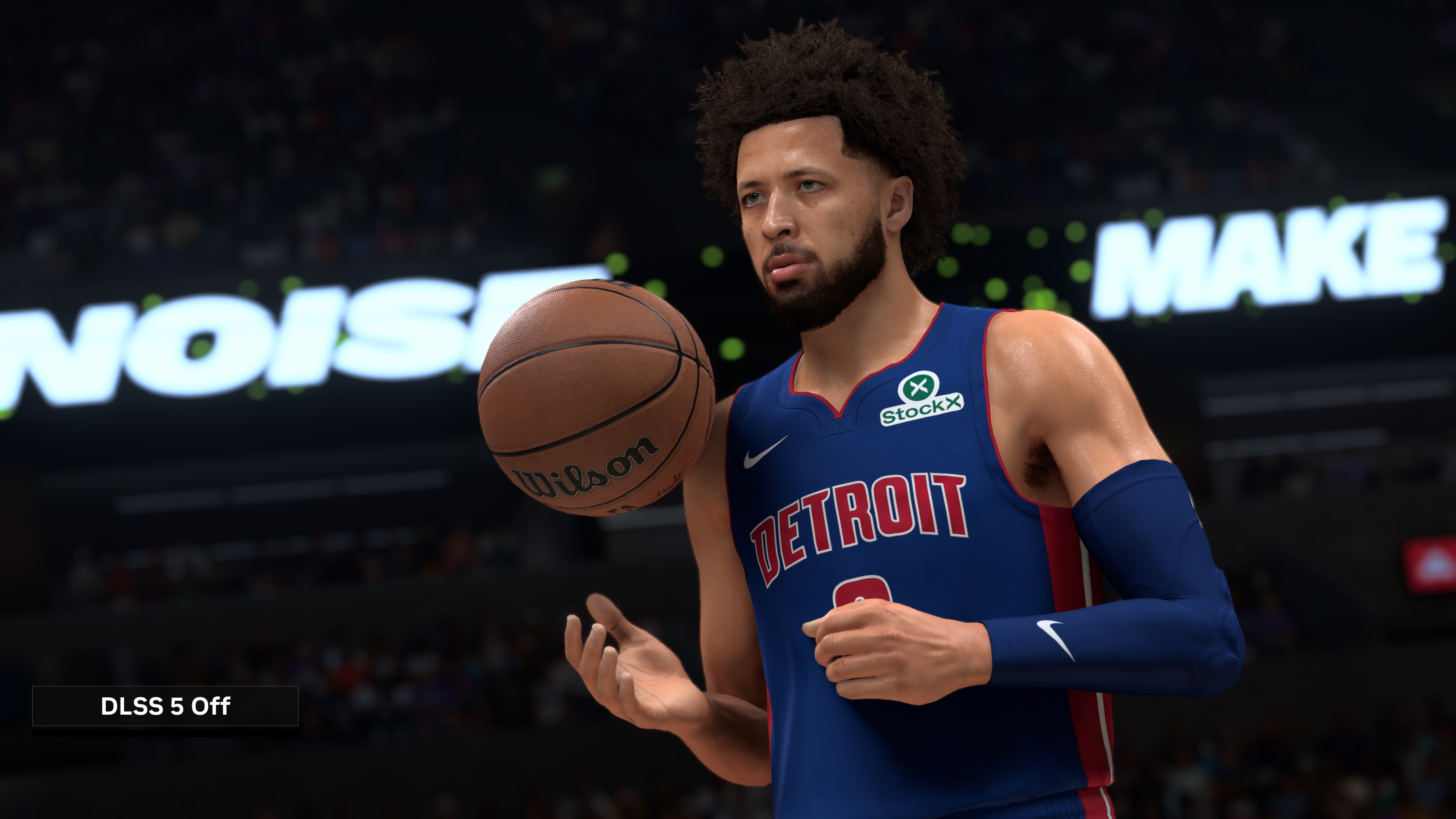 Nvidia / 2K The other question I had was about the impacts that DLSS 5 will have on indie games, or any title that isn't shooting for that ultra-realistic look. Video games are an amazing art form for many reasons, not least of which is their versatility. Some games that look and feel extremely lifelike are amazing, but others that shoot for more stylized visuals can be equally as impressive, so how will DLSS 5 impact these sorts of games?
 Nvidia seemed set on the idea that DLSS 5 was really "only" being aimed at games that wanted to go after photorealism. The first game that will support the technology as of this Friday is NBA 2K27, which is obviously a sports title that wants you to be able to recreate true-to-life basketball broadcasts in video game form. Maybe - maybe, a game like this suits a more photorealistic image enhancement like DLSS 5, but the results are still more uncanny to me than photoreal.
Moreover, I think there are entirely different conversations we should have about whether or not video games should shoot for photorealism, and whether it makes them look objectively better or worse. Personally, I'm not sure it improves anything or makes them more impressive.
There's also room for interpretation in this objective from Nvidia. As we've seen from leaks in the past week or so, titles like Control and GTA V seem to be able to utilize DLSS 5, and even though these titles have impressive visuals, I still wouldn't say they target "photorealism". To me, this all signals that we're going to see DLSS 5 in a lot more games that try to have "impressive" visuals, not just the ones that are trying to beam realistic sports athletes onto your gaming displays.
I still have no idea how it's going to impact your frame rates
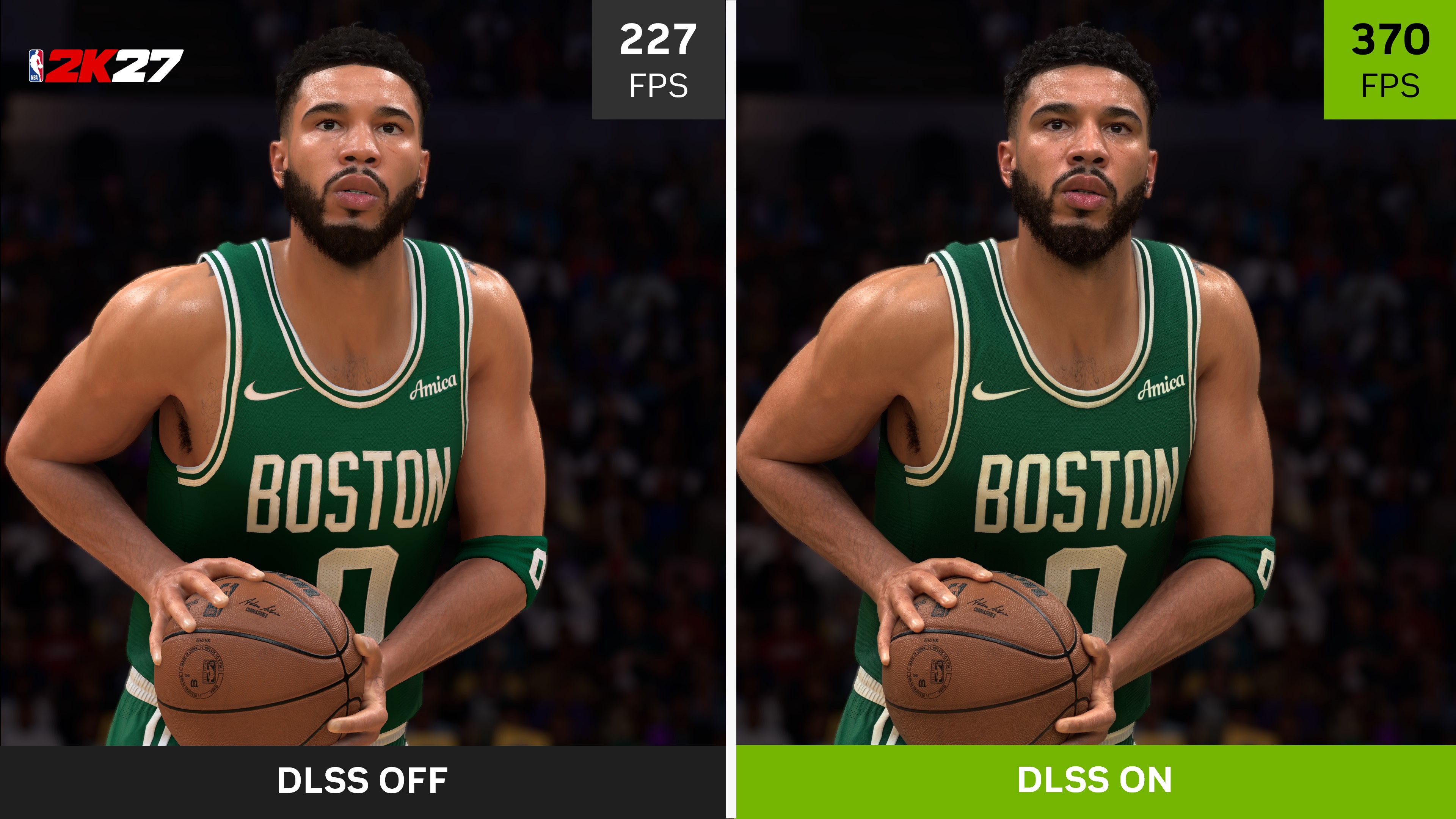
(Image credit: Nvidia / 2K) Although I saw a short gameplay demo with DLSS 5 working in NBA 2K27, I'm yet to see how using DLSS 5 will impact your frame rates in games. Frame rate increases have only really been a small part of the marketing appeal for this generation of DLSS, and besides a few details I've received today, nothing has been about improving your gaming performance.
Previous versions of this technology have been all about increasing your frame rates while making small compromises to visual fidelity, but DLSS 5 seems like it has different aims entirely and should have maybe been branded differently to reflect that. From what Nvidia is telling me and showing in the image above, it looks as though DLSS 5 will be able to increase your GPU performance, but that's caveated by the fact it's using frame generation tricks too. DLSS 5 isn't rendering your frames differently, so in theory, it shouldn't cause lower frame rates, but it'll be interesting to see whether DLSS 5 actually helps gamers get better performance without using frame generation.
For more on gaming PCs and components, take a look at the best computer speakers, best RAM for gaming, and the best CPU for gaming.
[/url]
What's Your Reaction?








XINKER - Business and Income Tips
Explore XINKER, the ultimate platform for mastering business strategies, discovering passive income opportunities, and learning success principles. Join a community of thinkers dedicated to achieving financial freedom and entrepreneurial excellence.



![[Business Talk] Chagee: Opening 3,500 stores in 6 years](https://xinker.org/uploads/images/202410/image_140x98_671afce94bf91.webp)