
![[PRO Tips] Gold’s Bullish Revival: Seasonal Trends and Key Levels to Watch](https://xinker.org/uploads/images/202412/image_430x256_67724cc6ad0cd.webp)
![[PRO Tips] Gold Market Under Short-Term Pressure, Safe-Haven Demand and Central Bank Buying Support Long-Term Upside Potential](https://xinker.org/uploads/images/202412/image_430x256_676ffb4685287.webp)
![[PRO Tips] Analysis of 9 key points of differentiation strategy! Master differentiation to create a brand advantage that is unique in the world!](https://firebasestorage.googleapis.com/v0/b/xinker-tips.appspot.com/o/article_thumbnails%2Fscaled_differentiation%20strategy.png.png?alt=media&token=a1bfc3d2-e85a-4db7-8a6d-01c7274f8940)
![[PRO Tips] Will REITs regain growth momentum in 2024? 3 REITs ETFs you must know if you want to invest in real estate.](https://firebasestorage.googleapis.com/v0/b/xinker-tips.appspot.com/o/article_thumbnails%2Fscaled_REITs1.png.png?alt=media&token=8af4eb93-33ff-466f-8039-b6555fad52b4)
![[PRO Tips] Complete tutorial on how to make money in Adobe Stock!](https://firebasestorage.googleapis.com/v0/b/xinker-tips.appspot.com/o/article_thumbnails%2Fscaled_tut-adobe1.png.png?alt=media&token=0b2c8cf2-22bd-4142-883e-140ed1cbaf02)
![[Passive Income] Unlock the secret of passive income: 3 steps to apply for Google AdSense](https://xinker.org/uploads/images/202410/image_430x256_6717a4fb3052b.webp)
![[Passive Income] Earn over $200 a day with AI-generated articles!](https://firebasestorage.googleapis.com/v0/b/xinker-tips.appspot.com/o/article_thumbnails%2Fscaled_article1.png.png?alt=media&token=f61bf35b-8553-4719-826d-7360024adc70)
![[Passive Income] Earn over 20 USD per download with AI-generated images!](https://firebasestorage.googleapis.com/v0/b/xinker-tips.appspot.com/o/article_thumbnails%2Fscaled_adobe2.png.png?alt=media&token=3e20e76a-a907-45af-80aa-bf9b3600301f)
![[Passive Income] Earn 10 USD per new download by sharing CapCut!](https://firebasestorage.googleapis.com/v0/b/xinker-tips.appspot.com/o/article_thumbnails%2Fscaled_capcut2.png.png?alt=media&token=a04dec40-1fac-4857-86f2-19a8be02d38e)
![[Passive Income] Use your WiFi to create passive income in 5 minutes, and you can earn 4-6 U per day!](https://firebasestorage.googleapis.com/v0/b/xinker-tips.appspot.com/o/article_thumbnails%2Fscaled_Grassio.webp.png?alt=media&token=7659a95e-0e47-4f27-a17d-c942ac3cf7f4)


![[Business Talk] The Unique Theme of XINKER's Song: Beef Wellington and Business Mastery](https://xinker.org/uploads/images/202410/image_430x256_671afc155f47f.webp)
![[Business Talk] Chagee: Opening 3,500 stores in 6 years](https://xinker.org/uploads/images/202410/image_430x256_671afce80c5f9.webp)


LumenTale: Memories of Trey review – A flawed, but fantastic take on the creature-collector formula
Pokémon has cast a long shadow over the creature-collector genre for more than 30 years. That hasn’t stopped developers from taking swings at the formula, though, with each new contender trying to put its own spin on monster collecting and battling. From TemTem to Nexomon to Cassette Beasts, a number of games have tried to get in on the real estate. Palworld, what many deemed the “Pokémon ripoff,” wrangled up its 15 minutes of fame by blending survival-crafting elements with the genre to offer players something unique. But none of them have had the staying power or impact of Game Freak’s darling. Now we have the next batter to take the mound, LumenTale: Memories of Trey. https://embeds.beehiiv.com/a8d62108-86ed-4039-bf49-44877ba62c15 A new contender enters the arena In LumenTale, you play as Trey, a man who suffers from amnesia after waking up in a bed of flowers. The world, Talea, is filled with wild creatures known as Animon that can be caught by people for battling or companionship. Most people can only get one Animon at a time, but Talea’s strongest trainers, the Lumen, are capable of catching and training many. And that’s where Trey comes in. What begins as Trey’s search for answers quickly turns into a victory lap across Talea as Trey takes on entire squadrons of Lumens with his newfound Animon-battling skills. After starting your journey with one of five starter creatures, you’re turned loose in the world to catch wild Animon and build your team to your heart’s desire in either the north or south parts of the continent. A beautiful world with elegant design. Screenshot by Destructoid Scattered between Animon battles and story beats are strange, distorted memories—it’s unclear whose memories—featuring unidentified figures caught in the middle of what appears to be a revolution or large-scale conflict. Talea itself is just as unfamiliar to players as it is to Trey, and discovering the world through his perspective becomes one of the narrative’s strengths. Conversations, technology, and environmental details slowly reveal pieces of the setting while dropping subtle hints about Trey’s identity. The mystery unfolds at a steady pace, creating enough intrigue to keep pushing forward. LumenTale follows many of the genre’s familiar conventions, but succeeds where many of its predecessors stumbled. It’s a gorgeous love letter to the genre and its origins, while offering slight variations that keep the gameplay fresh. With a narrative influenced by the player’s choices, a fresh combat system, gorgeous art, and a ton of smaller features to get lost in, it’s a must-play for fans of the genre—even if its technical performance frequently holds it back. Systems that click—but occasionally tangle The game’s strongest feature is how it builds on the creature-collector formula instead of simply imitating it. As you’re travelling around Talea, you can carry up to six Animon in your party, though a typical battle features two teams of four Animon. Battles are turn-based, and skills cost SP, which is shared across all four Animon, so if you use up all your SP on your first two Animon, your last two won’t be able to move that turn. Teams must act cohesively; the fast-moving member can’t hog all the resources. Similar to Pokémon, Animon have types, like Electric and Aura, that play a role in combat, though there isn’t a set type chart of how they counter each other. Instead, every species has its own set of strengths and weaknesses. One Electric species might be weak to Geo and Grass attacks, while another Electric type resists them. It’s an interesting twist on elemental matchups, but it comes with drawbacks. Remembering your own Animon’s strengths and weaknesses becomes surprisingly difficult, and every encounter with a new species turns into a bit of a gamble. Instead of reliably knowing a new Animon’s weakness based on their type, you’re forced to give up a turn scanning the target, which reveals some of their weaknesses, or you have to play a guessing game to figure it out. A familiar formula with a fresh face. Screenshot by Destructoid Combat is largely influenced by the presence of five different attributes: Mestus, Furor, Felicis, Horrens, and Sereum. Every Animon has one of the five, and they can be activated to provide an additional effect to an attack at the cost of additional SP. For example, Felicis heals all of your Animon currently on the field by a small percentage when activated, while Furor simply increases a skill’s damage. Animon also have stats, like physical and special attack, different defenses, speed, and HP—standard stuff for an RPG. What’s different from other creature collectors, though, is that each time an Animon levels up, you have to distribute these stat points manually across their stat pool. At times, distributing points felt like a slog; each Animon gains several points when they level up, and you’ll have to stop and distribute them if you want to ensure your team is as strong as poss

Pokémon has cast a long shadow over the creature-collector genre for more than 30 years. That hasn’t stopped developers from taking swings at the formula, though, with each new contender trying to put its own spin on monster collecting and battling.
From TemTem to Nexomon to Cassette Beasts, a number of games have tried to get in on the real estate. Palworld, what many deemed the “Pokémon ripoff,” wrangled up its 15 minutes of fame by blending survival-crafting elements with the genre to offer players something unique. But none of them have had the staying power or impact of Game Freak’s darling.
Now we have the next batter to take the mound, LumenTale: Memories of Trey.
https://embeds.beehiiv.com/a8d62108-86ed-4039-bf49-44877ba62c15
What begins as Trey’s search for answers quickly turns into a victory lap across Talea as Trey takes on entire squadrons of Lumens with his newfound Animon-battling skills. After starting your journey with one of five starter creatures, you’re turned loose in the world to catch wild Animon and build your team to your heart’s desire in either the north or south parts of the continent.
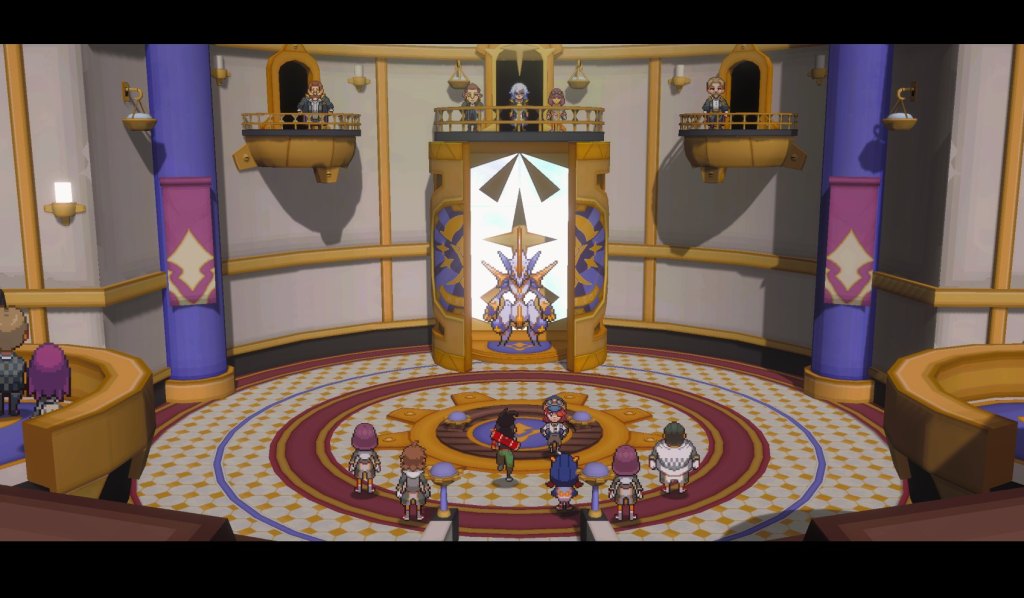 A beautiful world with elegant design. Screenshot by Destructoid Scattered between Animon battles and story beats are strange, distorted memories—it’s unclear whose memories—featuring unidentified figures caught in the middle of what appears to be a revolution or large-scale conflict. Talea itself is just as unfamiliar to players as it is to Trey, and discovering the world through his perspective becomes one of the narrative’s strengths. Conversations, technology, and environmental details slowly reveal pieces of the setting while dropping subtle hints about Trey’s identity. The mystery unfolds at a steady pace, creating enough intrigue to keep pushing forward.
LumenTale follows many of the genre’s familiar conventions, but succeeds where many of its predecessors stumbled. It’s a gorgeous love letter to the genre and its origins, while offering slight variations that keep the gameplay fresh. With a narrative influenced by the player’s choices, a fresh combat system, gorgeous art, and a ton of smaller features to get lost in, it’s a must-play for fans of the genre—even if its technical performance frequently holds it back.
Similar to Pokémon, Animon have types, like Electric and Aura, that play a role in combat, though there isn’t a set type chart of how they counter each other. Instead, every species has its own set of strengths and weaknesses. One Electric species might be weak to Geo and Grass attacks, while another Electric type resists them. It’s an interesting twist on elemental matchups, but it comes with drawbacks. Remembering your own Animon’s strengths and weaknesses becomes surprisingly difficult, and every encounter with a new species turns into a bit of a gamble. Instead of reliably knowing a new Animon’s weakness based on their type, you’re forced to give up a turn scanning the target, which reveals some of their weaknesses, or you have to play a guessing game to figure it out.
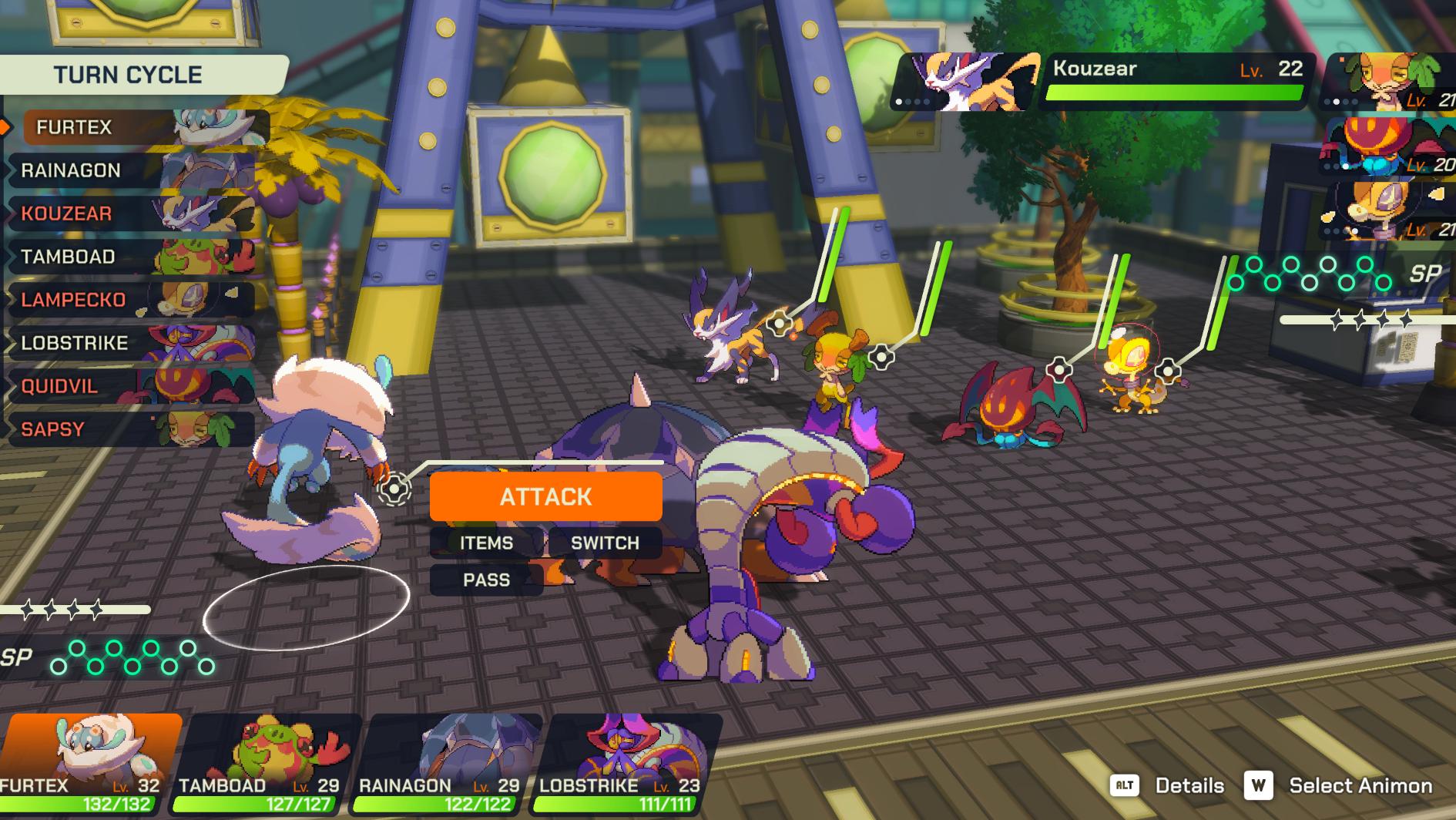 A familiar formula with a fresh face. Screenshot by Destructoid Combat is largely influenced by the presence of five different attributes: Mestus, Furor, Felicis, Horrens, and Sereum. Every Animon has one of the five, and they can be activated to provide an additional effect to an attack at the cost of additional SP. For example, Felicis heals all of your Animon currently on the field by a small percentage when activated, while Furor simply increases a skill’s damage.
Animon also have stats, like physical and special attack, different defenses, speed, and HP—standard stuff for an RPG. What’s different from other creature collectors, though, is that each time an Animon levels up, you have to distribute these stat points manually across their stat pool. At times, distributing points felt like a slog; each Animon gains several points when they level up, and you’ll have to stop and distribute them if you want to ensure your team is as strong as possible.
Together, attributes and stat distribution allow each Animon to fill a role on your team, such as tank, damage-dealer, or healer. Though the single- or double-battles of Pokémon operate similarly, having four Animon on the field in LumenTale means roles have a bigger impact on the outcome of a battle as your Animon heal and set each other up with supporting moves. It wasn’t until later stages of the game, though, that I felt like this really came into play. Early on, I steamrolled through any Lumen who dared face me, because I had overleveled in my pursuit of exploration. Luckily, you can change the difficulty at any time, should you need to scale up the challenge.
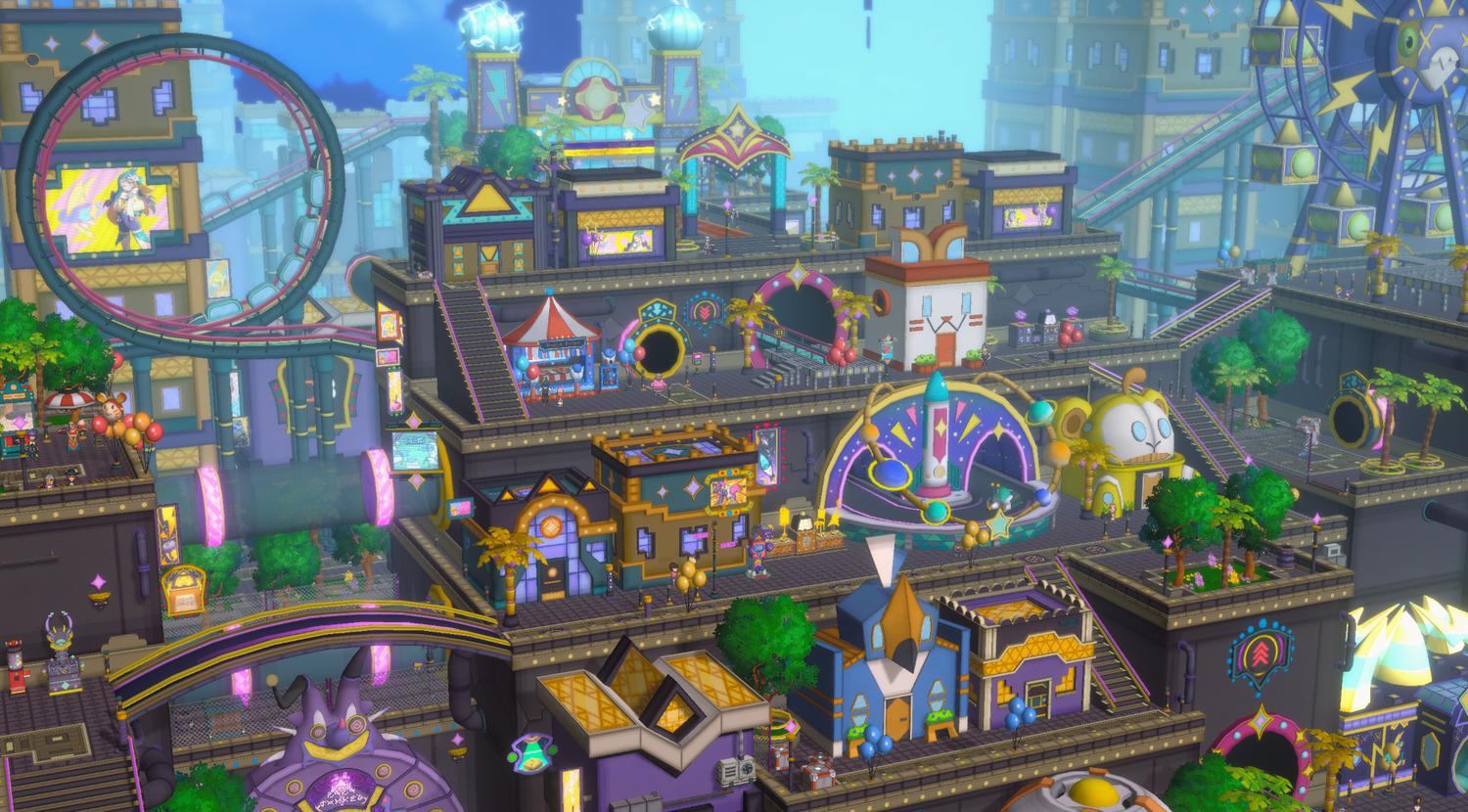 Voltar seems like a fun day trip. Screenshot by Destructoid And it’s a good thing Talea is so beautiful, because you’ll spend a lot of time crossing it. LumenTale lacks a fast-travel system, which can make questing frustrating when objectives send you back across the continent. You eventually unlock a Holoboard—a floating skateboard that dramatically speeds up movement—but it still feels like a feature the game is sorely missing.
Talea is split into two regions: Logos and Mythos, the north and south sides of the continent, respectively. Logos is known for its technological progress, while Mythos revels in tradition. After finishing the game’s tutorial, you get to decide which region you want to start your journey in, though you’ll get to explore both. The narrative takes place on a linear route through the region you choose, though you’re mostly free to roam wherever you please outside of a few closed-off areas.
LumenTale, in general, offers the player a lot of agency and has several story beats with player-led choices that influence the narrative direction. It’s not on the scale of an RPG like Mass Effect, mind you, but it’s much more than you’d ever get with Pokémon.
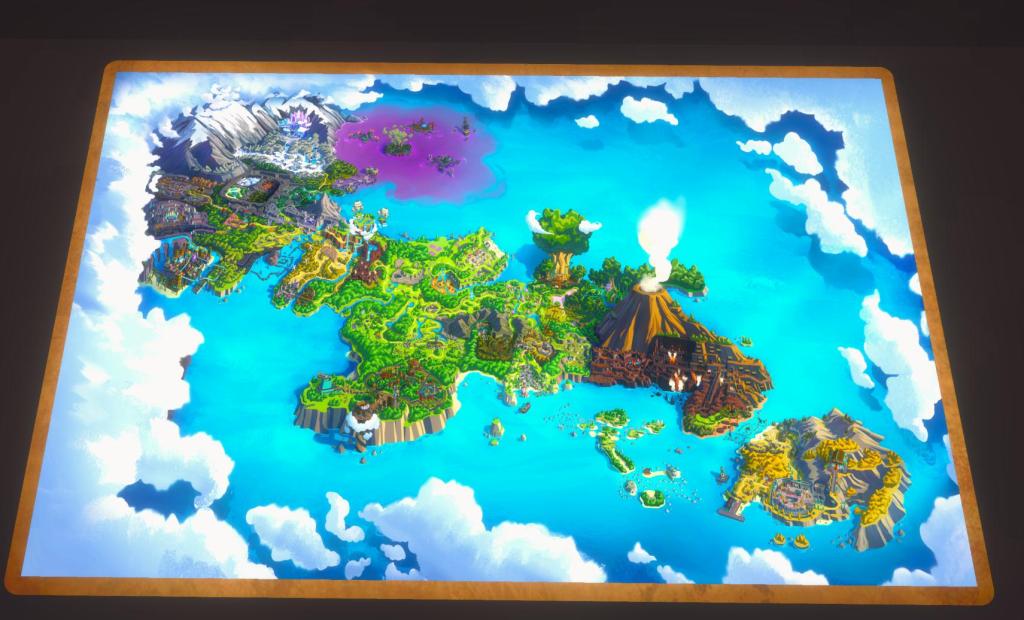 There’s plenty to explore in Talea. Screenshot by Destructoid Throw in a massive crafting system with over 120 recipes, plenty of side quests, and a collectible trading card feature with packs you can open, and you’ve got plenty to keep you preoccupied on your journey. There’s also a weather system that affects combat stats, just like in Pokémon. In LumenTale, though, it’s quite extensive, ranging from rainbows to heavy rain and sandstorms, to fire rain (yes, that’s a real thing). Some Animon also only spawn in certain weather conditions, making exploration and discovery fun with each new map.
The worst bug, though, prevented my game from saving properly; the auto-save slot would record my progress, but the game wouldn’t commit it to a designated save file. This happened twice during my playthrough, and though I found a workaround both times, it’s never fun to teeter on the edge of potentially losing hours of progress.
Bugs aside, I greatly enjoyed my time with LumenTale, and I can’t wait to hop back in. It definitely scratches that creature-collector itch—and with a few post-launch fixes, it has the potential to be much more than that.
The post LumenTale: Memories of Trey review – A flawed, but fantastic take on the creature-collector formula appeared first on Destructoid.
From TemTem to Nexomon to Cassette Beasts, a number of games have tried to get in on the real estate. Palworld, what many deemed the “Pokémon ripoff,” wrangled up its 15 minutes of fame by blending survival-crafting elements with the genre to offer players something unique. But none of them have had the staying power or impact of Game Freak’s darling.
Now we have the next batter to take the mound, LumenTale: Memories of Trey.
https://embeds.beehiiv.com/a8d62108-86ed-4039-bf49-44877ba62c15
A new contender enters the arena
In LumenTale, you play as Trey, a man who suffers from amnesia after waking up in a bed of flowers. The world, Talea, is filled with wild creatures known as Animon that can be caught by people for battling or companionship. Most people can only get one Animon at a time, but Talea’s strongest trainers, the Lumen, are capable of catching and training many. And that’s where Trey comes in.What begins as Trey’s search for answers quickly turns into a victory lap across Talea as Trey takes on entire squadrons of Lumens with his newfound Animon-battling skills. After starting your journey with one of five starter creatures, you’re turned loose in the world to catch wild Animon and build your team to your heart’s desire in either the north or south parts of the continent.
A beautiful world with elegant design. Screenshot by Destructoid Scattered between Animon battles and story beats are strange, distorted memories—it’s unclear whose memories—featuring unidentified figures caught in the middle of what appears to be a revolution or large-scale conflict. Talea itself is just as unfamiliar to players as it is to Trey, and discovering the world through his perspective becomes one of the narrative’s strengths. Conversations, technology, and environmental details slowly reveal pieces of the setting while dropping subtle hints about Trey’s identity. The mystery unfolds at a steady pace, creating enough intrigue to keep pushing forward.LumenTale follows many of the genre’s familiar conventions, but succeeds where many of its predecessors stumbled. It’s a gorgeous love letter to the genre and its origins, while offering slight variations that keep the gameplay fresh. With a narrative influenced by the player’s choices, a fresh combat system, gorgeous art, and a ton of smaller features to get lost in, it’s a must-play for fans of the genre—even if its technical performance frequently holds it back.
Systems that click—but occasionally tangle
The game’s strongest feature is how it builds on the creature-collector formula instead of simply imitating it. As you’re travelling around Talea, you can carry up to six Animon in your party, though a typical battle features two teams of four Animon. Battles are turn-based, and skills cost SP, which is shared across all four Animon, so if you use up all your SP on your first two Animon, your last two won’t be able to move that turn. Teams must act cohesively; the fast-moving member can’t hog all the resources.Similar to Pokémon, Animon have types, like Electric and Aura, that play a role in combat, though there isn’t a set type chart of how they counter each other. Instead, every species has its own set of strengths and weaknesses. One Electric species might be weak to Geo and Grass attacks, while another Electric type resists them. It’s an interesting twist on elemental matchups, but it comes with drawbacks. Remembering your own Animon’s strengths and weaknesses becomes surprisingly difficult, and every encounter with a new species turns into a bit of a gamble. Instead of reliably knowing a new Animon’s weakness based on their type, you’re forced to give up a turn scanning the target, which reveals some of their weaknesses, or you have to play a guessing game to figure it out.
A familiar formula with a fresh face. Screenshot by Destructoid Combat is largely influenced by the presence of five different attributes: Mestus, Furor, Felicis, Horrens, and Sereum. Every Animon has one of the five, and they can be activated to provide an additional effect to an attack at the cost of additional SP. For example, Felicis heals all of your Animon currently on the field by a small percentage when activated, while Furor simply increases a skill’s damage. Animon also have stats, like physical and special attack, different defenses, speed, and HP—standard stuff for an RPG. What’s different from other creature collectors, though, is that each time an Animon levels up, you have to distribute these stat points manually across their stat pool. At times, distributing points felt like a slog; each Animon gains several points when they level up, and you’ll have to stop and distribute them if you want to ensure your team is as strong as possible.
Together, attributes and stat distribution allow each Animon to fill a role on your team, such as tank, damage-dealer, or healer. Though the single- or double-battles of Pokémon operate similarly, having four Animon on the field in LumenTale means roles have a bigger impact on the outcome of a battle as your Animon heal and set each other up with supporting moves. It wasn’t until later stages of the game, though, that I felt like this really came into play. Early on, I steamrolled through any Lumen who dared face me, because I had overleveled in my pursuit of exploration. Luckily, you can change the difficulty at any time, should you need to scale up the challenge.
A beautiful world that demands your time
LumenTale’s environmental design is exquisite, with gorgeous art, memorable routes, and Metroidvania-style obstacles that encourage revisiting older areas. From the luscious treetops of Mirasilva to the vibrant colors of Voltar, most of Talea’s cities boast a unique sense of identity, and it really feels like you’re discovering different cultures as you reach each one. Character and Animon designs follow suit, with an impressive amount of detail going into each one. Voltar seems like a fun day trip. Screenshot by Destructoid And it’s a good thing Talea is so beautiful, because you’ll spend a lot of time crossing it. LumenTale lacks a fast-travel system, which can make questing frustrating when objectives send you back across the continent. You eventually unlock a Holoboard—a floating skateboard that dramatically speeds up movement—but it still feels like a feature the game is sorely missing.Talea is split into two regions: Logos and Mythos, the north and south sides of the continent, respectively. Logos is known for its technological progress, while Mythos revels in tradition. After finishing the game’s tutorial, you get to decide which region you want to start your journey in, though you’ll get to explore both. The narrative takes place on a linear route through the region you choose, though you’re mostly free to roam wherever you please outside of a few closed-off areas.
LumenTale, in general, offers the player a lot of agency and has several story beats with player-led choices that influence the narrative direction. It’s not on the scale of an RPG like Mass Effect, mind you, but it’s much more than you’d ever get with Pokémon.
There’s plenty to explore in Talea. Screenshot by Destructoid Throw in a massive crafting system with over 120 recipes, plenty of side quests, and a collectible trading card feature with packs you can open, and you’ve got plenty to keep you preoccupied on your journey. There’s also a weather system that affects combat stats, just like in Pokémon. In LumenTale, though, it’s quite extensive, ranging from rainbows to heavy rain and sandstorms, to fire rain (yes, that’s a real thing). Some Animon also only spawn in certain weather conditions, making exploration and discovery fun with each new map.Where Talea breaks down
My time in Talea wasn’t all sunshine and rainbows, though. A number of bugs threw wrenches into my gameplay, including everything from bushes that popped in and out of existence, error codes that prevented me from interacting with the game’s online system, and disappearing floors that caused Trey to fall off the map. Additionally, one bug in the Animon-storage system made it so that if I tried to change a creature’s stats, it would lock me in the menu, forcing a restart. The worst bug, though, prevented my game from saving properly; the auto-save slot would record my progress, but the game wouldn’t commit it to a designated save file. This happened twice during my playthrough, and though I found a workaround both times, it’s never fun to teeter on the edge of potentially losing hours of progress.
Bugs aside, I greatly enjoyed my time with LumenTale, and I can’t wait to hop back in. It definitely scratches that creature-collector itch—and with a few post-launch fixes, it has the potential to be much more than that.
The post LumenTale: Memories of Trey review – A flawed, but fantastic take on the creature-collector formula appeared first on Destructoid.
What's Your Reaction?








XINKER - Business and Income Tips
Explore XINKER, the ultimate platform for mastering business strategies, discovering passive income opportunities, and learning success principles. Join a community of thinkers dedicated to achieving financial freedom and entrepreneurial excellence.



![[Business Talk] Chagee: Opening 3,500 stores in 6 years](https://xinker.org/uploads/images/202410/image_140x98_671afce94bf91.webp)