

![[PRO Tips] Gold’s Bullish Revival: Seasonal Trends and Key Levels to Watch](https://xinker.org/uploads/images/202412/image_430x256_67724cc6ad0cd.webp)
![[PRO Tips] Gold Market Under Short-Term Pressure, Safe-Haven Demand and Central Bank Buying Support Long-Term Upside Potential](https://xinker.org/uploads/images/202412/image_430x256_676ffb4685287.webp)
![[PRO Tips] Analysis of 9 key points of differentiation strategy! Master differentiation to create a brand advantage that is unique in the world!](https://firebasestorage.googleapis.com/v0/b/xinker-tips.appspot.com/o/article_thumbnails%2Fscaled_differentiation%20strategy.png.png?alt=media&token=a1bfc3d2-e85a-4db7-8a6d-01c7274f8940)
![[PRO Tips] Will REITs regain growth momentum in 2024? 3 REITs ETFs you must know if you want to invest in real estate.](https://firebasestorage.googleapis.com/v0/b/xinker-tips.appspot.com/o/article_thumbnails%2Fscaled_REITs1.png.png?alt=media&token=8af4eb93-33ff-466f-8039-b6555fad52b4)
![[PRO Tips] Complete tutorial on how to make money in Adobe Stock!](https://firebasestorage.googleapis.com/v0/b/xinker-tips.appspot.com/o/article_thumbnails%2Fscaled_tut-adobe1.png.png?alt=media&token=0b2c8cf2-22bd-4142-883e-140ed1cbaf02)
![[Passive Income] Unlock the secret of passive income: 3 steps to apply for Google AdSense](https://xinker.org/uploads/images/202410/image_430x256_6717a4fb3052b.webp)
![[Passive Income] Earn over $200 a day with AI-generated articles!](https://firebasestorage.googleapis.com/v0/b/xinker-tips.appspot.com/o/article_thumbnails%2Fscaled_article1.png.png?alt=media&token=f61bf35b-8553-4719-826d-7360024adc70)
![[Passive Income] Earn over 20 USD per download with AI-generated images!](https://firebasestorage.googleapis.com/v0/b/xinker-tips.appspot.com/o/article_thumbnails%2Fscaled_adobe2.png.png?alt=media&token=3e20e76a-a907-45af-80aa-bf9b3600301f)
![[Passive Income] Earn 10 USD per new download by sharing CapCut!](https://firebasestorage.googleapis.com/v0/b/xinker-tips.appspot.com/o/article_thumbnails%2Fscaled_capcut2.png.png?alt=media&token=a04dec40-1fac-4857-86f2-19a8be02d38e)
![[Passive Income] Use your WiFi to create passive income in 5 minutes, and you can earn 4-6 U per day!](https://firebasestorage.googleapis.com/v0/b/xinker-tips.appspot.com/o/article_thumbnails%2Fscaled_Grassio.webp.png?alt=media&token=7659a95e-0e47-4f27-a17d-c942ac3cf7f4)


![[Business Talk] The Unique Theme of XINKER's Song: Beef Wellington and Business Mastery](https://xinker.org/uploads/images/202410/image_430x256_671afc155f47f.webp)
![[Business Talk] Chagee: Opening 3,500 stores in 6 years](https://xinker.org/uploads/images/202410/image_430x256_671afce80c5f9.webp)

How Brendan Greene wants you to find your way through the woods | exclusive interview
There are probably a lot of metaphors for Brendan Greene’s next game, where you start out lost in the woods. Greene himself, CEO of PlayerUnknown Productions, could probably say this is what it’s like looking for your next big hit game. It’s also like a story of the game industry, struggling for growth. It’s a metaphor about people who are increasingly disconnected in overpopulated cities where you don’t meet anyone. And it’s a place to go hide when the modern world is too much for us. Or, instead of a metaphor, it’s perhaps just better described as a realistic game where you could die in a short time if you stay out too long in the rain. Prologue: Go Wayback is a game where you land in a procedurally generated map of the woods, with each instance covering 64 square kilometers. Your job is to survive in the woods and reach an exit point in the map, a weather station. It’s a testbed of sorts, the first of a few massive games that Greene, also known as PlayerUnknown, the creator of PlayerUnknown’s Battlegrounds, the battle royale game that has sold more than 100 million copies since Greene released it in 2017. The proceeds from that long-sought success have enabled Greene to patiently build a game studio in the Netherlands that has huge ambitions to make the next big thing. Prologue: Go Wayback is a single‑player open‑world survival game that uses machine learning to generate millions of possible landscapes. Built in Unreal Engine, it’s just the first playable experiment for Greene’s larger ambitions. For those looking for a game as dramatic combat game like PUBG, where only one of many players survives, this game is slow-paced and very different. It’s for modders or user-generated content fans, with guided world-building. It’s where your biggest enemy is the weather. PlayerUnknown Productions is generating procedural game worlds. Source: PlayerUnknown Productions The second project underway is Preface: Undiscovered World, or Game Two. It will test more of the technologies that Greene’s team has been developing in his quest to create a large-scale world. It will be a multiplayer game that stress tests a networked, shared experience. And that large-scale, “Earth-sized” world will be Project Artemis, a massively multiplayer sandbox world that is like a new kind of 3D social platform for players — a persistent shared world with a user economy and more. Greene calls this Game Three. Greene released an early version of Prologue: Go Wayback! in August, 2025. It was buggy, and some players were disappointed with the lack of gameplay for a game that lacked directed play. But Greene’s team worked on it and fixed the bugs. By November, they released a paid $20 early access version and the ratings have been going up, he said. Greene himself finds that when he needs a bit of peace, it’s a wonderful thing to just go walk in the virtual woods. We caught up at a quiet spot near the recent Dice Summit in Las Vegas. We spent a lot of time talking about the emergent gameplay of ARC Raiders, but playing that game helped me understand more what Greene wants to do with his games. Greene is also going to do a fireside chat with me at GamesBeat Crossfire, our event that takes place during GDC Festival of Gaming, on March 10. Here’s an edited transcript of our interview. Brendan Greene is CEO of PlayerUnknown Productions, maker of Prologue. Source: GamesBeat/Dean Takahashi GamesBeat: How are things going? Brendan Greene: I’m incredibly proud of my team. When we launched in November we came out with a 55% rating on Steam. Now the recent reviews are up to–the last time I checked it was about 84%, which is really good. Even the mixed reviews we saw were saying, “We can see what this can be. It’s just a bit empty right now.” I don’t disagree with that. But I find a lot of joy in playing it. They really dug in over the last few months. They’ve pushed out updates and hot fixes. They’ve been very responsive to the community. Shout out to them, because they’ve been great. GamesBeat: Was the 55% related to anything in particular? Greene: It comes down to the expectation of what early access means. A lot of games release into early access, especially from the bigger guys, that are essentially gold masters. They’re releasing it for bug fixing. We’re using early access how it’s meant to be used, by releasing an early product and working with the community. Some of the earlier comments–as I said, they weren’t criticizing it. It wasn’t about bugs. The game is just a little empty right now. All the systems are quite basic. We wanted to first focus on getting the MVP into the game and then work on expanding it. That’s what we’re doing. That’s why people are seeing–we haven’t just released an empty product. We did updates every few weeks with patches, and then every month a bigger content update. The one we did in February, we added the glider mode and free roam. We had the mod jam before Christmas. The guys did some really cool mods, like one whe

There are probably a lot of metaphors for Brendan Greene’s next game, where you start out lost in the woods.
Greene himself, CEO of PlayerUnknown Productions, could probably say this is what it’s like looking for your next big hit game. It’s also like a story of the game industry, struggling for growth. It’s a metaphor about people who are increasingly disconnected in overpopulated cities where you don’t meet anyone. And it’s a place to go hide when the modern world is too much for us.
Or, instead of a metaphor, it’s perhaps just better described as a realistic game where you could die in a short time if you stay out too long in the rain.
Prologue: Go Wayback is a game where you land in a procedurally generated map of the woods, with each instance covering 64 square kilometers. Your job is to survive in the woods and reach an exit point in the map, a weather station.
It’s a testbed of sorts, the first of a few massive games that Greene, also known as PlayerUnknown, the creator of PlayerUnknown’s Battlegrounds, the battle royale game that has sold more than 100 million copies since Greene released it in 2017. The proceeds from that long-sought success have enabled Greene to patiently build a game studio in the Netherlands that has huge ambitions to make the next big thing.
Prologue: Go Wayback is a single‑player open‑world survival game that uses machine learning to generate millions of possible landscapes. Built in Unreal Engine, it’s just the first playable experiment for Greene’s larger ambitions. For those looking for a game as dramatic combat game like PUBG, where only one of many players survives, this game is slow-paced and very different. It’s for modders or user-generated content fans, with guided world-building. It’s where your biggest enemy is the weather.
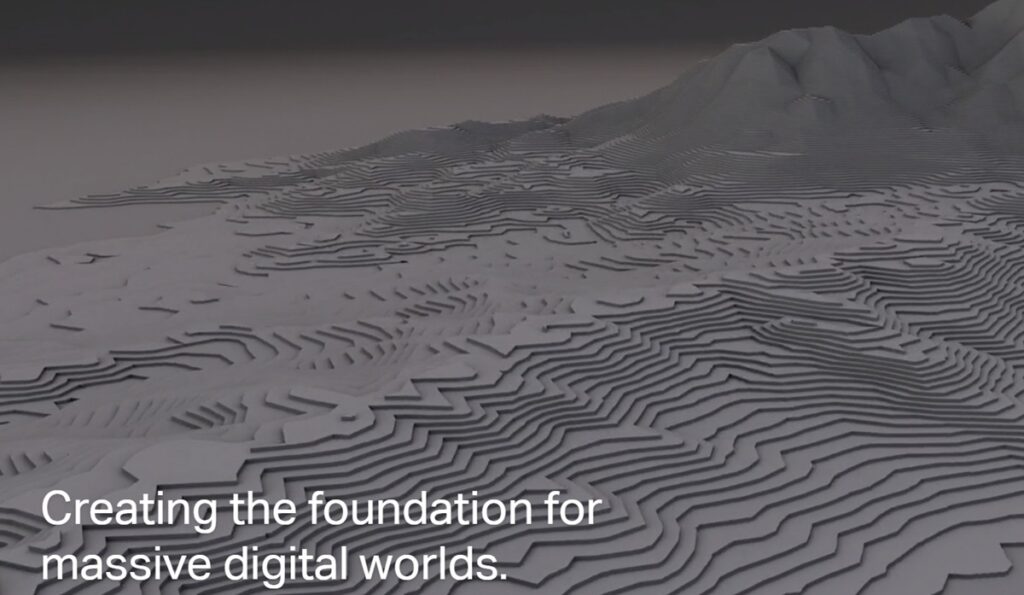 PlayerUnknown Productions is generating procedural game worlds. Source: PlayerUnknown Productions The second project underway is Preface: Undiscovered World, or Game Two. It will test more of the technologies that Greene’s team has been developing in his quest to create a large-scale world. It will be a multiplayer game that stress tests a networked, shared experience.
And that large-scale, “Earth-sized” world will be Project Artemis, a massively multiplayer sandbox world that is like a new kind of 3D social platform for players — a persistent shared world with a user economy and more. Greene calls this Game Three.
Greene released an early version of Prologue: Go Wayback! in August, 2025. It was buggy, and some players were disappointed with the lack of gameplay for a game that lacked directed play. But Greene’s team worked on it and fixed the bugs. By November, they released a paid $20 early access version and the ratings have been going up, he said.
Greene himself finds that when he needs a bit of peace, it’s a wonderful thing to just go walk in the virtual woods. We caught up at a quiet spot near the recent Dice Summit in Las Vegas. We spent a lot of time talking about the emergent gameplay of ARC Raiders, but playing that game helped me understand more what Greene wants to do with his games.
Greene is also going to do a fireside chat with me at GamesBeat Crossfire, our event that takes place during GDC Festival of Gaming, on March 10.
Here’s an edited transcript of our interview.
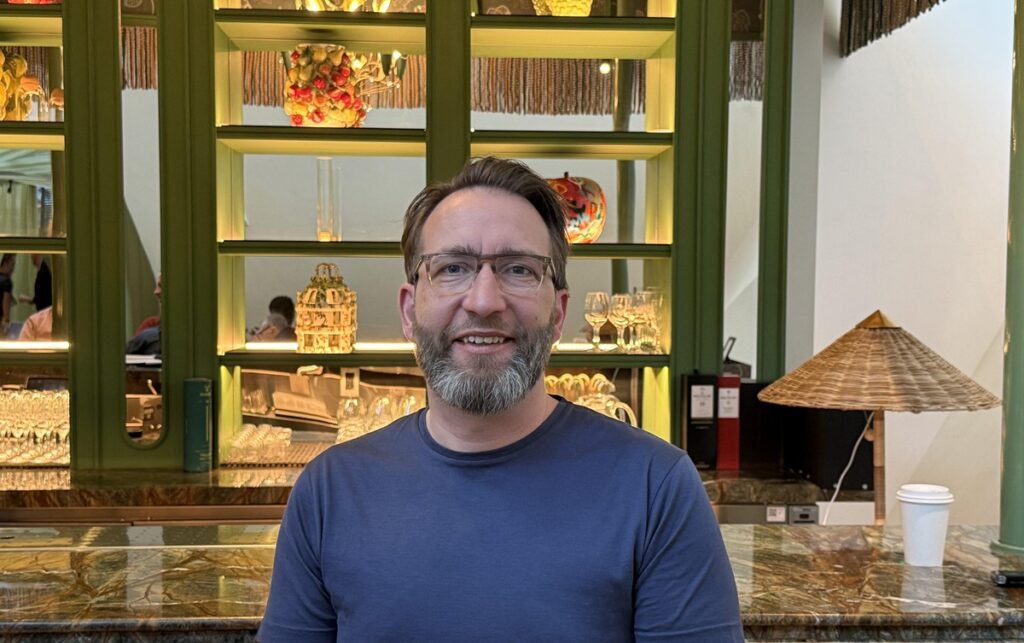 Brendan Greene is CEO of PlayerUnknown Productions, maker of Prologue. Source: GamesBeat/Dean Takahashi GamesBeat: How are things going?
Brendan Greene: I’m incredibly proud of my team. When we launched in November we came out with a 55% rating on Steam. Now the recent reviews are up to–the last time I checked it was about 84%, which is really good. Even the mixed reviews we saw were saying, “We can see what this can be. It’s just a bit empty right now.” I don’t disagree with that. But I find a lot of joy in playing it. They really dug in over the last few months. They’ve pushed out updates and hot fixes. They’ve been very responsive to the community. Shout out to them, because they’ve been great.
GamesBeat: Was the 55% related to anything in particular?
Greene: It comes down to the expectation of what early access means. A lot of games release into early access, especially from the bigger guys, that are essentially gold masters. They’re releasing it for bug fixing. We’re using early access how it’s meant to be used, by releasing an early product and working with the community. Some of the earlier comments–as I said, they weren’t criticizing it. It wasn’t about bugs. The game is just a little empty right now. All the systems are quite basic. We wanted to first focus on getting the MVP into the game and then work on expanding it. That’s what we’re doing.
That’s why people are seeing–we haven’t just released an empty product. We did updates every few weeks with patches, and then every month a bigger content update. The one we did in February, we added the glider mode and free roam. We had the mod jam before Christmas. The guys did some really cool mods, like one where they turned it into a desert instead of a forest. You survive against the heat. That was done in a day. It was showing off what you can do with the tech. As I said, the team has been great. They’ve been pushing through.
GamesBeat: Are there particular kinds of objects and things to use or craft that people wanted?
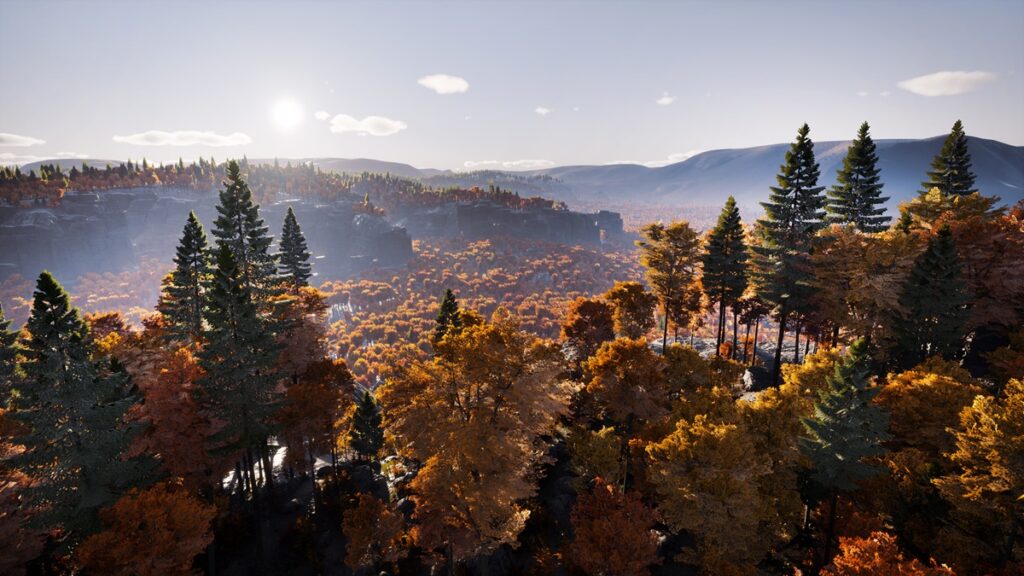 Prologue: Go Wayback can keep generating wilderness landscapes to explore Source: PlayerUnknown Productions Greene: For example, water. People wanted to be able to collect water from taps, or rainwater outside. That was one of the first things we did, making flasks and bottles. You can leave them outside in the rain and they’ll fill up. Adding cups and pans is harder, because it means creating a container system. That takes more coding. But in our Discord you can see our feedback channel. Every day I wake up and see new feedback about the systems. I’ll look through and follow up with some specific instances, but I know they’ve been very active in listening to what the community’s said.
GamesBeat: I’ve been playing a lot of ARC Raiders. I’m probably 85 hours in. My friends who are at level 75 are closer to 150 hours. It’s very enlightening, I think, about emergent systems.
Greene: Oh, I love what they’ve done. It gives the players the freedom to choose. It’s a wonderful play space. It reminds me a lot of how PUBG was when it came out, or even H1Z1. Just these emergent, chaotic spaces where anything can happen. It’s just a bit more guided with ARC Raiders, because you have missions and stuff.
I love what they do because that’s my jam. Not necessarily playing it. I haven’t played ARC Raiders because I don’t really like third-person shooters. It’s just not my thing. But the space they’ve created is right up my alley. It’s emergent. I see that with Prologue. When we started adding DLCs, adding the story points with the quests and stuff like that, because it’s a randomly generated world every time, I see this opportunity as well. You’re assigned a mission, but it’s going to be on a different map every time, so you can have a different experience. It’s single-player for now, but I’d love to add co-op multiplayer, because it’s something that people like a lot. Playing with friends, but without really having an enemy.
https://www.youtube.com/embed/YLdm77g5F2M?feature=oembed GamesBeat: They’ve narrowed down to what they think is the slice of the world that is the fun part. I don’t know how much they went into the open world idea, but they concluded that there was just too much. The fun parts were too far apart.
Greene: This is the nice thing about the tech we’re building, especially for Prologue. Because we can do an eight by eight world pretty instantly now, and it now looks pretty nice–we’ve added in freezing mud, so the mud freezes over and you can slip and slide on it. It allows us to focus on the fun. It allows us to add a system and then it just works in the world. When we released our road map I saw a few articles saying, “This is a very ambitious road map.” But internally we know we can achieve all these things. The way that the world works, we can iterate on it quickly and add these systems in a much quicker succession than the traditional way of doing things.
People look at our road map and say, “Well, can they really do this in a year?” I’m looking internally at the Jira boards and saying, “Yes, we probably can, because of the way that we iterate.” It allows us to focus on the fun, which is half the battle. A lot of bigger games, getting it to that point where you can explore the whole map and see, as you said, how far it is between points of fun, how much time it takes, that just makes it much easier.
GamesBeat: They seem to have picked up on things that had been partially done in other games and combined them all. The proximity chat, that was in Warzone. You could chat with people around you. But the only purpose in Call of Duty was to overhear someone and then go shoot them. There was no reason to use that chat in a game where everyone is your enemy.
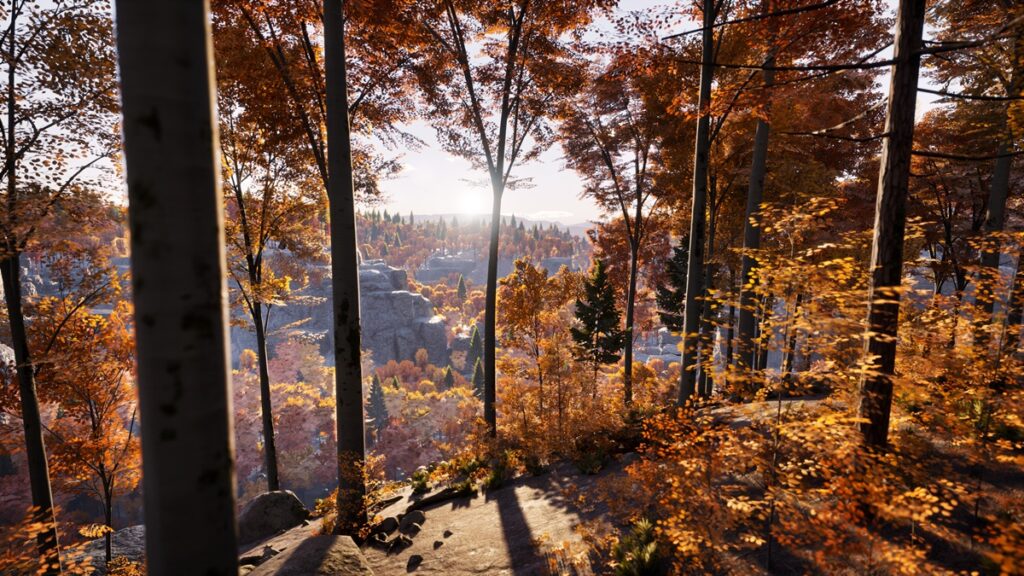 Now that’s a view. Source: PlayerUnknown Productions Greene: It’s the same with DayZ. You saw streamers like Lirik who would say, “I’m friendly, dude!” And then just shoot someone. That lovely betrayal of trust that’s possible with these kinds of systems is wonderful.
GamesBeat: And the sound. Hearing things first before they’re in your face.
Greene: That’s super important, having really good sound design. That’s something I’m proud of in Prologue. The sound design of the world makes it really feel alive. It’s funny. When I’m under stress or I’m thinking too much, I’ll just spin up Prologue and go running through the forest for a few hours. I know the game well enough that I don’t really die. There are some moments where I come close because I misjudge the rain or something and I get wet. But generally I’m just running through a forest trying to stay warm. That’s all I have to think about. It’s peaceful. It’s calm in 3D. It allows me to relax a little and stop thinking because I’m focused on some very simple tasks.
GamesBeat: Some of the indicators for stuff you can find are valuable, like olive trees. I know I can get olives on the ground by the olive trees. If I recognize the olive trees from far away–
Greene: Or spotting the mushrooms on the ground.
GamesBeat: The cacti. These are all things that give you clues about resources. That part has been interesting.
Greene: We did the same thing with the shelters. Right now it’s a bunch of cabins in the woods. But then we added some set dressing, like a small sauna outside. Maybe some wooden fencing to give the cabin a wider area of interest. As you pass by, maybe you’ll notice a fence. That means there’s a cabin nearby. Before you were just hoping to see a cabin in the forest.
In the next update, or the one after, we have some cabin variations, where it’s not just going to be the same cabin. We want to add different types of cabins, and also locations with a lot more interest. Not just a single cabin. We want to add pathing and infrastructure, so it feels like a real world. Paths between cabins, telephone lines, these kinds of things. Once all those elements are in, then we can start leveraging quests and missions, because it feels like a world where there are things to do. You can repair the power lines to get power to the weather tower and have a message delivered, things like that. Right now it’s very hard to do that. That’s where our focus is, trying to make sure the world we generate is deep and rich enough that the stuff that happens in ARC Raiders and these other emergent spaces can happen.
GamesBeat: These things that happen far away, like the beacons that go up whenever somebody dies–you know, okay, either I want to go over there or I don’t want to go over there.
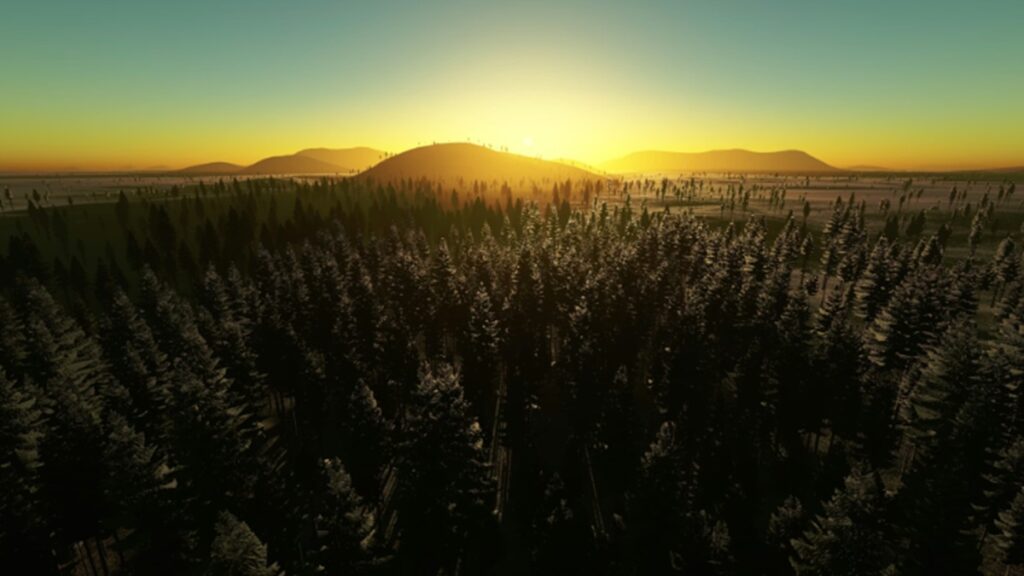 Game 2 will be a multiplayer world with massive networking. Source: PlayerUnknown Productions Greene: H1Z1 had the smoke on the care packages. You would see it dropping. Similar mechanic. Do I risk going and getting the care package? It’s a nice catch-up feature. Maybe I haven’t done well looting, but I see a care package and I can get something good from that. Then you face the risk-reward. Are other people going to try and get it?
GamesBeat: Because you’re so oriented around a natural world, can you do these kinds of indicators in the world that help people? Or do you really just want people to go and find things, rather than telling them there’s something good here?
Greene: We don’t believe in yellow paint. We want players to figure it out for themselves. We are doing a tutorial to try to allow people to understand how to play the game, but in the game itself, I really don’t want to hold anyone’s hand. This is meant to be an exploration game. You’re meant to find it hard to get across the map until you learn how to read the map, read the landscape.
Of course, we still have a lot of improvements to make to the landscape, but I don’t want to make it again, adding stuff like paths, like power lines, bigger points of interest, that immediately make the map more navigable. Right now, you’re really just looking for cabins in the forest. Opening up some of the biome so that it’s not just pure forest, but maybe a meadow, a break in the forest to let you see more of the world. But all the systems need to be done one by one, and iteratively. We just updated the foraging. Before, if you found a meadow, you were fine. Carrots fucking everywhere. The mushrooms used to be a lot bigger, but now they’re a lot smaller. But again, if you run through with your lamp on it highlights the mushrooms to make them easier to spot. We did an update for foraging and looting that balances stuff a bit better.
These are all things where, again, we just work on community feedback. They say, “I can’t find maps to save my life.” We already have a high level of maps in the game, but again, there’s 400 cabins. Maybe I’ve just come across the five cabins that don’t have a map. The wonderful thing about working with an RNG–I was just checking where it was spawning a map. I teleported myself from cabin to cabin. It has lines like someone has done a cross-stitch or something on the map. I just went through 50 or 60 cabins trying to find the frequency of how much stuff is spawning. Because of the way we generate the world, the total loot isn’t known until you’re in the world. We can’t go through and figure out, “We want X number of maps.”
GamesBeat: Do you have something like player killers, people out there hunting other players?
Greene: No, not yet. We’ve had a lot of call for animals, for wildlife in the game. But that adds so much other work. If you want animals, either you need a stealth mechanic or a killing mechanic, so you can protect yourself against them. That requires a lot of coding. I would much prefer to focus on getting the world rich, that end of things, rather than adding more threats. The weather is already threatening enough. In a blizzard or a thunderstorm we’re hopefully going to add some flying debris that can hit you. It’s really about making the environment more threatening, rather than adding specific threats. Don’t get me wrong. I would like to do it. But it requires a bit of discipline so we don’t get caught up in feature creep.
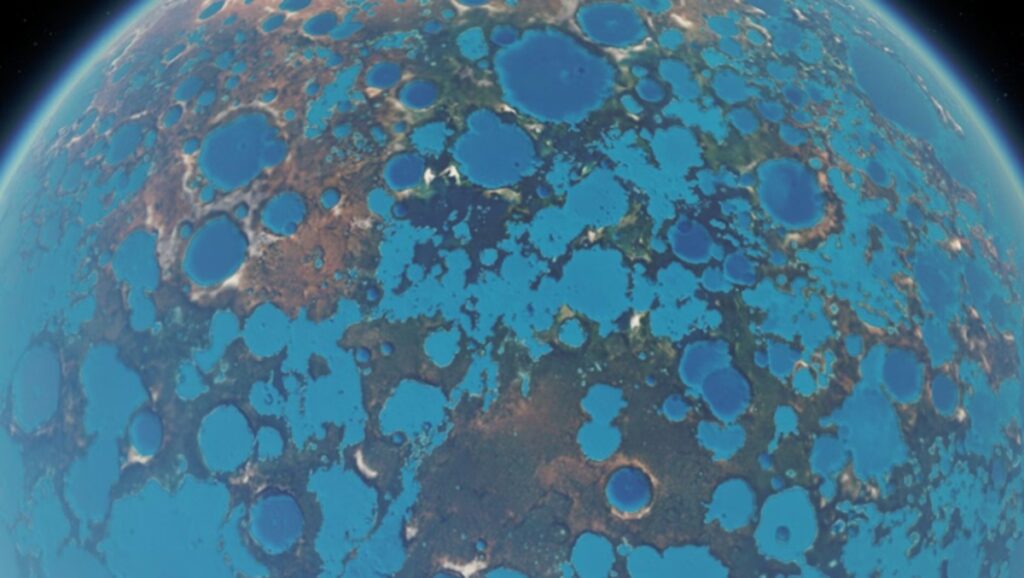 A rendering of Project Artemis’ Earth-sized world. Source: PlayerUnknown Productions GamesBeat: Is it going to be co-op in some way?
Greene: I want it to be co-op. I asked my tech director about maybe putting in an asynchronous, Dark Souls kind of co-op, where you can play with your friend, but you’re experiencing two different worlds. You can experience the same world together, play the same world, but you’re not in the world with each other. I would love to add co-op multiplayer, but again, we want to make sure the worlds are deterministic first, which they are. That took us a while to get. Everything now is based on the seed, from loot to weather to everything else, so you can share that. Multiplayer is just a lot of coding.
GamesBeat: I do think that some of this helps with retention and engagement. Those level 75 players have been helping me so much. It makes me want to go back in the world and find the things they’ve showed me. “If you’re short of this thing, you have to go that way.” There’s enough predictability about the world that experienced players have a lot to teach.
Greene: I like the way they do it where if you’re an aggressive player, they put you in aggressive lobbies. If you’re a more chill player, if you don’t kill anyone–one guy said, “I didn’t kill anyone for 20 rounds, and now look at my lobbies. It’s a bunch of guys dancing in a disco.” It’s great. This is why I love emergent spaces. It allows this kind of experience to happen. It’s not just linear, point A to point B. Even in Fortnite you had the Daft Punk experience, which was wonderful, but it was still a line from here to here.
If you look up Blood Club in Rust–there’s a streamer called ZChum, a Rust streamer. He got a DJ and they set up a club in Rust. They built a club out. He had a stream deck controlling the lights, pushing buttons. There was a DJ and live lighting with lasers and all kinds of stuff. Really looked cool. Again, it’s an emergent space. It wasn’t just start here and end here. It was up to the DJ to choose what music to play. The lighting was live. It’s a digital place.
GamesBeat: There’s one subway exit in ARC Raiders. When you go into that, you have all this loot. There was a guy just sitting there with a guitar playing music. He had his cup out, basically. He was trying to get his music out there, playing for people as they left the game. They would drop valuable loot for him.
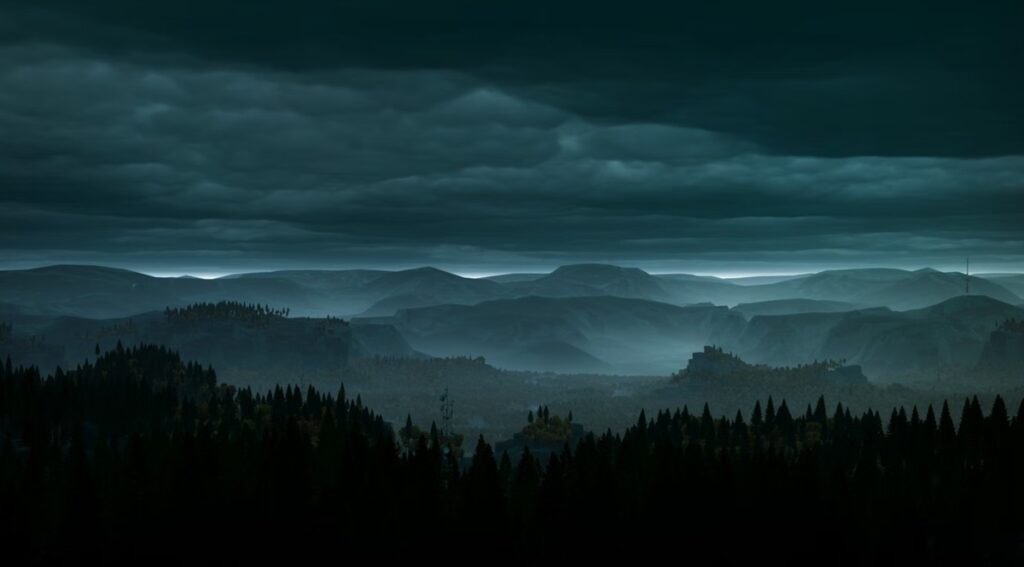 PlayerUnknown Productions is shooting for massive scale. Source: PlayerUnknown Productions Greene: That’s amazing. In DayZ you had the jukebox guy. He just went on a bicycle and would play music. You’d watch streams where suddenly you’d hear music coming. It’s just the jukebox guy riding by on his bicycle, blaring music through proximity chat. I love it.
GamesBeat: It was interesting for this to come out two weeks after Battlefield and two weeks before Call of Duty and become the game I played the most. I saw Battlefield’s curve of concurrent players drop off quickly, and that outsold Call of Duty for the first time.
Greene: By a large margin, yeah.
GamesBeat: It turned me around on the idea that different kinds of shooters are possible, that can be much more fun. The other thing, I did this gameplay session where I went in with Patrick Soderlund and Owen Mahoney at the same time. We were a trio. Patrick showed us things that were interesting, things the CEO would know about. He knew where to find everything. But I was able to interview him and Owen while we were doing this, about a 90-minute video. It got very popular because of that format. That was where Patrick showed how they were doing aggression-based matchmaking for the first time. These are the kinds of things I’d like to do more of in the future, just going into a game with creators and playing it. Interviewing them on the spot about the things we see. One of these days I’d like to do that with you.
Greene: Oh, we should play together. Let me know when you get time, because we can just play the same seed. We’d have exactly the same experience together, just on different machines. We’d experience the same game. I feel like that’s exciting as well, because for events, like conventions, you could set up 16 players on the same map and see who could survive the longest. We have free roam and survival modes now, where the objective is to survive. I was going to call it Just Survive as a little shout out to H1Z1, but we called it Objective Survive, because one of the team thought a shout to Halo was probably better. What objective? Survive!
GamesBeat: It’s easier to do in a game where you’re not trying to kill everything in your path. It would be hard to interview someone while you’re playing Call of Duty.
Greene: ARC Raiders, again, it has that nice curve that PUBG had. Tension, relaxation, tension, relaxation. You have that nice flow. A lot of the others, like Call of Duty or even Fortnite, are a lot of action all the time. A lot of people are chasing that dollar. Quick rounds, get people in and out, cycle and cycle and cycle. With PUBG and ARC Raiders, you have that understanding that people don’t want action all the time. They would like a little break. Or some people may want action all the time, but they’re generally under 21.
You want that break where you can–with PUBG, I heard this all the time. I did an interview with Zaknafein. He’s a Long Dark streamer. He helped them with Misery mode. At the end of the interview, he said, “Look, thank you for talking to me. I never thought I’d talk to PlayerUnknown.” I said, “Well, you gave me a really good critical review of the game. Of course, I’d love to talk to you. You took that time.” He said he’d had a bunch of friends in school that he’d kind of lost contact with, but through PUBG, he remade these friends, reignited those friendships. I’ve met people here at Dice who’ve told me the same thing. I was playing a quick game of poker yesterday, and a guy at the table said, “Yeah, I made friends playing your game on my iPad.” This ability to connect with people is what happens in that relaxation phase. If it’s all tension, those connections don’t easily form.
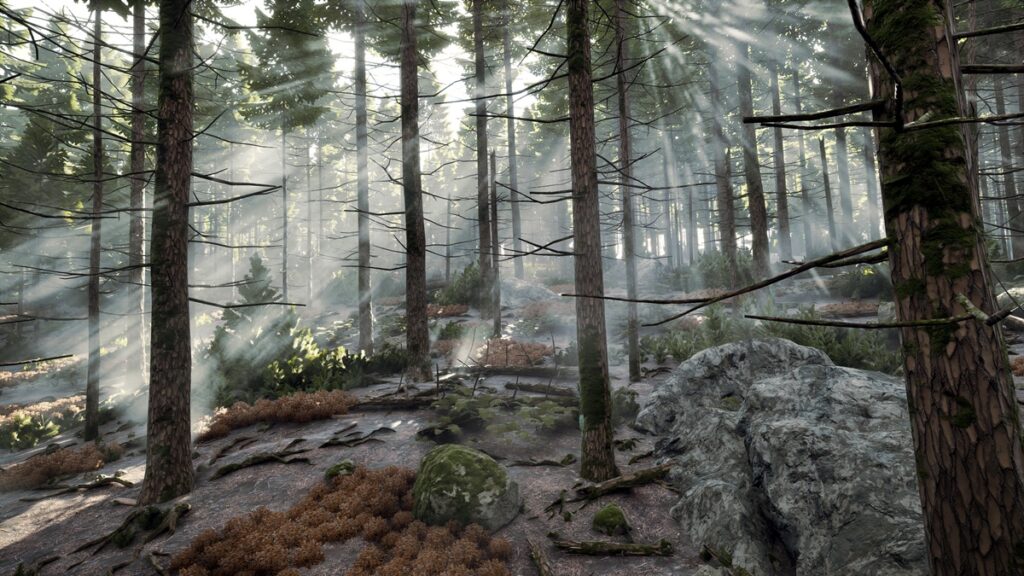 Some beautiful scenery generated by AI. Source: PlayerUnknown Productions GamesBeat: I felt like Patrick was more relaxed in his own environment. It didn’t feel like a confrontation with a journalist. We were playing together.
Greene: It’s a nice way to experience a game and get thoughts in the moment. It’s funny. You asked me earlier about some of the features we’ve gotten from community feedback. Off the top of my head, I can’t remember any directly here, but if we were playing the game, I know that would come to me. I’d do something and think, “Oh, this is because someone asked us to do this.” These small changes that you remember in the moment, rather than trying to sort it through in your head, take it out of the memory palace.
GamesBeat: There were two emergent things that happened when we were playing. We killed a big Leaper, one of the spider-like things, and we were looting it. Then another team comes upon us and kills us and takes our loot. Patrick is saying, “Why did you do this?” They said, “Oh, we thought you were these other guys who attacked us first.” Patrick’s like, “Eh, it’s all right, I’ve got a lot of good stuff on me already.” Then, when we were exiting, we had a bunch of loot as we went to the subway train. We came in from one side, another team came in from the other side, and they started shooting us as we were boarding the exit vehicle. Patrick survived and started cursing at them. “I’m going to get you guys for shooting my friends!” It was hilarious.
Greene: It’s why I fell in love with gaming. It was because of the emergence you found in the DayZ mod. It’s why I’m so passionate about creating these kinds of spaces. It’s shown time and time again that people like this freedom. Players like to have that choice of what to do.
GamesBeat: The interesting net of this, it makes me think more about all these decisions you’ve made and how it’s more interesting than I thought. I was a Call of Duty player.
Greene: When you’re used to something a lot more linear, coming into this emergent space–as I said, this is why I stopped playing games back in my 20s. It was because of games that were just too linear. I liked Delta Force: Black Hawk Down. I liked more open-world stuff. When I found the DayZ mod, seeing that emergent space, it reignited this passion. Holy shit, you can do this. I see it in Bulkhead’s new game, Wardogs. That looks really good. It’s only wishlisting at the moment, but their marketing is, “Not a battle royale, not an extraction shooter.” It’s king of the hill, basically, which is great. These game modes are fantastic.
GamesBeat: Or Last Flag, where they’re making capture the flag only.
Greene: Oh, the guys from Imagine Dragons. I saw that yesterday. It looks kind of cute? It has a really nice style to it. And it should have some pretty good music.
GamesBeat: There doesn’t seem to be many venture-backed experiments still playing out. So many have failed. A bunch ran out of money. A bunch just didn’t have a hit when they came out. Now, just a handful are there to possibly prove that venture capital can still succeed.
Greene: VCs aren’t so adventurous anymore, right? It’s very data-driven now. It’s very focused on upward growth.
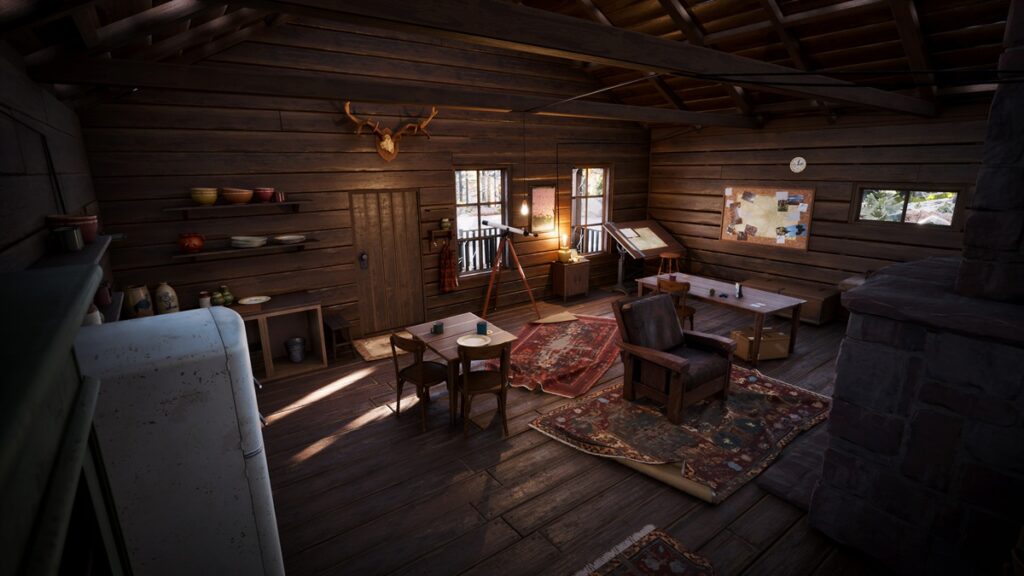 Perhaps I should just stay in the cabin. Too bad the windows are broken. Source: PlayerUnknown Productions GamesBeat: Acquisition funds are the thing that’s possibly going to take their place.
Greene: Games take a long time to make. You look at CS: GO. It took years to get to where they are now. PUBG, battle royale in general, that happened very quickly. It happened within the space of about three years. That gave people the idea–you hear this all the time about games like Valheim and No Man’s Sky. Look at this tiny team making so much money! Why can’t everyone work like that? Because the type of game they’re making is procedural, it lends itself to a small team. Same with us, with Prologue. It’s a procedurally generated landscape. You can do that with a small team.
The tech in Prologue, I’d love to make it into some kind of tool for other dev teams. I think the ability, now that we have the whole system set up, it would probably take a team of five or six people, artists, to take that tech, train it with new terrain data, and put in some assets. They could do it in a few months, rather than several years, and make an eight-by-eight-kilometer world that they could iterate on really quickly. Having that as a tool for indies for free, and then over a million, you give us some money.
I just think these kinds of tools–you see so many of these survival games that release the map in parts. It takes time to build these big maps. Look at Horizon. Look at GTA. They take almost a decade. That’s still a small map, relatively. It’s probably 10 by 10, maybe? It’s still small. Whereas if you want to do 100 by 100 or even bigger, the only way is procedural generation. You still need to know how to work with terrain. You still need to know about access. It’s like a calculator. It helps the mathematician work more efficiently, but you still need to know math. The same with the tool I’d like to build. If you know how to work with art assets, how to find the right terrain data, then you can use this to speed up your workflow and get to the fun part, get to the playability and the gameplay a lot sooner than having to do everything gray-boxed.
GamesBeat: What do you have coming up in the near future?
Greene: I’m looking forward to the March update we have coming out. We have a bunch of juicy things planned for the game. And also when we eventually have modding. That’s really exciting. I saw what the team could do in a day or so last December. Having the community be able to exploit the platform and the worldbuilding, that really excites me. I’m looking forward to the next few months, seeing what we can do with the community.
GamesBeat: Any longer-term things? Do you have some sense of when the game ships, when your next things get going?
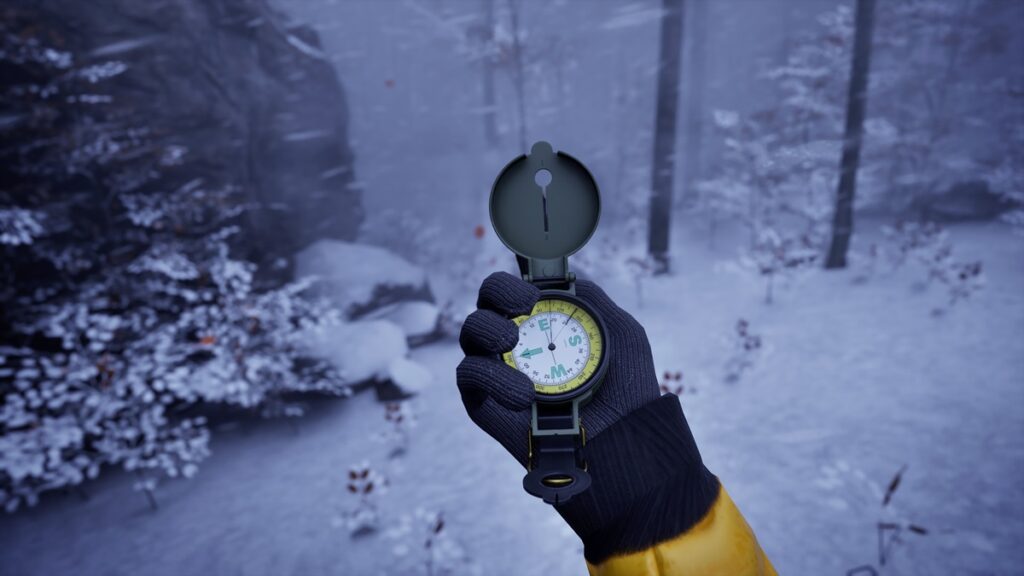 Will players know how to use a compass? Source: PlayerUnknown Productions Greene: With Prologue, we aimed to be out in early access for about a year. That will bring the world generation part up to what we would consider almost 1.0, or as close as environmentally rich as we can make it. Then, with DLCs, we want to start telling the story, the lore I have planned. I’m still writing my comic book. I’m on to the fifth draft of the screenplay now. It’s getting better. I’m not cringing so much when I read it, so that’s nice.
Game two is going to be built in our own engine, but that needs time to get it to a stage where we can build games on top of it. Right now, we can build Earth-scale worlds, sure, but we have a plan this year to do a beautiful corner of 100 by 100 kilometers, showing how rich and beautiful we can make the world and add some layer of multiplayer to it as well. The aim will hopefully be –maybe three years — we’ll look at doing early access for game two, which is the bigger FPS/RTS that I’ve spoken about.
GamesBeat: What was the codename on that one?
Greene: Game two. No codename.
GamesBeat: I thought there was Artemis and Prologue, but–
Greene: Artemis is just the overarching project, the whole thing, all three bundled together. Prologue, game two, and game three. Each of them helps prove out a tech stack. Prologue helps prove out the terrain. Game two will help prove out marketplace and NPC interaction and large-scale battles, that kind of stuff. Then game three will do massive multiplayer.
GamesBeat: That reminds of the other thing that Patrick had to say about the combination of Embark and Nexon. Nexon taught them all the stuff they knew about crafting, and that’s turned out to be the third part of the game. You’re underground, you’re safe, and you can put all this stuff together into much better things that you can take up into the world. You’re always scrounging for particular things to find that you can bring down, and they become missions themselves.
Greene: Right, because I want this level of weapon or utility. Missions just for that. Of course, they’re planned, but it’s more–it makes the second-to-second stuff far more interesting.
GamesBeat: Do you think about crafting in that same way?
Greene: No, not really, because nothing in the world is craftable. You build a fire by just laying down stuff. What you can find in the world–I don’t want to have a traditional crafting system. It’s more like–we have Project Treehouse, where we’re redoing our construction system to allow you to build cabins in the woods, basically. Take down the cabin completely and rebuild it somewhere else. Again, that takes time, but it’s these kinds of systems we want to add, rather than more traditional crafting stuff.
The post How Brendan Greene wants you to find your way through the woods | exclusive interview appeared first on GamesBeat.
Greene himself, CEO of PlayerUnknown Productions, could probably say this is what it’s like looking for your next big hit game. It’s also like a story of the game industry, struggling for growth. It’s a metaphor about people who are increasingly disconnected in overpopulated cities where you don’t meet anyone. And it’s a place to go hide when the modern world is too much for us.
Or, instead of a metaphor, it’s perhaps just better described as a realistic game where you could die in a short time if you stay out too long in the rain.
Prologue: Go Wayback is a game where you land in a procedurally generated map of the woods, with each instance covering 64 square kilometers. Your job is to survive in the woods and reach an exit point in the map, a weather station.
It’s a testbed of sorts, the first of a few massive games that Greene, also known as PlayerUnknown, the creator of PlayerUnknown’s Battlegrounds, the battle royale game that has sold more than 100 million copies since Greene released it in 2017. The proceeds from that long-sought success have enabled Greene to patiently build a game studio in the Netherlands that has huge ambitions to make the next big thing.
Prologue: Go Wayback is a single‑player open‑world survival game that uses machine learning to generate millions of possible landscapes. Built in Unreal Engine, it’s just the first playable experiment for Greene’s larger ambitions. For those looking for a game as dramatic combat game like PUBG, where only one of many players survives, this game is slow-paced and very different. It’s for modders or user-generated content fans, with guided world-building. It’s where your biggest enemy is the weather.
PlayerUnknown Productions is generating procedural game worlds. Source: PlayerUnknown Productions The second project underway is Preface: Undiscovered World, or Game Two. It will test more of the technologies that Greene’s team has been developing in his quest to create a large-scale world. It will be a multiplayer game that stress tests a networked, shared experience.And that large-scale, “Earth-sized” world will be Project Artemis, a massively multiplayer sandbox world that is like a new kind of 3D social platform for players — a persistent shared world with a user economy and more. Greene calls this Game Three.
Greene released an early version of Prologue: Go Wayback! in August, 2025. It was buggy, and some players were disappointed with the lack of gameplay for a game that lacked directed play. But Greene’s team worked on it and fixed the bugs. By November, they released a paid $20 early access version and the ratings have been going up, he said.
Greene himself finds that when he needs a bit of peace, it’s a wonderful thing to just go walk in the virtual woods. We caught up at a quiet spot near the recent Dice Summit in Las Vegas. We spent a lot of time talking about the emergent gameplay of ARC Raiders, but playing that game helped me understand more what Greene wants to do with his games.
Greene is also going to do a fireside chat with me at GamesBeat Crossfire, our event that takes place during GDC Festival of Gaming, on March 10.
Here’s an edited transcript of our interview.
Brendan Greene is CEO of PlayerUnknown Productions, maker of Prologue. Source: GamesBeat/Dean Takahashi GamesBeat: How are things going?Brendan Greene: I’m incredibly proud of my team. When we launched in November we came out with a 55% rating on Steam. Now the recent reviews are up to–the last time I checked it was about 84%, which is really good. Even the mixed reviews we saw were saying, “We can see what this can be. It’s just a bit empty right now.” I don’t disagree with that. But I find a lot of joy in playing it. They really dug in over the last few months. They’ve pushed out updates and hot fixes. They’ve been very responsive to the community. Shout out to them, because they’ve been great.
GamesBeat: Was the 55% related to anything in particular?
Greene: It comes down to the expectation of what early access means. A lot of games release into early access, especially from the bigger guys, that are essentially gold masters. They’re releasing it for bug fixing. We’re using early access how it’s meant to be used, by releasing an early product and working with the community. Some of the earlier comments–as I said, they weren’t criticizing it. It wasn’t about bugs. The game is just a little empty right now. All the systems are quite basic. We wanted to first focus on getting the MVP into the game and then work on expanding it. That’s what we’re doing.
That’s why people are seeing–we haven’t just released an empty product. We did updates every few weeks with patches, and then every month a bigger content update. The one we did in February, we added the glider mode and free roam. We had the mod jam before Christmas. The guys did some really cool mods, like one where they turned it into a desert instead of a forest. You survive against the heat. That was done in a day. It was showing off what you can do with the tech. As I said, the team has been great. They’ve been pushing through.
GamesBeat: Are there particular kinds of objects and things to use or craft that people wanted?
Prologue: Go Wayback can keep generating wilderness landscapes to explore Source: PlayerUnknown Productions Greene: For example, water. People wanted to be able to collect water from taps, or rainwater outside. That was one of the first things we did, making flasks and bottles. You can leave them outside in the rain and they’ll fill up. Adding cups and pans is harder, because it means creating a container system. That takes more coding. But in our Discord you can see our feedback channel. Every day I wake up and see new feedback about the systems. I’ll look through and follow up with some specific instances, but I know they’ve been very active in listening to what the community’s said.GamesBeat: I’ve been playing a lot of ARC Raiders. I’m probably 85 hours in. My friends who are at level 75 are closer to 150 hours. It’s very enlightening, I think, about emergent systems.
Greene: Oh, I love what they’ve done. It gives the players the freedom to choose. It’s a wonderful play space. It reminds me a lot of how PUBG was when it came out, or even H1Z1. Just these emergent, chaotic spaces where anything can happen. It’s just a bit more guided with ARC Raiders, because you have missions and stuff.
I love what they do because that’s my jam. Not necessarily playing it. I haven’t played ARC Raiders because I don’t really like third-person shooters. It’s just not my thing. But the space they’ve created is right up my alley. It’s emergent. I see that with Prologue. When we started adding DLCs, adding the story points with the quests and stuff like that, because it’s a randomly generated world every time, I see this opportunity as well. You’re assigned a mission, but it’s going to be on a different map every time, so you can have a different experience. It’s single-player for now, but I’d love to add co-op multiplayer, because it’s something that people like a lot. Playing with friends, but without really having an enemy.
https://www.youtube.com/embed/YLdm77g5F2M?feature=oembed GamesBeat: They’ve narrowed down to what they think is the slice of the world that is the fun part. I don’t know how much they went into the open world idea, but they concluded that there was just too much. The fun parts were too far apart.
Greene: This is the nice thing about the tech we’re building, especially for Prologue. Because we can do an eight by eight world pretty instantly now, and it now looks pretty nice–we’ve added in freezing mud, so the mud freezes over and you can slip and slide on it. It allows us to focus on the fun. It allows us to add a system and then it just works in the world. When we released our road map I saw a few articles saying, “This is a very ambitious road map.” But internally we know we can achieve all these things. The way that the world works, we can iterate on it quickly and add these systems in a much quicker succession than the traditional way of doing things.
People look at our road map and say, “Well, can they really do this in a year?” I’m looking internally at the Jira boards and saying, “Yes, we probably can, because of the way that we iterate.” It allows us to focus on the fun, which is half the battle. A lot of bigger games, getting it to that point where you can explore the whole map and see, as you said, how far it is between points of fun, how much time it takes, that just makes it much easier.
GamesBeat: They seem to have picked up on things that had been partially done in other games and combined them all. The proximity chat, that was in Warzone. You could chat with people around you. But the only purpose in Call of Duty was to overhear someone and then go shoot them. There was no reason to use that chat in a game where everyone is your enemy.
Now that’s a view. Source: PlayerUnknown Productions Greene: It’s the same with DayZ. You saw streamers like Lirik who would say, “I’m friendly, dude!” And then just shoot someone. That lovely betrayal of trust that’s possible with these kinds of systems is wonderful.GamesBeat: And the sound. Hearing things first before they’re in your face.
Greene: That’s super important, having really good sound design. That’s something I’m proud of in Prologue. The sound design of the world makes it really feel alive. It’s funny. When I’m under stress or I’m thinking too much, I’ll just spin up Prologue and go running through the forest for a few hours. I know the game well enough that I don’t really die. There are some moments where I come close because I misjudge the rain or something and I get wet. But generally I’m just running through a forest trying to stay warm. That’s all I have to think about. It’s peaceful. It’s calm in 3D. It allows me to relax a little and stop thinking because I’m focused on some very simple tasks.
GamesBeat: Some of the indicators for stuff you can find are valuable, like olive trees. I know I can get olives on the ground by the olive trees. If I recognize the olive trees from far away–
Greene: Or spotting the mushrooms on the ground.
GamesBeat: The cacti. These are all things that give you clues about resources. That part has been interesting.
Greene: We did the same thing with the shelters. Right now it’s a bunch of cabins in the woods. But then we added some set dressing, like a small sauna outside. Maybe some wooden fencing to give the cabin a wider area of interest. As you pass by, maybe you’ll notice a fence. That means there’s a cabin nearby. Before you were just hoping to see a cabin in the forest.
In the next update, or the one after, we have some cabin variations, where it’s not just going to be the same cabin. We want to add different types of cabins, and also locations with a lot more interest. Not just a single cabin. We want to add pathing and infrastructure, so it feels like a real world. Paths between cabins, telephone lines, these kinds of things. Once all those elements are in, then we can start leveraging quests and missions, because it feels like a world where there are things to do. You can repair the power lines to get power to the weather tower and have a message delivered, things like that. Right now it’s very hard to do that. That’s where our focus is, trying to make sure the world we generate is deep and rich enough that the stuff that happens in ARC Raiders and these other emergent spaces can happen.
GamesBeat: These things that happen far away, like the beacons that go up whenever somebody dies–you know, okay, either I want to go over there or I don’t want to go over there.
Game 2 will be a multiplayer world with massive networking. Source: PlayerUnknown Productions Greene: H1Z1 had the smoke on the care packages. You would see it dropping. Similar mechanic. Do I risk going and getting the care package? It’s a nice catch-up feature. Maybe I haven’t done well looting, but I see a care package and I can get something good from that. Then you face the risk-reward. Are other people going to try and get it?GamesBeat: Because you’re so oriented around a natural world, can you do these kinds of indicators in the world that help people? Or do you really just want people to go and find things, rather than telling them there’s something good here?
Greene: We don’t believe in yellow paint. We want players to figure it out for themselves. We are doing a tutorial to try to allow people to understand how to play the game, but in the game itself, I really don’t want to hold anyone’s hand. This is meant to be an exploration game. You’re meant to find it hard to get across the map until you learn how to read the map, read the landscape.
Of course, we still have a lot of improvements to make to the landscape, but I don’t want to make it again, adding stuff like paths, like power lines, bigger points of interest, that immediately make the map more navigable. Right now, you’re really just looking for cabins in the forest. Opening up some of the biome so that it’s not just pure forest, but maybe a meadow, a break in the forest to let you see more of the world. But all the systems need to be done one by one, and iteratively. We just updated the foraging. Before, if you found a meadow, you were fine. Carrots fucking everywhere. The mushrooms used to be a lot bigger, but now they’re a lot smaller. But again, if you run through with your lamp on it highlights the mushrooms to make them easier to spot. We did an update for foraging and looting that balances stuff a bit better.
These are all things where, again, we just work on community feedback. They say, “I can’t find maps to save my life.” We already have a high level of maps in the game, but again, there’s 400 cabins. Maybe I’ve just come across the five cabins that don’t have a map. The wonderful thing about working with an RNG–I was just checking where it was spawning a map. I teleported myself from cabin to cabin. It has lines like someone has done a cross-stitch or something on the map. I just went through 50 or 60 cabins trying to find the frequency of how much stuff is spawning. Because of the way we generate the world, the total loot isn’t known until you’re in the world. We can’t go through and figure out, “We want X number of maps.”
GamesBeat: Do you have something like player killers, people out there hunting other players?
Greene: No, not yet. We’ve had a lot of call for animals, for wildlife in the game. But that adds so much other work. If you want animals, either you need a stealth mechanic or a killing mechanic, so you can protect yourself against them. That requires a lot of coding. I would much prefer to focus on getting the world rich, that end of things, rather than adding more threats. The weather is already threatening enough. In a blizzard or a thunderstorm we’re hopefully going to add some flying debris that can hit you. It’s really about making the environment more threatening, rather than adding specific threats. Don’t get me wrong. I would like to do it. But it requires a bit of discipline so we don’t get caught up in feature creep.
A rendering of Project Artemis’ Earth-sized world. Source: PlayerUnknown Productions GamesBeat: Is it going to be co-op in some way?Greene: I want it to be co-op. I asked my tech director about maybe putting in an asynchronous, Dark Souls kind of co-op, where you can play with your friend, but you’re experiencing two different worlds. You can experience the same world together, play the same world, but you’re not in the world with each other. I would love to add co-op multiplayer, but again, we want to make sure the worlds are deterministic first, which they are. That took us a while to get. Everything now is based on the seed, from loot to weather to everything else, so you can share that. Multiplayer is just a lot of coding.
GamesBeat: I do think that some of this helps with retention and engagement. Those level 75 players have been helping me so much. It makes me want to go back in the world and find the things they’ve showed me. “If you’re short of this thing, you have to go that way.” There’s enough predictability about the world that experienced players have a lot to teach.
Greene: I like the way they do it where if you’re an aggressive player, they put you in aggressive lobbies. If you’re a more chill player, if you don’t kill anyone–one guy said, “I didn’t kill anyone for 20 rounds, and now look at my lobbies. It’s a bunch of guys dancing in a disco.” It’s great. This is why I love emergent spaces. It allows this kind of experience to happen. It’s not just linear, point A to point B. Even in Fortnite you had the Daft Punk experience, which was wonderful, but it was still a line from here to here.
If you look up Blood Club in Rust–there’s a streamer called ZChum, a Rust streamer. He got a DJ and they set up a club in Rust. They built a club out. He had a stream deck controlling the lights, pushing buttons. There was a DJ and live lighting with lasers and all kinds of stuff. Really looked cool. Again, it’s an emergent space. It wasn’t just start here and end here. It was up to the DJ to choose what music to play. The lighting was live. It’s a digital place.
GamesBeat: There’s one subway exit in ARC Raiders. When you go into that, you have all this loot. There was a guy just sitting there with a guitar playing music. He had his cup out, basically. He was trying to get his music out there, playing for people as they left the game. They would drop valuable loot for him.
PlayerUnknown Productions is shooting for massive scale. Source: PlayerUnknown Productions Greene: That’s amazing. In DayZ you had the jukebox guy. He just went on a bicycle and would play music. You’d watch streams where suddenly you’d hear music coming. It’s just the jukebox guy riding by on his bicycle, blaring music through proximity chat. I love it.GamesBeat: It was interesting for this to come out two weeks after Battlefield and two weeks before Call of Duty and become the game I played the most. I saw Battlefield’s curve of concurrent players drop off quickly, and that outsold Call of Duty for the first time.
Greene: By a large margin, yeah.
GamesBeat: It turned me around on the idea that different kinds of shooters are possible, that can be much more fun. The other thing, I did this gameplay session where I went in with Patrick Soderlund and Owen Mahoney at the same time. We were a trio. Patrick showed us things that were interesting, things the CEO would know about. He knew where to find everything. But I was able to interview him and Owen while we were doing this, about a 90-minute video. It got very popular because of that format. That was where Patrick showed how they were doing aggression-based matchmaking for the first time. These are the kinds of things I’d like to do more of in the future, just going into a game with creators and playing it. Interviewing them on the spot about the things we see. One of these days I’d like to do that with you.
Greene: Oh, we should play together. Let me know when you get time, because we can just play the same seed. We’d have exactly the same experience together, just on different machines. We’d experience the same game. I feel like that’s exciting as well, because for events, like conventions, you could set up 16 players on the same map and see who could survive the longest. We have free roam and survival modes now, where the objective is to survive. I was going to call it Just Survive as a little shout out to H1Z1, but we called it Objective Survive, because one of the team thought a shout to Halo was probably better. What objective? Survive!
GamesBeat: It’s easier to do in a game where you’re not trying to kill everything in your path. It would be hard to interview someone while you’re playing Call of Duty.
Greene: ARC Raiders, again, it has that nice curve that PUBG had. Tension, relaxation, tension, relaxation. You have that nice flow. A lot of the others, like Call of Duty or even Fortnite, are a lot of action all the time. A lot of people are chasing that dollar. Quick rounds, get people in and out, cycle and cycle and cycle. With PUBG and ARC Raiders, you have that understanding that people don’t want action all the time. They would like a little break. Or some people may want action all the time, but they’re generally under 21.
You want that break where you can–with PUBG, I heard this all the time. I did an interview with Zaknafein. He’s a Long Dark streamer. He helped them with Misery mode. At the end of the interview, he said, “Look, thank you for talking to me. I never thought I’d talk to PlayerUnknown.” I said, “Well, you gave me a really good critical review of the game. Of course, I’d love to talk to you. You took that time.” He said he’d had a bunch of friends in school that he’d kind of lost contact with, but through PUBG, he remade these friends, reignited those friendships. I’ve met people here at Dice who’ve told me the same thing. I was playing a quick game of poker yesterday, and a guy at the table said, “Yeah, I made friends playing your game on my iPad.” This ability to connect with people is what happens in that relaxation phase. If it’s all tension, those connections don’t easily form.
Some beautiful scenery generated by AI. Source: PlayerUnknown Productions GamesBeat: I felt like Patrick was more relaxed in his own environment. It didn’t feel like a confrontation with a journalist. We were playing together.Greene: It’s a nice way to experience a game and get thoughts in the moment. It’s funny. You asked me earlier about some of the features we’ve gotten from community feedback. Off the top of my head, I can’t remember any directly here, but if we were playing the game, I know that would come to me. I’d do something and think, “Oh, this is because someone asked us to do this.” These small changes that you remember in the moment, rather than trying to sort it through in your head, take it out of the memory palace.
GamesBeat: There were two emergent things that happened when we were playing. We killed a big Leaper, one of the spider-like things, and we were looting it. Then another team comes upon us and kills us and takes our loot. Patrick is saying, “Why did you do this?” They said, “Oh, we thought you were these other guys who attacked us first.” Patrick’s like, “Eh, it’s all right, I’ve got a lot of good stuff on me already.” Then, when we were exiting, we had a bunch of loot as we went to the subway train. We came in from one side, another team came in from the other side, and they started shooting us as we were boarding the exit vehicle. Patrick survived and started cursing at them. “I’m going to get you guys for shooting my friends!” It was hilarious.
Greene: It’s why I fell in love with gaming. It was because of the emergence you found in the DayZ mod. It’s why I’m so passionate about creating these kinds of spaces. It’s shown time and time again that people like this freedom. Players like to have that choice of what to do.
GamesBeat: The interesting net of this, it makes me think more about all these decisions you’ve made and how it’s more interesting than I thought. I was a Call of Duty player.
Greene: When you’re used to something a lot more linear, coming into this emergent space–as I said, this is why I stopped playing games back in my 20s. It was because of games that were just too linear. I liked Delta Force: Black Hawk Down. I liked more open-world stuff. When I found the DayZ mod, seeing that emergent space, it reignited this passion. Holy shit, you can do this. I see it in Bulkhead’s new game, Wardogs. That looks really good. It’s only wishlisting at the moment, but their marketing is, “Not a battle royale, not an extraction shooter.” It’s king of the hill, basically, which is great. These game modes are fantastic.
GamesBeat: Or Last Flag, where they’re making capture the flag only.
Greene: Oh, the guys from Imagine Dragons. I saw that yesterday. It looks kind of cute? It has a really nice style to it. And it should have some pretty good music.
GamesBeat: There doesn’t seem to be many venture-backed experiments still playing out. So many have failed. A bunch ran out of money. A bunch just didn’t have a hit when they came out. Now, just a handful are there to possibly prove that venture capital can still succeed.
Greene: VCs aren’t so adventurous anymore, right? It’s very data-driven now. It’s very focused on upward growth.
Perhaps I should just stay in the cabin. Too bad the windows are broken. Source: PlayerUnknown Productions GamesBeat: Acquisition funds are the thing that’s possibly going to take their place.Greene: Games take a long time to make. You look at CS: GO. It took years to get to where they are now. PUBG, battle royale in general, that happened very quickly. It happened within the space of about three years. That gave people the idea–you hear this all the time about games like Valheim and No Man’s Sky. Look at this tiny team making so much money! Why can’t everyone work like that? Because the type of game they’re making is procedural, it lends itself to a small team. Same with us, with Prologue. It’s a procedurally generated landscape. You can do that with a small team.
The tech in Prologue, I’d love to make it into some kind of tool for other dev teams. I think the ability, now that we have the whole system set up, it would probably take a team of five or six people, artists, to take that tech, train it with new terrain data, and put in some assets. They could do it in a few months, rather than several years, and make an eight-by-eight-kilometer world that they could iterate on really quickly. Having that as a tool for indies for free, and then over a million, you give us some money.
I just think these kinds of tools–you see so many of these survival games that release the map in parts. It takes time to build these big maps. Look at Horizon. Look at GTA. They take almost a decade. That’s still a small map, relatively. It’s probably 10 by 10, maybe? It’s still small. Whereas if you want to do 100 by 100 or even bigger, the only way is procedural generation. You still need to know how to work with terrain. You still need to know about access. It’s like a calculator. It helps the mathematician work more efficiently, but you still need to know math. The same with the tool I’d like to build. If you know how to work with art assets, how to find the right terrain data, then you can use this to speed up your workflow and get to the fun part, get to the playability and the gameplay a lot sooner than having to do everything gray-boxed.
GamesBeat: What do you have coming up in the near future?
Greene: I’m looking forward to the March update we have coming out. We have a bunch of juicy things planned for the game. And also when we eventually have modding. That’s really exciting. I saw what the team could do in a day or so last December. Having the community be able to exploit the platform and the worldbuilding, that really excites me. I’m looking forward to the next few months, seeing what we can do with the community.
GamesBeat: Any longer-term things? Do you have some sense of when the game ships, when your next things get going?
Will players know how to use a compass? Source: PlayerUnknown Productions Greene: With Prologue, we aimed to be out in early access for about a year. That will bring the world generation part up to what we would consider almost 1.0, or as close as environmentally rich as we can make it. Then, with DLCs, we want to start telling the story, the lore I have planned. I’m still writing my comic book. I’m on to the fifth draft of the screenplay now. It’s getting better. I’m not cringing so much when I read it, so that’s nice.Game two is going to be built in our own engine, but that needs time to get it to a stage where we can build games on top of it. Right now, we can build Earth-scale worlds, sure, but we have a plan this year to do a beautiful corner of 100 by 100 kilometers, showing how rich and beautiful we can make the world and add some layer of multiplayer to it as well. The aim will hopefully be –maybe three years — we’ll look at doing early access for game two, which is the bigger FPS/RTS that I’ve spoken about.
GamesBeat: What was the codename on that one?
Greene: Game two. No codename.
GamesBeat: I thought there was Artemis and Prologue, but–
Greene: Artemis is just the overarching project, the whole thing, all three bundled together. Prologue, game two, and game three. Each of them helps prove out a tech stack. Prologue helps prove out the terrain. Game two will help prove out marketplace and NPC interaction and large-scale battles, that kind of stuff. Then game three will do massive multiplayer.
GamesBeat: That reminds of the other thing that Patrick had to say about the combination of Embark and Nexon. Nexon taught them all the stuff they knew about crafting, and that’s turned out to be the third part of the game. You’re underground, you’re safe, and you can put all this stuff together into much better things that you can take up into the world. You’re always scrounging for particular things to find that you can bring down, and they become missions themselves.
Greene: Right, because I want this level of weapon or utility. Missions just for that. Of course, they’re planned, but it’s more–it makes the second-to-second stuff far more interesting.
GamesBeat: Do you think about crafting in that same way?
Greene: No, not really, because nothing in the world is craftable. You build a fire by just laying down stuff. What you can find in the world–I don’t want to have a traditional crafting system. It’s more like–we have Project Treehouse, where we’re redoing our construction system to allow you to build cabins in the woods, basically. Take down the cabin completely and rebuild it somewhere else. Again, that takes time, but it’s these kinds of systems we want to add, rather than more traditional crafting stuff.
The post How Brendan Greene wants you to find your way through the woods | exclusive interview appeared first on GamesBeat.
What's Your Reaction?








XINKER - Business and Income Tips
Explore XINKER, the ultimate platform for mastering business strategies, discovering passive income opportunities, and learning success principles. Join a community of thinkers dedicated to achieving financial freedom and entrepreneurial excellence.