


![[PRO Tips] Gold’s Bullish Revival: Seasonal Trends and Key Levels to Watch](https://xinker.org/uploads/images/202412/image_430x256_67724cc6ad0cd.webp)
![[PRO Tips] Gold Market Under Short-Term Pressure, Safe-Haven Demand and Central Bank Buying Support Long-Term Upside Potential](https://xinker.org/uploads/images/202412/image_430x256_676ffb4685287.webp)
![[PRO Tips] Analysis of 9 key points of differentiation strategy! Master differentiation to create a brand advantage that is unique in the world!](https://firebasestorage.googleapis.com/v0/b/xinker-tips.appspot.com/o/article_thumbnails%2Fscaled_differentiation%20strategy.png.png?alt=media&token=a1bfc3d2-e85a-4db7-8a6d-01c7274f8940)
![[PRO Tips] Will REITs regain growth momentum in 2024? 3 REITs ETFs you must know if you want to invest in real estate.](https://firebasestorage.googleapis.com/v0/b/xinker-tips.appspot.com/o/article_thumbnails%2Fscaled_REITs1.png.png?alt=media&token=8af4eb93-33ff-466f-8039-b6555fad52b4)
![[PRO Tips] Complete tutorial on how to make money in Adobe Stock!](https://firebasestorage.googleapis.com/v0/b/xinker-tips.appspot.com/o/article_thumbnails%2Fscaled_tut-adobe1.png.png?alt=media&token=0b2c8cf2-22bd-4142-883e-140ed1cbaf02)
![[Passive Income] Unlock the secret of passive income: 3 steps to apply for Google AdSense](https://xinker.org/uploads/images/202410/image_430x256_6717a4fb3052b.webp)
![[Passive Income] Earn over $200 a day with AI-generated articles!](https://firebasestorage.googleapis.com/v0/b/xinker-tips.appspot.com/o/article_thumbnails%2Fscaled_article1.png.png?alt=media&token=f61bf35b-8553-4719-826d-7360024adc70)
![[Passive Income] Earn over 20 USD per download with AI-generated images!](https://firebasestorage.googleapis.com/v0/b/xinker-tips.appspot.com/o/article_thumbnails%2Fscaled_adobe2.png.png?alt=media&token=3e20e76a-a907-45af-80aa-bf9b3600301f)
![[Passive Income] Earn 10 USD per new download by sharing CapCut!](https://firebasestorage.googleapis.com/v0/b/xinker-tips.appspot.com/o/article_thumbnails%2Fscaled_capcut2.png.png?alt=media&token=a04dec40-1fac-4857-86f2-19a8be02d38e)
![[Passive Income] Use your WiFi to create passive income in 5 minutes, and you can earn 4-6 U per day!](https://firebasestorage.googleapis.com/v0/b/xinker-tips.appspot.com/o/article_thumbnails%2Fscaled_Grassio.webp.png?alt=media&token=7659a95e-0e47-4f27-a17d-c942ac3cf7f4)


![[Business Talk] The Unique Theme of XINKER's Song: Beef Wellington and Business Mastery](https://xinker.org/uploads/images/202410/image_430x256_671afc155f47f.webp)
![[Business Talk] Chagee: Opening 3,500 stores in 6 years](https://xinker.org/uploads/images/202410/image_430x256_671afce80c5f9.webp)

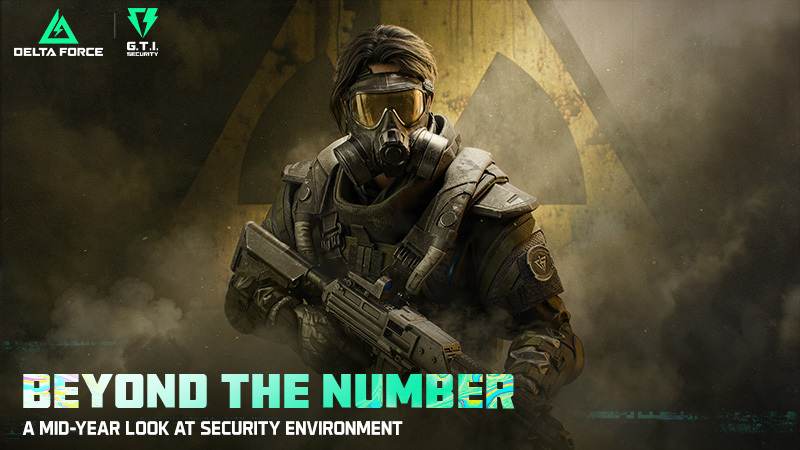
G.T.I. Security Brief | A Mid-Year Look at Our Security Environment
Hi Operators, If you've been following our weekly security updates, you probably look at the ban numbers first. We get it. Numbers are the fastest signal, and they're easy to compare from one week to the next: Are bans up? Are they down? Is the environment actually getting better? But now that we're halfway through 2026, it's become clear to us that weekly numbers alone do not tell the full story. Because what actually shapes your matches isn't how many accounts got banned in a given week. It's whether suspicious behavior gets caught before it matters, whether accounts get dealt with faster, and whether you're simply running into this stuff less often when you queue up. So today, we want to step back and look at the bigger picture: what we've been building over the past six months, what has already started to change, and what we're still working on next. The Short Version Over the last six months, that's meant working on four fronts at once: catching problems earlier, hardening the systems underneath our protection stack, chasing down cheats that are harder to spot, and making enforcement stick instead of resetting every time someone gets banned. Not all of that shows up as a headline number, but it's working. Cheat activity is trending down, confirmed cheat samples are shrinking, and the overall fair-play environment is moving in the right direction. To be clear, none of this is a problem you fix once and walk away from. A single week's number was never really the point — what matters more is catching more of this before it ever gets the chance to damage your matches.Catching Problems Earlier Earlier this year, we started seeing some bad actors and organized cheat sellers lean harder into more evasive methods, including masking real locations and mask abnormal system environments to reduce exposure to security detection mechanisms. That pushed us to move our detection point earlier. We upgraded how we identify abnormal environments and suspicious execution behavior, along with the broader chains those two connect to.This kind of work rarely shows up right away in a weekly ban count, but it's a big part of what a healthier environment actually depends on — not just what we remove after the fact, but how much we can catch before it ever reaches your match. In practice, that means some problems get stopped before they ever have the chance to spread.Building Deeper Protection As DMA-based cheating became more common, software-only detection stopped being enough to cover every risk. These methods rely on external hardware and lower-level access paths to evade detection, which makes them harder to spot and harder to shut down once they are active. That's why we rolled out DMA Shield and gradually brought Secure Boot and TPM 2.0 into our protection stack.Secure Boot: verifies the system boot chain during startup, allowing only authenticated critical components to load and reducing the room for unauthorized drivers or abnormal programs to get involved early.TPM 2.0: uses hardware-level security to help verify the integrity of the runtime environment, further improving the reliability and stability of our anti-cheat protections.Put simply, this work is about pushing protection earlier in the chain and into places that are harder to bypass. We do not want to wait until a bad actor is already inside a live match before we respond. We want to cut off more high-risk methods before they ever get that far. For you, that means some lower-level cheats that used to be harder to detect and harder to handle should become much less reliable over time.(2026 Mid-Year Ban Statistics Review) Going After the Cheats You Don't Always See By April, our focus had expanded even further toward the kinds of cheats that are harder to spot from the outside, especially kernel-level stealth cheats. We strengthened detection for in-game Shellcode and kernel Shellcode, while also improving our ability to identify high-stealth risks like malicious code, abnormal memory execution, and unauthorized drivers. Unlike blatant cheats, these are the kinds of tools that can sit in the background and keep damaging the play experience over time if they are not caught. We also continued strengthening game data protection and tamper detection. Whether that means protecting critical data, monitoring abnormal modifications, or identifying illegal third-party tampering. The goal is the same: surface these problems earlier and stop them from quietly taking effect in the background. This work is not as visible as a new map or a new mode, but that does not make it any less important. It is part of how we keep shrinking the space cheat programs and abnormal environments can operate in.Moving Beyond One-Time Enforcement In June, we rolled out Operation Sentinel, a new enforcement framework built to move past one-off action. If the work above is about finding problems sooner, Operation Sentinel is about what happens after that. Instead of acting only at a single poin

Hi Operators,
If you've been following our weekly security updates, you probably look at the ban numbers first. We get it. Numbers are the fastest signal, and they're easy to compare from one week to the next: Are bans up? Are they down? Is the environment actually getting better?
But now that we're halfway through 2026, it's become clear to us that weekly numbers alone do not tell the full story.
Because what actually shapes your matches isn't how many accounts got banned in a given week. It's whether suspicious behavior gets caught before it matters, whether accounts get dealt with faster, and whether you're simply running into this stuff less often when you queue up.
So today, we want to step back and look at the bigger picture: what we've been building over the past six months, what has already started to change, and what we're still working on next.
Over the last six months, that's meant working on four fronts at once: catching problems earlier, hardening the systems underneath our protection stack, chasing down cheats that are harder to spot, and making enforcement stick instead of resetting every time someone gets banned.
Not all of that shows up as a headline number, but it's working. Cheat activity is trending down, confirmed cheat samples are shrinking, and the overall fair-play environment is moving in the right direction.
To be clear, none of this is a problem you fix once and walk away from. A single week's number was never really the point — what matters more is catching more of this before it ever gets the chance to damage your matches.
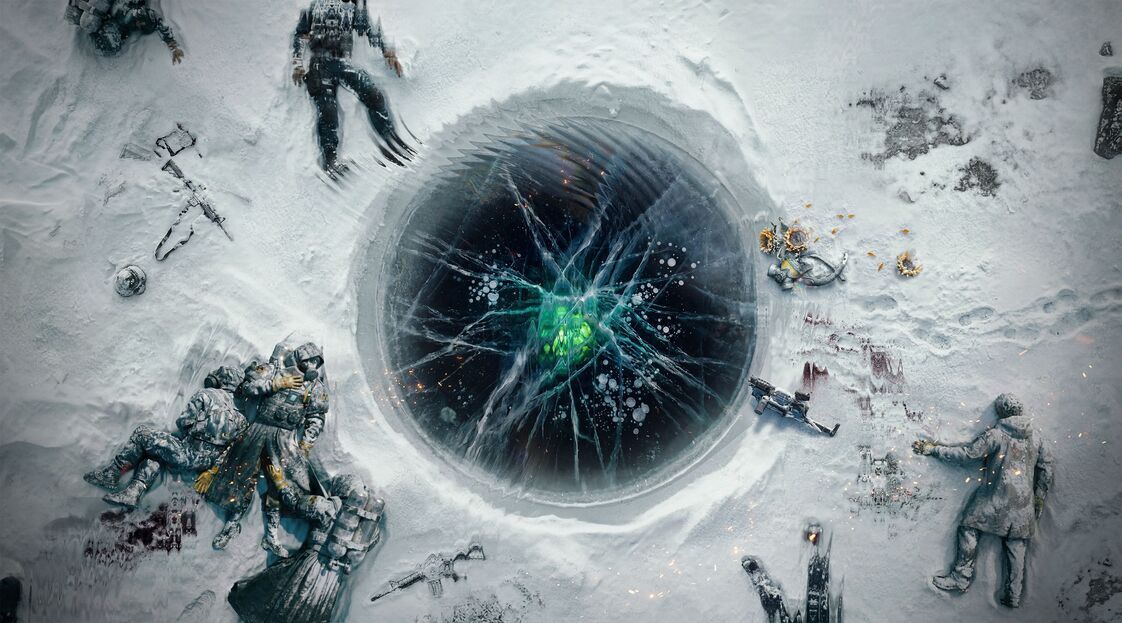
Earlier this year, we started seeing some bad actors and organized cheat sellers lean harder into more evasive methods, including masking real locations and mask abnormal system environments to reduce exposure to security detection mechanisms.
That pushed us to move our detection point earlier. We upgraded how we identify abnormal environments and suspicious execution behavior, along with the broader chains those two connect to.This kind of work rarely shows up right away in a weekly ban count, but it's a big part of what a healthier environment actually depends on — not just what we remove after the fact, but how much we can catch before it ever reaches your match.
In practice, that means some problems get stopped before they ever have the chance to spread.
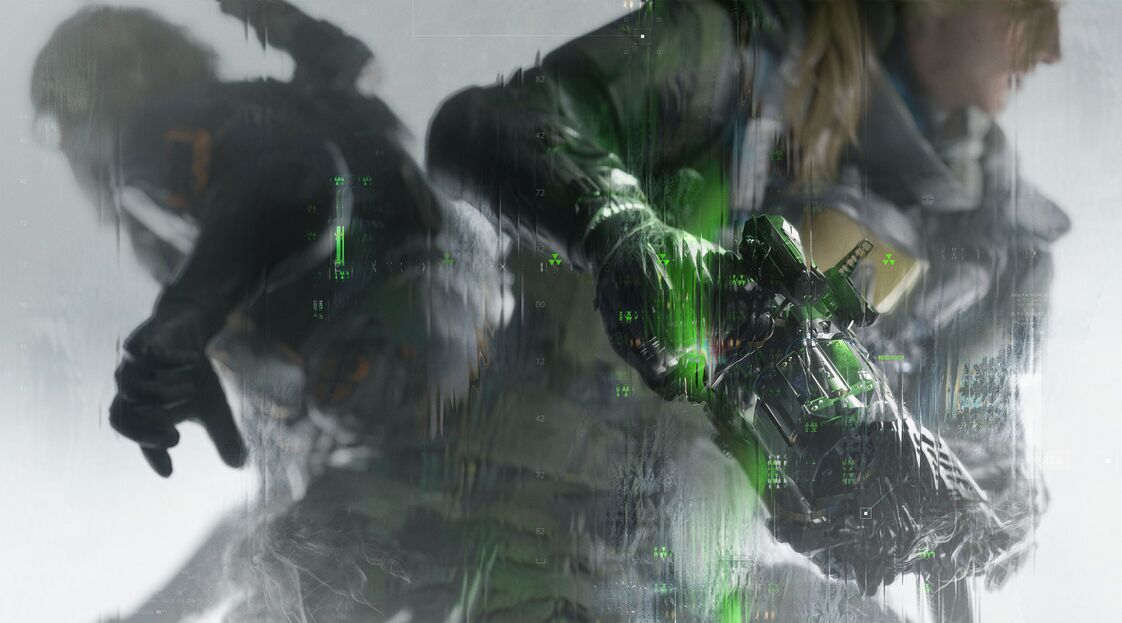
As DMA-based cheating became more common, software-only detection stopped being enough to cover every risk.
These methods rely on external hardware and lower-level access paths to evade detection, which makes them harder to spot and harder to shut down once they are active.
That's why we rolled out DMA Shield and gradually brought Secure Boot and TPM 2.0 into our protection stack.
Secure Boot: verifies the system boot chain during startup, allowing only authenticated critical components to load and reducing the room for unauthorized drivers or abnormal programs to get involved early.
TPM 2.0: uses hardware-level security to help verify the integrity of the runtime environment, further improving the reliability and stability of our anti-cheat protections.
Put simply, this work is about pushing protection earlier in the chain and into places that are harder to bypass. We do not want to wait until a bad actor is already inside a live match before we respond. We want to cut off more high-risk methods before they ever get that far.
For you, that means some lower-level cheats that used to be harder to detect and harder to handle should become much less reliable over time.
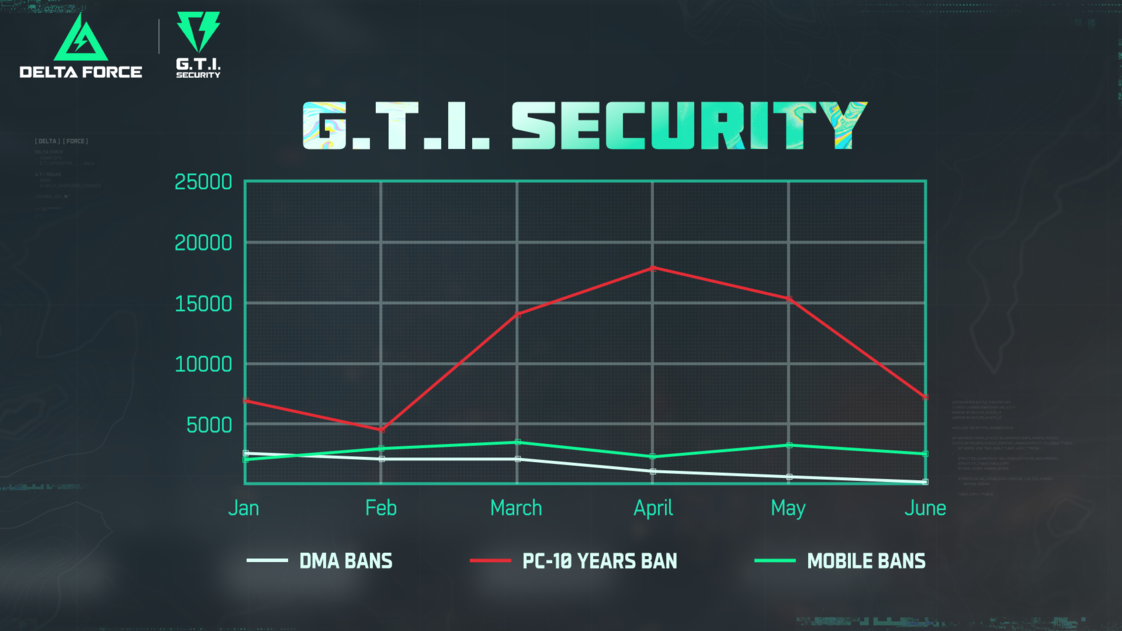
(2026 Mid-Year Ban Statistics Review)

By April, our focus had expanded even further toward the kinds of cheats that are harder to spot from the outside, especially kernel-level stealth cheats.
We strengthened detection for in-game Shellcode and kernel Shellcode, while also improving our ability to identify high-stealth risks like malicious code, abnormal memory execution, and unauthorized drivers. Unlike blatant cheats, these are the kinds of tools that can sit in the background and keep damaging the play experience over time if they are not caught.
We also continued strengthening game data protection and tamper detection. Whether that means protecting critical data, monitoring abnormal modifications, or identifying illegal third-party tampering.
The goal is the same: surface these problems earlier and stop them from quietly taking effect in the background.
This work is not as visible as a new map or a new mode, but that does not make it any less important. It is part of how we keep shrinking the space cheat programs and abnormal environments can operate in.

In June, we rolled out Operation Sentinel, a new enforcement framework built to move past one-off action.
If the work above is about finding problems sooner, Operation Sentinel is about what happens after that. Instead of acting only at a single point in time, it is built to make enforcement more persistent and more targeted, making it harder for violating accounts to stay active, come back quickly, keep disrupting matches, or keep profiting from the same behavior.
At the same time, we continued improving device-security identification and broader risk detection against new cheating methods and profit-driven abuse. In practical terms, that means trying to stop more risk earlier instead of waiting until it grows into a larger problem.
Over the past six months, our goal has not just been to ban more accounts. It has been to make the entire enforcement loop more continuous, more stable, and more proactive.

Put simply, all of this is meant to show up where it matters most: in your actual matches. Accounts and risk patterns that might have slipped through before are now more likely to get caught earlier. The deeper, harder-to-handle cheats should get less reliable over time. And accounts that keep trying to come back, stay active, and disrupt matches should find that a lot harder to pull off. Weekly ban numbers will keep moving up and down — what actually matters is whether you're running into this stuff less often when you play.
At the end of the day, what most Operators care about is simple: Is this match cleaner? Can I finish it without something ruining the experience? Does the environment feel more stable than it used to?
That is the standard we care about too. Numbers matter, but they are not the finish line. What matters more is fewer broken matches, fewer interruptions to normal play, and more confidence that when you queue up, the fight will be decided on the battlefield.

This isn't the kind of work that ends after one or two waves of enforcement. Going forward, we're staying on the same few fronts: catching abnormal environments and suspicious behavior sooner, hardening the layers underneath our protection stack, chasing whatever new cheating and monetization schemes show up next, and pushing enforcement earlier rather than waiting for a problem to become obvious at scale — all while trying to stay out of the way of players who are just here to play.
We're not going to tell you everything is fixed, because it isn't, and it never fully will be. What we can say is that we've moved several important pieces forward over the last six months, and we're not slowing down from here.
If you stepped away from Delta Force because cheating, suspicious matches, or repeated disruptions made it hard to trust the experience, the second half of 2026 is worth a second look. The work isn't done, but a lot has genuinely started to change: more issues are getting caught earlier, more risk is getting stopped before it spreads, and the stuff that used to wreck your matches over and over is getting squeezed harder than before.
We're not chasing better-looking weekly numbers. We're trying to pull this environment back to a place you actually want to play in — and one worth coming back to.
And if you do run into a security issue — whether that's suspicious behavior, a case you want reviewed again, an appeal, or a situation where you need live support — please send it our way. Don't just sit on it. The more directly we hear about it, the faster we can verify what happened and follow up where needed.
You can reach us through any of these channels:
Click the customer service icon (the headset icon) on the login screen or anywhere in-game
Go to https://www.playdeltaforce.com/ and open Support → Customer Service
Email us at https://service@playdeltaforce.com
Every report, appeal, and follow-up helps us get a clearer picture of what's happening in the game, and helps us respond more accurately.
Thank you to every Operator who has kept speaking up about the state of the game.
Your real match experience, your discussions across the community, and every piece of feedback you share help us do this work better.
We will keep investing in this fight, and we will keep being clear with you when it is time to talk about where things stand.
See you in Ahsarah,
The G.T.I. Security Team
What's Your Reaction?









![[Business Talk] Chagee: Opening 3,500 stores in 6 years](https://xinker.org/uploads/images/202410/image_140x98_671afce94bf91.webp)