

![[PRO Tips] Gold’s Bullish Revival: Seasonal Trends and Key Levels to Watch](https://xinker.org/uploads/images/202412/image_430x256_67724cc6ad0cd.webp)
![[PRO Tips] Gold Market Under Short-Term Pressure, Safe-Haven Demand and Central Bank Buying Support Long-Term Upside Potential](https://xinker.org/uploads/images/202412/image_430x256_676ffb4685287.webp)
![[PRO Tips] Analysis of 9 key points of differentiation strategy! Master differentiation to create a brand advantage that is unique in the world!](https://firebasestorage.googleapis.com/v0/b/xinker-tips.appspot.com/o/article_thumbnails%2Fscaled_differentiation%20strategy.png.png?alt=media&token=a1bfc3d2-e85a-4db7-8a6d-01c7274f8940)
![[PRO Tips] Will REITs regain growth momentum in 2024? 3 REITs ETFs you must know if you want to invest in real estate.](https://firebasestorage.googleapis.com/v0/b/xinker-tips.appspot.com/o/article_thumbnails%2Fscaled_REITs1.png.png?alt=media&token=8af4eb93-33ff-466f-8039-b6555fad52b4)
![[PRO Tips] Complete tutorial on how to make money in Adobe Stock!](https://firebasestorage.googleapis.com/v0/b/xinker-tips.appspot.com/o/article_thumbnails%2Fscaled_tut-adobe1.png.png?alt=media&token=0b2c8cf2-22bd-4142-883e-140ed1cbaf02)
![[Passive Income] Unlock the secret of passive income: 3 steps to apply for Google AdSense](https://xinker.org/uploads/images/202410/image_430x256_6717a4fb3052b.webp)
![[Passive Income] Earn over $200 a day with AI-generated articles!](https://firebasestorage.googleapis.com/v0/b/xinker-tips.appspot.com/o/article_thumbnails%2Fscaled_article1.png.png?alt=media&token=f61bf35b-8553-4719-826d-7360024adc70)
![[Passive Income] Earn over 20 USD per download with AI-generated images!](https://firebasestorage.googleapis.com/v0/b/xinker-tips.appspot.com/o/article_thumbnails%2Fscaled_adobe2.png.png?alt=media&token=3e20e76a-a907-45af-80aa-bf9b3600301f)
![[Passive Income] Earn 10 USD per new download by sharing CapCut!](https://firebasestorage.googleapis.com/v0/b/xinker-tips.appspot.com/o/article_thumbnails%2Fscaled_capcut2.png.png?alt=media&token=a04dec40-1fac-4857-86f2-19a8be02d38e)
![[Passive Income] Use your WiFi to create passive income in 5 minutes, and you can earn 4-6 U per day!](https://firebasestorage.googleapis.com/v0/b/xinker-tips.appspot.com/o/article_thumbnails%2Fscaled_Grassio.webp.png?alt=media&token=7659a95e-0e47-4f27-a17d-c942ac3cf7f4)


![[Business Talk] The Unique Theme of XINKER's Song: Beef Wellington and Business Mastery](https://xinker.org/uploads/images/202410/image_430x256_671afc155f47f.webp)
![[Business Talk] Chagee: Opening 3,500 stores in 6 years](https://xinker.org/uploads/images/202410/image_430x256_671afce80c5f9.webp)

Griffin Gaming Partners launches $100M project financing fund for indie games
Griffin Gaming Partners, the game-focused venture capital fund with $1.5 billion under management, announced today a $100 million indie games fund for project financing. The Special Opportunities Fund could unlock hundreds of thousands to low millions of dollars per deal for indie game developers, said Nick Tuosto, managing director at Griffin in an interview with GamesBeat. The initiative targets promising indie games. And the Special Opportunities Fund aims to provide a new model for venture capital investment in gaming, focusing on project-based financing with simple terms, in which funding is provided in exchange for a share of a game’s revenue. This contrasts with commonly used equity-based investments and seeks to offer a better way of getting capital into the hands of indie studios, many of which are not equipped for or interested in traditional equity-based investment. In recent years, the success of indie developers in achieving breakout hits with comparatively modest budgets has made clear both the need for and the opportunity in fair funding solutions for small studios. By combining industry-leading expertise and $100 million in funding, the Special Opportunities Fund aims to make substantial changes in theopportunities available to developers.Why look for small and special? Menace is one of the games Griffin’s SOF has already financed. “This is pretty exciting because it’s an unusually challenging capital markets environment for funds, but this one, we just had an incredible amount of excitement from investors to participate in the fastest-growing segment of the content side of the ecosystem,” said Tuosto. “That’s how we think about where this fund plays. It’s indie and double A. Everyone has these different definitions of indie. Some of these budgets get up into the triple-i or double-A space. But we’re usually focused on relatively small teams and extraordinary vision for product.” The focus is on demos that are easy to get excited about, and the team writes relatively small checks compared to venture investing. “We’re funding anywhere from hundreds of thousands of dollars up to several million, but it’s a lot smaller average check size versus venture capital. And we provide a lot of support to the developers. So we come in and provide a lot of advice and perspective on how to maximize their potential opportunity.” With project financing, developers know exactly what they’re getting. He said they know that the terms are friendly in terms of how Griffin structures its contracts, at least in comparison to a lot of publisher deals where capital is provided with a focus on recoup and making sure the publisher gets paid before anybody else. We focus on partnering, and in the spirit of that, we get paid when the developer gets paid.” “We are looking to shake things up a bit with this decent amount of capital to work for lots of teams that might otherwise have otherwise not been able to make the most of the products that they have,” he said. Peter Levin (left) and Nick Tuosto of Griffin Gaming Partners. Source: Griffin Gaming Partners Tim Bender, CEO of Hooded Horse, also serves as managing director of the fund, whichhas already invested in fifteen titles, including nine announced projects:● Menace is a sci-fi turn-based tactical RPG created by Overhype Studios (BattleBrothers), which has sold over 250,000 copies in less than three months (Steam Page |Trailer) ● Begone Beast is a top-down co-op horror game for up to four players, featuring a blend of exploration, combat, and character customization across an array of procedurally generated maps (Steam Page |Trailer)● Expedition: Into Darkness is a dungeon crawler and extraction game in a dark fantasysetting with co-op gameplay (Steam Page |Trailer)● Vaunted is a sci-fi turn-based RPG featuring both singleplayer and co-op gamemodes, recently announced via the Xbox Partner Preview (Steam Page |Trailer)● Gilded Destiny is an ambitious hex-based grand strategy title set in the Industrial Age(Steam Page | Trailer)● Darkwood 2 is a top-down survival horror sequel to the original best-sellingDarkwood (Steam Page | Trailer)● Kinstrife is a high-fidelity medieval RPG set in an authentic open world withphysics-based combat (Steam Page | Trailer)● Highland Keep is an open-world survival craft game set in medieval Scotland, featuring base building, colony management, and real-time action combat (Steam Page | Trailer)● Hellforged: Extraction/loot-driven bullet-heaven game with a focus on finding epicgear to fight off waves of demons (Steam Page | Trailer) Griffin Gaming Partners has started a $100 million indie fund. Source: Griffin Gaming Partners The SOF is also invested in six unannounced projects:● A sci-fi grand strategy game based on a popular book and TV franchise● A God game with physics mechanics● A Gladiator management simulation● A dinosaur multiplayer RPG● A hard sci-fi space ARPG● A fantasy ARPG with base-buildingThese projects represent a mix of

Griffin Gaming Partners, the game-focused venture capital fund with $1.5 billion under management, announced today a $100 million indie games fund for project financing.
The Special Opportunities Fund could unlock hundreds of thousands to low millions of dollars per deal for indie game developers, said Nick Tuosto, managing director at Griffin in an interview with GamesBeat.
The initiative targets promising indie games. And the Special Opportunities Fund aims to provide a new model for venture capital investment in gaming, focusing on project-based financing with simple terms, in which funding is provided in exchange for a share of a game’s revenue.
This contrasts with commonly used equity-based investments and seeks to offer a better way of getting capital into the hands of indie studios, many of which are not equipped for or interested in traditional equity-based investment.
In recent years, the success of indie developers in achieving breakout hits with comparatively modest budgets has made clear both the need for and the opportunity in fair funding solutions for small studios. By combining industry-leading expertise and $100 million in funding, the Special Opportunities Fund aims to make substantial changes in the
opportunities available to developers.
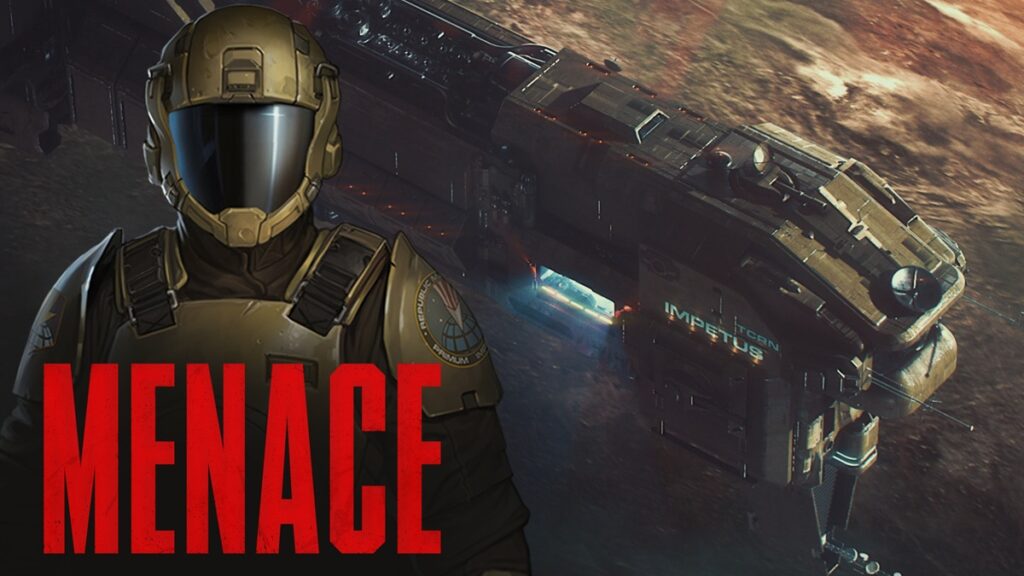 Menace is one of the games Griffin’s SOF has already financed. “This is pretty exciting because it’s an unusually challenging capital markets environment for funds, but this one, we just had an incredible amount of excitement from investors to participate in the fastest-growing segment of the content side of the ecosystem,” said Tuosto. “That’s how we think about where this fund plays. It’s indie and double A. Everyone has these different definitions of indie. Some of these budgets get up into the triple-i or double-A space. But we’re usually focused on relatively small teams and extraordinary vision for product.”
The focus is on demos that are easy to get excited about, and the team writes relatively small checks compared to venture investing.
“We’re funding anywhere from hundreds of thousands of dollars up to several million, but it’s a lot smaller average check size versus venture capital. And we provide a lot of support to the developers. So we come in and provide a lot of advice and perspective on how to maximize their potential opportunity.”
With project financing, developers know exactly what they’re getting. He said they know that the terms are friendly in terms of how Griffin structures its contracts, at least in comparison to a lot of publisher deals where capital is provided with a focus on recoup and making sure the publisher gets paid before anybody else. We focus on partnering, and in the spirit of that, we get paid when the developer gets paid.”
“We are looking to shake things up a bit with this decent amount of capital to work for lots of teams that might otherwise have otherwise not been able to make the most of the products that they have,” he said.
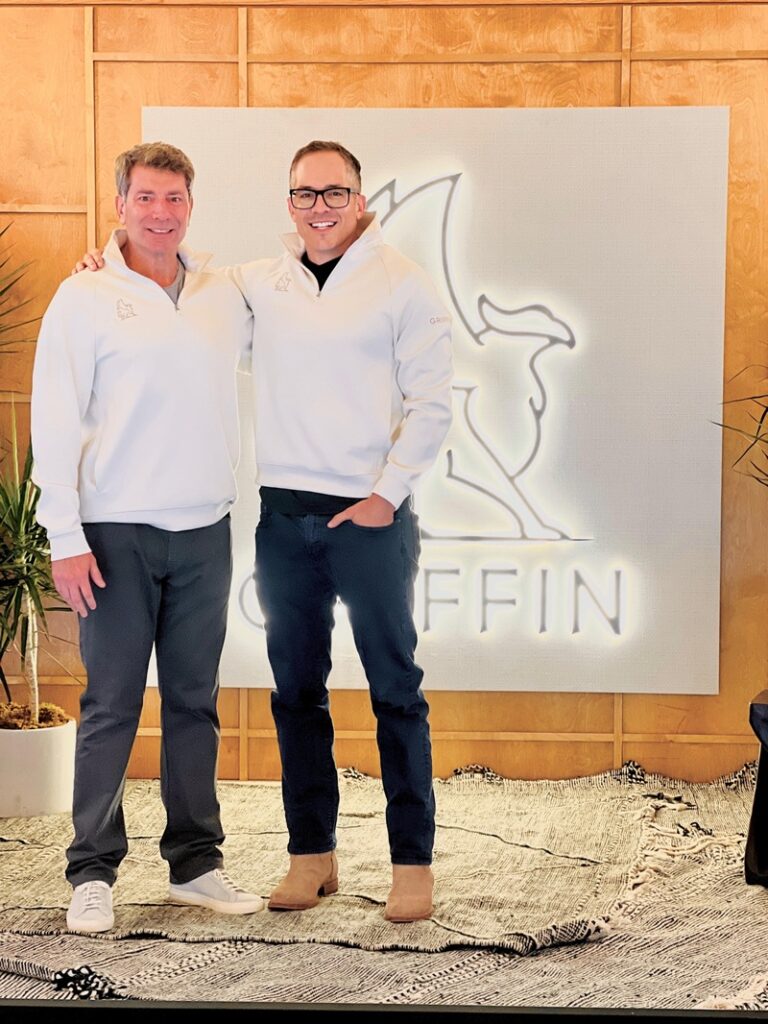 Peter Levin (left) and Nick Tuosto of Griffin Gaming Partners. Source: Griffin Gaming Partners Tim Bender, CEO of Hooded Horse, also serves as managing director of the fund, which
has already invested in fifteen titles, including nine announced projects:
● Menace is a sci-fi turn-based tactical RPG created by Overhype Studios (Battle
Brothers), which has sold over 250,000 copies in less than three months (Steam Page |
Trailer)
● Begone Beast is a top-down co-op horror game for up to four players, featuring a blend of exploration, combat, and character customization across an array of procedurally generated maps (Steam Page |Trailer)
● Expedition: Into Darkness is a dungeon crawler and extraction game in a dark fantasy
setting with co-op gameplay (Steam Page |Trailer)
● Vaunted is a sci-fi turn-based RPG featuring both singleplayer and co-op game
modes, recently announced via the Xbox Partner Preview (Steam Page |
Trailer)
● Gilded Destiny is an ambitious hex-based grand strategy title set in the Industrial Age
(Steam Page | Trailer)
● Darkwood 2 is a top-down survival horror sequel to the original best-selling
Darkwood (Steam Page | Trailer)
● Kinstrife is a high-fidelity medieval RPG set in an authentic open world with
physics-based combat (Steam Page | Trailer)
● Highland Keep is an open-world survival craft game set in medieval Scotland, featuring base building, colony management, and real-time action combat (Steam Page | Trailer)
● Hellforged: Extraction/loot-driven bullet-heaven game with a focus on finding epic
gear to fight off waves of demons (Steam Page | Trailer)
 Griffin Gaming Partners has started a $100 million indie fund. Source: Griffin Gaming Partners
The SOF is also invested in six unannounced projects:
● A sci-fi grand strategy game based on a popular book and TV franchise
● A God game with physics mechanics
● A Gladiator management simulation
● A dinosaur multiplayer RPG
● A hard sci-fi space ARPG
● A fantasy ARPG with base-building
These projects represent a mix of situations, ranging from self-published games to those
signed with a publisher, with several published by Hooded Horse.
The investments have been proceeding for a few months now in the project-financing fund, Tuosto said.
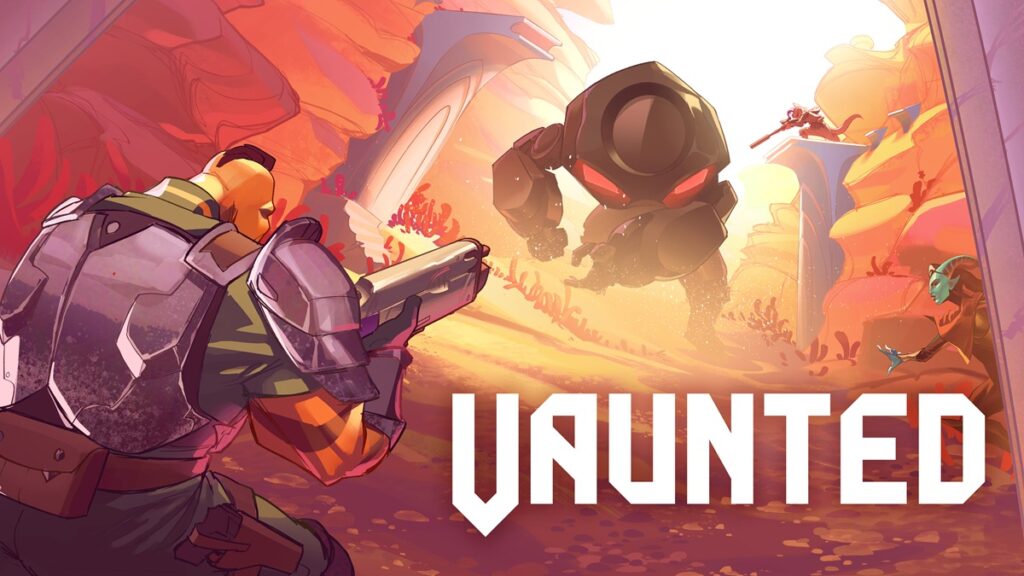 Vaunted got funding from Griffin’s SOF. “Indie games represent one of the fastest-growing segments of the interactive
entertainment market today,” said Tuosto. “We know developers want a flexible, transparent financing solution, and we’re excited to support their ambitions through the dedicated Special Opportunities Fund. Griffin has been honing its strategy since its formation, and we are proud to bring this new initiative to market with an investment team we believe is uniquely positioned to help exceptional developers realize their full potential.”
“We’re very excited for the transmedia potential of this fund,” said Griffin managing
director and cofounder Peter Levin, in a statement. “The very essence of these games and the contemplative nature of their development lead to sticky player communities and loyal
followings. Having fund advisors such as film and television producer Dylan Clark (producer of The Batman, The Penguin, Miami Vice) and brand stewards such as Russell Binder (Five Nights at Freddy’s, Angry Birds, The Walking Dead, Dead by Daylight) shows we’re serious about unlocking opportunities for these titles outside of gaming.”
“The potential of indie game development is incredible,” said Bender. “The $100 million
this fund makes available to indie studios is going to result in so many more great games
being brought to audiences that will love them.”
Griffin’s investment in the indie game ecosystem extends outside the Special Opportunities Fund as well, with equity investments into a variety of independent studios and the recent acquisition of Playdigious, the premier mobile porting and publishing studio for premium PC indie games.
Griffin has invested in a wide variety of game-related companies including Overwolf, Discord, Amplitude Studios, AppLovin and numerous other gaming projects.
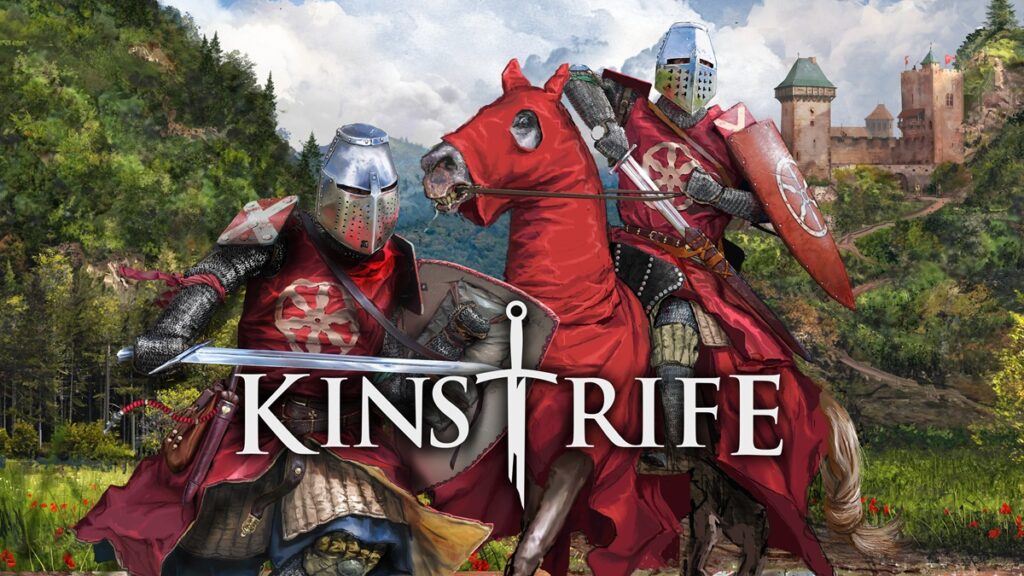 Kinstrife got funding from Griffin’s SOF. These aren’t likely to be games at the edge of the market like VR, AR or AI. Rather, they’re games at the core of the market.
“These are great games, but with tremendous innovation, but not in terms of distribution or the form factor. These are games built for PC in ways that are totally novel. And this is another theme that we think is really interesting,” Tuosto said. “Lots of big creative chances are being taken in the indie arena, and we’re starting to see more triple-A products that follow formulaic approaches to producing content.”
“There’s hundreds of millions or tens of millions of dollars behind it, in terms of the budget, and you have a lot to lose if you take a creative swing. And it doesn’t resonate,” he said. “[The indies] are passion-driven founders that are mostly betting with their own time. They’re spending years and years, in some cases, of their own time against the vision they have for a product, and that frees them to be able to take risks.”
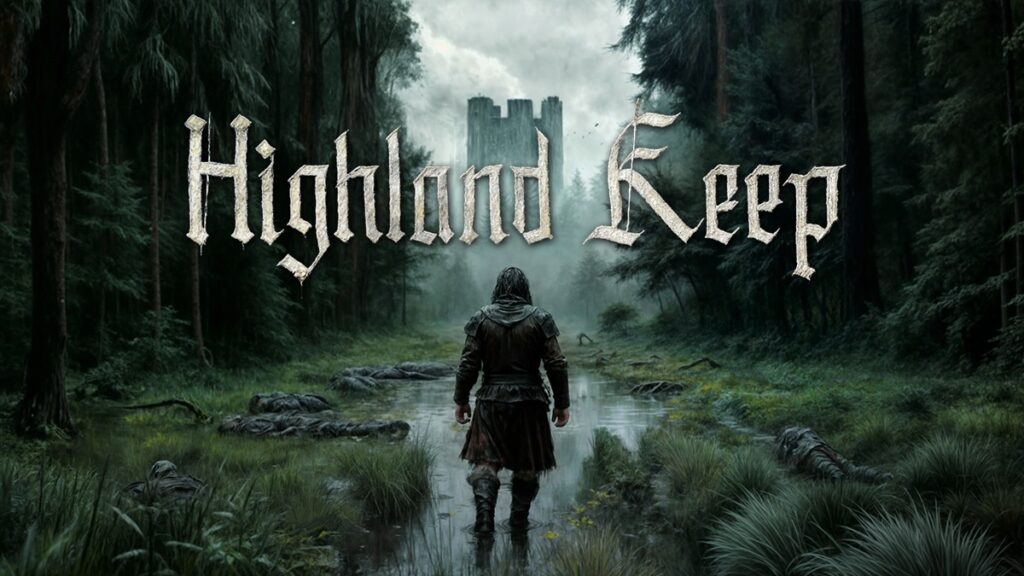 Highland Keep got financing from Griffin’s SOF. The larger fund’s strategy isn’t changed, as its focus is to take meaningful equity in companies and making big bets on large outcomes, Tuosto said. In this case, the indie fund isn’t investing in technology or large budgets or big teams.
Tuosto said Griffin’s strategy is unchanged.
“We’re making a very long term bet on the company or studio,” he said. “We can be very patient. It’s a decade later that you see the real fruits of those labors start to manifest. I think this is really a tailored solution for indie studios. So we’re not investing in technology, we’re not investing in large budgets or big teams. This is an addressable opportunity for venture before you really need only look at the exit activity to see very few small teams end up getting acquired at any price.”
He said, “There’s been a big slowdown relative to three or four years ago, where companies like Embracer were quite active in the consolidation arena around content. There are very few acquirers today that are looking to buy studios.”
And he said, “When you think about the venture math, it doesn’t really work to invest millions of dollars in a studio and then take the risk that the company doesn’t get sold and ultimately see an exit on the other side for $20 million, $30 million, $40 million. Even $100 million is very tough. Venture math works best when a single investment has the potential to return the whole fund, or even multiples of it. And in this case, you know, there’s been counter examples, like Subnautica with Krafton. But there are very few big ticket m&a transactions.”
He most developers don’t want to sell their companies.
“That’s a big signal for us that we need to respond in a way that’s responsive to what the developer is actually looking for. And what they do want is capital. And they want a passive partner that is there to support but not control their company.”
That’s where project financing has found its place in the market, he said.
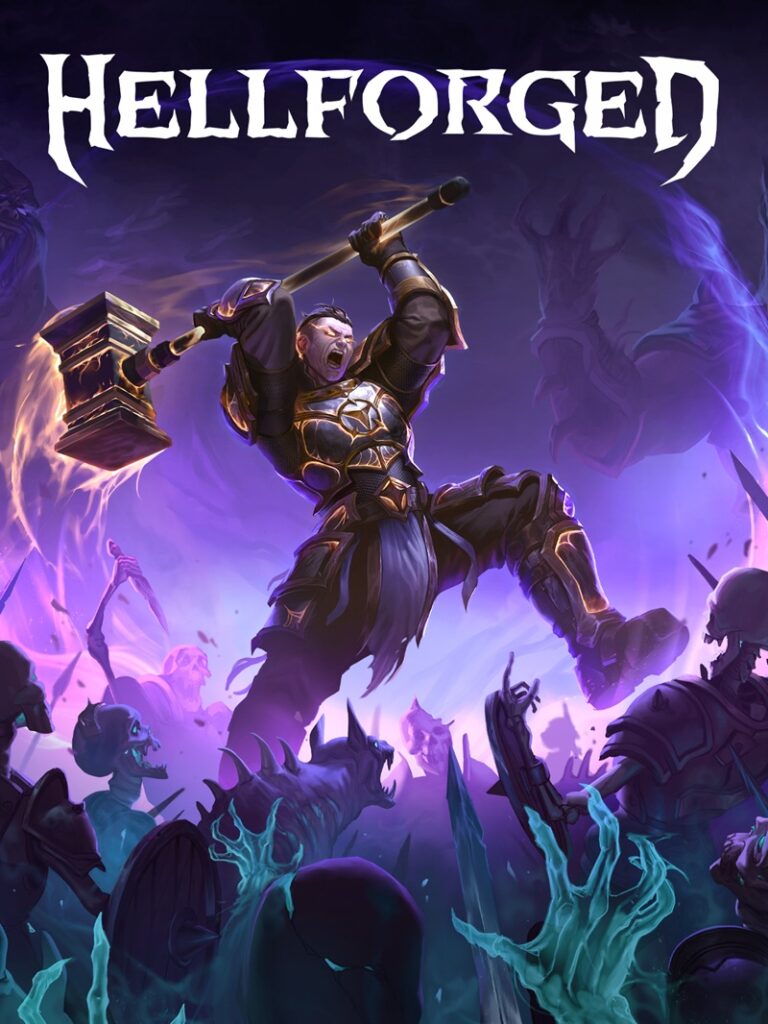 Hellforged got funding from Griffin’s SOF. He noted that the growth of titles on Steam is almost on an exponential curve, and the proportion of indie breakout hits has actually been very high, and that’s in contrast to mobile, where now you see an incredible volume of creatives required to operate a game and market that game at scale.
“It’s really a game where very few players are able to deploy hundreds of millions, if not billions of dollars, on user acquisition to reach the users in crowded categories. You see very quick copycat products by very competent and capable teams supercharged with AI. It just makes the the odds that a single person or two people you know, can have it a breakthrough hit in mobile almost zero.”
All of the investments so far are in Steam games. They maybe a mobile port opoprtunity and console adjacency. But Steam has ways of showing which games are resonating.
“For us, that’s really exciting because we don’t feel like we’re taking the same type of risk of a failure,” he said. “We think that a lot of these products have more potential with capital and good advice, but we don’t think that we’re gonna have a high proportion of these games that we fund not work. And that’s that’s also very different than venture where you’re taking perhaps one in 10 games is a breakout. One breakout hit makes up for nine that aren’t.”
Griffin Gaming Partners hasn’t disclosed publicly its internal rate of return, or what it makes on its fund investments. But it did invest in firms like AppLovin, Scopely and others with successful exits.
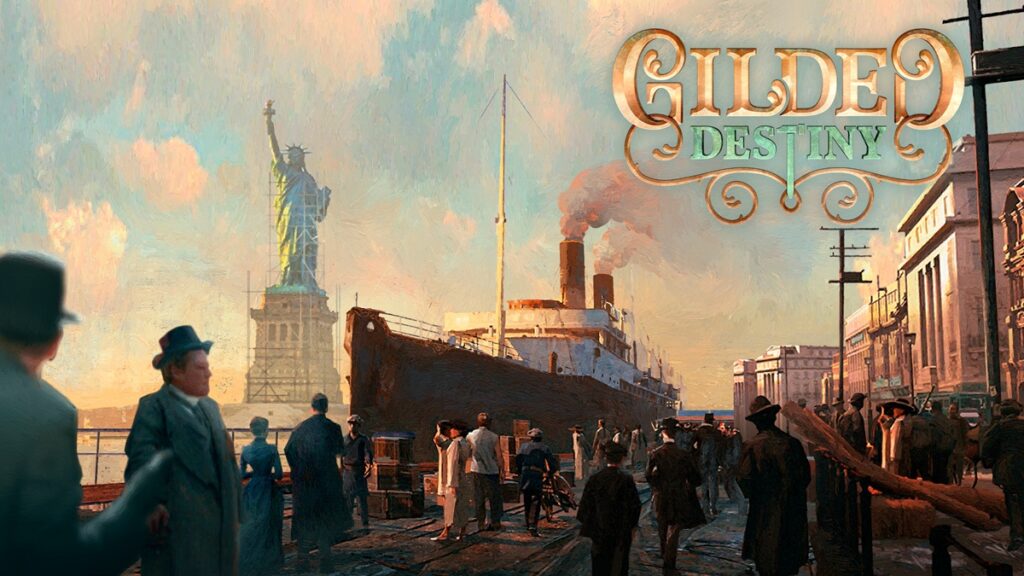 Gilded Destiny got funding from Griffin’s SOF. As for the “attention war” that Epyllion’s Matthew Ball wrote about, he said the competition for attention is indeed fierce, with platforms like TikTok using machine learning to tune the algorithm to surface content that deepens engagement. That’s considerable competition for the time of gamers.
At the same time, Tuosto said, “There are pockets of very visible growth and opportunity. Roblox has unlocked a massive new category of incremental engagement, very different than other platforms that existed before, and found a new niche and a new platform to grow. And those are the type of things that end up driving market growth.”
He added, “We think AI technologies are going to be a big tailwind that unlock not only a lot more time on the consumer side to play games and to entertain themselves, but also to create new and novel experiences. This could be one of those step functions higher, like we’ve seen traditionally on distribution. Like when mobile came online, it went from zero to $100 billion market in the course of 15 years. And that, of course, is exactly how this market tends to work, where a new platform comes online and it opens up new incremental market opportunity.”
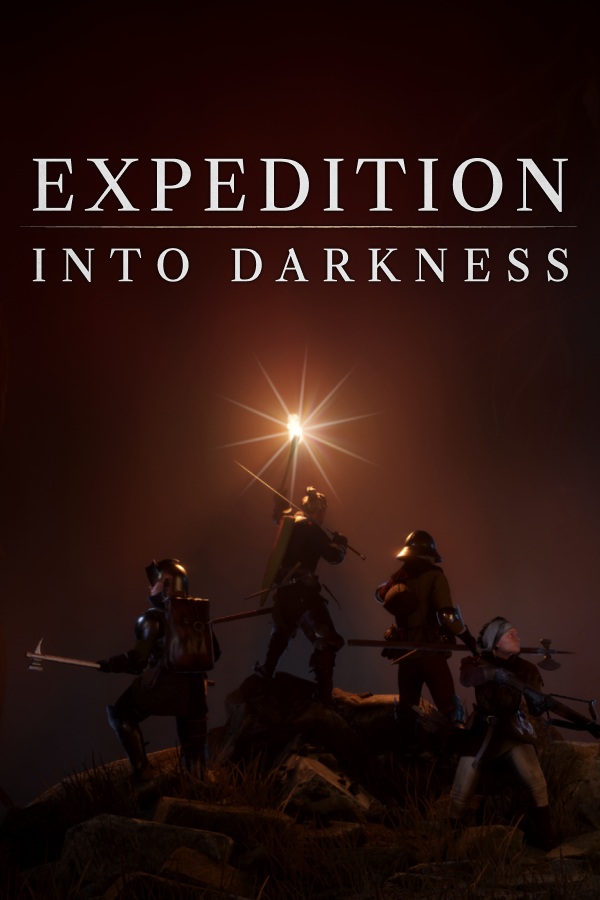 Expedition: Into Darkness got funding from Griffin’s SOF. He said the consoles did something similar at a smaller scale. And looking at the PC market, there’s sustained growth and sustained engagement. You can see through wishlists what kind of potential a game has, and that helps the firm sort through the 20,000 or so games hitting Steam every year.
“This is incredible for us to see the world’s oldest gaming market, where it all started, become the market that has the highest CAGR (compound annual growth rate) in terms of growth rates on content outside of the triple-A arena. That’s where we’re zeroing in on this hyper growth.”
He noted the PC market has extraordinarily robust, organic discovery. It has gameplay attracting people to go try something new, and then they evangelize it.
“They go tell their friends these are games where they don’t have big marketing budgets and they don’t even have the polish of the triple-A games, and yet the game play and the systems are so good and robust that they can get people excited,” Tuosto said. “That’s where we’re starting to see just tremendous investment opportunities because the budgets are so limited in many of these cases. And the upside when there is product-market fit found can be so enormous. You see examples like Manor Lords with a single dev, of course, supported by others, but a single person coding a game like that. It’s a magnum opus, and it explodes to north of $100 million in revenue in early access.”
He said that’s the type of potential that the market has, and with the support of a capital partner like Griffin, those numbers can be a lot higher, Tuosto said.
Given the headwinds Ball pointed out, Tuosto said, “We’re not ones to abandon the market because of some near-term headwinds. We’re much more focused on finding those growth opportunities within this market that are large enough to see lots and lots of opportunity for the right teams with the right vision.”
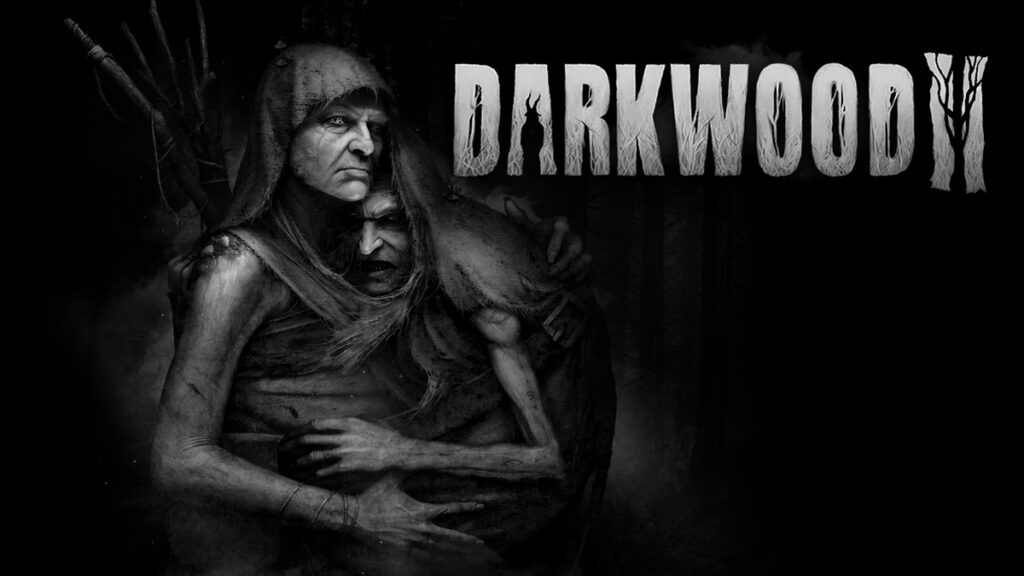 Darkwood 2 got funding from Griffin’s SOF. And Tuosto noted that Ball was positive on indie gaming as a subset of the market, as well as Roblox.
As for how dry the market is, Tuosto said that rumors that there is no money to be had are not true. He noted Griffin has been active and some of its peers are as well.
“Things are up substantially from the nadir, but still very different market environment than 2021 or even 2022 where we saw volumes that were many multiples of where they are today. But for the best teams, I don’t think that should be discouraging at all. I think that the best teams that are prepared to really devote themselves to the next chapter of their careers to building something often start in times where capital is constrained and the macroeconomic picture is cloudy,” Tuosto said. “It’s really the passion and commitment that gets them motivated, even in what can be the worst of times, to go build something.”
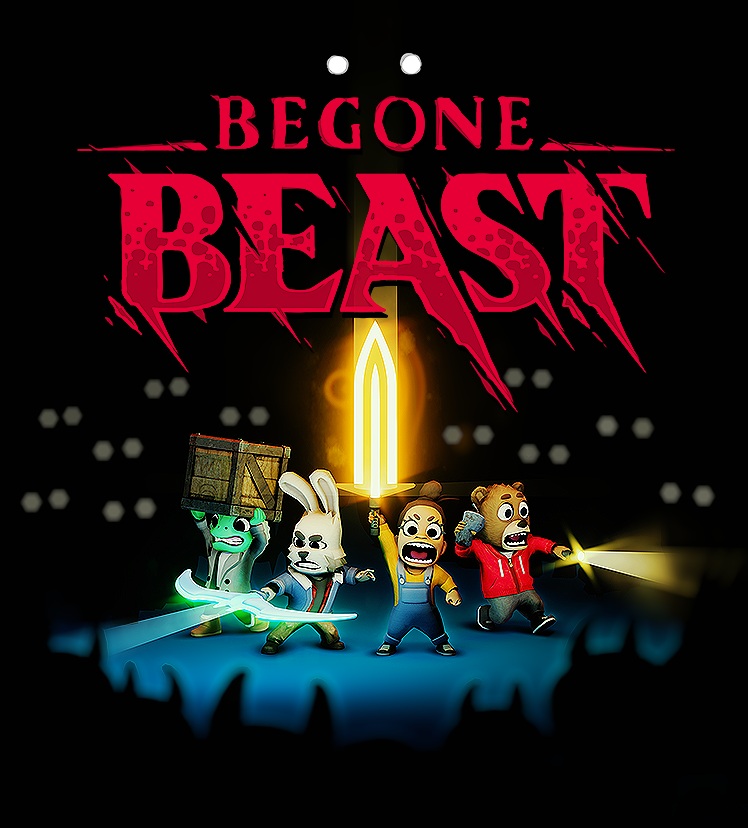 Begone Beast got funding from Griffin’s SOF. He said he loves finding teams that are motivated in spite of those headwinds.
“For us, at the time when valuations are elevated, sometimes it’s not the most disciplined teams that end up sort of attracting capital. So this is a market where we’re redoubling our efforts to go find extraordinary and committed teams,” he said.
Tuosto said that it’s important for devs to take really big creative risks and go for something where maybe the conventional wisdom would say that this game has no chance.
“At the end of the day, the market decides. You come up with something, you put up a video of gameplay on Steam, you’re starting to be able to check and see if your vision resonates with people,” he said. “It might be a niche audience, but do people feel passionate about this vision? And that’s where we can get involved and provide capital that could potentially grow the size of the pie tremendously.”
Disclosure: Levin is a strategic adviser for GamesBeat.
The post Griffin Gaming Partners launches $100M project financing fund for indie games appeared first on GamesBeat.
The Special Opportunities Fund could unlock hundreds of thousands to low millions of dollars per deal for indie game developers, said Nick Tuosto, managing director at Griffin in an interview with GamesBeat.
The initiative targets promising indie games. And the Special Opportunities Fund aims to provide a new model for venture capital investment in gaming, focusing on project-based financing with simple terms, in which funding is provided in exchange for a share of a game’s revenue.
This contrasts with commonly used equity-based investments and seeks to offer a better way of getting capital into the hands of indie studios, many of which are not equipped for or interested in traditional equity-based investment.
In recent years, the success of indie developers in achieving breakout hits with comparatively modest budgets has made clear both the need for and the opportunity in fair funding solutions for small studios. By combining industry-leading expertise and $100 million in funding, the Special Opportunities Fund aims to make substantial changes in the
opportunities available to developers.
Why look for small and special?
Menace is one of the games Griffin’s SOF has already financed. “This is pretty exciting because it’s an unusually challenging capital markets environment for funds, but this one, we just had an incredible amount of excitement from investors to participate in the fastest-growing segment of the content side of the ecosystem,” said Tuosto. “That’s how we think about where this fund plays. It’s indie and double A. Everyone has these different definitions of indie. Some of these budgets get up into the triple-i or double-A space. But we’re usually focused on relatively small teams and extraordinary vision for product.”The focus is on demos that are easy to get excited about, and the team writes relatively small checks compared to venture investing.
“We’re funding anywhere from hundreds of thousands of dollars up to several million, but it’s a lot smaller average check size versus venture capital. And we provide a lot of support to the developers. So we come in and provide a lot of advice and perspective on how to maximize their potential opportunity.”
With project financing, developers know exactly what they’re getting. He said they know that the terms are friendly in terms of how Griffin structures its contracts, at least in comparison to a lot of publisher deals where capital is provided with a focus on recoup and making sure the publisher gets paid before anybody else. We focus on partnering, and in the spirit of that, we get paid when the developer gets paid.”
“We are looking to shake things up a bit with this decent amount of capital to work for lots of teams that might otherwise have otherwise not been able to make the most of the products that they have,” he said.
Peter Levin (left) and Nick Tuosto of Griffin Gaming Partners. Source: Griffin Gaming Partners Tim Bender, CEO of Hooded Horse, also serves as managing director of the fund, whichhas already invested in fifteen titles, including nine announced projects:
● Menace is a sci-fi turn-based tactical RPG created by Overhype Studios (Battle
Brothers), which has sold over 250,000 copies in less than three months (Steam Page |
Trailer)
● Begone Beast is a top-down co-op horror game for up to four players, featuring a blend of exploration, combat, and character customization across an array of procedurally generated maps (Steam Page |Trailer)
● Expedition: Into Darkness is a dungeon crawler and extraction game in a dark fantasy
setting with co-op gameplay (Steam Page |Trailer)
● Vaunted is a sci-fi turn-based RPG featuring both singleplayer and co-op game
modes, recently announced via the Xbox Partner Preview (Steam Page |
Trailer)
● Gilded Destiny is an ambitious hex-based grand strategy title set in the Industrial Age
(Steam Page | Trailer)
● Darkwood 2 is a top-down survival horror sequel to the original best-selling
Darkwood (Steam Page | Trailer)
● Kinstrife is a high-fidelity medieval RPG set in an authentic open world with
physics-based combat (Steam Page | Trailer)
● Highland Keep is an open-world survival craft game set in medieval Scotland, featuring base building, colony management, and real-time action combat (Steam Page | Trailer)
● Hellforged: Extraction/loot-driven bullet-heaven game with a focus on finding epic
gear to fight off waves of demons (Steam Page | Trailer)
Griffin Gaming Partners has started a $100 million indie fund. Source: Griffin Gaming Partners The SOF is also invested in six unannounced projects:
● A sci-fi grand strategy game based on a popular book and TV franchise
● A God game with physics mechanics
● A Gladiator management simulation
● A dinosaur multiplayer RPG
● A hard sci-fi space ARPG
● A fantasy ARPG with base-building
These projects represent a mix of situations, ranging from self-published games to those
signed with a publisher, with several published by Hooded Horse.
The investments have been proceeding for a few months now in the project-financing fund, Tuosto said.
The shift to project financing?
Vaunted got funding from Griffin’s SOF. “Indie games represent one of the fastest-growing segments of the interactiveentertainment market today,” said Tuosto. “We know developers want a flexible, transparent financing solution, and we’re excited to support their ambitions through the dedicated Special Opportunities Fund. Griffin has been honing its strategy since its formation, and we are proud to bring this new initiative to market with an investment team we believe is uniquely positioned to help exceptional developers realize their full potential.”
“We’re very excited for the transmedia potential of this fund,” said Griffin managing
director and cofounder Peter Levin, in a statement. “The very essence of these games and the contemplative nature of their development lead to sticky player communities and loyal
followings. Having fund advisors such as film and television producer Dylan Clark (producer of The Batman, The Penguin, Miami Vice) and brand stewards such as Russell Binder (Five Nights at Freddy’s, Angry Birds, The Walking Dead, Dead by Daylight) shows we’re serious about unlocking opportunities for these titles outside of gaming.”
“The potential of indie game development is incredible,” said Bender. “The $100 million
this fund makes available to indie studios is going to result in so many more great games
being brought to audiences that will love them.”
Griffin’s investment in the indie game ecosystem extends outside the Special Opportunities Fund as well, with equity investments into a variety of independent studios and the recent acquisition of Playdigious, the premier mobile porting and publishing studio for premium PC indie games.
Griffin has invested in a wide variety of game-related companies including Overwolf, Discord, Amplitude Studios, AppLovin and numerous other gaming projects.
The core of the market may have the opportunity
Kinstrife got funding from Griffin’s SOF. These aren’t likely to be games at the edge of the market like VR, AR or AI. Rather, they’re games at the core of the market.“These are great games, but with tremendous innovation, but not in terms of distribution or the form factor. These are games built for PC in ways that are totally novel. And this is another theme that we think is really interesting,” Tuosto said. “Lots of big creative chances are being taken in the indie arena, and we’re starting to see more triple-A products that follow formulaic approaches to producing content.”
“There’s hundreds of millions or tens of millions of dollars behind it, in terms of the budget, and you have a lot to lose if you take a creative swing. And it doesn’t resonate,” he said. “[The indies] are passion-driven founders that are mostly betting with their own time. They’re spending years and years, in some cases, of their own time against the vision they have for a product, and that frees them to be able to take risks.”
The larger fund is still on course
Highland Keep got financing from Griffin’s SOF. The larger fund’s strategy isn’t changed, as its focus is to take meaningful equity in companies and making big bets on large outcomes, Tuosto said. In this case, the indie fund isn’t investing in technology or large budgets or big teams.Tuosto said Griffin’s strategy is unchanged.
“We’re making a very long term bet on the company or studio,” he said. “We can be very patient. It’s a decade later that you see the real fruits of those labors start to manifest. I think this is really a tailored solution for indie studios. So we’re not investing in technology, we’re not investing in large budgets or big teams. This is an addressable opportunity for venture before you really need only look at the exit activity to see very few small teams end up getting acquired at any price.”
He said, “There’s been a big slowdown relative to three or four years ago, where companies like Embracer were quite active in the consolidation arena around content. There are very few acquirers today that are looking to buy studios.”
And he said, “When you think about the venture math, it doesn’t really work to invest millions of dollars in a studio and then take the risk that the company doesn’t get sold and ultimately see an exit on the other side for $20 million, $30 million, $40 million. Even $100 million is very tough. Venture math works best when a single investment has the potential to return the whole fund, or even multiples of it. And in this case, you know, there’s been counter examples, like Subnautica with Krafton. But there are very few big ticket m&a transactions.”
He most developers don’t want to sell their companies.
“That’s a big signal for us that we need to respond in a way that’s responsive to what the developer is actually looking for. And what they do want is capital. And they want a passive partner that is there to support but not control their company.”
That’s where project financing has found its place in the market, he said.
Hellforged got funding from Griffin’s SOF. He noted that the growth of titles on Steam is almost on an exponential curve, and the proportion of indie breakout hits has actually been very high, and that’s in contrast to mobile, where now you see an incredible volume of creatives required to operate a game and market that game at scale. “It’s really a game where very few players are able to deploy hundreds of millions, if not billions of dollars, on user acquisition to reach the users in crowded categories. You see very quick copycat products by very competent and capable teams supercharged with AI. It just makes the the odds that a single person or two people you know, can have it a breakthrough hit in mobile almost zero.”
All of the investments so far are in Steam games. They maybe a mobile port opoprtunity and console adjacency. But Steam has ways of showing which games are resonating.
“For us, that’s really exciting because we don’t feel like we’re taking the same type of risk of a failure,” he said. “We think that a lot of these products have more potential with capital and good advice, but we don’t think that we’re gonna have a high proportion of these games that we fund not work. And that’s that’s also very different than venture where you’re taking perhaps one in 10 games is a breakout. One breakout hit makes up for nine that aren’t.”
Griffin Gaming Partners hasn’t disclosed publicly its internal rate of return, or what it makes on its fund investments. But it did invest in firms like AppLovin, Scopely and others with successful exits.
Strategy in the face of market headwinds
Gilded Destiny got funding from Griffin’s SOF. As for the “attention war” that Epyllion’s Matthew Ball wrote about, he said the competition for attention is indeed fierce, with platforms like TikTok using machine learning to tune the algorithm to surface content that deepens engagement. That’s considerable competition for the time of gamers. At the same time, Tuosto said, “There are pockets of very visible growth and opportunity. Roblox has unlocked a massive new category of incremental engagement, very different than other platforms that existed before, and found a new niche and a new platform to grow. And those are the type of things that end up driving market growth.”
He added, “We think AI technologies are going to be a big tailwind that unlock not only a lot more time on the consumer side to play games and to entertain themselves, but also to create new and novel experiences. This could be one of those step functions higher, like we’ve seen traditionally on distribution. Like when mobile came online, it went from zero to $100 billion market in the course of 15 years. And that, of course, is exactly how this market tends to work, where a new platform comes online and it opens up new incremental market opportunity.”
The strength of the Steam games market
Expedition: Into Darkness got funding from Griffin’s SOF. He said the consoles did something similar at a smaller scale. And looking at the PC market, there’s sustained growth and sustained engagement. You can see through wishlists what kind of potential a game has, and that helps the firm sort through the 20,000 or so games hitting Steam every year.“This is incredible for us to see the world’s oldest gaming market, where it all started, become the market that has the highest CAGR (compound annual growth rate) in terms of growth rates on content outside of the triple-A arena. That’s where we’re zeroing in on this hyper growth.”
He noted the PC market has extraordinarily robust, organic discovery. It has gameplay attracting people to go try something new, and then they evangelize it.
“They go tell their friends these are games where they don’t have big marketing budgets and they don’t even have the polish of the triple-A games, and yet the game play and the systems are so good and robust that they can get people excited,” Tuosto said. “That’s where we’re starting to see just tremendous investment opportunities because the budgets are so limited in many of these cases. And the upside when there is product-market fit found can be so enormous. You see examples like Manor Lords with a single dev, of course, supported by others, but a single person coding a game like that. It’s a magnum opus, and it explodes to north of $100 million in revenue in early access.”
He said that’s the type of potential that the market has, and with the support of a capital partner like Griffin, those numbers can be a lot higher, Tuosto said.
Given the headwinds Ball pointed out, Tuosto said, “We’re not ones to abandon the market because of some near-term headwinds. We’re much more focused on finding those growth opportunities within this market that are large enough to see lots and lots of opportunity for the right teams with the right vision.”
The indie games opportunity
Darkwood 2 got funding from Griffin’s SOF. And Tuosto noted that Ball was positive on indie gaming as a subset of the market, as well as Roblox.As for how dry the market is, Tuosto said that rumors that there is no money to be had are not true. He noted Griffin has been active and some of its peers are as well.
“Things are up substantially from the nadir, but still very different market environment than 2021 or even 2022 where we saw volumes that were many multiples of where they are today. But for the best teams, I don’t think that should be discouraging at all. I think that the best teams that are prepared to really devote themselves to the next chapter of their careers to building something often start in times where capital is constrained and the macroeconomic picture is cloudy,” Tuosto said. “It’s really the passion and commitment that gets them motivated, even in what can be the worst of times, to go build something.”
Begone Beast got funding from Griffin’s SOF. He said he loves finding teams that are motivated in spite of those headwinds. “For us, at the time when valuations are elevated, sometimes it’s not the most disciplined teams that end up sort of attracting capital. So this is a market where we’re redoubling our efforts to go find extraordinary and committed teams,” he said.
Tuosto said that it’s important for devs to take really big creative risks and go for something where maybe the conventional wisdom would say that this game has no chance.
“At the end of the day, the market decides. You come up with something, you put up a video of gameplay on Steam, you’re starting to be able to check and see if your vision resonates with people,” he said. “It might be a niche audience, but do people feel passionate about this vision? And that’s where we can get involved and provide capital that could potentially grow the size of the pie tremendously.”
Disclosure: Levin is a strategic adviser for GamesBeat.
The post Griffin Gaming Partners launches $100M project financing fund for indie games appeared first on GamesBeat.
What's Your Reaction?








XINKER - Business and Income Tips
Explore XINKER, the ultimate platform for mastering business strategies, discovering passive income opportunities, and learning success principles. Join a community of thinkers dedicated to achieving financial freedom and entrepreneurial excellence.

![[Business Talk] Chagee: Opening 3,500 stores in 6 years](https://xinker.org/uploads/images/202410/image_140x98_671afce94bf91.webp)