
![[PRO Tips] Gold’s Bullish Revival: Seasonal Trends and Key Levels to Watch](https://xinker.org/uploads/images/202412/image_430x256_67724cc6ad0cd.webp)
![[PRO Tips] Gold Market Under Short-Term Pressure, Safe-Haven Demand and Central Bank Buying Support Long-Term Upside Potential](https://xinker.org/uploads/images/202412/image_430x256_676ffb4685287.webp)
![[PRO Tips] Analysis of 9 key points of differentiation strategy! Master differentiation to create a brand advantage that is unique in the world!](https://firebasestorage.googleapis.com/v0/b/xinker-tips.appspot.com/o/article_thumbnails%2Fscaled_differentiation%20strategy.png.png?alt=media&token=a1bfc3d2-e85a-4db7-8a6d-01c7274f8940)
![[PRO Tips] Will REITs regain growth momentum in 2024? 3 REITs ETFs you must know if you want to invest in real estate.](https://firebasestorage.googleapis.com/v0/b/xinker-tips.appspot.com/o/article_thumbnails%2Fscaled_REITs1.png.png?alt=media&token=8af4eb93-33ff-466f-8039-b6555fad52b4)
![[PRO Tips] Complete tutorial on how to make money in Adobe Stock!](https://firebasestorage.googleapis.com/v0/b/xinker-tips.appspot.com/o/article_thumbnails%2Fscaled_tut-adobe1.png.png?alt=media&token=0b2c8cf2-22bd-4142-883e-140ed1cbaf02)
![[Passive Income] Unlock the secret of passive income: 3 steps to apply for Google AdSense](https://xinker.org/uploads/images/202410/image_430x256_6717a4fb3052b.webp)
![[Passive Income] Earn over $200 a day with AI-generated articles!](https://firebasestorage.googleapis.com/v0/b/xinker-tips.appspot.com/o/article_thumbnails%2Fscaled_article1.png.png?alt=media&token=f61bf35b-8553-4719-826d-7360024adc70)
![[Passive Income] Earn over 20 USD per download with AI-generated images!](https://firebasestorage.googleapis.com/v0/b/xinker-tips.appspot.com/o/article_thumbnails%2Fscaled_adobe2.png.png?alt=media&token=3e20e76a-a907-45af-80aa-bf9b3600301f)
![[Passive Income] Earn 10 USD per new download by sharing CapCut!](https://firebasestorage.googleapis.com/v0/b/xinker-tips.appspot.com/o/article_thumbnails%2Fscaled_capcut2.png.png?alt=media&token=a04dec40-1fac-4857-86f2-19a8be02d38e)
![[Passive Income] Use your WiFi to create passive income in 5 minutes, and you can earn 4-6 U per day!](https://firebasestorage.googleapis.com/v0/b/xinker-tips.appspot.com/o/article_thumbnails%2Fscaled_Grassio.webp.png?alt=media&token=7659a95e-0e47-4f27-a17d-c942ac3cf7f4)


![[Business Talk] The Unique Theme of XINKER's Song: Beef Wellington and Business Mastery](https://xinker.org/uploads/images/202410/image_430x256_671afc155f47f.webp)
![[Business Talk] Chagee: Opening 3,500 stores in 6 years](https://xinker.org/uploads/images/202410/image_430x256_671afce80c5f9.webp)


Devblog 1.0 — May 18
Over the past month, the PTE has already seen a large number of new solutions and balance changes. Some of them still require serious fine-tuning, while others managed to hit the intended target almost immediately. In today’s Devblog, we’ll take a closer look at two of what we believe to be the most successful changes so far.MBTs Are No Longer Playing NiceAccording to feedback, heavy armored vehicles armed with 120 mm guns finally started feeling like a truly uncompromising option on the battlefield, which ended up resonating with the overwhelming majority of players. In part because the visual and audio impact of firing them now finally matches their gameplay performance.Why did tanks originally have an aim time of 3 to 4 seconds, while APFSDS rounds base DMG capped to 6? Previously, the logic was roughly the following: in a direct duel, the MBT was, so to speak, “playing fair”, giving enemy vehicles enough room to use their ATGMs. At the same time, it’s important to remember that tanks do not need to maintain LOS until hit, meaning their only task was to simply survive long enough to fire, instantly deploy smoke afterward, and still guarantee a damage.However, time has shown that such “fair duels” simply did not justify themselves. This logic especially hurt long-range tank engagements, as well as ambush fire against superior vehicles. On top of that, MBTs also were hard to prove their cost due to the near-guaranteed arrival of a strike fighter carrying guided bombs or cluster munitions, because while the price looked justified on card, the vehicle itself often did not feel worth that amount in actual battle.⠀ As a result, in current meta heavily favors vehicles armed with 50+ mm autocannons, since they are cheaper while also being outright more effective in close-range engagements. Meanwhile, tanks themselves are typically played either through the cheapest possible options or merely as situational countermeasures against threats such as M10 Booker.Now, after the buff, even the weakest tank caliber currently present in the game, represented by the 2A29 Rapira and mounted on the BMOP Toros, is capable of two-shotting nearly every armored vehicle at any firing range. However, if something gains power somewhere, something else inevitably loses it elsewhere. Unsurprisingly, this buff ended up creating several adjacent balance conflicts: In most cases, ATGM carriers became significantly less capable of fighting back against tank guns, even when firing first. One notable example is the massive drop in value of the Bradley IFV family. Due to the APFSDS damage buff, HEAT rounds stopped being the default shell choice, which effectively erased Bradley’s main advantage: 17 HP with 400 mm armor that previously allowed it to survive two hits even from top-tier Russian tank HEAT rounds.Specializations lacking MBTs or at least Tank Destroyers with main caliber guns (2S25 Sprut−SD, M8 Thunderbolt) lost a considerable amount of value, forcing them to compensate through a much larger number of meta options just to stay competitive. The reverse is also true: already strong specs that additionally have access to good tanks naturally rate even higher now.⠀The demand for strong anti-tank weaponry sharply increased (RPGs, ATGMs, Cluster Bombs), while not every specialization can realistically provide it, particularly on the US side (in the first point), even despite the increased roof vulnerability to AT-Llaunchers in urban combat.At the same time, despite the inverted open-field resist system, many players still point out that tanks remain insufficiently effective against infantry. This is influenced both by infantry tools themselves (sprint, smoke), which make disengaging from incoming fire relatively easy, and by the overall damage distribution of the tank. Compared to HE shells, MGs still account for nearly half of the total impact simply due to their massive contribution to suppression and generally comparable DPS. ⠀However, at this point it can already be confidently said that tanks have successfully secured a very important — and more importantly, genuinely interesting gameplay part. What remains now is primarily polishing.Less Economic Pressure, More ArmyThe economic system is, essentially, one of Broken Arrow’s core gameplay systems. Income, pricing, and so on — all of this is deeply interconnected with overall balance. Because of that, even seemingly minor adjustments can noticeably affect things like pick rate or the overall meta environment. Unfortunately, this area also came with several large-scale problems. One of those problems was the linear income system itself. Not only could it trap players inside fairly unintuitive rules for proper reinvestment, but it also somewhat punished smart rotations and favorable trading during combat. Most importantly, the amount of tuning flexibility inside the system was extremely limited, forcing much of the economic stabilization onto the compensation system... which ultimate
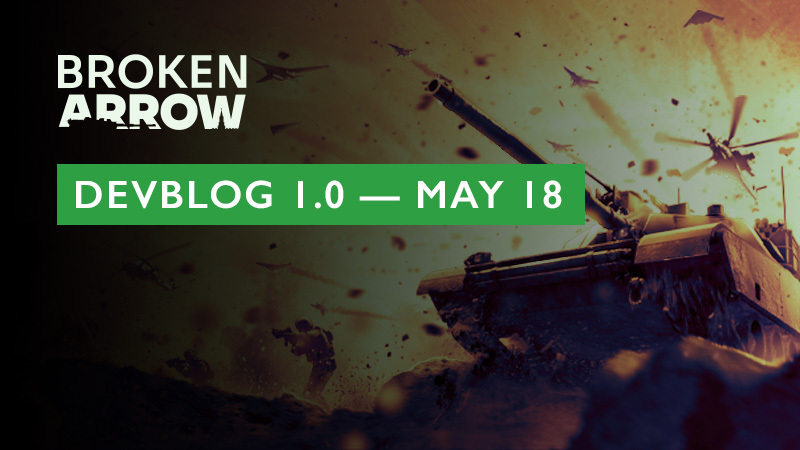
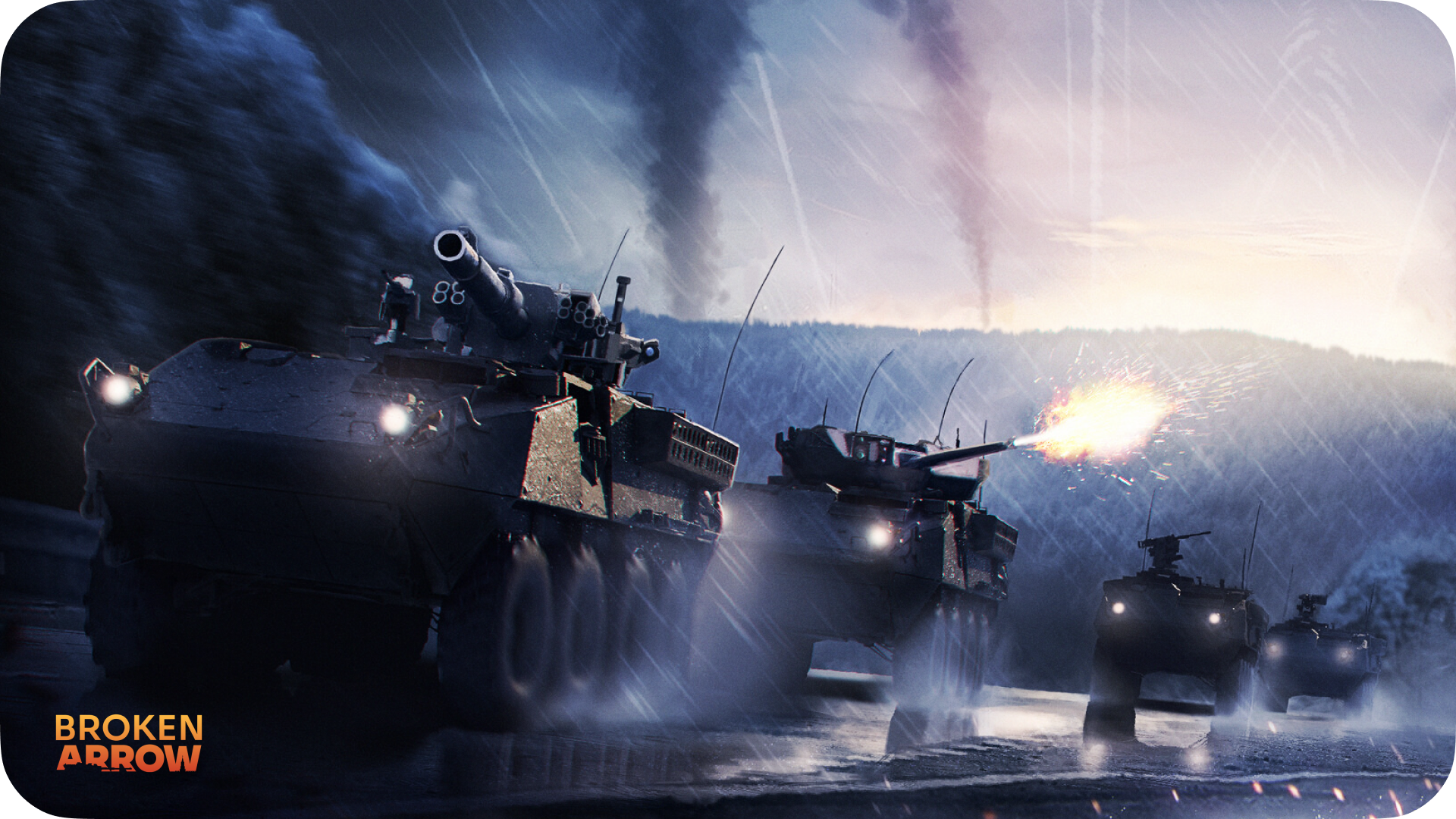
Over the past month, the PTE has already seen a large number of new solutions and balance changes. Some of them still require serious fine-tuning, while others managed to hit the intended target almost immediately. In today’s Devblog, we’ll take a closer look at two of what we believe to be the most successful changes so far.
According to feedback, heavy armored vehicles armed with 120 mm guns finally started feeling like a truly uncompromising option on the battlefield, which ended up resonating with the overwhelming majority of players. In part because the visual and audio impact of firing them now finally matches their gameplay performance.
Why did tanks originally have an aim time of 3 to 4 seconds, while APFSDS rounds base DMG capped to 6? Previously, the logic was roughly the following: in a direct duel, the MBT was, so to speak, “playing fair”, giving enemy vehicles enough room to use their ATGMs. At the same time, it’s important to remember that tanks do not need to maintain LOS until hit, meaning their only task was to simply survive long enough to fire, instantly deploy smoke afterward, and still guarantee a damage.
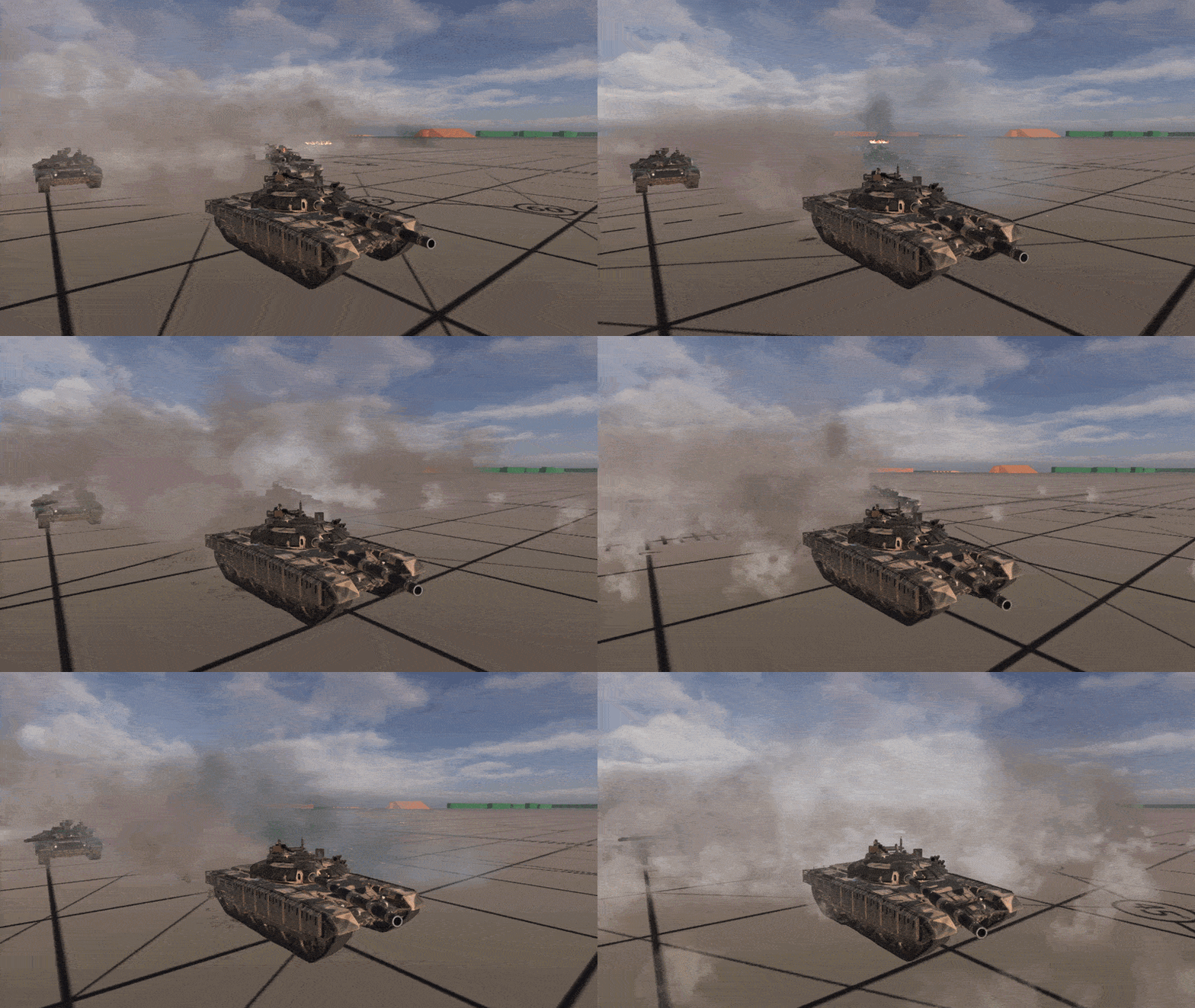
However, time has shown that such “fair duels” simply did not justify themselves. This logic especially hurt long-range tank engagements, as well as ambush fire against superior vehicles. On top of that, MBTs also were hard to prove their cost due to the near-guaranteed arrival of a strike fighter carrying guided bombs or cluster munitions, because while the price looked justified on card, the vehicle itself often did not feel worth that amount in actual battle.⠀
As a result, in current meta heavily favors vehicles armed with 50+ mm autocannons, since they are cheaper while also being outright more effective in close-range engagements. Meanwhile, tanks themselves are typically played either through the cheapest possible options or merely as situational countermeasures against threats such as M10 Booker.
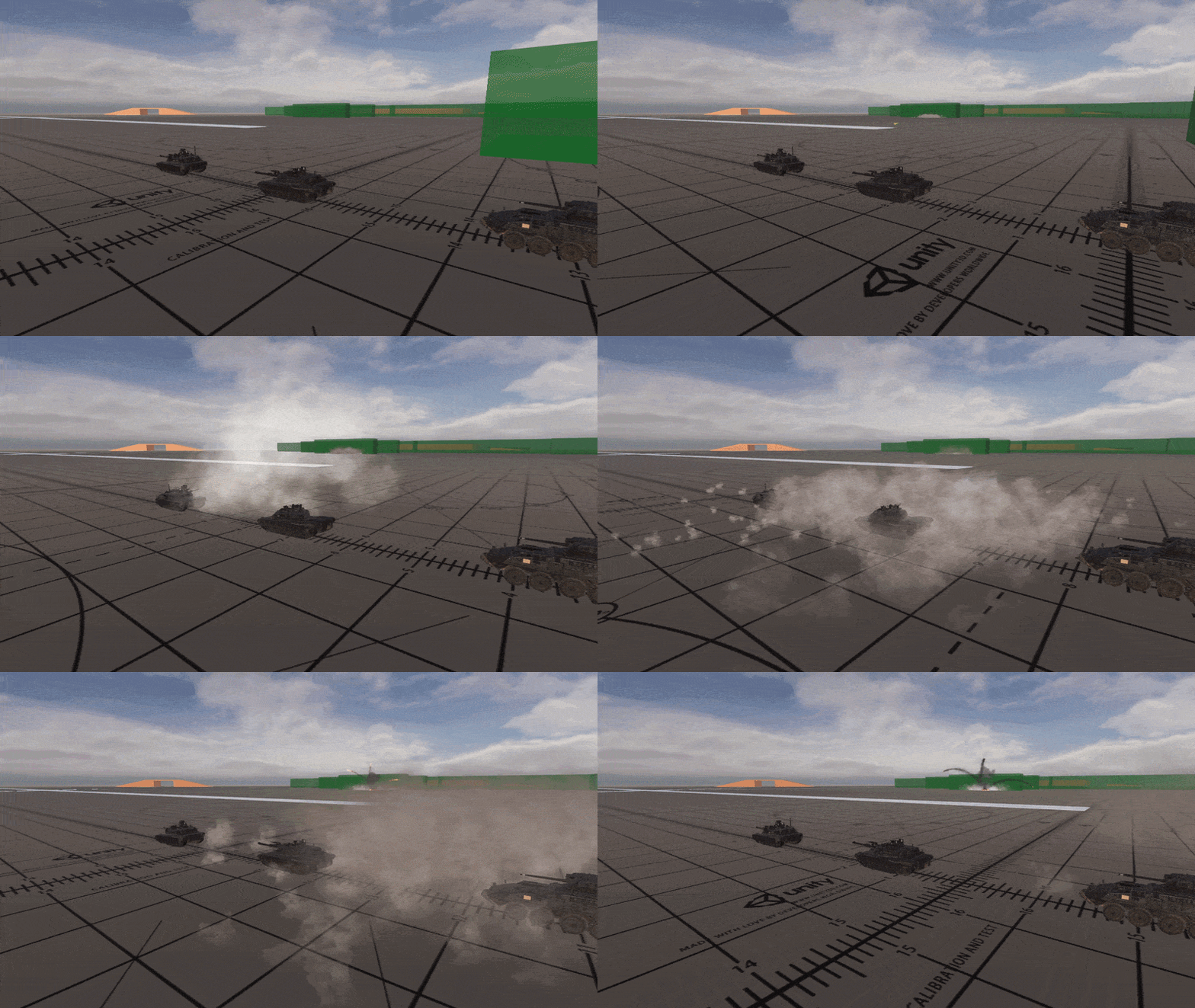
Now, after the buff, even the weakest tank caliber currently present in the game, represented by the 2A29 Rapira and mounted on the BMOP Toros, is capable of two-shotting nearly every armored vehicle at any firing range. However, if something gains power somewhere, something else inevitably loses it elsewhere. Unsurprisingly, this buff ended up creating several adjacent balance conflicts:
In most cases, ATGM carriers became significantly less capable of fighting back against tank guns, even when firing first. One notable example is the massive drop in value of the Bradley IFV family. Due to the APFSDS damage buff, HEAT rounds stopped being the default shell choice, which effectively erased Bradley’s main advantage: 17 HP with 400 mm armor that previously allowed it to survive two hits even from top-tier Russian tank HEAT rounds.
Specializations lacking MBTs or at least Tank Destroyers with main caliber guns (2S25 Sprut−SD, M8 Thunderbolt) lost a considerable amount of value, forcing them to compensate through a much larger number of meta options just to stay competitive. The reverse is also true: already strong specs that additionally have access to good tanks naturally rate even higher now.⠀
The demand for strong anti-tank weaponry sharply increased (RPGs, ATGMs, Cluster Bombs), while not every specialization can realistically provide it, particularly on the US side (in the first point), even despite the increased roof vulnerability to AT-Llaunchers in urban combat.
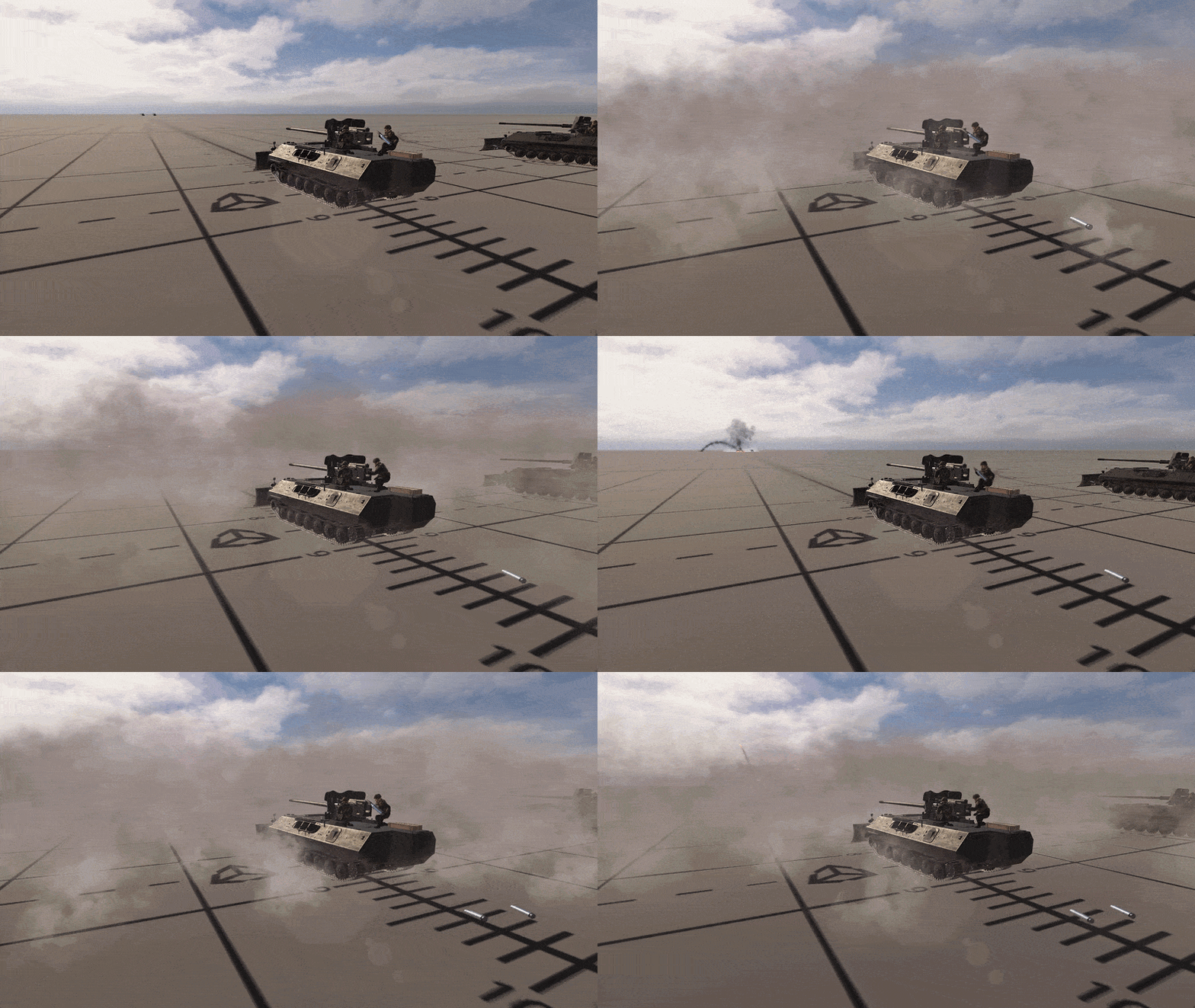
At the same time, despite the inverted open-field resist system, many players still point out that tanks remain insufficiently effective against infantry. This is influenced both by infantry tools themselves (sprint, smoke), which make disengaging from incoming fire relatively easy, and by the overall damage distribution of the tank. Compared to HE shells, MGs still account for nearly half of the total impact simply due to their massive contribution to suppression and generally comparable DPS. ⠀
However, at this point it can already be confidently said that tanks have successfully secured a very important — and more importantly, genuinely interesting gameplay part. What remains now is primarily polishing.
The economic system is, essentially, one of Broken Arrow’s core gameplay systems. Income, pricing, and so on — all of this is deeply interconnected with overall balance. Because of that, even seemingly minor adjustments can noticeably affect things like pick rate or the overall meta environment. Unfortunately, this area also came with several large-scale problems.
One of those problems was the linear income system itself. Not only could it trap players inside fairly unintuitive rules for proper reinvestment, but it also somewhat punished smart rotations and favorable trading during combat. Most importantly, the amount of tuning flexibility inside the system was extremely limited, forcing much of the economic stabilization onto the compensation system... which ultimately also turned out to be far from an ideal solution. ⠀
The new dynamic income system has now replaced all of that, functioning through segmented scaling stages instead. Without diving too deeply into the complicated details, the key advantage of the new system is that income now reacts far more accurately to the actual battlefield situation. In practice, a full wipe no longer forces players to stop deploying units simply to preserve maximum income, while prolonged favorable trading combined with gradual force buildup has, on the contrary, become economically rewarding.
To prevent abuse through permanently staying inside the 100% income range, we introduced a cap of 1500 reserve points. Interestingly enough, some players managed to discover an exploit involving refund cashback that also applied to supply inside transports. In other words, a supply crate parked near spawn can literally function as a bank account, allowing players to deposit and withdraw resources whenever needed — while also transferring points between teammates.
Naturally, the concept itself is hilarious, but it will obviously be fixed in the future. We will also continue gathering statistics and analyzing your feedback, adjusting stage thresholds and decay scaling where necessary. Before wrapping things up, let’s briefly clarify some terminology in case we accidentally managed to confuse anyone: ⠀⠀
Income — an overall name for the system responsible for pts generation, with a baseline value of +300 per minute.
Upkeep — a part of a unit’s cost that gets subtracted from income while the unit remains alive on the battlefield.
Segment — a range bracket with upper and lower thresholds used to calculate income scaling while total upkeep remains inside the setted range.
0 pts, +300 (100%) — 750 pts, +288 (96%) — 1500 pts, +210 (70%) — 2500 pts, +195 (65%) — 3500 pts, +90 (30%) — 5000 pts, +0 (0%)
Compensation — a one-time payout granted at the start of a new phase for losing the war goals.
Trading — a situation where a player achieves a more favorable economic or positional outcome even while losing a certain number of units.
Besides tanks and economy, there are also several other important changes that are generally moving in the right direction, even if they still come with their own set of associated issues: ⠀
The new «Conquest» mode brought significantly more dynamic into the gameplay, but at the same time also caused a certain inflation of score gains through kills. For example, capturing even a single additional objective zone can already be enough to secure the full +1 +1 +1, even if the advantage only lasted for a couple of minutes.
Competition between AA systems and their operational logic has noticeably improved, yet fully relying on their effectiveness is still difficult. At the very least because strike jets are still capable of generating extremely favorable trades, effectively deleting key units from the battlefield for nearly half of an entire phase.
Airtab has also gradually started moving away from the old only 1,5 stealth bomber with GBU−56 LJDAM, at least in terms of carrier and loadout variety. That said, the ecosystem still largely revolves around the most efficient suicide bomber available.
Overall, this is exactly what the first PTE iteration is for. Many systems still have not been fully revisited yet, including tank pricing itself, although we already have fairly concrete plans for several directions moving forward. We will continue covering all of this in detail throughout future Devblogs.
Thank you for helping us. — Steel Balalaika Studio
What's Your Reaction?










![[Business Talk] Chagee: Opening 3,500 stores in 6 years](https://xinker.org/uploads/images/202410/image_140x98_671afce94bf91.webp)