
![[PRO Tips] Gold’s Bullish Revival: Seasonal Trends and Key Levels to Watch](https://xinker.org/uploads/images/202412/image_430x256_67724cc6ad0cd.webp)
![[PRO Tips] Gold Market Under Short-Term Pressure, Safe-Haven Demand and Central Bank Buying Support Long-Term Upside Potential](https://xinker.org/uploads/images/202412/image_430x256_676ffb4685287.webp)
![[PRO Tips] Analysis of 9 key points of differentiation strategy! Master differentiation to create a brand advantage that is unique in the world!](https://firebasestorage.googleapis.com/v0/b/xinker-tips.appspot.com/o/article_thumbnails%2Fscaled_differentiation%20strategy.png.png?alt=media&token=a1bfc3d2-e85a-4db7-8a6d-01c7274f8940)
![[PRO Tips] Will REITs regain growth momentum in 2024? 3 REITs ETFs you must know if you want to invest in real estate.](https://firebasestorage.googleapis.com/v0/b/xinker-tips.appspot.com/o/article_thumbnails%2Fscaled_REITs1.png.png?alt=media&token=8af4eb93-33ff-466f-8039-b6555fad52b4)
![[PRO Tips] Complete tutorial on how to make money in Adobe Stock!](https://firebasestorage.googleapis.com/v0/b/xinker-tips.appspot.com/o/article_thumbnails%2Fscaled_tut-adobe1.png.png?alt=media&token=0b2c8cf2-22bd-4142-883e-140ed1cbaf02)
![[Passive Income] Unlock the secret of passive income: 3 steps to apply for Google AdSense](https://xinker.org/uploads/images/202410/image_430x256_6717a4fb3052b.webp)
![[Passive Income] Earn over $200 a day with AI-generated articles!](https://firebasestorage.googleapis.com/v0/b/xinker-tips.appspot.com/o/article_thumbnails%2Fscaled_article1.png.png?alt=media&token=f61bf35b-8553-4719-826d-7360024adc70)
![[Passive Income] Earn over 20 USD per download with AI-generated images!](https://firebasestorage.googleapis.com/v0/b/xinker-tips.appspot.com/o/article_thumbnails%2Fscaled_adobe2.png.png?alt=media&token=3e20e76a-a907-45af-80aa-bf9b3600301f)
![[Passive Income] Earn 10 USD per new download by sharing CapCut!](https://firebasestorage.googleapis.com/v0/b/xinker-tips.appspot.com/o/article_thumbnails%2Fscaled_capcut2.png.png?alt=media&token=a04dec40-1fac-4857-86f2-19a8be02d38e)
![[Passive Income] Use your WiFi to create passive income in 5 minutes, and you can earn 4-6 U per day!](https://firebasestorage.googleapis.com/v0/b/xinker-tips.appspot.com/o/article_thumbnails%2Fscaled_Grassio.webp.png?alt=media&token=7659a95e-0e47-4f27-a17d-c942ac3cf7f4)


![[Business Talk] The Unique Theme of XINKER's Song: Beef Wellington and Business Mastery](https://xinker.org/uploads/images/202410/image_430x256_671afc155f47f.webp)
![[Business Talk] Chagee: Opening 3,500 stores in 6 years](https://xinker.org/uploads/images/202410/image_430x256_671afce80c5f9.webp)

Bethesda veteran says Oblivion Remastered can't be called a remake, unlike Final Fantasy 7 and Resident Evil 2 which are "completely new games"
Last year's The Elder Scrolls 4: Oblivion Remastered did a lot more than slap a fresh coat of paint on the 2006 RPG, with environments (but not necessarily character models) that look straight out of a 2026 AAA release, but as anyone who's played the original game knows, it's still very much Oblivion, lovable jank and all. While there was a lot of deliberation about what and what not to modernize during development, Todd Howard and co. drew a hard line between remaster and full-blown remake, opting to market the game as a polished-up version of the original rather than something all new. That's because, in the words of associate art director Dan Lee, it shares the same "bones" as the original Oblivion. "Obviously the art is remake territory, it was all remade," Lee tells Nintendo Life. "But it really came down to Todd's perception of - well, the core bones are still the original game. So it's disingenuous to call it a remake. We're taking the core engine and then laying all this other stuff on top. We did some other little tweaks and things like that. But the core is still mostly there." You might think the distinction between remaster and remake is fairly straightforward, and to some degree it is, but since there's such a wide spectrum between straight-up ports and ground-up remakes, the lines can be a little fuzzy and lead to all sorts of controversy when it comes to pricing and availability alongside the originals. On the other hand, there are remakes that are so different from their original counterparts as to be virtually considered separate games, leaving zero ambiguity about how to label them. "There are all kinds of games that fit on the scale where it's just high resolution and then maybe they upgrade some of the textures or update some character models," adds Lee. "But then you can go all the way over to Resident Evil 2 and Final Fantasy 7 Remake, which are clearly remakes. They're taking the original vision and then just making completely new games based on that vision. Whereas here, we have lots of elements of the original game intact." I think Bethesda made the right call sticking to remastering Oblivion rather than remaking it. Both Oblivion and Oblivion Remastered are gorgeous games and, with a remake, the studio would've likely had to reallocate resources from The Elder Scrolls 6, which was announced eight long years ago. No distractions, is what I'm saying. Oblivion intern tried to outsmart Bethesda's AI and was stunned when his apple murder strategy actually worked: "I can't believe you accounted for this" [/url]
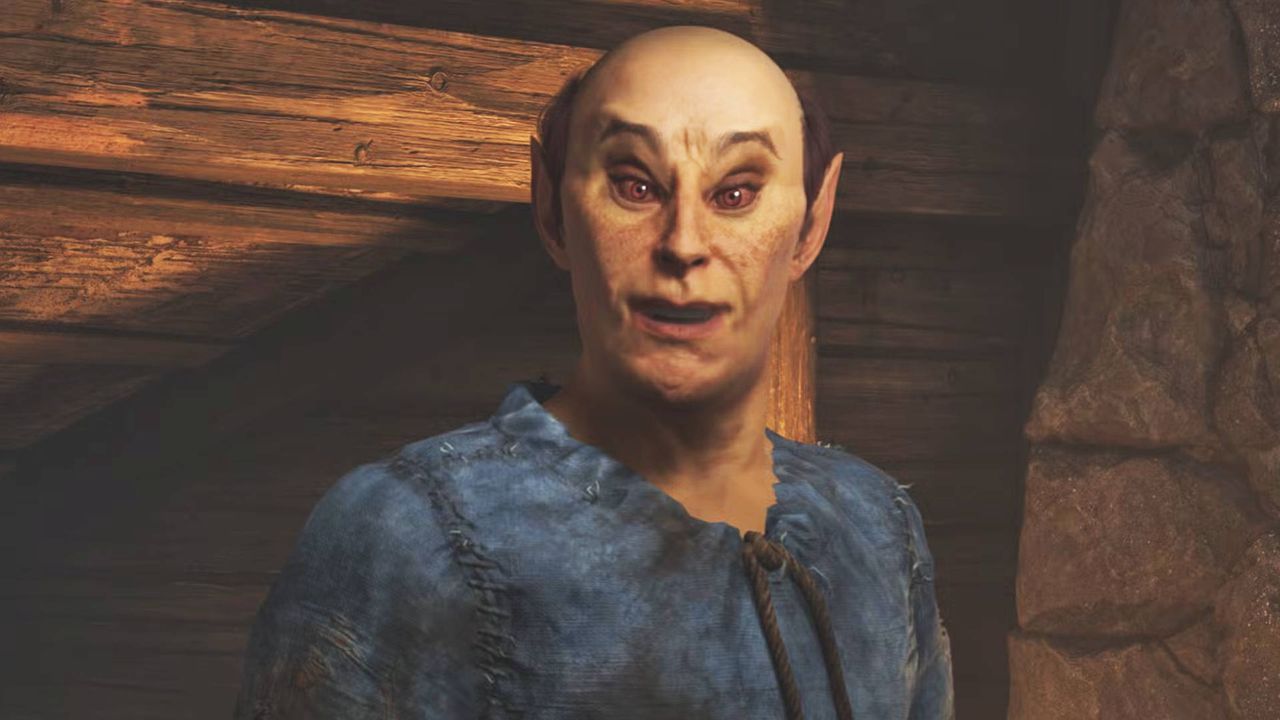 Last year's The Elder Scrolls 4: Oblivion Remastered did a lot more than slap a fresh coat of paint on the 2006 RPG, with environments (but not necessarily character models) that look straight out of a 2026 AAA release, but as anyone who's played the original game knows, it's still very much Oblivion, lovable jank and all. While there was a lot of deliberation about what and what not to modernize during development, Todd Howard and co. drew a hard line between remaster and full-blown remake, opting to market the game as a polished-up version of the original rather than something all new.
That's because, in the words of associate art director Dan Lee, it shares the same "bones" as the original Oblivion. "Obviously the art is remake territory, it was all remade," Lee tells Nintendo Life. "But it really came down to Todd's perception of - well, the core bones are still the original game. So it's disingenuous to call it a remake. We're taking the core engine and then laying all this other stuff on top. We did some other little tweaks and things like that. But the core is still mostly there."
You might think the distinction between remaster and remake is fairly straightforward, and to some degree it is, but since there's such a wide spectrum between straight-up ports and ground-up remakes, the lines can be a little fuzzy and lead to all sorts of controversy when it comes to pricing and availability alongside the originals. On the other hand, there are remakes that are so different from their original counterparts as to be virtually considered separate games, leaving zero ambiguity about how to label them.
"There are all kinds of games that fit on the scale where it's just high resolution and then maybe they upgrade some of the textures or update some character models," adds Lee. "But then you can go all the way over to Resident Evil 2 and Final Fantasy 7 Remake, which are clearly remakes. They're taking the original vision and then just making completely new games based on that vision. Whereas here, we have lots of elements of the original game intact."
I think Bethesda made the right call sticking to remastering Oblivion rather than remaking it. Both Oblivion and Oblivion Remastered are gorgeous games and, with a remake, the studio would've likely had to reallocate resources from The Elder Scrolls 6, which was announced eight long years ago. No distractions, is what I'm saying.
Oblivion intern tried to outsmart Bethesda's AI and was stunned when his apple murder strategy actually worked: "I can't believe you accounted for this"
[/url]
What's Your Reaction?








XINKER - Business and Income Tips
Explore XINKER, the ultimate platform for mastering business strategies, discovering passive income opportunities, and learning success principles. Join a community of thinkers dedicated to achieving financial freedom and entrepreneurial excellence.


![[Business Talk] Chagee: Opening 3,500 stores in 6 years](https://xinker.org/uploads/images/202410/image_140x98_671afce94bf91.webp)