

![[PRO Tips] Gold’s Bullish Revival: Seasonal Trends and Key Levels to Watch](https://xinker.org/uploads/images/202412/image_430x256_67724cc6ad0cd.webp)
![[PRO Tips] Gold Market Under Short-Term Pressure, Safe-Haven Demand and Central Bank Buying Support Long-Term Upside Potential](https://xinker.org/uploads/images/202412/image_430x256_676ffb4685287.webp)
![[PRO Tips] Analysis of 9 key points of differentiation strategy! Master differentiation to create a brand advantage that is unique in the world!](https://firebasestorage.googleapis.com/v0/b/xinker-tips.appspot.com/o/article_thumbnails%2Fscaled_differentiation%20strategy.png.png?alt=media&token=a1bfc3d2-e85a-4db7-8a6d-01c7274f8940)
![[PRO Tips] Will REITs regain growth momentum in 2024? 3 REITs ETFs you must know if you want to invest in real estate.](https://firebasestorage.googleapis.com/v0/b/xinker-tips.appspot.com/o/article_thumbnails%2Fscaled_REITs1.png.png?alt=media&token=8af4eb93-33ff-466f-8039-b6555fad52b4)
![[PRO Tips] Complete tutorial on how to make money in Adobe Stock!](https://firebasestorage.googleapis.com/v0/b/xinker-tips.appspot.com/o/article_thumbnails%2Fscaled_tut-adobe1.png.png?alt=media&token=0b2c8cf2-22bd-4142-883e-140ed1cbaf02)
![[Passive Income] Unlock the secret of passive income: 3 steps to apply for Google AdSense](https://xinker.org/uploads/images/202410/image_430x256_6717a4fb3052b.webp)
![[Passive Income] Earn over $200 a day with AI-generated articles!](https://firebasestorage.googleapis.com/v0/b/xinker-tips.appspot.com/o/article_thumbnails%2Fscaled_article1.png.png?alt=media&token=f61bf35b-8553-4719-826d-7360024adc70)
![[Passive Income] Earn over 20 USD per download with AI-generated images!](https://firebasestorage.googleapis.com/v0/b/xinker-tips.appspot.com/o/article_thumbnails%2Fscaled_adobe2.png.png?alt=media&token=3e20e76a-a907-45af-80aa-bf9b3600301f)
![[Passive Income] Earn 10 USD per new download by sharing CapCut!](https://firebasestorage.googleapis.com/v0/b/xinker-tips.appspot.com/o/article_thumbnails%2Fscaled_capcut2.png.png?alt=media&token=a04dec40-1fac-4857-86f2-19a8be02d38e)
![[Passive Income] Use your WiFi to create passive income in 5 minutes, and you can earn 4-6 U per day!](https://firebasestorage.googleapis.com/v0/b/xinker-tips.appspot.com/o/article_thumbnails%2Fscaled_Grassio.webp.png?alt=media&token=7659a95e-0e47-4f27-a17d-c942ac3cf7f4)


![[Business Talk] The Unique Theme of XINKER's Song: Beef Wellington and Business Mastery](https://xinker.org/uploads/images/202410/image_430x256_671afc155f47f.webp)
![[Business Talk] Chagee: Opening 3,500 stores in 6 years](https://xinker.org/uploads/images/202410/image_430x256_671afce80c5f9.webp)

Arvore is taking aim at making triple-A games in Brazil for VR and beyond | founder interview
Brazil’s game development community is moving up the food chain, rising from external development to making original games and bigger titles with game licenses. An example is Arvore, which is based in Sao Paulo, Brazil, and started making games in 2017. The company, started by Ricardo Justus and Rodrigo Terra, just shipped a virtual reality game for the Meta Quest VR platform. The title, The Boys: Trigger Warning, is based on the The Boys TV show license. And it was published by Sony Pictures and developed by Arvore. At Gamescom Latam, I talked with Justus and Terra about their efforts to grow the prestige of the Brazilian game industry — Terra is also the president of Abragames, the Brazilian Association of Game Development. Arvore also worked on titles including Pixel Ripped 1978 (2023), Yuki (2021) and The Line (2020). While it had venture capital funding early on at the dawn of the VR hype era, the company earned its future projects over time with each successful title. Arvore also created an AI-driven game called Tabula Rasa, and it won an award at South by Southwest. And while Justus said the company is still working on VR titles, Arvore is also branching out into new areas to diversify beyond the VR market. Both paths can lead Arvore into the triple-A space, one successful game at a time. Here’s our edited transcript of our interview. Rodrigo Terra (left) and Ricardo Justus are cofounders of Arvore, a maker of VR games like The Boys. Source: GamesBeat/Dean Takahashi Ricardo Justus: We launched on Quest late last month. We’re still working on the PlayStation version, which will launch soon. It was a great experience. We partnered with Sony Pictures for the project. We worked directly with the show creators, Eric Kripke and his team, on the story. It was a super interesting experience. Some of the actors reprise their roles and give their voices to the game. It was our biggest project so far. A very interesting experience, to translate an ongoing TV show. Our game is set between the fourth and fifth seasons. It was very interesting to do that. Rodrigo Terra: It was the first opportunity for the studio to work with such a big IP. We’ve worked with others, with Sony Pictures IP, but– Justus: It’s the first game based on the show. They did character cameos in Call of Duty and Mortal Kombat, things like that, but it’s the first game fully based on the show. Terra: It’s not a game they commissioned or requested. Justus: How it started was really interesting. We were exploring superhero interactions in VR, prototyping a bunch of cool things. We wanted to do a superhero game, but we also wanted to lampoon the genre a bit. The same thing The Boys does. Make it sarcastic, humorous, stuff like that. But we were exploring native interactions, gesture-based interactions for superpowers in VR. At the same time we met the people at Sony Pictures and started talking to them. We won an Emmy award in 2020 for an interactive narrative experience called The Line. That opened some doors with Hollywood. We met at one of these events. They wanted to do something with a TV property. They had done some VR games based on movies, and they wanted to bring a TV property to VR. We started talking about doing something for quite some time. Eventually we sat down with them and showed them our superhero prototypes, and they said they were exploring The Boys as a game franchise. After that point it was nine months of negotiation, because it wasn’t just Sony Pictures. We had to get the show creators on board. Meta and PlayStation funded the project, so we had to get them on board. It was a very long process. Finally we were able to get the project running. GamesBeat: What scale was the project like, as far as the number of people and how long it took? Brazil’s Abragames and Brazil Games showed off 38 games at Gamescom Latam. Source: GamesBeat/Dean Takahashi Justus: We worked on it for two and a half years, give or take, after those nine months of negotiation. Plus we had the previous time spent prototyping the interactions. But that wasn’t for The Boys specifically. It was for our own superhero game at the time. We used a lot of that work in the game. Total, probably close to three years of development. The team got pretty sizable. At one point we ramped up to about 77 people on the team. Right now Arvore has 130 people. We’ve grown a lot. This is one of the biggest games we’ve done. Now we’re working on some things that are even bigger, which we can’t talk about. But up to this point this was our biggest project. It’s still VR, of course. Triple-A scale doesn’t really exist in VR, unless it’s a first-party game from Meta, and even those don’t exist anymore. GamesBeat: How did you think about the opportunity in VR, whether it was something you should get into? What made you think about doing VR versus staying with more traditional games? Justus: It’s interesting. When we founded the company in 2017 – we’re nine years old in June – ou

Brazil’s game development community is moving up the food chain, rising from external development to making original games and bigger titles with game licenses.
An example is Arvore, which is based in Sao Paulo, Brazil, and started making games in 2017. The company, started by Ricardo Justus and Rodrigo Terra, just shipped a virtual reality game for the Meta Quest VR platform. The title, The Boys: Trigger Warning, is based on the The Boys TV show license. And it was published by Sony Pictures and developed by Arvore.
At Gamescom Latam, I talked with Justus and Terra about their efforts to grow the prestige of the Brazilian game industry — Terra is also the president of Abragames, the Brazilian Association of Game Development.
Arvore also worked on titles including Pixel Ripped 1978 (2023), Yuki (2021) and The Line (2020). While it had venture capital funding early on at the dawn of the VR hype era, the company earned its future projects over time with each successful title. Arvore also created an AI-driven game called Tabula Rasa, and it won an award at South by Southwest.
And while Justus said the company is still working on VR titles, Arvore is also branching out into new areas to diversify beyond the VR market. Both paths can lead Arvore into the triple-A space, one successful game at a time.
Here’s our edited transcript of our interview.
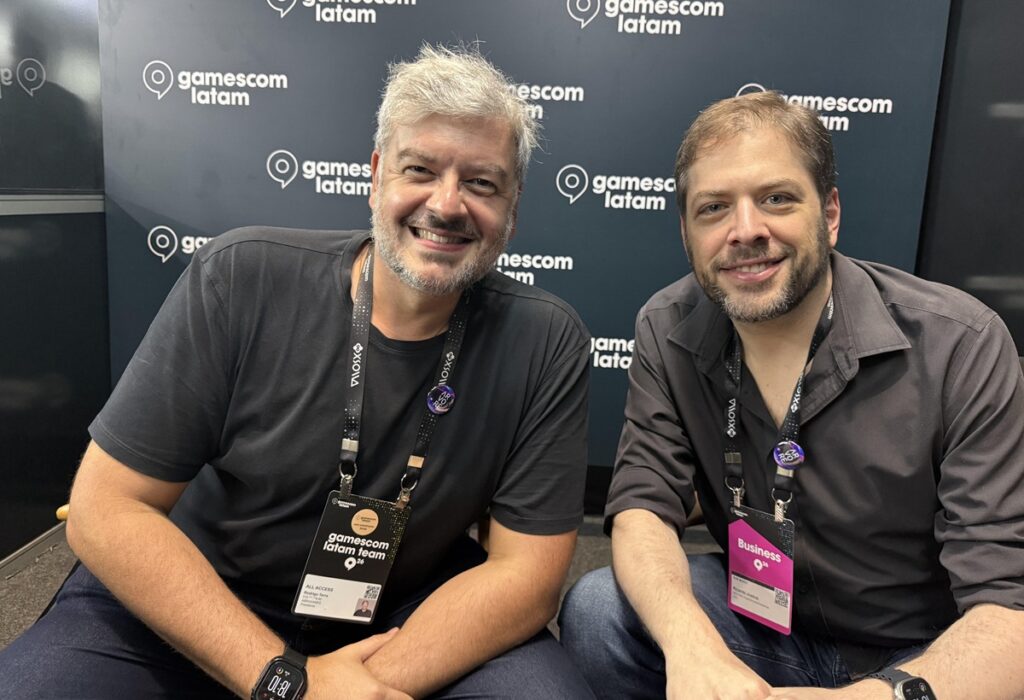 Rodrigo Terra (left) and Ricardo Justus are cofounders of Arvore, a maker of VR games like The Boys. Source: GamesBeat/Dean Takahashi Ricardo Justus: We launched on Quest late last month. We’re still working on the PlayStation version, which will launch soon. It was a great experience. We partnered with Sony Pictures for the project. We worked directly with the show creators, Eric Kripke and his team, on the story. It was a super interesting experience. Some of the actors reprise their roles and give their voices to the game. It was our biggest project so far. A very interesting experience, to translate an ongoing TV show. Our game is set between the fourth and fifth seasons. It was very interesting to do that.
Rodrigo Terra: It was the first opportunity for the studio to work with such a big IP. We’ve worked with others, with Sony Pictures IP, but–
Justus: It’s the first game based on the show. They did character cameos in Call of Duty and Mortal Kombat, things like that, but it’s the first game fully based on the show.
Terra: It’s not a game they commissioned or requested.
Justus: How it started was really interesting. We were exploring superhero interactions in VR, prototyping a bunch of cool things. We wanted to do a superhero game, but we also wanted to lampoon the genre a bit. The same thing The Boys does. Make it sarcastic, humorous, stuff like that. But we were exploring native interactions, gesture-based interactions for superpowers in VR.
At the same time we met the people at Sony Pictures and started talking to them. We won an Emmy award in 2020 for an interactive narrative experience called The Line. That opened some doors with Hollywood. We met at one of these events. They wanted to do something with a TV property. They had done some VR games based on movies, and they wanted to bring a TV property to VR. We started talking about doing something for quite some time. Eventually we sat down with them and showed them our superhero prototypes, and they said they were exploring The Boys as a game franchise.
After that point it was nine months of negotiation, because it wasn’t just Sony Pictures. We had to get the show creators on board. Meta and PlayStation funded the project, so we had to get them on board. It was a very long process. Finally we were able to get the project running.
GamesBeat: What scale was the project like, as far as the number of people and how long it took?
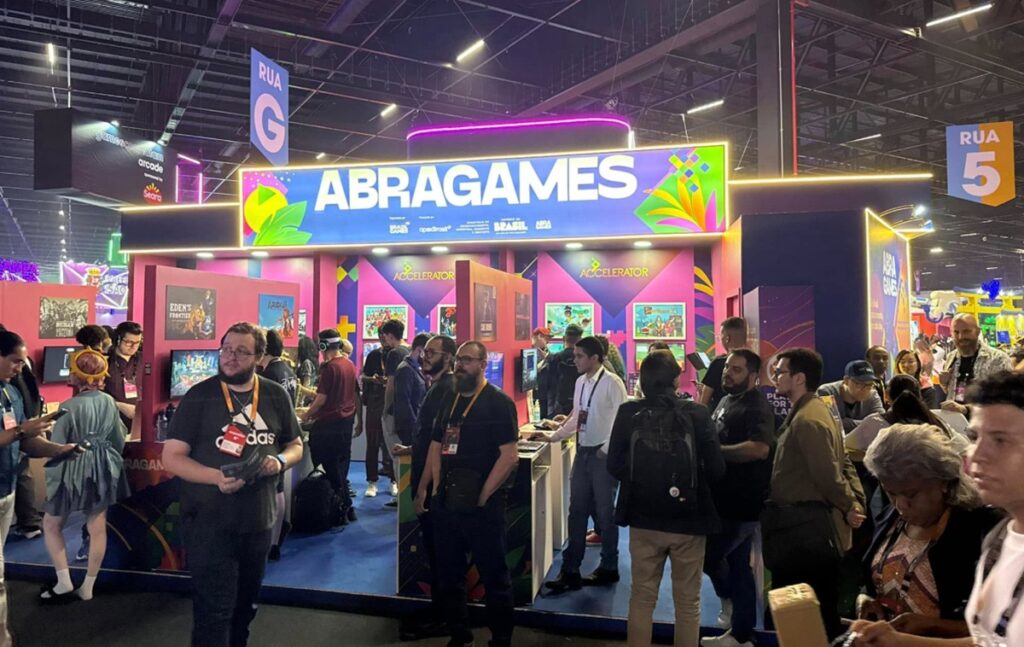 Brazil’s Abragames and Brazil Games showed off 38 games at Gamescom Latam. Source: GamesBeat/Dean Takahashi Justus: We worked on it for two and a half years, give or take, after those nine months of negotiation. Plus we had the previous time spent prototyping the interactions. But that wasn’t for The Boys specifically. It was for our own superhero game at the time. We used a lot of that work in the game. Total, probably close to three years of development. The team got pretty sizable. At one point we ramped up to about 77 people on the team.
Right now Arvore has 130 people. We’ve grown a lot. This is one of the biggest games we’ve done. Now we’re working on some things that are even bigger, which we can’t talk about. But up to this point this was our biggest project. It’s still VR, of course. Triple-A scale doesn’t really exist in VR, unless it’s a first-party game from Meta, and even those don’t exist anymore.
GamesBeat: How did you think about the opportunity in VR, whether it was something you should get into? What made you think about doing VR versus staying with more traditional games?
Justus: It’s interesting. When we founded the company in 2017 – we’re nine years old in June – our goal was to make VR games. Initially we were 100% focused on VR. But we approached it with a very multidisciplinary team of storytellers, game creators, artists. We wanted to create new things. We’re interested in immersive storytelling. That doesn’t necessarily have to be in VR. We want to create input innovations, gameplay innovations.
Up to now we’ve focused on VR, and we’re not abandoning VR. We have a bunch of VR games in our pipeline. But we’re now exploring other platforms as well. VR is a very challenging space. In 2017 there was more hope. We started with venture capital funding at the time, but all the growth we’ve had since 2020 was with our own revenue from our games. We found success, even though it’s a challenging space. I believe in it as an entertainment platform. The challenges that VR has are solvable. How fast they’re going to be solved is the question. They’re not being solved as fast as I would like. That’s why we’re exploring some other platforms as well.
Terra: We’re expanding the company. We’re exploring new revenue streams, new endeavors, new ways to deliver games.
Justus: But always with the same innovative DNA. We use the same approach around input innovation. We have to use that for VR, and I think we can apply it to non-VR games as well, console and PC games.
GamesBeat: Do you think there are still opportunities in VR with Meta, or do you think they’ve closed that door?
Justus: We’re still doing a bunch of things with Meta. We can’t talk about them, but we’re still working on it. I think the media exaggerates a lot. The media loves failure stories. Meta is still very much committed to Reality Labs and all these things. We’re doing a bunch of things with them. I think priorities shift, goals shift. But there’s still space.
Recently I was asked, “What do you recommend for new studios doing VR?” It’s a challenging space to enter right now. It’s hard to find success in games, even when you’re doing big IP games. We launched The Boys and it’s doing great. But it’s a challenging space, both on the development side–it’s harder to make VR games than non-VR games. There are technical challenges. Audience fit is difficult. There are so many things. But if you can do it and survive, which is what we’ve done, there’s room for future growth. Even with these priority shifts, there’s future growth. Valve is coming out with a headset soon.
I believe in VR as a platform. We just need time for some of these technical hurdles to fall. They’re all solvable hurdles. The games are fun. It’s amazing to create VR games. That’s why we’re super passionate about it.
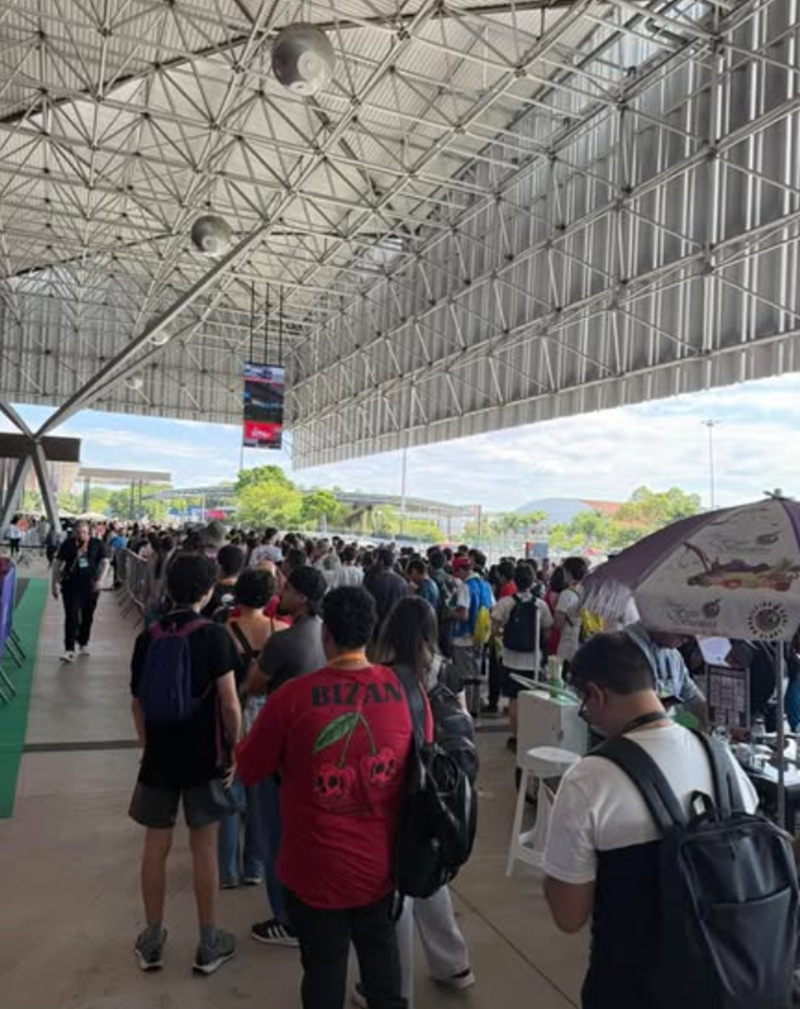 The crowds are huge at Gamescom Latam, which is in its third year. Source: GamesBeat/Dean Takahashi GamesBeat: Is there an expected opportunity with Apple as well? I saw Resolution Games did two things with them recently. They wouldn’t do that for no reason.
Justus: We have conversations with them.
Terra: They’re committed to a longer-term vision for their device. They want to explore more iterations of the hardware. They’re committed to fostering the next platform. Vision Pro is just one of the first–
Justus: It’s not a gaming platform right now like the Quest is. The Quest is priced like a console. It’s marketed like a console in some ways. That’s not what the Vision Pro is. Nobody’s going to buy a Vision Pro just to play games.
GamesBeat: Would you go into more traditional games to find a bigger base there, or would you want to go into something more experimental? There’s AI glasses now, all kinds of things that are potentially interesting.
Justus: Our DNA is very experimental. Even on our non-VR games we’re trying to explore interesting new inputs, new forms of interaction. We just won the audience award last month at SXSW for a game called Fabula Rasa. It’s a game where you interact with generative AI-driven characters. Luiza Justus directed it. It’s pretty unique.
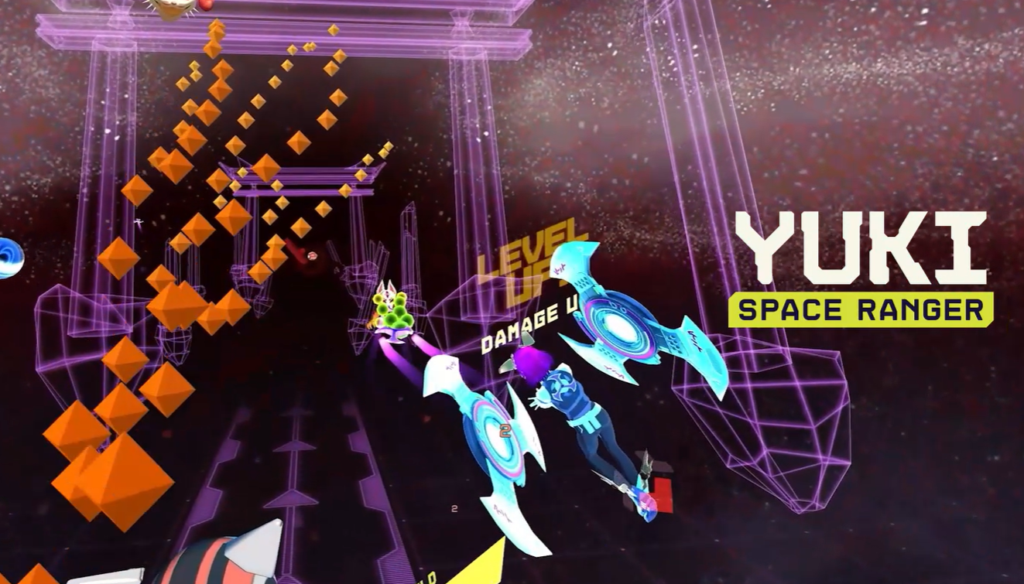 Yuki. Source: Arvore There’s a lot of bias against that sort of thing in the game industry right now, so we deliberately made it–all the art in the game is human-made. Our writers worked on it a lot, even though all the dialogue is generated. We wanted to create characters that have personalities. It’s a humorous game. It’s only been showcased at SXSW for now, but we intend to launch it as a Quest game in the future. People really resonated with it.
GamesBeat: There’s this category of ethically created AI games emerging.
Justus: We were very careful about that. Our philosophy was to make an experience that could only exist because of this technology. You talk to characters and the game changes based on what you say. It would be impossible to create infinite dialogue trees. This experience, because of the way we created it, could only exist because of this new technology. That’s how we approach VR games as well. Are we using the affordances of the medium? If not, we should just make a non-VR game, because we’ll have a bigger audience.
The games we’ve launched so far have achieved a level of success. Our partnerships with Meta–we’ve done a lot of work on Horizon Worlds with Meta. That sustains us. Even though VR is challenging, we’ve found relative success in the space.
Terra: These experiments are part of our constant R&D process. We’re always trying to figure out the best experience for a given medium. That’s why companies like Sony Pictures have approached us. They can see that we’re delivering something fresh and unique in the market, even if it’s in a niche. They see that we can do something different.
GamesBeat: I was talking to Jim Perkins today, from one of the big M&A firms. He was asking a bunch of people here about how much they charge. It sounded like one American developer gets paid what about a dozen or more developers here in Brazil might get paid. A Microsoft developer might get times as much.
https://www.youtube.com/embed/n0O5T6qB0no?feature=oembed Justus: That’s maybe an exaggeration. But we’re delivering equivalent quality–I mean, we won an Emmy. We’ve won awards. We’ve been recognized. And our cost structure, in local currency–we have a big advantage. We pay our developers well. We’re competitive. But the cost structure is just different. I feel like emerging markets like Latin America are solving some of the problems of the American game development industry. The American industry may have grown to unsustainable levels, making $200 million games. In VR, making more experimental stuff–the biggest games on Quest, you’re not going to see returns. But for games that cost way less, there’s an audience. The Quest has a good audience. It’s easier to find success.
I wouldn’t say we’re at that one to 25 ratio. But people here that are well paid, I’d say it’s one to four, one to five, for equivalent quality. Quality is a consideration. One to 25, you’re not getting the quality you’d get from a veteran Microsoft developer. If you want equivalent quality, it’s more like one to four, one to five.
GamesBeat: You’re maybe closer to Canada. Or more cost-effective than Canada?
Justus: We definitely are. Canada has a lot of government support, though. That helps a lot. We’re doing a lot through Abragames to try to help build government support here. Brazil has historically offered good government support for traditional media, but games have been coming up relatively recently.
GamesBeat: Is there money starting to come from the government at all?
Terra: Local governments, state governments, yes. Federal, we’re working on it.
Justus: Plus the industry is finally consolidating. Look at the size of this event. The industry is consolidating. The legal framework we’ve pushed forward in the last few years–before, the industry wasn’t even recognized as an industry. There was no category for game development. All of that is really important, to formalize the industry and create the structures to make more things possible.
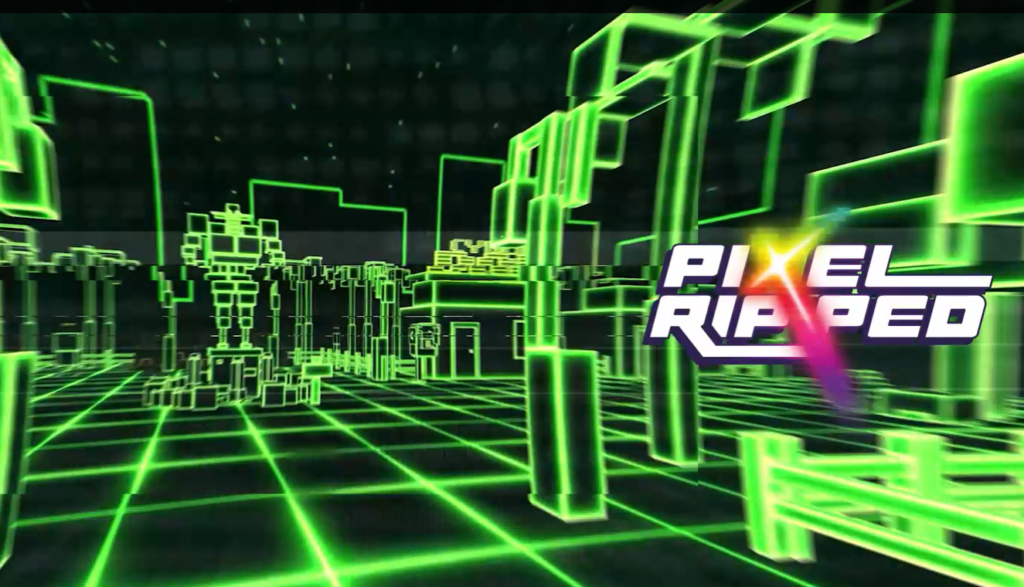 Pixel Ripped 1978 from Arvore. Source: Arvore GamesBeat: It feels like you’re setting the industry up for better things.
Terra: We’re trying to set up more of a foundation. We don’t want to make the mistakes that we’ve seen things like the Canada Media Fund make in the past. They’re great. They’ve fostered a lot in their ecosystem. But we don’t want to make any errors.
Justus: One thing we would talk about when we started the company was that we wanted to make a Brazilian company with Brazilian people – Brazilian engineers, Brazilian artists, Brazilian narrative designers, Brazilian game designers. All of our team is here. They’re delivering world-class stuff and being recognized around the world. We’ve achieved some of that. I think we still have a lot of ground to cover in terms of being recognized. There’s so much talent here. What there wasn’t is opportunity, capital investment.
We’re in an interesting position now, because the rest of the world – the American market and the rest of the industry – is noticing that emerging markets like Brazil and Argentina and other countries around Latin America have a lot of talent. We have a lot of advantages. The consumer side is important too. Look at the size of this event. It’s a consumer event. Even the consumer side is underserved. They don’t price games correctly here. Games cost a fortune. Consoles cost a fortune compared to the average person’s purchasing power. Once these things start adjusting, I feel like it’s going to blow up.
Nelson Rodrigues is a famous playwright here in Brazil. He coined a term in the ‘50s, what he called the “stray dog syndrome.” Brazil has this, culturally. A lot of Brazilians have this feeling like we’re scrappy, but we can’t compete with Hollywood, with the U.S., with bigger countries. But there’s so much talent and passion and energy here. If we get an opportunity–I want to refute that. I don’t believe in that. That’s part of the reason I built the company. Let’s make Brazilian games that we can sell worldwide with major IP like The Boys. We’re working on more games with major IP. We’re trusted by major companies with Brazilian talent, Brazilian energy and passion. That sends a message to the rest of the industry.
Terra: It ripples throughout the games industry. That’s our foundation. We want to be a global Brazilian company.
GamesBeat: If you have your AI game and you have VR games you’ve done, what’s the next milestone you want to hit? What’s the next ambition?
Justus: We’re in a transitional phase. Up to today, if you asked anyone who we are, they’d say we’re a VR games company. I want to transition us to becoming a multiplatform game company. We’re still doing VR games. I believe in VR. But we’re doing other things. We’re working on a couple things I can’t talk about. We still haven’t launched a non-VR game. That’s the next step. The AI game is in an experimental area, exploring something new. I can send you a build and you can try it. It’s about half an hour. I think you’ll love it.
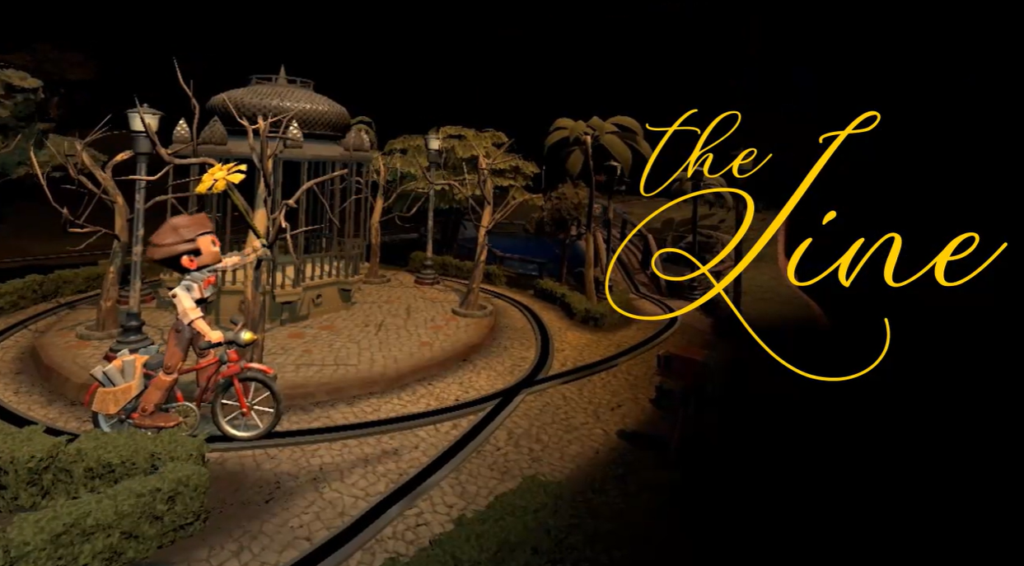 The Line. Source: Arvore GamesBeat: I’ve heard other companies describe the “ethical AI” development strategy. It does seem like that area is starting to build some interesting momentum.
Justus: My interest in AI–I don’t believe in substituting AI for humans. I don’t just want to lower production costs or speed up production. That’s not my interest. My interest is, can we do new types of games and experiences and workflows and so on that were not possible without this technology? Fabula Rasa is exactly that. I’ll send a build for you to try. This game would not be possible without generative AI. The next step is exploring more of these innovations and then launching non-VR games alongside our VR games.
Terra: We love to experiment with inputs. For us this is a very clever example of what we’re going to keep doing. New forms of interaction. New thinking, trying to get new game designs out into the world.
Disclosure: Gamescom Latam paid my way to Brazil, where I moderated two panels at the event.
The post Arvore is taking aim at making triple-A games in Brazil for VR and beyond | founder interview appeared first on GamesBeat.
An example is Arvore, which is based in Sao Paulo, Brazil, and started making games in 2017. The company, started by Ricardo Justus and Rodrigo Terra, just shipped a virtual reality game for the Meta Quest VR platform. The title, The Boys: Trigger Warning, is based on the The Boys TV show license. And it was published by Sony Pictures and developed by Arvore.
At Gamescom Latam, I talked with Justus and Terra about their efforts to grow the prestige of the Brazilian game industry — Terra is also the president of Abragames, the Brazilian Association of Game Development.
Arvore also worked on titles including Pixel Ripped 1978 (2023), Yuki (2021) and The Line (2020). While it had venture capital funding early on at the dawn of the VR hype era, the company earned its future projects over time with each successful title. Arvore also created an AI-driven game called Tabula Rasa, and it won an award at South by Southwest.
And while Justus said the company is still working on VR titles, Arvore is also branching out into new areas to diversify beyond the VR market. Both paths can lead Arvore into the triple-A space, one successful game at a time.
Here’s our edited transcript of our interview.
Rodrigo Terra (left) and Ricardo Justus are cofounders of Arvore, a maker of VR games like The Boys. Source: GamesBeat/Dean Takahashi Ricardo Justus: We launched on Quest late last month. We’re still working on the PlayStation version, which will launch soon. It was a great experience. We partnered with Sony Pictures for the project. We worked directly with the show creators, Eric Kripke and his team, on the story. It was a super interesting experience. Some of the actors reprise their roles and give their voices to the game. It was our biggest project so far. A very interesting experience, to translate an ongoing TV show. Our game is set between the fourth and fifth seasons. It was very interesting to do that.Rodrigo Terra: It was the first opportunity for the studio to work with such a big IP. We’ve worked with others, with Sony Pictures IP, but–
Justus: It’s the first game based on the show. They did character cameos in Call of Duty and Mortal Kombat, things like that, but it’s the first game fully based on the show.
Terra: It’s not a game they commissioned or requested.
Justus: How it started was really interesting. We were exploring superhero interactions in VR, prototyping a bunch of cool things. We wanted to do a superhero game, but we also wanted to lampoon the genre a bit. The same thing The Boys does. Make it sarcastic, humorous, stuff like that. But we were exploring native interactions, gesture-based interactions for superpowers in VR.
At the same time we met the people at Sony Pictures and started talking to them. We won an Emmy award in 2020 for an interactive narrative experience called The Line. That opened some doors with Hollywood. We met at one of these events. They wanted to do something with a TV property. They had done some VR games based on movies, and they wanted to bring a TV property to VR. We started talking about doing something for quite some time. Eventually we sat down with them and showed them our superhero prototypes, and they said they were exploring The Boys as a game franchise.
After that point it was nine months of negotiation, because it wasn’t just Sony Pictures. We had to get the show creators on board. Meta and PlayStation funded the project, so we had to get them on board. It was a very long process. Finally we were able to get the project running.
GamesBeat: What scale was the project like, as far as the number of people and how long it took?
Brazil’s Abragames and Brazil Games showed off 38 games at Gamescom Latam. Source: GamesBeat/Dean Takahashi Justus: We worked on it for two and a half years, give or take, after those nine months of negotiation. Plus we had the previous time spent prototyping the interactions. But that wasn’t for The Boys specifically. It was for our own superhero game at the time. We used a lot of that work in the game. Total, probably close to three years of development. The team got pretty sizable. At one point we ramped up to about 77 people on the team.Right now Arvore has 130 people. We’ve grown a lot. This is one of the biggest games we’ve done. Now we’re working on some things that are even bigger, which we can’t talk about. But up to this point this was our biggest project. It’s still VR, of course. Triple-A scale doesn’t really exist in VR, unless it’s a first-party game from Meta, and even those don’t exist anymore.
GamesBeat: How did you think about the opportunity in VR, whether it was something you should get into? What made you think about doing VR versus staying with more traditional games?
Justus: It’s interesting. When we founded the company in 2017 – we’re nine years old in June – our goal was to make VR games. Initially we were 100% focused on VR. But we approached it with a very multidisciplinary team of storytellers, game creators, artists. We wanted to create new things. We’re interested in immersive storytelling. That doesn’t necessarily have to be in VR. We want to create input innovations, gameplay innovations.
Up to now we’ve focused on VR, and we’re not abandoning VR. We have a bunch of VR games in our pipeline. But we’re now exploring other platforms as well. VR is a very challenging space. In 2017 there was more hope. We started with venture capital funding at the time, but all the growth we’ve had since 2020 was with our own revenue from our games. We found success, even though it’s a challenging space. I believe in it as an entertainment platform. The challenges that VR has are solvable. How fast they’re going to be solved is the question. They’re not being solved as fast as I would like. That’s why we’re exploring some other platforms as well.
Terra: We’re expanding the company. We’re exploring new revenue streams, new endeavors, new ways to deliver games.
Justus: But always with the same innovative DNA. We use the same approach around input innovation. We have to use that for VR, and I think we can apply it to non-VR games as well, console and PC games.
GamesBeat: Do you think there are still opportunities in VR with Meta, or do you think they’ve closed that door?
Justus: We’re still doing a bunch of things with Meta. We can’t talk about them, but we’re still working on it. I think the media exaggerates a lot. The media loves failure stories. Meta is still very much committed to Reality Labs and all these things. We’re doing a bunch of things with them. I think priorities shift, goals shift. But there’s still space.
Recently I was asked, “What do you recommend for new studios doing VR?” It’s a challenging space to enter right now. It’s hard to find success in games, even when you’re doing big IP games. We launched The Boys and it’s doing great. But it’s a challenging space, both on the development side–it’s harder to make VR games than non-VR games. There are technical challenges. Audience fit is difficult. There are so many things. But if you can do it and survive, which is what we’ve done, there’s room for future growth. Even with these priority shifts, there’s future growth. Valve is coming out with a headset soon.
I believe in VR as a platform. We just need time for some of these technical hurdles to fall. They’re all solvable hurdles. The games are fun. It’s amazing to create VR games. That’s why we’re super passionate about it.
The crowds are huge at Gamescom Latam, which is in its third year. Source: GamesBeat/Dean Takahashi GamesBeat: Is there an expected opportunity with Apple as well? I saw Resolution Games did two things with them recently. They wouldn’t do that for no reason.Justus: We have conversations with them.
Terra: They’re committed to a longer-term vision for their device. They want to explore more iterations of the hardware. They’re committed to fostering the next platform. Vision Pro is just one of the first–
Justus: It’s not a gaming platform right now like the Quest is. The Quest is priced like a console. It’s marketed like a console in some ways. That’s not what the Vision Pro is. Nobody’s going to buy a Vision Pro just to play games.
GamesBeat: Would you go into more traditional games to find a bigger base there, or would you want to go into something more experimental? There’s AI glasses now, all kinds of things that are potentially interesting.
Justus: Our DNA is very experimental. Even on our non-VR games we’re trying to explore interesting new inputs, new forms of interaction. We just won the audience award last month at SXSW for a game called Fabula Rasa. It’s a game where you interact with generative AI-driven characters. Luiza Justus directed it. It’s pretty unique.
Yuki. Source: Arvore There’s a lot of bias against that sort of thing in the game industry right now, so we deliberately made it–all the art in the game is human-made. Our writers worked on it a lot, even though all the dialogue is generated. We wanted to create characters that have personalities. It’s a humorous game. It’s only been showcased at SXSW for now, but we intend to launch it as a Quest game in the future. People really resonated with it.GamesBeat: There’s this category of ethically created AI games emerging.
Justus: We were very careful about that. Our philosophy was to make an experience that could only exist because of this technology. You talk to characters and the game changes based on what you say. It would be impossible to create infinite dialogue trees. This experience, because of the way we created it, could only exist because of this new technology. That’s how we approach VR games as well. Are we using the affordances of the medium? If not, we should just make a non-VR game, because we’ll have a bigger audience.
The games we’ve launched so far have achieved a level of success. Our partnerships with Meta–we’ve done a lot of work on Horizon Worlds with Meta. That sustains us. Even though VR is challenging, we’ve found relative success in the space.
Terra: These experiments are part of our constant R&D process. We’re always trying to figure out the best experience for a given medium. That’s why companies like Sony Pictures have approached us. They can see that we’re delivering something fresh and unique in the market, even if it’s in a niche. They see that we can do something different.
GamesBeat: I was talking to Jim Perkins today, from one of the big M&A firms. He was asking a bunch of people here about how much they charge. It sounded like one American developer gets paid what about a dozen or more developers here in Brazil might get paid. A Microsoft developer might get times as much.
https://www.youtube.com/embed/n0O5T6qB0no?feature=oembed Justus: That’s maybe an exaggeration. But we’re delivering equivalent quality–I mean, we won an Emmy. We’ve won awards. We’ve been recognized. And our cost structure, in local currency–we have a big advantage. We pay our developers well. We’re competitive. But the cost structure is just different. I feel like emerging markets like Latin America are solving some of the problems of the American game development industry. The American industry may have grown to unsustainable levels, making $200 million games. In VR, making more experimental stuff–the biggest games on Quest, you’re not going to see returns. But for games that cost way less, there’s an audience. The Quest has a good audience. It’s easier to find success.
I wouldn’t say we’re at that one to 25 ratio. But people here that are well paid, I’d say it’s one to four, one to five, for equivalent quality. Quality is a consideration. One to 25, you’re not getting the quality you’d get from a veteran Microsoft developer. If you want equivalent quality, it’s more like one to four, one to five.
GamesBeat: You’re maybe closer to Canada. Or more cost-effective than Canada?
Justus: We definitely are. Canada has a lot of government support, though. That helps a lot. We’re doing a lot through Abragames to try to help build government support here. Brazil has historically offered good government support for traditional media, but games have been coming up relatively recently.
GamesBeat: Is there money starting to come from the government at all?
Terra: Local governments, state governments, yes. Federal, we’re working on it.
Justus: Plus the industry is finally consolidating. Look at the size of this event. The industry is consolidating. The legal framework we’ve pushed forward in the last few years–before, the industry wasn’t even recognized as an industry. There was no category for game development. All of that is really important, to formalize the industry and create the structures to make more things possible.
Pixel Ripped 1978 from Arvore. Source: Arvore GamesBeat: It feels like you’re setting the industry up for better things.Terra: We’re trying to set up more of a foundation. We don’t want to make the mistakes that we’ve seen things like the Canada Media Fund make in the past. They’re great. They’ve fostered a lot in their ecosystem. But we don’t want to make any errors.
Justus: One thing we would talk about when we started the company was that we wanted to make a Brazilian company with Brazilian people – Brazilian engineers, Brazilian artists, Brazilian narrative designers, Brazilian game designers. All of our team is here. They’re delivering world-class stuff and being recognized around the world. We’ve achieved some of that. I think we still have a lot of ground to cover in terms of being recognized. There’s so much talent here. What there wasn’t is opportunity, capital investment.
We’re in an interesting position now, because the rest of the world – the American market and the rest of the industry – is noticing that emerging markets like Brazil and Argentina and other countries around Latin America have a lot of talent. We have a lot of advantages. The consumer side is important too. Look at the size of this event. It’s a consumer event. Even the consumer side is underserved. They don’t price games correctly here. Games cost a fortune. Consoles cost a fortune compared to the average person’s purchasing power. Once these things start adjusting, I feel like it’s going to blow up.
Nelson Rodrigues is a famous playwright here in Brazil. He coined a term in the ‘50s, what he called the “stray dog syndrome.” Brazil has this, culturally. A lot of Brazilians have this feeling like we’re scrappy, but we can’t compete with Hollywood, with the U.S., with bigger countries. But there’s so much talent and passion and energy here. If we get an opportunity–I want to refute that. I don’t believe in that. That’s part of the reason I built the company. Let’s make Brazilian games that we can sell worldwide with major IP like The Boys. We’re working on more games with major IP. We’re trusted by major companies with Brazilian talent, Brazilian energy and passion. That sends a message to the rest of the industry.
Terra: It ripples throughout the games industry. That’s our foundation. We want to be a global Brazilian company.
GamesBeat: If you have your AI game and you have VR games you’ve done, what’s the next milestone you want to hit? What’s the next ambition?
Justus: We’re in a transitional phase. Up to today, if you asked anyone who we are, they’d say we’re a VR games company. I want to transition us to becoming a multiplatform game company. We’re still doing VR games. I believe in VR. But we’re doing other things. We’re working on a couple things I can’t talk about. We still haven’t launched a non-VR game. That’s the next step. The AI game is in an experimental area, exploring something new. I can send you a build and you can try it. It’s about half an hour. I think you’ll love it.
The Line. Source: Arvore GamesBeat: I’ve heard other companies describe the “ethical AI” development strategy. It does seem like that area is starting to build some interesting momentum.Justus: My interest in AI–I don’t believe in substituting AI for humans. I don’t just want to lower production costs or speed up production. That’s not my interest. My interest is, can we do new types of games and experiences and workflows and so on that were not possible without this technology? Fabula Rasa is exactly that. I’ll send a build for you to try. This game would not be possible without generative AI. The next step is exploring more of these innovations and then launching non-VR games alongside our VR games.
Terra: We love to experiment with inputs. For us this is a very clever example of what we’re going to keep doing. New forms of interaction. New thinking, trying to get new game designs out into the world.
Disclosure: Gamescom Latam paid my way to Brazil, where I moderated two panels at the event.
The post Arvore is taking aim at making triple-A games in Brazil for VR and beyond | founder interview appeared first on GamesBeat.
What's Your Reaction?








XINKER - Business and Income Tips
Explore XINKER, the ultimate platform for mastering business strategies, discovering passive income opportunities, and learning success principles. Join a community of thinkers dedicated to achieving financial freedom and entrepreneurial excellence.
![[Business Talk] Chagee: Opening 3,500 stores in 6 years](https://xinker.org/uploads/images/202410/image_140x98_671afce94bf91.webp)