






Tinto Talks #102 - 1st of April 2026
Friends, Romans, countrymen, lend me your ears. For today we will be looking into some of the miscellaneous content in the Fate of the Phoenix immersion pack.Some of the earlier events are focused around John Kantakouzenos, the nobleman who served under the incumbent Andronikos III, and eventually became emperor himself. He starts as the Head of the Cabinet, reflecting his position as Megas Domestikos. In real life, he lived to a venerable age of 91, and so his life expectancy is given a significant boost in the setup.In real life, he rejected Co-Emperorship, at least to begin with. But if you force him down that path, it opens up an event chain of courtly intrigue of Ana de Savoie.His position as Head of the Cabinet will now also put him in a prime position to take over the Regency, as he historically did upon the death of Andronikos III.We are also introducing a new Subject Type called the Prónoiai, based on the real Byzantine Prónoiai system, conditional land grants from the Emperor to military officers and officials, which evolved from temporary tax-collection appointments into hereditary holdings combining fiscal and military duties. It is more extractive than a vassal, giving gold, sailors, and manpower to the overlord, and increases the owner’s monthly legitimacy but also pushes towards decentralization.What have the Romans ever done for us? Well, some cities will start with an aqueduct system.Philipp Melanchton was a close ally of Martin Luther, and he was fascinated by the Eastern church. When the reformation happens, the country housing Philipp Melanchthon will be able to petition Byzantium for assistance. They can respond, either choosing to look upon Lutheranism favourably or aloofly ignoring them.In the past, the Byzantines deployed a napalm-like substance whose recipe was a closely guarded secret. So closely guarded in fact that by 1337 the recipe was lost to time. However the Byzantines had a cultural memory and fascination with Greek Fire, so if you have a scientist in Byzantium, you can sponsor them to rediscover Greek Fire, a costly and dangerous process that has a high chance of ending in failure.If the scientist succeeds, the secret of Greek Fire will give you access to Siphōnes fire galleys, which will aid you in defending the Bosphorus.Societal ValueBased on community feedback, we’ve been revisiting how we frame the Latinitas vs Hellenismos societal value. Our original design did not fully capture the nature of the choices facing the Byzantine Empire in the 14th and 15th centuries.Latinitas is now more clearly associated with engagement with the contemporary Latin West. It represents the political influence of the internal factions who believe that the Empire’s survival depends on closer ties with the Latins through diplomacy, religious compromise, and the selective adoption of Western currents and Renaissance thought. Shaped by contact with Frankish kingdoms and Italian republics, Latinitas looks for foreign support and renewal in a time of mounting pressure. As the Empire expands into historically Romance regions, particularly in Italy, this outlook may strengthen further, encouraging accommodation and integration with Latin elites and populations.The illustration will also change to be less Imperator’s SPQR and instead reflect Renaissance Italy’s depictions of their nostalgia for Pax Romana.Meanwhile, Hellenismos has been reworked into Romanismos. It reflects the political power of those who understand that the Empire endures through its unbroken Roman inheritance: rooted in Constantinople as the seat of empire, upheld by the Orthodox Church, and sustained by long-established imperial institutions. Romanismos does not represent a novel Greekish direction, but the continuation of what already exists: the Roman Empire as it has always been, requiring preservation rather than transformation.You will get several events as you navigate this political dichotomy that represent the real push-and-pull that was happening inside the Byzantine court.And on the topic of events, we have also been working on a much-requested quality of life tool for players to see the list of unique events that a country has access to. Players will be able to use a searchable, filterable, tooltippable database of Dynamic Historical Events, so they can plan out which path they want to go down and see why some events fire and some events don’t. Bear in mind this is very WIP.This Tinto Talks has just a hint of the kind of content you can find in Fate of the Phoenix, but there is a lot more to discover as you play.In the patch 1.2 Echinades we have also added a lot of free content to countries in the Byzantine sphere. There 5 new works of art in the Balkans, over 300 new advances spread around Greek Minors, Frankokratia, and the Balkans, more than a hundred new events, new government reforms, privileges, etc. The whole region will now be a much more exciting place to rule in.Next week we will take a look at what the c
Friends, Romans, countrymen, lend me your ears. For today we will be looking into some of the miscellaneous content in the Fate of the Phoenix immersion pack.
Some of the earlier events are focused around John Kantakouzenos, the nobleman who served under the incumbent Andronikos III, and eventually became emperor himself. He starts as the Head of the Cabinet, reflecting his position as Megas Domestikos. In real life, he lived to a venerable age of 91, and so his life expectancy is given a significant boost in the setup.
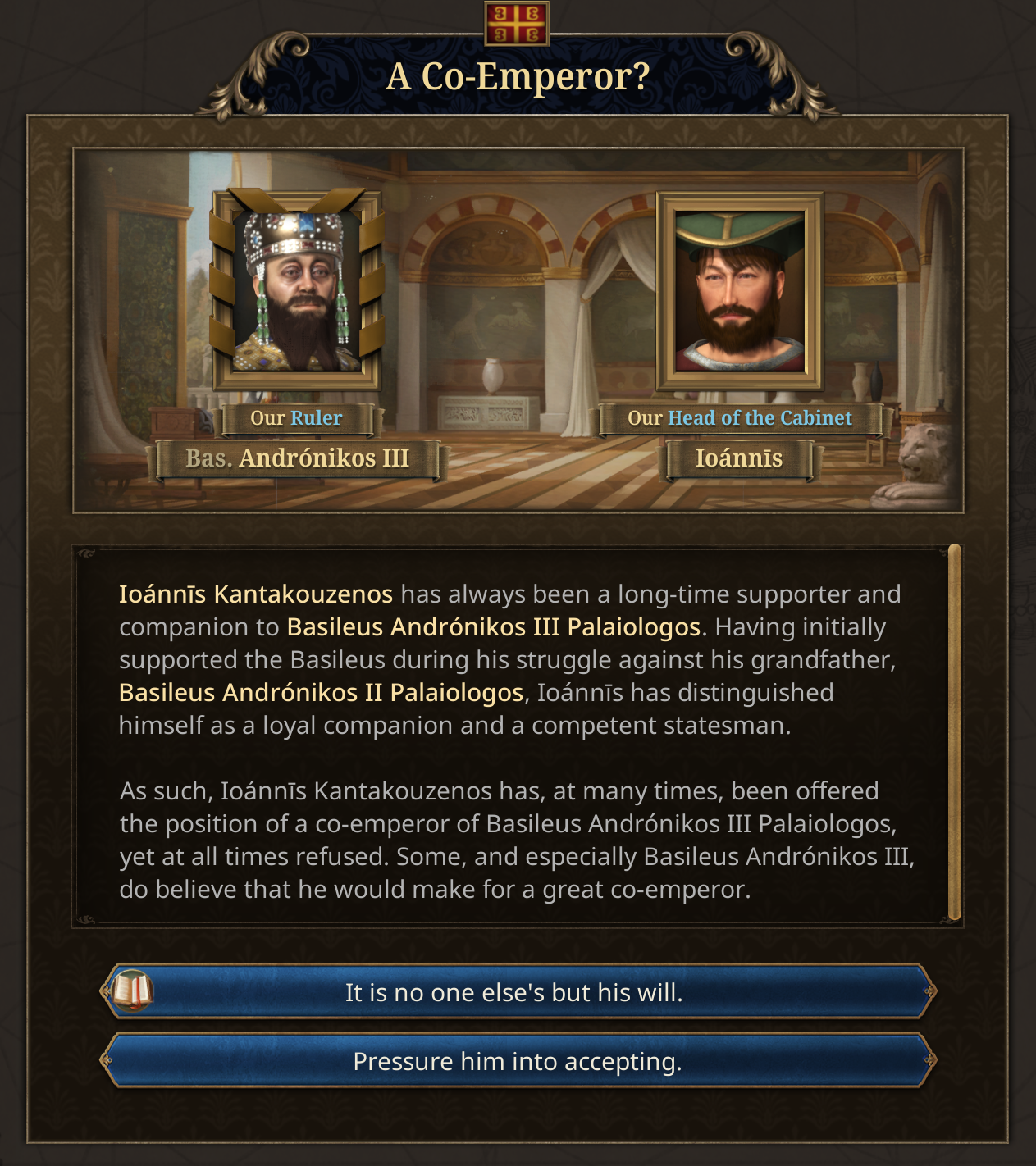
In real life, he rejected Co-Emperorship, at least to begin with. But if you force him down that path, it opens up an event chain of courtly intrigue of Ana de Savoie.
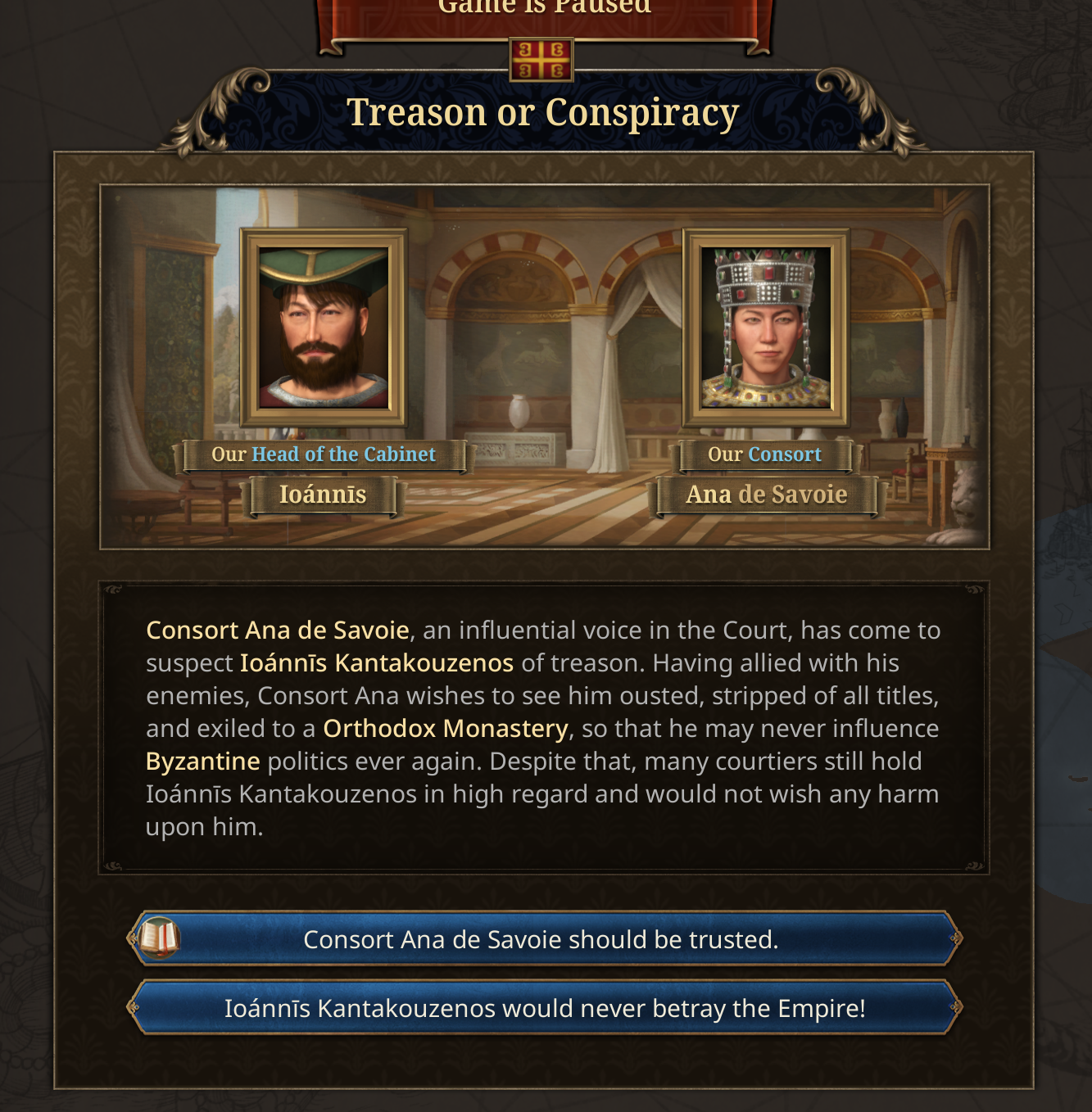
His position as Head of the Cabinet will now also put him in a prime position to take over the Regency, as he historically did upon the death of Andronikos III.
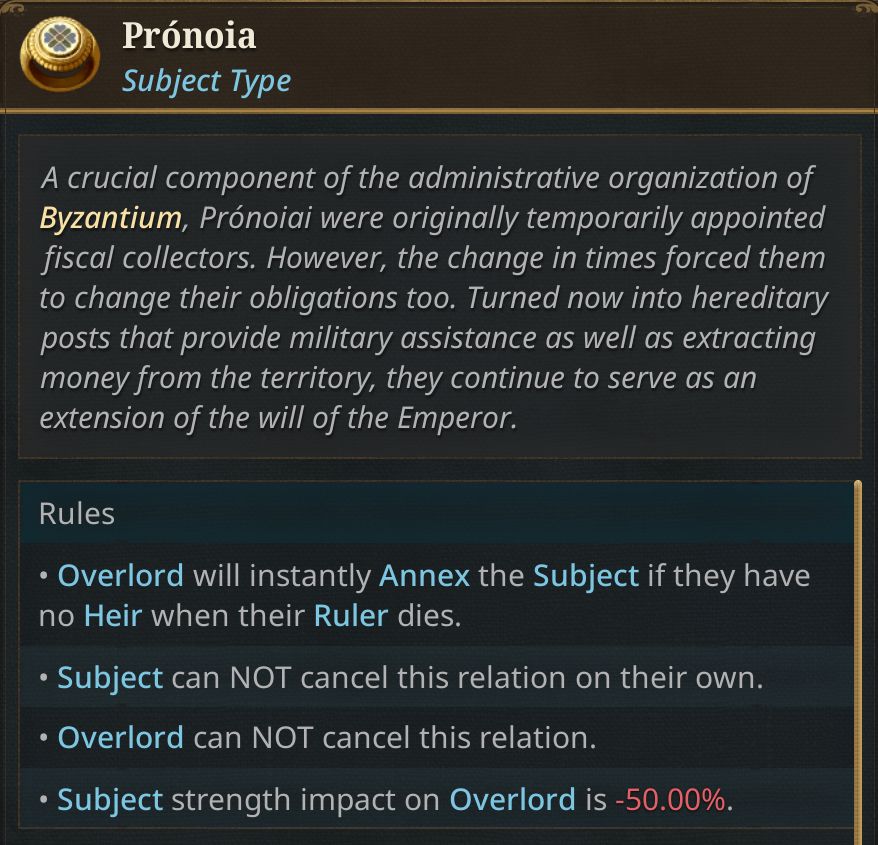
We are also introducing a new Subject Type called the Prónoiai, based on the real Byzantine Prónoiai system, conditional land grants from the Emperor to military officers and officials, which evolved from temporary tax-collection appointments into hereditary holdings combining fiscal and military duties. It is more extractive than a vassal, giving gold, sailors, and manpower to the overlord, and increases the owner’s monthly legitimacy but also pushes towards decentralization.
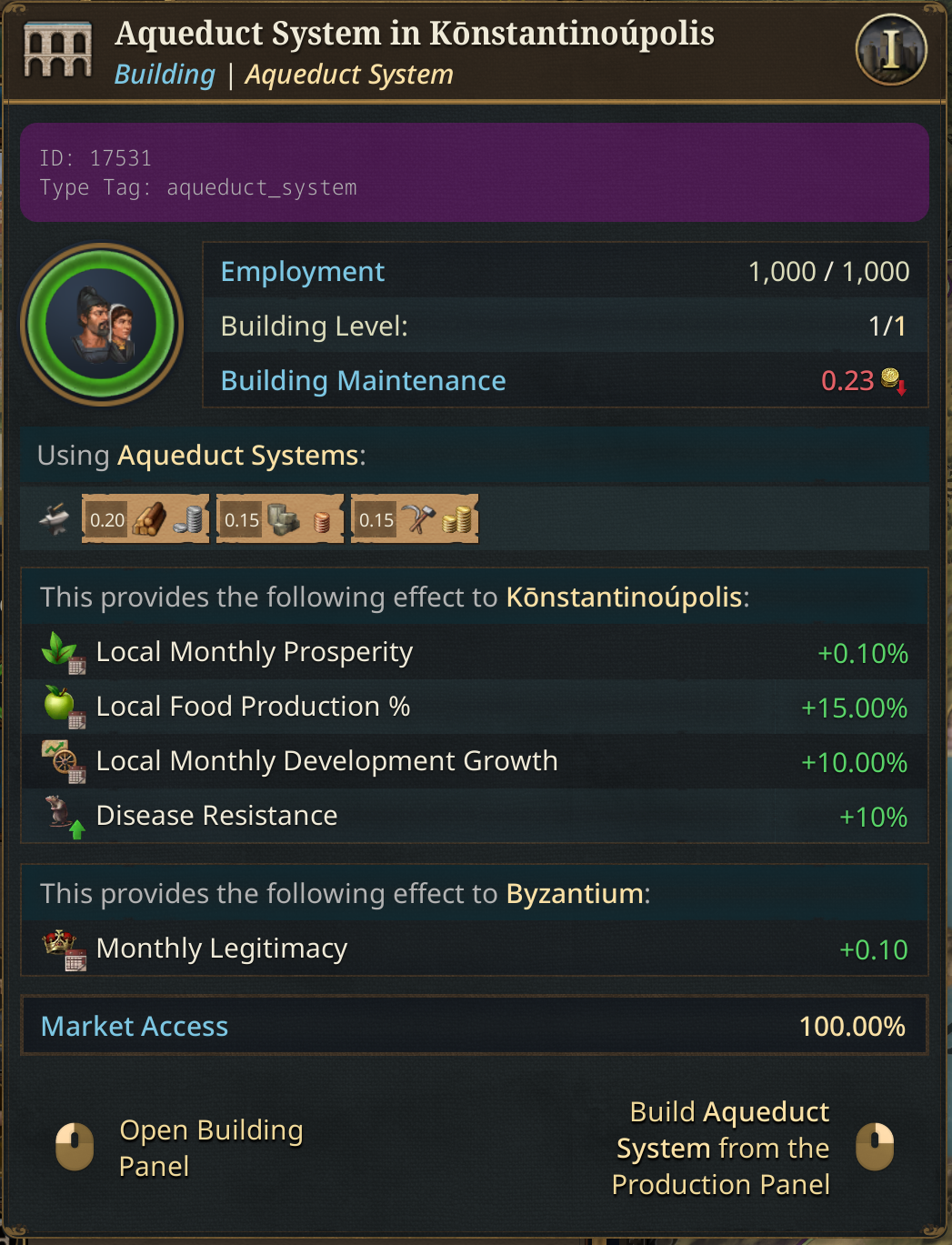
What have the Romans ever done for us? Well, some cities will start with an aqueduct system.
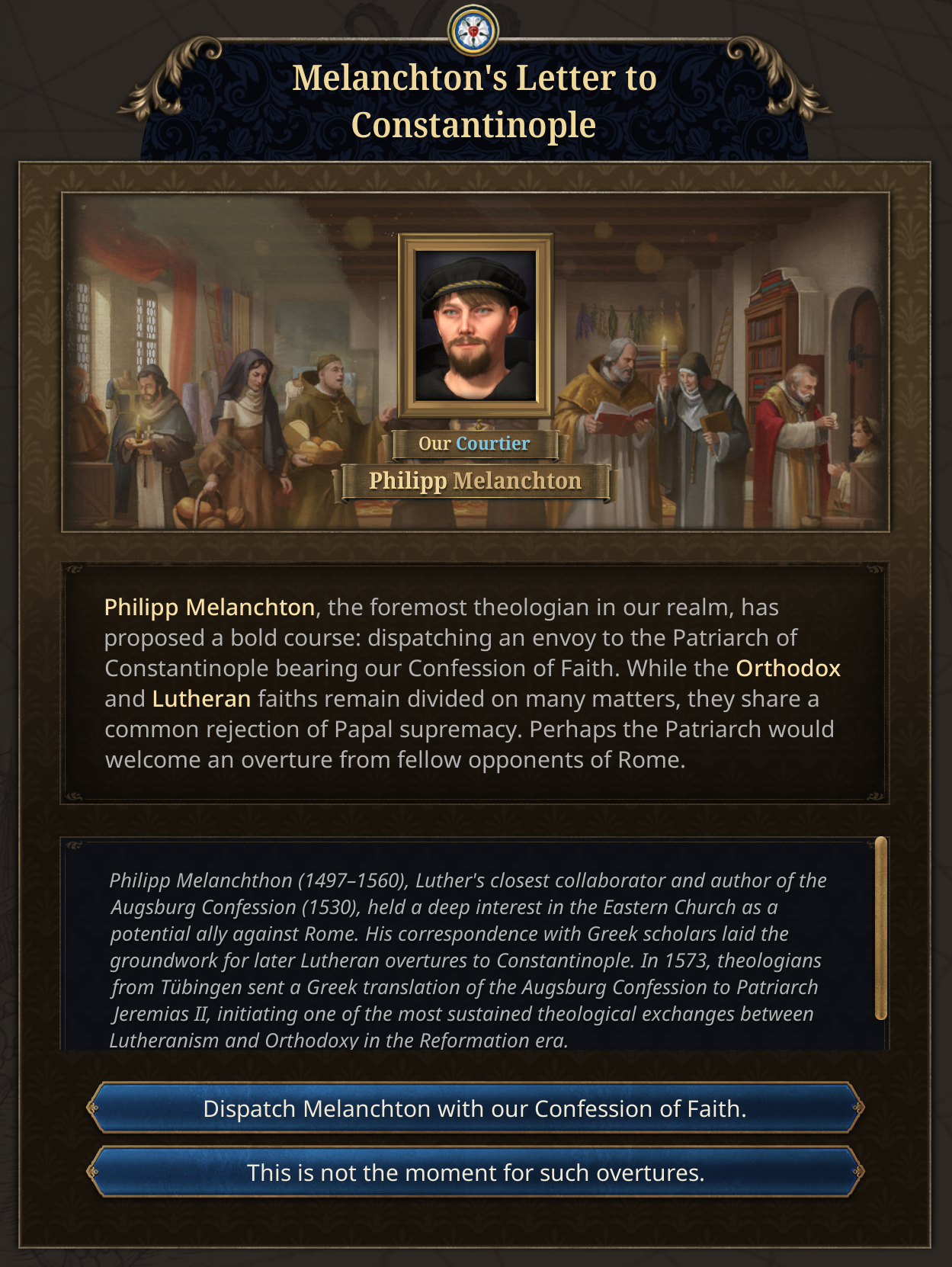
Philipp Melanchton was a close ally of Martin Luther, and he was fascinated by the Eastern church. When the reformation happens, the country housing Philipp Melanchthon will be able to petition Byzantium for assistance. They can respond, either choosing to look upon Lutheranism favourably or aloofly ignoring them.
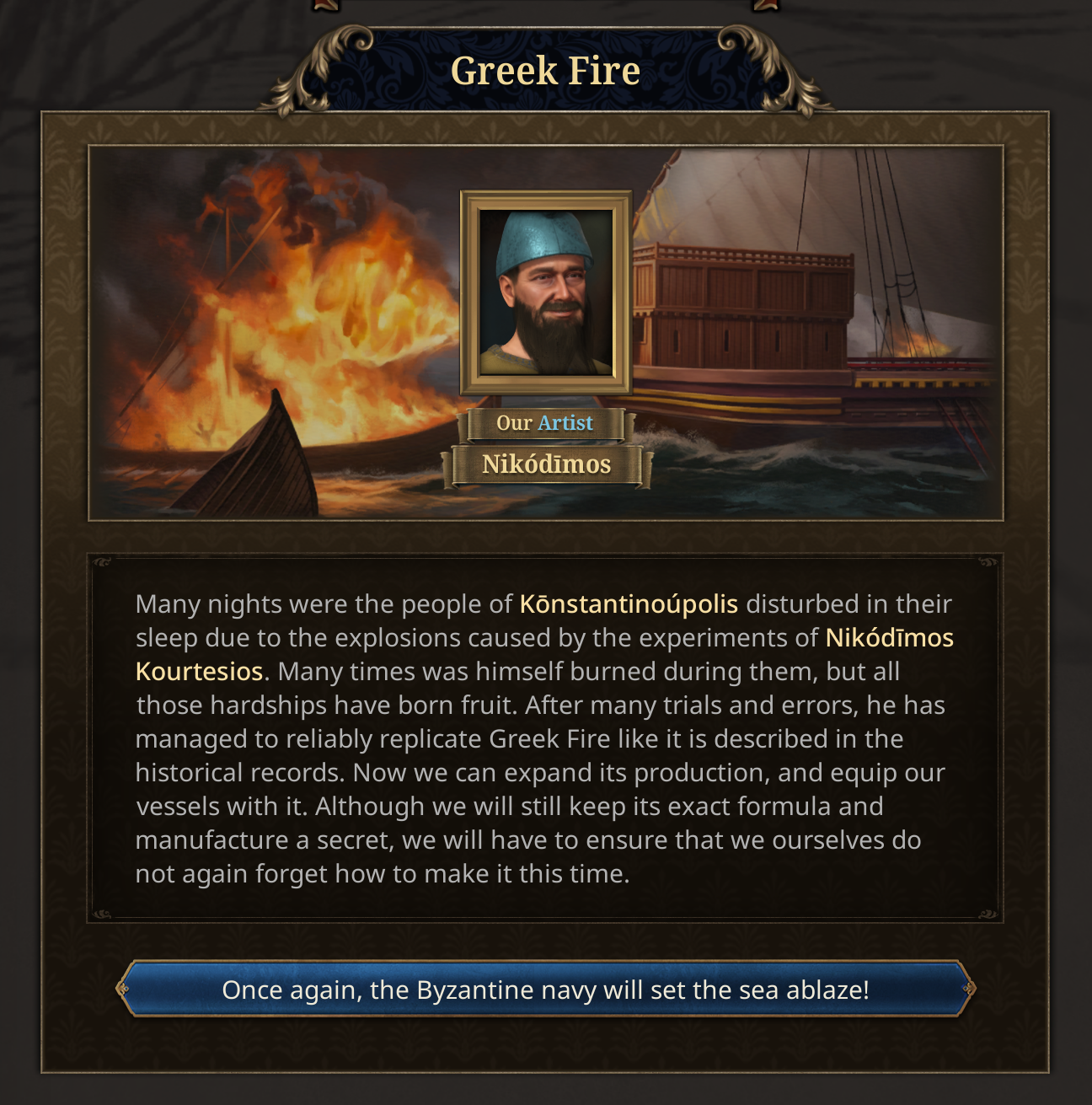
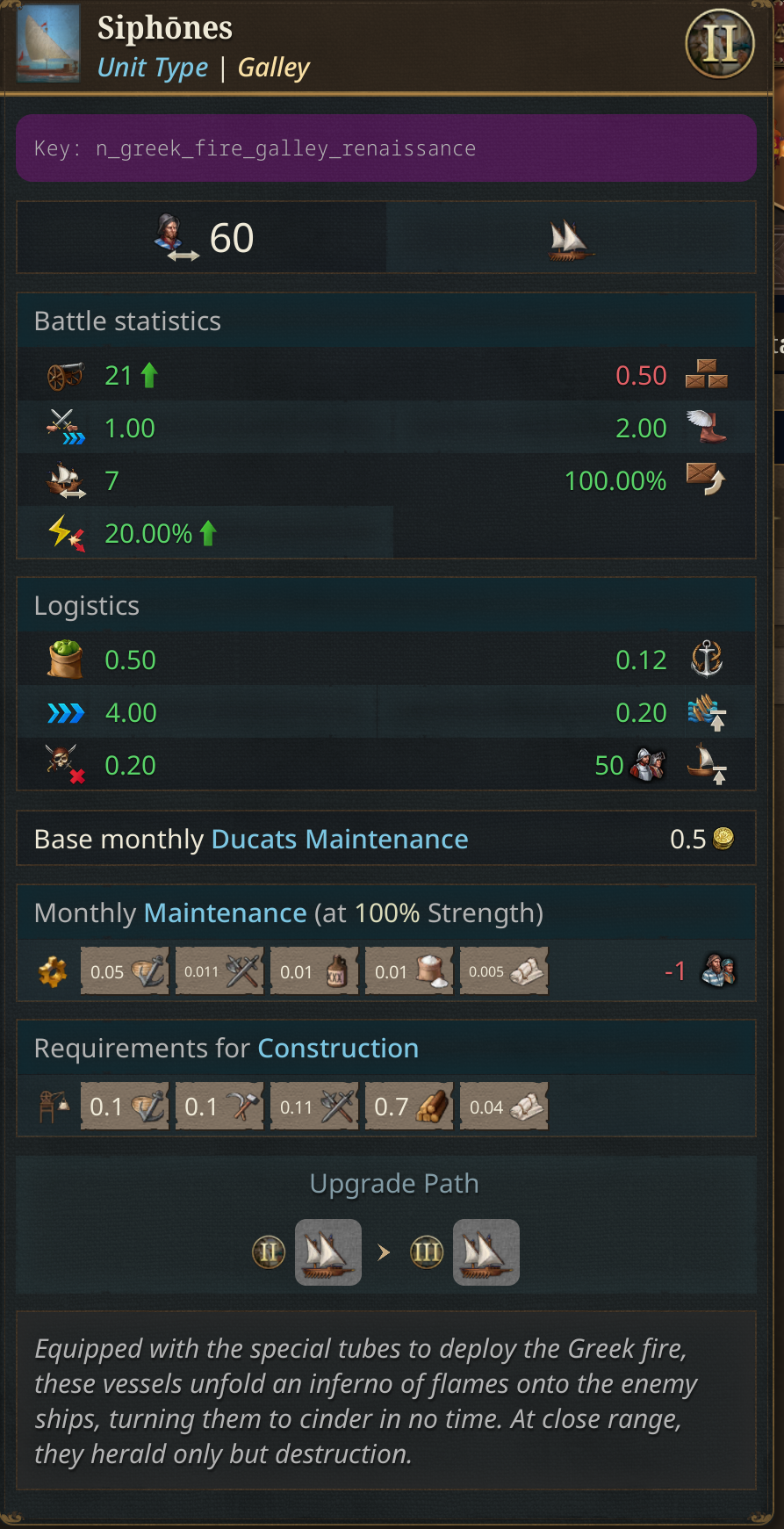
In the past, the Byzantines deployed a napalm-like substance whose recipe was a closely guarded secret. So closely guarded in fact that by 1337 the recipe was lost to time. However the Byzantines had a cultural memory and fascination with Greek Fire, so if you have a scientist in Byzantium, you can sponsor them to rediscover Greek Fire, a costly and dangerous process that has a high chance of ending in failure.
If the scientist succeeds, the secret of Greek Fire will give you access to Siphōnes fire galleys, which will aid you in defending the Bosphorus.
Based on community feedback, we’ve been revisiting how we frame the Latinitas vs Hellenismos societal value. Our original design did not fully capture the nature of the choices facing the Byzantine Empire in the 14th and 15th centuries.
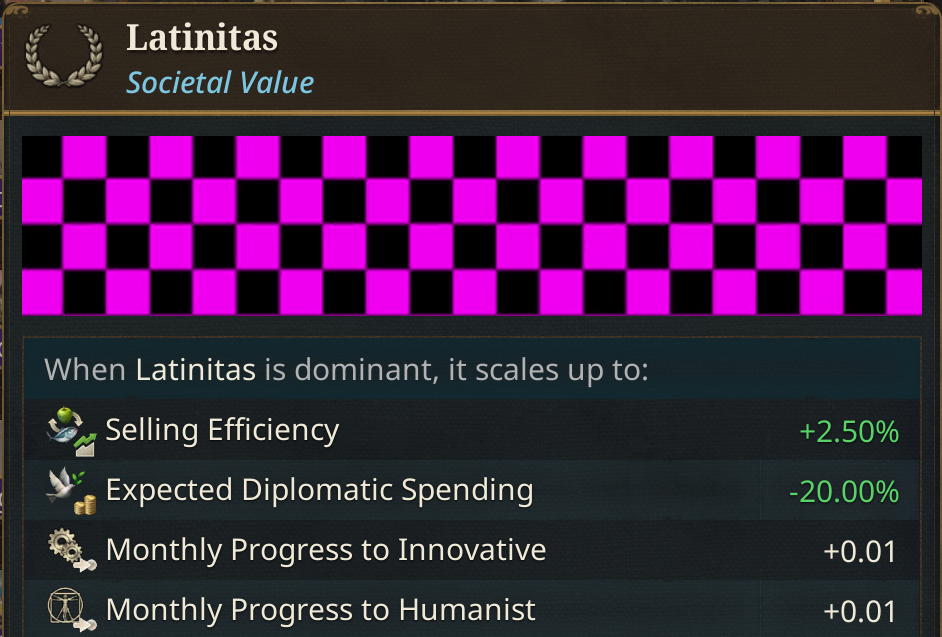
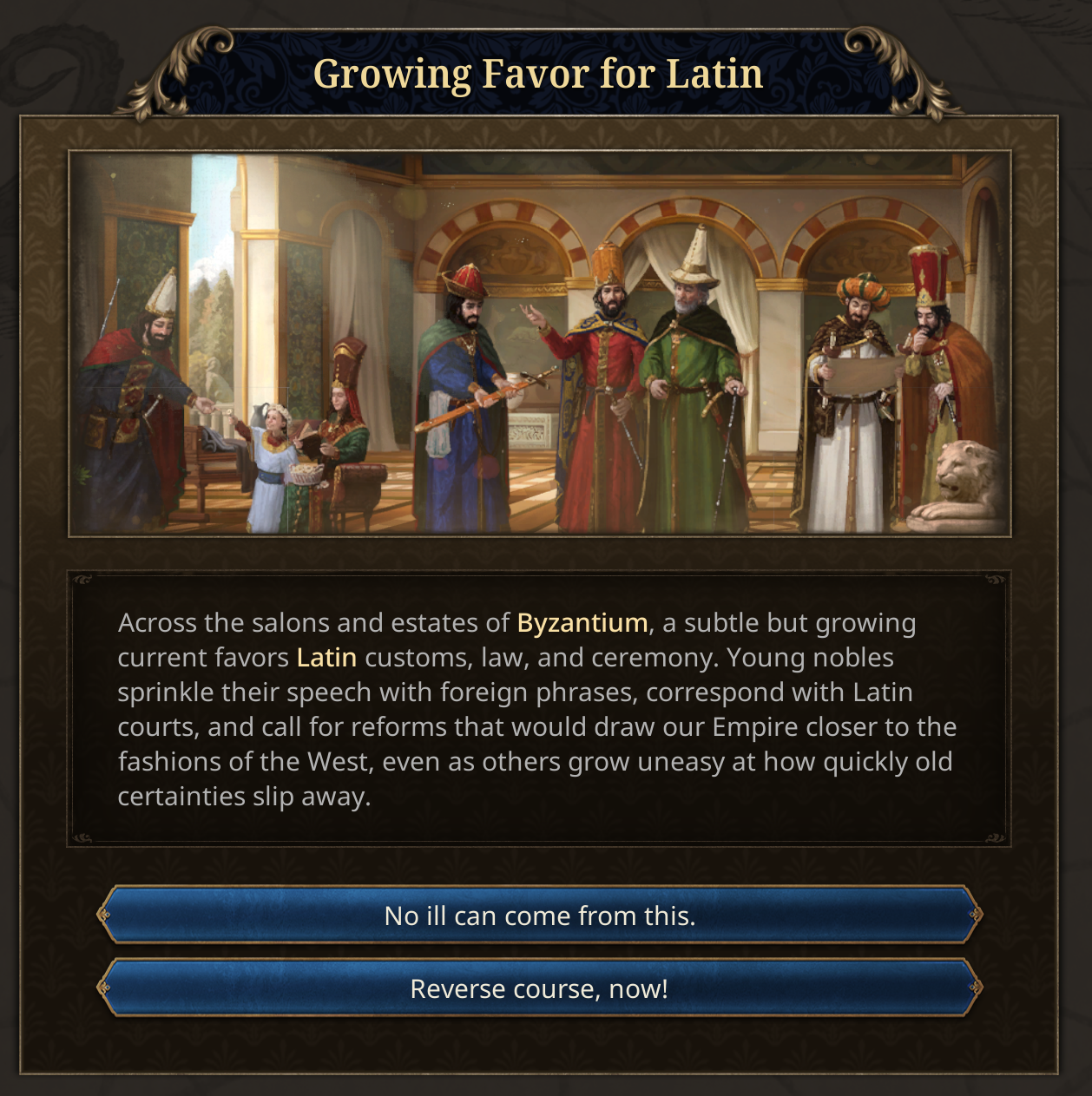
Latinitas is now more clearly associated with engagement with the contemporary Latin West. It represents the political influence of the internal factions who believe that the Empire’s survival depends on closer ties with the Latins through diplomacy, religious compromise, and the selective adoption of Western currents and Renaissance thought. Shaped by contact with Frankish kingdoms and Italian republics, Latinitas looks for foreign support and renewal in a time of mounting pressure. As the Empire expands into historically Romance regions, particularly in Italy, this outlook may strengthen further, encouraging accommodation and integration with Latin elites and populations.
The illustration will also change to be less Imperator’s SPQR and instead reflect Renaissance Italy’s depictions of their nostalgia for Pax Romana.
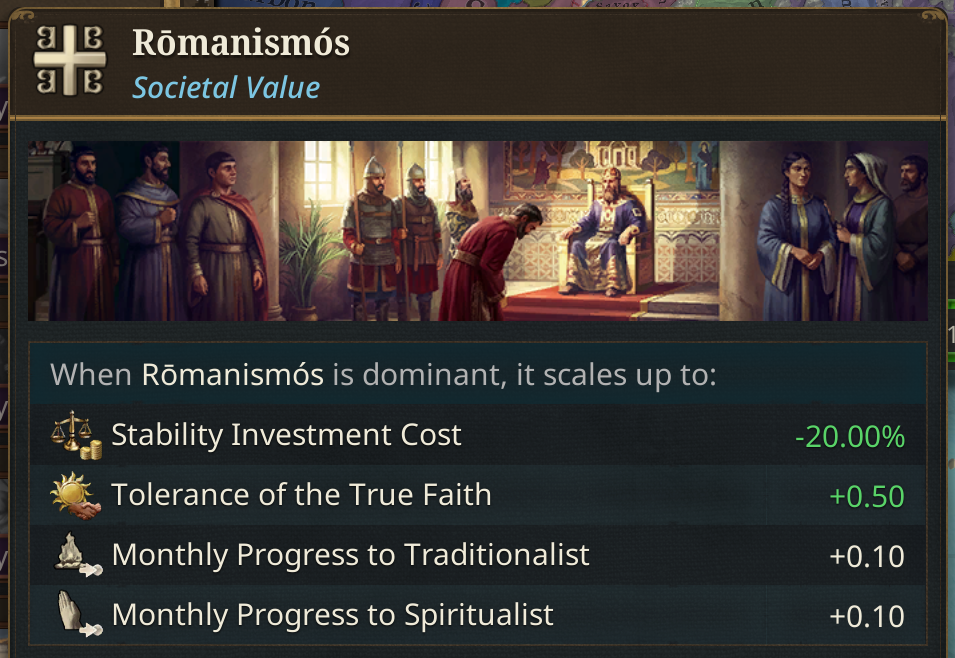
Meanwhile, Hellenismos has been reworked into Romanismos. It reflects the political power of those who understand that the Empire endures through its unbroken Roman inheritance: rooted in Constantinople as the seat of empire, upheld by the Orthodox Church, and sustained by long-established imperial institutions. Romanismos does not represent a novel Greekish direction, but the continuation of what already exists: the Roman Empire as it has always been, requiring preservation rather than transformation.
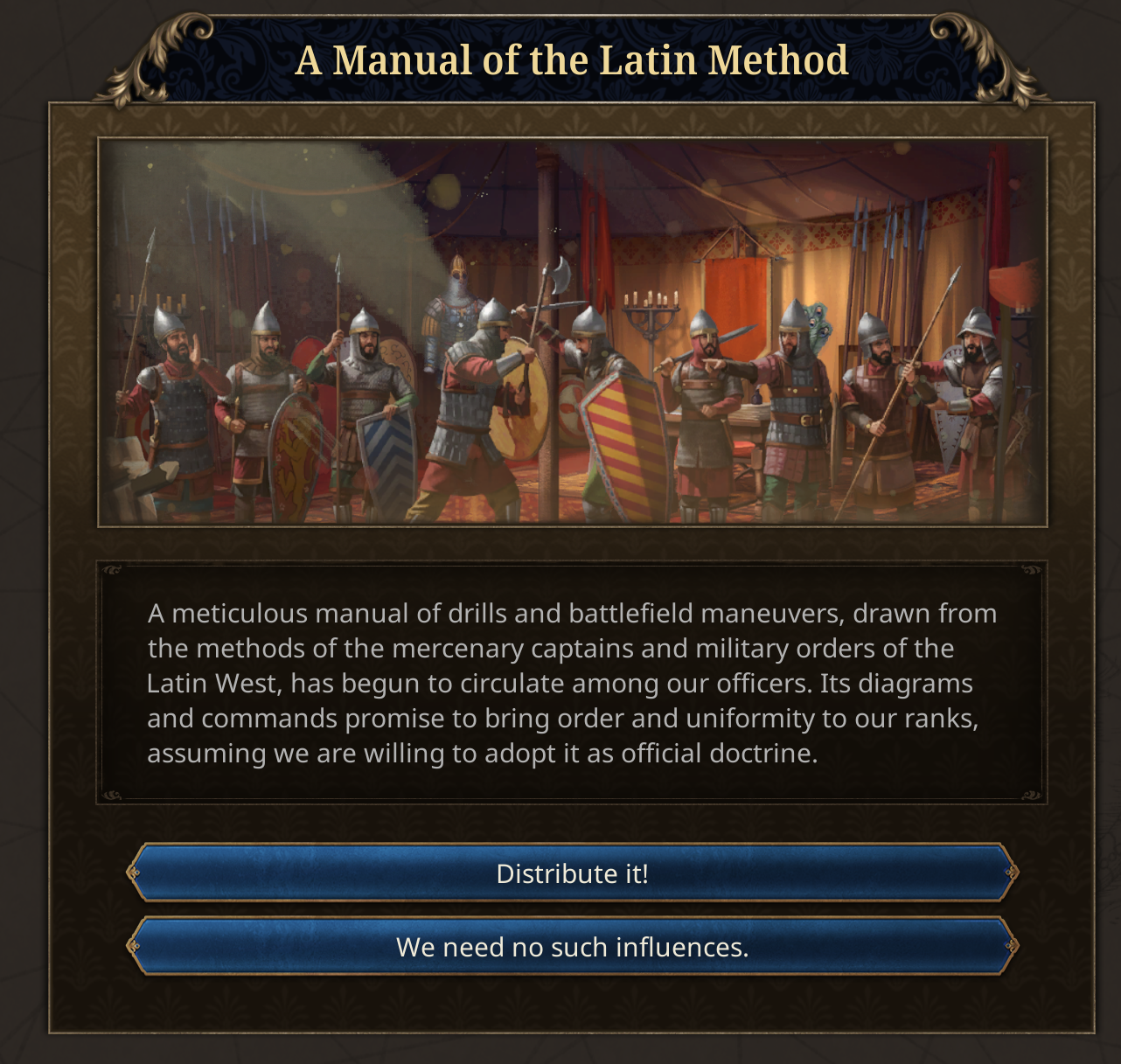
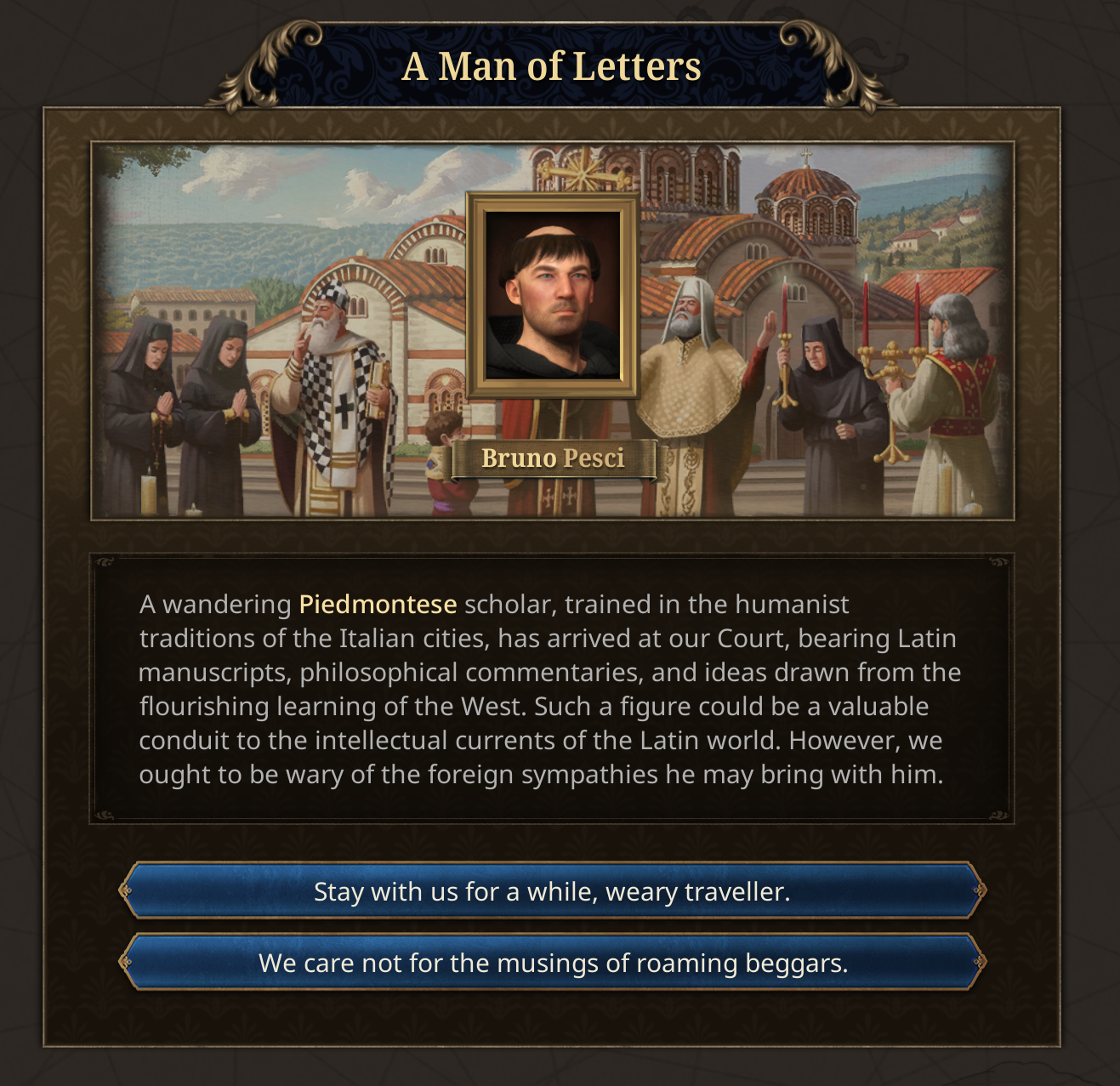
You will get several events as you navigate this political dichotomy that represent the real push-and-pull that was happening inside the Byzantine court.
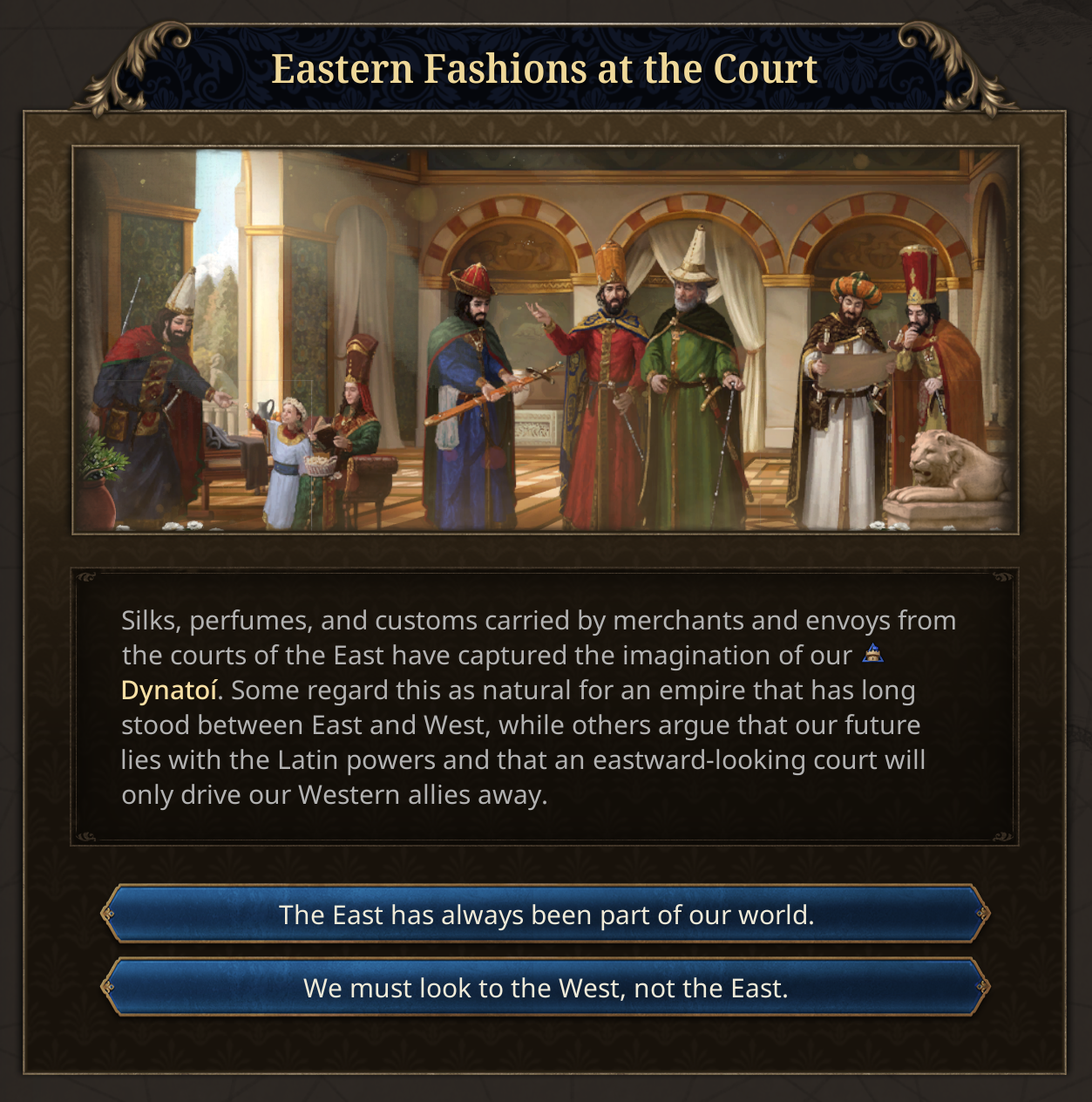
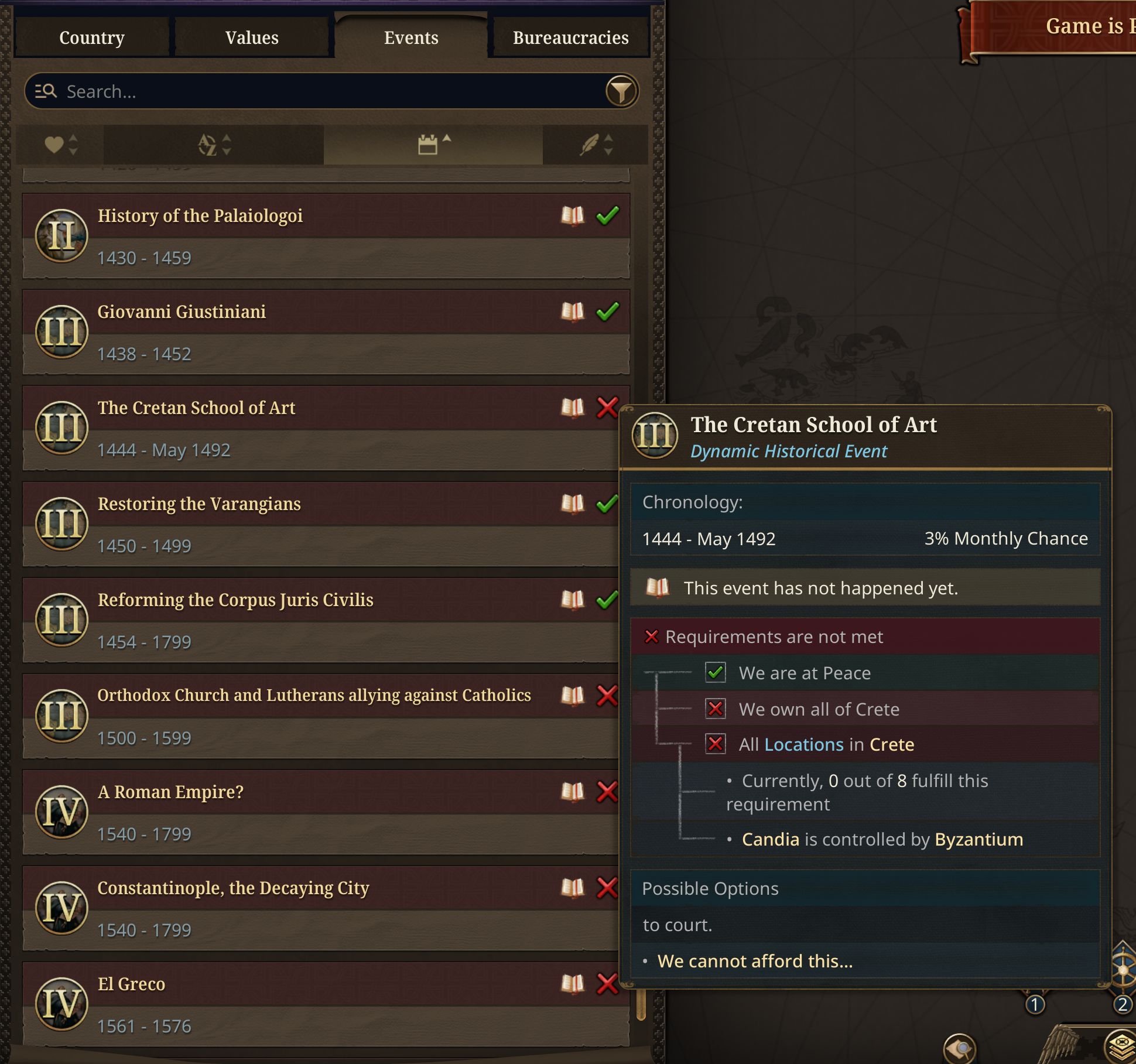
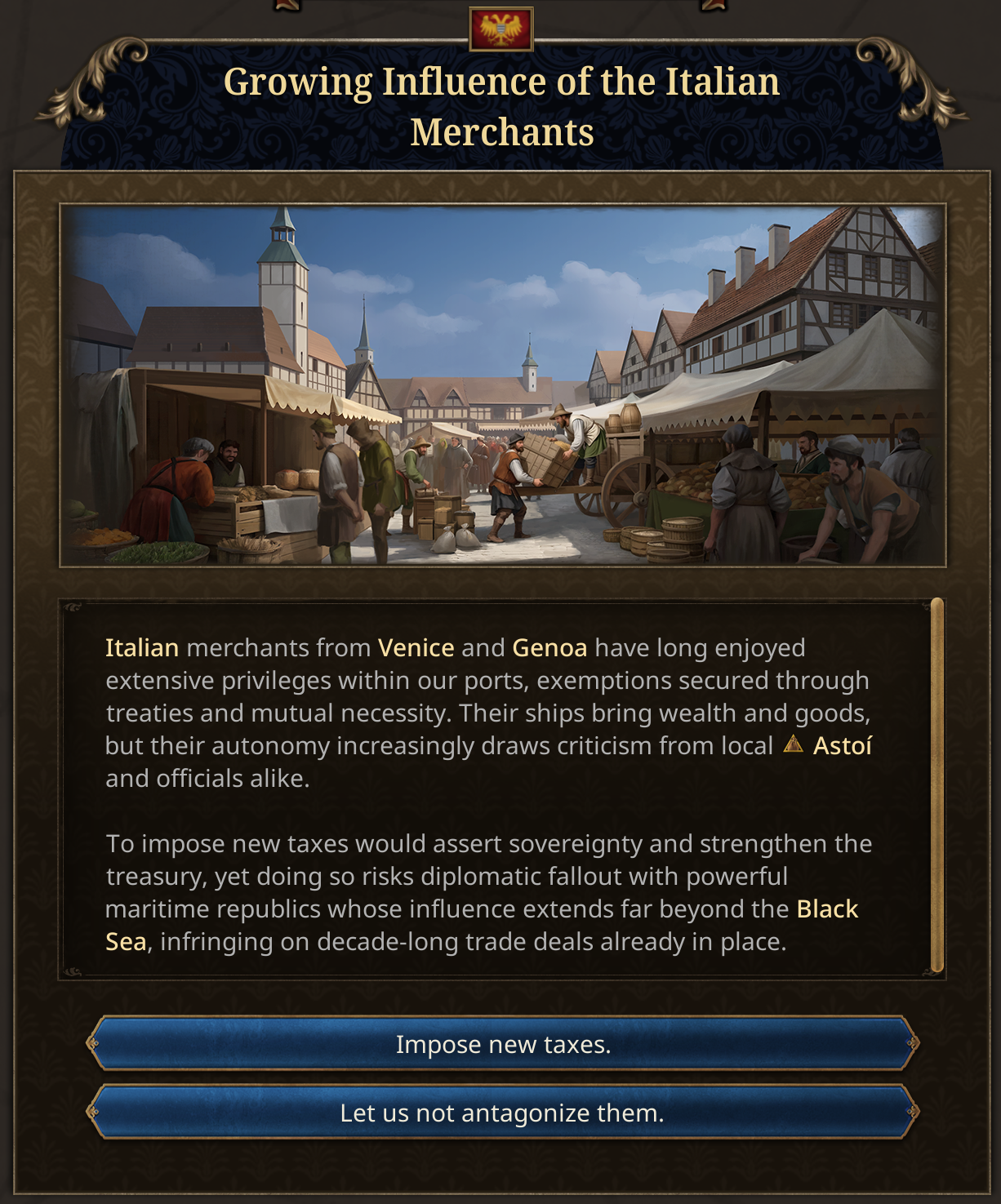
And on the topic of events, we have also been working on a much-requested quality of life tool for players to see the list of unique events that a country has access to. Players will be able to use a searchable, filterable, tooltippable database of Dynamic Historical Events, so they can plan out which path they want to go down and see why some events fire and some events don’t. Bear in mind this is very WIP.
This Tinto Talks has just a hint of the kind of content you can find in Fate of the Phoenix, but there is a lot more to discover as you play.
In the patch 1.2 Echinades we have also added a lot of free content to countries in the Byzantine sphere. There 5 new works of art in the Balkans, over 300 new advances spread around Greek Minors, Frankokratia, and the Balkans, more than a hundred new events, new government reforms, privileges, etc. The whole region will now be a much more exciting place to rule in.
Next week we will take a look at what the custodian team has been doing in the 1.2 Echinades patch in regards to the economy. See you then!
你覺得這篇文章如何?