![[PRO Tips] Gold’s Bullish Revival: Seasonal Trends and Key Levels to Watch](https://xinker.org/uploads/images/202412/image_430x256_67724cc6ad0cd.webp)
![[PRO Tips] Gold Market Under Short-Term Pressure, Safe-Haven Demand and Central Bank Buying Support Long-Term Upside Potential](https://xinker.org/uploads/images/202412/image_430x256_676ffb4685287.webp)
![[PRO Tips] Analysis of 9 key points of differentiation strategy! Master differentiation to create a brand advantage that is unique in the world!](https://firebasestorage.googleapis.com/v0/b/xinker-tips.appspot.com/o/article_thumbnails%2Fscaled_differentiation%20strategy.png.png?alt=media&token=a1bfc3d2-e85a-4db7-8a6d-01c7274f8940)
![[PRO Tips] Will REITs regain growth momentum in 2024? 3 REITs ETFs you must know if you want to invest in real estate.](https://firebasestorage.googleapis.com/v0/b/xinker-tips.appspot.com/o/article_thumbnails%2Fscaled_REITs1.png.png?alt=media&token=8af4eb93-33ff-466f-8039-b6555fad52b4)
![[PRO Tips] Complete tutorial on how to make money in Adobe Stock!](https://firebasestorage.googleapis.com/v0/b/xinker-tips.appspot.com/o/article_thumbnails%2Fscaled_tut-adobe1.png.png?alt=media&token=0b2c8cf2-22bd-4142-883e-140ed1cbaf02)
![[Passive Income] Unlock the secret of passive income: 3 steps to apply for Google AdSense](https://xinker.org/uploads/images/202410/image_430x256_6717a4fb3052b.webp)
![[Passive Income] Earn over $200 a day with AI-generated articles!](https://firebasestorage.googleapis.com/v0/b/xinker-tips.appspot.com/o/article_thumbnails%2Fscaled_article1.png.png?alt=media&token=f61bf35b-8553-4719-826d-7360024adc70)
![[Passive Income] Earn over 20 USD per download with AI-generated images!](https://firebasestorage.googleapis.com/v0/b/xinker-tips.appspot.com/o/article_thumbnails%2Fscaled_adobe2.png.png?alt=media&token=3e20e76a-a907-45af-80aa-bf9b3600301f)
![[Passive Income] Earn 10 USD per new download by sharing CapCut!](https://firebasestorage.googleapis.com/v0/b/xinker-tips.appspot.com/o/article_thumbnails%2Fscaled_capcut2.png.png?alt=media&token=a04dec40-1fac-4857-86f2-19a8be02d38e)
![[Passive Income] Use your WiFi to create passive income in 5 minutes, and you can earn 4-6 U per day!](https://firebasestorage.googleapis.com/v0/b/xinker-tips.appspot.com/o/article_thumbnails%2Fscaled_Grassio.webp.png?alt=media&token=7659a95e-0e47-4f27-a17d-c942ac3cf7f4)


![[Business Talk] The Unique Theme of XINKER's Song: Beef Wellington and Business Mastery](https://xinker.org/uploads/images/202410/image_430x256_671afc155f47f.webp)
![[Business Talk] Chagee: Opening 3,500 stores in 6 years](https://xinker.org/uploads/images/202410/image_430x256_671afce80c5f9.webp)

How Gamescom views its growth prospects in Latin America, Asia and more | interview
While the game industry went through tough times in the last four years, the Gamescom family of game fan events have expanded around the world in places like Cologne, Germany; Sao Paulo, Brazil, and Bangkok, Thailand. For sure, the health of game publishing and game development is a different business than expos for game events that are directed at consumers. But the growth of game fan expos around the world is a reason the game industry can be hopeful. At Gamescom Latam, I did an interview with Gamescom director Tim Endres and Stefan Heikhaus, head of Gamescom at GAME, the German game association. Gamescom Latam is in its third year as an event, after taking over from the BIG Festival. The 2025 show drew 130,000 fans and the 2024 show drew 100,000. And this year, Abragames hosted 38 titles from Brazilian game developers in its booth — the most ever. All told, this year there were 125 exhibitors from around the world and the BIG Festival Awards drew 900 entries from around the globe. In a survey released on Sunday, the survey found . And the B2B portion of the event estimated there were $150 million worth of deals closed at the event. A survey of 7,202 participants from five countries — Argentina, Chile, Colombia, Mexico and Peru found that Gen Z accounts for 47.5% of the audience that consumes games in the region. Those players prefer mobile platforms as their preferred, but a growing number favor the PC (17.5%) and consoles (19.5%). Those percentages were higher in Argentina and Peru. About 62.7% of women prefer mobile platforms, and 61.8% of men prefer consoles. They’re also paying attention to the news. About 40.6% of respondents said they are concerned about job losses and the precariousness of creative work due to the implementation of AI in the digital games market. Another 36.2% are on alert regarding the rights and misuse of the work of artists and creators due to AI, and 35.8% fear a drop in the quality of games, leaving them “soulless.” Even so, 25.7% of the study participants say they would consider buying a game that was made primarily with AI, and a significant portion (48.8%) say they might consume such games. The audience also prefers to wait for buying games until discounts are available. The growth of the expos are a sign of a bigger win, where gaming is rising from a subculture to mass culture. The expos in places like Sao Paulo, Brazil, where Gamescom Latam just took place, are providing an economic benefit to the cities that host the events. I asked them if they have plans to go to North America, as we certainly miss the days of E3. And I got the usual answer on that question. For sure, they’re happy with Gamescom Latam, as the fans in Brazil and South America in general are exceedingly passionate and enthusiastic about games. And they punch above their weight in coming out in full cosplay to celebrate and play their favorite games. Clearly, the expo model in Brazil is something that allows Brazilians to express their unique love for gaming culture. But can it work in more places around the world? Here’s an edited transcript of our interview. Stefan Heikhaus (left) and Tim Endres of Gamescom. Source: GamesBeat/Dean Takahashi GamesBeat: Does the market seem healthy to you? Someone on stage commented that people used to doubt the stability of Latin America, but now they look to Latin America for stability. Tim Endres: It’s a very dynamic market, a growing market, absolutely. That’s why we’re here at Gamescom Latam. GamesBeat: Do you expect the show to grow again this year in terms of attendance? Endres: This year we have about 125 exhibitors, and we expect about 150,000 visitors. That’s a lot more. Stefan Heikhaus: You always want to grow your event. The team here at Latam did everything they could. I was here last year as well, and I just said this morning that it looked more crowded in front of the halls. It might be in part because they changed the way the entrances are set up, but it already looked more crowded. GamesBeat: For the biggest consumer day, is that still Friday or Saturday? Endres: Saturday and then Sunday as well. There are a lot of events happening on Saturday. GamesBeat: Do you try to control attendance and keep it lower on Thursday? Endres: As always for exhibition centers there’s a maximum based on the space. But it’s the same for every day. Blizzard’s Disblo display at Gamescom Latam. Source: GamesBeat/Dean Takahashi GamesBeat: How is it that shows like this can grow, even while it feels like the games industry has gone through a lot of pain? In the last four years we’ve seen 48,000 layoffs and only 52,000 hires, according to Amir Satvat’s data. We’ve seen an 11% decline in jobs in North America. Meanwhile, though, the attendance at expos like this is going up. Endres: I don’t know about expos in general, but as far as Gamescom, at least, for Cologne we see a 15% increase in exhibitors at the end of the early booking discount. That’s an amazing result. Gamescom Col

While the game industry went through tough times in the last four years, the Gamescom family of game fan events have expanded around the world in places like Cologne, Germany; Sao Paulo, Brazil, and Bangkok, Thailand.
For sure, the health of game publishing and game development is a different business than expos for game events that are directed at consumers. But the growth of game fan expos around the world is a reason the game industry can be hopeful.
At Gamescom Latam, I did an interview with Gamescom director Tim Endres and Stefan Heikhaus, head of Gamescom at GAME, the German game association. Gamescom Latam is in its third year as an event, after taking over from the BIG Festival. The 2025 show drew 130,000 fans and the 2024 show drew 100,000.
And this year, Abragames hosted 38 titles from Brazilian game developers in its booth — the most ever. All told, this year there were 125 exhibitors from around the world and the BIG Festival Awards drew 900 entries from around the globe.
In a survey released on Sunday, the survey found . And the B2B portion of the event estimated there were $150 million worth of deals closed at the event.
A survey of 7,202 participants from five countries — Argentina, Chile, Colombia, Mexico and Peru found that Gen Z accounts for 47.5% of the audience that consumes games in the region. Those players prefer mobile platforms as their preferred, but a growing number favor the PC (17.5%) and consoles (19.5%). Those percentages were higher in Argentina and Peru. About 62.7% of women prefer mobile platforms, and 61.8% of men prefer consoles.
They’re also paying attention to the news. About 40.6% of respondents said they are concerned about job losses and the precariousness of creative work due to the implementation of AI in the digital games market. Another 36.2% are on alert regarding the rights and misuse of the work of artists and creators due to AI, and 35.8% fear a drop in the quality of games, leaving them “soulless.” Even so, 25.7% of the study participants say they would consider buying a game that was made primarily with AI, and a significant portion (48.8%) say they might consume such games. The audience also prefers to wait for buying games until discounts are available.
The growth of the expos are a sign of a bigger win, where gaming is rising from a subculture to mass culture. The expos in places like Sao Paulo, Brazil, where Gamescom Latam just took place, are providing an economic benefit to the cities that host the events.
I asked them if they have plans to go to North America, as we certainly miss the days of E3. And I got the usual answer on that question. For sure, they’re happy with Gamescom Latam, as the fans in Brazil and South America in general are exceedingly passionate and enthusiastic about games. And they punch above their weight in coming out in full cosplay to celebrate and play their favorite games.
Clearly, the expo model in Brazil is something that allows Brazilians to express their unique love for gaming culture. But can it work in more places around the world?
Here’s an edited transcript of our interview.
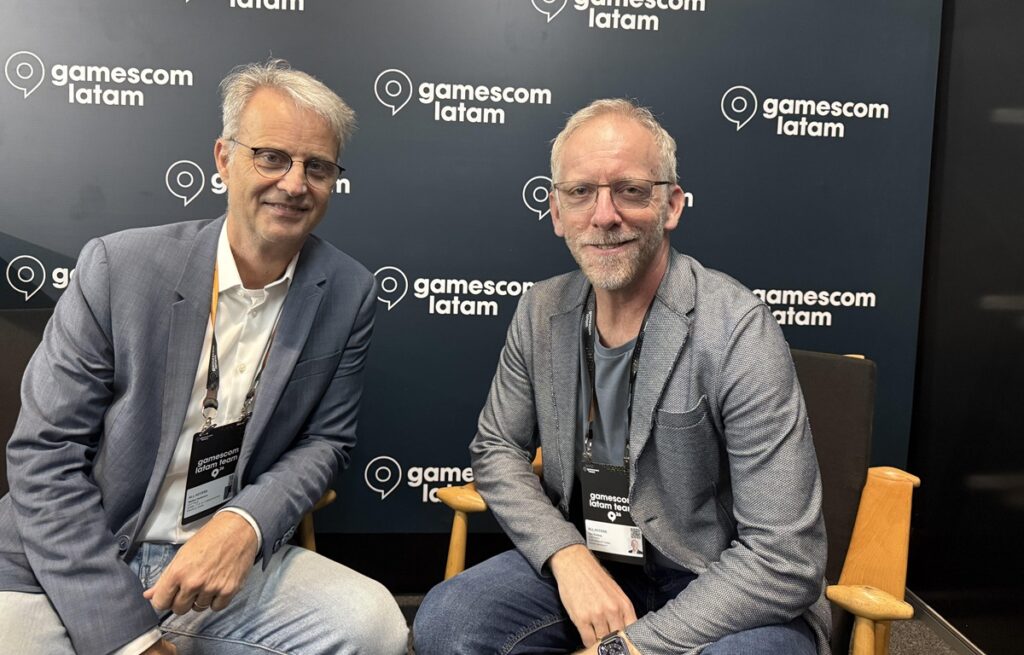 Stefan Heikhaus (left) and Tim Endres of Gamescom. Source: GamesBeat/Dean Takahashi GamesBeat: Does the market seem healthy to you? Someone on stage commented that people used to doubt the stability of Latin America, but now they look to Latin America for stability.
Tim Endres: It’s a very dynamic market, a growing market, absolutely. That’s why we’re here at Gamescom Latam.
GamesBeat: Do you expect the show to grow again this year in terms of attendance?
Endres: This year we have about 125 exhibitors, and we expect about 150,000 visitors. That’s a lot more.
Stefan Heikhaus: You always want to grow your event. The team here at Latam did everything they could. I was here last year as well, and I just said this morning that it looked more crowded in front of the halls. It might be in part because they changed the way the entrances are set up, but it already looked more crowded.
GamesBeat: For the biggest consumer day, is that still Friday or Saturday?
Endres: Saturday and then Sunday as well. There are a lot of events happening on Saturday.
GamesBeat: Do you try to control attendance and keep it lower on Thursday?
Endres: As always for exhibition centers there’s a maximum based on the space. But it’s the same for every day.
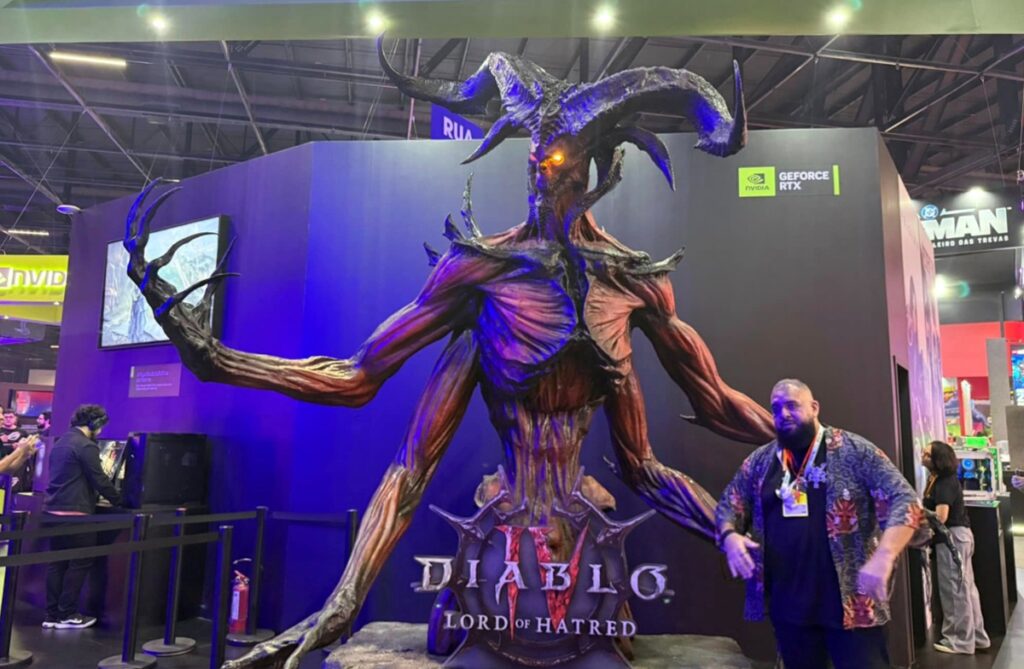 Blizzard’s Disblo display at Gamescom Latam. Source: GamesBeat/Dean Takahashi GamesBeat: How is it that shows like this can grow, even while it feels like the games industry has gone through a lot of pain? In the last four years we’ve seen 48,000 layoffs and only 52,000 hires, according to Amir Satvat’s data. We’ve seen an 11% decline in jobs in North America. Meanwhile, though, the attendance at expos like this is going up.
Endres: I don’t know about expos in general, but as far as Gamescom, at least, for Cologne we see a 15% increase in exhibitors at the end of the early booking discount. That’s an amazing result. Gamescom Cologne is on a growing path again. That’s thanks to the commitment from publishers and developers and the whole industry to Gamescom, but it’s also a clear signal that they’re confident in the future, confident in the road map we’ve released. When the market is difficult it’s always important to stay tuned and invest for better times. We’re happy we can help with the Gamescom platforms, help things to get better.
We do a lot. We support publishers. We support indie developers especially. Things like Gamescom Biz, our networking app, help all those people who were laid off to get connected with the industry and find new opportunities. We support the industry in many different ways.
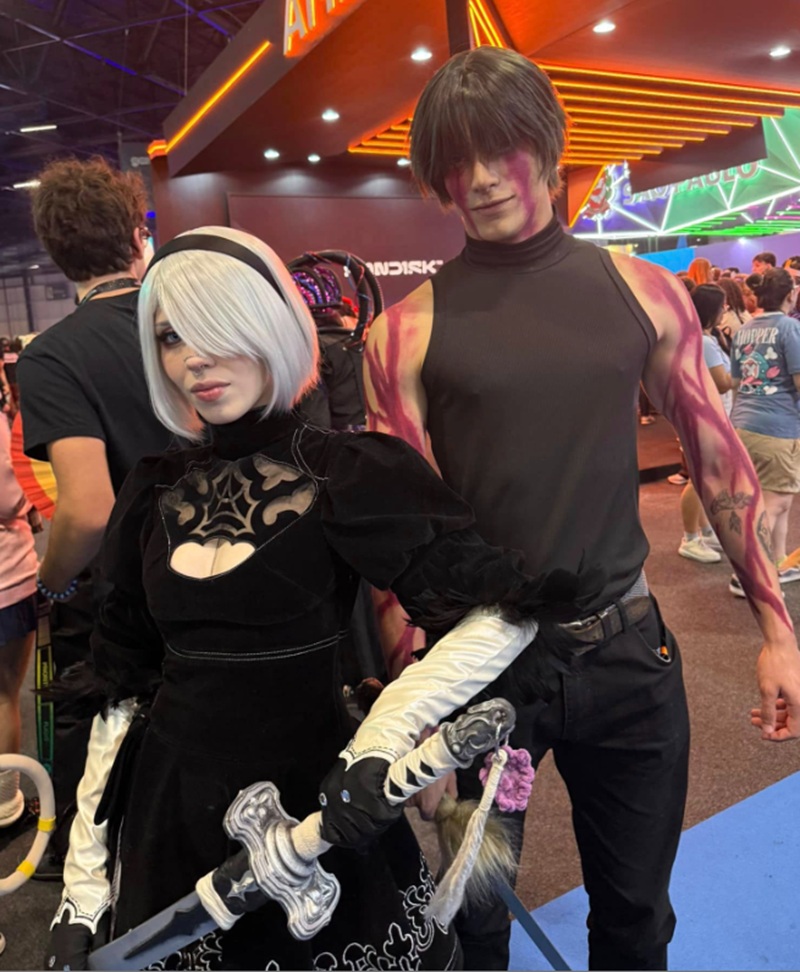 Cosplayers were especially plentiful on Saturday at Gamescom Latam. Source: GamesBeat/Dean Takahashi Heikhaus: Yesterday it came to my mind that after coronavirus, everybody thought that fairs and events would be dead. Nobody would want to meet in a stadium with 150,000 people to listen to a concert, or go into packed convention centers like this. But it’s obviously happened. I believe that in these times, where more and more of our entertainment is becoming digital–this is just a guess. There’s no science behind it. But I feel like people long for physical events. Being part of a concert. I see all these new musicals popping up, because my daughter is into these kinds of things. The same applies for an event like Gamescom.
I also believe that–on the one hand you have consumers who long for this kind of event, and then you also have the other side, the people who bring the content. They realize this is an opportunity to get closer to their communities. This is something that’s been happening for the last few years. It’s not just a Gamescom phenomenon. It’s across various industries. We profit from this development.
GamesBeat: It’s an important signal for the industry itself, for developers. They can still spread a lot of joy. Fandom doesn’t go up and down. It’s always going up in games. Even if developers may feel discouraged, they should take heart that these shows are doing well. You see a lot of the gaming ecosystem, though. Do you see more strength and health in any parts of the ecosystem, or weakness in others?
Endres: It’s a difficult question. Looking at Gamescom as a platform and all of our exhibitors, we see growth in all parts of the industry. That added 15%, it’s not only triple-A or only indies or merchandise or card and board. We’re growing in all areas. That’s what I can say for Gamescom as an event.
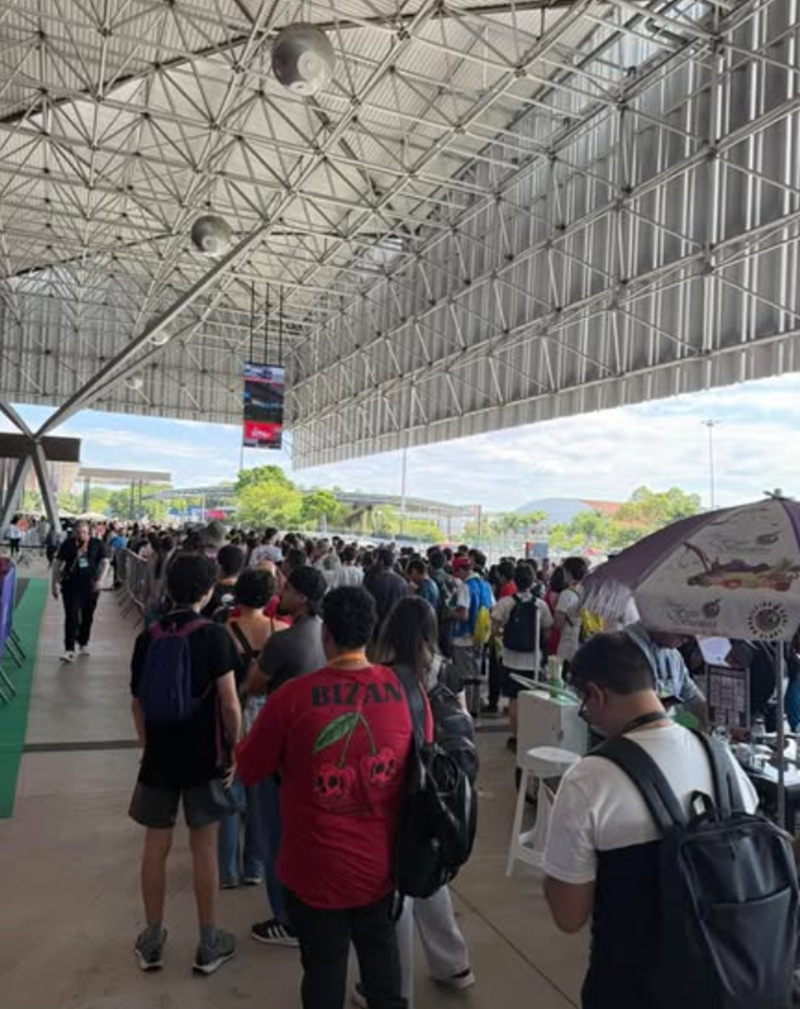 The crowds are huge at Gamescom Latam, which is in its third year. Source: GamesBeat/Dean Takahashi Heikhaus: You always have waves. There’s a time for strategy games. There’s a time for adventure games. It doesn’t follow a clear structure, necessarily, but you always have a different emphasis, perhaps? You have phases when one area is more important. It’s the same with regions. The last few years, there was a very strong content push from the Asian markets, and this trend toward Asian pop culture. It’s not something new, but in the last couple of years it has become even more important. Asian content has become more relevant for western people. That’s the current megatrend, but in two years from now, three years, it might be something different.
This, by the way, is one of our challenges as Gamescom. We only have these three events. When we see these trends coming and going, we need to make decisions about whether to include them in our overall events or not, or when to do it. That’s an important decision, because we know that consumers–in the past they would stick to their interests. It took time to move them from one trend to another. These days, they have one interest today and another one tomorrow. If you want to bring all these communities into one place, it’s a challenge to find the right way to address that.
Endres: Gamescom has always been a platform for the whole ecosystem. It will still be one in the future. What we definitely see is the indie sector, indie developers becoming more and more relevant. We see constant growth in the indie area. This year we invested a six-figure sum in our indie showcase to bring a more relevant digital platform for the indie community. That’s something new at Gamescom this year.
GamesBeat: For Devcom, I know Stephan Reichart is moving on. Is there an opportunity to change how Devcom works with new leadership? Will it be different in some way?
Endres: It’s now officially Gamescom Dev. It’s part of the Gamescom family. Gamescom starts on August 24 with Gamescom Dev. For us it’s an integration into the whole Gamescom ecosystem. There are different ways we cooperate much more strongly than before. We’ll share a stage. The Gamescom Dev main stage is also the stage for the opening of Gamescom and the Gamescom Congress. That’s one example.
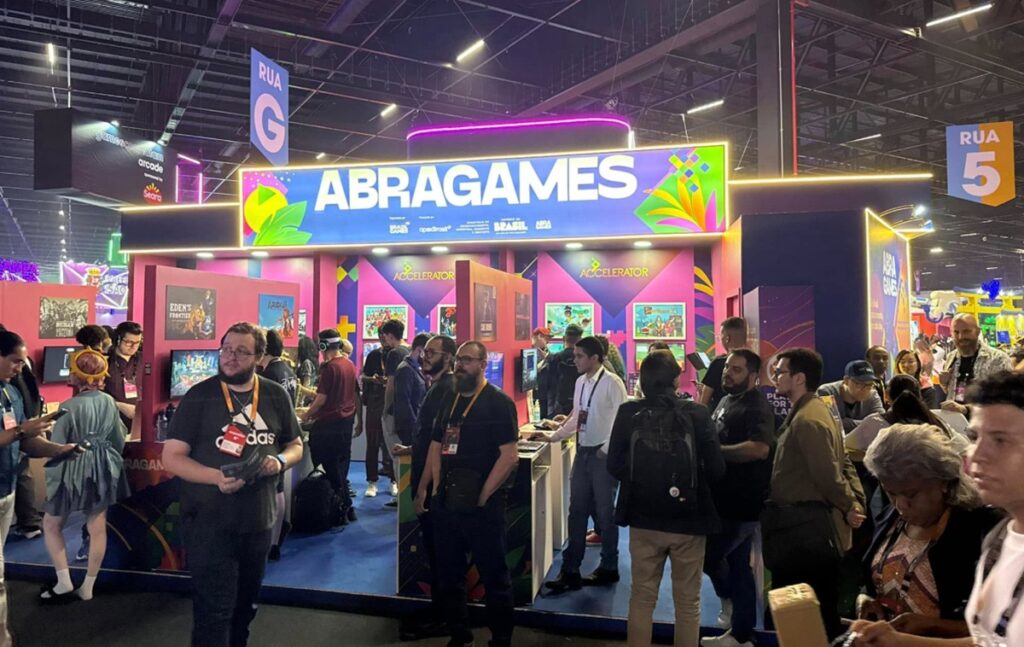 Brazil’s Abragames and Brazil Games showed off 38 games at Gamescom Latam. Source: GamesBeat/Dean Takahashi Another example is Gamescom Biz, the platform I mentioned earlier. In Gamescom Biz all events are now on the same level – Gamescom Dev, Congress, and Gamescom itself. The networking for everyone, for the business people, is much more clear. You don’t need to decide if you want to go to Gamescom Dev or Gamescom Congress to network. It’s all one community in Gamescom Biz. It’s much easier, much more relevant. It’s all the same ticket shop, all the same media accreditation. If you’re accredited for Gamescom you can opt in for Gamescom Dev. It’s a much easier process for media representatives.
GamesBeat: The B2B that happens here, is that considered Gamescom Dev? Would you consider the branding for Gamescom Dev here, and in Asia as well?
Endres: Here at Gamescom Latam there is a business area, so that’s comparable to the business area in Cologne as well, as far as positioning. But it’s not up to the size of Gamescom Dev, so it’s not comparable yet. We need to make these changes step by step. We started with Gamescom Latam three years ago. Of course before it was the BIG festival, but we’ve only had three years of Gamescom Latam. Gamescom Asia we moved from Singapore to Bangkok to cooperate with the Thailand Game Show, so we’re improving year to year, adopting new markets and looking for feedback from stakeholders. Of course we’re thinking about how the developer program will evolve in the future at all of our shows.
Heikhaus: We definitely believe that this combination of B2B, B2C, and developers in one event is the right way for the future. We believe this will be the right way to go for Gamescom Latam and Asia. But Gamescom in Cologne took us a decade and a half, or even more if you count the Leipzig times, to find the right way to address this. It was always a combination of B2B and B2C. That was the initial reason why the event became so big, so quickly. But every market has its own rules. Gamescom Latam and Gamescom Asia are still at the very start of their development. We need to find the right adaptation of our success strategy for these markets. Both regions are testing certain elements. I think it’s too early to judge what is the right way to go. But our tendency is to move in the same directions we have in the past.
GamesBeat: Is there anything new you can tip us off about for Gamescom in August?
 A violinist opened the show with performances of game-related music. Source: GamesBeat/Dean Takahashi Endres: Other than that it’ll be a great event again, with more than 300,000 excited consumers? I hope that we’ll be able to communicate good news earlier than we have in the past. One great piece of news is Games Done Quick at Gamescom. It’s a perfect fit. We continue to need to find ways to entertain people and bring communities together. It’s the perfect event. I’m really proud and happy to have them at Gamescom this year.
There will be a couple of other fresh ideas that we’re bringing into it. This is one of the things that makes Gamescom what it is, that we always surprise with aspects of each new edition. Although the site doesn’t change – same size, same halls – we continue to change. Last year we had the cosplay awards in the event arena with more than 5,000 people attending. These are things that can only happen at Gamescom.
Heikhaus: Games Done Quick is a good example. We talked about Gamescom Dev of course. That’s something really new this year. Also Gamescom Biz, where everything is on one platform with Gamescom Dev, Gamescom Congress, and Gamescom. And our investment in the Gamescom Awesome Indies show, a six-digit investment to make a much more relevant digital platform for indie developers. Of course there will be other announcements later on at our press conference in July and so on.
GamesBeat: I always have the question, are you interested in coming to North America?
Endres: Right now we have Gamescom Cologne, Gamescom Asia, and Gamescom Latam. We’re focused on making all those platforms more relevant, strengthening them, and fulfilling the needs of the whole community around those three platforms. Of course we always look at what’s happening in other regions. But currently there’s nothing we’re going to announce within the next month.
Heikhaus: From my perspective, I always feel honored when I’m asked this question, because it’s a signal that we’re doing something right. You never know what the future brings. As Tim said, we’re quite busy with these three events. You can see with Latam and Asia that success doesn’t come on its own. You have to work hard to make these events successful.
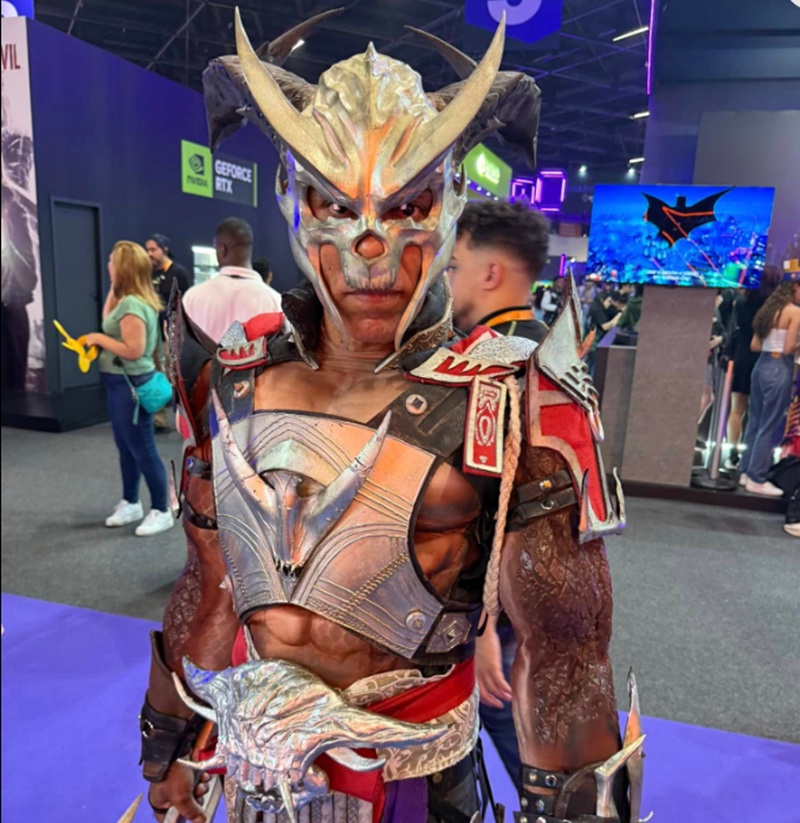 This is pretty elaborate cosplay. Source: GamesBeat/Dean Takahashi GamesBeat: As far as the economic impact of the show for Sao Paulo, what are some things that come to mind when you think about what the show does for the city?
Endres: Sao Paulo is still very much interested in the show. They support the show. I’m sure there’s an impact, with 150,000 visitors coming. It brings a lot of press attention. We see much more potential in the future for Sao Paulo state. It’s a very fruitful cooperation. We’ll have more numbers in our final report, because we have to wait for the next few days of the show, especially for the weekend when we see our biggest crowds.
Disclosure: Gamescom Latam paid my way to Brazil, where I moderated two panels.
The post How Gamescom views its growth prospects in Latin America, Asia and more | interview appeared first on GamesBeat.
For sure, the health of game publishing and game development is a different business than expos for game events that are directed at consumers. But the growth of game fan expos around the world is a reason the game industry can be hopeful.
At Gamescom Latam, I did an interview with Gamescom director Tim Endres and Stefan Heikhaus, head of Gamescom at GAME, the German game association. Gamescom Latam is in its third year as an event, after taking over from the BIG Festival. The 2025 show drew 130,000 fans and the 2024 show drew 100,000.
And this year, Abragames hosted 38 titles from Brazilian game developers in its booth — the most ever. All told, this year there were 125 exhibitors from around the world and the BIG Festival Awards drew 900 entries from around the globe.
In a survey released on Sunday, the survey found . And the B2B portion of the event estimated there were $150 million worth of deals closed at the event.
A survey of 7,202 participants from five countries — Argentina, Chile, Colombia, Mexico and Peru found that Gen Z accounts for 47.5% of the audience that consumes games in the region. Those players prefer mobile platforms as their preferred, but a growing number favor the PC (17.5%) and consoles (19.5%). Those percentages were higher in Argentina and Peru. About 62.7% of women prefer mobile platforms, and 61.8% of men prefer consoles.
They’re also paying attention to the news. About 40.6% of respondents said they are concerned about job losses and the precariousness of creative work due to the implementation of AI in the digital games market. Another 36.2% are on alert regarding the rights and misuse of the work of artists and creators due to AI, and 35.8% fear a drop in the quality of games, leaving them “soulless.” Even so, 25.7% of the study participants say they would consider buying a game that was made primarily with AI, and a significant portion (48.8%) say they might consume such games. The audience also prefers to wait for buying games until discounts are available.
The growth of the expos are a sign of a bigger win, where gaming is rising from a subculture to mass culture. The expos in places like Sao Paulo, Brazil, where Gamescom Latam just took place, are providing an economic benefit to the cities that host the events.
I asked them if they have plans to go to North America, as we certainly miss the days of E3. And I got the usual answer on that question. For sure, they’re happy with Gamescom Latam, as the fans in Brazil and South America in general are exceedingly passionate and enthusiastic about games. And they punch above their weight in coming out in full cosplay to celebrate and play their favorite games.
Clearly, the expo model in Brazil is something that allows Brazilians to express their unique love for gaming culture. But can it work in more places around the world?
Here’s an edited transcript of our interview.
Stefan Heikhaus (left) and Tim Endres of Gamescom. Source: GamesBeat/Dean Takahashi GamesBeat: Does the market seem healthy to you? Someone on stage commented that people used to doubt the stability of Latin America, but now they look to Latin America for stability.Tim Endres: It’s a very dynamic market, a growing market, absolutely. That’s why we’re here at Gamescom Latam.
GamesBeat: Do you expect the show to grow again this year in terms of attendance?
Endres: This year we have about 125 exhibitors, and we expect about 150,000 visitors. That’s a lot more.
Stefan Heikhaus: You always want to grow your event. The team here at Latam did everything they could. I was here last year as well, and I just said this morning that it looked more crowded in front of the halls. It might be in part because they changed the way the entrances are set up, but it already looked more crowded.
GamesBeat: For the biggest consumer day, is that still Friday or Saturday?
Endres: Saturday and then Sunday as well. There are a lot of events happening on Saturday.
GamesBeat: Do you try to control attendance and keep it lower on Thursday?
Endres: As always for exhibition centers there’s a maximum based on the space. But it’s the same for every day.
Blizzard’s Disblo display at Gamescom Latam. Source: GamesBeat/Dean Takahashi GamesBeat: How is it that shows like this can grow, even while it feels like the games industry has gone through a lot of pain? In the last four years we’ve seen 48,000 layoffs and only 52,000 hires, according to Amir Satvat’s data. We’ve seen an 11% decline in jobs in North America. Meanwhile, though, the attendance at expos like this is going up.Endres: I don’t know about expos in general, but as far as Gamescom, at least, for Cologne we see a 15% increase in exhibitors at the end of the early booking discount. That’s an amazing result. Gamescom Cologne is on a growing path again. That’s thanks to the commitment from publishers and developers and the whole industry to Gamescom, but it’s also a clear signal that they’re confident in the future, confident in the road map we’ve released. When the market is difficult it’s always important to stay tuned and invest for better times. We’re happy we can help with the Gamescom platforms, help things to get better.
We do a lot. We support publishers. We support indie developers especially. Things like Gamescom Biz, our networking app, help all those people who were laid off to get connected with the industry and find new opportunities. We support the industry in many different ways.
Cosplayers were especially plentiful on Saturday at Gamescom Latam. Source: GamesBeat/Dean Takahashi Heikhaus: Yesterday it came to my mind that after coronavirus, everybody thought that fairs and events would be dead. Nobody would want to meet in a stadium with 150,000 people to listen to a concert, or go into packed convention centers like this. But it’s obviously happened. I believe that in these times, where more and more of our entertainment is becoming digital–this is just a guess. There’s no science behind it. But I feel like people long for physical events. Being part of a concert. I see all these new musicals popping up, because my daughter is into these kinds of things. The same applies for an event like Gamescom.I also believe that–on the one hand you have consumers who long for this kind of event, and then you also have the other side, the people who bring the content. They realize this is an opportunity to get closer to their communities. This is something that’s been happening for the last few years. It’s not just a Gamescom phenomenon. It’s across various industries. We profit from this development.
GamesBeat: It’s an important signal for the industry itself, for developers. They can still spread a lot of joy. Fandom doesn’t go up and down. It’s always going up in games. Even if developers may feel discouraged, they should take heart that these shows are doing well. You see a lot of the gaming ecosystem, though. Do you see more strength and health in any parts of the ecosystem, or weakness in others?
Endres: It’s a difficult question. Looking at Gamescom as a platform and all of our exhibitors, we see growth in all parts of the industry. That added 15%, it’s not only triple-A or only indies or merchandise or card and board. We’re growing in all areas. That’s what I can say for Gamescom as an event.
The crowds are huge at Gamescom Latam, which is in its third year. Source: GamesBeat/Dean Takahashi Heikhaus: You always have waves. There’s a time for strategy games. There’s a time for adventure games. It doesn’t follow a clear structure, necessarily, but you always have a different emphasis, perhaps? You have phases when one area is more important. It’s the same with regions. The last few years, there was a very strong content push from the Asian markets, and this trend toward Asian pop culture. It’s not something new, but in the last couple of years it has become even more important. Asian content has become more relevant for western people. That’s the current megatrend, but in two years from now, three years, it might be something different.This, by the way, is one of our challenges as Gamescom. We only have these three events. When we see these trends coming and going, we need to make decisions about whether to include them in our overall events or not, or when to do it. That’s an important decision, because we know that consumers–in the past they would stick to their interests. It took time to move them from one trend to another. These days, they have one interest today and another one tomorrow. If you want to bring all these communities into one place, it’s a challenge to find the right way to address that.
Endres: Gamescom has always been a platform for the whole ecosystem. It will still be one in the future. What we definitely see is the indie sector, indie developers becoming more and more relevant. We see constant growth in the indie area. This year we invested a six-figure sum in our indie showcase to bring a more relevant digital platform for the indie community. That’s something new at Gamescom this year.
GamesBeat: For Devcom, I know Stephan Reichart is moving on. Is there an opportunity to change how Devcom works with new leadership? Will it be different in some way?
Endres: It’s now officially Gamescom Dev. It’s part of the Gamescom family. Gamescom starts on August 24 with Gamescom Dev. For us it’s an integration into the whole Gamescom ecosystem. There are different ways we cooperate much more strongly than before. We’ll share a stage. The Gamescom Dev main stage is also the stage for the opening of Gamescom and the Gamescom Congress. That’s one example.
Brazil’s Abragames and Brazil Games showed off 38 games at Gamescom Latam. Source: GamesBeat/Dean Takahashi Another example is Gamescom Biz, the platform I mentioned earlier. In Gamescom Biz all events are now on the same level – Gamescom Dev, Congress, and Gamescom itself. The networking for everyone, for the business people, is much more clear. You don’t need to decide if you want to go to Gamescom Dev or Gamescom Congress to network. It’s all one community in Gamescom Biz. It’s much easier, much more relevant. It’s all the same ticket shop, all the same media accreditation. If you’re accredited for Gamescom you can opt in for Gamescom Dev. It’s a much easier process for media representatives.GamesBeat: The B2B that happens here, is that considered Gamescom Dev? Would you consider the branding for Gamescom Dev here, and in Asia as well?
Endres: Here at Gamescom Latam there is a business area, so that’s comparable to the business area in Cologne as well, as far as positioning. But it’s not up to the size of Gamescom Dev, so it’s not comparable yet. We need to make these changes step by step. We started with Gamescom Latam three years ago. Of course before it was the BIG festival, but we’ve only had three years of Gamescom Latam. Gamescom Asia we moved from Singapore to Bangkok to cooperate with the Thailand Game Show, so we’re improving year to year, adopting new markets and looking for feedback from stakeholders. Of course we’re thinking about how the developer program will evolve in the future at all of our shows.
Heikhaus: We definitely believe that this combination of B2B, B2C, and developers in one event is the right way for the future. We believe this will be the right way to go for Gamescom Latam and Asia. But Gamescom in Cologne took us a decade and a half, or even more if you count the Leipzig times, to find the right way to address this. It was always a combination of B2B and B2C. That was the initial reason why the event became so big, so quickly. But every market has its own rules. Gamescom Latam and Gamescom Asia are still at the very start of their development. We need to find the right adaptation of our success strategy for these markets. Both regions are testing certain elements. I think it’s too early to judge what is the right way to go. But our tendency is to move in the same directions we have in the past.
GamesBeat: Is there anything new you can tip us off about for Gamescom in August?
A violinist opened the show with performances of game-related music. Source: GamesBeat/Dean Takahashi Endres: Other than that it’ll be a great event again, with more than 300,000 excited consumers? I hope that we’ll be able to communicate good news earlier than we have in the past. One great piece of news is Games Done Quick at Gamescom. It’s a perfect fit. We continue to need to find ways to entertain people and bring communities together. It’s the perfect event. I’m really proud and happy to have them at Gamescom this year.There will be a couple of other fresh ideas that we’re bringing into it. This is one of the things that makes Gamescom what it is, that we always surprise with aspects of each new edition. Although the site doesn’t change – same size, same halls – we continue to change. Last year we had the cosplay awards in the event arena with more than 5,000 people attending. These are things that can only happen at Gamescom.
Heikhaus: Games Done Quick is a good example. We talked about Gamescom Dev of course. That’s something really new this year. Also Gamescom Biz, where everything is on one platform with Gamescom Dev, Gamescom Congress, and Gamescom. And our investment in the Gamescom Awesome Indies show, a six-digit investment to make a much more relevant digital platform for indie developers. Of course there will be other announcements later on at our press conference in July and so on.
GamesBeat: I always have the question, are you interested in coming to North America?
Endres: Right now we have Gamescom Cologne, Gamescom Asia, and Gamescom Latam. We’re focused on making all those platforms more relevant, strengthening them, and fulfilling the needs of the whole community around those three platforms. Of course we always look at what’s happening in other regions. But currently there’s nothing we’re going to announce within the next month.
Heikhaus: From my perspective, I always feel honored when I’m asked this question, because it’s a signal that we’re doing something right. You never know what the future brings. As Tim said, we’re quite busy with these three events. You can see with Latam and Asia that success doesn’t come on its own. You have to work hard to make these events successful.
This is pretty elaborate cosplay. Source: GamesBeat/Dean Takahashi GamesBeat: As far as the economic impact of the show for Sao Paulo, what are some things that come to mind when you think about what the show does for the city?Endres: Sao Paulo is still very much interested in the show. They support the show. I’m sure there’s an impact, with 150,000 visitors coming. It brings a lot of press attention. We see much more potential in the future for Sao Paulo state. It’s a very fruitful cooperation. We’ll have more numbers in our final report, because we have to wait for the next few days of the show, especially for the weekend when we see our biggest crowds.
Disclosure: Gamescom Latam paid my way to Brazil, where I moderated two panels.
The post How Gamescom views its growth prospects in Latin America, Asia and more | interview appeared first on GamesBeat.
What's Your Reaction?








XINKER - Business and Income Tips
Explore XINKER, the ultimate platform for mastering business strategies, discovering passive income opportunities, and learning success principles. Join a community of thinkers dedicated to achieving financial freedom and entrepreneurial excellence.

![[Business Talk] Chagee: Opening 3,500 stores in 6 years](https://xinker.org/uploads/images/202410/image_140x98_671afce94bf91.webp)