

![[PRO Tips] Gold’s Bullish Revival: Seasonal Trends and Key Levels to Watch](https://xinker.org/uploads/images/202412/image_430x256_67724cc6ad0cd.webp)
![[PRO Tips] Gold Market Under Short-Term Pressure, Safe-Haven Demand and Central Bank Buying Support Long-Term Upside Potential](https://xinker.org/uploads/images/202412/image_430x256_676ffb4685287.webp)
![[PRO Tips] Analysis of 9 key points of differentiation strategy! Master differentiation to create a brand advantage that is unique in the world!](https://firebasestorage.googleapis.com/v0/b/xinker-tips.appspot.com/o/article_thumbnails%2Fscaled_differentiation%20strategy.png.png?alt=media&token=a1bfc3d2-e85a-4db7-8a6d-01c7274f8940)
![[PRO Tips] Will REITs regain growth momentum in 2024? 3 REITs ETFs you must know if you want to invest in real estate.](https://firebasestorage.googleapis.com/v0/b/xinker-tips.appspot.com/o/article_thumbnails%2Fscaled_REITs1.png.png?alt=media&token=8af4eb93-33ff-466f-8039-b6555fad52b4)
![[PRO Tips] Complete tutorial on how to make money in Adobe Stock!](https://firebasestorage.googleapis.com/v0/b/xinker-tips.appspot.com/o/article_thumbnails%2Fscaled_tut-adobe1.png.png?alt=media&token=0b2c8cf2-22bd-4142-883e-140ed1cbaf02)
![[Passive Income] Unlock the secret of passive income: 3 steps to apply for Google AdSense](https://xinker.org/uploads/images/202410/image_430x256_6717a4fb3052b.webp)
![[Passive Income] Earn over $200 a day with AI-generated articles!](https://firebasestorage.googleapis.com/v0/b/xinker-tips.appspot.com/o/article_thumbnails%2Fscaled_article1.png.png?alt=media&token=f61bf35b-8553-4719-826d-7360024adc70)
![[Passive Income] Earn over 20 USD per download with AI-generated images!](https://firebasestorage.googleapis.com/v0/b/xinker-tips.appspot.com/o/article_thumbnails%2Fscaled_adobe2.png.png?alt=media&token=3e20e76a-a907-45af-80aa-bf9b3600301f)
![[Passive Income] Earn 10 USD per new download by sharing CapCut!](https://firebasestorage.googleapis.com/v0/b/xinker-tips.appspot.com/o/article_thumbnails%2Fscaled_capcut2.png.png?alt=media&token=a04dec40-1fac-4857-86f2-19a8be02d38e)
![[Passive Income] Use your WiFi to create passive income in 5 minutes, and you can earn 4-6 U per day!](https://firebasestorage.googleapis.com/v0/b/xinker-tips.appspot.com/o/article_thumbnails%2Fscaled_Grassio.webp.png?alt=media&token=7659a95e-0e47-4f27-a17d-c942ac3cf7f4)


![[Business Talk] The Unique Theme of XINKER's Song: Beef Wellington and Business Mastery](https://xinker.org/uploads/images/202410/image_430x256_671afc155f47f.webp)
![[Business Talk] Chagee: Opening 3,500 stores in 6 years](https://xinker.org/uploads/images/202410/image_430x256_671afce80c5f9.webp)


Crimson Desert Review – Vast, violent, and impossible to put down
Crimson Desert is the sort of game that suddenly appears on everyone's radar. The ones that captivate us with great marketing and cinematics, but leave everyone skeptical as to whether they can deliver on what they promised. And Pearl Abyss's first voyage into the sphere of singleplayer, narrative-driven video games proves they really understood the task and delivered exactly what they told everyone they would. Here, we have a huge open world filled with loads of content, exciting locations to visit, and stories to experience. Wherever you turn, you'll find some genuinely intersting activity or side quest. It's a concise, player-driven, sandbox experience attached to an epic overarching story of loss, revenge, and bloodshed. Crimson Desert's medieval fantasy, which combines elements of the entire Middle Ages from swords to cannons, stands as a unique case of a good fantasy world that does not mindlessly follow the standards set by Tolkien. It's a great game through and through, though one that severely lacks polish, balance, and quality-of-life improvements that can and will hinder your experience, but never ruin it even in the slightest. Here is our full review. The wolf and the bear Kliff is your main guy, and you can equip him with countless armor pieces and weapons. Screenshot by Destructoid Crimson Desert takes place in the mystical world of Pywel, a medieval continent where technological advancements vary from early tribal to the level of the Age of Exploration and swords and cannons coexist in harmony. You primarily play as Kliff, a high-ranking clan warrior of a tribe in Pailune, itself a tribal country within Pywel. One night, you are ambushed by another clan, the Black Bears, who slaughter many of your kinsmen and scatter or enslave the rest while landing the killing blow on you as well. As your consciousness wanders between the planes, you are contacted by a strange being who brings you into the Abyss, a dimension that exists high in the clouds but is invisible to the naked eye. Resurrected and discovering new allies beyond the grave, Kliff returns to Pywel, set on seeking out his lost comrades and freeing Pailune from the tyrannical, murderous grip of the Black Bears. A lot more happens in between and after, and from the POV of several characters that you swapp between as you would in GTA 5. For example, you can swap to Oongka, a huge orc with a penchant for slaughter, finding him embroiled in battles and fights. Or you can switch to Damiane and see her roaming the world on her own, doing whatever it is ladies of Demeniss love doing. I can't say I did much of this swapping, as I preferred to stick with Kliff for the sake of narrative consistency, but in some cases, swapping is mandatory but never detrimental to the story (which can't always be said about the gameplay). Your gang of Greymanes can also be managed and sent on missions, as you get a camp early on and even more later, which you can upgrade and expand and use as a home base, with numerous mechanics tied to this particular part of the game. Planting seeds, ranching animals, selling them off at back-alley farm fences, all of that is an extension of the otherwise familiar experience, and gives you a sense that you are indeed an important person, leading and helping your people rebuild. Each moment spent on horseback is a moment to remember. Screenshot by Destructoid The overall story quality is strong. Initially, the game suffers from a huge disconnect between the quests, and it is hard to keep track of what is actually going on. You frequently switch from sci-fi to medieval fantasy, and that doesn't help maintain coherence or consistency in tone and atmosphere whatsoever. After the first few hours of that, once Kliff starts making progress in rebuilding the Greymanes, everything starts falling into place, and tone is seldom broken by any sort of narrative digression. Though the characters are a bit superficial at first, most of them eventually come into their own, and you grow to like or dislike them based on their very strong characteristics. They do genuinely feel like real people. Where I did feel an overall lack of quality was the writing itself. Pearl Abyss is a Korean studio and likely wrote the game in its native tongue, and the translation does not always carry over well. This is, like quite a few things in Crimson Desert, inconsistent, and you'll get pure aura farm moments and ones where you cringe at the dialogue and the writing in equal measure. This is not a huge problem, however, and though I would have liked to have better voice acting in the game, it's important to note that the most crucial characters are performed spectacularly well, even if the writing isn't always on point. The voice actor of Kliff, the main protagonist, certainly does the best job, and that's enough for me. Pywel is a world worthy of exploring The game is full of mystical locations, some of which carry strong real-world inspirations, giving Pywe
Crimson Desert is the sort of game that suddenly appears on everyone's radar. The ones that captivate us with great marketing and cinematics, but leave everyone skeptical as to whether they can deliver on what they promised. And Pearl Abyss's first voyage into the sphere of singleplayer, narrative-driven video games proves they really understood the task and delivered exactly what they told everyone they would.
Here, we have a huge open world filled with loads of content, exciting locations to visit, and stories to experience. Wherever you turn, you'll find some genuinely intersting activity or side quest. It's a concise, player-driven, sandbox experience attached to an epic overarching story of loss, revenge, and bloodshed.
Crimson Desert's medieval fantasy, which combines elements of the entire Middle Ages from swords to cannons, stands as a unique case of a good fantasy world that does not mindlessly follow the standards set by Tolkien. It's a great game through and through, though one that severely lacks polish, balance, and quality-of-life improvements that can and will hinder your experience, but never ruin it even in the slightest.
Here is our full review.
The wolf and the bear
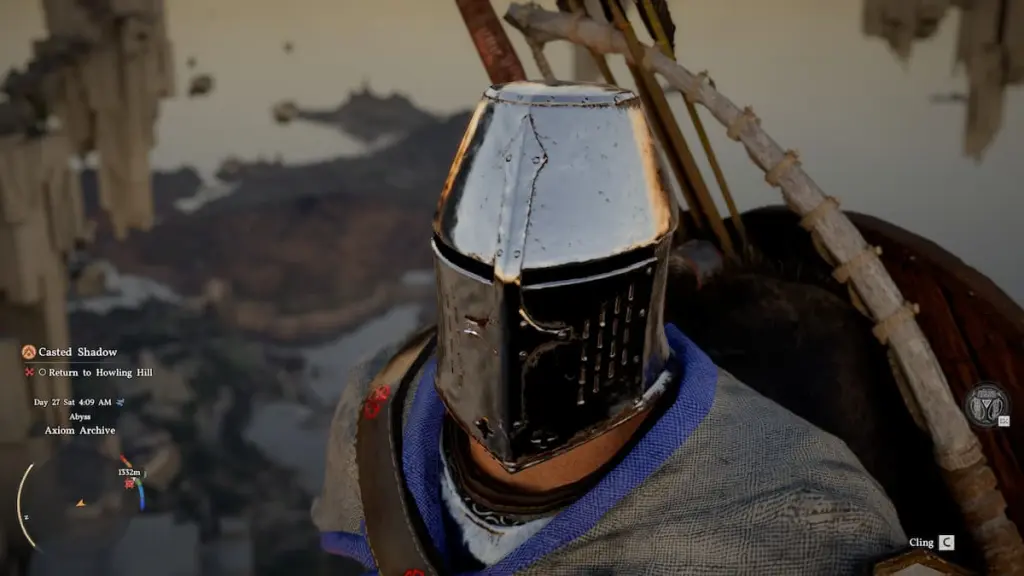 Kliff is your main guy, and you can equip him with countless armor pieces and weapons. Screenshot by Destructoid Crimson Desert takes place in the mystical world of Pywel, a medieval continent where technological advancements vary from early tribal to the level of the Age of Exploration and swords and cannons coexist in harmony.
 You primarily play as Kliff, a high-ranking clan warrior of a tribe in Pailune, itself a tribal country within Pywel. One night, you are ambushed by another clan, the Black Bears, who slaughter many of your kinsmen and scatter or enslave the rest while landing the killing blow on you as well. As your consciousness wanders between the planes, you are contacted by a strange being who brings you into the Abyss, a dimension that exists high in the clouds but is invisible to the naked eye.
Resurrected and discovering new allies beyond the grave, Kliff returns to Pywel, set on seeking out his lost comrades and freeing Pailune from the tyrannical, murderous grip of the Black Bears. A lot more happens in between and after, and from the POV of several characters that you swapp between as you would in GTA 5.
For example, you can swap to Oongka, a huge orc with a penchant for slaughter, finding him embroiled in battles and fights. Or you can switch to Damiane and see her roaming the world on her own, doing whatever it is ladies of Demeniss love doing. I can't say I did much of this swapping, as I preferred to stick with Kliff for the sake of narrative consistency, but in some cases, swapping is mandatory but never detrimental to the story (which can't always be said about the gameplay).
Your gang of Greymanes can also be managed and sent on missions, as you get a camp early on and even more later, which you can upgrade and expand and use as a home base, with numerous mechanics tied to this particular part of the game. Planting seeds, ranching animals, selling them off at back-alley farm fences, all of that is an extension of the otherwise familiar experience, and gives you a sense that you are indeed an important person, leading and helping your people rebuild.
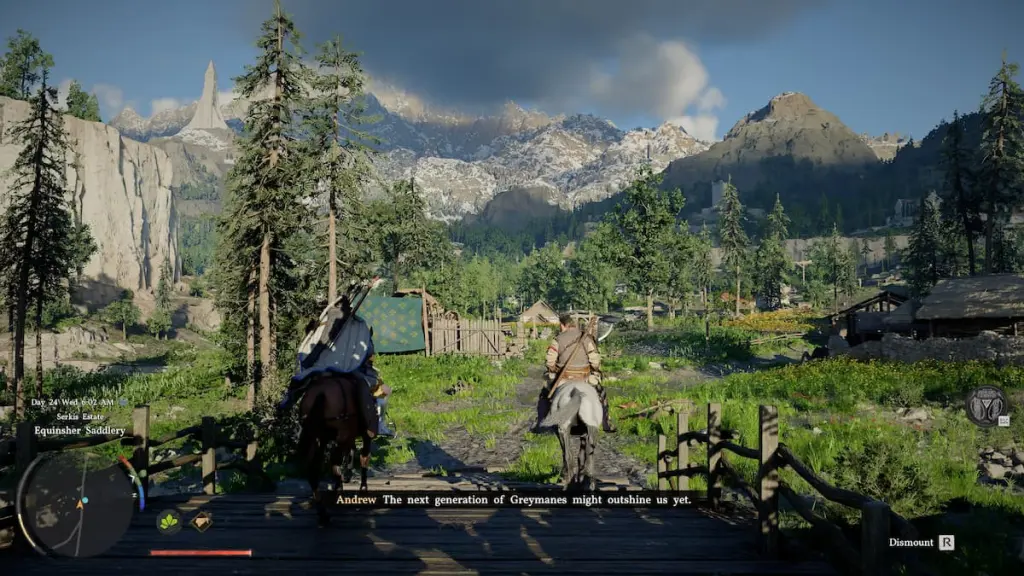 Each moment spent on horseback is a moment to remember. Screenshot by Destructoid The overall story quality is strong. Initially, the game suffers from a huge disconnect between the quests, and it is hard to keep track of what is actually going on. You frequently switch from sci-fi to medieval fantasy, and that doesn't help maintain coherence or consistency in tone and atmosphere whatsoever.
After the first few hours of that, once Kliff starts making progress in rebuilding the Greymanes, everything starts falling into place, and tone is seldom broken by any sort of narrative digression.
Though the characters are a bit superficial at first, most of them eventually come into their own, and you grow to like or dislike them based on their very strong characteristics. They do genuinely feel like real people.
Where I did feel an overall lack of quality was the writing itself. Pearl Abyss is a Korean studio and likely wrote the game in its native tongue, and the translation does not always carry over well. This is, like quite a few things in Crimson Desert, inconsistent, and you'll get pure aura farm moments and ones where you cringe at the dialogue and the writing in equal measure.
This is not a huge problem, however, and though I would have liked to have better voice acting in the game, it's important to note that the most crucial characters are performed spectacularly well, even if the writing isn't always on point. The voice actor of Kliff, the main protagonist, certainly does the best job, and that's enough for me.
Pywel is a world worthy of exploring
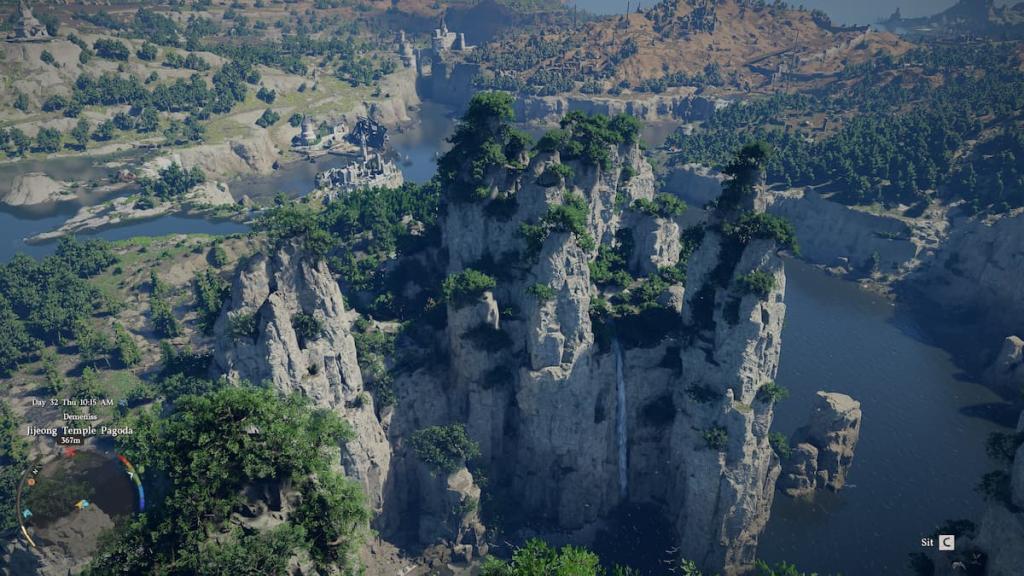 The game is full of mystical locations, some of which carry strong real-world inspirations, giving Pywel an extra sense of realism. Screenshot by Destructoid Speaking of characters, a point I would love for you to really understand is that Pywel, the world in which the game is set, can itself be considered a character. So much time and effort clearly went into building this universe from the ground up, with cultures and nations, and the backstories of each radiate from every rock, every tree, every ruin and ancient shrine.
The locales are vastly varied, from oakwood forests to autumn woods to entire deserts or crescent havens out by the sea. Mountains and stone pillars and hills cover the land, as do open fields of wheat and barley and other grains more beautiful yet. It's such a diverse continent, where so many different people exist in different environments, climates, and circumstances that have helped shape their unique cultures.
There are kingdoms and duchies and tribal states, and the politics between them also come through in the stories you get to experience. How they operate and how arrogant they are, how caring some are for their people, and how some others are cold and heartless and bent on power and domination and little else. It's incredible, and traveling really feels meaningful when there are so many interesting, different places to visit.
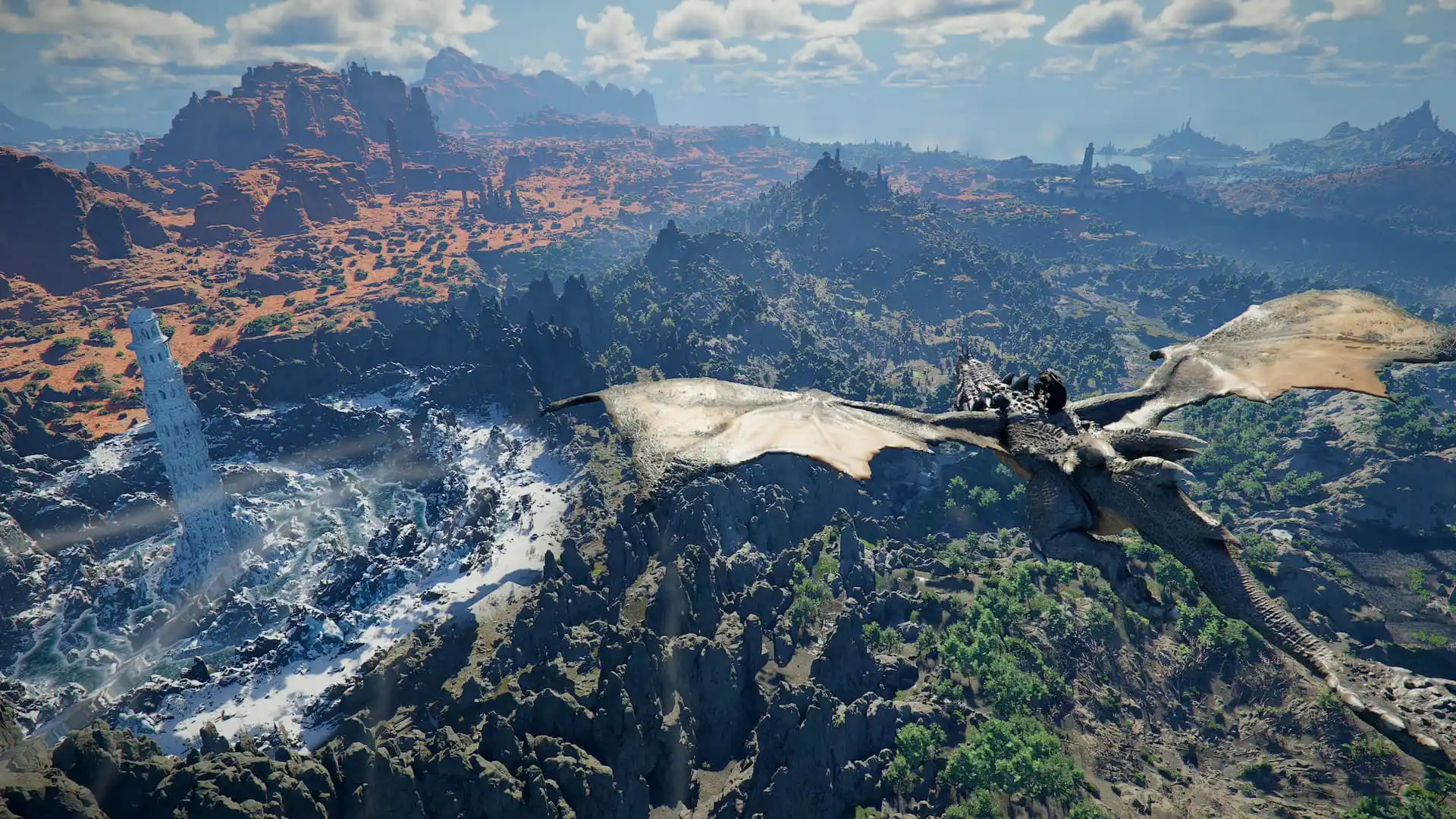
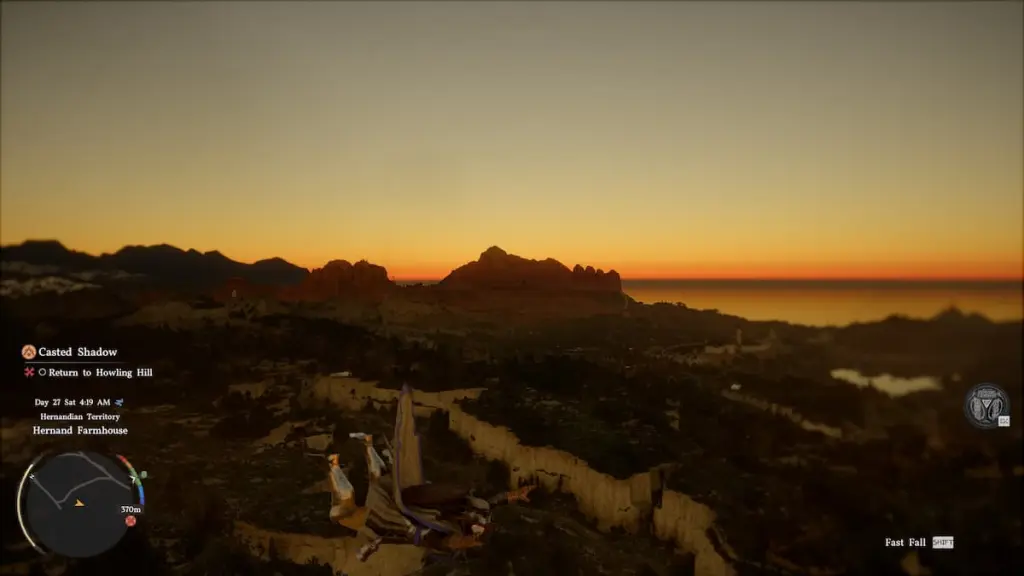 You get numerous options for traversal, whether by land or, well, air. Screenshot by Destructoid And exploration is really the primary goal of this game. Being a sandbox like RDR2 and GTA, Crimson Desert wants you to go out into the world and motivate yourself to explore and experience everything it has to offer. And though you need to make yourself do it, there are side quests that always send you in some new direction, while progressing the main story is a guarantee that you'll visit some new area, much like you would unlock the next town over in San Andreas (but everything is unlocked from the get-go in CD).
It's one of those cases where you climb a tall hill or mountain or just climb up a spire somewhere and see a lot of potential points of interest in the distance and say, "Can I go there?" and the answer is ubiquitously yes.
That tall spire on top of a massive mountain? Maybe it is a college of mages that wants to learn about the stars and the mystical world of the Abyss. See that huge walled castle nestled on top of a hill? It could be some fortress with a strange history where people are on edge. There is enough here to make your imagination run wild.
Rock formations reminiscent of Chinese national parks? Yep, the home of monks who live in pagodas and temples thousands of feet up in the air. Everything you see can be reached and explored and oftentimes used to reach new narrative threads, and by following them, you're taken to lands more breathtaking still.
And none of these places ever pulls you into a loading screen, unless you're using fast travel spots—which, due to the game's incredible optimization, will often be very quick on most modern hardware.
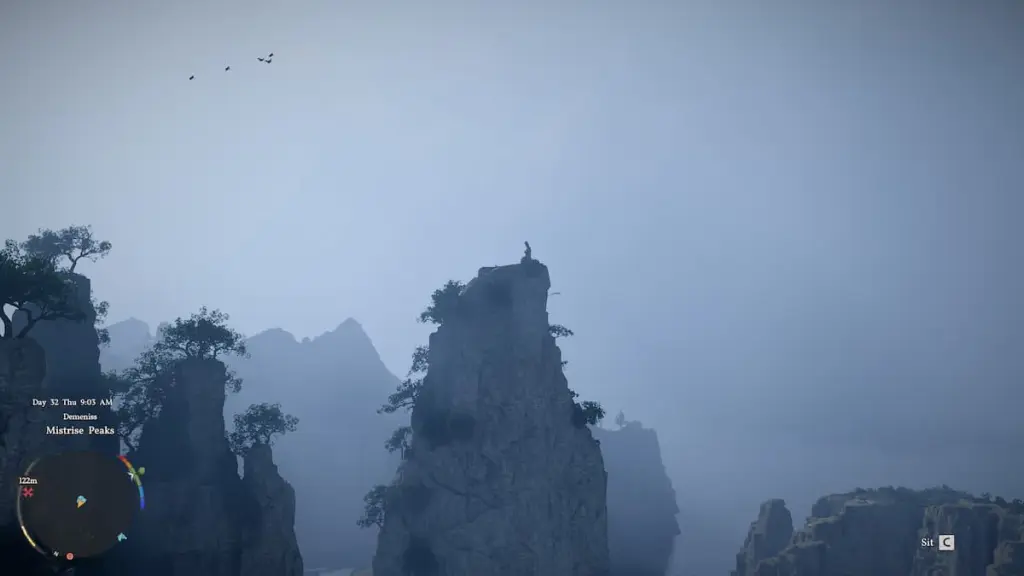 Shots like this one drove me to explore the world, and it was always worth it in the end. Screenshot by Destructoid The game gives you many different tools to make exploration a lot more fun. The horse, your primary vessel, controls so well that it puts many other AAA games to shame. I've played and loved other titles with horses, like The Witcher 3, but nothing compares to what Crimson Desert has done here. Leveling it up and increasing its stamina is entirely based on use, and the controls are incredibly smooth.
The horse never gets caught on things, doesn't spaz out at the slightest inconvenience, and can actually climb places you never thought it could. You also get gliding, using the Abyss as skydiving points, jetpacks, and many other tools to improve and speed up your exploration and traversal.
Oh, and you can rock climb, too. You can climb basically anything, but be mindful of your stamina. I've reached the ground face-first too many times to count, and it was no one's fault but my own.
There are potentially hundreds of hours of exploration here, and I haven't even scratched the surface despite trying my best, playing five to six hours per day for the last two weeks. It's gigantic and could become the new standard for what an open-world game should do with its massive level. Content is everywhere. Stories, quests, points of interest, factions, bases to be liberated, you name it.
Pywel is, for what it's worth, one of the best open worlds ever created.
Amazing combat, horrible balance, frustrating lack of polish
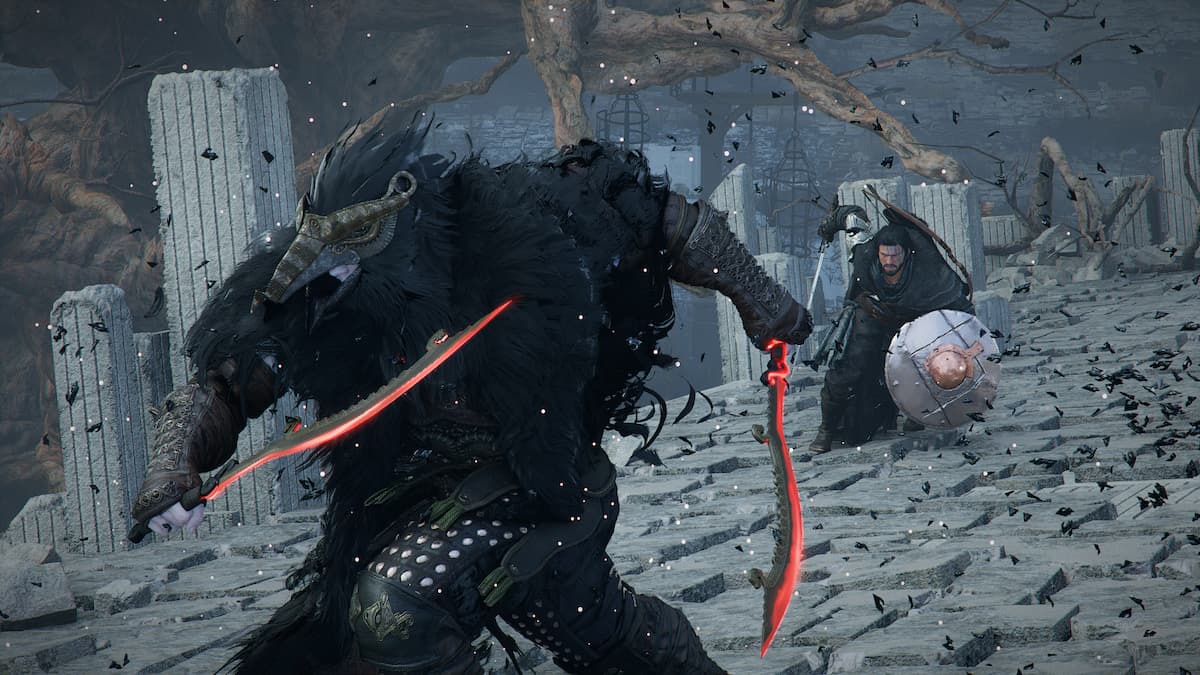
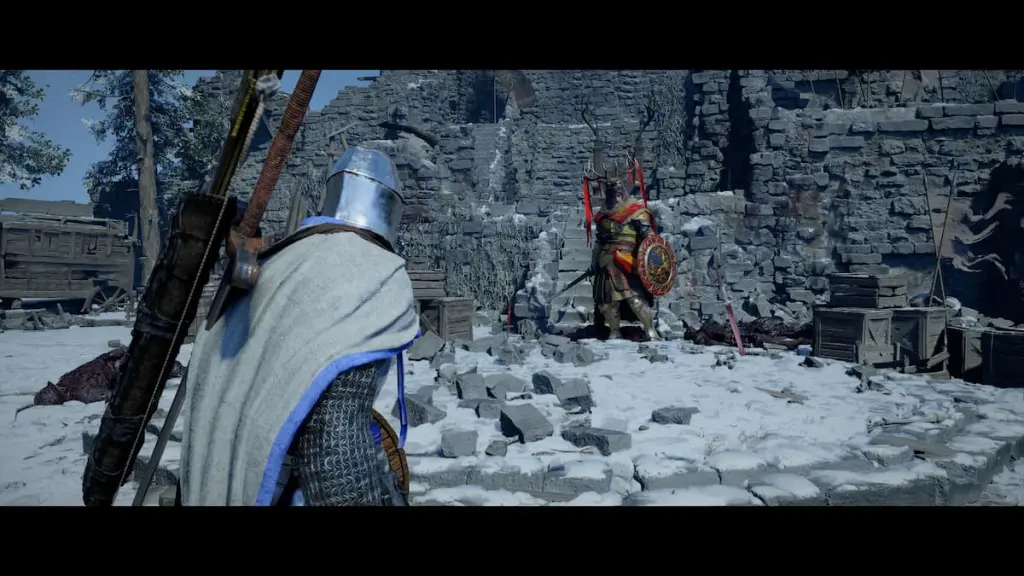 Bosses, though often unbalanced, are as close to aesthetic perfection as they can be. Screenshot by Destructoid Now we get to the actual gameplay. On top of exploring things and watching the narrative unfold, you will be fighting quite a lot. The game, understanding its position as an action-oriented adventure title, made sure that you have the right means to execute any sort of fight you want, and the amount of content on this side of the game puts many others in the genre to shame.
Combat is melee-oriented for all characters, and you can use any number of weapons, great and small, including melee and ranged options. Ranged are both bows and guns, and there are countless variants of each that you can find around Pywel.
Melee combat is where the most fun is to be had, I think, and it's incredible how varied and deep it is. You can chain combos in ways you never thought possible, and though I wasn't much of an expert, I am confident we'll soon be seeing cinematic edits of Kliff doing the most incredible combination of moves imaginable. Weapons can be either found or crafted, while some unique arms drop from the plentiful boss fights.
Every weapon has unique move sets. While some have a strong right-click attack, others may be better utilized by focusing on piercing or other benefits. You can also upgrade each weapon by refining it to increase its base stats, or embedding cores (gems) into sockets, adding entirely new skills and abilities. The same applies to armor pieces, which are all stylish and great, though some (gauntlets, boots) also double as weapons since unarmed combat is a perfectly viable way to play.
You can also utilize your Axiom Force, a mystical ability granted to you by those creatures of the Abyss, to perform "impossible tasks" as the name calls them, i.e., to manipulate gravity, grab enemies, do ungodly things to them, or slap them using spirit attacks. All in all, the combat is both as deep and as wide as an ocean, and there's a world of builds here that I didn't get to truly experience on account of, well, finding very strong stuff and sticking to it for most of the game.
But the combat fails to make up for the massive amount of frustration caused by the game's overall lack of balance, which severely ruins the pacing and the good vibes you get by playing the game in general. The most notable examples are region liberations and boss fights.
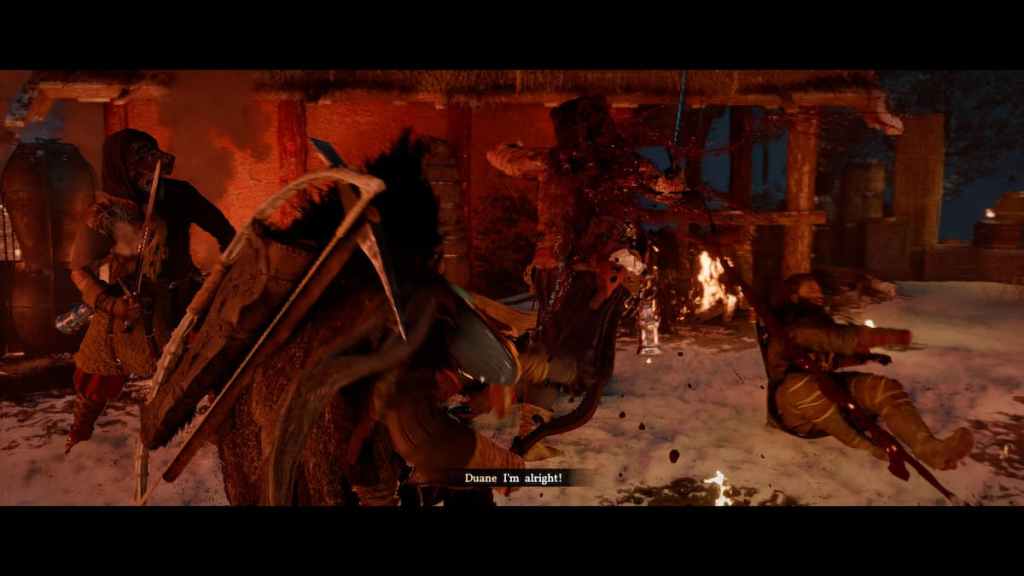 Fighting hordes of enemies and liberating areas is a very frequent pastime in Crimson Desert, but it can sometimes be quite tedious. Screenshot by Destructoid In the former, you can come to a place that is occupied by bandits or rival factions and start liberating it by basically killing enemies until the liberation bar reaches zero. At that point, enemies start to scatter, and the area is declared free. The issue here is that these liberations take far too long, and there are so many foes constantly respawning and coming at you that small mistakes can really ruin the flow, while being attacked by several elites generally means certain death if you aren't equipped well.
Several main story beats feature mandatory liberations, with a boss fight at the end of this onslaught and gauntlet. The experience is rather unfair, both in the open world and in the main story events, since you have to fight the big bad and the enemies around them simultaneously. That is especially the problem when Crimson Desert's frustrating and completely unfair bosses are taken into account.
Most of the game's bosses, despite being cool and unique and interesting design-wise, are totally unbalanced. They are too fast, too strong, and have so many sucker punches in their arsenal (which they tend to spam) that no-hit runs or even just good fights are few and far between. A lot of the fights hinge on your use of respawn pills, which revive you mid-fight with 30 percent of your max HP. That is particularly true when you're fighting one of the many multi-phase bosses, which sometimes have a third phase to struggle through.
It's as if no one at Pearl Abyss playtested or even tried to think of the balance. The only saving grace here is that respawn pills can be rather easily obtained, and that many bosses have a very specific weakness that tends to trivialize them. This works for some but not for others, as those have to be brute-forced by just attacking and dying over and over in a battle of attrition.
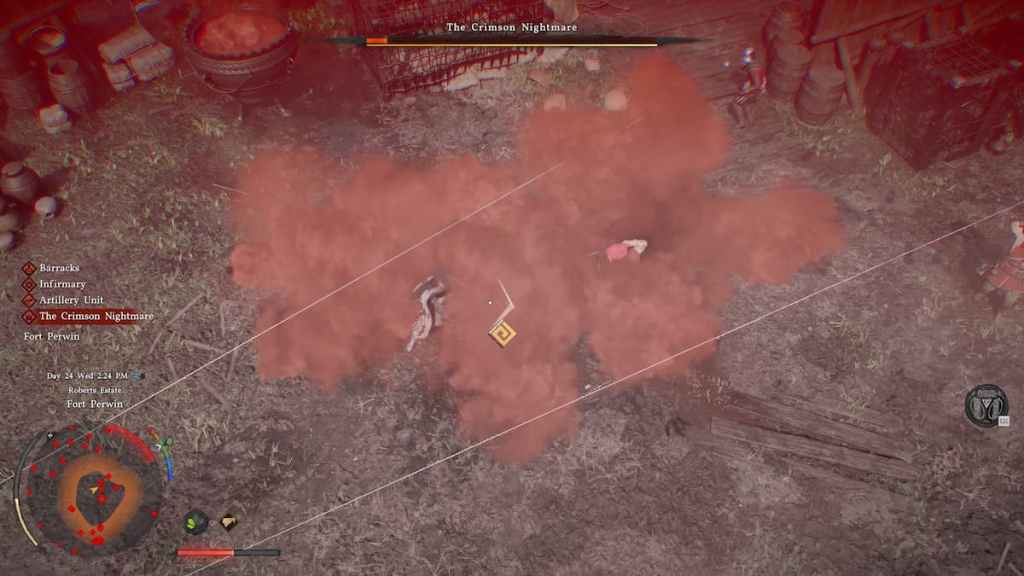 The Crimson Nightmare is a notably gimmicky boss. You have to beat it to liberate a region, all while surrounded by dozens of enemies, by using a very specific unlockable skill. Screenshot by Destructoid When you have such gimmicky bosses at the end of massive gauntlets of enemies that are themselves very powerful, you get frustration unlike anything you've ever experienced. Regardless of my skill, or lack thereof, my overall experience with the bosses just wasn't pleasant, even if I did like how they looked.
In some cases, it is mandatory to swap from Kliff to other characters for certain segments of the story, which include brutal, difficult boss fights. After spending 50 hours as Kliff and then being forced to use a new character I never played before with new skills and items that might not be up to snuff with that part of the game, I got my a** handed to me by a particular boss for the sole reason of that character just not being as good or as leveled as Kliff is.
This threw me off, but it's not that big of a deal and doesn't account for a lot of playtime anyway.
Overall, there is a strong lack of polish. Though the developers did issue several patches during the review period, key issues still remain present as of launch. Inventory remains limited, there is no proper storage for unnecessary but still wanted items, and many puzzles are almost impossible to solve without help.
This is a problem because the game relies on so many puzzles for you to progress that it becomes an actual chore to do them. Some are simple and understandable, some take a little more focus and effort, but some are just nigh impossible unless someone tells you what to do. Brute-forcing much of the game's content detracts from the overall experience, but I think the devs can and will fix many of these flaws over time.
Fast travel also sometimes requires puzzle-solving, as you can only use it to move between set points on the map. Finding these points also felt like a chore compared to doing, well, literally anything else.
And yet, a beautiful and great game
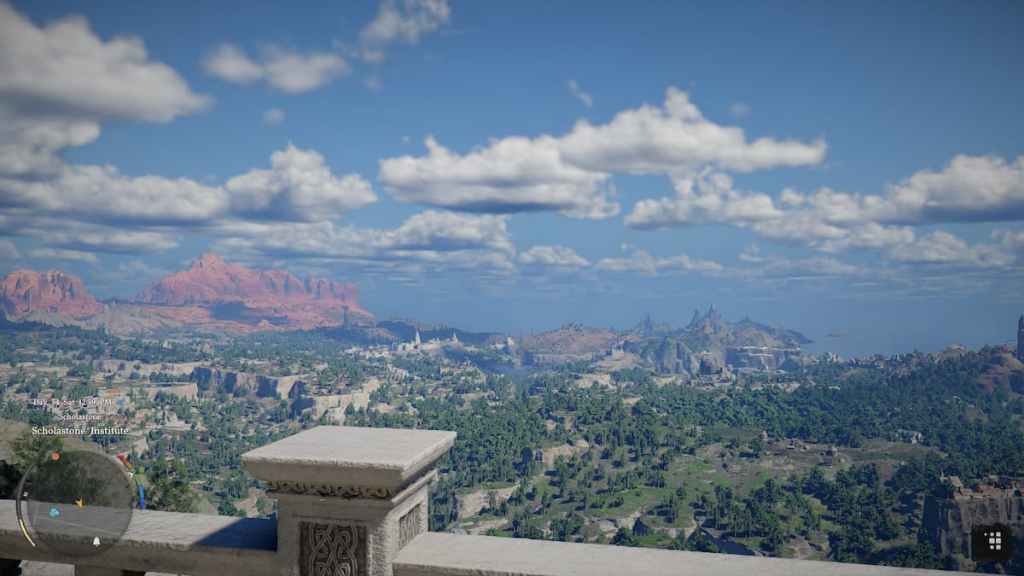 Everywhere you look, something invites you to come and visit. And you can, at an amazingly high FPS. Screenshot by Destructoid Outside of those very specific frustrations that I experienced, I don't think Crimson Desert deserves anything but praise. Given how big it is and how nice it looks, the game performs so incredibly well that I cannot believe AAA publishers have been putting out muddy, oily, horribly-looking titles with single-digit FPS counts for so long.
Crimson Desert runs at 4K native at around 70 fps on my RX 9070XT, but I did notice a significant dip in performance in the last few days of the review window. I used to run Ray Regeneration and an Ultra preset at 4K using FSR at Quality, giving me around 65 to 70 FPS, but I was forced to turn RR off and set the Lighting to Cinematic manually to win back my performance after a patch a few days prior to this review's release.
This had to do with how RR was tied to setting the Lighting to Max, decimating performance across the board. I hope this changes by the time the game releases, and the devs did tell us that they're monitoring this quirk.
At the end of the day, though, Crimson Desert is a fine title, with a story, characters, and world worth exploring. Coupled with entertaining gameplay, memorable bosses, and deep, engaging systems, it has just about everything a good game should have. Polishing these elements a little further would have done a world of wonders for the title, but the rough edges don't take away from the core experience that much, as the game is impossible to put down once you get going.
Pearl Abyss has made a place for itself among great AAA developers, and I'm excited to see where it will take us next.
The post Crimson Desert Review – Vast, violent, and impossible to put down appeared first on Destructoid.
What's Your Reaction?








XINKER - Business and Income Tips
Explore XINKER, the ultimate platform for mastering business strategies, discovering passive income opportunities, and learning success principles. Join a community of thinkers dedicated to achieving financial freedom and entrepreneurial excellence.